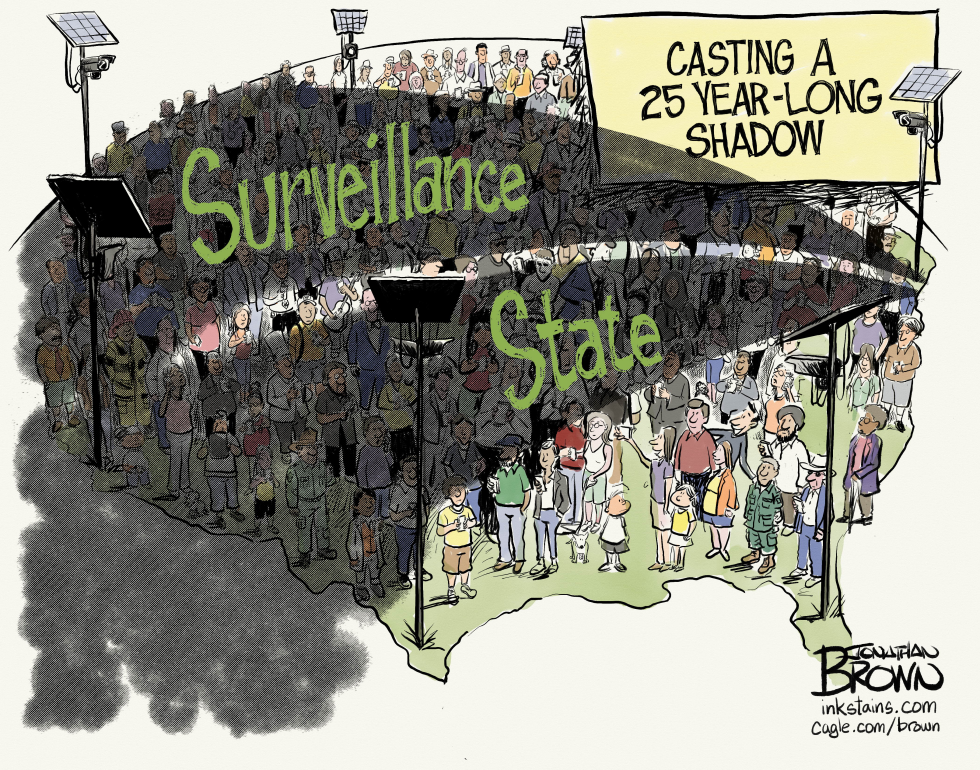
The cartoon depicts a dense crowd of Americans standing on a map of the United States, partially obscured by a large dark shadow cast by surveillance cameras mounted on poles. The words 'Surveillance State' appear prominently in green lettering across the scene, while a sign in the upper right reads 'CASTING A 25 YEAR-LONG SHADOW.' The image comments on the lasting effects of expanded government surveillance programs that began after the September 11 attacks, now spanning a quarter century. It illustrates how these measures continue to influence daily life and public spaces in 2026.
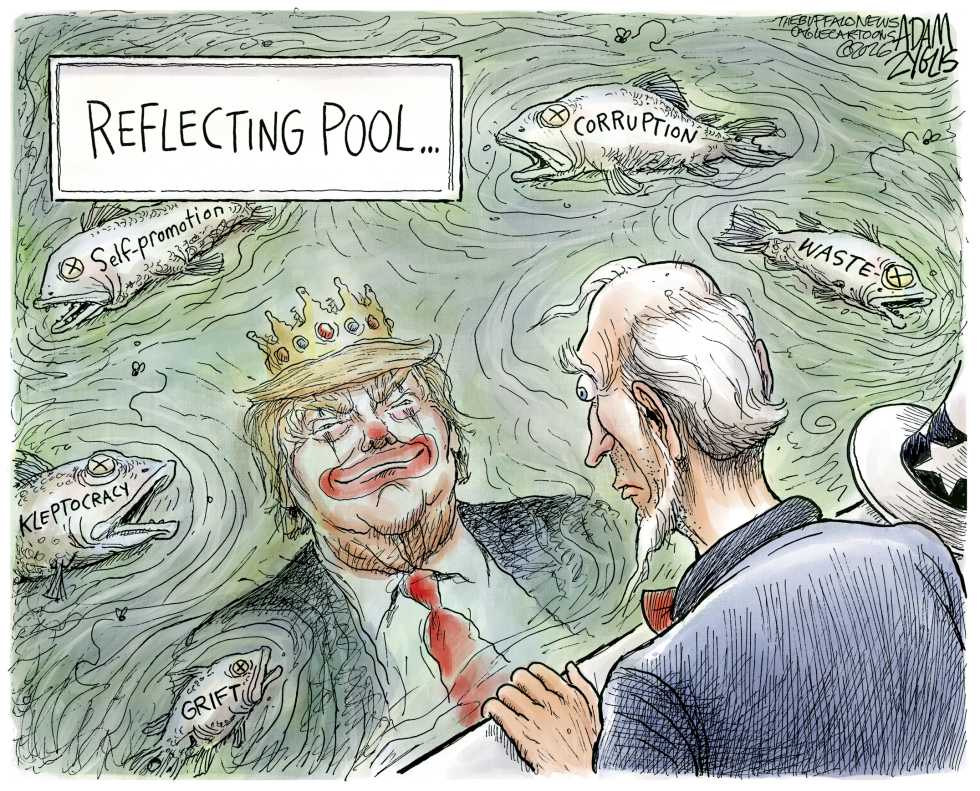
Accusations of kleptocracy and self-dealing have followed Donald Trump through multiple phases of his political career. Critics point to patterns of self-promotion and waste in government dealings. The cartoon frames these issues as dead fish surfacing in a reflecting pool, with Trump depicted wearing a crown and clown makeup while an older observer looks on. The editorial position criticizes Trump as emblematic of corruption and grift.
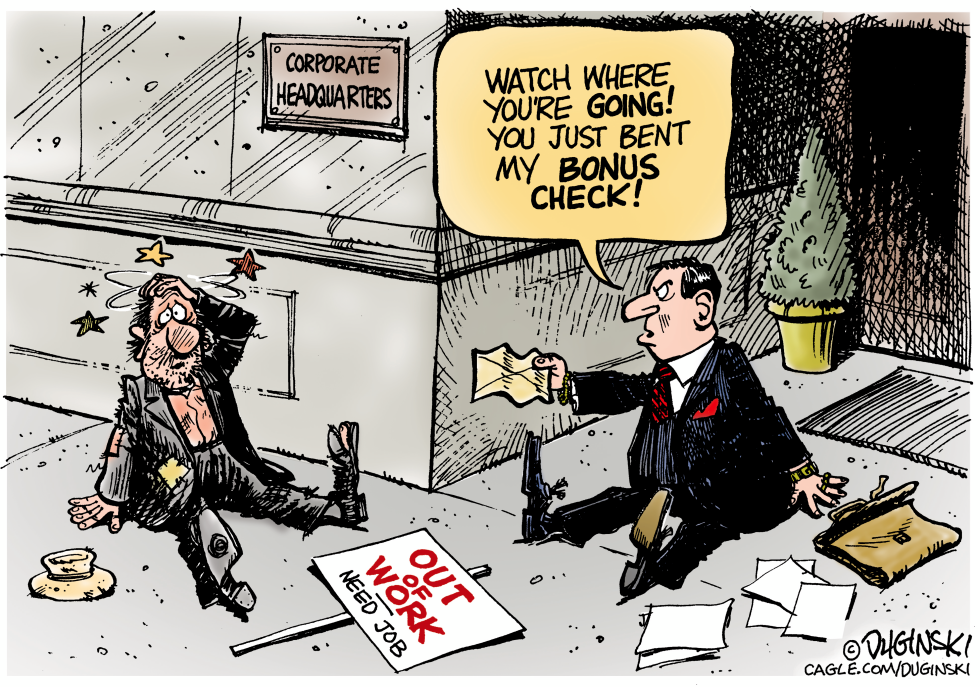
Corporate executives continue to receive large bonuses even as layoffs persist across sectors. The piece responds to ongoing debates over executive compensation packages during periods of workforce reduction. It takes the position that such bonuses appear disconnected from the realities facing displaced employees.
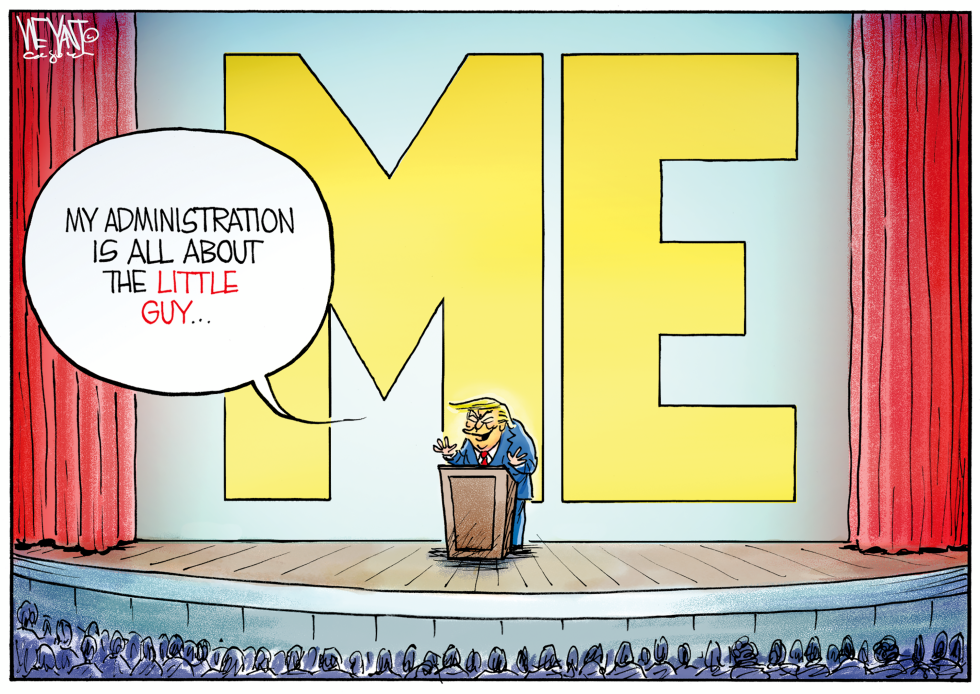
Donald Trump has repeatedly positioned his administration as champion of ordinary Americans during public addresses. The claim comes amid ongoing debates over policy priorities and personal branding in the White House. The piece portrays the rhetoric as centered on the speaker rather than the public.
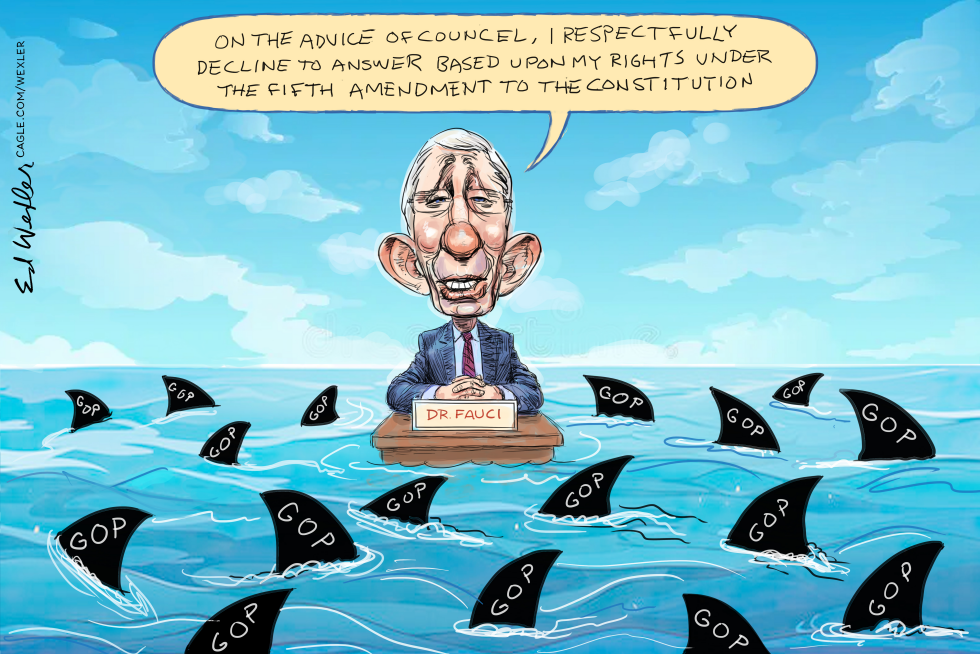
Dr. Anthony Fauci declined to answer questions at a House hearing, invoking his Fifth Amendment protections. The piece responds to Republican-led scrutiny of his role in pandemic-era public health decisions. It depicts the proceeding as a hostile setting rather than a neutral fact-finding exercise.
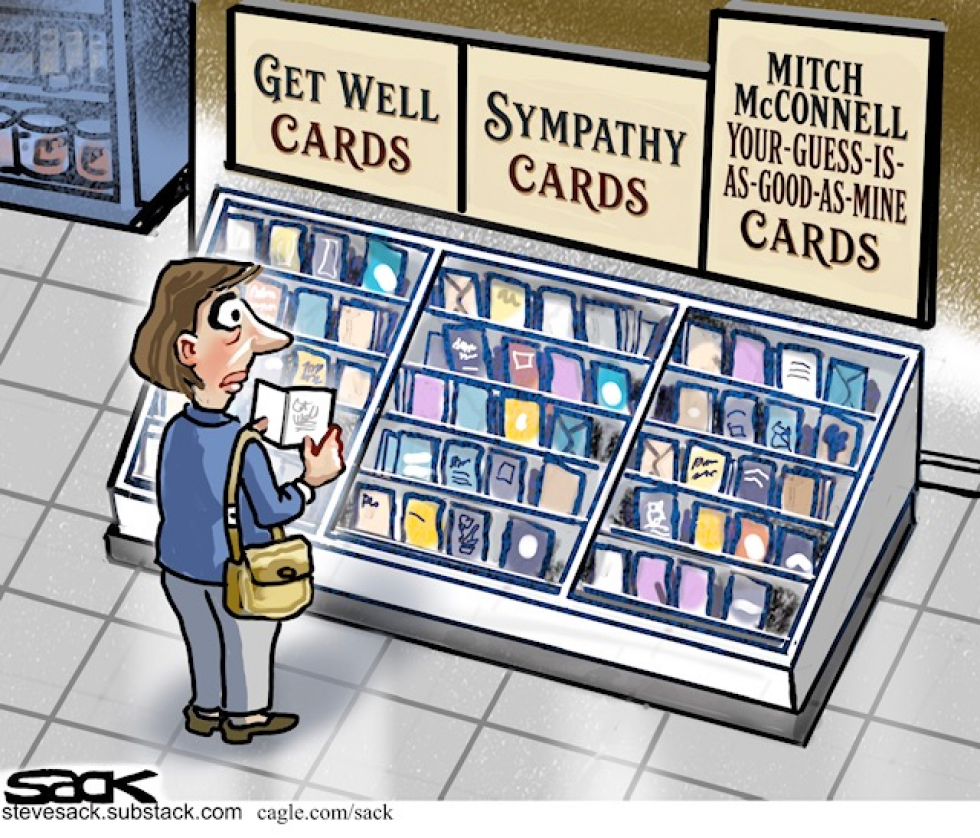
Questions about Mitch McConnell's health and future in Senate leadership have persisted into mid-2026. The Kentucky Republican has faced repeated absences and public episodes that fuel speculation about his capacity to continue. Colleagues in both parties watch closely because his position influences committee assignments and floor strategy. The uncertainty affects legislative timelines on appropriations and judicial matters. The piece argues that the situation leaves observers with little reliable information and treats the ambiguity itself as the central story.
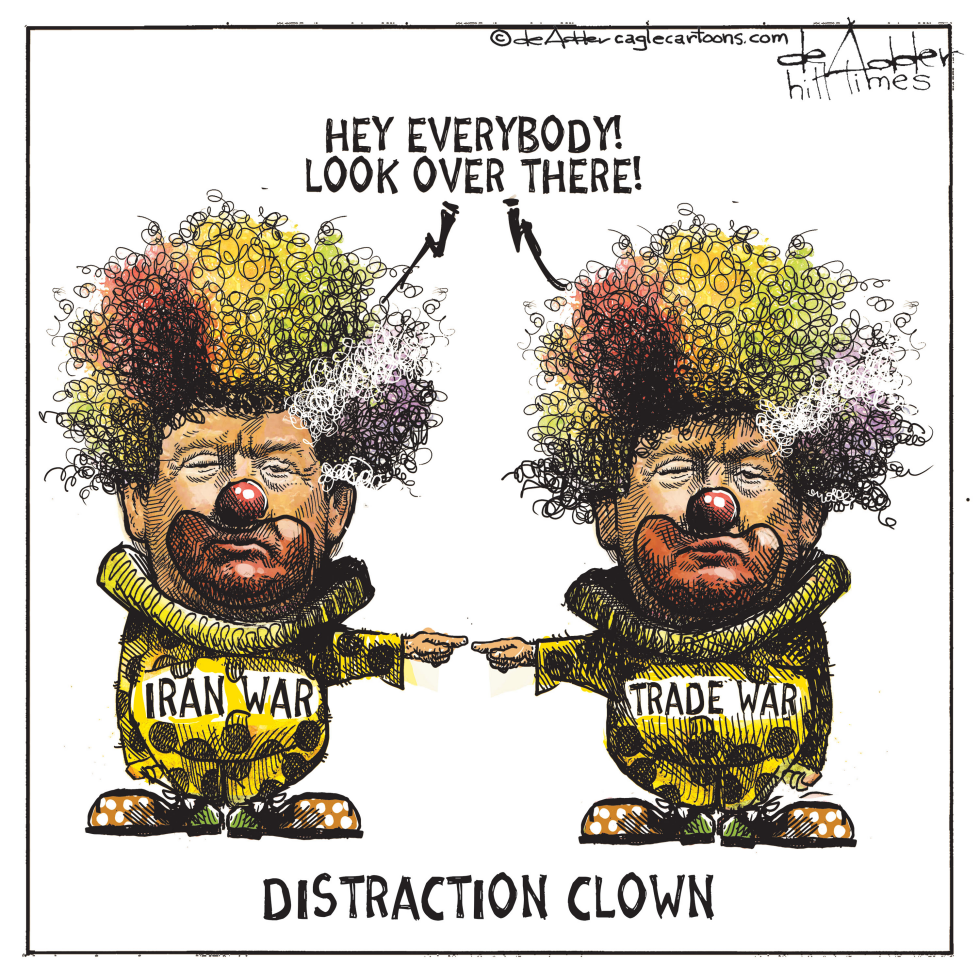
Public attention is being directed toward simultaneous Iran and trade conflicts as potential diversions from other issues. The editorial depicts the two crises as interchangeable distractions promoted by the same source. It argues that leaders are using these flashpoints to shift focus rather than address underlying problems.
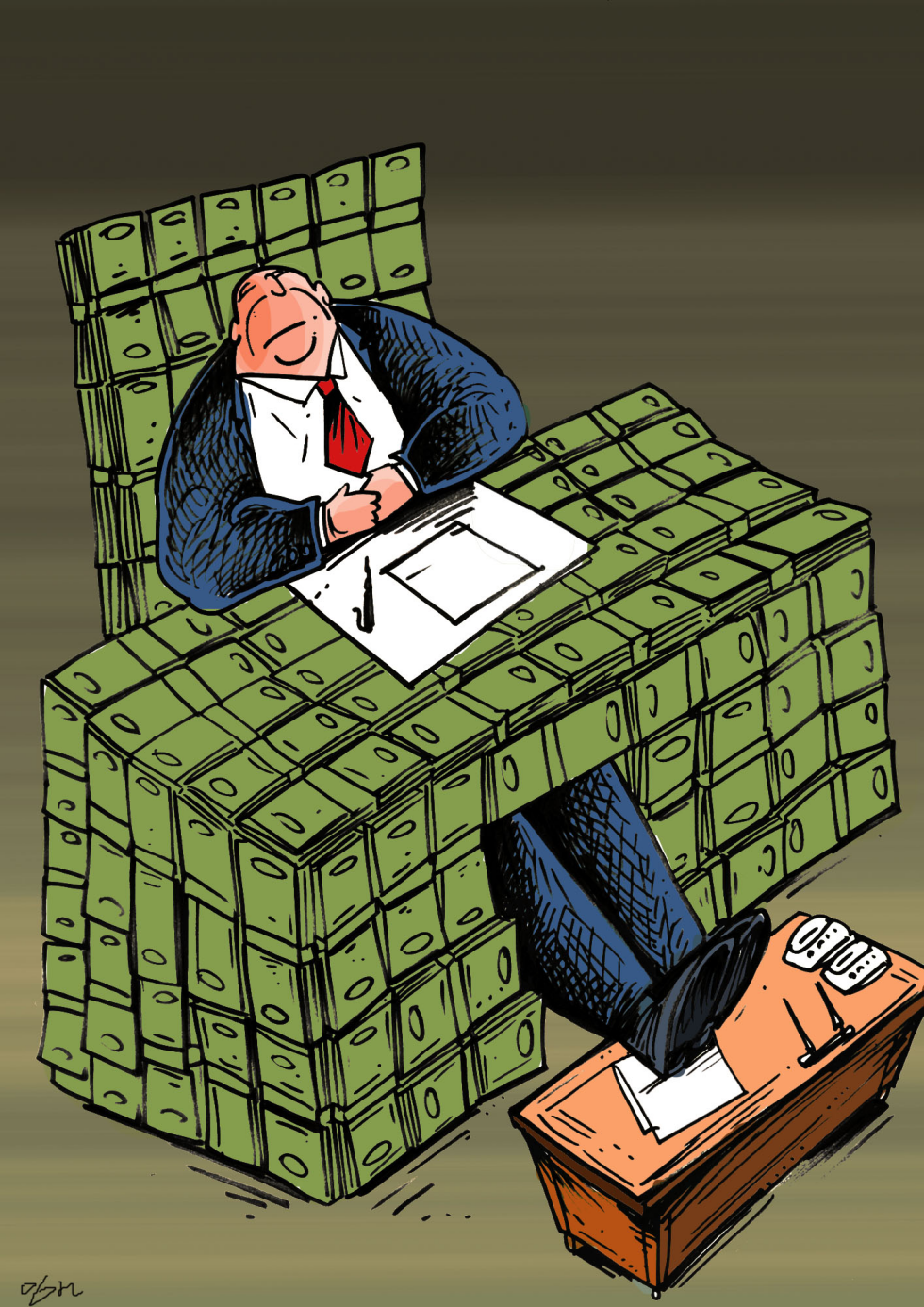
Public officials and business leaders often operate amid substantial financial resources that shape their daily environments and decisions. Recent developments in campaign finance and corporate influence have kept scrutiny on how wealth intersects with governance. The piece portrays an executive fully at ease within a setting constructed entirely from currency, underscoring the normalization of money's central role in positions of authority.
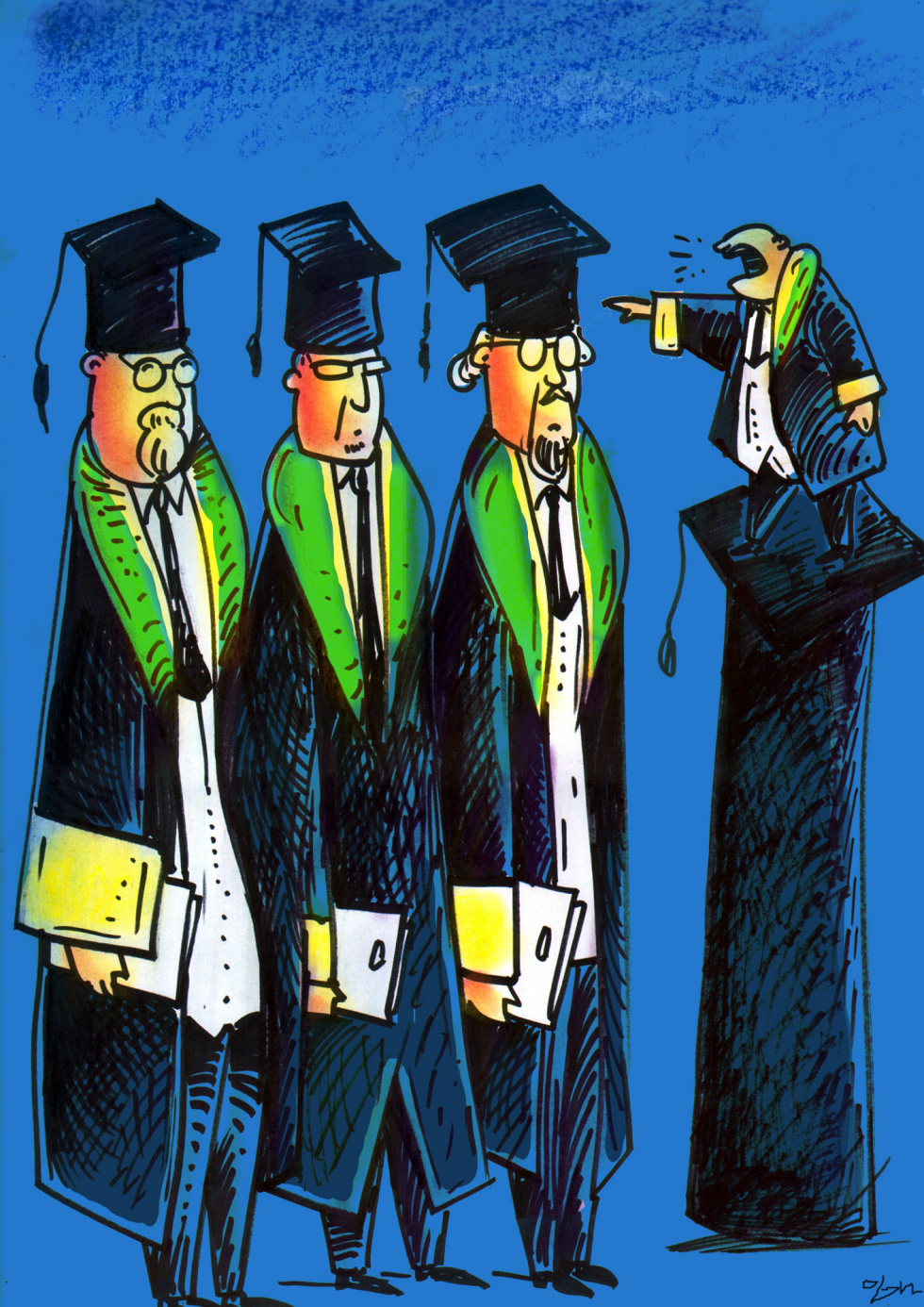
A university ceremony draws attention as an official delivers pointed remarks to administrators in academic attire. The exchange highlights ongoing tensions over leadership accountability and campus governance. The piece portrays the speaker as assertive in pressing the group on their responsibilities.
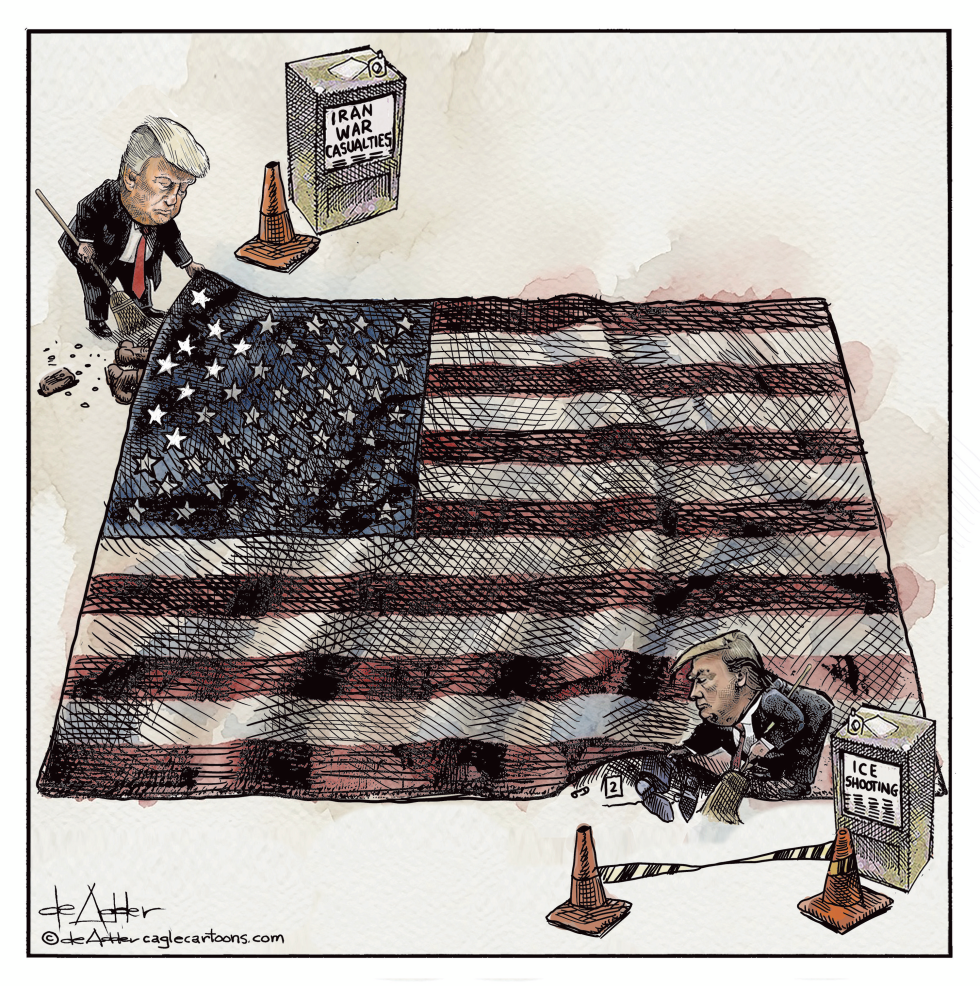
Donald Trump faces scrutiny over reported casualties from potential Iran conflict and an ICE-related shooting incident in mid-2026. The administration's handling of these events draws criticism for downplaying accountability. The piece argues that attempts to minimize these issues undermine public trust in governance.
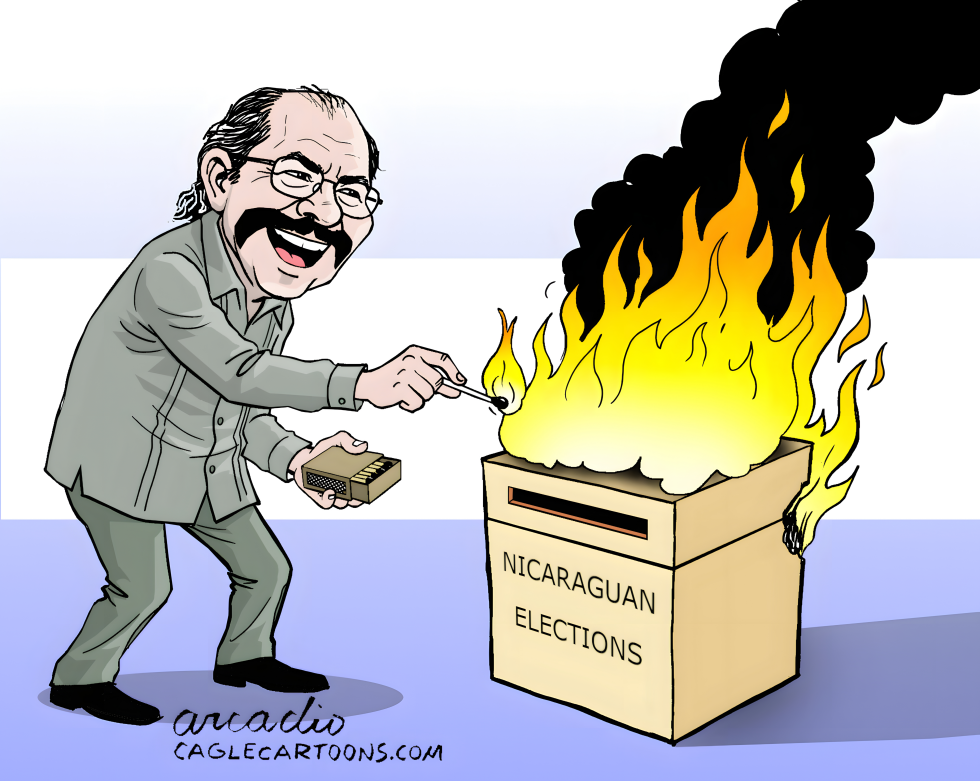
Nicaraguan President Daniel Ortega has publicly stated there will be no more elections, a move that solidifies his long-term grip on power. The declaration comes amid ongoing concerns over democratic backsliding in the Central American nation. This development matters because it removes any remaining avenues for political opposition and citizen participation in governance. The accompanying editorial takes the position that Ortega's action represents a deliberate destruction of democratic institutions rather than a legitimate policy choice.
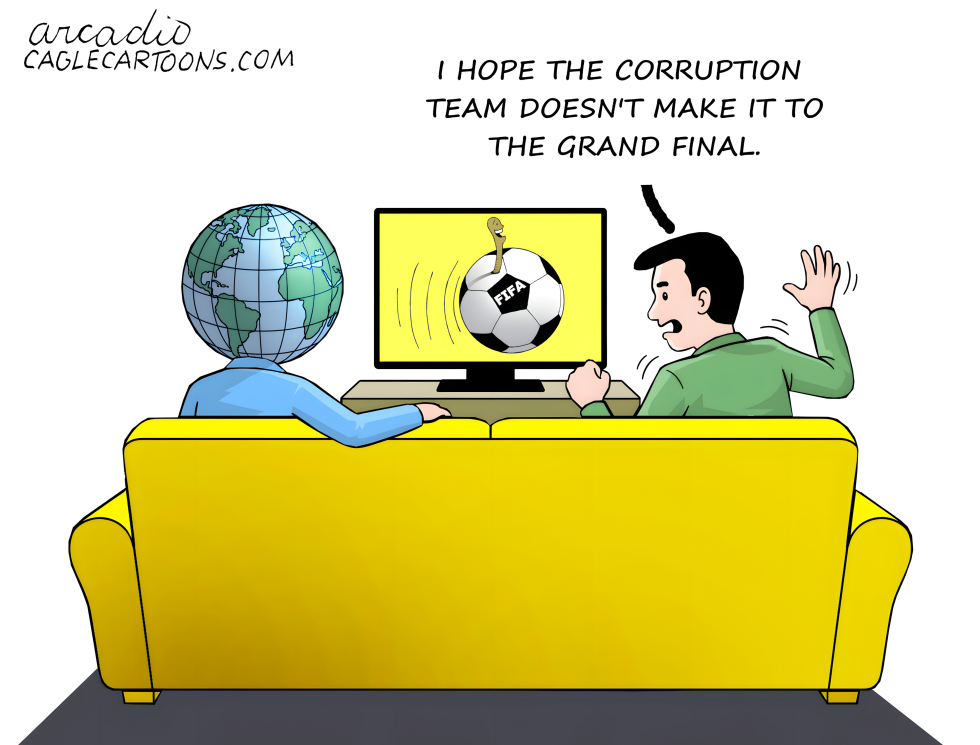
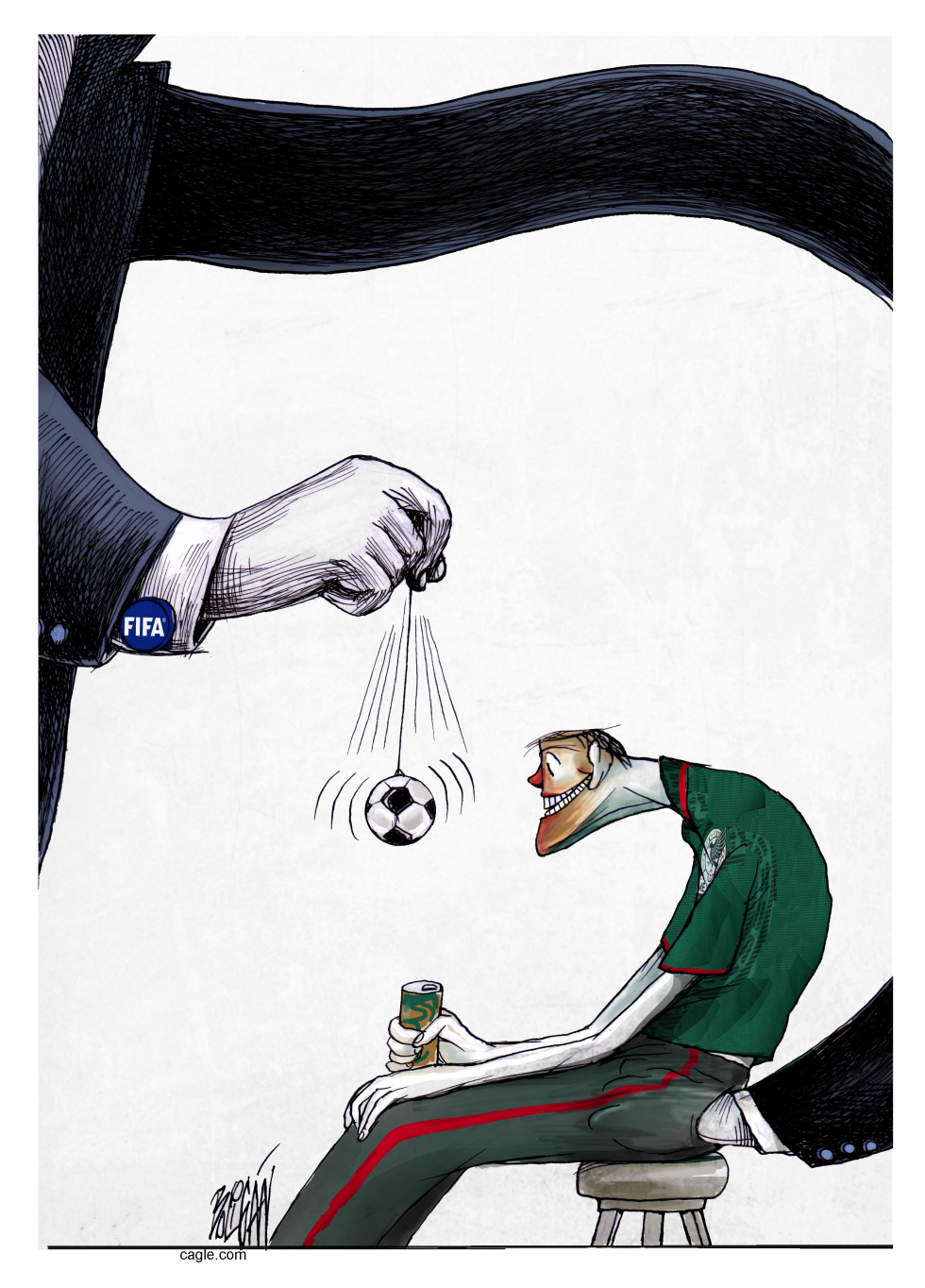
A man with a globe for a head sits beside a green-shirted viewer on a yellow couch, both staring at a television displaying a FIFA soccer ball with a worm emerging from it. The viewer raises a hand in alarm while a speech bubble expresses hope that the corruption team will not reach the grand final. The image, dated July 7, 2026, captures public anxiety over ongoing FIFA integrity issues tied to major soccer events.
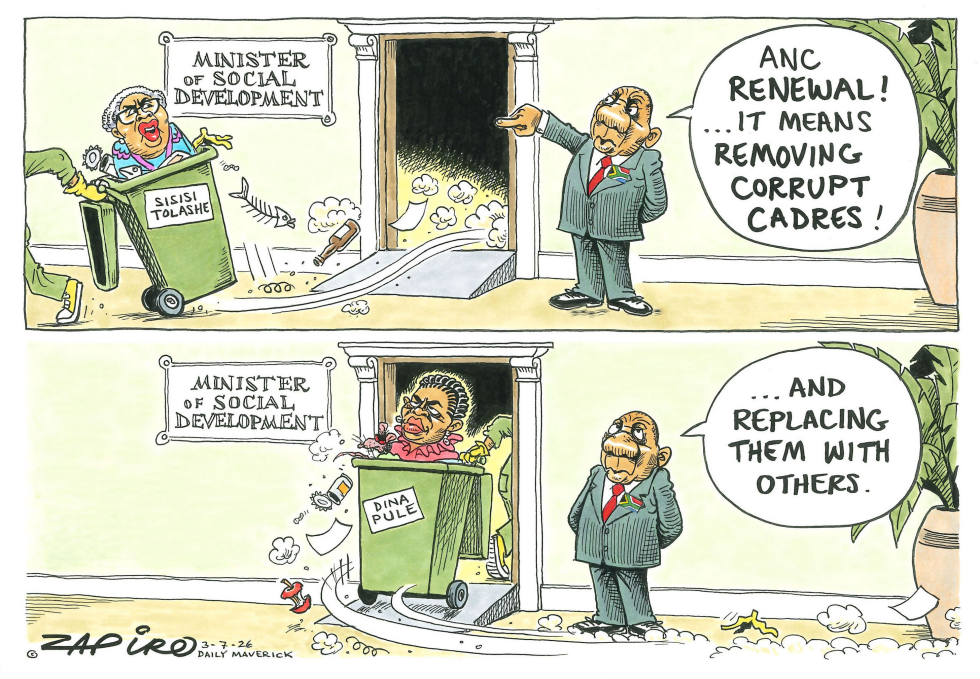
Zapiro's July 2026 cartoon mocks ANC renewal claims by showing the Minister of Social Development post swapped from Sisisi Tolashe to Dina Pule, with the party figure declaring removal of corrupt cadres only to replace them with others. The image responds to recent ANC efforts at internal reform and minister reshuffles in South Africa amid persistent allegations of cadre deployment and graft in government departments.