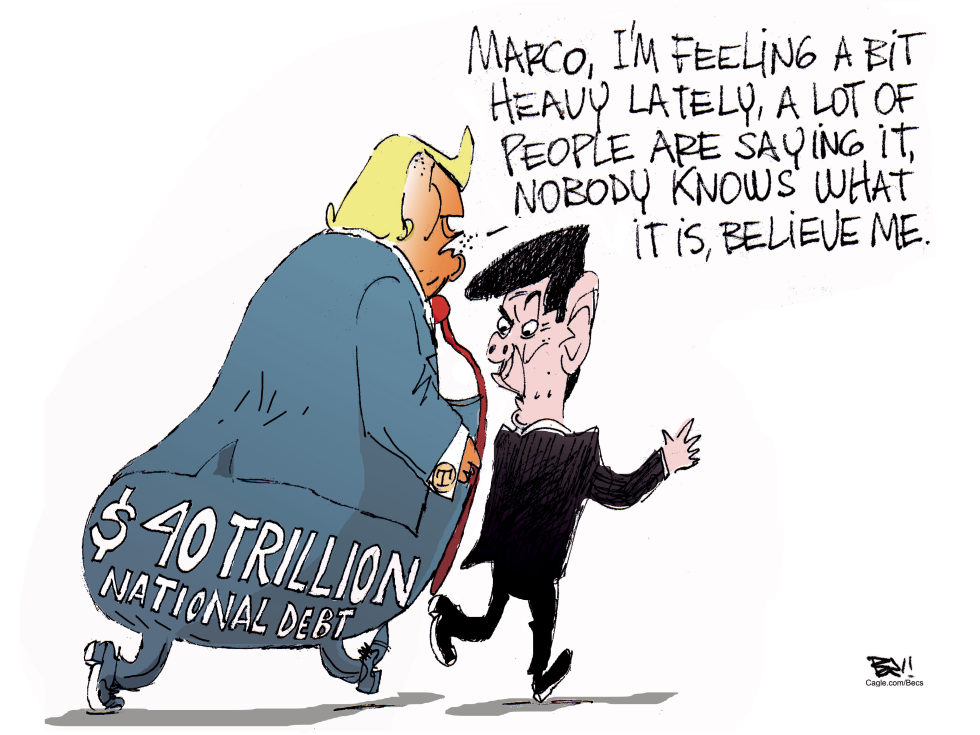
President Trump discussed the national debt with Senator Marco Rubio in early September 2026. The conversation highlighted the $40 trillion figure and public confusion over its scale. The exchange occurs as the administration manages spending priorities and deficit growth. The piece portrays the debt as a personal load that Trump seeks to downplay by blaming external views rather than policy choices.
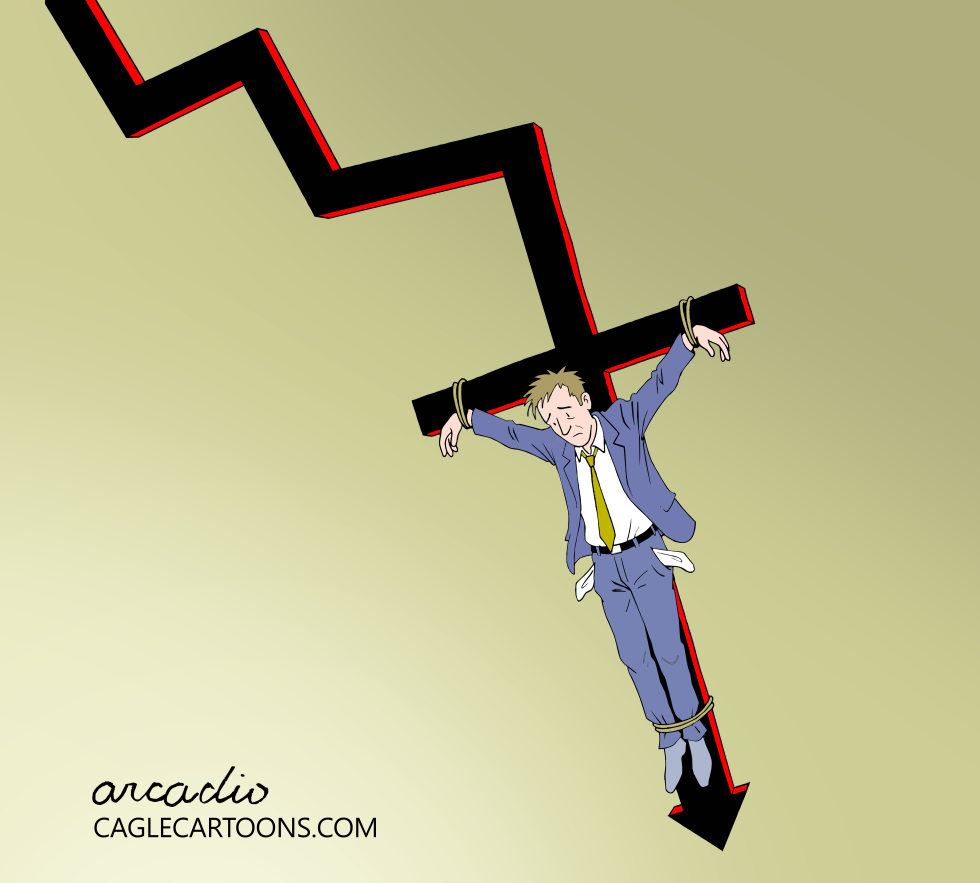
Corporate leaders continue to confront sharp market drops that directly affect company performance and investor confidence. The situation underscores how executives remain closely tied to negative financial trends rather than insulated from them. The piece argues that such binding reflects the reality of accountability in failing markets.
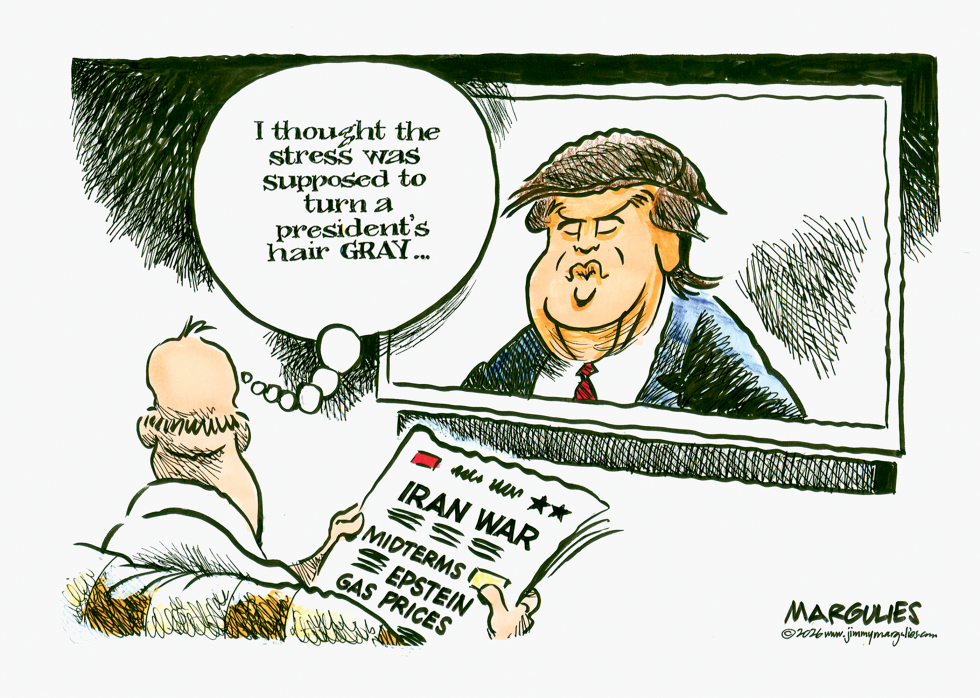
President Donald Trump confronts an Iran war, midterm election pressures, Epstein-related revelations and rising gas prices in September 2026. These overlapping challenges test the administration's capacity to manage foreign conflict and domestic economic strain simultaneously. The cartoon argues that the expected physical toll of such stress on the president has not materialized in the anticipated way.
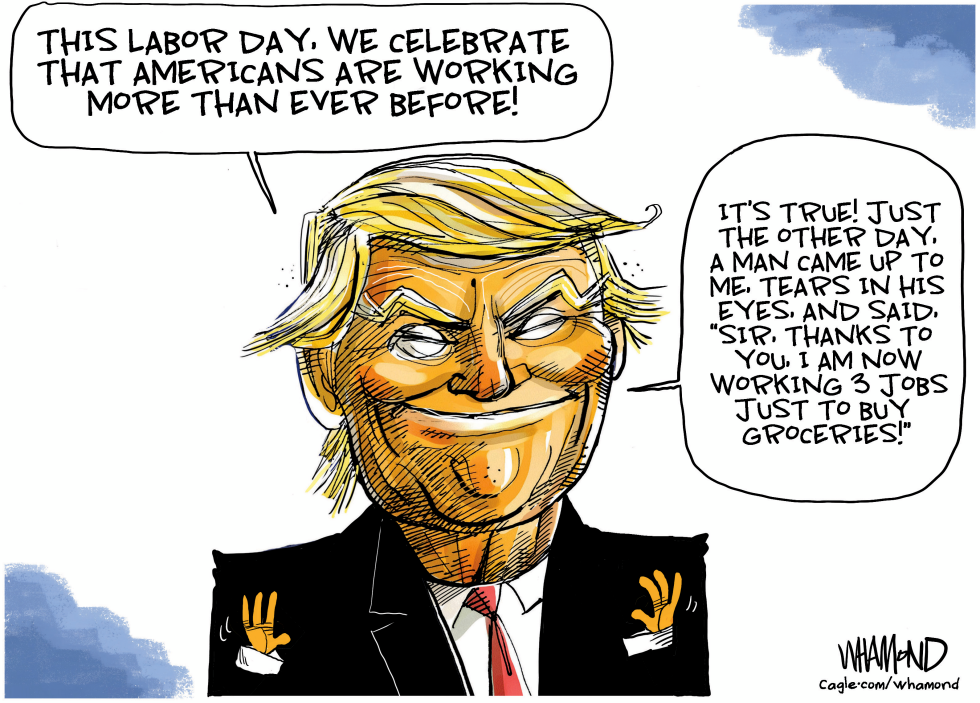
On Labor Day 2026, President Trump highlighted what he described as record employment levels in a public address. He pointed to Americans taking on more work as evidence of economic strength. The remarks come amid ongoing public concern over household costs and wage pressures. Critics argue the comments underscore the gap between official job numbers and the lived experience of workers needing multiple positions to cover basic expenses. The cartoon presents the remarks as tone-deaf to economic strain.
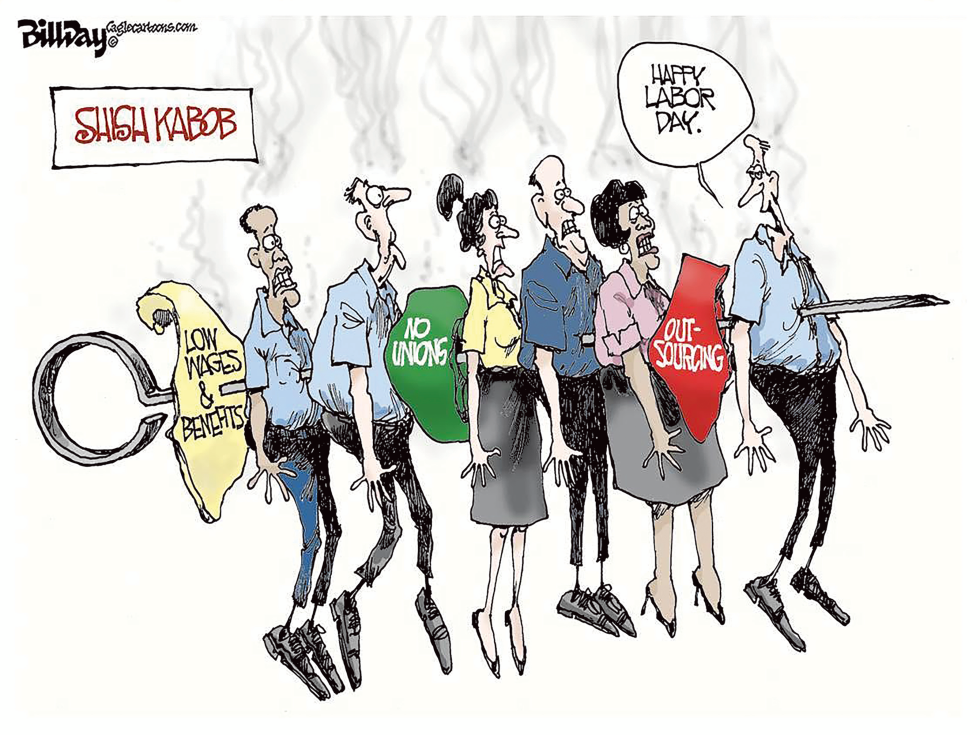
On Labor Day 2026, American workers continue to confront stagnant wages, union suppression, and widespread outsourcing that erode job security and benefits. These pressures persist amid corporate strategies that prioritize cost-cutting over employee welfare. The cartoon argues that such practices turn the holiday into a grim reminder of labor's weakened position rather than a celebration of worker gains.
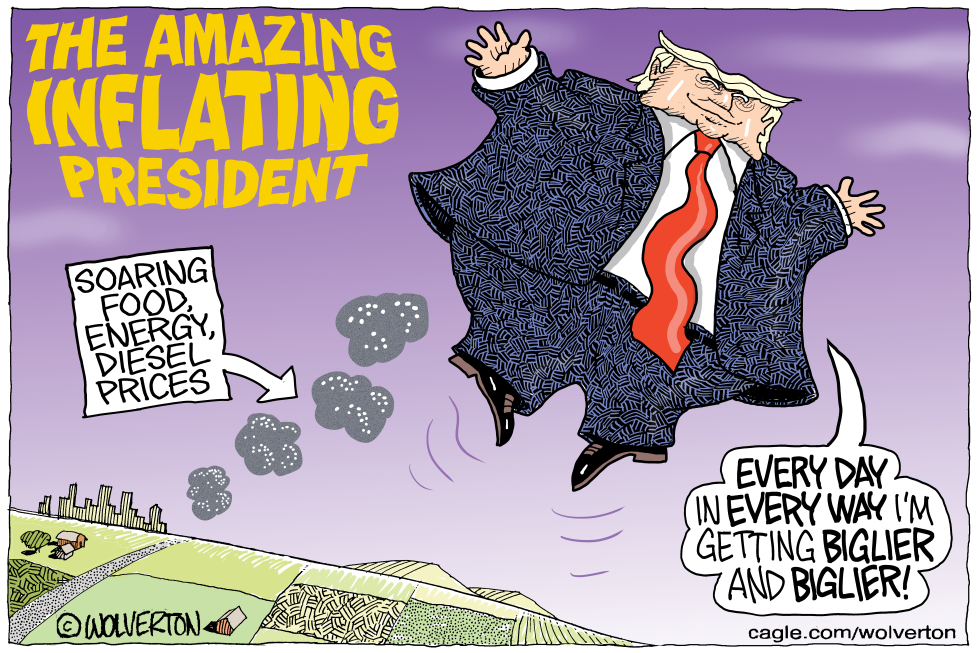
The cartoon depicts Donald Trump as an inflating balloon figure rising above a rural scene with a city skyline. A sign points to gray clouds labeled soaring food energy and diesel prices. Trump declares in a speech bubble that he is getting biglier every day. Published on September 4 2026 the work responds to ongoing concerns over inflation and household costs during the Trump presidency. The visual metaphor connects the president's public presence to the expansion of prices across key sectors.
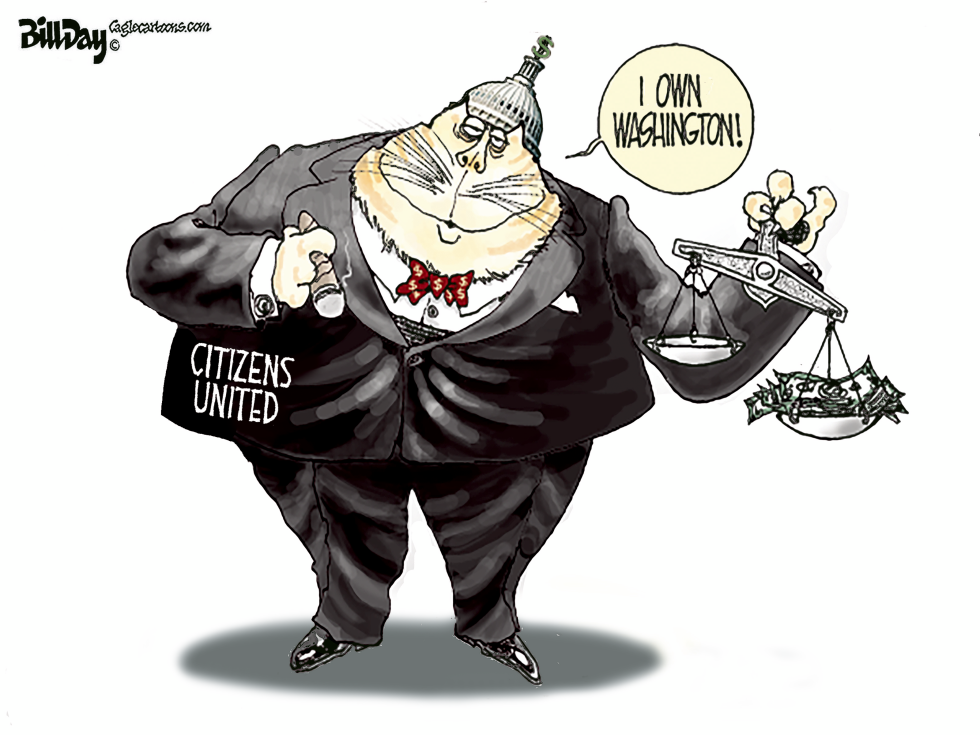
The 2010 Citizens United Supreme Court ruling opened the door to unlimited independent expenditures by corporations and unions in elections. Critics argue the decision amplified the voice of wealthy donors and special interests over average voters. The cartoon responds to the ongoing effects of that precedent by depicting a powerful corporate figure claiming control of the capital. It highlights how the ruling has reshaped campaign finance and public trust in government institutions.
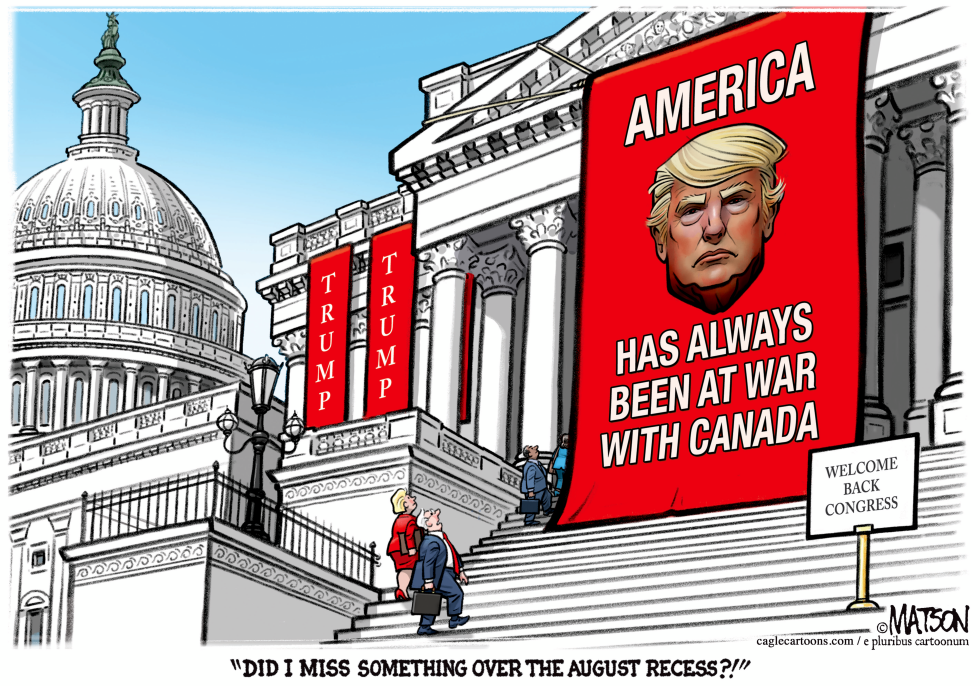
President Trump has intensified trade measures against Canada, prompting comparisons to classic dystopian rhetoric as lawmakers reconvene after the August recess. The move revives long-standing bilateral tensions over tariffs and economic policy. The cartoon frames the development as an attempt to normalize conflict through repeated messaging, underscoring concerns that familiar disputes are being recast as perpetual struggle.
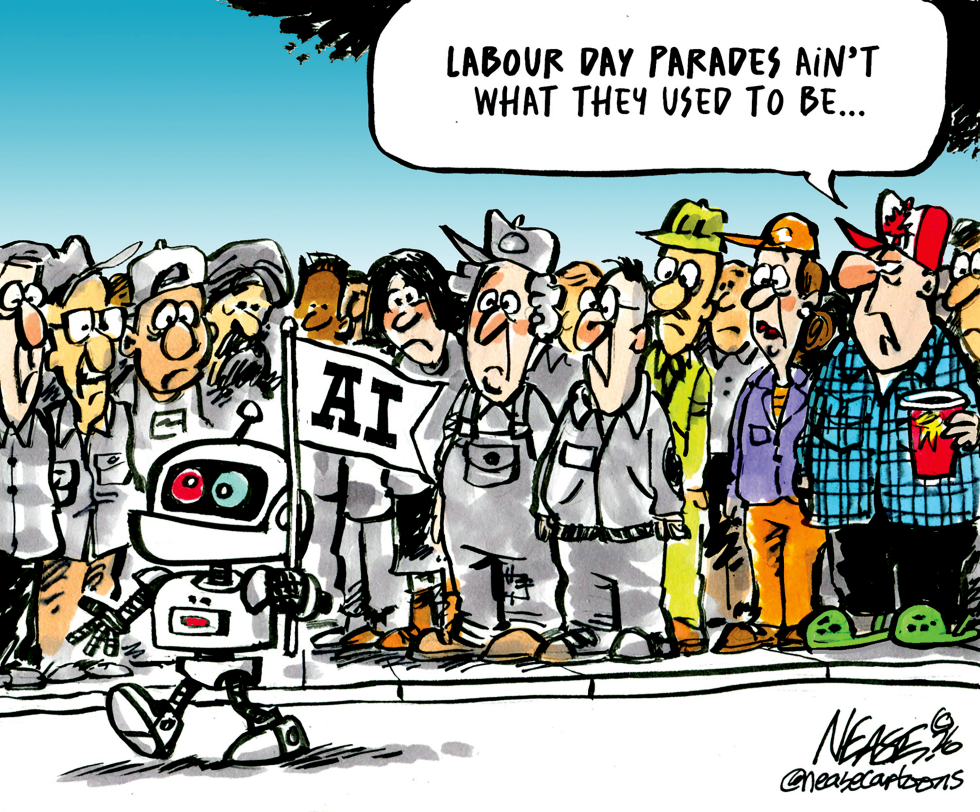
On Labour Day 2026, artificial intelligence continues its rapid integration into workplaces across Canada and beyond, prompting questions about job security for human workers. The cartoon captures this transition by placing a robot at the head of a traditional parade. The editorial position highlights the irreversible change automation brings to labor traditions and employment.
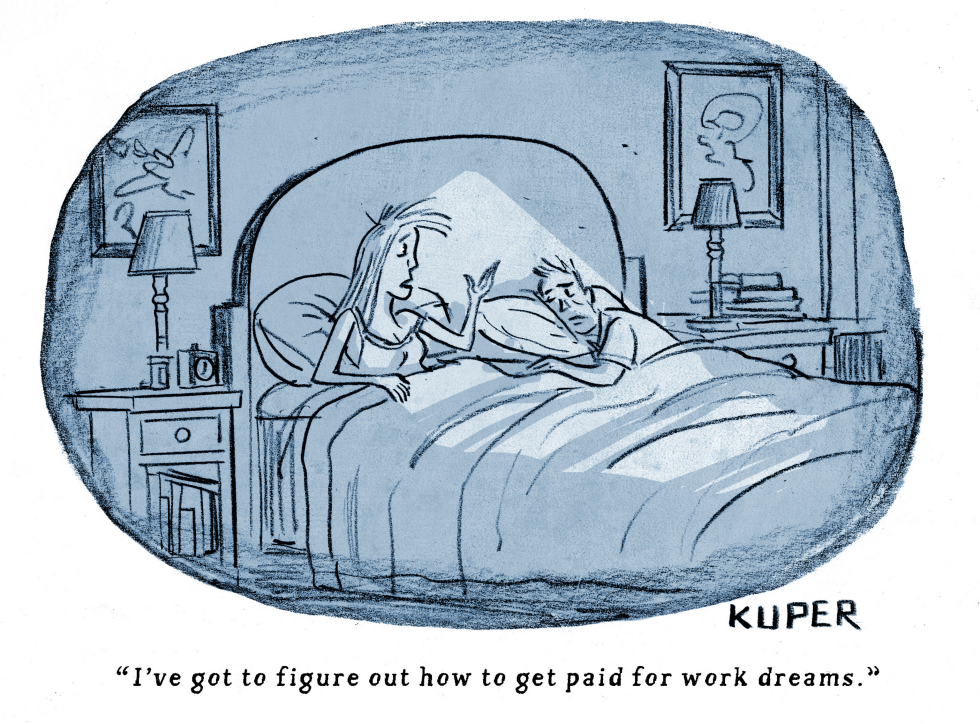
The cartoon addresses the expanding reach of work into personal time through dreams, reflecting ongoing debates about compensation for mental and emotional labor in the modern economy. With side hustles and constant connectivity blurring lines between rest and productivity, many workers feel the grind never stops. The piece takes the position that this intrusion underscores the need for better boundaries and recognition of unpaid cognitive effort as part of broader labor concerns.
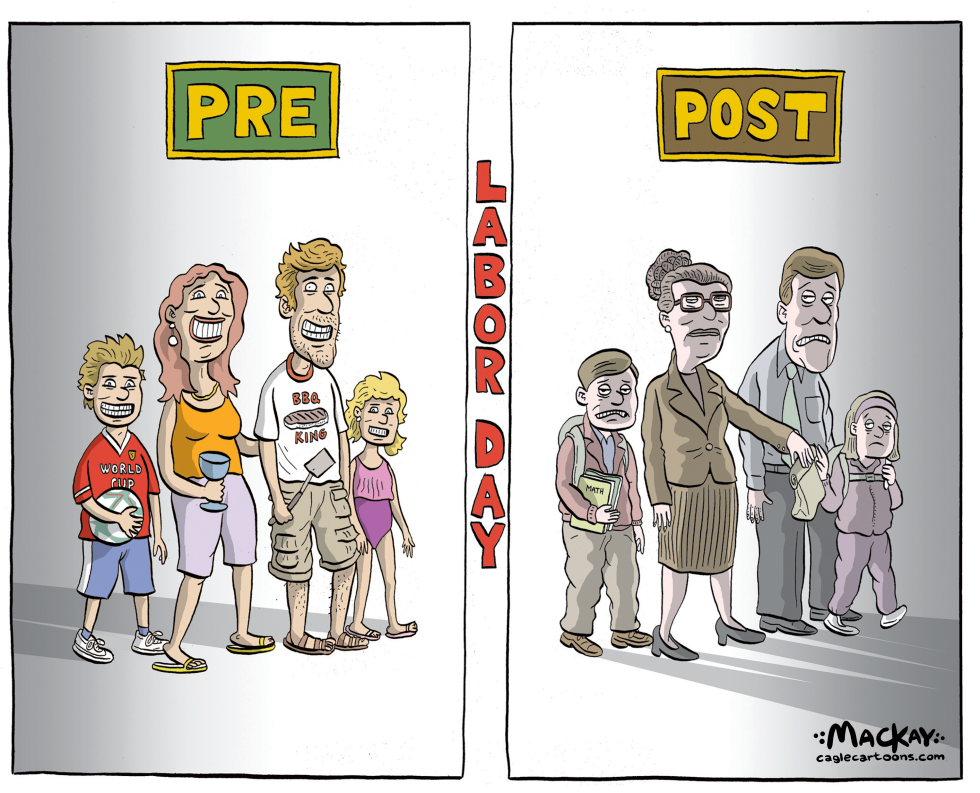
The cartoon by Graeme MacKay contrasts a joyful pre-Labor Day family scene with a weary post-Labor Day version. On the left, parents and children smile in casual summer attire while holding leisure items. On the right, the same family appears drained as they prepare for school and work. The vertical label emphasizes the holiday as the dividing line. This reflects the annual transition many households experience each September. The piece uses simple visual comparison to highlight the end of vacation freedom.
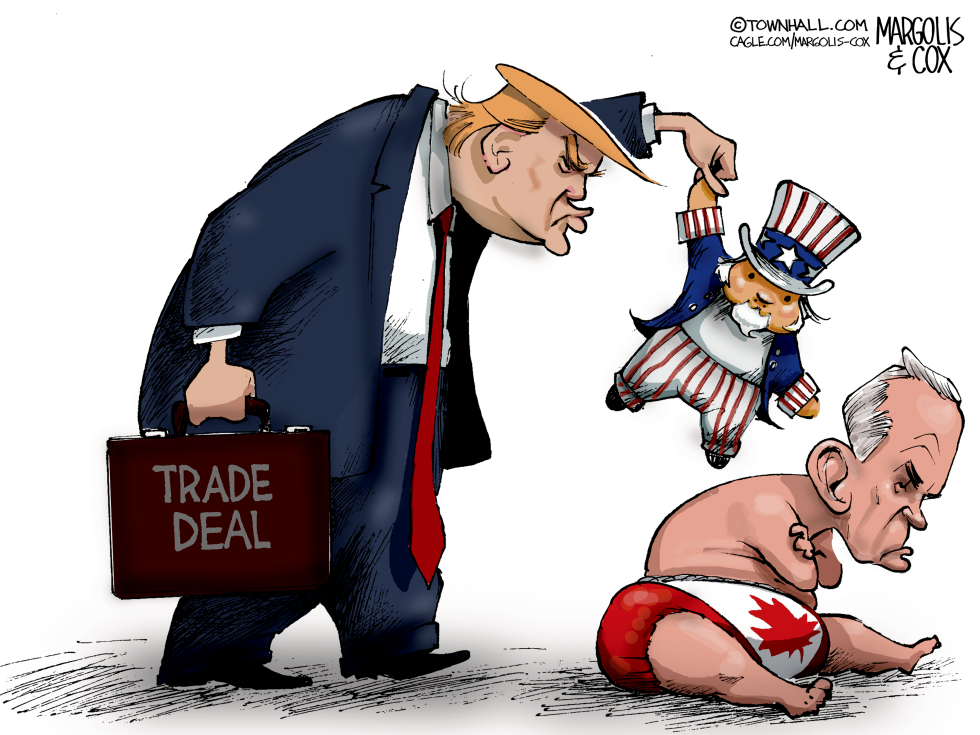
Donald Trump holds a briefcase labeled trade deal while dangling an Uncle Sam puppet above a baby figure wearing a Canadian flag diaper, identified as Mark Carney. The September 2026 cartoon responds to ongoing US-Canada trade tensions under the Trump administration. Carney, a prominent Canadian figure eyed for leadership, faces portrayal as vulnerable in negotiations. The piece argues that Trump exerts direct control over Canadian interests through economic leverage rather than equal partnership.
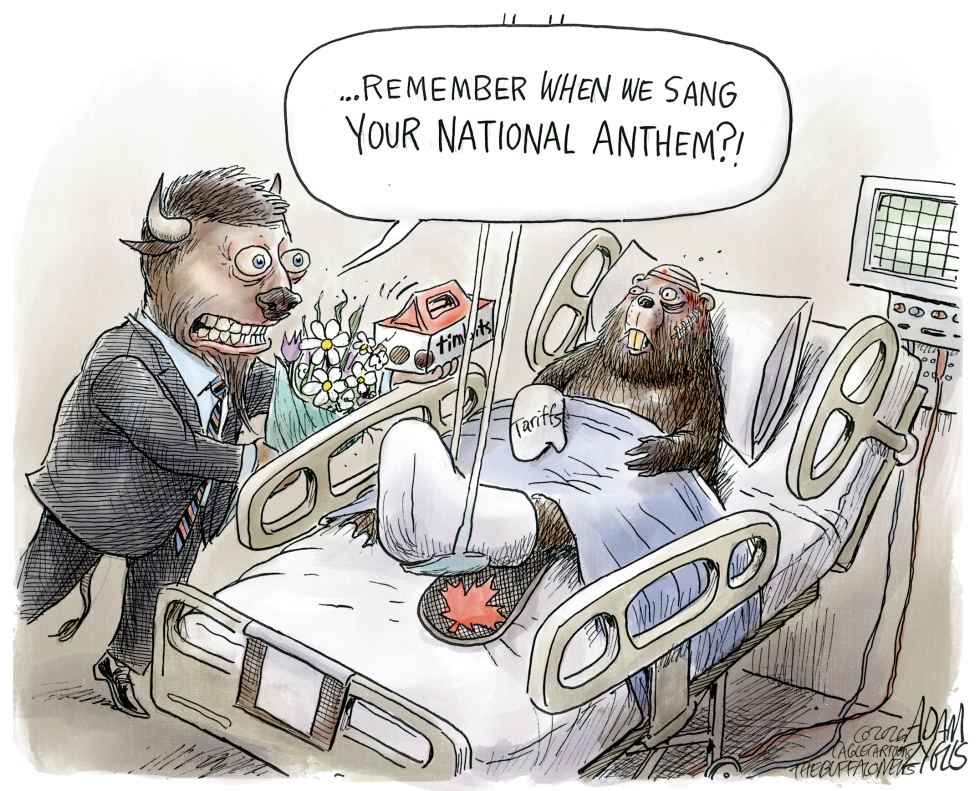
The cartoon depicts a suited bull figure at the bedside of an injured beaver wearing a hospital gown labeled Tariffs. The beaver lies in a hospital bed with a maple leaf emblem visible. A speech bubble from the bull references singing the national anthem. Medical equipment and a Tim Hortons box appear in the room. The image addresses ongoing tariff policies affecting US Canada trade relations as of the September 2026 publication date. The visual metaphor highlights economic harm to the Canadian side of the partnership while recalling past cooperative gestures between the two nations.
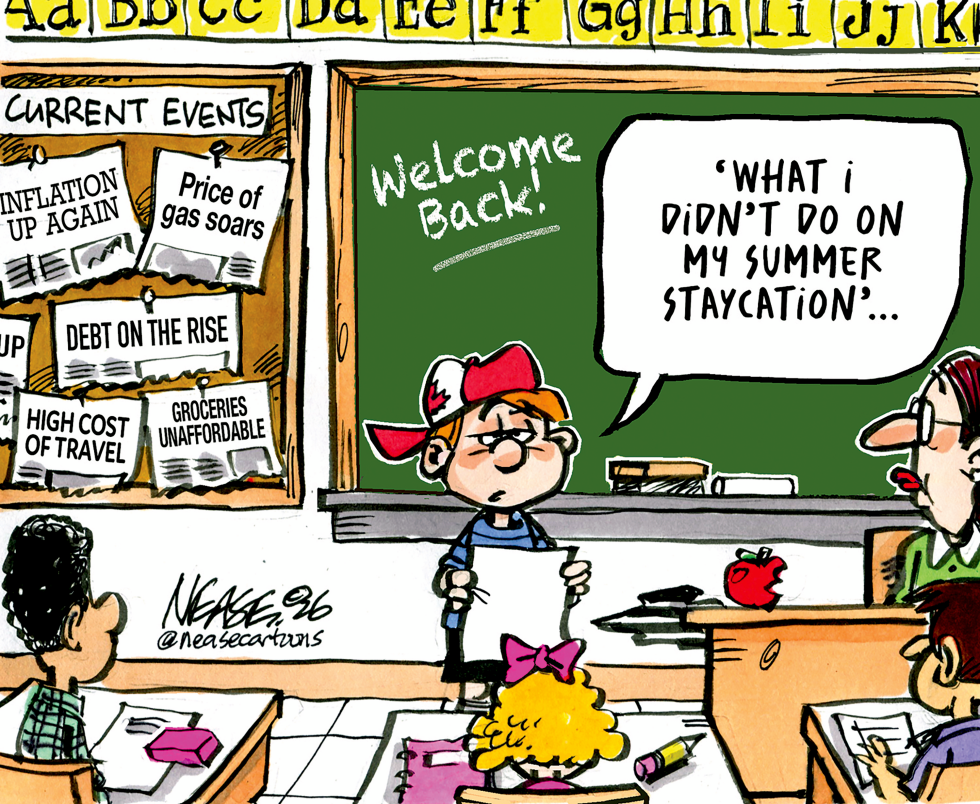
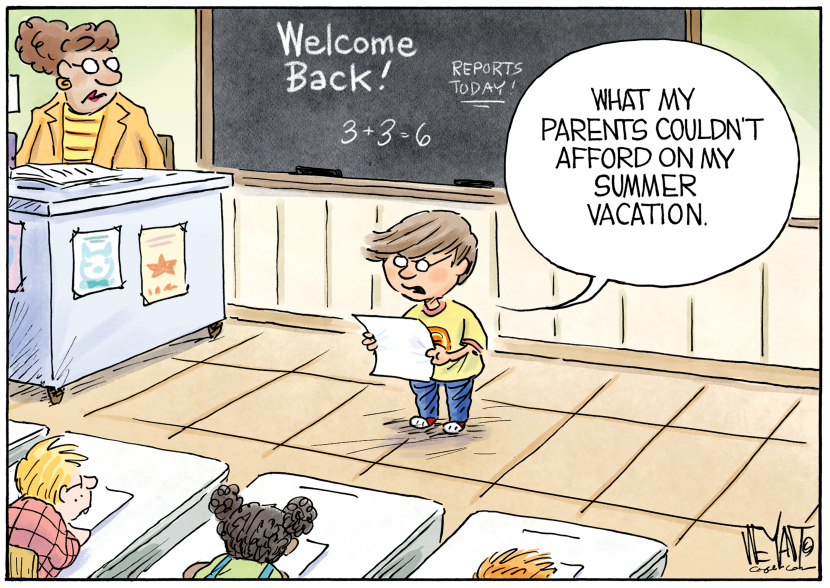
Rising inflation, gas prices, and household debt have made traditional summer vacations unaffordable for many families, leading to increased staycations as the new school year starts. The cartoon captures this cost-of-living squeeze through a classroom presentation on what students did not do over the break. It underscores how everyday expenses now dominate family decisions and limit leisure options.
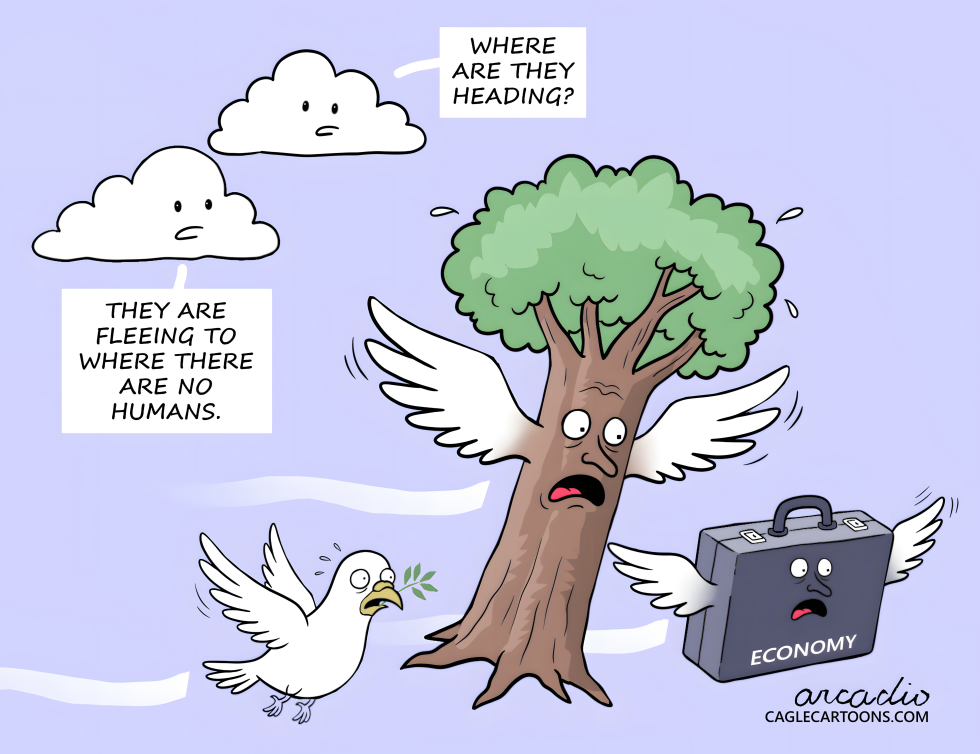
No single dated event anchors this cartoon, which addresses the ongoing dynamic of economic activity retreating from areas of heavy human environmental impact. The piece uses the visual of a winged briefcase labeled Economy fleeing alongside a concerned tree to highlight how unchecked human presence disrupts both natural systems and economic stability. It argues that reducing human interference allows nature to stabilize, indirectly benefiting long-term economic health by creating conditions where resources and peace can return.