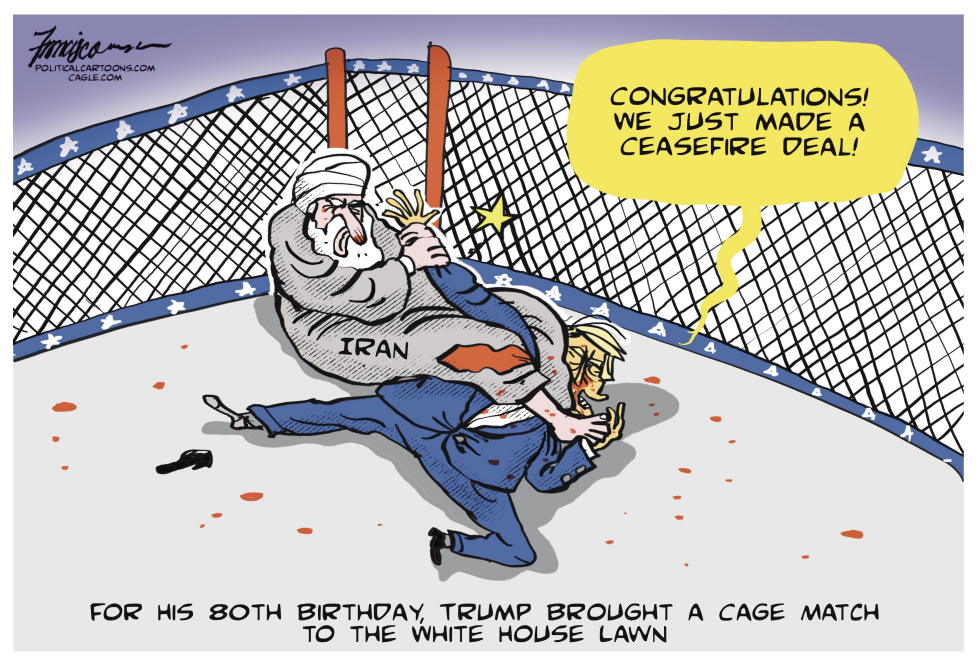
A cage match between the United States and Iran over a potential ceasefire deal has drawn attention amid ongoing Middle East tensions. The confrontation highlights the high stakes of direct engagement between the two nations. The piece portrays the encounter as a chaotic personal brawl rather than a measured diplomatic effort.
Arend van Dam's cartoon shows a gray battleship marked USA, complete with guns and missiles, driven by a figure in a suit at the wheel, as it goes over a waterfall between rocky cliffs under a blue sky. The image captures the essence of strategy failure in the Strait of Hormuz, tying into themes of Iran, ayatollahs, war, battleship mishaps, Middle East conflicts, oil, gas, energy, and economy. Such visuals often poke at misguided military moves, where the ship's plunge represents a dramatic downfall in strategic planning. The dry humor lies in the absurdity of a warship treating a strait like a river rapid, underscoring potential economic fallout from regional tensions. Cartoons like this thrive on clear, exaggerated metaphors that resonate with readers familiar with global news.
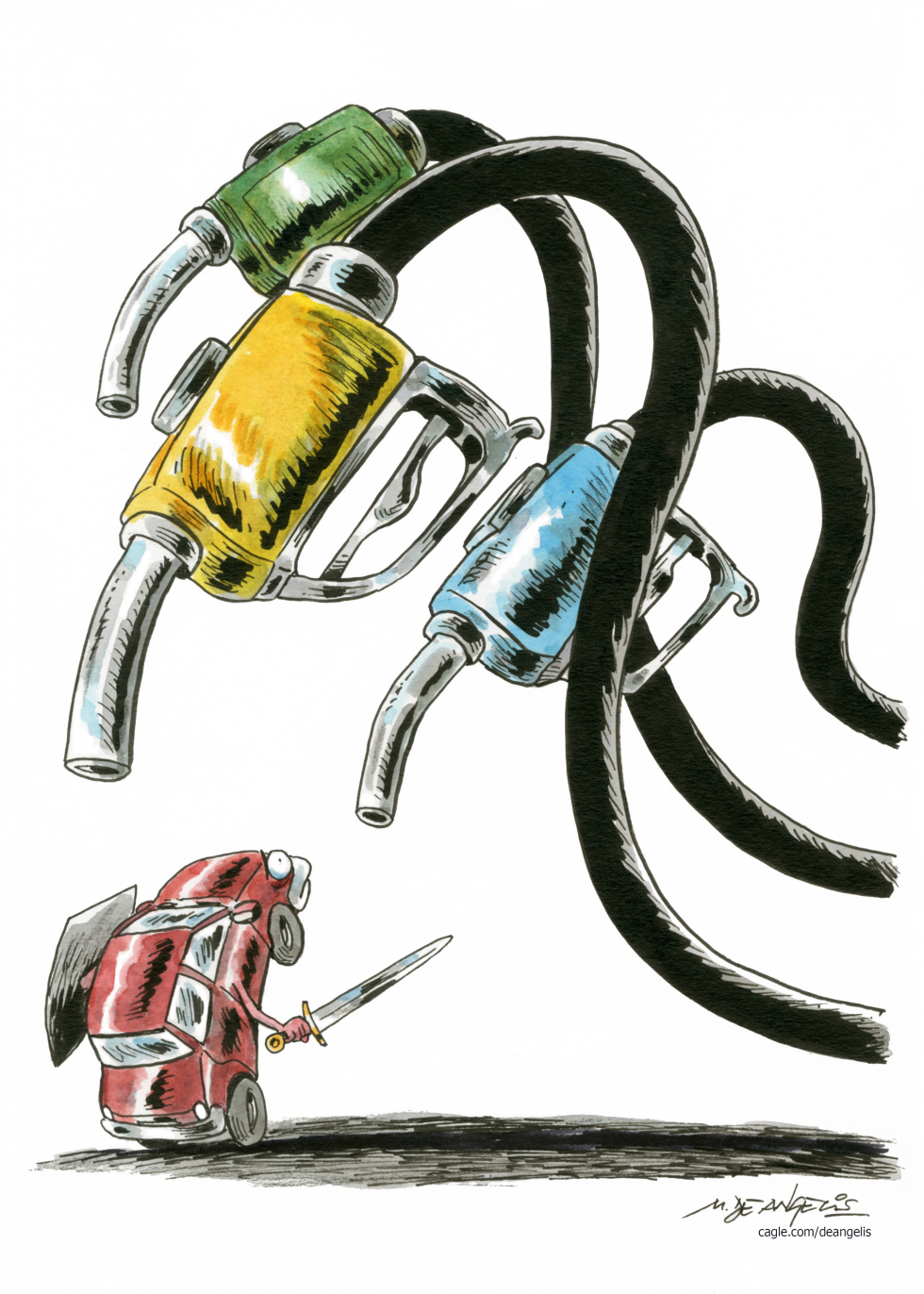
Marco De Angelis draws a clever twist on the ancient HYDRA myth, where a plucky red CAR, sword in hand, squares off against a beastly creature formed by three FUEL pump nozzles—green, yellow, and blue—attached to writhing black hoses. The scene plays on the endless battles drivers face with soaring OIL PRICES and FUEL costs, tying into broader ECONOMY woes. Tags like TRANSPORTATION, TRADE, WAR, CRISIS, IRAN, USA, and HORMUZ hint at real-world tensions in the Strait of Hormuz, where geopolitical strife disrupts global OIL supplies. It's a sharp commentary on how these issues regenerate like hydra heads, making every victory temporary in the fight against economic pressures.
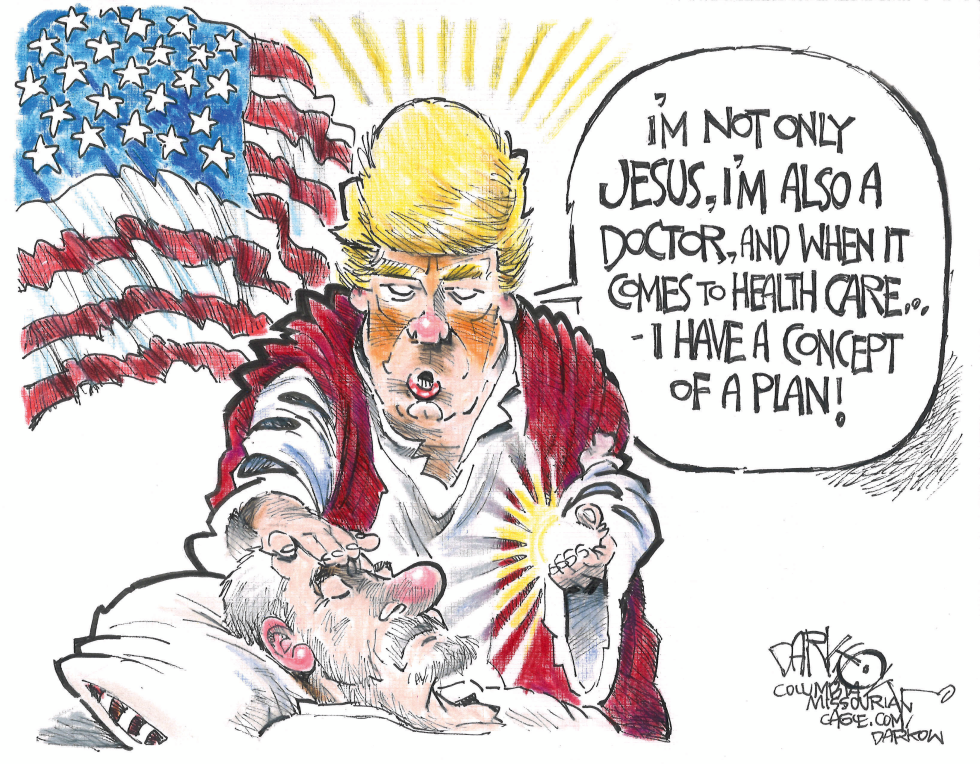
John Darkow's cartoon shows a blonde-haired figure resembling Donald Trump, clad in a red cape and white garment, extending a glowing hand toward an elderly man lying in bed. An American flag waves in the background with radiant beams from above. The speech bubble declares the figure as both Jesus and a doctor, boasting a concept of a health care plan. This setup highlights satirical elements in political imagery. Tags like donald trump political cartoon, trump health care plan satire, jesus doctor parody cartoon, american flag political humor, trump messiah complex illustration, and health care policy cartoon fit the visible components.
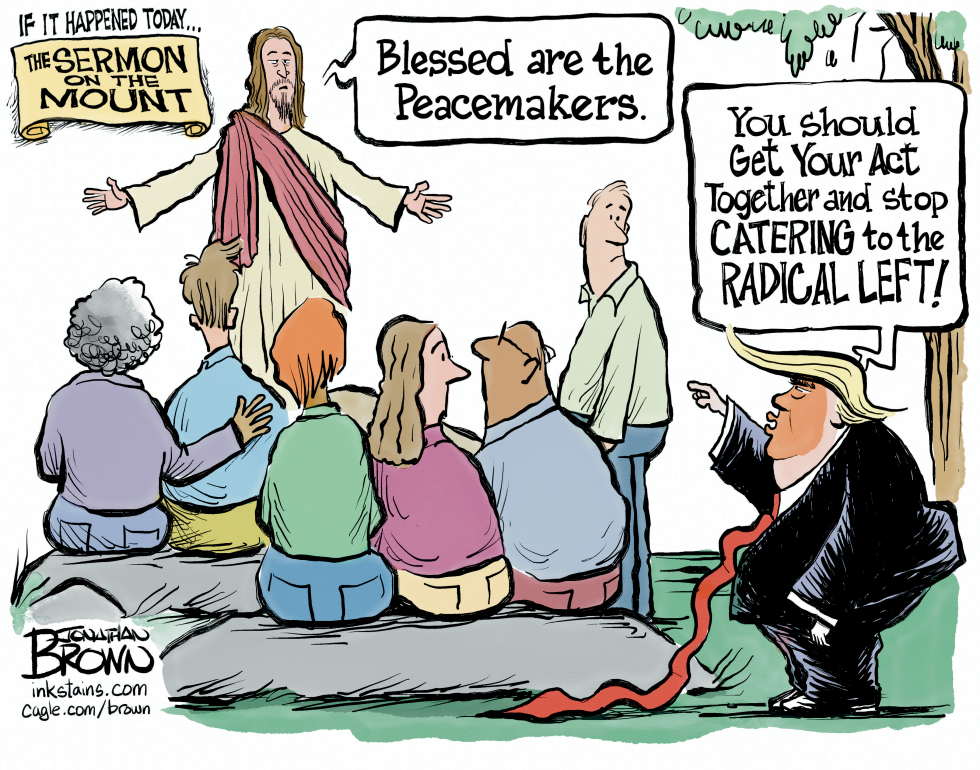
The cartoon depicts Jesus delivering the Sermon on the Mount, arms outstretched, proclaiming 'Blessed are the Peacemakers.' A banner reads 'If It Happened Today... The Sermon on the Mount.' A crowd sits on the ground, listening. A figure resembling Donald Trump, with distinctive hair and suit, points at Jesus and shouts, 'You Should Get Your Act Together and stop CATERING to the RADICAL LEFT!' The scene includes simple background elements like grass and a tree. Tags like war, peace, peacemakers, Jesus, and politics highlight the blend of biblical imagery with modern political commentary. This setup creates a direct contrast between messages of peace and partisan rhetoric.
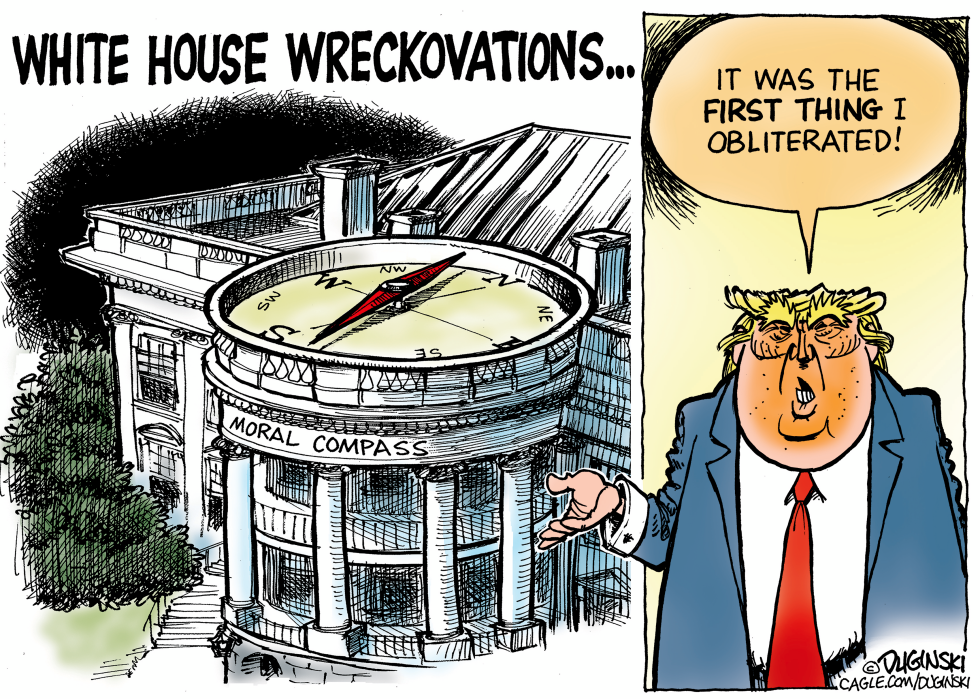
Paul Duginski's cartoon shows a caricatured Trump gesturing proudly while speaking about obliterating the moral compass, a large dome-like structure labeled 'Moral Compass' with directional arrows, placed on the White House roof. The title 'White House Wreckovations' plays on renovations, suggesting destructive changes. Tags including president, MAGA, White House, demolition, morality, ethics, obliteration, Republicans, and Iran war frame the image as a critique of ethical standards in politics. The scene captures a dark night setting with part of the building and trees visible, emphasizing the theme of moral destruction in Washington.
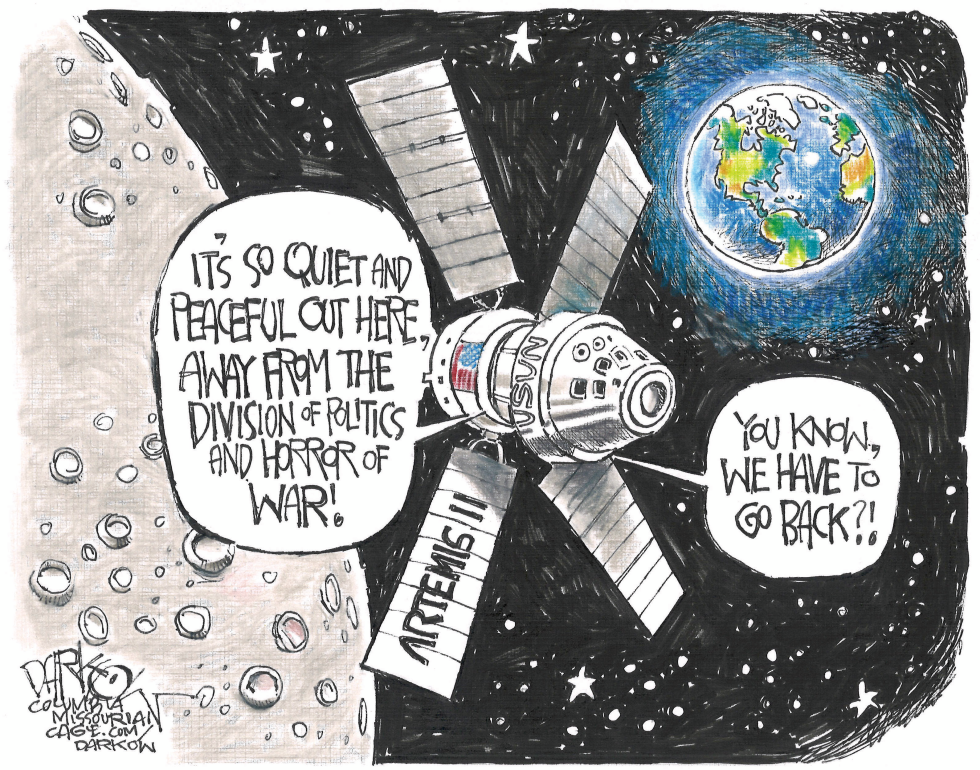
This Daryl Cagle political cartoon analysis features the Artemis II spacecraft floating in serene space, with Earth glowing in the background and the moon nearby. The left speech bubble extols the quiet peace away from division of politics and horror of war, while the right one resignedly notes the need to go back. It's a satirical cartoon on politics and war division, poking fun at how space exploration escaping earthly conflicts offers temporary respite. The NASA Artemis program humor illustration underscores the irony of advanced space missions contrasting with unresolved human divisions on Earth. Through this humorous take on returning to political division, the cartoon cleverly comments on the allure of peaceful space vs chaotic Earth without delving into specifics.
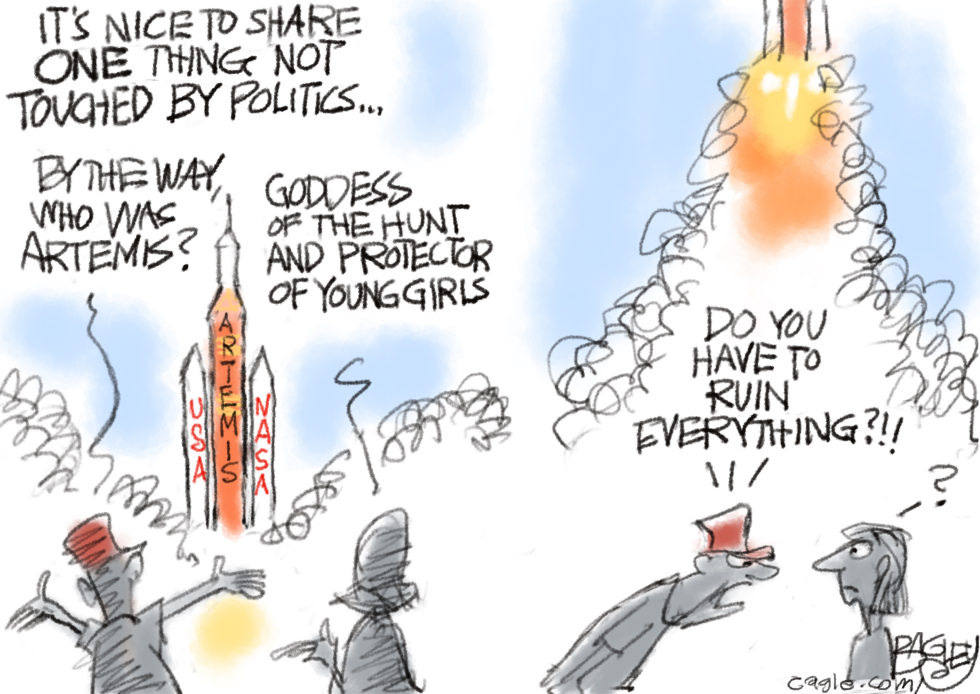
This political cartoon features a launching rocket labeled Artemis, SLS, NASA, and USA, with overlaid text praising one thing untouched by politics before asking about the goddess Artemis, described as goddess of the hunt and protector of young girls. A figure exclaims frustration at ruining everything, satirizing how even space missions get dragged into cultural debates. The irreverent sketch uses humorous figures with red hats to poke at over-politicization in science, blending mythology with modern rocketry in a witty critique. Tags like Artemis rocket launch political cartoon, NASA SLS Artemis mission satire, and politics invading science editorial cartoon underscore the cartoon's sharp insight into societal divisions spilling into apolitical realms like space exploration politicized cartoon.
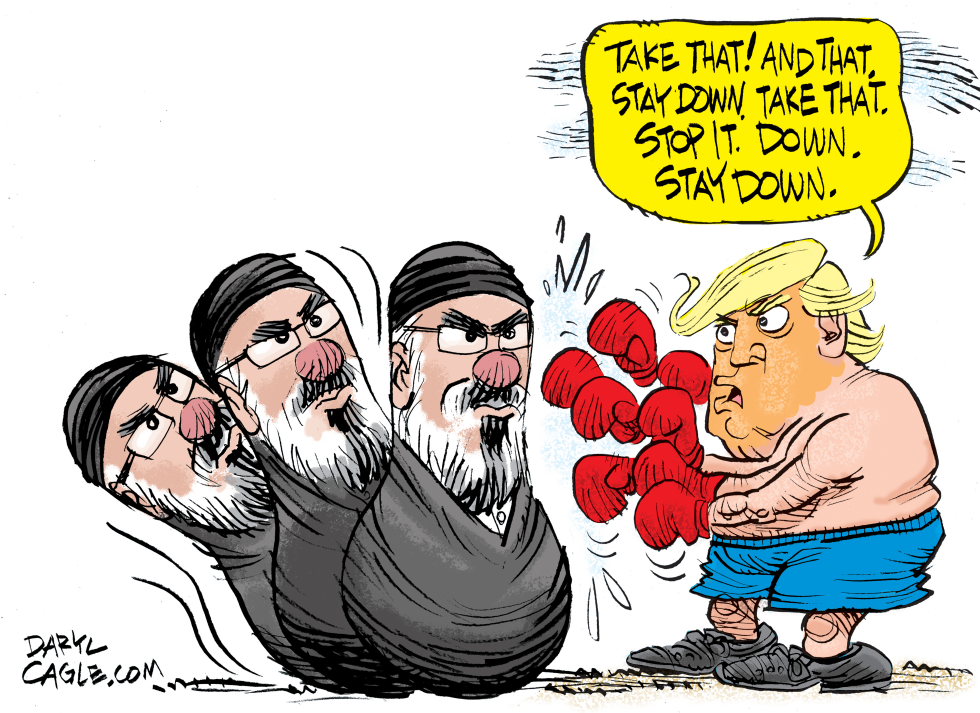
The cartoon shows Donald Trump, shirtless and wearing boxing gloves, repeatedly striking a large bop bag shaped like an Iranian cleric. Multiple faces of bearded men in turbans appear on the bag, which rebounds after each punch. A speech bubble captures Trump's frustrated commands for the figure to stay down. The image responds to reports of a new Iranian supreme leader and U.S. efforts against the regime in early 2026. It highlights the perceived futility of direct confrontations with Iran's leadership structure.
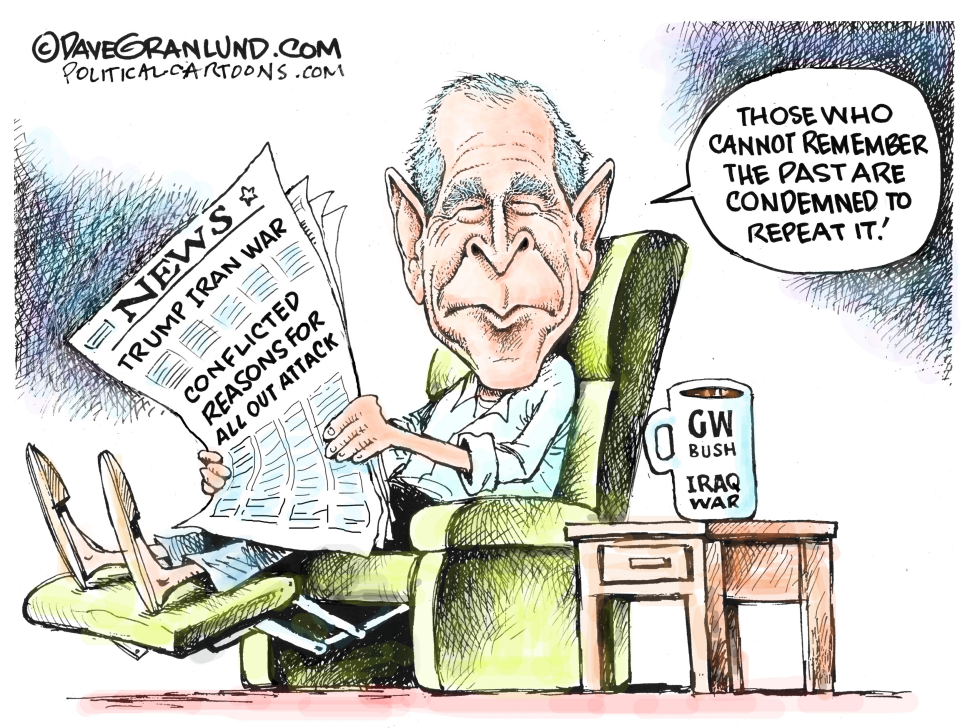
Dave Granlund's political cartoon cleverly lampoons the Trump Iran conflict by portraying a smug, elf-eared figure—possibly a nod to forgetful policymakers—lounging with a newspaper screaming 'Iran War' headlines, while clutching a mug emblazoned with 'GW Bush Iraq War.' The speech bubble twists George Santayana's famous quote on historical amnesia, warning that those who cannot remember the past are condemned to repeat it. This satirical jab underscores the eerie parallels between Bush's ill-fated Iraq invasion and Trump's bellicose posturing toward Iran, blending humor with sharp insight into geopolitical folly. Tags like Iraq War repetition and Trump Iran conflict amplify its relevance, making it a viral-ready critique of endless war cycles.
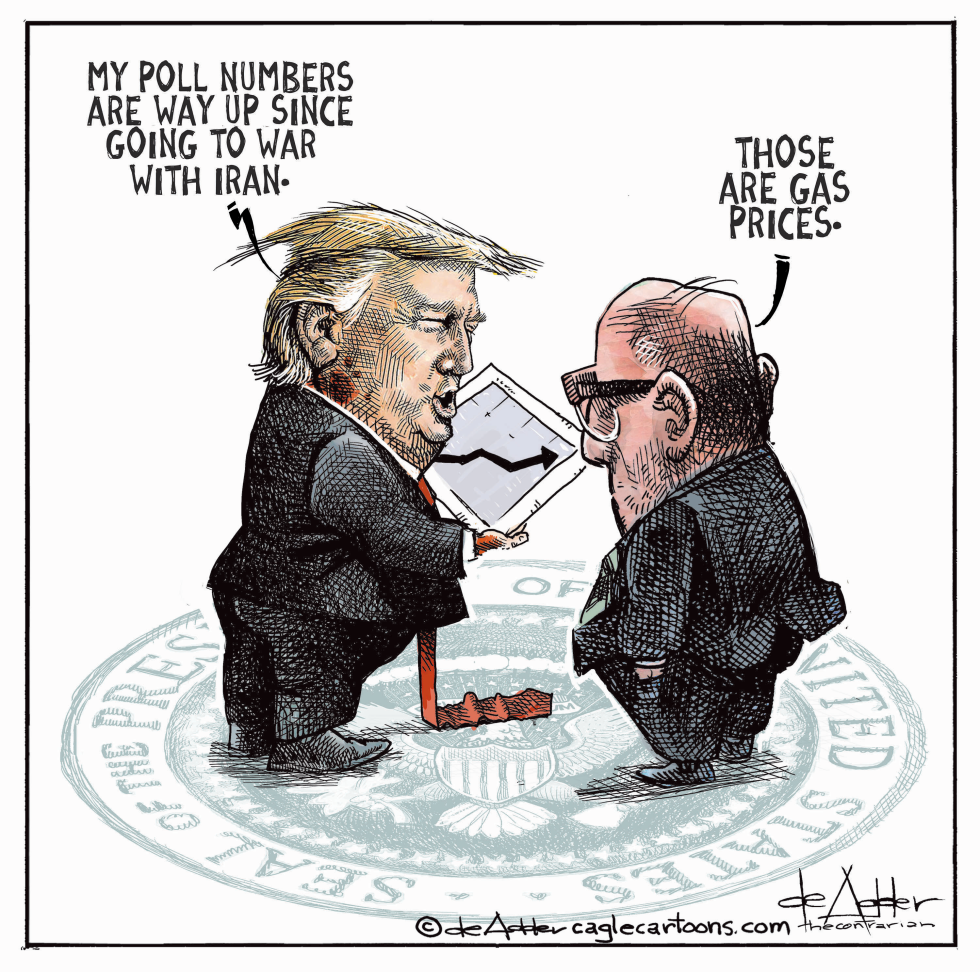
This sharp political cartoon by Michael de Adder captures Donald Trump triumphantly holding a chart of upward trends, claiming his poll numbers have skyrocketed since going to war with Iran. However, a bespectacled Dick Cheney corrects him, revealing those are actually gas prices soaring. The satire highlights the ironic consequences of Middle East conflict on the US economy, blending humor with commentary on presidential approval ratings tied to foreign policy blunders. Incorporating elements of US politics, oil prices, and war economy, the image stands on the presidential seal, emphasizing official folly. It's a witty jab at how leaders might misread economic fallout as personal gains, perfect for editorial discussions on satire and current events.
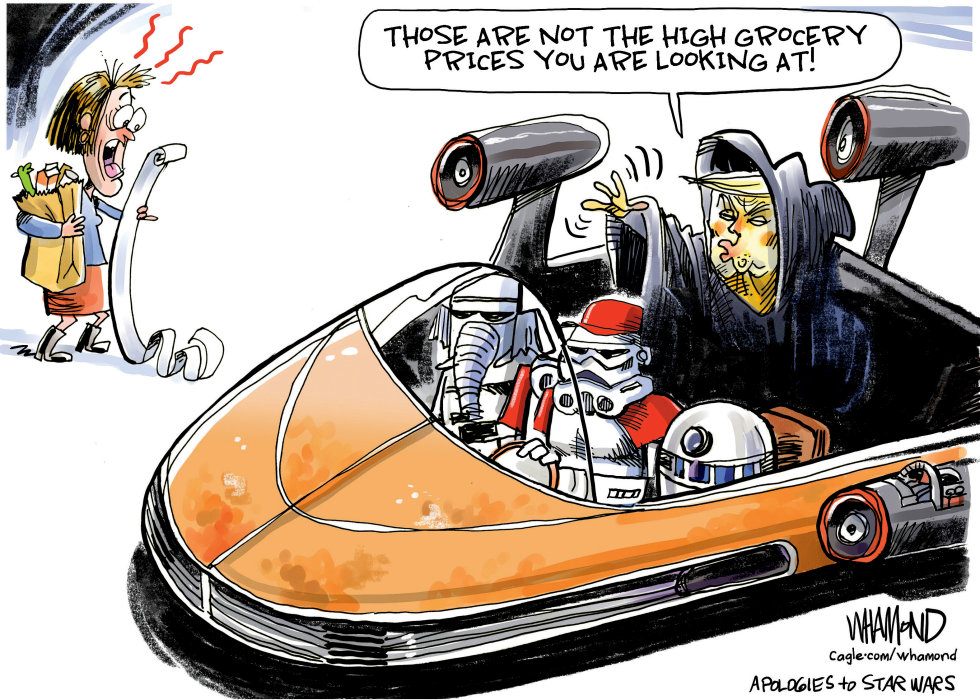
The image shows a shopper with groceries confronting a denial of high prices from a figure resembling the president. The scene references a film franchise to illustrate ongoing debates over inflation and tariffs. Recent policy shifts on food imports have drawn attention to consumer costs. Families continue to report pressure from elevated bills despite official statements. The visual ties the denial directly to visible price data on a long receipt.
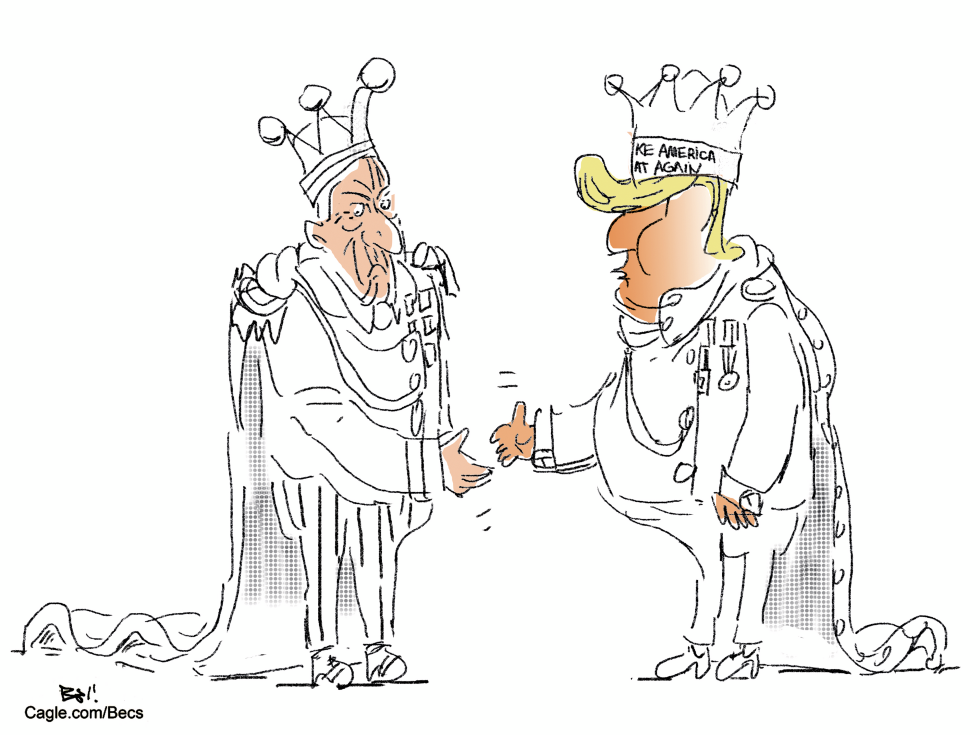
This political cartoon captures a moment of satirical diplomacy between caricatures of King Charles and Donald Trump, both donned in ostentatious royal garb. The Trump figure sports a crown emblazoned with 'Ke America At Again,' a clear nod to his famous slogan, while shaking hands with the stern-faced King Charles. Set against a simple background, the artwork highlights themes of US-England relations, Europe-US tensions, and the pomp of leadership. The dry humor underscores the absurdity of political ostentation in the reign, blending American bravado with British tradition in a straightforward line drawing by Becs. Tags like Donald Trump Administration, King Charles, and ostentation in the reign frame this piece as timely commentary on transatlantic ties.
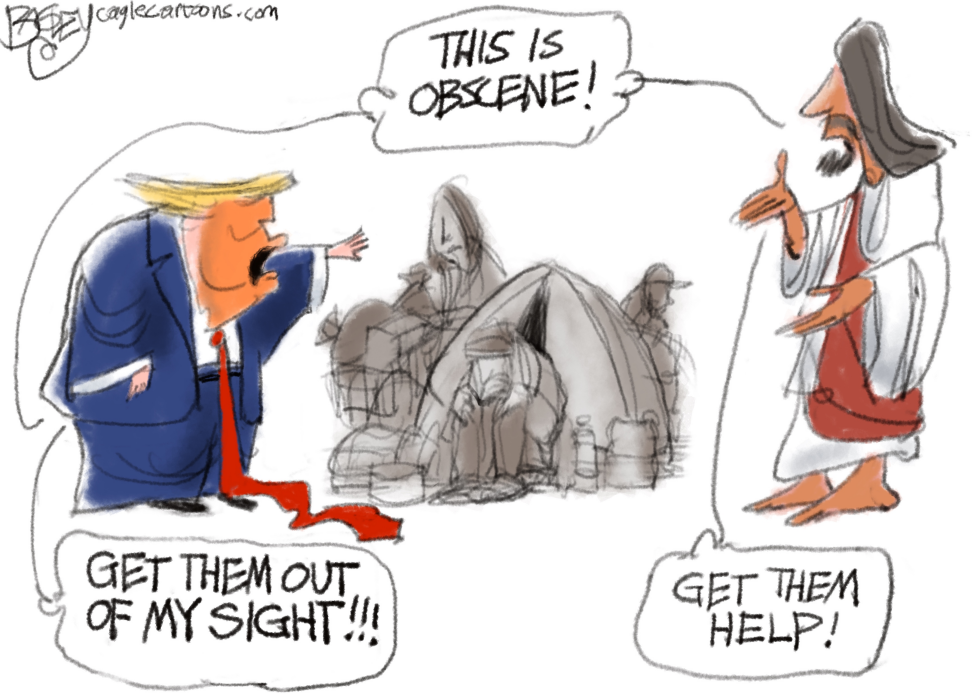
Pat Bagley's latest piece captures a stark contrast in this Trump homelessness cartoon, where a caricature in a blue suit and red tie gestures furiously at a cluster of makeshift tents and huddled figures, declaring the scene obscene and demanding their removal. On the right, a long-haired, bearded man in a white robe and red sash extends a hand, advocating to get them help instead. The homeless crisis political humor underscores differing approaches to urban plight, with the Trump Jesus contrast cartoon highlighting themes of expulsion versus empathy. Such editorial cartoon homelessness policy works often spark debate on societal responses, blending sharp lines and simple composition for maximum impact in satirical take Trump compassion.