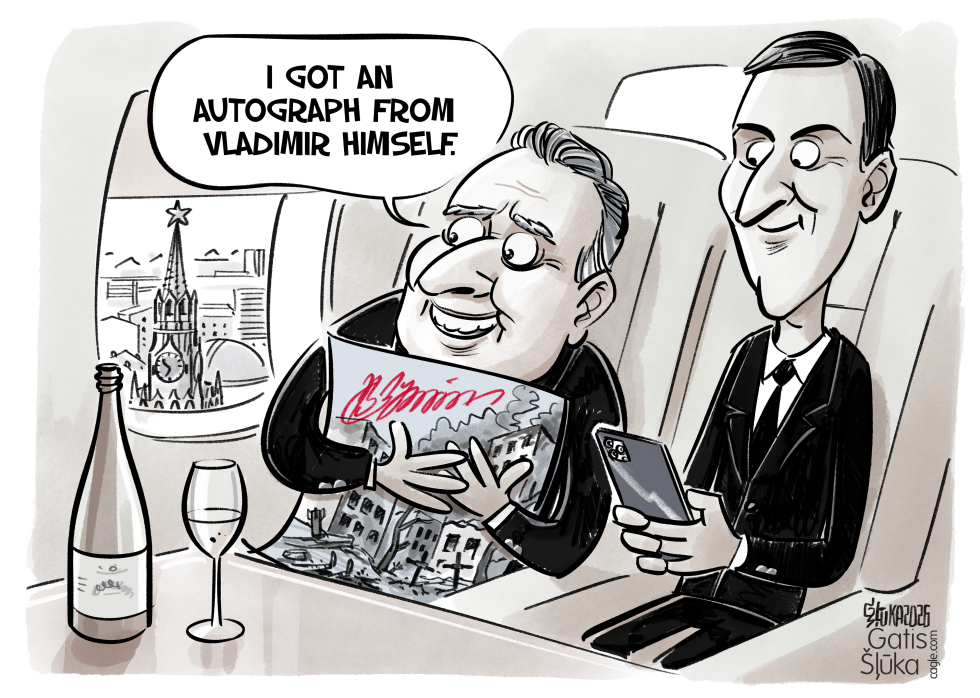
The cartoon depicts a politician on an airplane excitedly showing a colleague an autograph from Vladimir Putin on a book or document. The speech bubble reads that the autograph came from Vladimir himself. A bottle of wine and glass sit on the table, with a view of a city featuring a star-topped tower outside the window. The second man smiles while holding a phone. Published on September 7, 2026, the image comments on political figures maintaining or displaying ties to Russia despite international strains. The visual emphasizes the politician's enthusiasm for the souvenir as a point of pride.
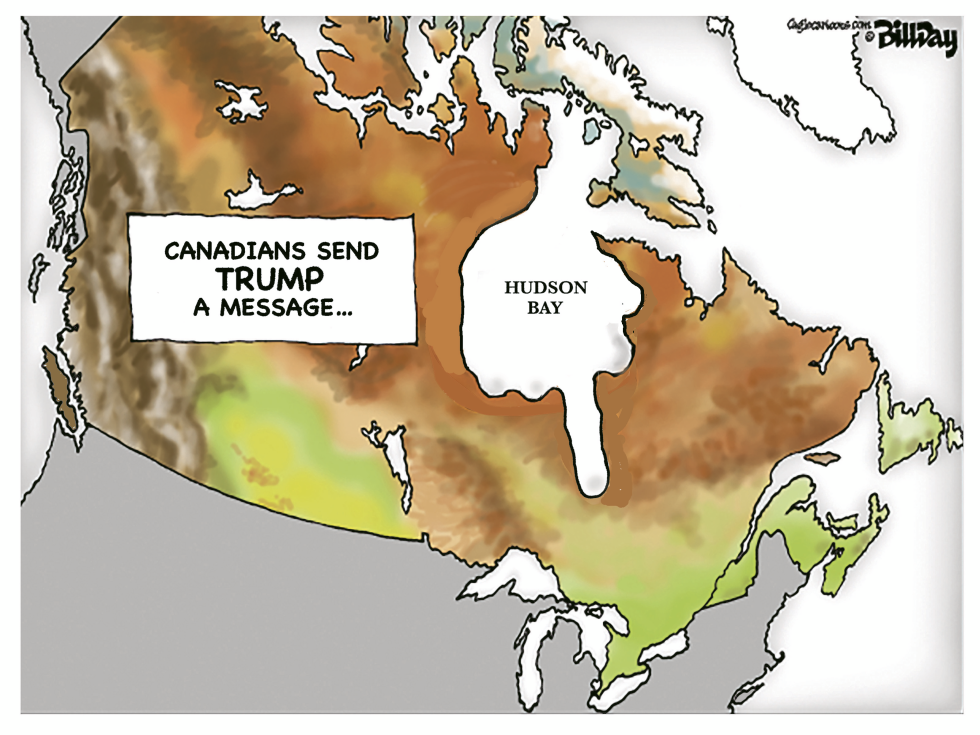
On September 3 2026 Canadians used a map of their country to send a pointed message to President Donald J. Trump. The image highlights Hudson Bay whose shape forms a recognizable rude gesture aimed southward. The editorial points to ongoing tensions in Canada US relations and uses geography as the vehicle for public sentiment. The piece criticizes Trump policies that have strained ties with Canada and portrays the map as a direct rebuke from Canadian citizens.
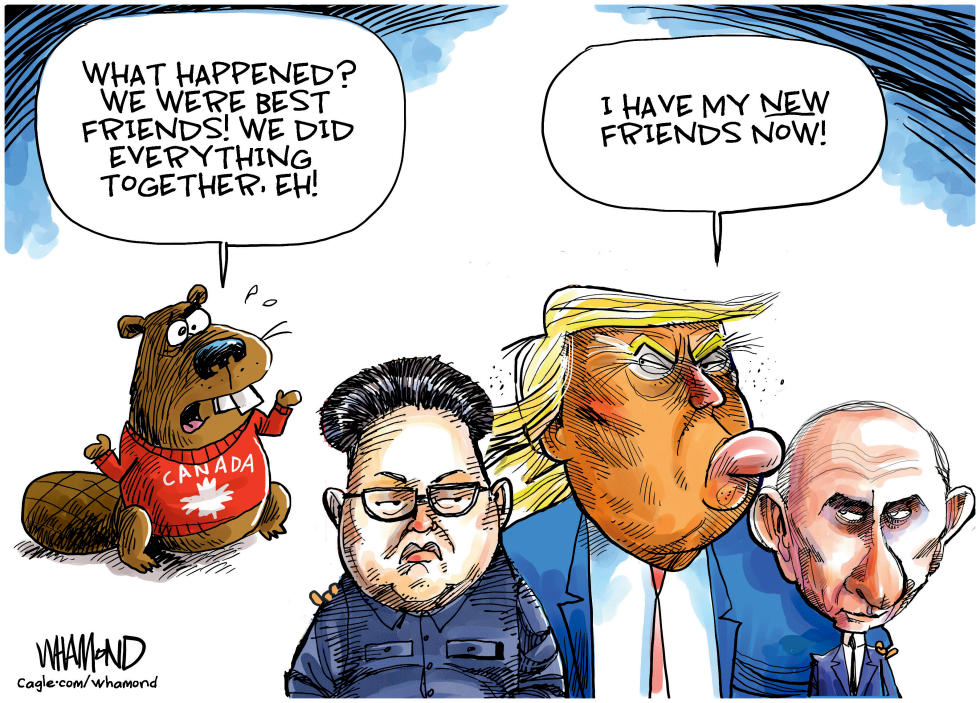
President Trump has redirected diplomatic priorities toward closer ties with Russian President Vladimir Putin and North Korean leader Kim Jong Un. Traditional partners such as Canada now face reduced engagement. The move reflects a broader realignment in U.S. foreign policy that favors authoritarian counterparts over longstanding democratic allies. Observers note the shift carries risks for trade, security cooperation, and international norms. The editorial position criticizes the pivot as shortsighted and damaging to established relationships.
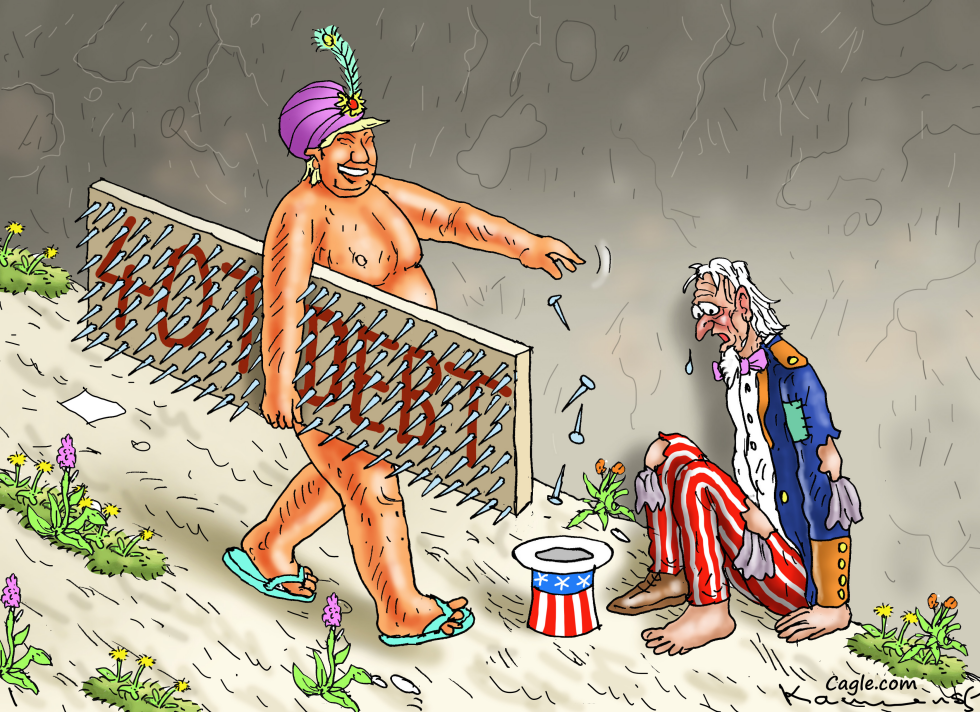
National debt has climbed toward 40 trillion dollars under the current administration. The figure of Donald Trump appears in the role of a fakir performing a bed-of-nails act while Uncle Sam sits nearby in evident distress. The image underscores concerns that fiscal policies have left the federal government in a precarious position with little relief in sight.
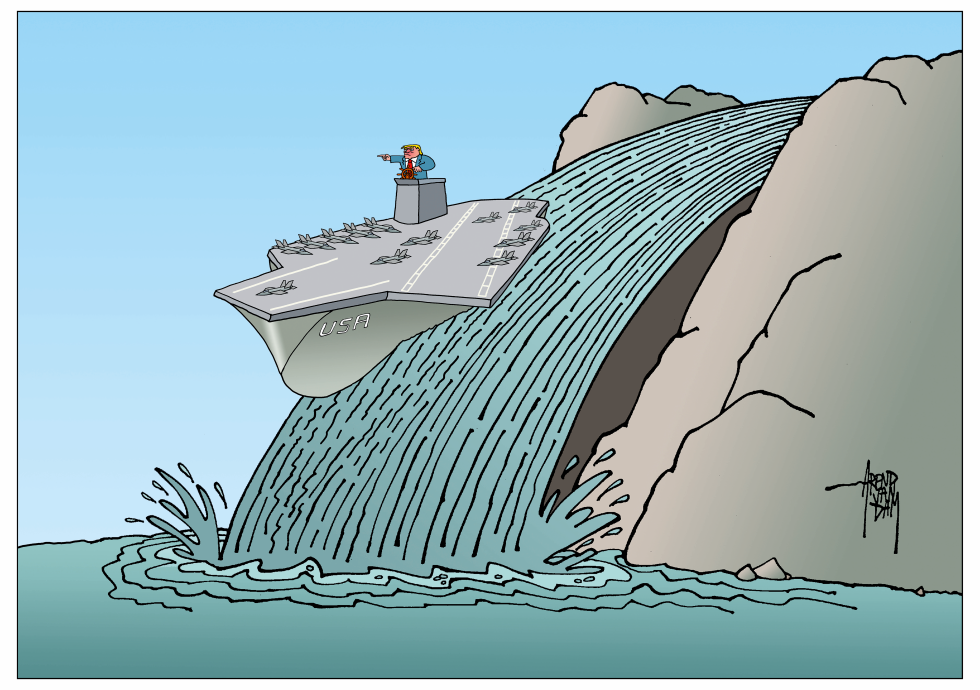
Donald Trump directs the course of the United States as the nation faces mounting challenges in 2026. The president holds authority over major policy decisions affecting the economy, foreign relations, and domestic stability. Critics argue his approach risks driving the country into deeper difficulties without clear safeguards. The image frames this leadership as steering a massive vessel directly toward disaster.
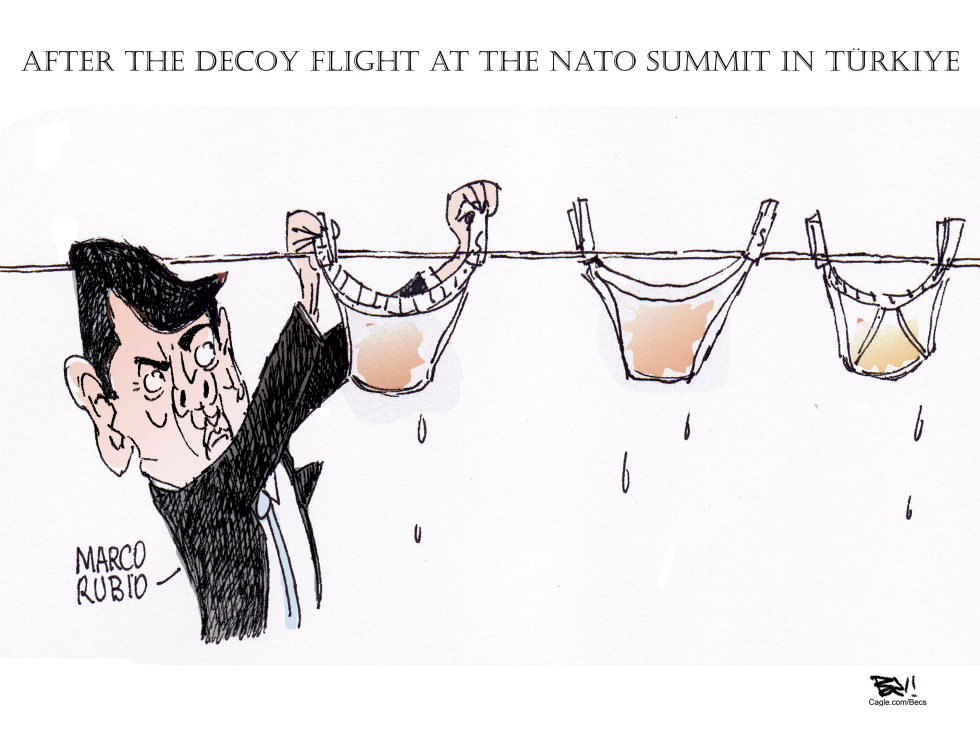
A decoy flight during the NATO summit in Türkiye forced senior U.S. officials including Marco Rubio into damage control over security and optics. The episode highlighted vulnerabilities in summit logistics and personal exposure for attendees. The piece portrays the episode as an embarrassing cleanup task for Rubio.
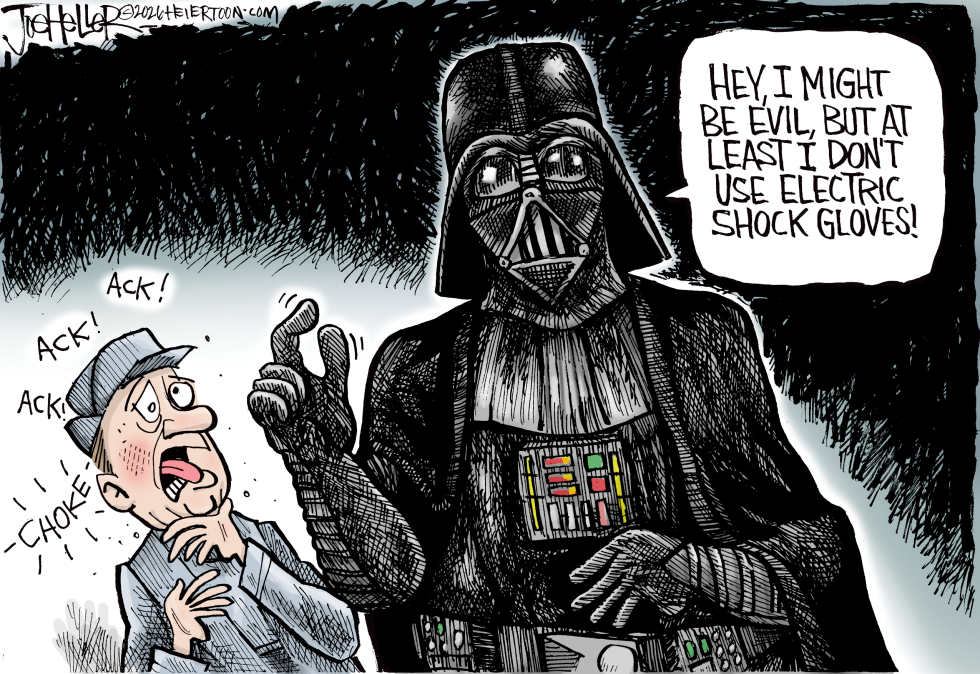
Public discussion continues over the use of electric shock gloves in security and law enforcement settings. Critics argue the devices risk excessive force and injury during confrontations. Darth Vader's stance in the piece frames the tools as crossing a line that even a fictional villain avoids. The editorial position holds that such methods undermine claims of restraint and invite scrutiny on their necessity and oversight.
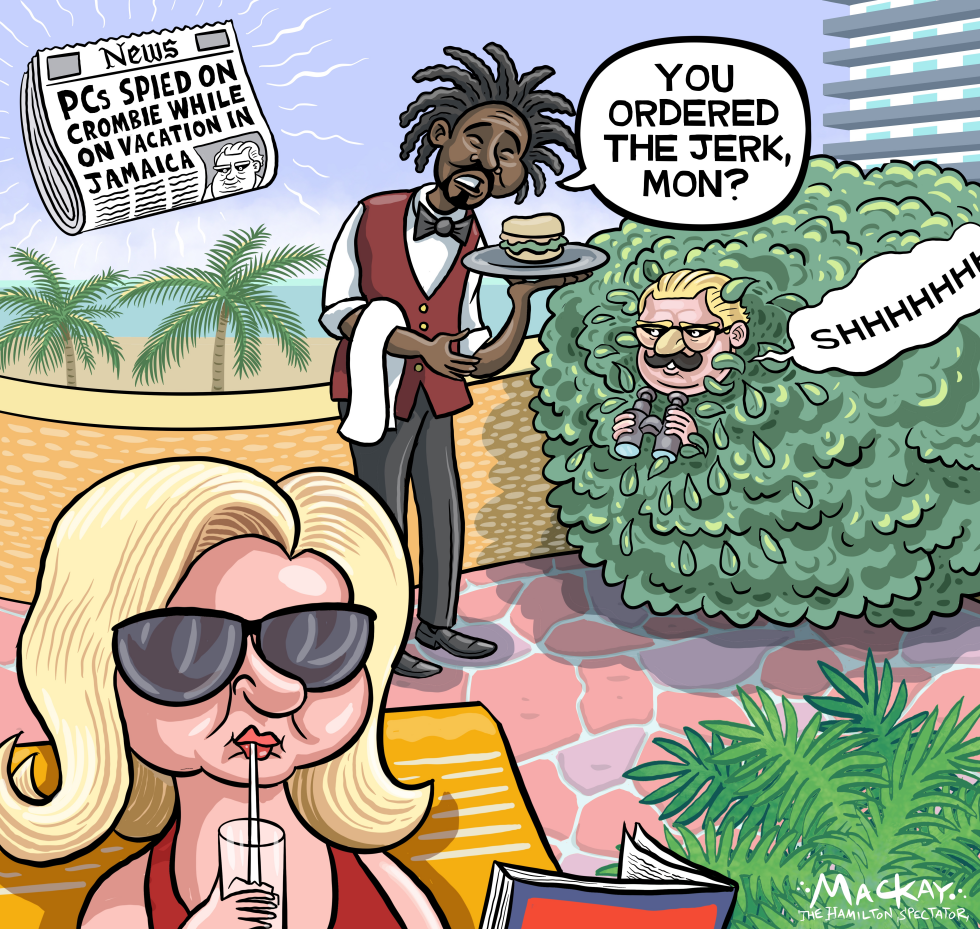
Ontario Progressive Conservative leader Doug Ford faces accusations of directing surveillance on Liberal rival Bonnie Crombie during her Jamaica vacation. Reports indicate party operatives monitored her activities at a resort, prompting opposition outrage over privacy violations. The episode highlights tensions between the governing PCs and opposition parties ahead of future elections. The cartoon portrays Ford as comically inept in his hiding spot, underscoring the absurdity and potential overreach of the alleged operation.
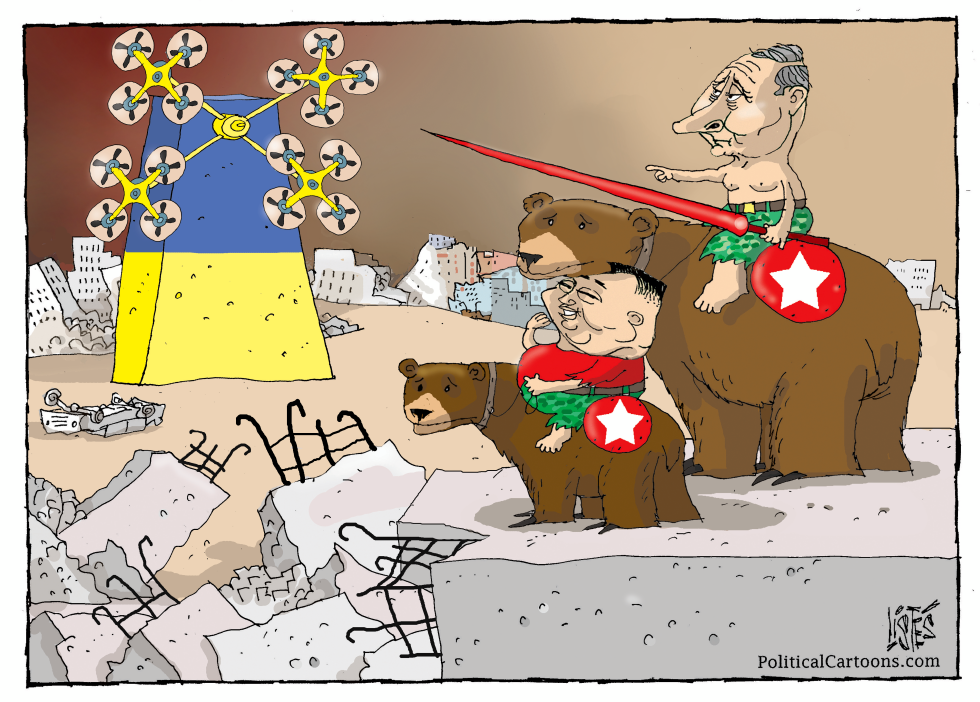
Russian President Vladimir Putin and North Korean leader Kim Jong-un coordinate military support involving drones and personnel in the ongoing Ukraine conflict. The partnership raises concerns over expanded battlefield capabilities and prolonged fighting. The piece portrays their joint advance as a direct strike on Ukrainian infrastructure and sovereignty.
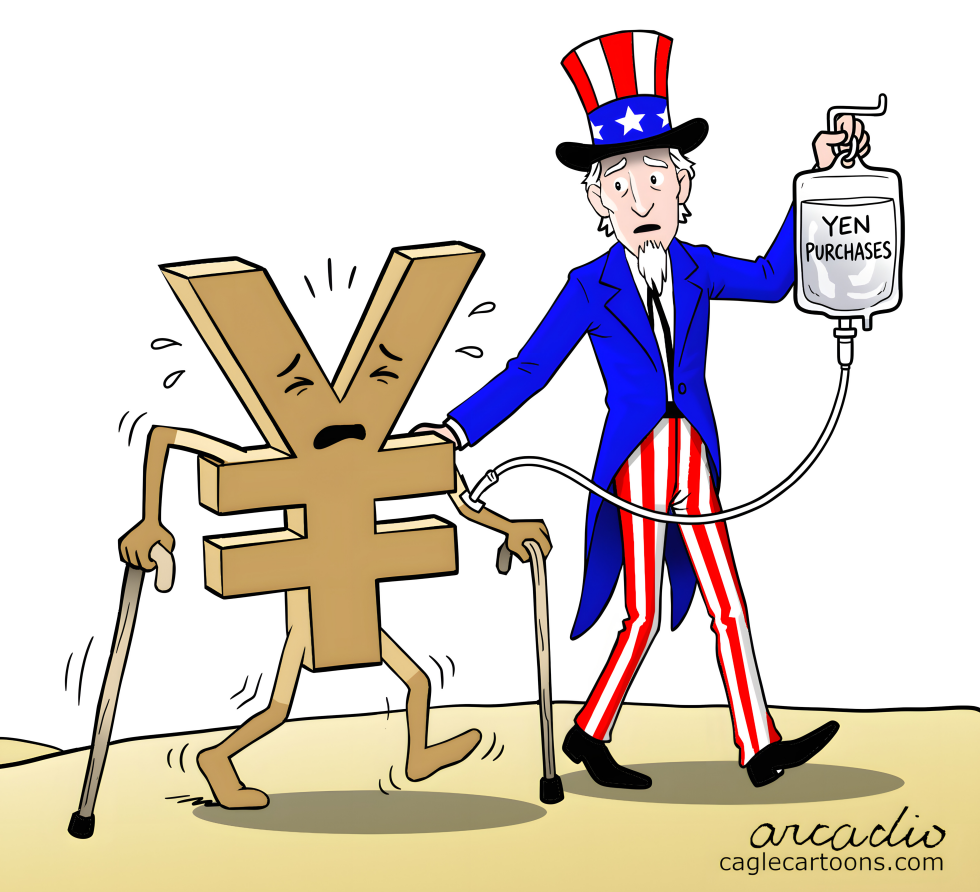
The United States has moved to support the Japanese yen through direct purchases amid signs of currency weakness. This action reflects ongoing efforts to stabilize exchange rates and ease pressure on Japan's economy. The intervention highlights the interconnected nature of global financial markets and the role major economies play in currency defense. The piece portrays the support as a necessary but concerned response to persistent economic fragility.
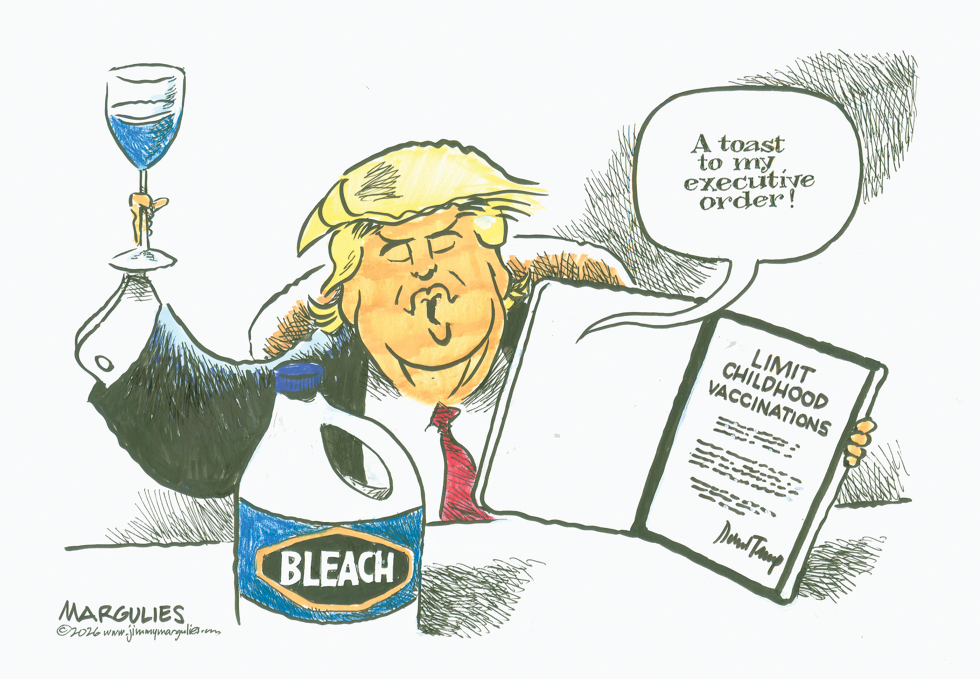
President Donald Trump signed an executive order limiting childhood vaccinations on or around August 2026. The move drew immediate attention for its potential impact on public health access and immunization rates nationwide. Critics argued the policy could increase disease risks for children while supporters framed it as protecting parental choice. The editorial uses the bleach toast imagery to critique the decision as reckless and disconnected from established medical guidance.
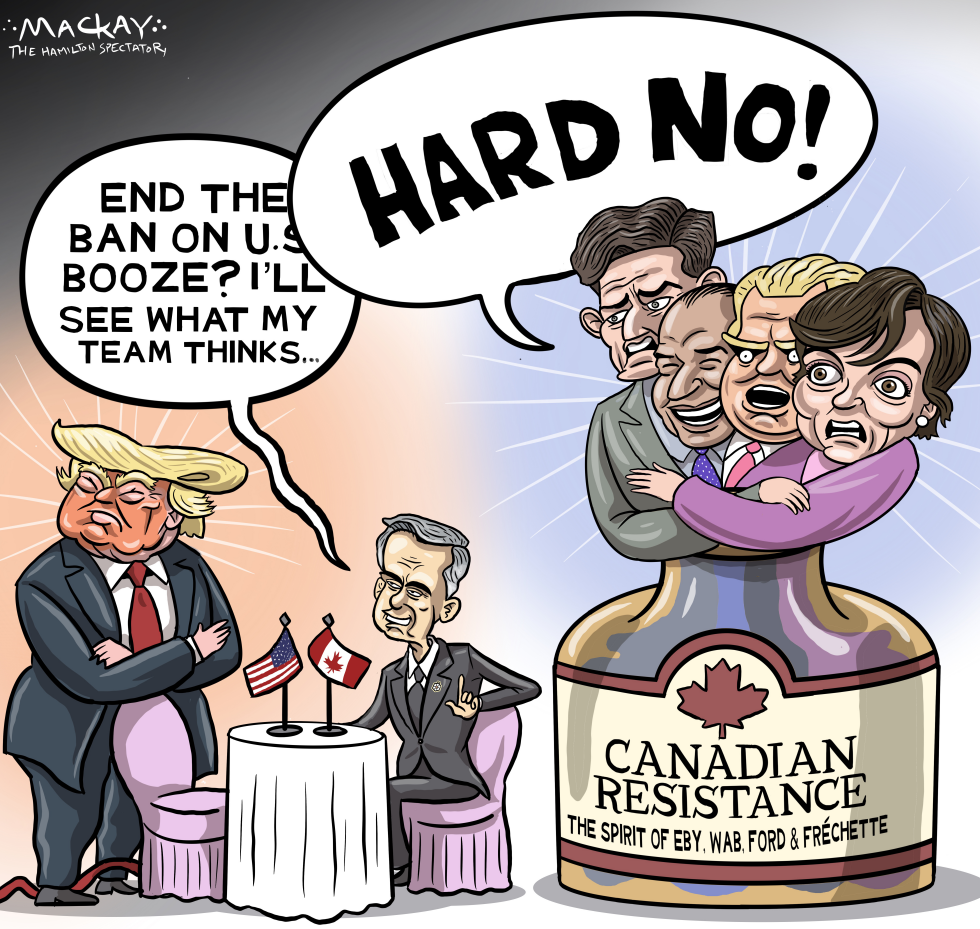
Donald Trump signaled openness to ending a ban on US alcohol imports into Canada during a meeting with Canadian officials. Provincial leaders including David Eby and Doug Ford responded with unified opposition. The cartoon portrays the premiers as a collective force of resistance and shows Trump deferring the decision to his team.
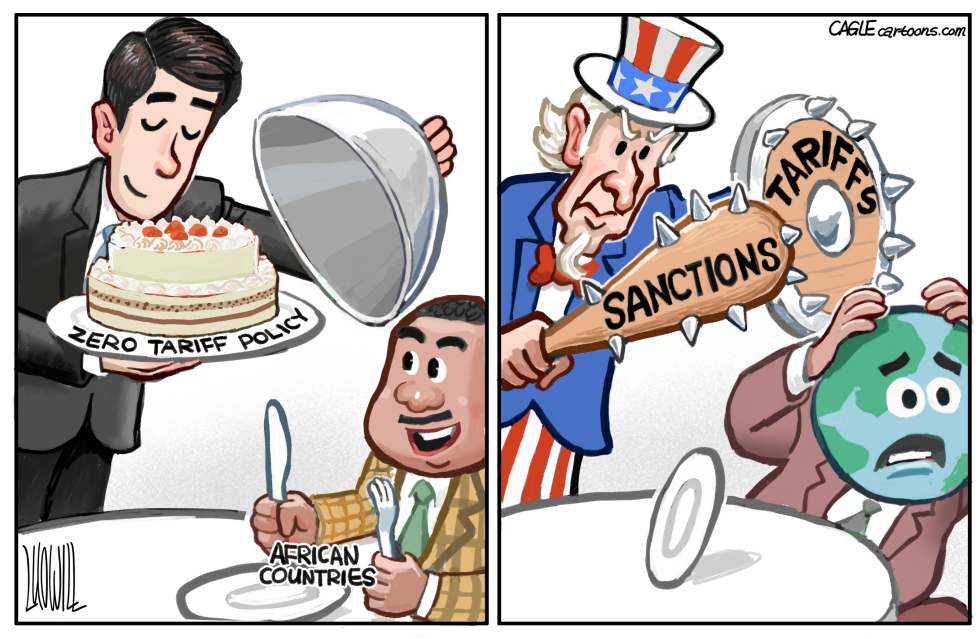
The United States has extended a zero-tariff policy offer to African nations amid ongoing global trade tensions. This move stands in contrast to simultaneous use of tariffs and sanctions against other trading partners. The policy highlights selective economic engagement by Washington. The editorial position criticizes the inconsistency between the overture to Africa and the punitive approach applied more broadly.
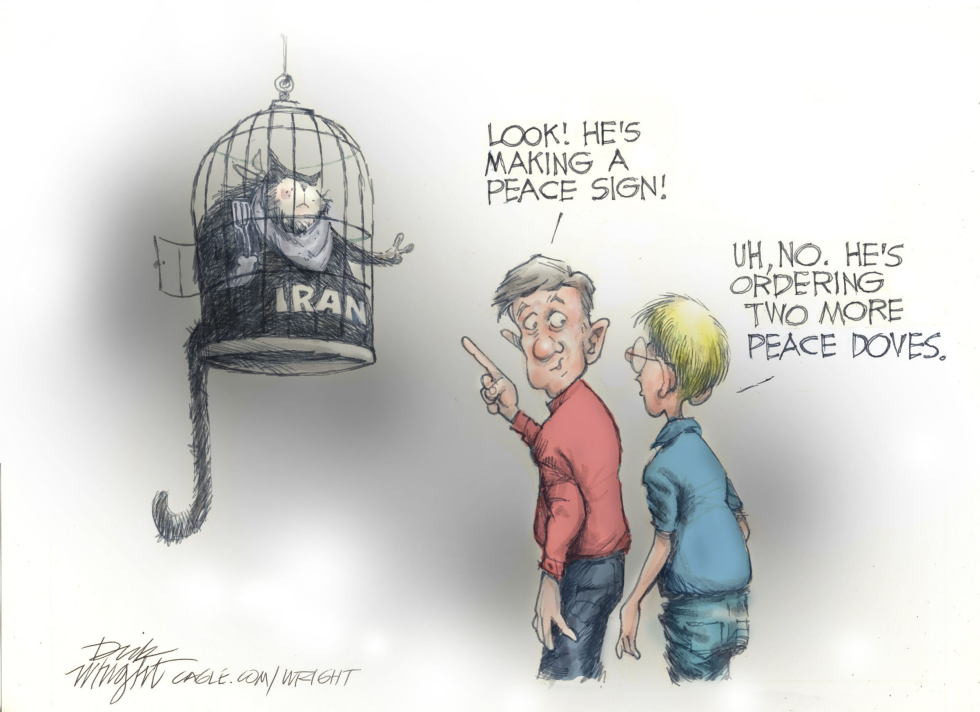
Iran continues to project peaceful intentions while advancing its military capabilities. Recent diplomatic overtures have been met with skepticism from observers who note ongoing weapons development. The piece argues that Iran's gestures are being misinterpreted as peaceful when they signal further aggression.
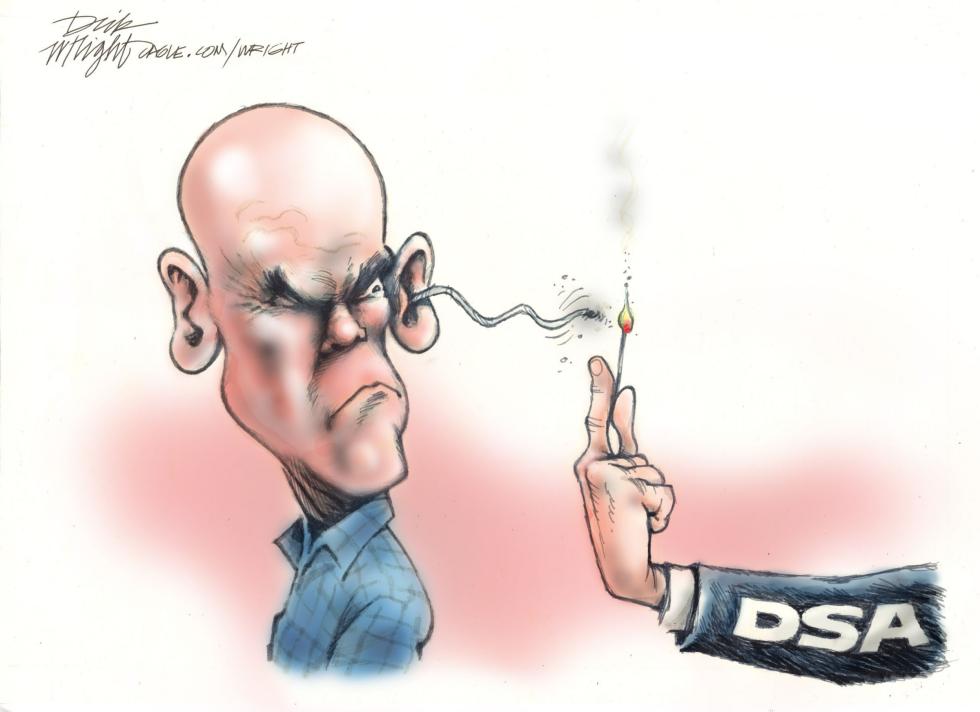
James Carville faces provocation from the Democratic Socialists of America in an ongoing internal party dynamic. The piece portrays DSA actions as directly inflaming tensions with established Democratic figures.