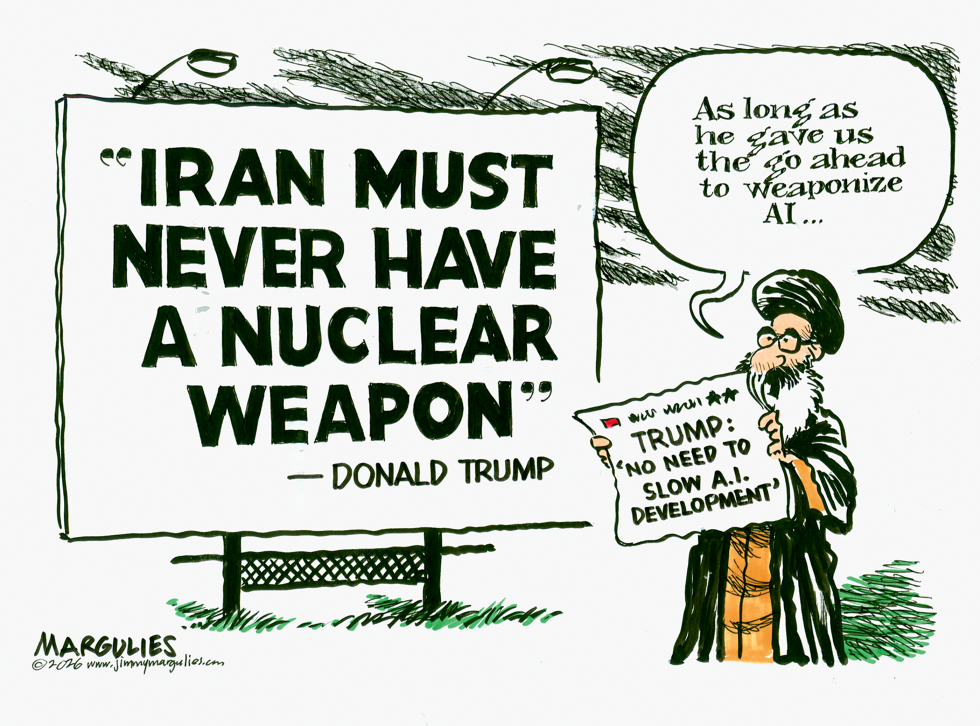
Donald Trump has repeatedly stated that Iran must never obtain a nuclear weapon, a position rooted in long-standing U.S. efforts to prevent nuclear proliferation in the Middle East. At the same time, reports indicate interest in accelerating artificial intelligence development without slowdowns. The cartoon responds to this apparent tension by depicting an Iranian leader conditioning acceptance of the nuclear restriction on permission to pursue AI weaponization. It argues that prioritizing rapid AI advancement risks undermining nonproliferation goals and hands strategic advantages to adversaries.
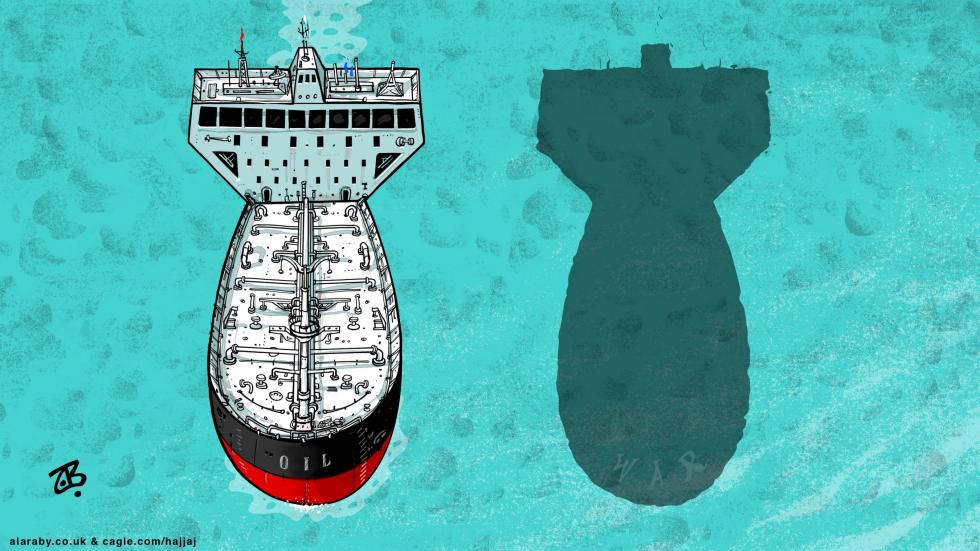
An oil tanker depicted in bomb form with a matching shadow labeled war underscores ongoing links between energy resources and armed conflict. The image responds to persistent tensions in oil-producing regions where shipping routes and resource control intersect with military actions. Such portrayals emphasize how fossil fuel transport remains entangled in geopolitical disputes. The editorial stance critiques the weaponization of energy supplies and the persistent threat of escalation tied to oil interests.
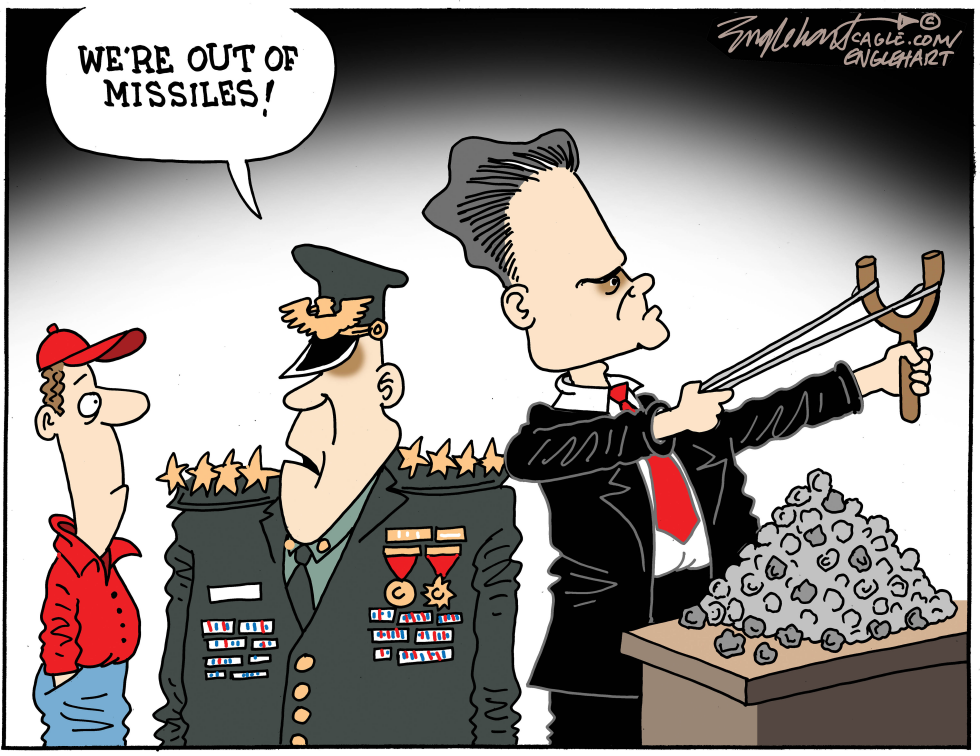
The Pentagon confronts depleted missile inventories during active defense needs. Officials explore improvised options including slingshots loaded with rocks. The development highlights supply chain strains and readiness questions for U.S. forces. The piece criticizes the situation as a failure of planning and resource allocation.
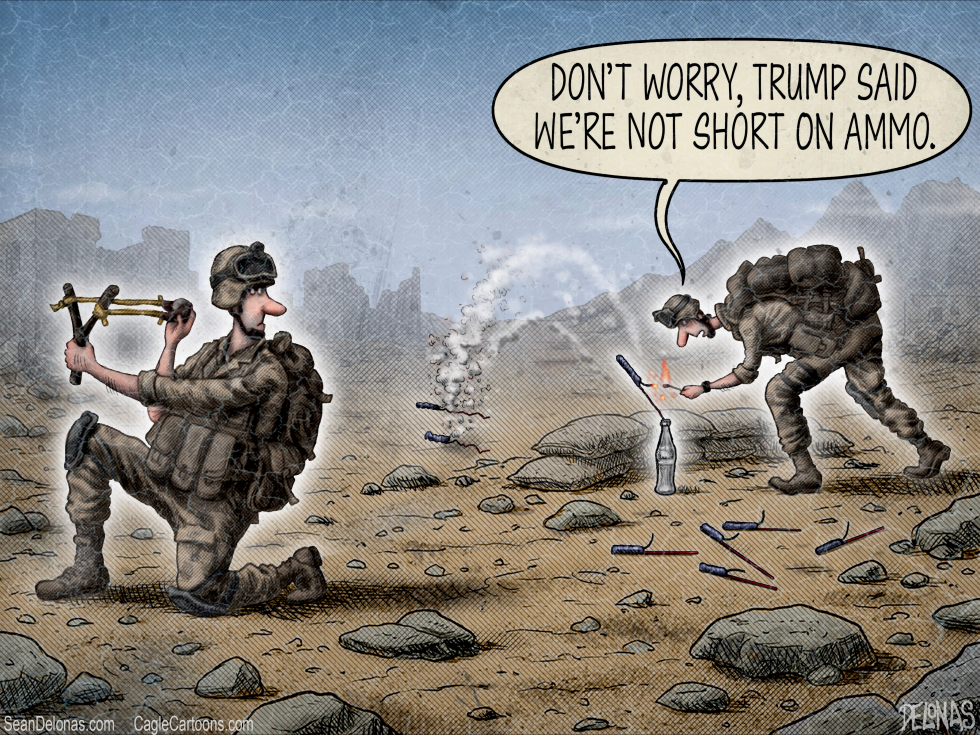
U.S. forces in a desert conflict zone report ammunition shortages forcing improvised weapons. The situation highlights strains on military logistics during ongoing operations. The piece critiques assurances from leadership that supplies remain adequate.
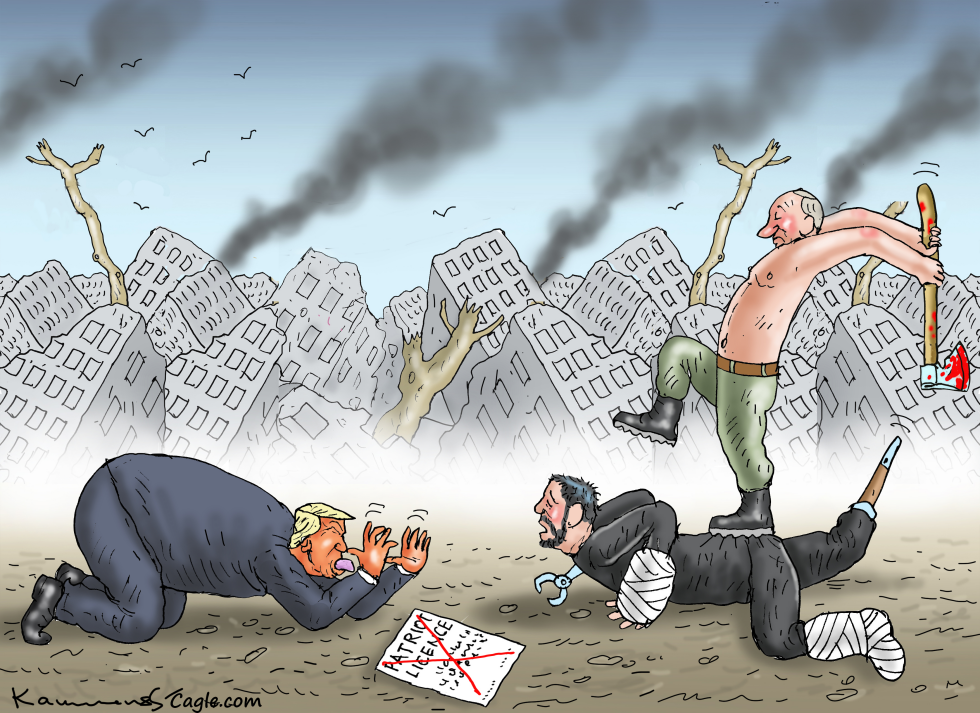
Russian President Vladimir Putin asserted dominance in the ongoing Ukraine conflict as US President Donald Trump and Ukrainian President Volodymyr Zelenskyy faced mounting pressure in mid-2026. The war continued to devastate Ukrainian cities with no immediate resolution in sight. The editorial depicts Putin as the unchallenged power broker leaving both leaders vulnerable and sidelined.
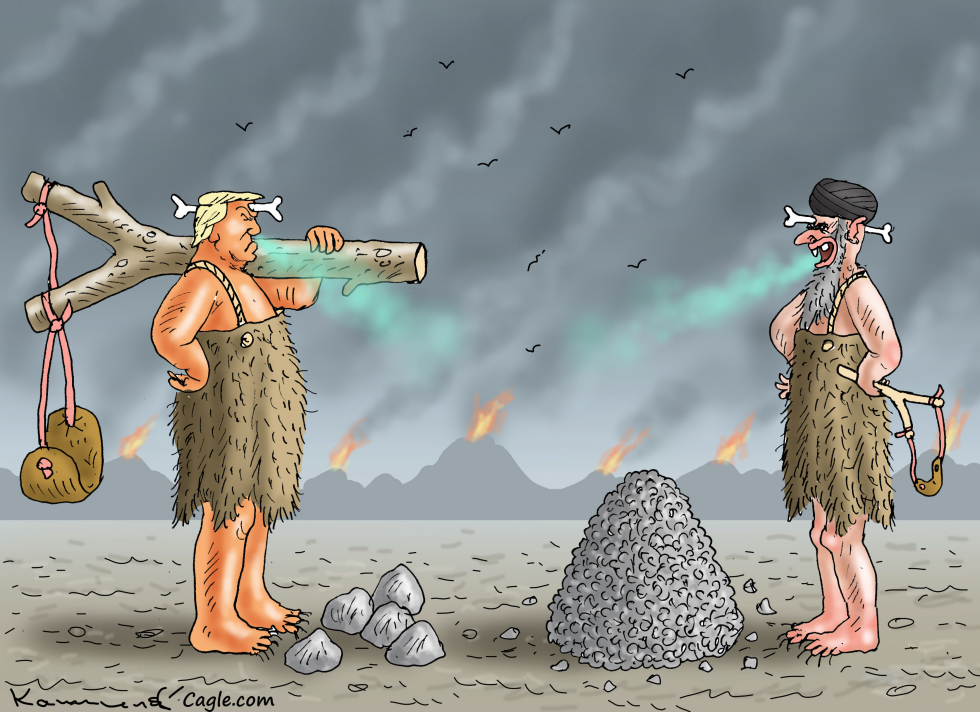
Donald Trump faces a political rival in a heated contest marked by aggressive posturing and primitive tactics. The confrontation underscores deep divisions in leadership style and approach to conflict. The piece portrays these dynamics as regressive and destructive.
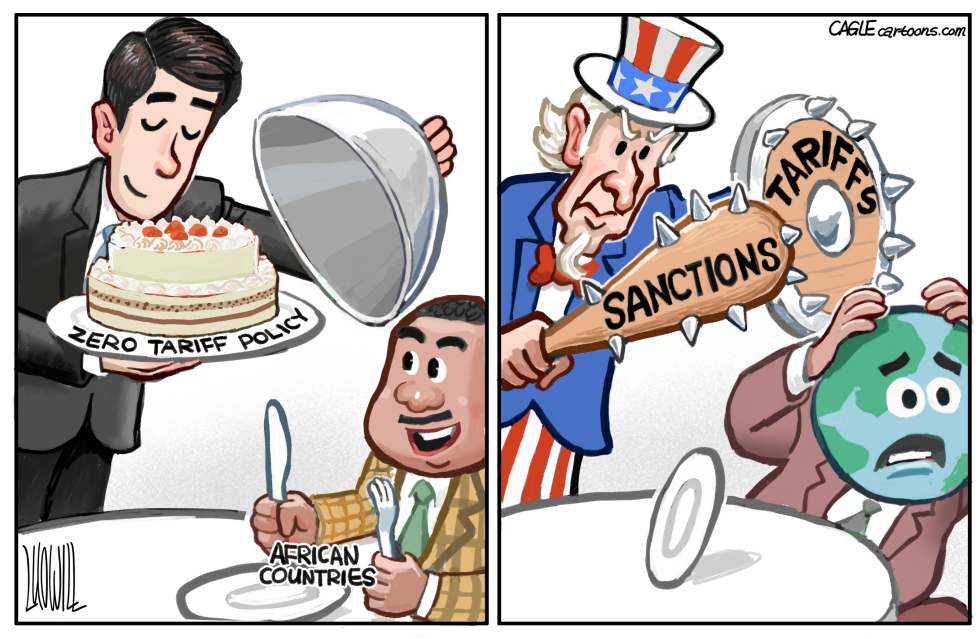
The United States has extended a zero-tariff policy offer to African nations amid ongoing global trade tensions. This move stands in contrast to simultaneous use of tariffs and sanctions against other trading partners. The policy highlights selective economic engagement by Washington. The editorial position criticizes the inconsistency between the overture to Africa and the punitive approach applied more broadly.
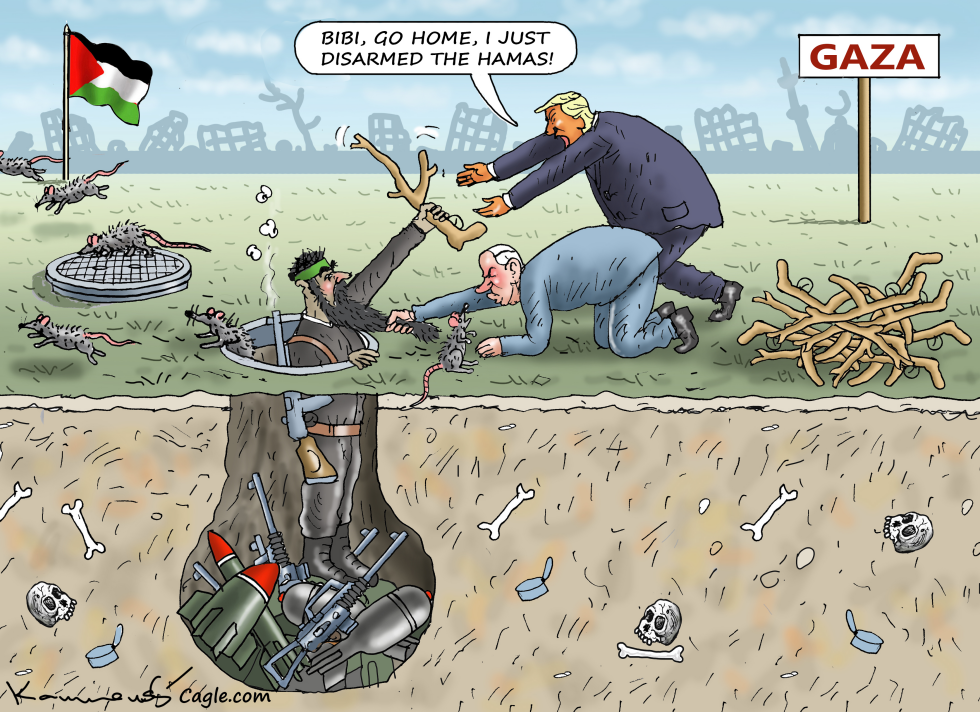
Donald Trump publicly claims to have disarmed Hamas while addressing Israeli Prime Minister Netanyahu. The assertion comes amid ongoing operations in Gaza where underground weapon stores remain active. The piece portrays the claim as premature given the scale of remaining armaments and the involvement of other U.S. figures in the effort.
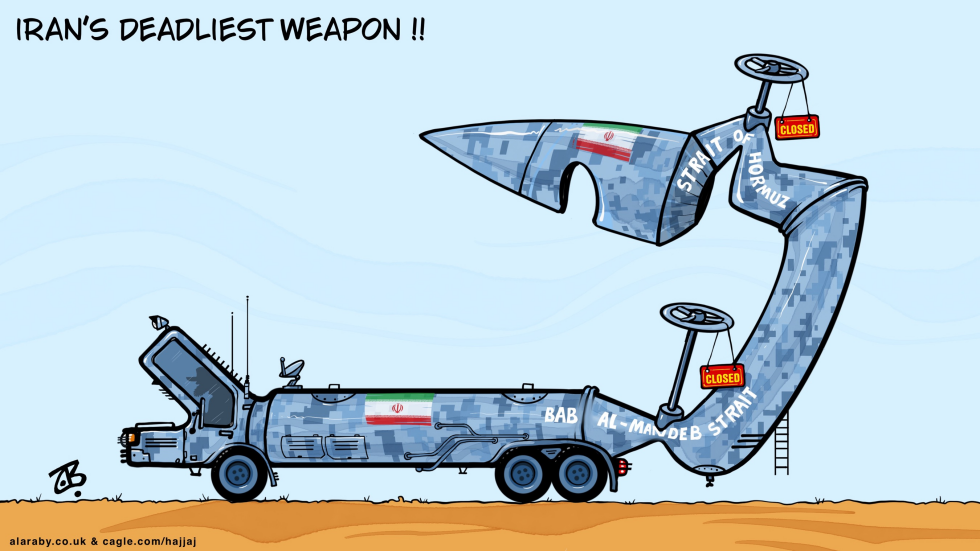
A new cartoon by Emad Hajjaj illustrates Iran's control over the Strait of Hormuz and Bab al-Mandeb Strait as its most potent weapon. The image renders a large camouflaged missile launcher bearing Iranian flags and marked with the two straits, each valve labeled closed. The work responds to ongoing concerns about potential disruptions to global oil shipments through these critical waterways in the Middle East. It emphasizes how Tehran could leverage geographic position to pressure adversaries without direct military engagement. The visual underscores the strategic importance of these passages amid heightened regional tensions.
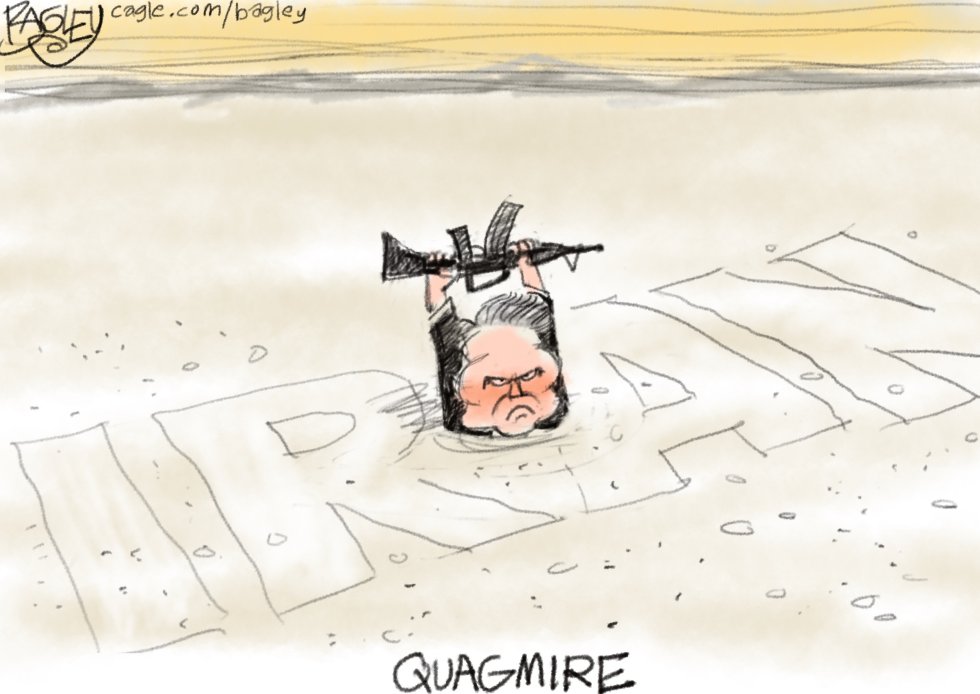
Donald Trump faces mounting difficulties tied to military engagements as of late July 2026. The situation underscores risks of prolonged involvement abroad. The piece portrays these events as a self-inflicted trap that threatens broader stability.
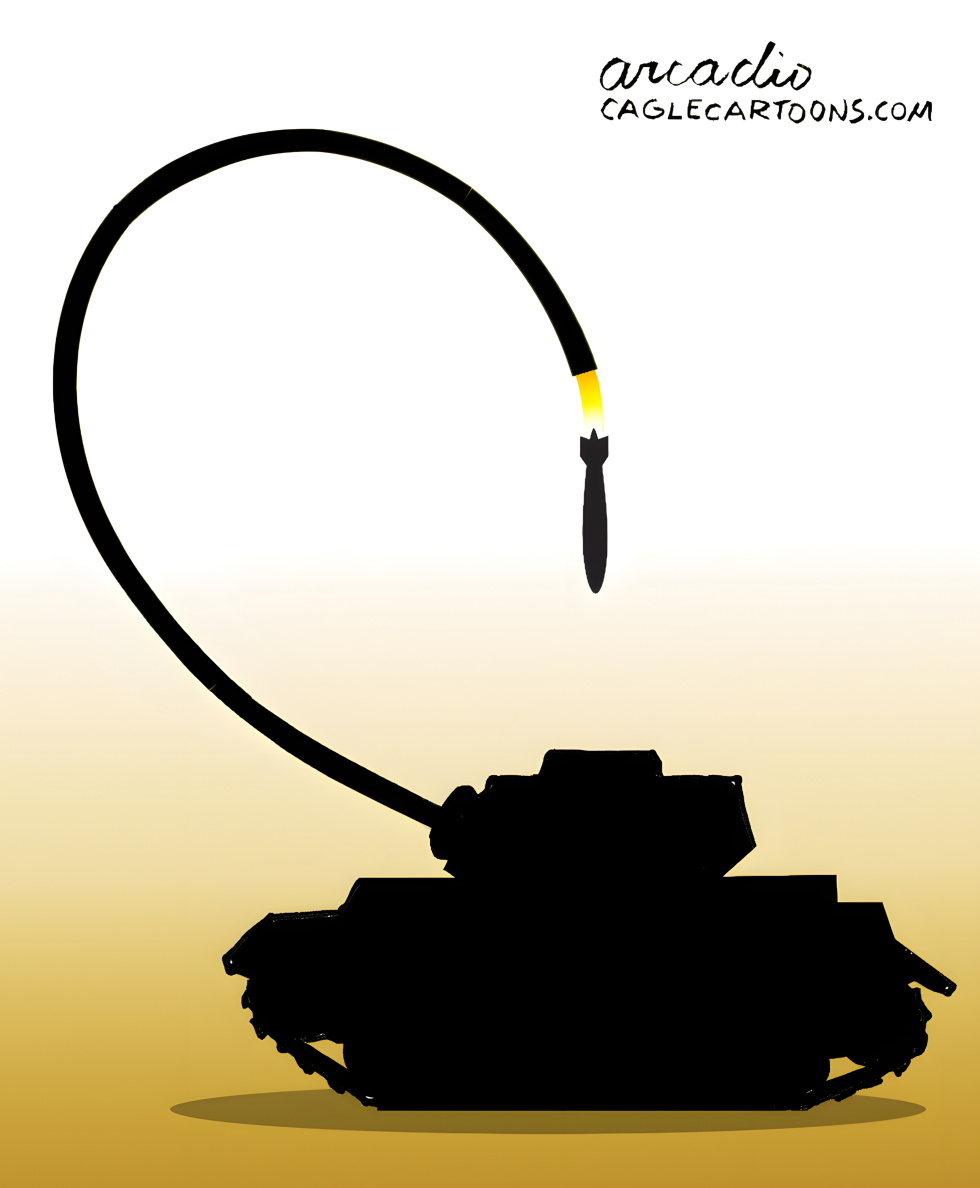
A military tank deploys a projectile attached to an unusually long curved fuse in this editorial image. The setup implies hardware that could rebound on its user. The piece comments on defense strategies where advanced systems carry built-in risks of unintended harm to the deploying force itself.
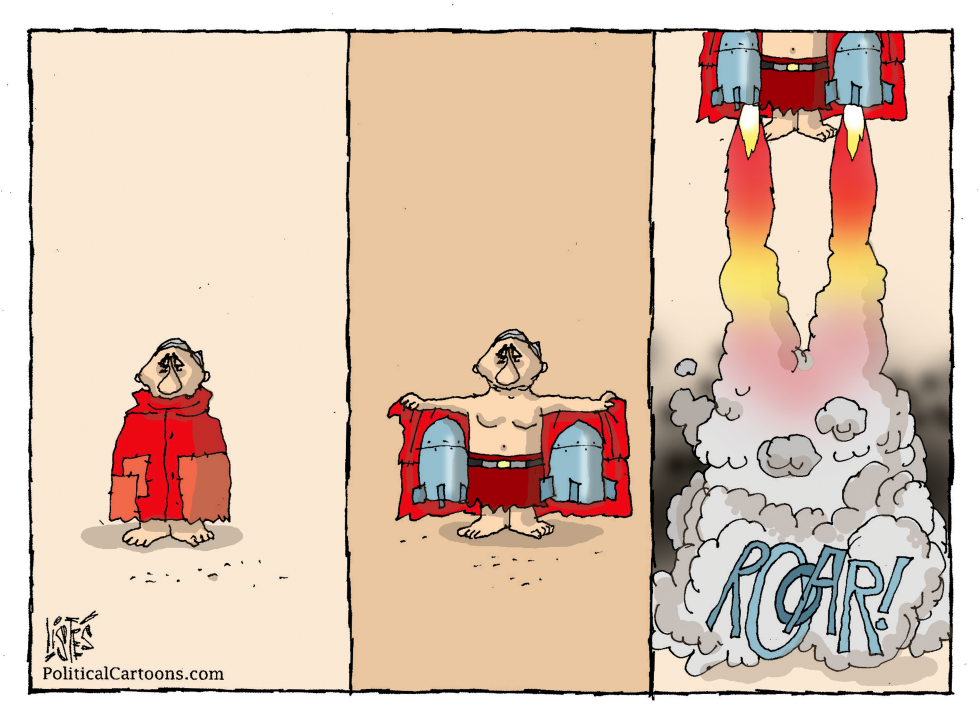
Vladimir Putin demonstrates a new personal rocket system as Russia continues military modernization efforts. The development underscores ongoing emphasis on advanced weaponry in national defense strategy. The piece portrays the move as an extension of Russia's assertive posture in global affairs.
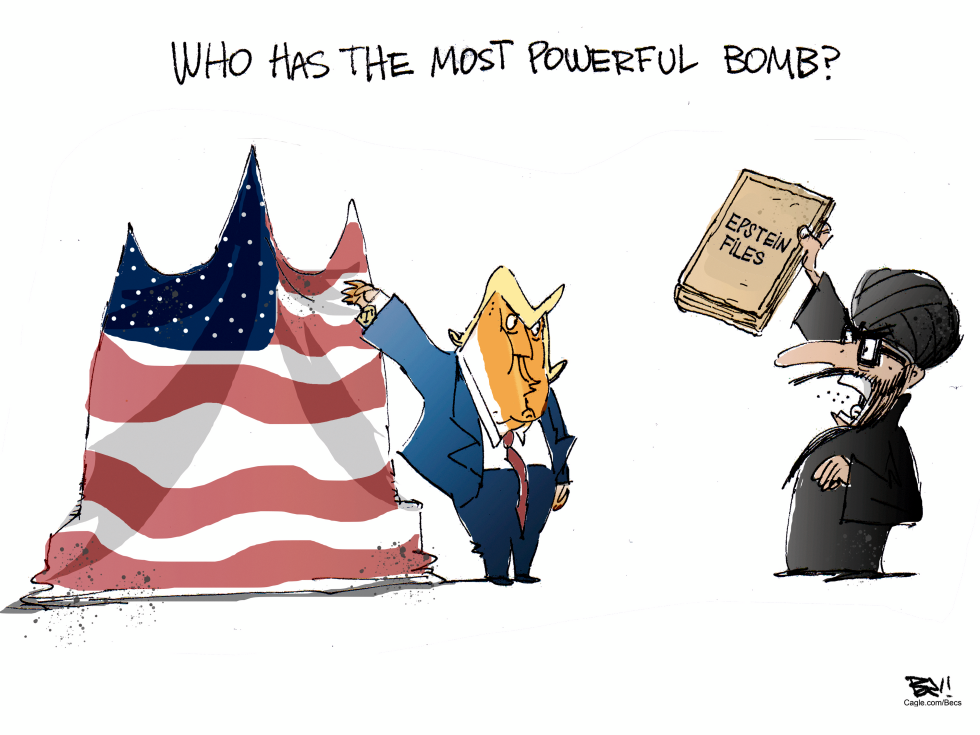
Leverage between the United States and Iran has long centered on nuclear capability and diplomacy. The piece sets that against domestic political pressure from document releases and investigations. It suggests the most damaging weapon in play may not be a military one.
A revolver appears with its lower portion shaped as the United States map featuring a prominent hole. Smoke rises from the barrel. The phrase more guns sits centered beneath the image. The composition links firearm imagery directly to geographic damage on the date of publication.
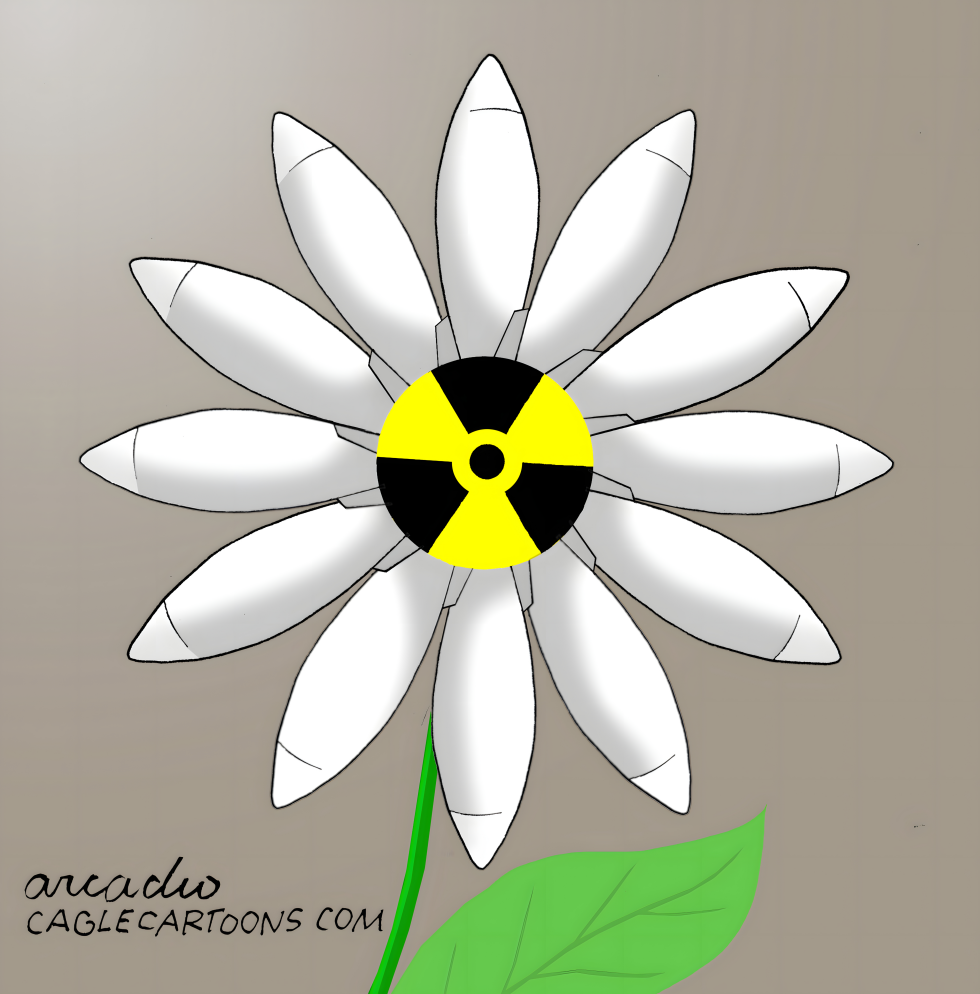
A daisy flower illustration replaces its petals with white missiles arranged around a central radiation warning symbol in yellow and black. The green stem and leaf extend downward from the bloom against a plain background. Artist Arcadio Esquivel signed the work in the lower left with the CagleCartoons.com credit.