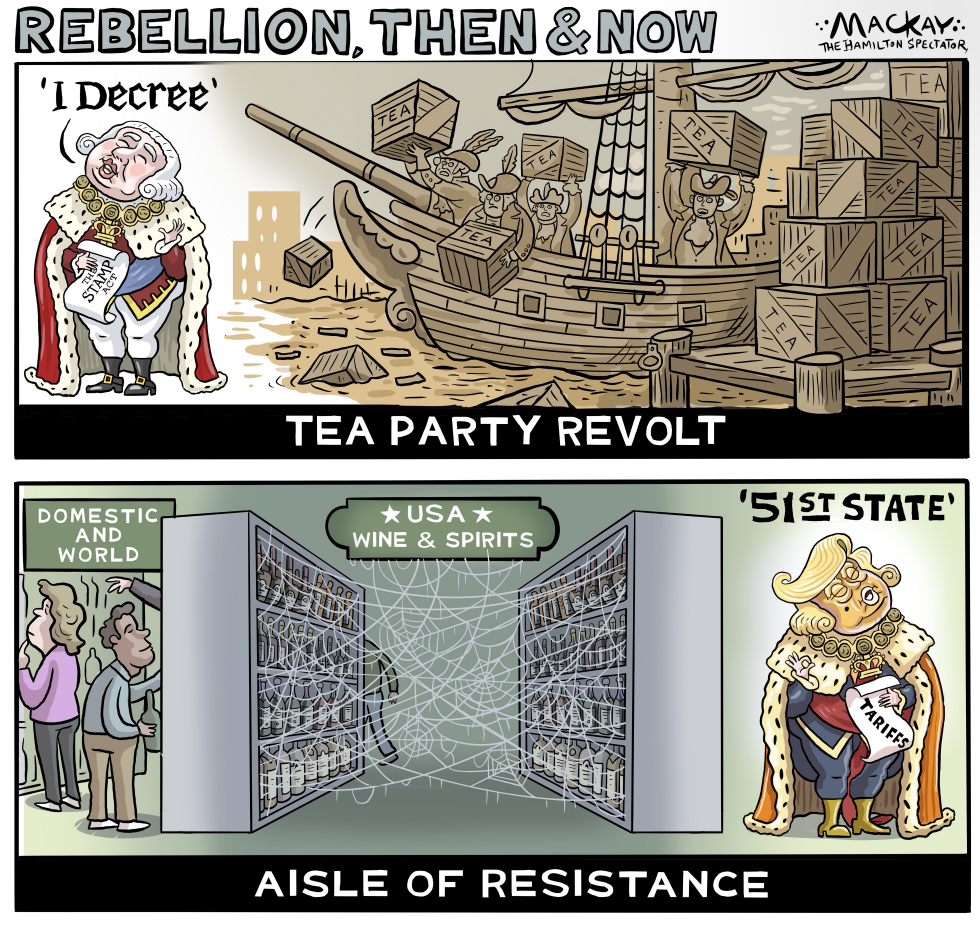
President Trump renewed tariff threats against Canada while floating the idea of the country becoming the 51st state. Canadian consumers responded with a boycott of American wine and spirits, leaving store shelves empty. The cartoon draws a parallel to the Boston Tea Party, casting the tariff policy as a modern decree provoking resistance.
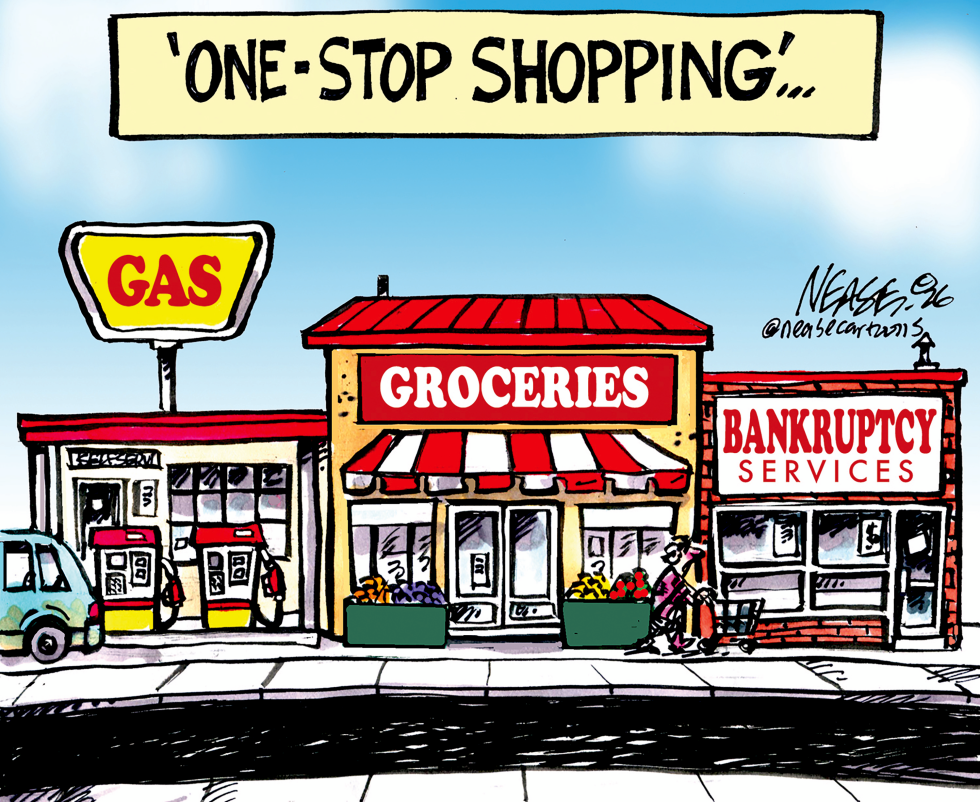
Consumers face persistent inflation that raises the cost of essentials such as fuel and food. A strip mall now groups gas, groceries and bankruptcy services together, highlighting how household budgets stretch thin. The editorial position criticizes the normalization of bankruptcy as a routine stop in everyday commerce.
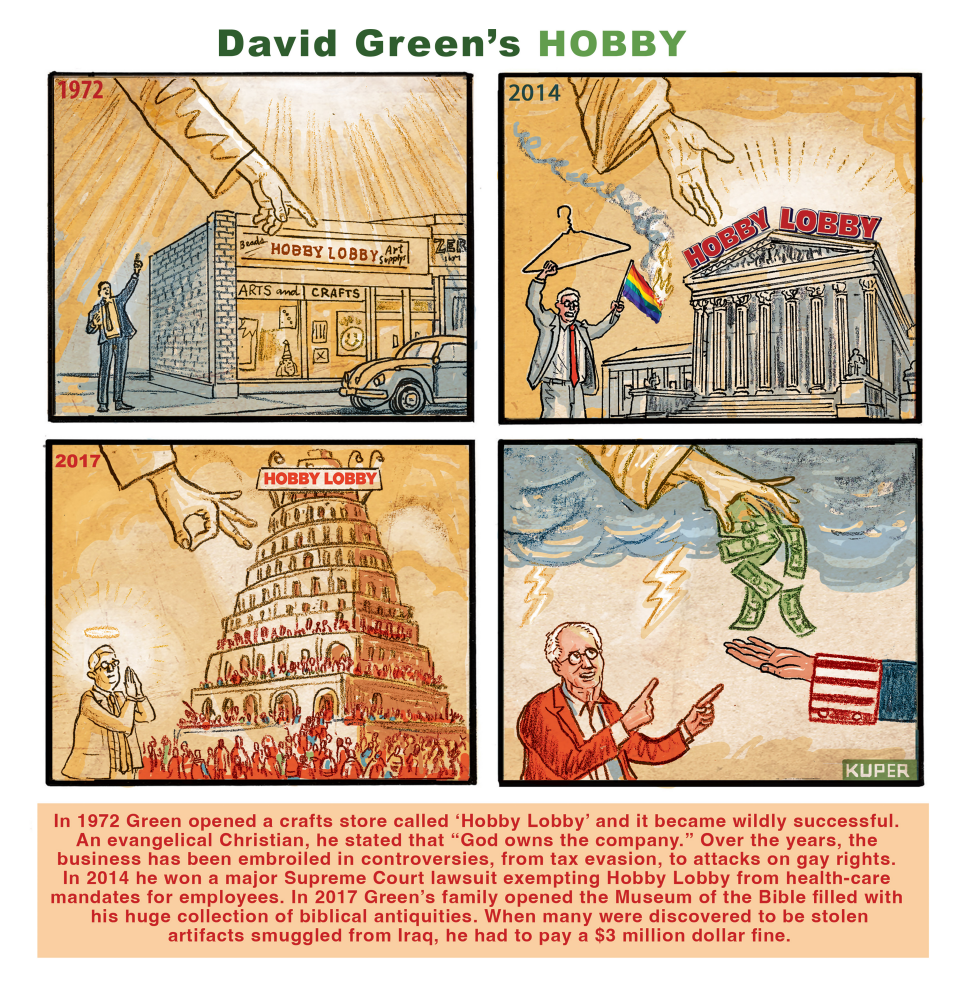
David Green opened Hobby Lobby in 1972 and built it into a major chain while declaring God owns the company. The business faced repeated controversies including a 2014 Supreme Court case on health care mandates and a 2017 Bible Museum scandal involving smuggled Iraqi artifacts that resulted in a $3 million fine. The piece presents these events as a pattern of legal and ethical issues tied to the company's evangelical leadership.
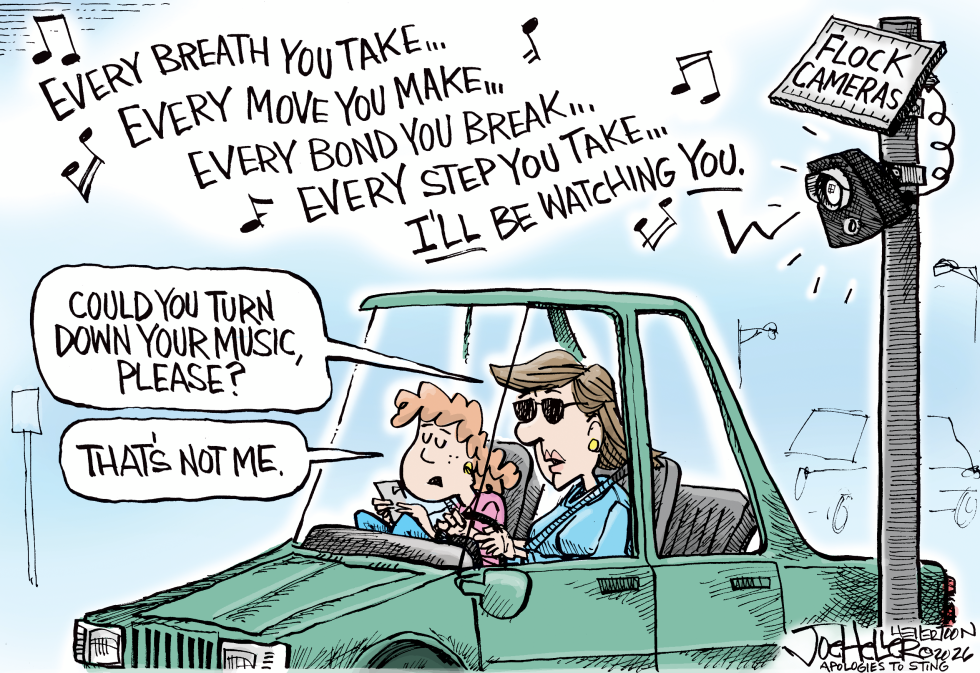
Police departments across the country have expanded use of Flock license plate readers to track vehicles in real time. The technology raises questions about the balance between public safety and individual privacy. The piece argues that such systems create an inescapable watch on everyday movement.
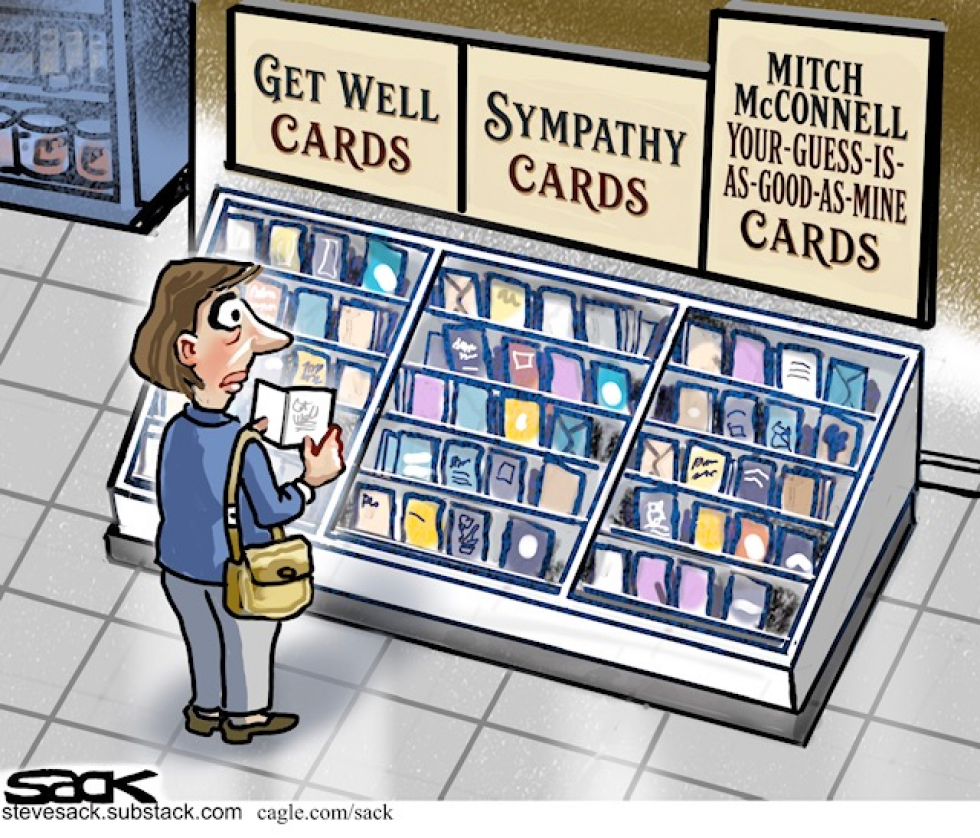
Questions about Mitch McConnell's health and future in Senate leadership have persisted into mid-2026. The Kentucky Republican has faced repeated absences and public episodes that fuel speculation about his capacity to continue. Colleagues in both parties watch closely because his position influences committee assignments and floor strategy. The uncertainty affects legislative timelines on appropriations and judicial matters. The piece argues that the situation leaves observers with little reliable information and treats the ambiguity itself as the central story.
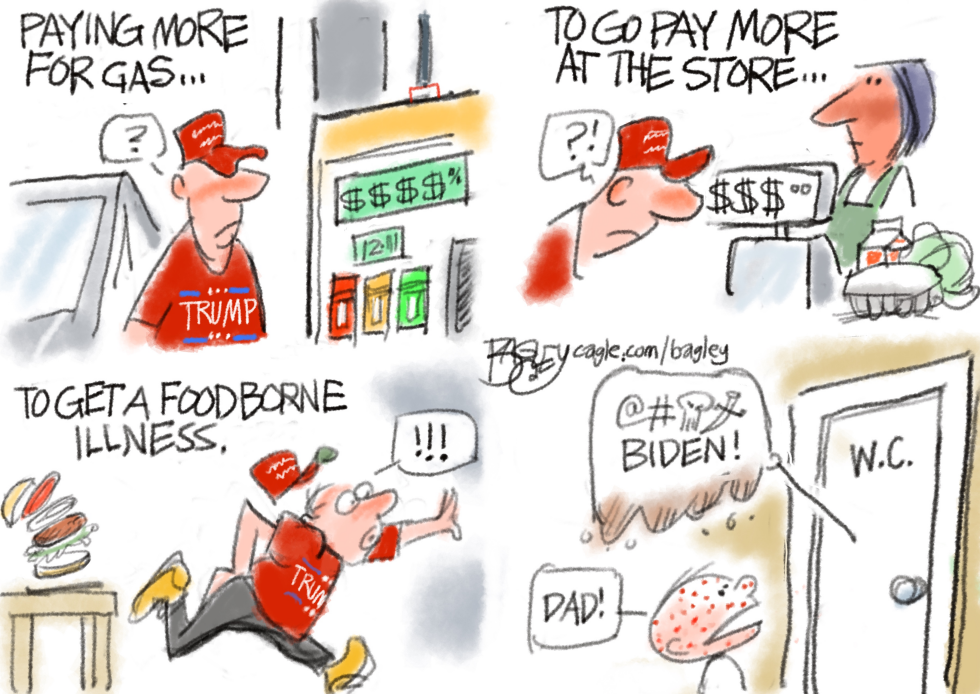
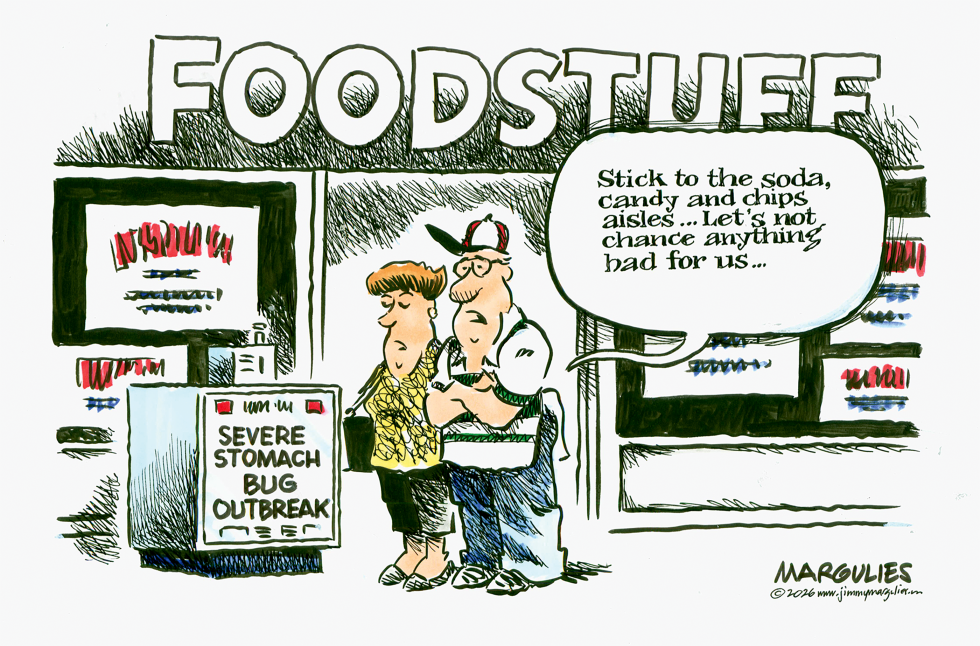
A Trump supporter encounters higher costs at the gas pump and grocery store plus a foodborne illness before directing blame toward Biden. The episode reflects persistent economic pressures on households and partisan finger-pointing that continues well after the 2024 election cycle. The cartoon highlights how some voters tie every inconvenience directly to the prior administration regardless of other factors at play.
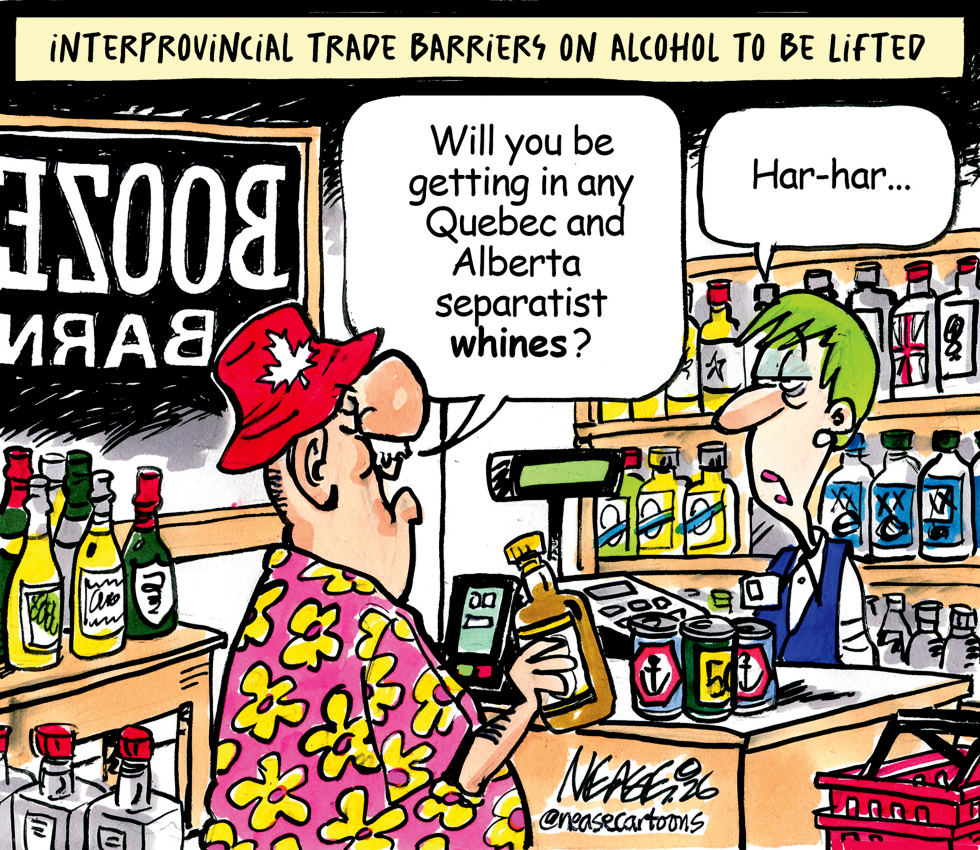
Canada announced it will lift interprovincial trade barriers on alcohol sales. The change opens cross-border provincial liquor markets and prompts complaints from Quebec and Alberta separatists. The cartoon mocks those complaints as mere whines while a clerk offers a dismissive laugh.
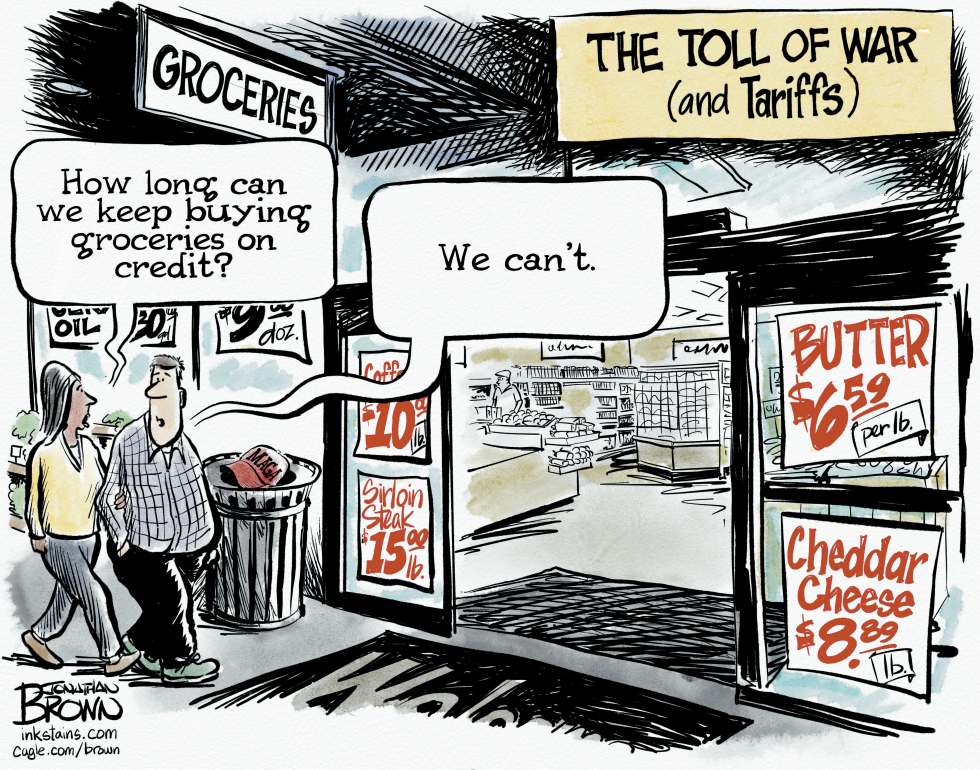
A political cartoon depicts a couple leaving a grocery store after learning they cannot continue buying food on credit. Signs inside show sharply higher prices for butter at $6.59 per pound, cheddar cheese at $8.89 per pound and sirloin steak at $15 per pound. A banner overhead reads The Toll of War (and Tariffs). The scene illustrates how ongoing conflict and trade barriers have driven up everyday food costs leaving households to rely on credit that is no longer sustainable.
A grocery store scene shows two men reacting to a severe stomach bug outbreak sign by vowing to shop only in the soda, candy and chips aisles. The July 2026 cartoon captures consumer caution during a public health scare affecting produce purchases.
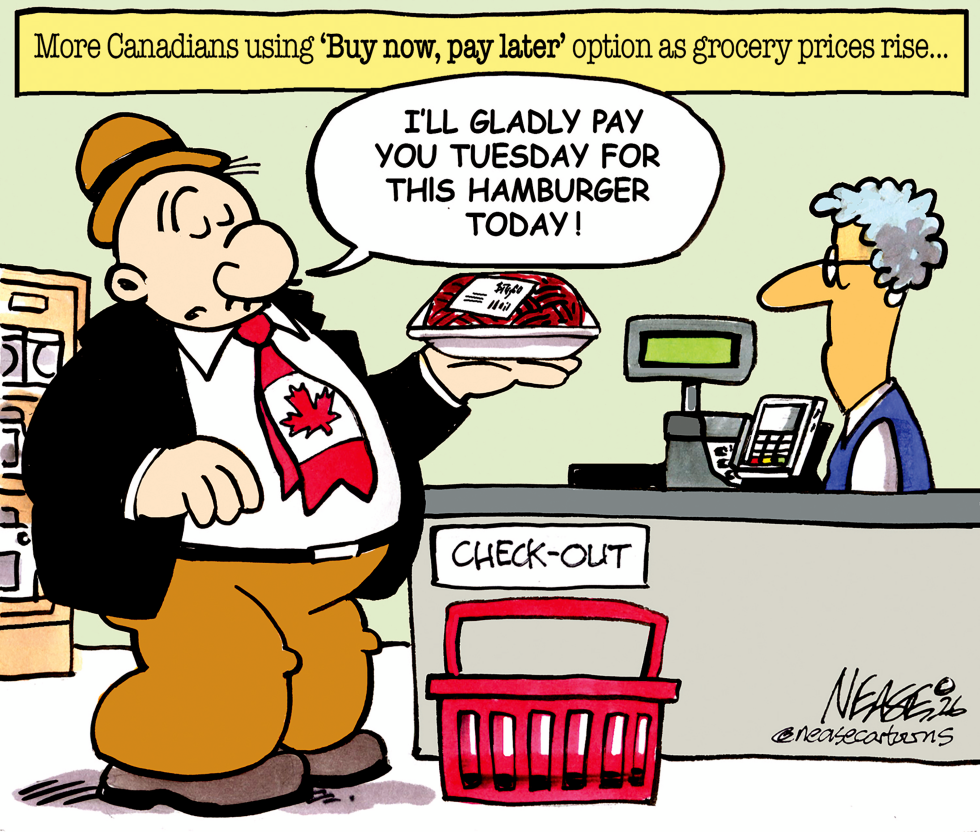
A cartoon published July 8, 2026, shows a Canadian shopper at a grocery checkout counter holding a package of hamburger meat while declaring he will gladly pay Tuesday for the item today. The scene references the classic Wimpy line and highlights growing use of buy now pay later services as grocery prices continue to climb in Canada.
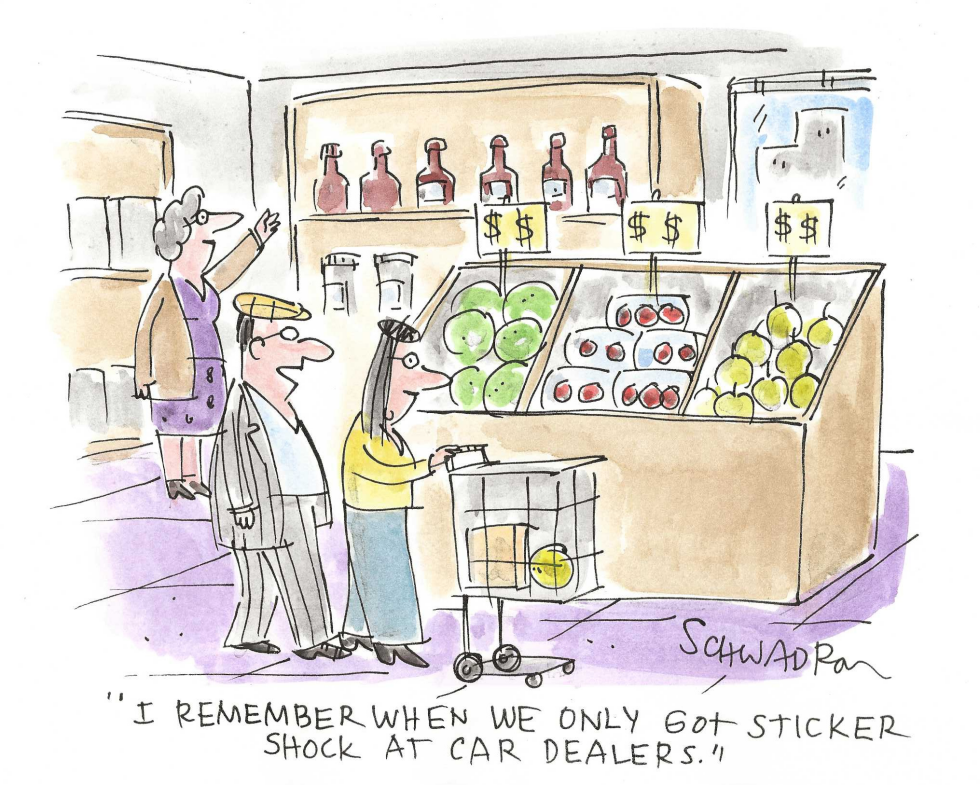
The cartoon depicts a supermarket produce section with green apples, red tomatoes and bottles on shelves. Multiple yellow signs show dollar symbols. Three figures stand by a shopping cart while one points toward the display. The caption references sticker shock previously limited to car dealers. Tags include groceries, prices, inflation and supermarket.
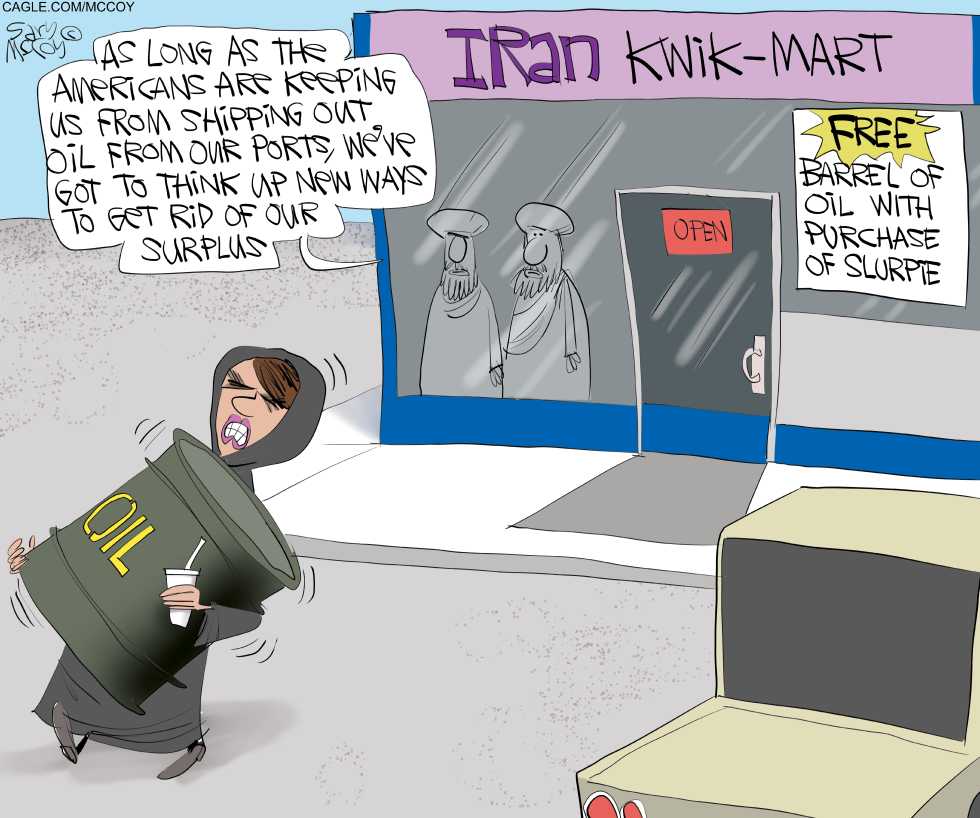
Gary McCoy's cartoon depicts two bearded Iranian clerics inside the Iran Kwik-Mart, promoting a free barrel of oil with Slurpee purchase to handle surplus crude. Outside, a hooded figure dumps an oil barrel into a car trunk, lamenting U.S. blockades on shipping ports. The image ties into Strait of Hormuz tensions, oil prices, Trump-era policies, Iran's Revolutionary Guard, and Middle East conflicts, highlighting ironic solutions to energy surplus amid international sanctions and naval standoffs. Commercial ships and tankers face barriers, forcing creative disposal methods in this dryly humorous take on global oil dynamics.