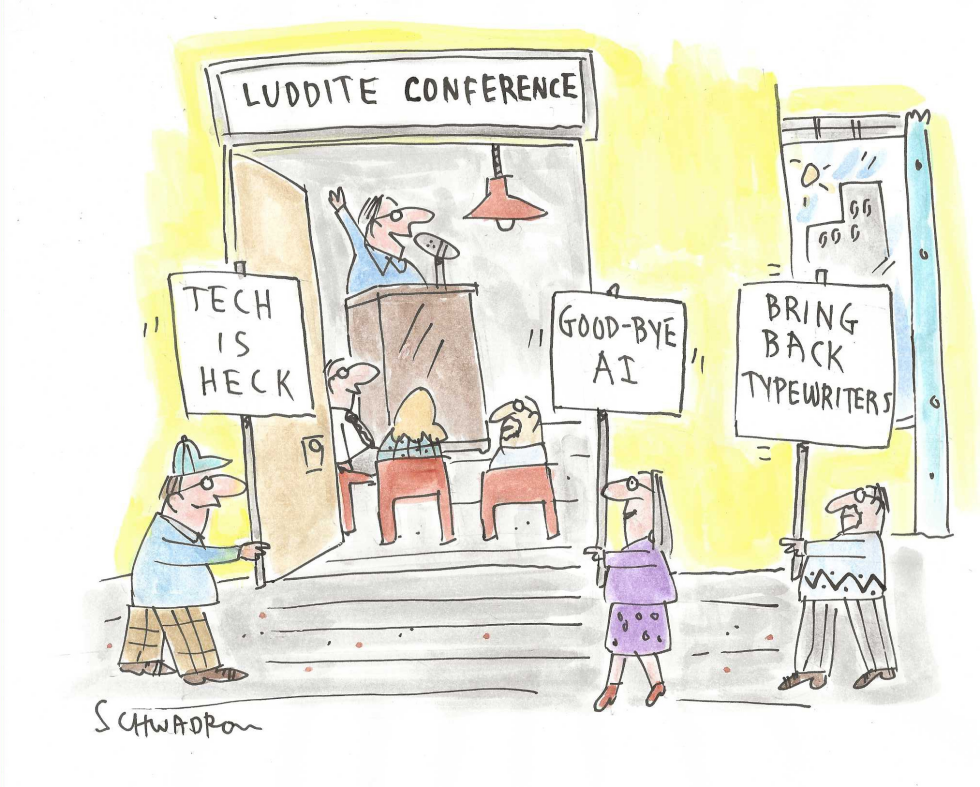
Luddite groups have staged protests at technology conferences in 2026, voicing opposition to rapid AI development and calling for simpler tools like typewriters. The demonstrations reflect broader societal unease over job displacement and ethical issues tied to artificial intelligence. Critics argue such resistance ignores the productivity gains and innovation AI brings to industries. The cartoon highlights the protesters' outdated demands as out of step with technological progress.
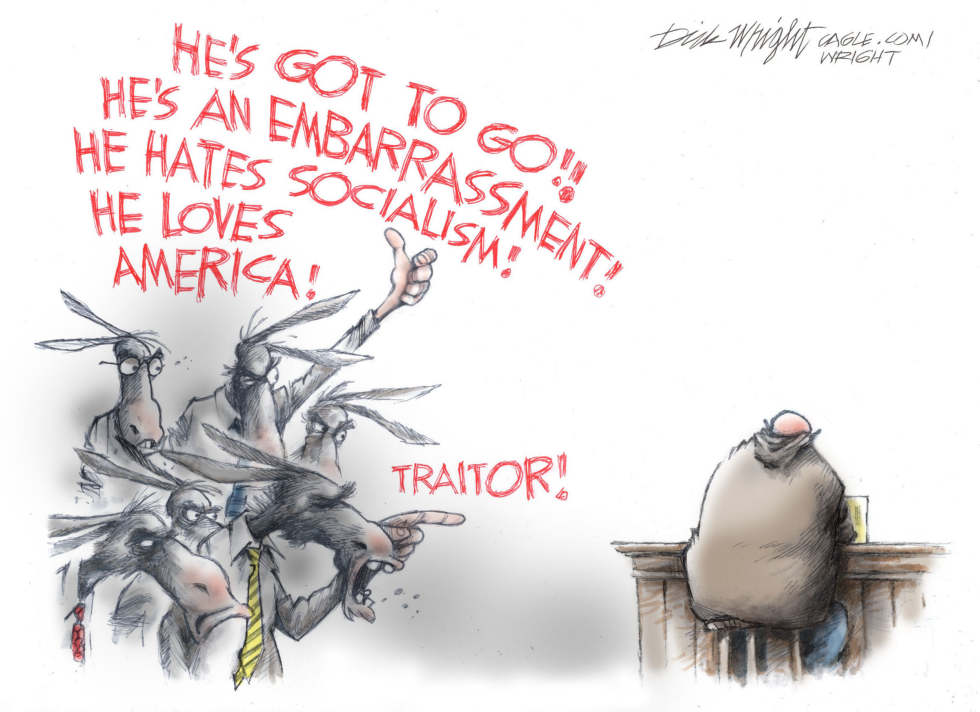
Senator John Fetterman drew sharp criticism from fellow Democrats in September 2026 for publicly rejecting socialism and emphasizing his love of America. The episode highlights deepening tensions within the party over ideological purity tests. The cartoon portrays the attacks as self-destructive party infighting.
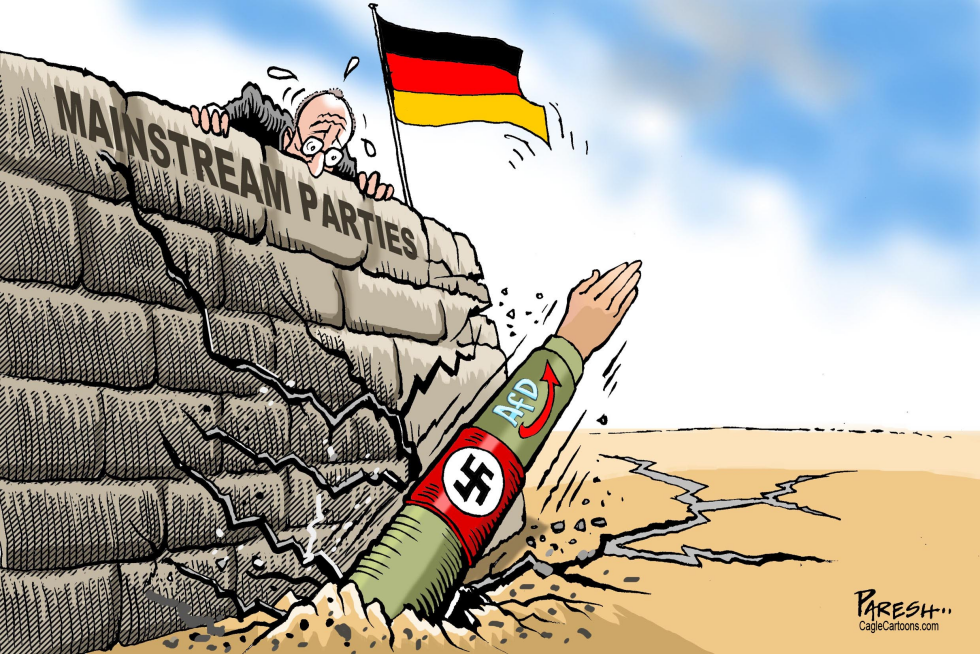
The cartoon depicts Germany's mainstream parties as a fracturing wall under assault from the AfD, portrayed as an extremist force with Nazi imagery. Published on September 10, 2026, it responds to the party's growing electoral strength and its impact on traditional coalitions ahead of key votes. The image shows a distressed mainstream figure atop the wall while the AfD arm breaks through from below, symbolizing how the party's advances erode established political structures. This reflects ongoing concerns about coalition stability and the mainstream's struggle to contain far-right momentum in German politics.
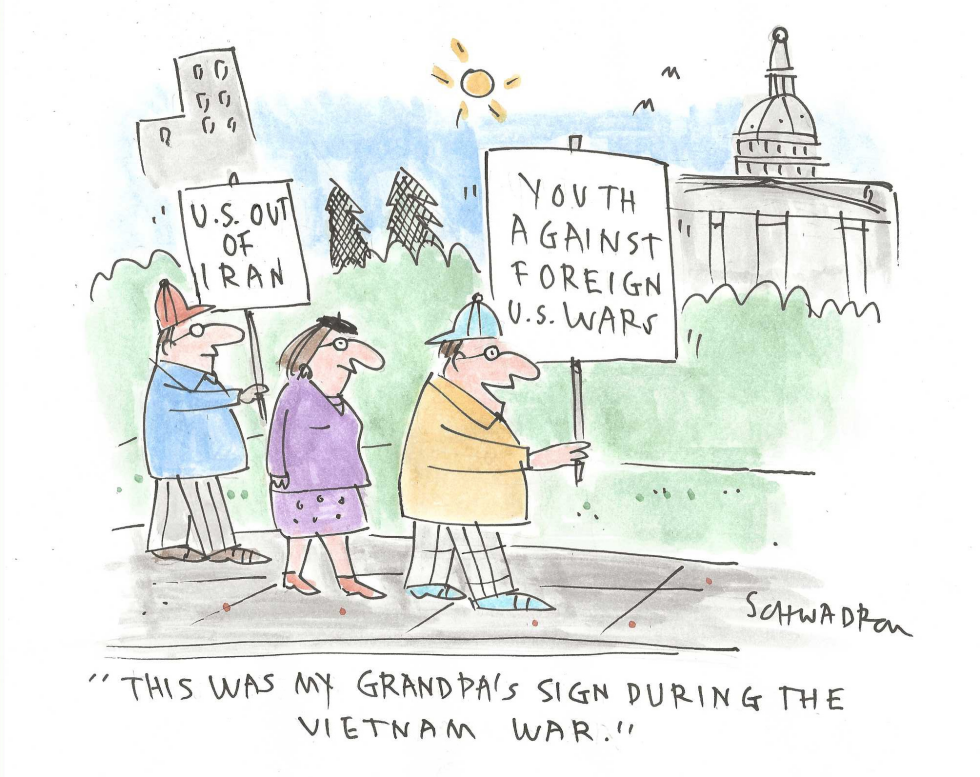
Anti-war demonstrators gather near the Capitol with signs calling for an end to US involvement in Iran and broader foreign conflicts. One protester notes that his sign originated during the Vietnam War, underscoring continuity across generations. The piece highlights persistent public opposition to military engagements abroad and questions the repetition of past policy mistakes.
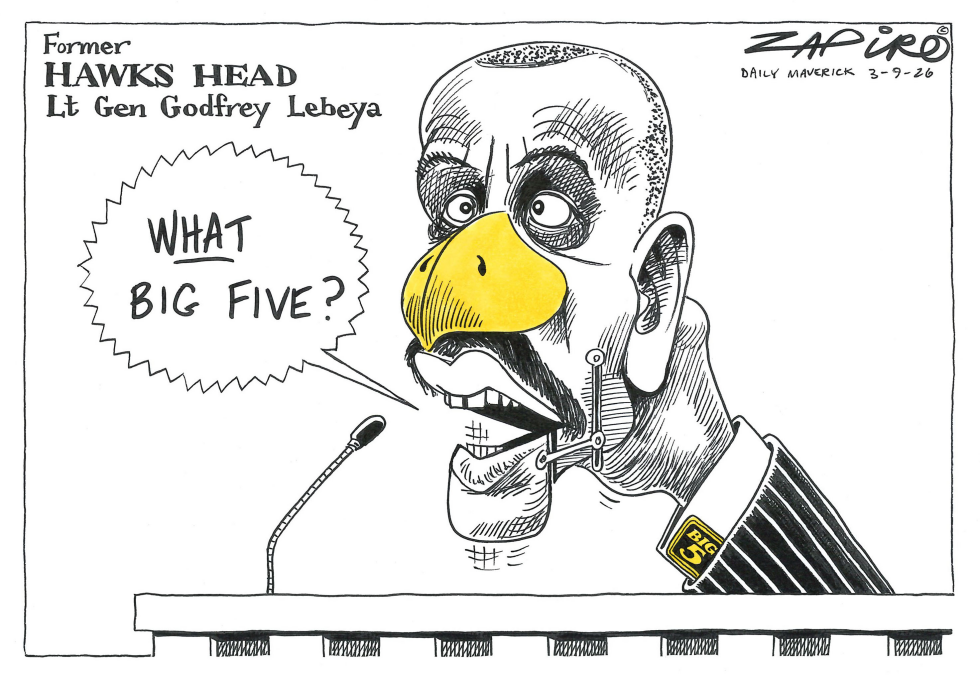
Former Hawks head Lt Gen Godfrey Lebeya publicly questioned the Big Five label applied to him and his unit. The designation refers to the focus on five priority crime areas under South African anti-corruption efforts. The exchange highlights tensions over how the Hawks prioritize cases involving senior officials and organized crime. The cartoon frames Lebeya's denial as an attempt to distance himself from the label's implications for accountability.
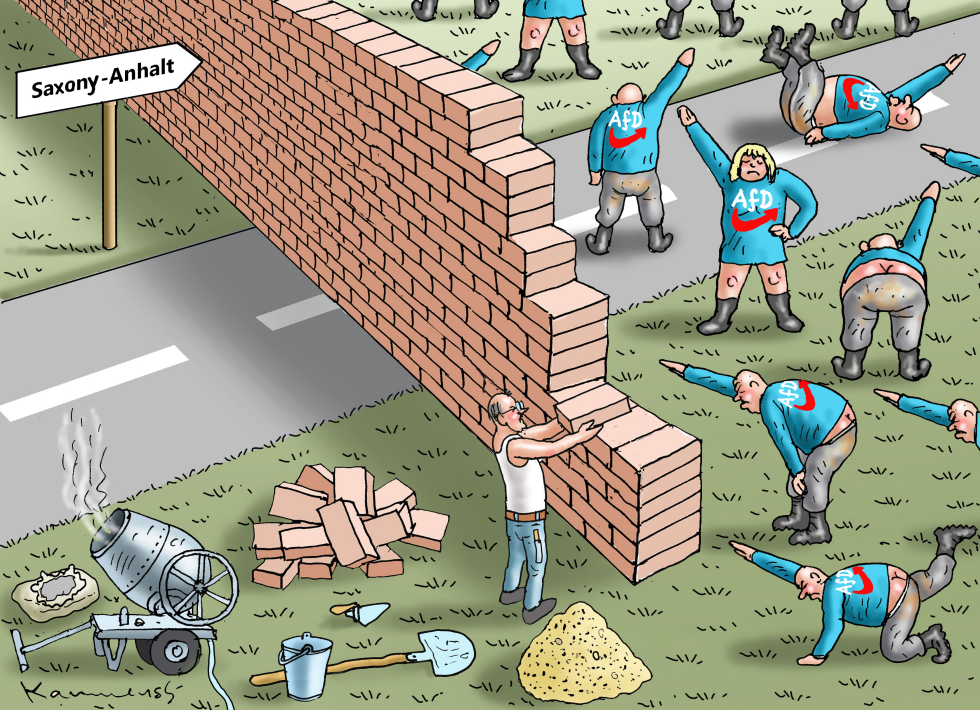
Friedrich Merz has positioned himself as a bulwark against Alternative for Germany advances ahead of state elections in Saxony-Anhalt. The cartoon depicts Merz personally laying bricks for a wall labeled for the eastern state while AfD figures in branded shirts struggle to cross it. The image underscores the CDU leader's strategy of containment rather than engagement with the far-right party. It reflects ongoing debates within German center-right circles about how to address AfD electoral strength without legitimizing its platform. The editorial stance presents the wall-building as a necessary, if blunt, defensive measure.
German opposition leader Friedrich Merz has positioned himself as a bulwark against the Alternative for Germany party ahead of state elections in Saxony-Anhalt. The move comes as AfD polls strongly in eastern regions, prompting mainstream parties to draw sharper lines. Merz's approach emphasizes containment over engagement. The cartoon frames this as literal wall-building, underscoring the defensive posture parties adopt when facing AfD momentum. It highlights the ongoing struggle within German politics to isolate the far-right without ceding ground on immigration and national identity issues that fuel AfD support.
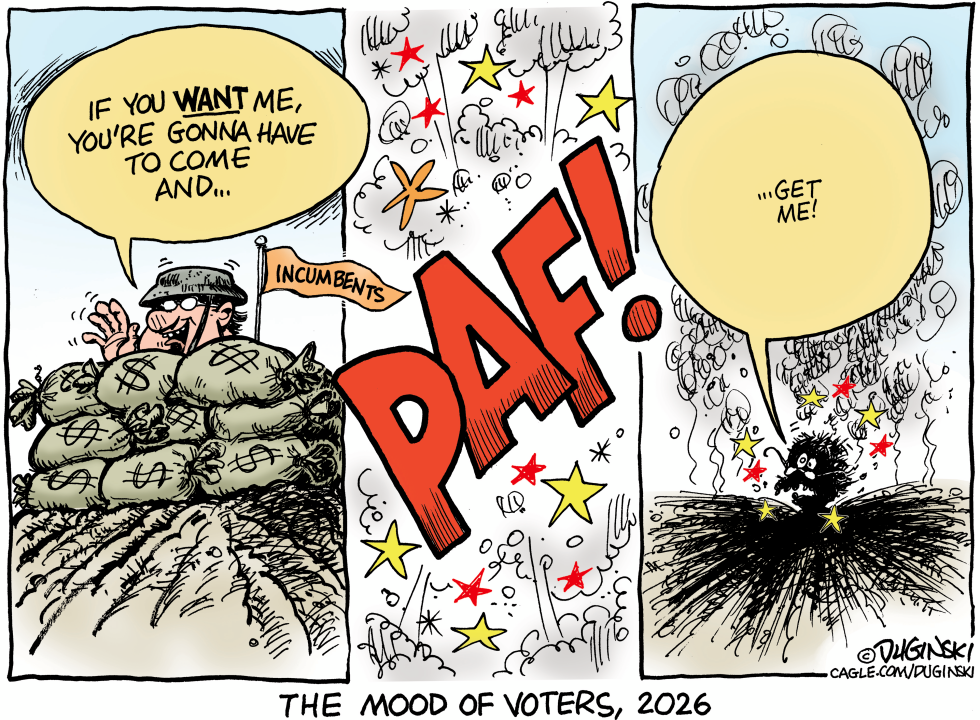
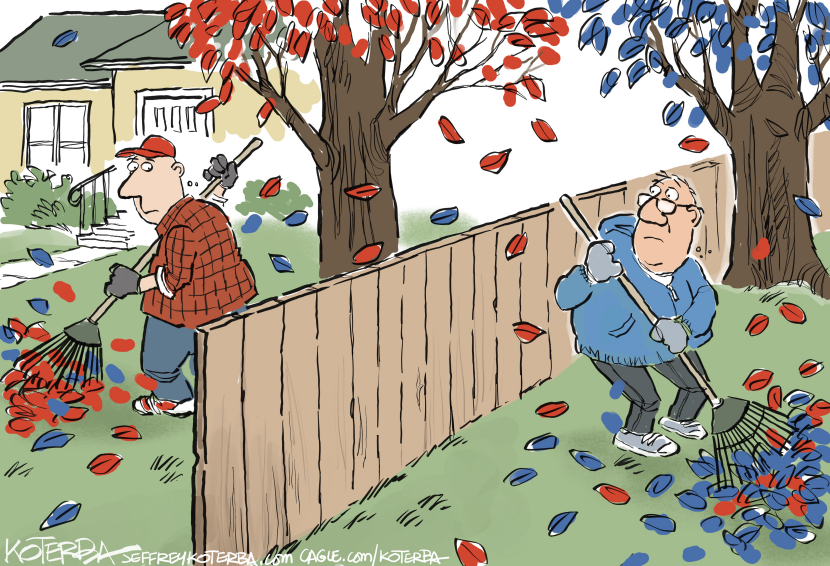
Voters are showing clear signs of turning against sitting officeholders as the 2026 election cycle advances. Incumbents face mounting pressure from constituents frustrated with long-term entrenchment and perceived insulation from accountability. This shift reflects broader discontent with the status quo in Congress and state legislatures. The cartoon argues that the protective barriers incumbents have built around themselves are proving ineffective against rising voter anger.
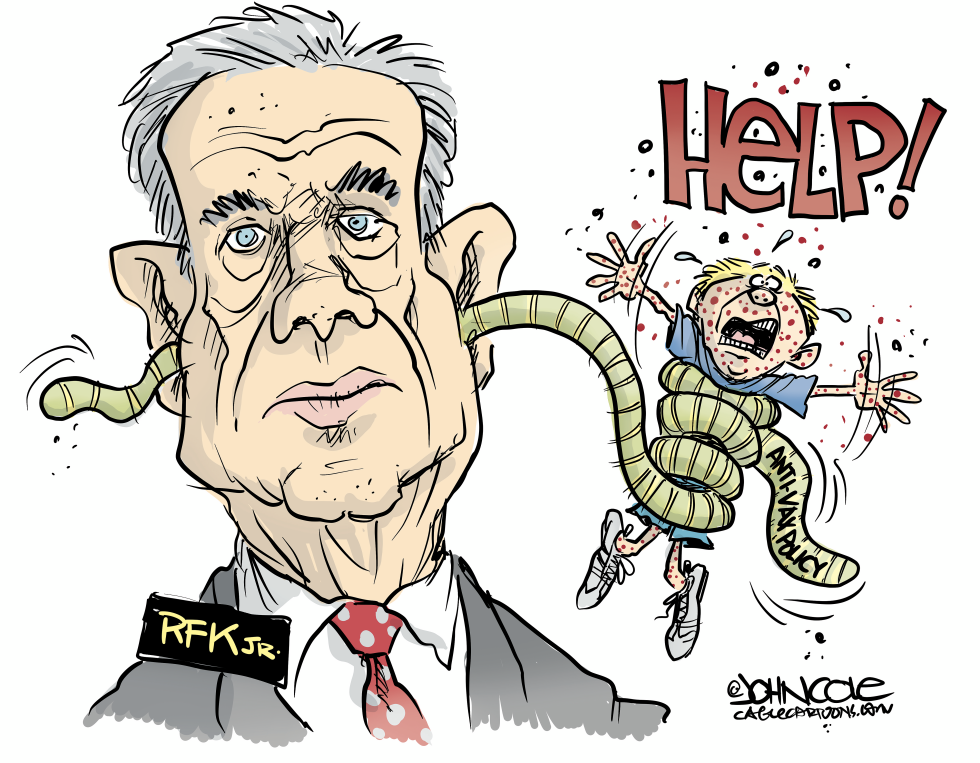
Robert F. Kennedy Jr faces renewed scrutiny over his past brain worm infection and longstanding anti-vaccine positions as he influences health policy. The episode highlights risks to childhood immunization rates and public trust in medical guidance. The piece argues these personal and ideological factors directly threaten child safety.
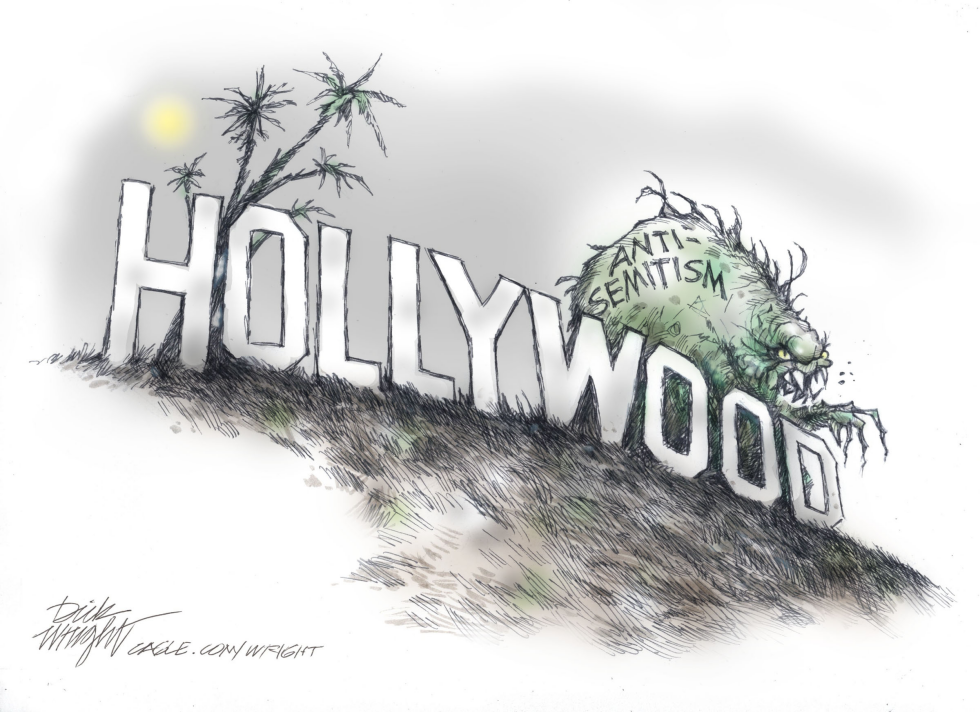
Antisemitism has surged in public discourse and institutions, including entertainment circles, prompting concern over its impact on creative communities and public discourse. The piece frames this hostility as a direct assault on Hollywood itself. It takes the position that such prejudice must be confronted as a destructive force undermining cultural institutions.
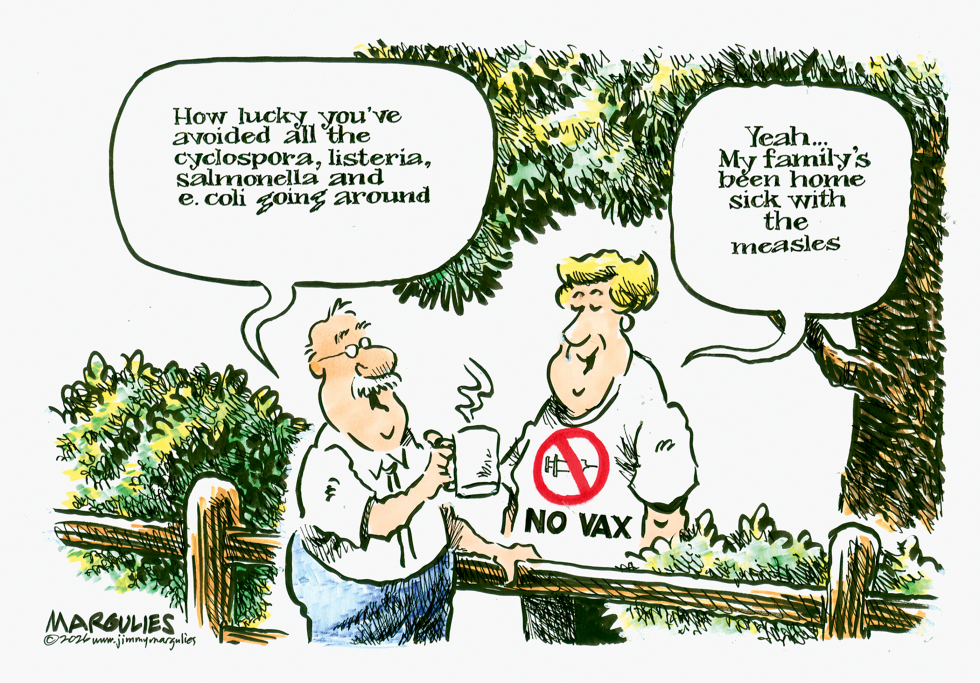
Vaccine-hesitant individuals continue to cite food safety concerns while measles cases rise in unvaccinated communities. The dynamic underscores ongoing public health tensions around immunization decisions and preventable disease spread.
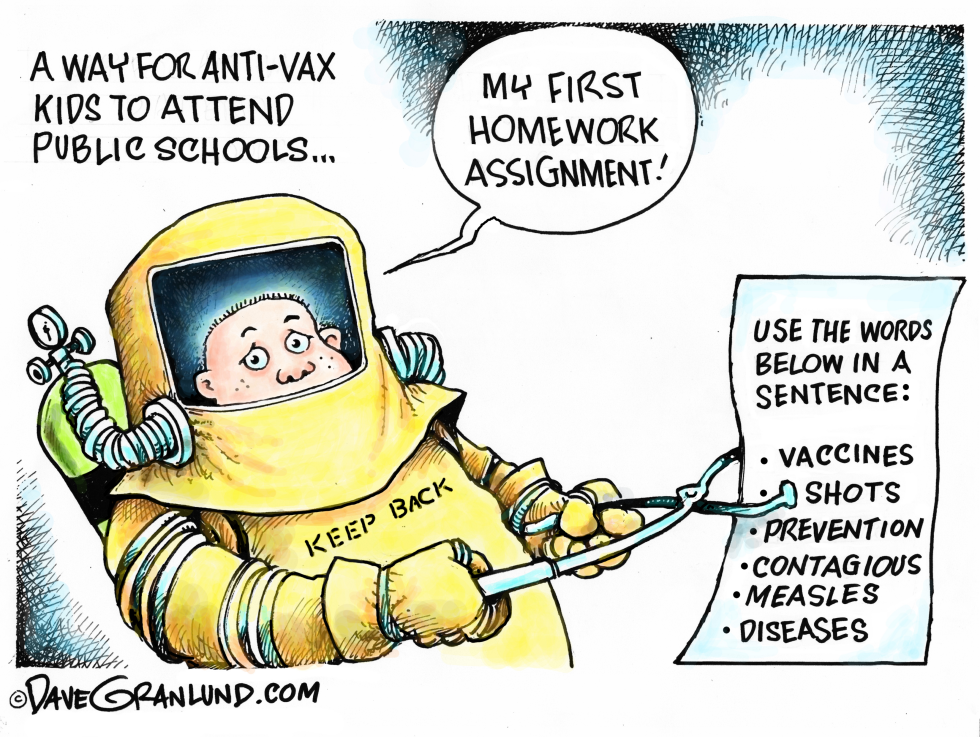
A child dressed in a full hazmat suit holds a homework sheet listing vaccine-related terms. The scene shows the suit labeled keep back and a speech bubble declaring the first assignment. Publication date of August 28 2026 places this amid ongoing debates over school entry rules and disease prevention. The image responds to concerns about measles spread when immunization rates drop. It illustrates how some families seek alternatives to standard requirements while maintaining classroom access. Broader context includes state laws on student vaccinations and recent case reports in multiple districts.
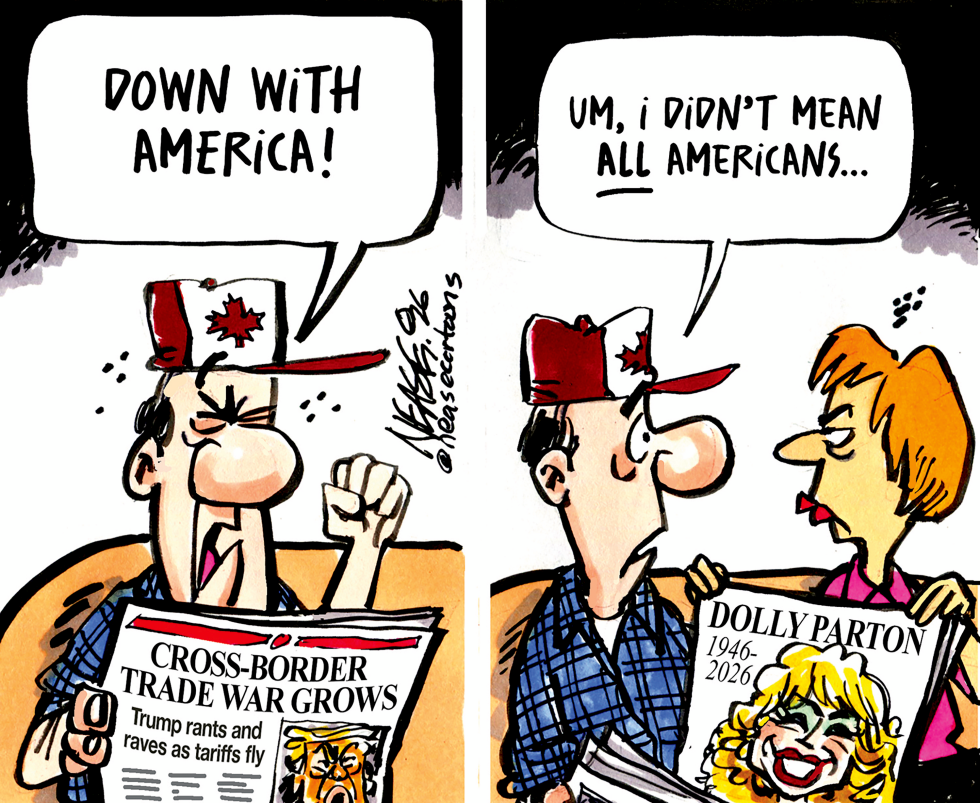
US-Canada trade tensions intensified in August 2026 as tariffs mounted amid heated rhetoric from President Trump. The dispute drew sharp reactions north of the border. The cartoon takes the position that even vocal critics of America make exceptions for beloved figures like Dolly Parton.
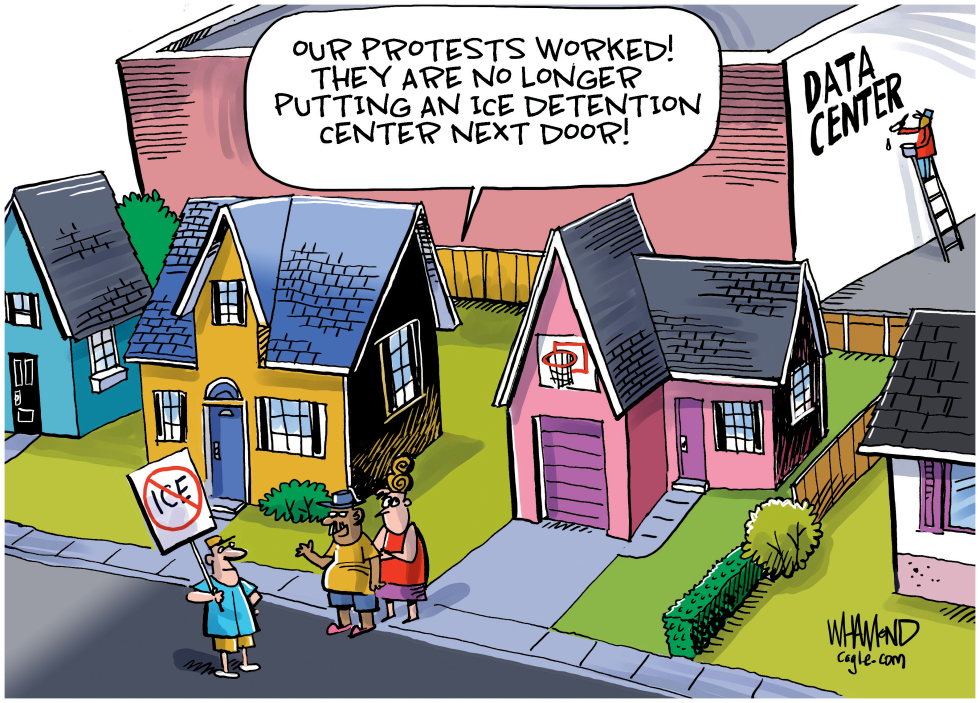
Residents in a suburban neighborhood protested plans for an ICE detention center near their homes. The facility was replaced by a data center, prompting cheers from locals who had opposed the detention site. The editorial highlights community pushback against immigration enforcement infrastructure and the unexpected outcome favoring commercial development instead.
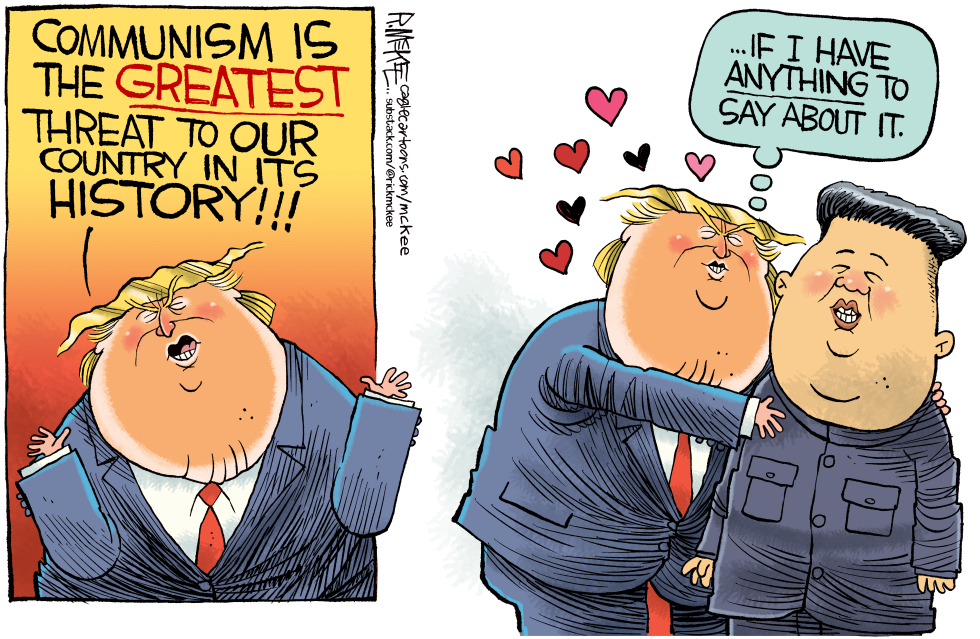
Donald Trump publicly labeled communism the greatest threat to the country before embracing North Korean leader Kim Jong Un. The image captures the shift in tone through contrasting scenes of protest and affection. The editorial position criticizes the inconsistency in the approach to the regime.