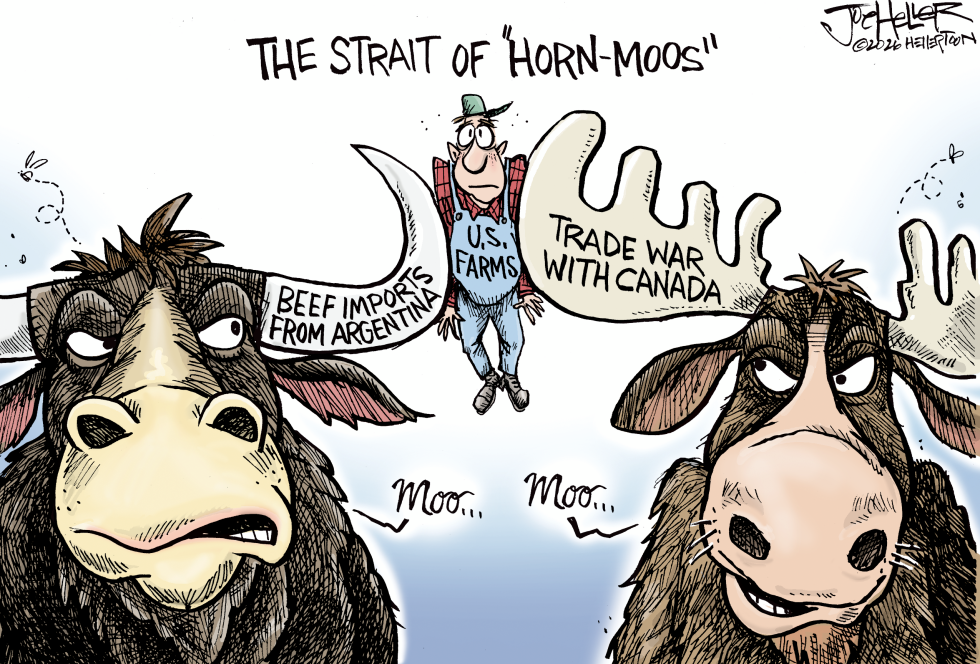
US agricultural interests face simultaneous pressure from increased beef imports from Argentina and an escalating trade dispute with Canada. The situation highlights how competing international trade policies directly affect domestic producers. The piece portrays American farms as caught in the middle of these conflicting pressures.
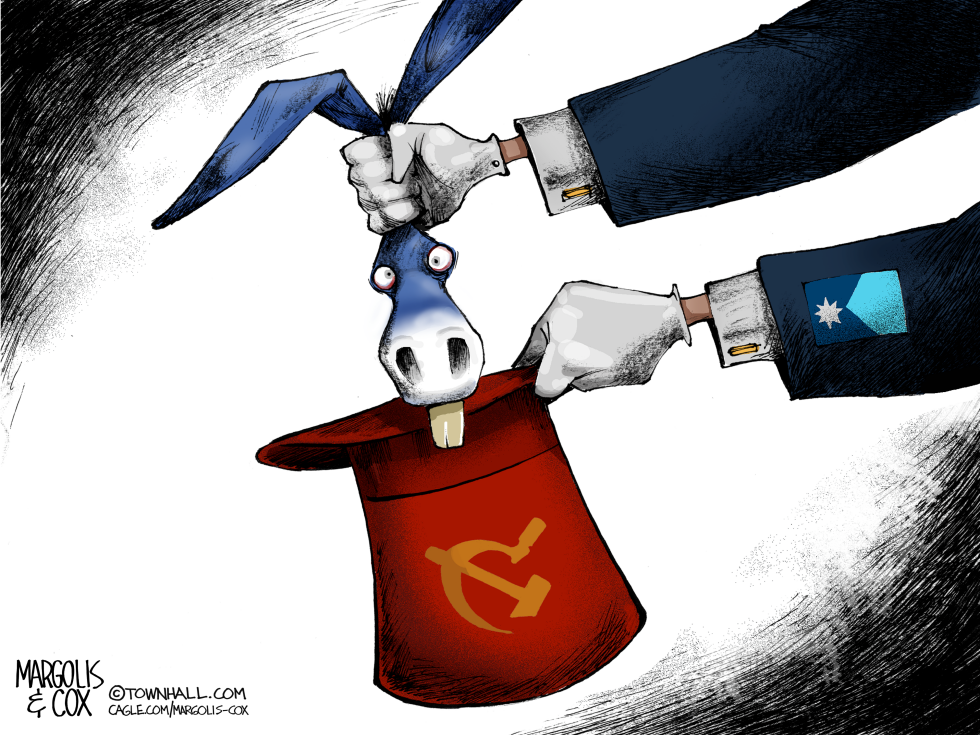
Accusations that Democratic policies carry communist undertones have persisted in partisan debate for years. The image frames the party as emerging directly from a communist emblem through a conjurer's reveal. This visual argument underscores ongoing conservative critiques that Democratic governance veers toward authoritarian economic controls rather than traditional American principles.
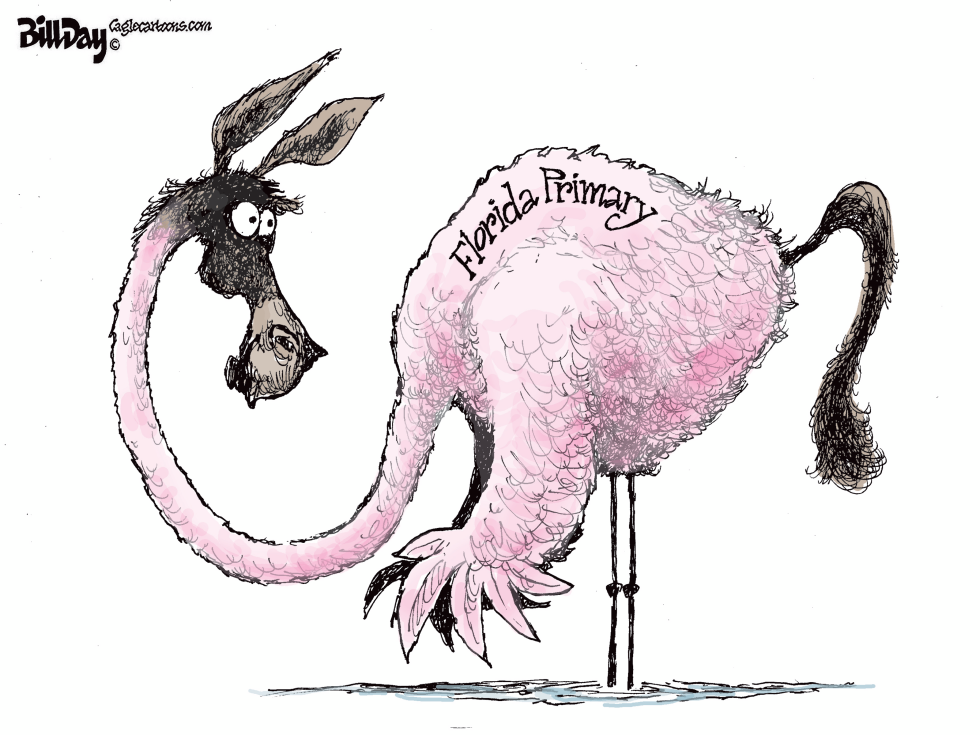
Florida prepares for its primary election with Democratic candidates competing for key nominations. The contest draws attention due to the state's role in national party positioning. The piece portrays the primary as an awkward fusion of traditional party identity and local Florida elements, suggesting the process strains familiar symbols.
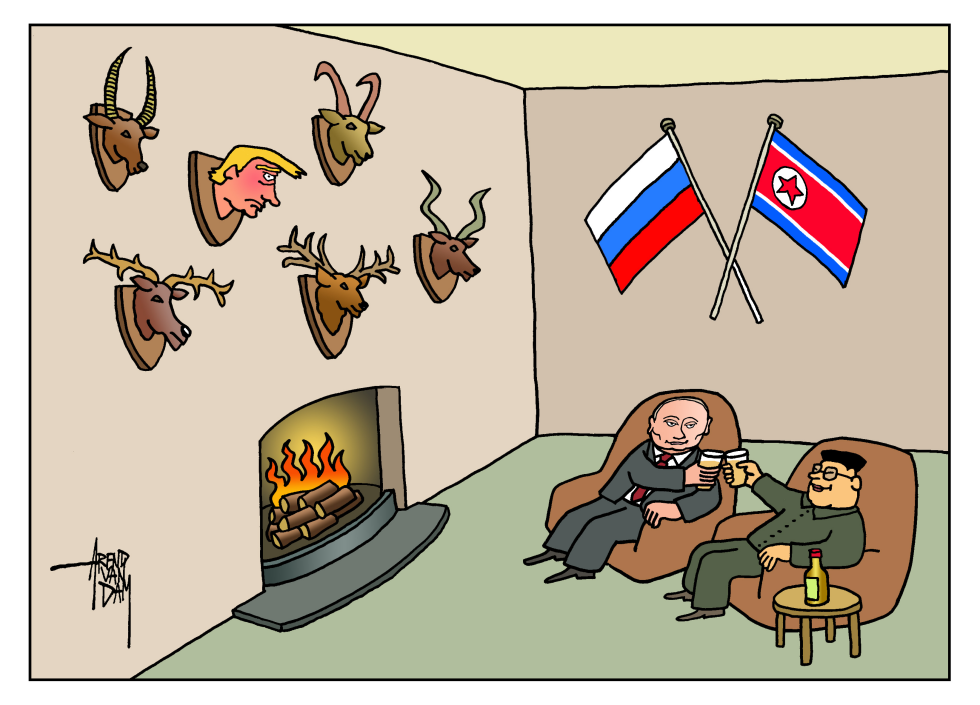
Vladimir Putin and Kim Jong Un appear together in a hunting lodge raising glasses in celebration. A mounted head resembling Donald Trump joins animal trophies on the wall beside the flags of their two nations. The scene reflects ongoing diplomatic alignment between Moscow and Pyongyang amid persistent tensions with Washington over security and sanctions.
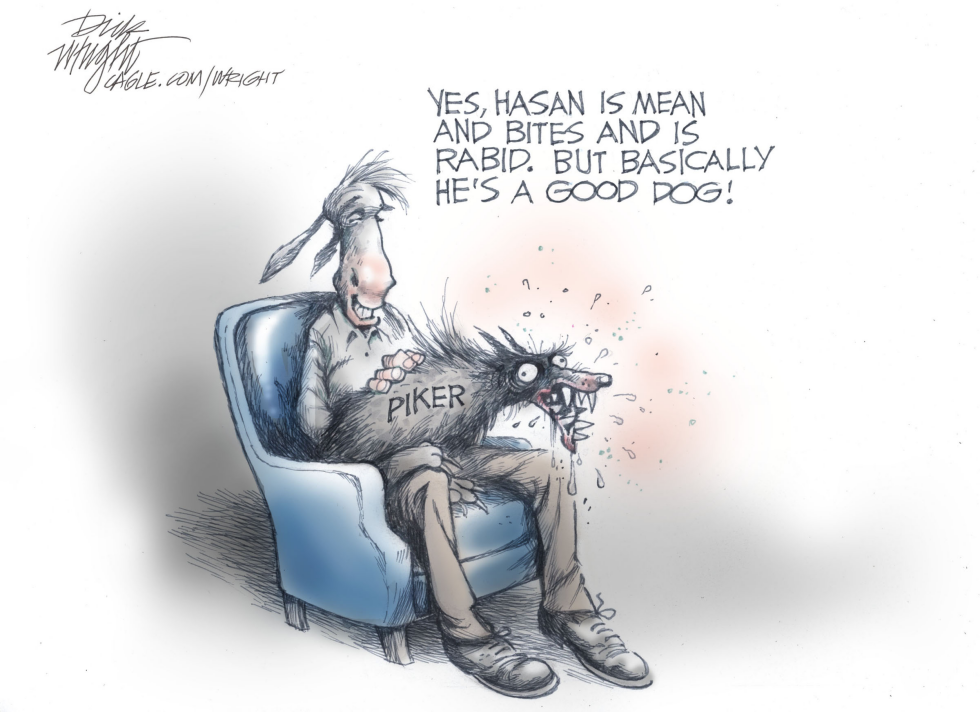
A prominent left-leaning commentator known for inflammatory rhetoric continues to draw defenses from Democratic figures despite repeated controversies over his statements. The defense frames the commentator as fundamentally loyal even while acknowledging aggressive conduct. This dynamic highlights ongoing tensions within progressive circles over how to handle allies whose rhetoric crosses into personal attacks. The piece portrays the defense as an exercise in willful denial of evident problems.
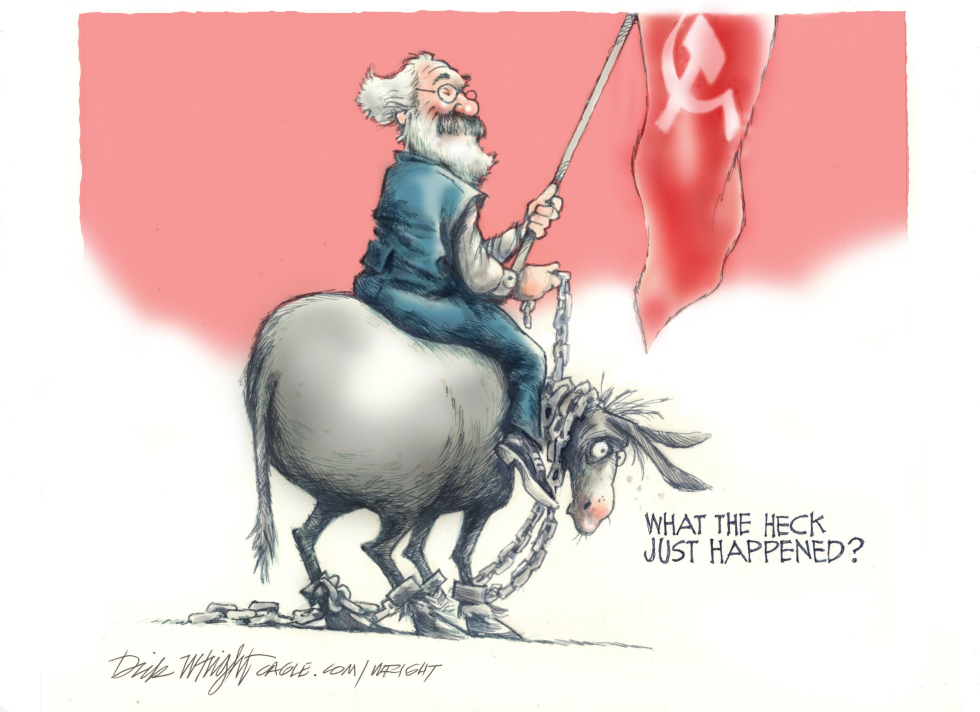
A Marxist figure has taken the reins of the Democratic Party symbol, raising a hammer-and-sickle flag over a donkey bound in chains. The image captures the moment the animal registers the shift in control. The editorial argues that radical communist influence has overtaken the party and left its traditional base bewildered by the abrupt change in direction.
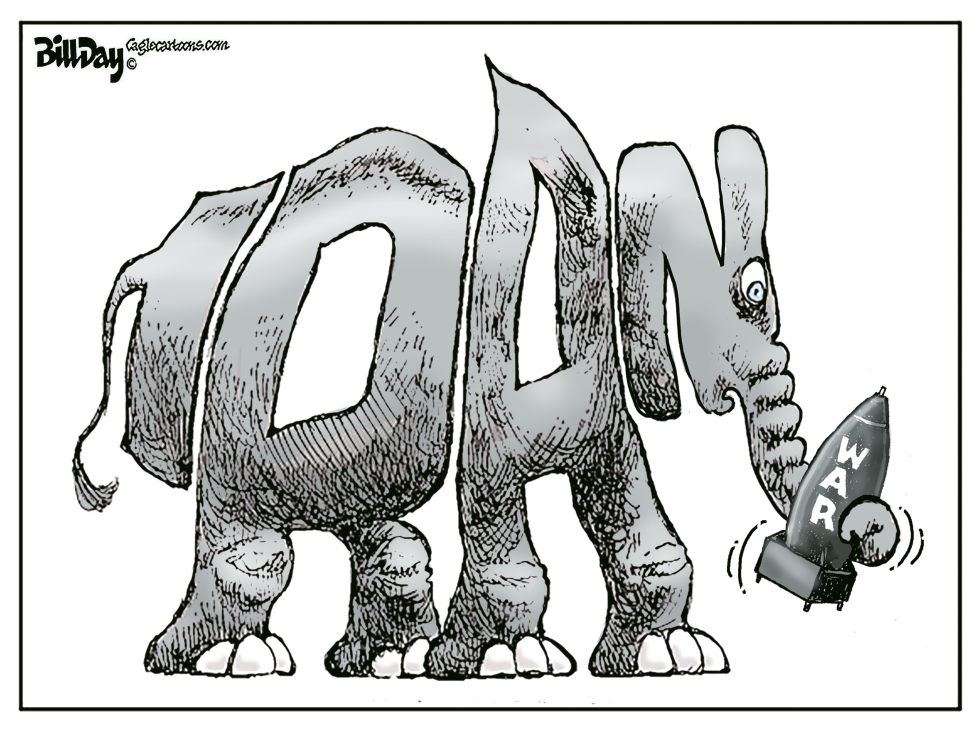
The Republican Party continues to navigate internal divisions over foreign policy and military engagement. Recent statements from party leaders have emphasized strength abroad while avoiding specific commitments on ongoing global conflicts. The piece portrays the GOP elephant as directly handling a war bomb, underscoring the risks of escalating rhetoric. It highlights how party identity remains tied to assertive defense postures. The editorial position criticizes the embrace of war imagery as potentially reckless.
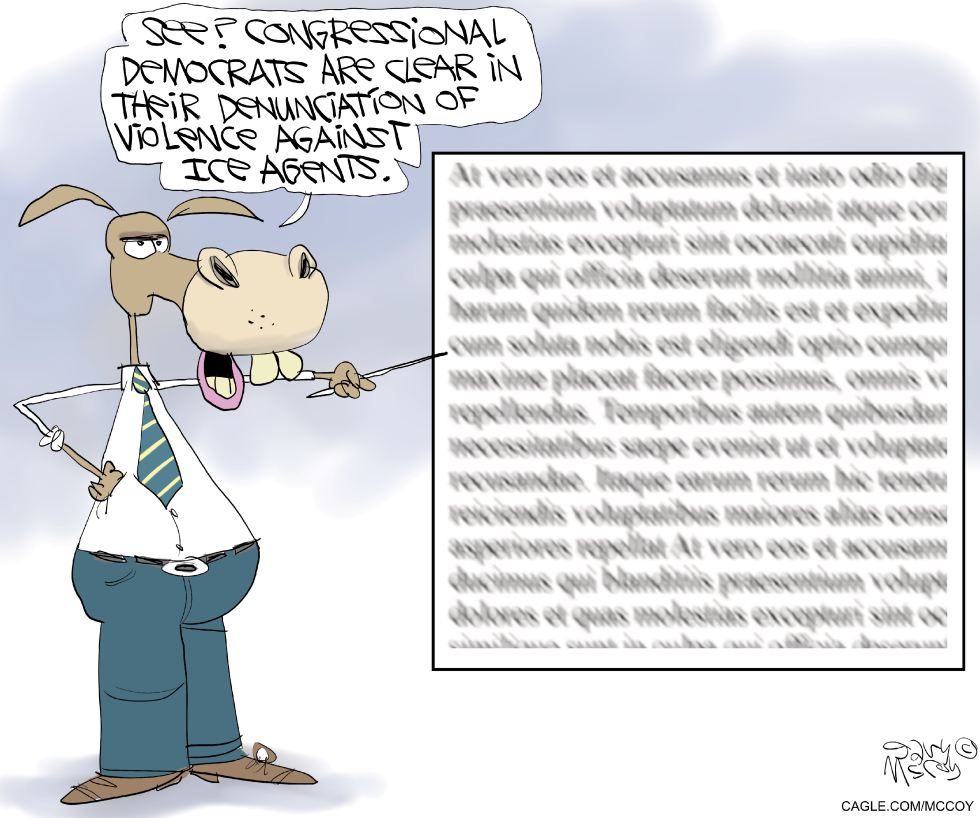
Congressional Democrats have issued statements condemning violence targeting ICE agents amid ongoing enforcement operations. The move comes as border security remains a flashpoint in legislative debates. The piece suggests the denunciation relies on dense or unclear language rather than direct action.
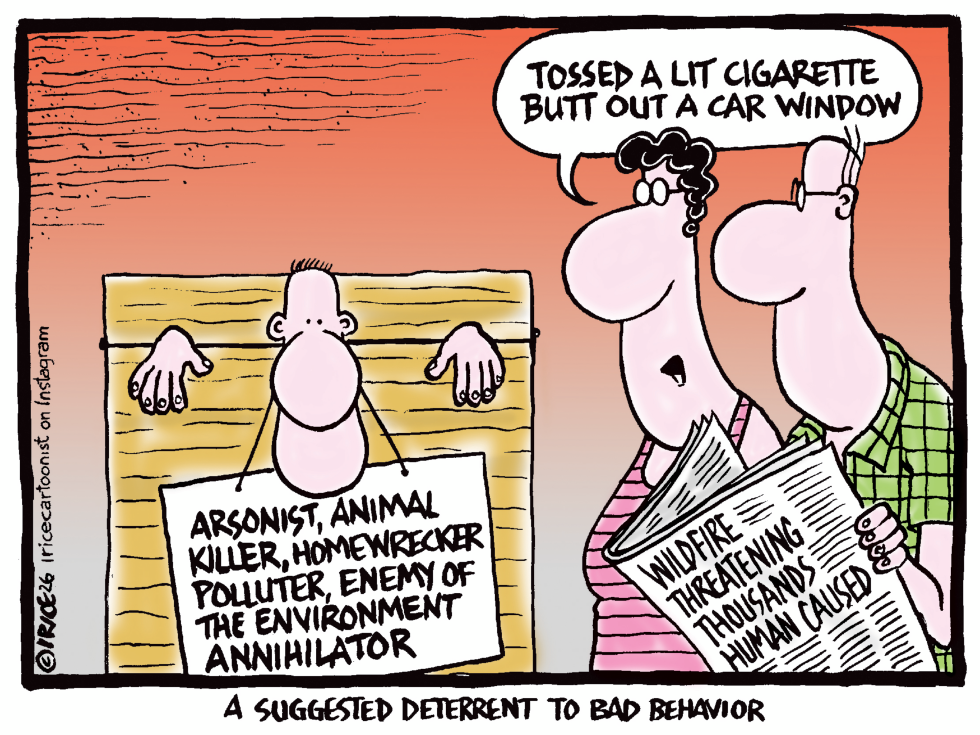
Cigarette litter from vehicles continues to ignite wildfires that destroy homes and habitats across dry regions. The practice endangers thousands and burdens emergency responders during peak fire seasons. The cartoon advances stocks as an old-fashioned public punishment to shame and deter the specific act of tossing lit butts out car windows.
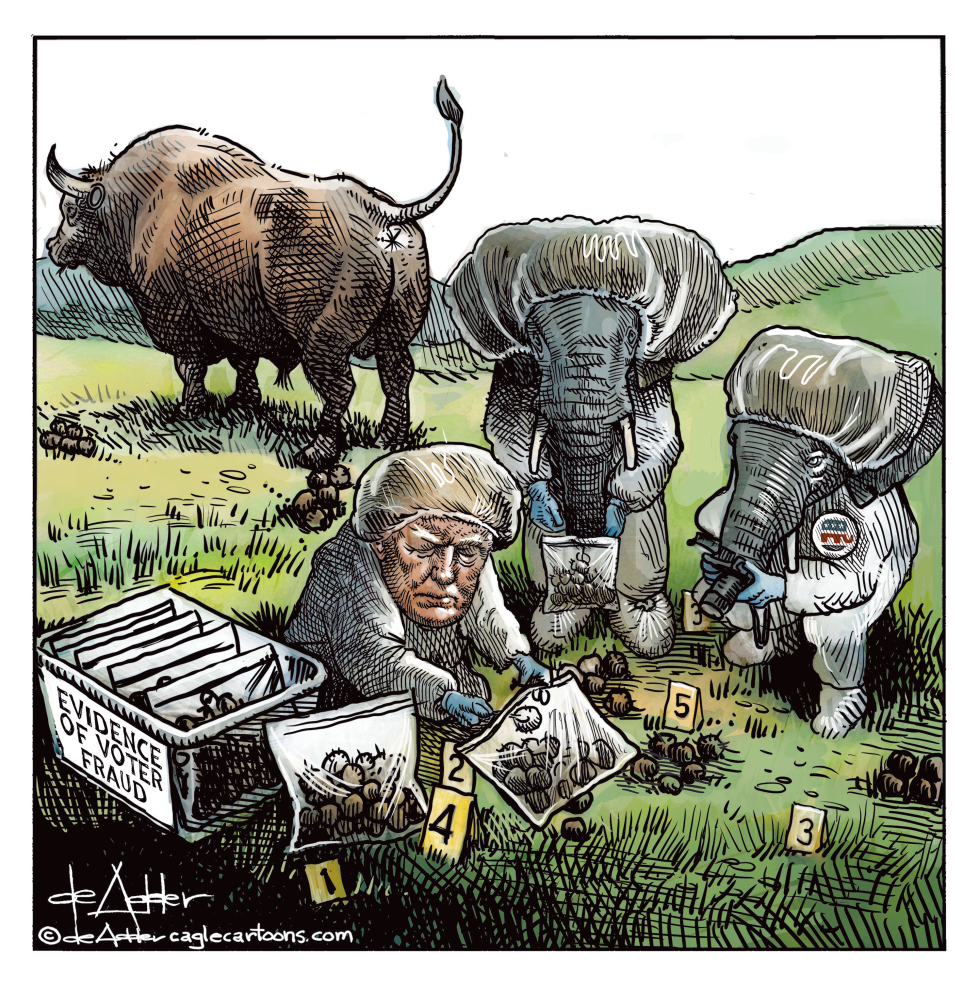
The cartoon shows Donald Trump in protective gear crouching to inspect animal droppings marked as voter fraud evidence. Two elephants wearing GOP buttons and hairnets collect samples in bags, while a bull stands in the background. Evidence boxes and numbered markers line the grassy field. The scene responds to ongoing Republican focus on election integrity issues around the 2026 period. It uses the droppings as a visual stand-in for disputed claims of widespread fraud.
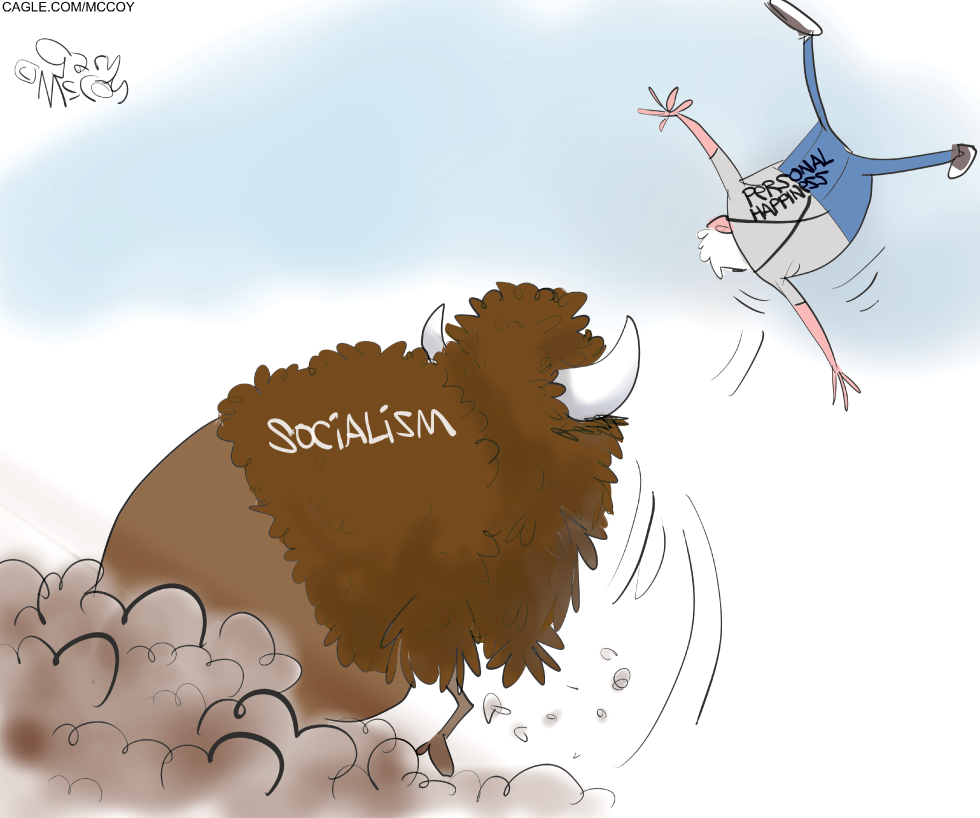
A bison marked socialism sends a person marked personal happiness tumbling through the air. The scene shows the animal in motion with dust rising from its hooves while the figure spins upside down.
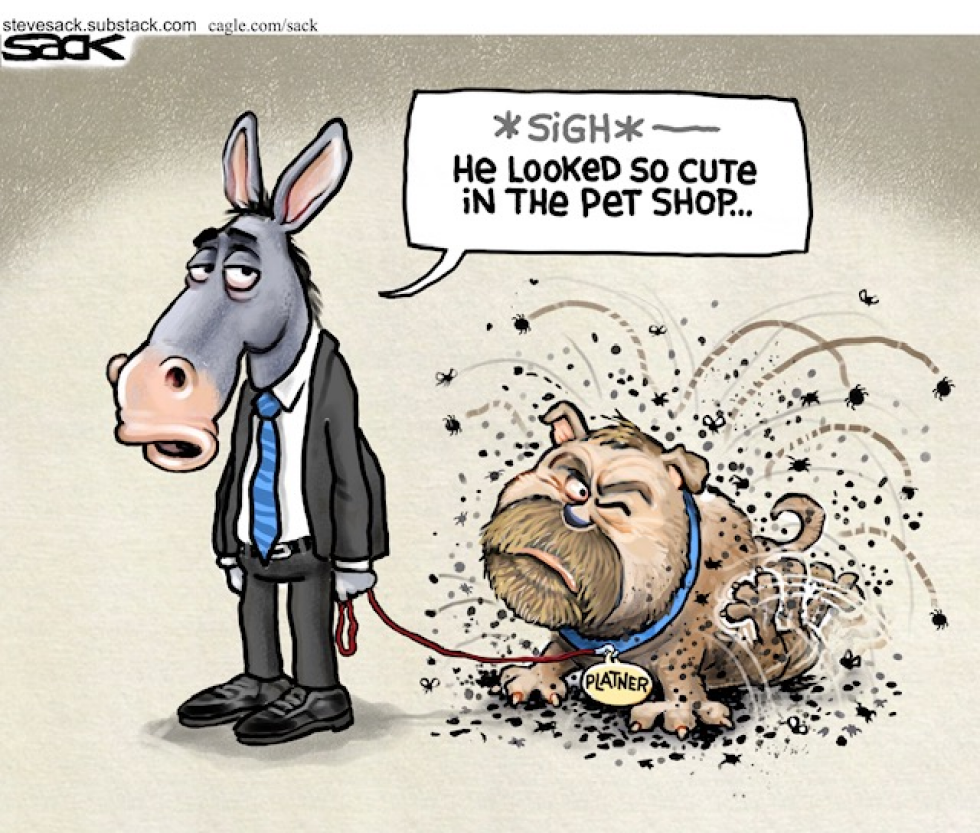
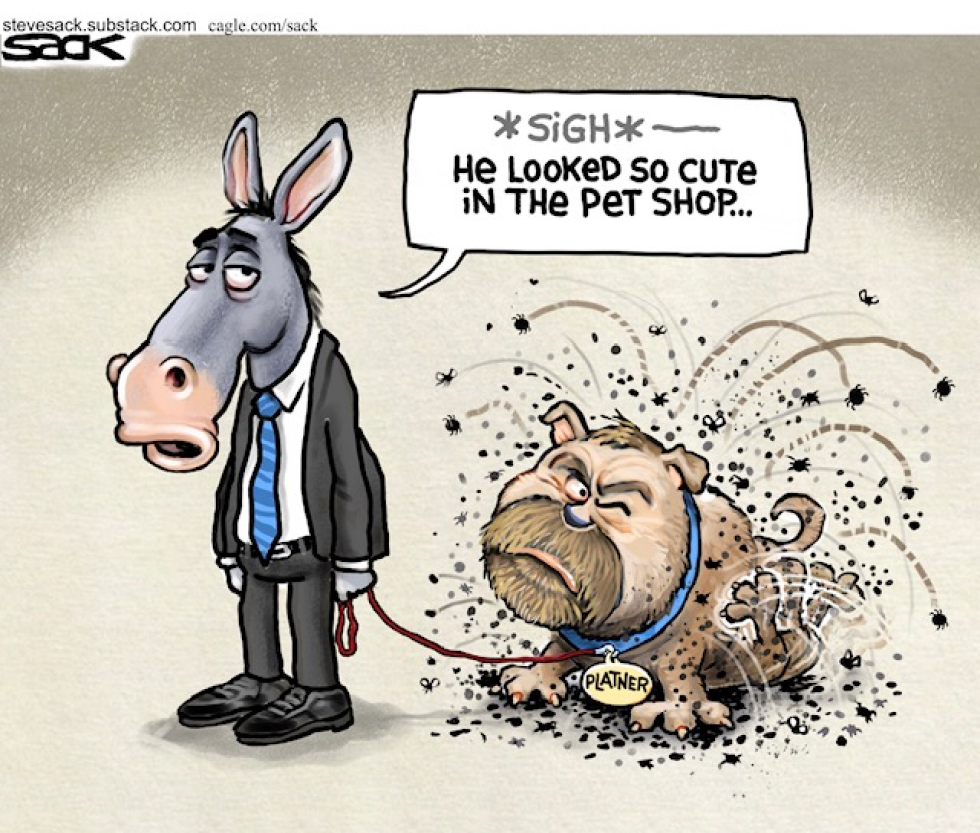
A suited donkey on a leash holds a flea-infested bulldog named Platner on the publication date of July 9, 2026. The donkey sighs about the pet shop appearance while bugs swarm the scene. The image uses standard party symbols to depict buyer remorse over a recent political choice.
A Democratic donkey on a leash holds a flea-infested dog tagged Platner and expresses regret over its pet shop purchase in this July 8 2026 cartoon by Steve Sack. The visual shows the dog scratching amid a cloud of fleas as the donkey sighs that it looked cute at the store. The image comments on recent political developments involving candidate selection within the party.
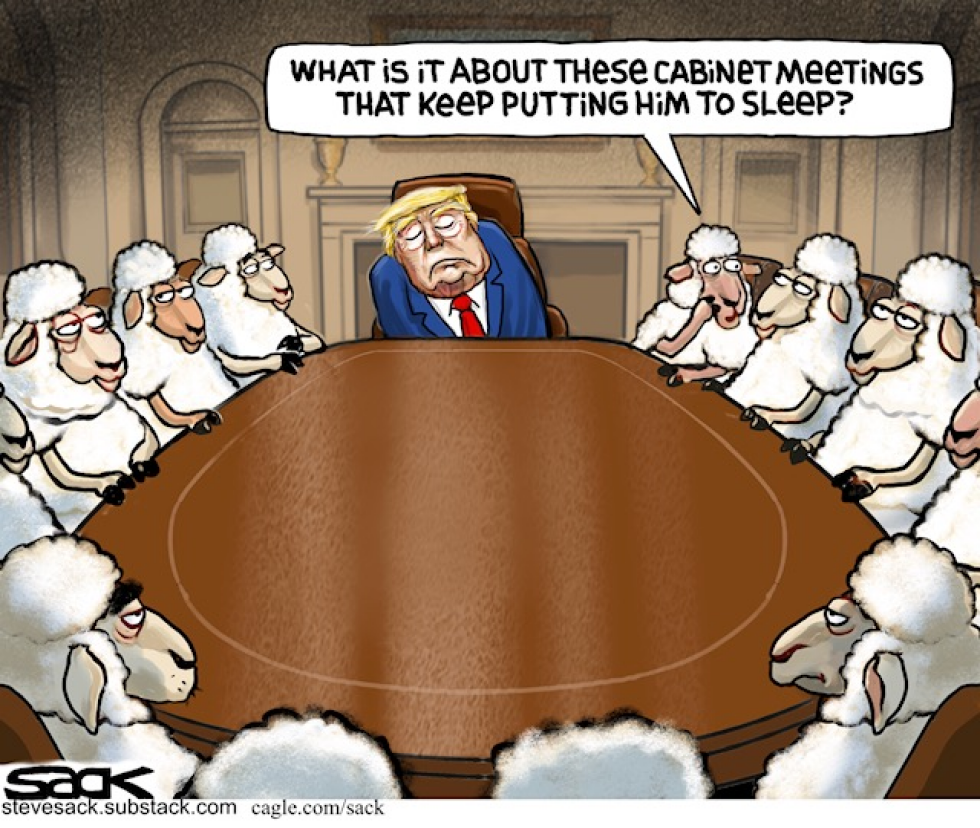
Donald Trump appears asleep at the head of a long conference table while sheep dressed in business attire occupy the surrounding seats. A speech bubble above the scene asks what about cabinet meetings keeps putting him to sleep. The July 2026 image from Steve Sack depicts the president in a blue suit and red tie with eyes closed and head tilted. The setting shows a formal room with arched doorways and a large wooden table. Text at the bottom includes the artist's signature and website links.
A goat wearing a crown stands in grass with the words BLAME OTHERS -DJT printed in red across its side and the label SCAPEGOAT beneath it. The image from July 2026 uses the animal to represent a political figure associated with shifting responsibility.