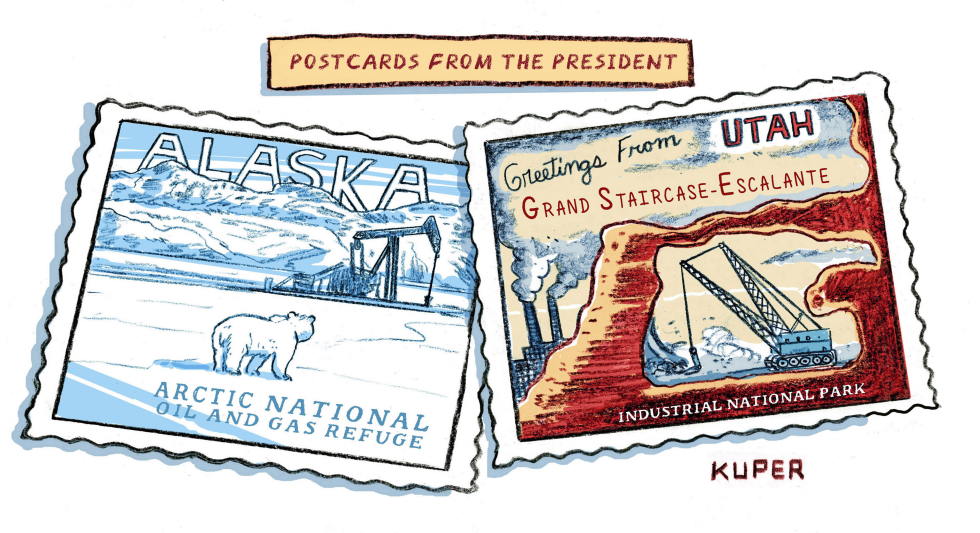
The president has advanced policies opening Arctic National Wildlife Refuge and Grand Staircase-Escalante to expanded oil and gas development. These moves prioritize domestic energy production over prior conservation designations. The editorial uses postcard imagery to critique the transformation of protected lands into industrial zones, arguing that short-term extraction gains undermine long-term environmental protections and public lands legacy.
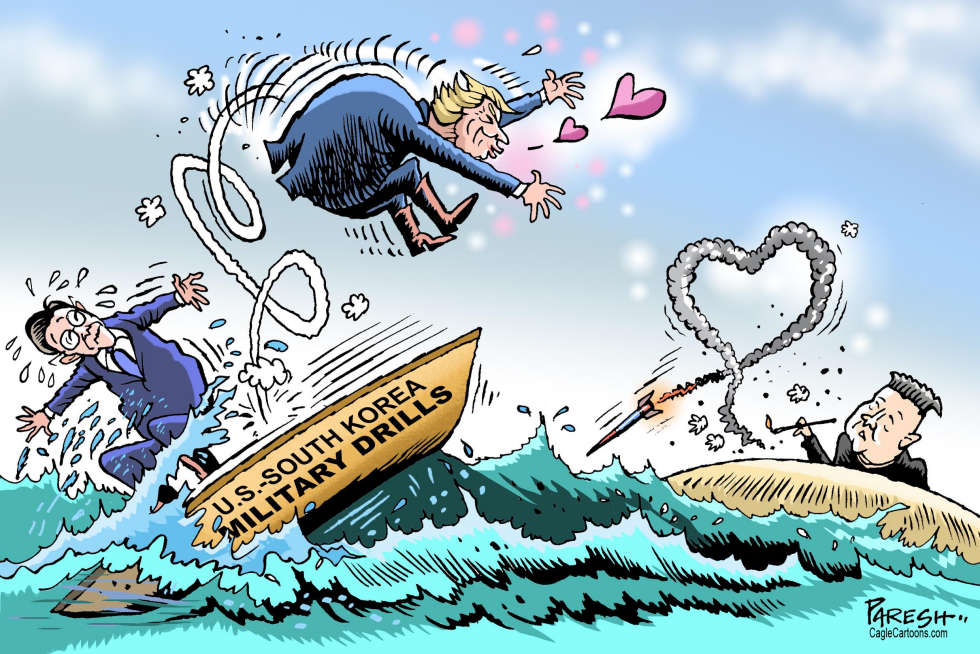
The image depicts Donald Trump being pulled from a boat labeled U.S.-South Korea military drills toward a heart formed by smoke from a missile launched by Kim Jong-un. Trump reaches out with hearts nearby while the other figure tumbles into the water. The scene illustrates tension between ongoing joint exercises and apparent interest in the North Korean leader. Publication occurred on August 21 2026 amid recurring discussions of regional security.
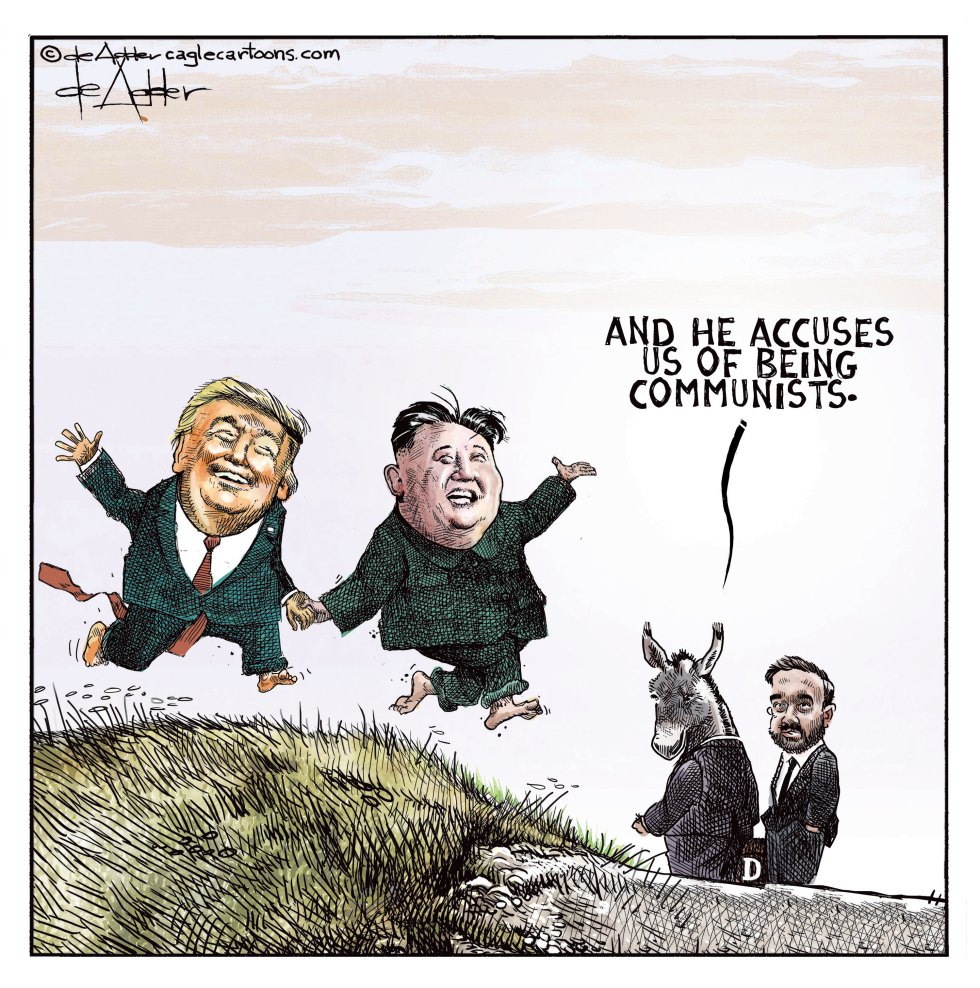
Donald Trump and Kim Jong Un appear together in a political scene accusing Democrats of communist leanings. The depiction highlights their joint action amid ongoing partisan rhetoric. The editorial position frames the accusation as inconsistent given the shared leap.
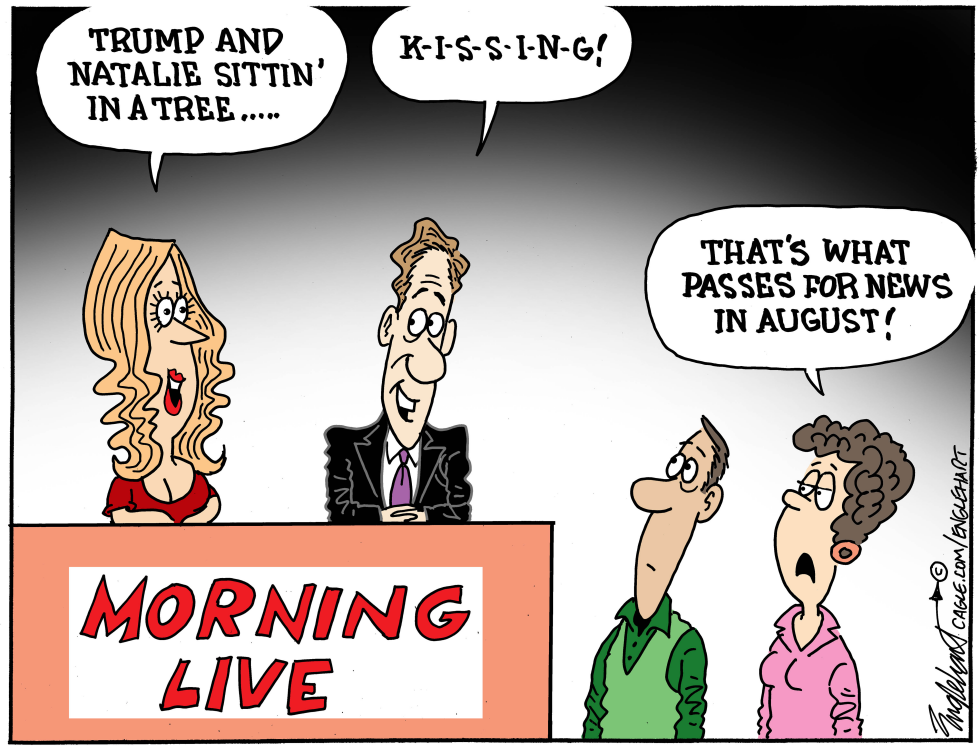
Speculation about Donald Trump and Natalie Harp sharing a kiss surfaced on morning television in August 2026. The story gained traction during a traditionally slow news period. The cartoon portrays the coverage as trivial gossip that passes for reporting when substantive events are scarce.
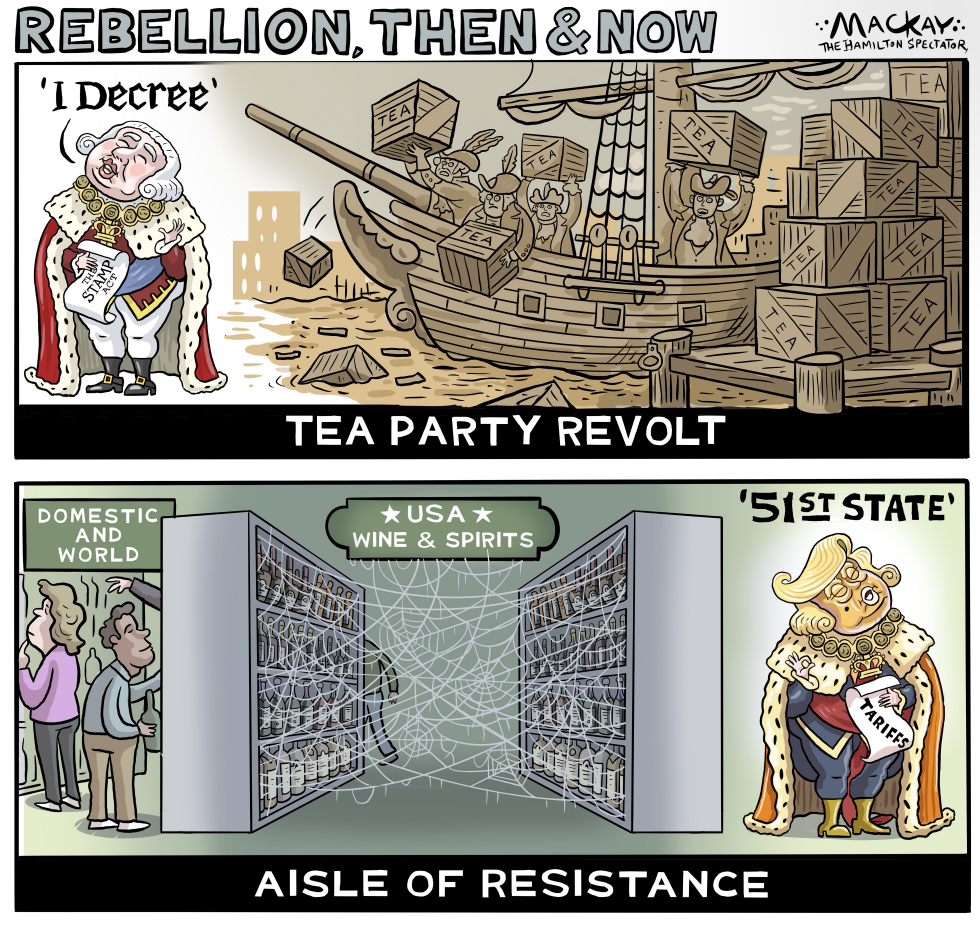
President Trump renewed tariff threats against Canada while floating the idea of the country becoming the 51st state. Canadian consumers responded with a boycott of American wine and spirits, leaving store shelves empty. The cartoon draws a parallel to the Boston Tea Party, casting the tariff policy as a modern decree provoking resistance.
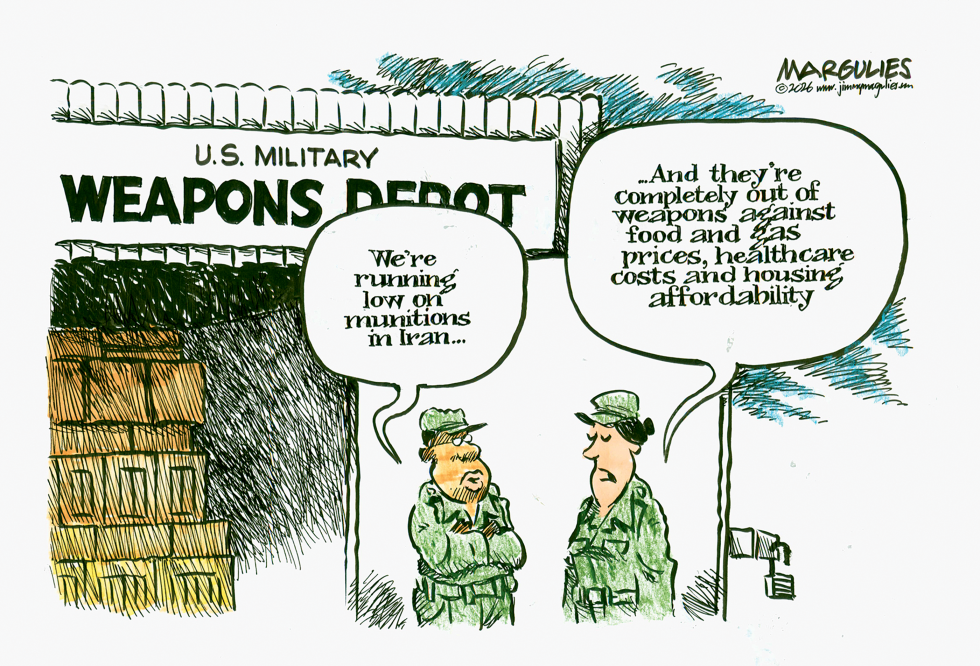
The cartoon depicts two U.S. soldiers outside a weapons depot labeled U.S. Military Weapons Depot. One soldier states the facility is running low on munitions in Iran. The second replies that domestic fronts are out of weapons against food and gas prices, healthcare costs and housing affordability. The image responds to ongoing debates over U.S. military aid commitments abroad and competing budget pressures at home as of the August 2026 publication date. It uses the depot setting and dialogue to contrast foreign military demands with economic challenges facing American households.
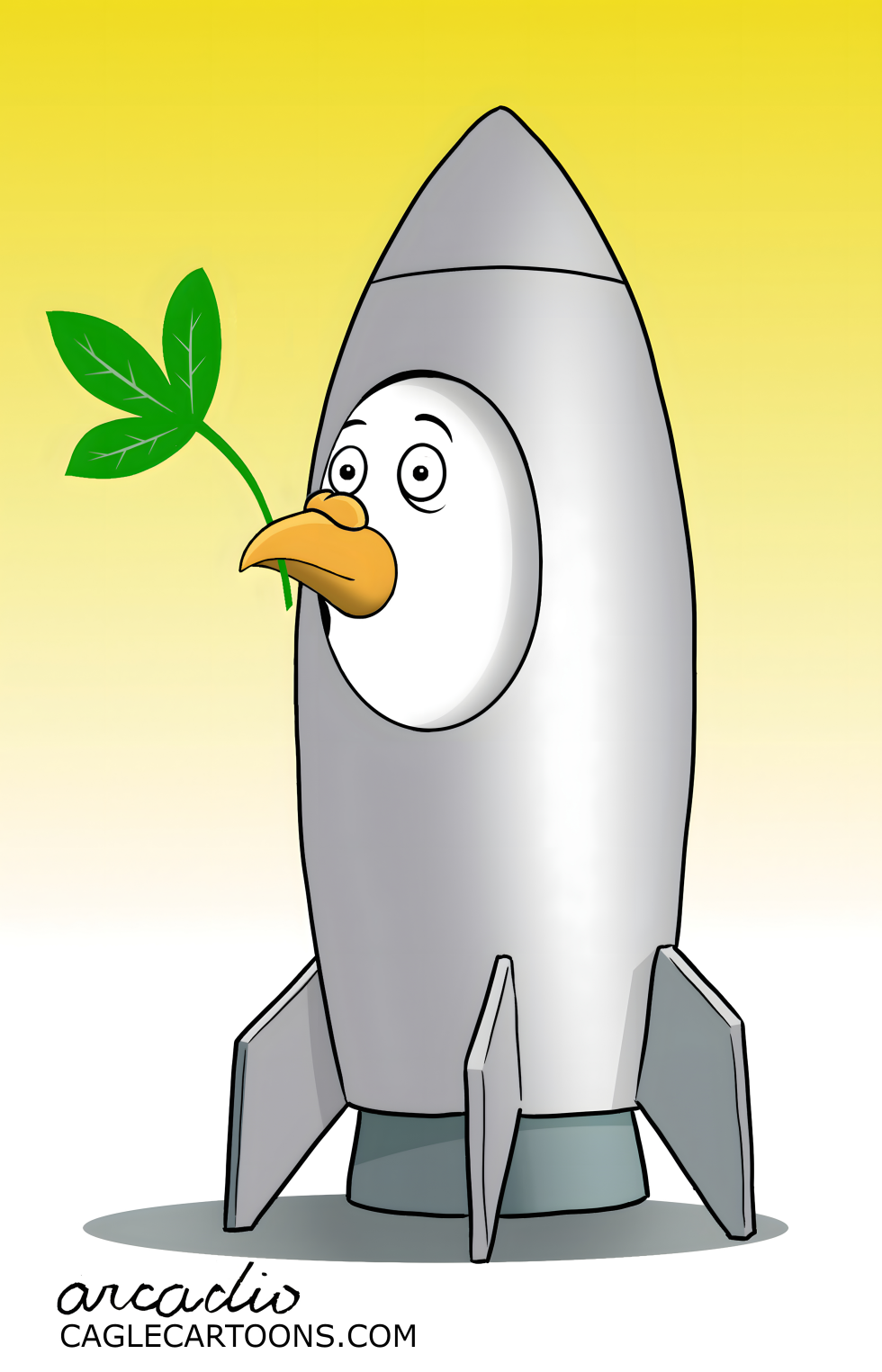
A hybrid rocket and dove figure holding an olive branch appears in editorial imagery dated August 2026. The visual merges symbols of military technology and peace efforts amid ongoing global tensions over defense systems and diplomatic initiatives. The piece presents the combined image as a commentary on attempts to balance strength with reconciliation in international affairs.
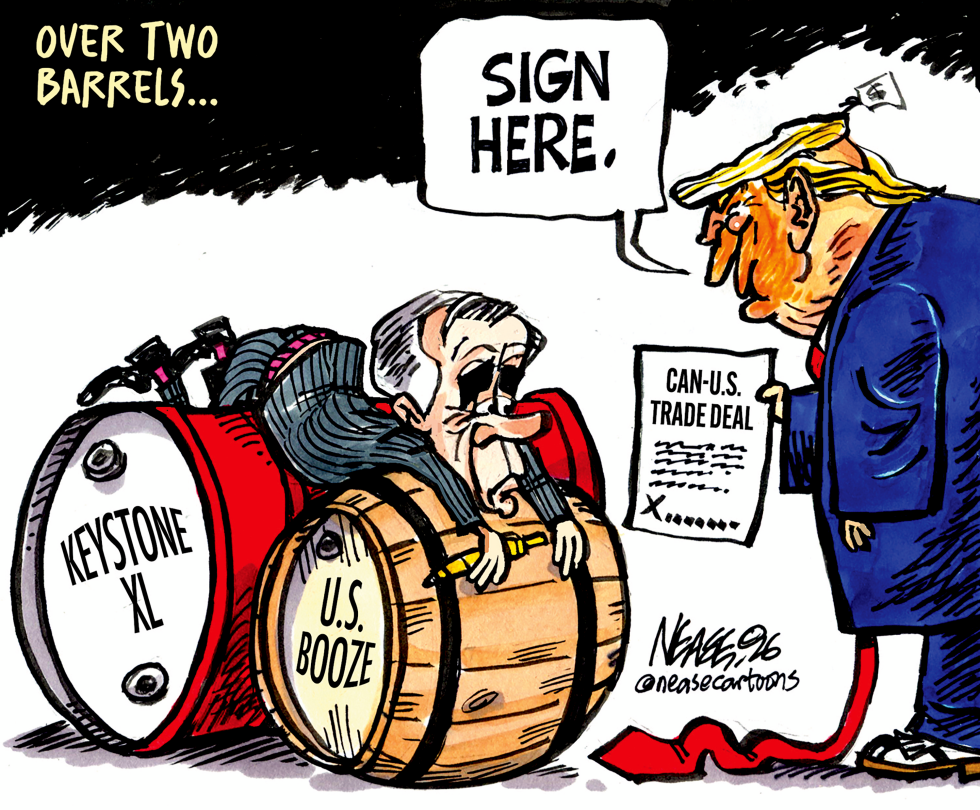
Donald Trump is pressing Canada to finalize a bilateral trade agreement by positioning the Canadian leader between a Keystone XL pipeline barrel and a U.S. booze barrel. The move ties energy infrastructure approval to broader trade concessions including alcohol exports. The editorial takes the position that such barrel-based pressure tactics risk undermining stable Canada-U.S. economic relations.
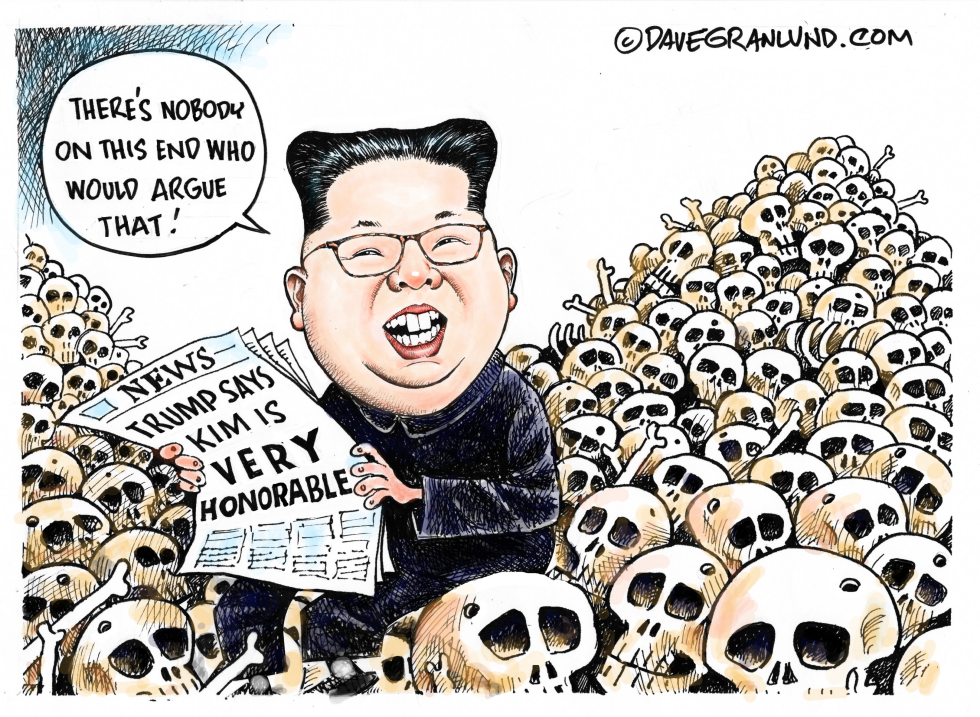
Donald Trump publicly described North Korean leader Kim Jong-un as very honorable. The remark revives questions about U.S. engagement with a regime long accused of severe human rights abuses and internal purges. Critics argue such language undercuts pressure on Pyongyang and signals weakness to allies. Supporters see it as pragmatic diplomacy aimed at reducing nuclear risks. The statement fits a pattern of personal assessments of foreign leaders that have drawn both support and condemnation depending on the political side. The editorial position holds that the praise ignores the human cost inside North Korea and weakens the moral standing of U.S. foreign policy.
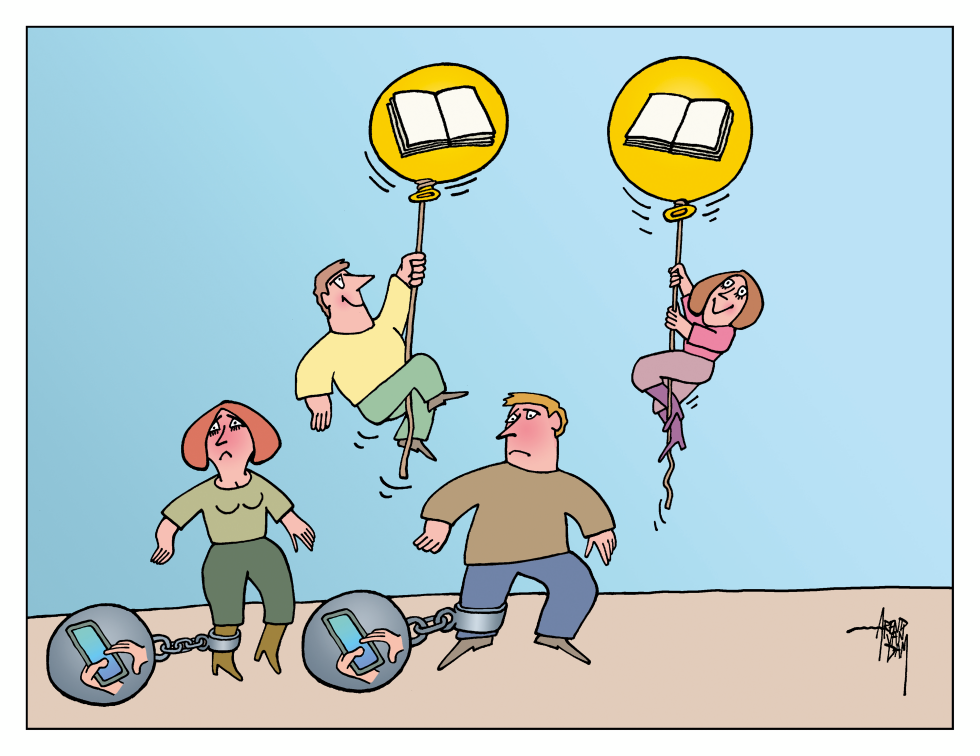
The ongoing debate over digital devices versus traditional reading materials continues to highlight how constant smartphone use can limit personal growth and mobility. Books, by contrast, offer pathways to broader perspectives and advancement. The editorial position favors reading as a superior force for individual upliftment over reliance on handheld technology.
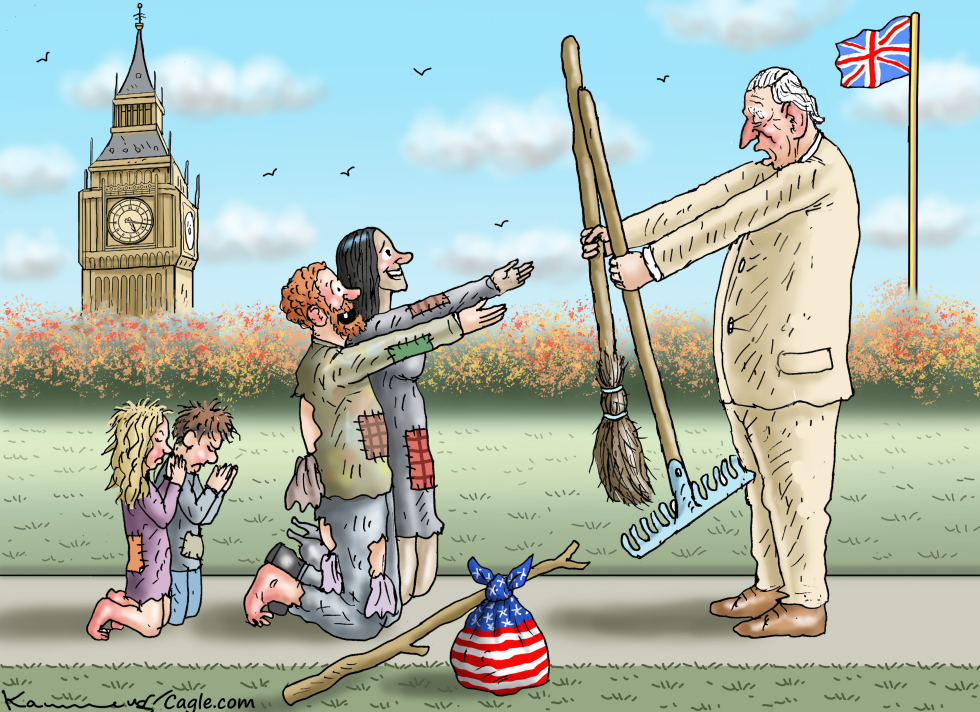
Prince Harry and family appear in tattered clothing seeking reentry to Britain as King Charles stands with a broom marked welcome near the Houses of Parliament. The scene reflects ongoing tensions over the couple's status after their move to the United States.
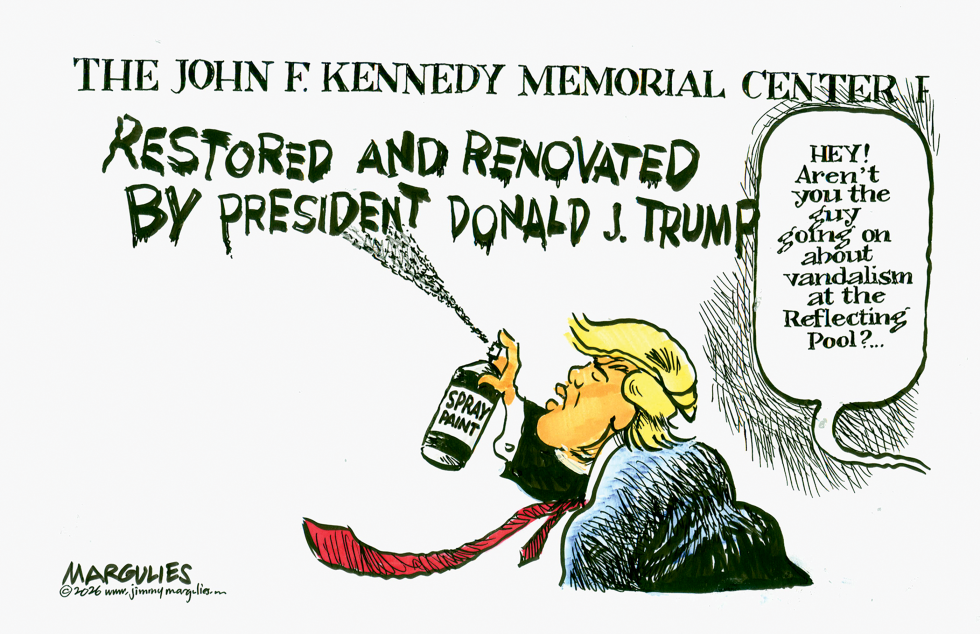
President Donald J. Trump faces accusations of altering the John F. Kennedy Memorial Center sign to claim personal credit for restoration work. The move draws immediate pushback tied to prior statements on vandalism at the Reflecting Pool. Critics see the action as an attempt to insert his name into a site honoring a predecessor.
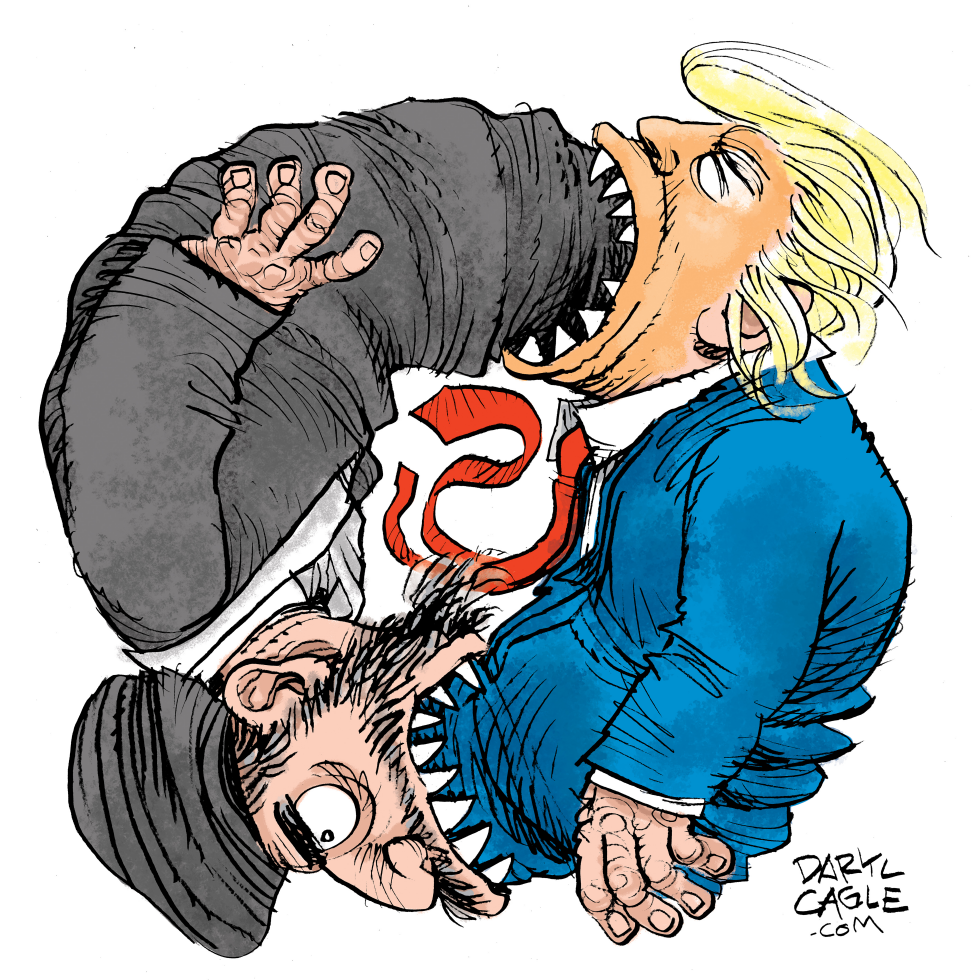
Tensions between the United States and Iran continue amid ongoing disputes over nuclear issues and regional influence. The editorial portrays the two sides as trapped in a self-perpetuating cycle of hostility with no resolution in sight.
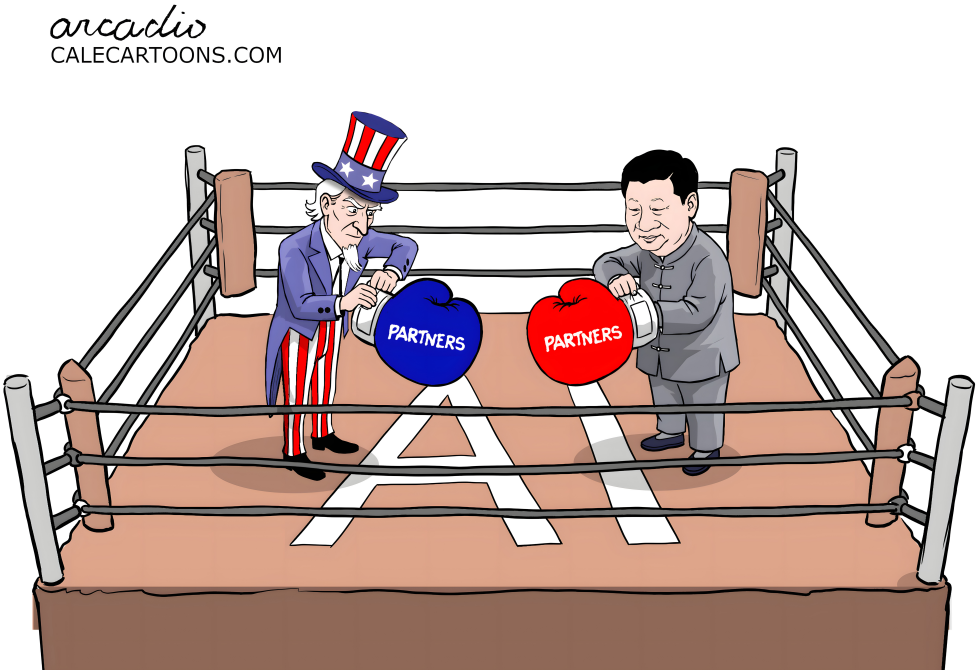
The United States and China continue their contest for leadership in artificial intelligence development. Both nations invest heavily in research and infrastructure to secure advantages in computing power and applications. The competition carries implications for economic growth, military capabilities, and global standards. Recent policy moves on export controls and domestic incentives underscore the stakes. The editorial position frames the dynamic as a direct contest where surface cooperation masks deeper rivalry.
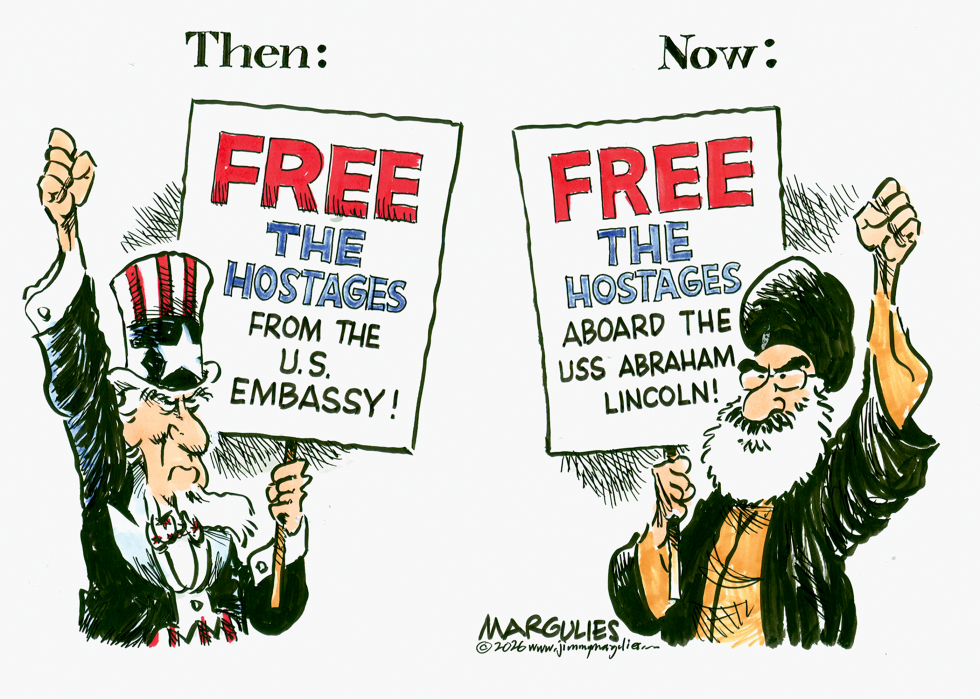
The 1979 Iran hostage crisis saw militants seize the US embassy in Tehran, holding 52 Americans for 444 days. In 2026, renewed tensions involve US naval assets like the USS Abraham Lincoln amid Middle East conflicts. The cartoon draws a parallel between past embassy demands and present calls involving the carrier, critiquing the recurring cycle of hostage rhetoric from Iranian leadership.