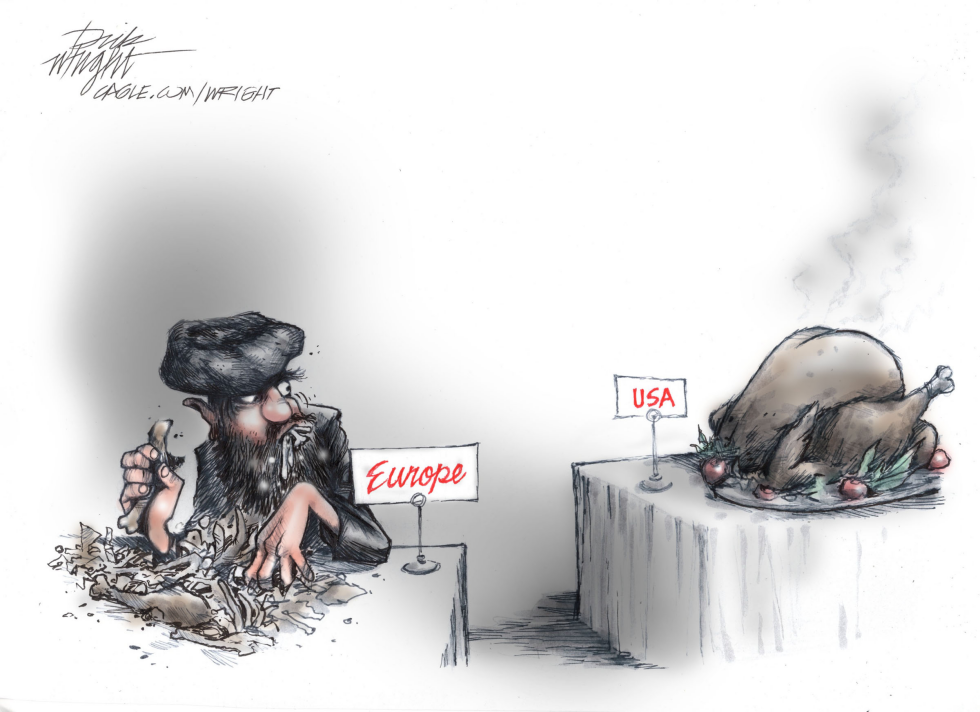
A foreign leader has stripped Europe bare and now eyes the United States as the next prize. The piece argues that unchecked expansionist momentum threatens American security and global stability.
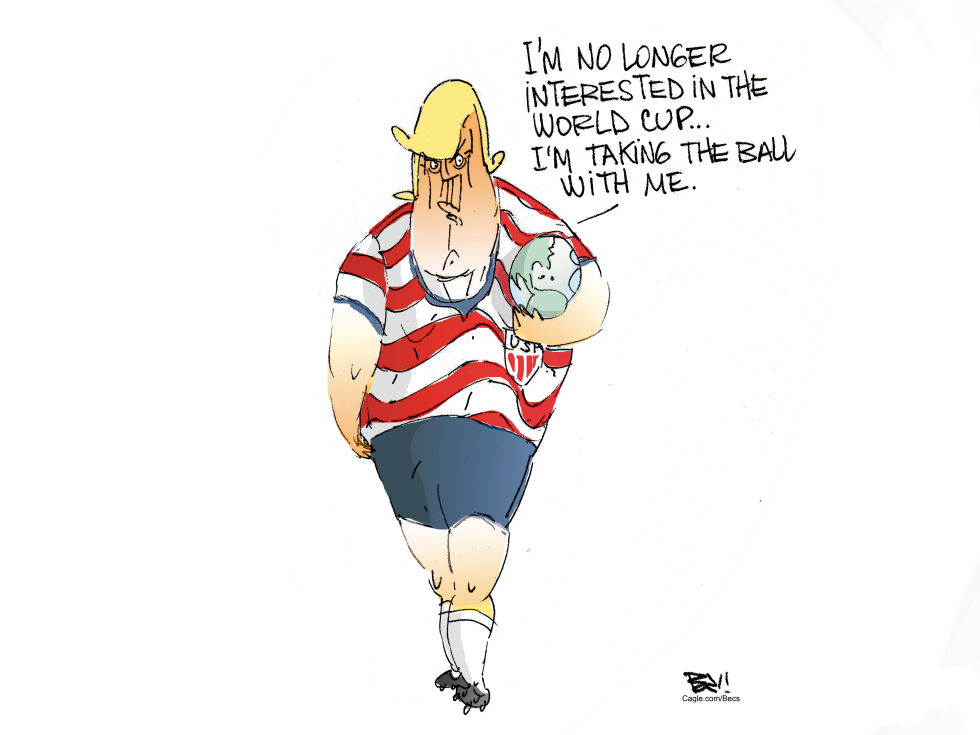
Donald Trump appears in a USA soccer jersey on July 9, 2026, clutching a globe and announcing he is no longer interested in the World Cup. The image shows him walking off with the ball under his arm. The cartoon responds to the 2026 World Cup hosted in North America and ongoing political debates over U.S. engagement in international events.
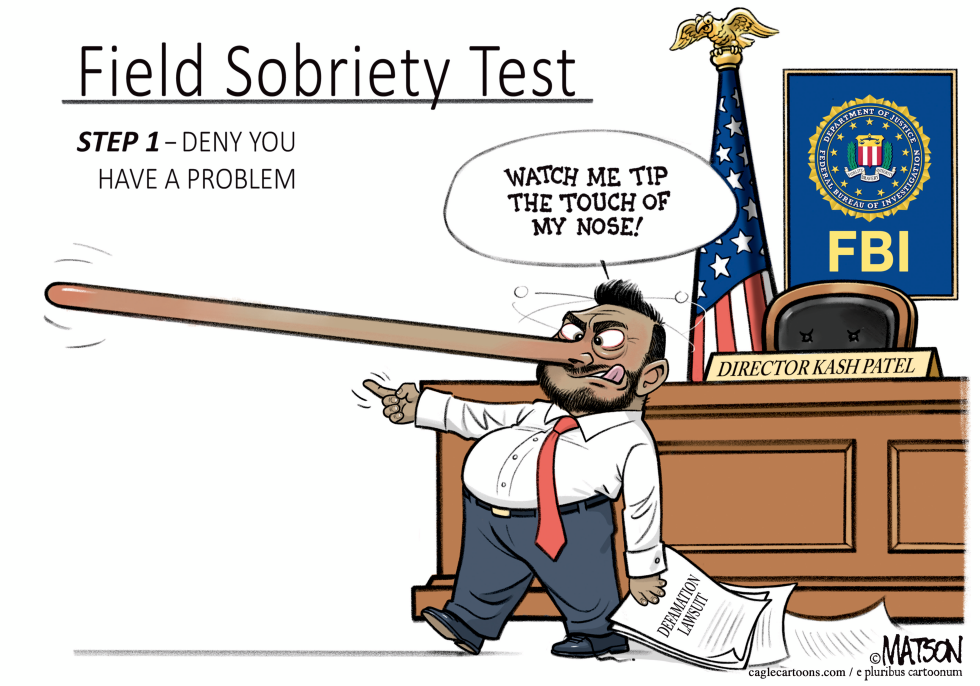
R.J. Matson's cartoon depicts Director Kash Patel behind an FBI desk, his nose elongated like Pinocchio's, as he mangles a sobriety test phrase: 'Watch me tip the touch of my nose!' The setup labels it Step 1: Deny you have a problem, with a defamation lawsuit paper slipping away. American and FBI flags frame the scene, tying into tags like Federal Bureau of Investigation, Kash Patel, field sobriety test, intoxication, drinking problem, and criminal justice. This visual pokes at perceptions of denial in leadership, blending humor with commentary on domestic policy without overreaching into unseen motives.
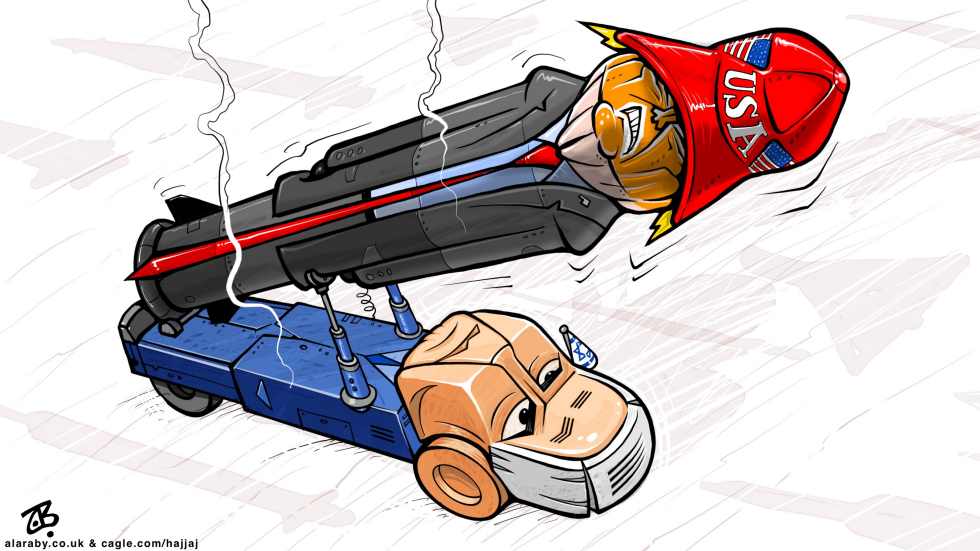
This viral cartoon captures the essence of US politics with Donald Trump morphed into a explosive rocket, complete with a patriotic USA hat, aggressively targeting a downtrodden Joe Biden as a blue, masked robot vehicle. The satirical missile embodies Trump’s bombastic style, while Biden’s robotic depiction hints at perceptions of frailty or mechanized leadership. Through political humor and cartoon warfare, the image skewers presidential satire, highlighting American rivalry in election humor. Artist Hajjaj’s work blends irreverent wit with insightful commentary on the Trump Biden clash, making it a sharable gem in political cartoon circles.
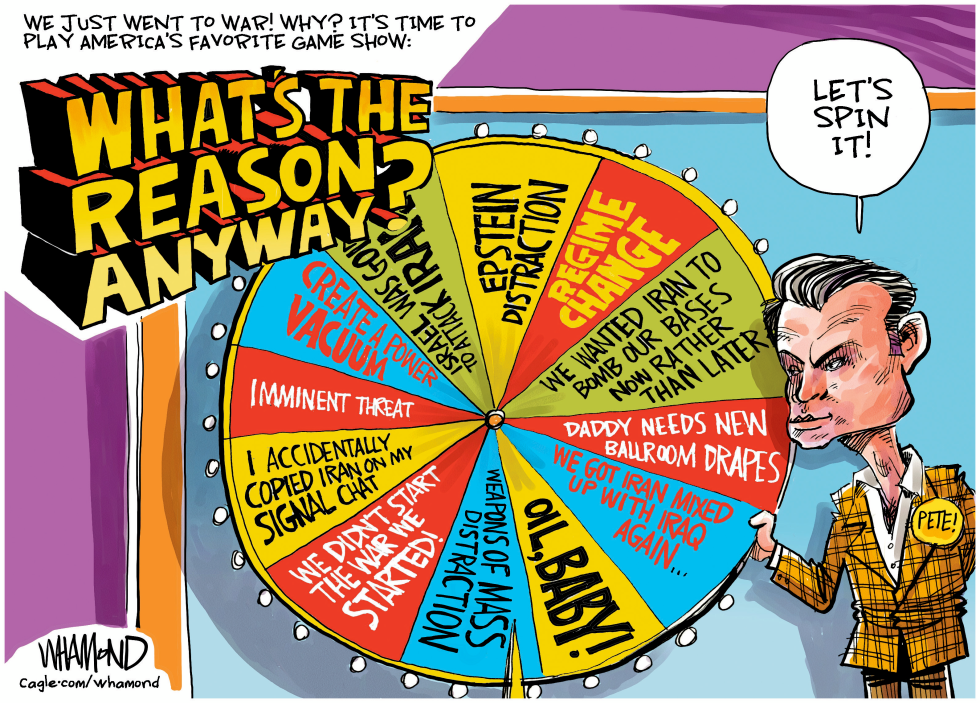
Dive into this biting political cartoon where America's war decisions are reduced to a game show parody wheel, featuring options like 'Imminent Threat,' 'Oil, Baby!,' and 'Regime Change.' The irreverent satire targets US foreign policy, highlighting how military interventions often spin on flimsy pretexts, from accidental escalations to resource grabs. With a host eagerly spinning the wheel, the artwork cleverly critiques the absurdity of war justifications, blending humor with insightful commentary on geopolitical cynicism. Tags like political cartoon, war justifications, and military intervention humor underscore its viral potential in today's polarized discourse.
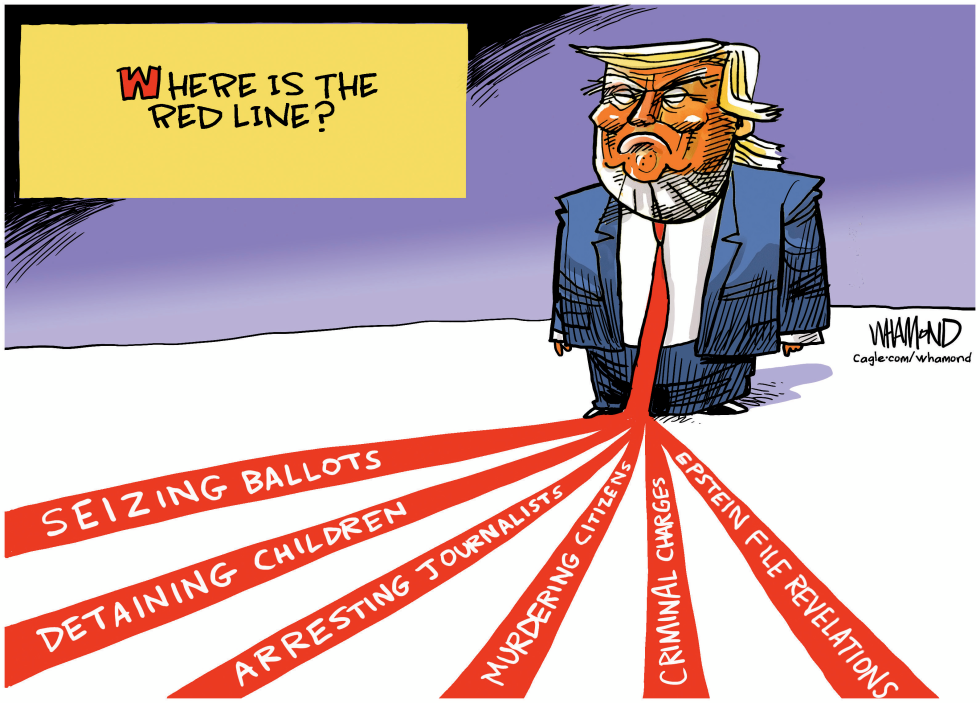
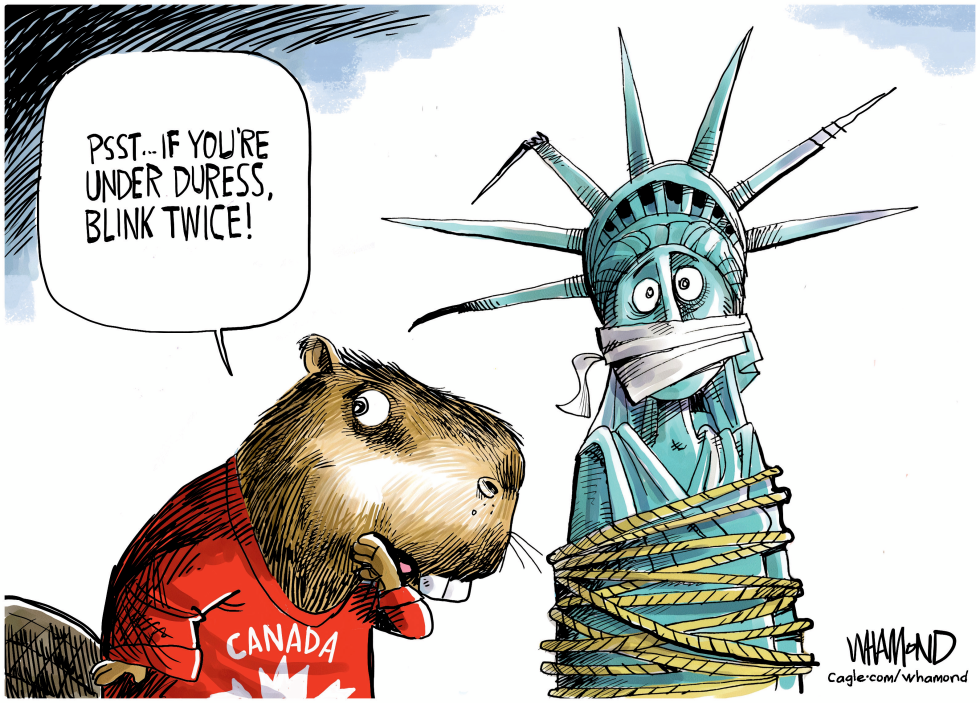
Where is the red line for Trump? by Dave Whamond, Canada, PoliticalCartoons.com
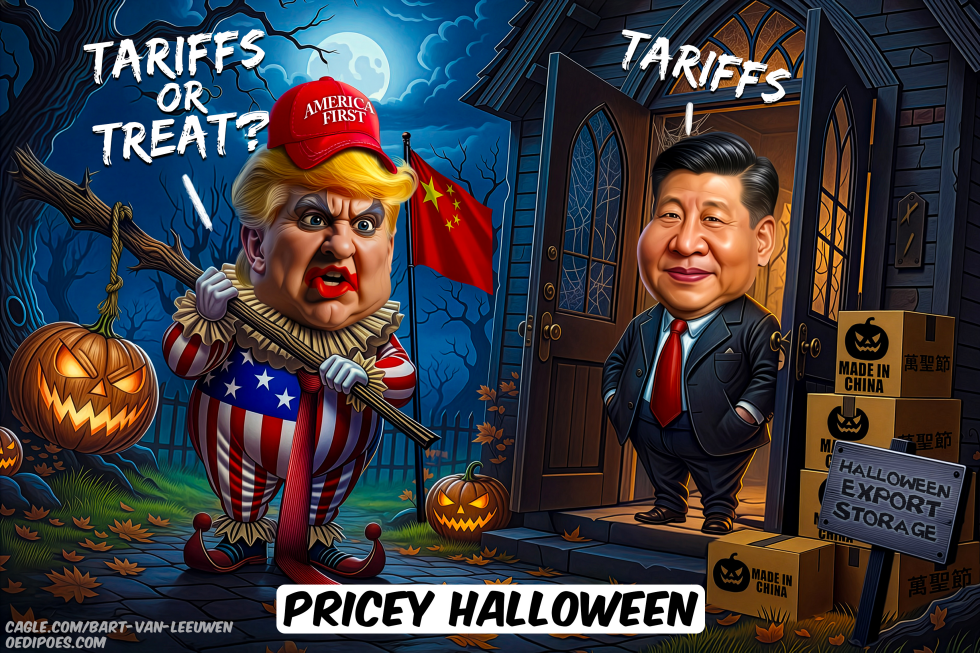
On October 4 2025 the cartoon depicts Donald Trump in a jester costume confronting Xi Jinping outside a house stacked with Chinese made Halloween goods. The scene highlights the impact of proposed tariffs on imported holiday products and resulting higher consumer prices in the United States.
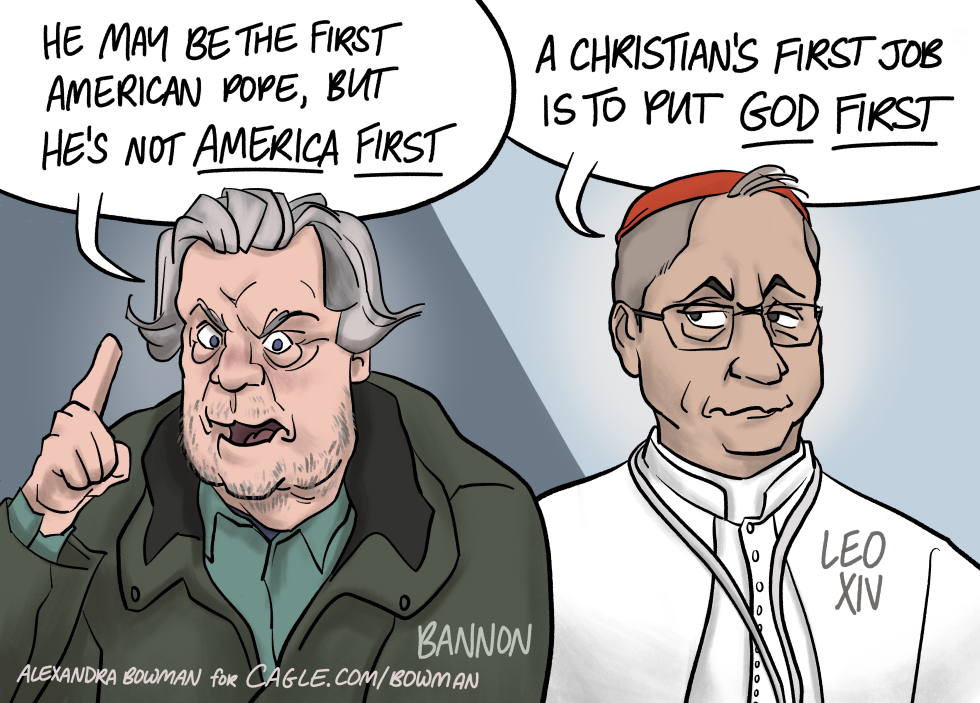
The cartoon shows Steve Bannon, labeled clearly, gesturing emphatically while decrying Pope Leo XIV as the first American pope but not America First. The pope, in white robes and red cap, responds that a Christian's job is to put God first. Tags such as Vatican, conclave, Catholics, Christianity, Jesus Christ, and border underscore the satire on blending partisan politics with faith. The drawing captures a stark divide, with Bannon's angry expression contrasting the pope's stern look. Alexandra Bowman's style brings dry humor to the clash between nationalism and religious priorities.
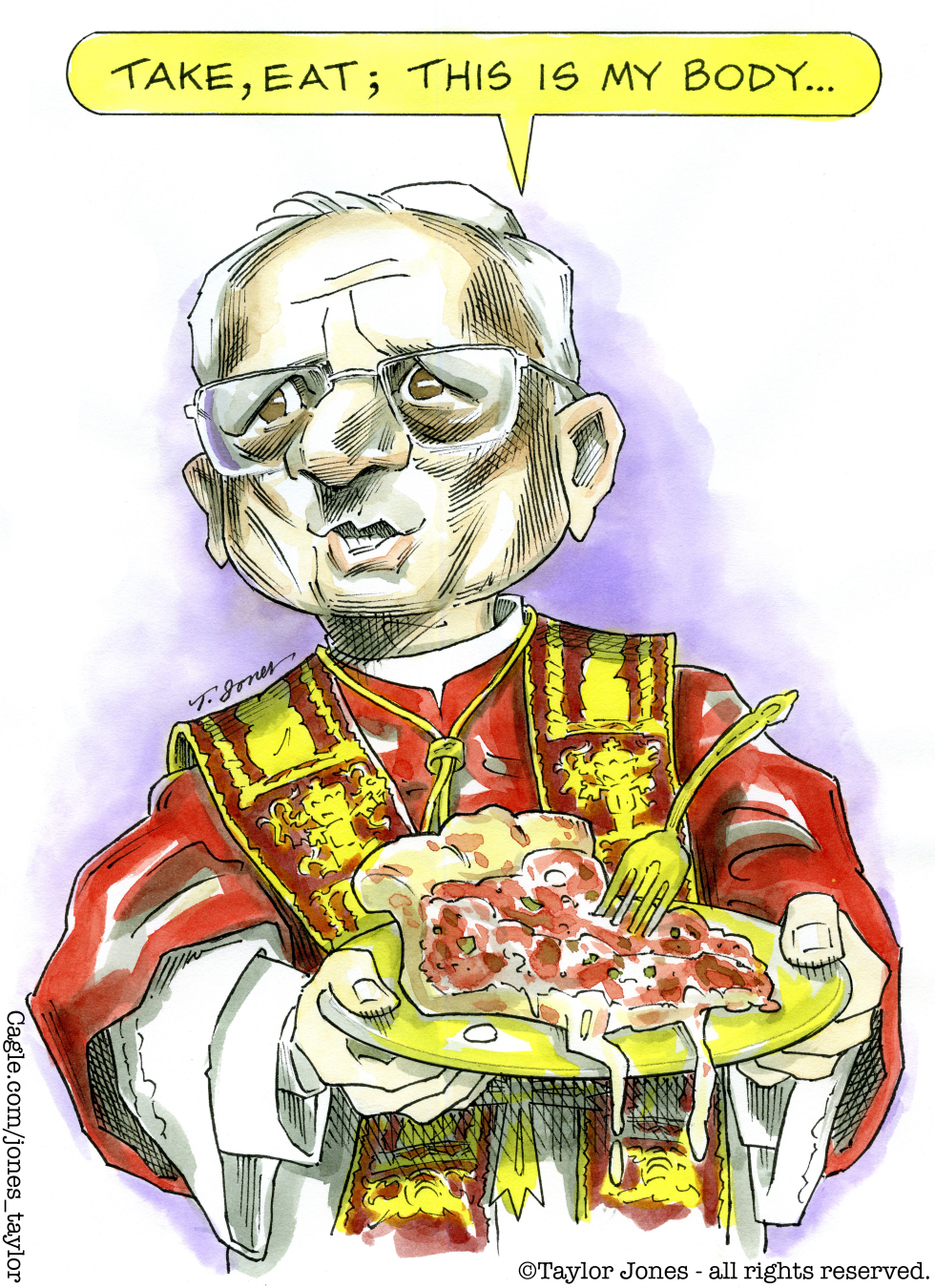
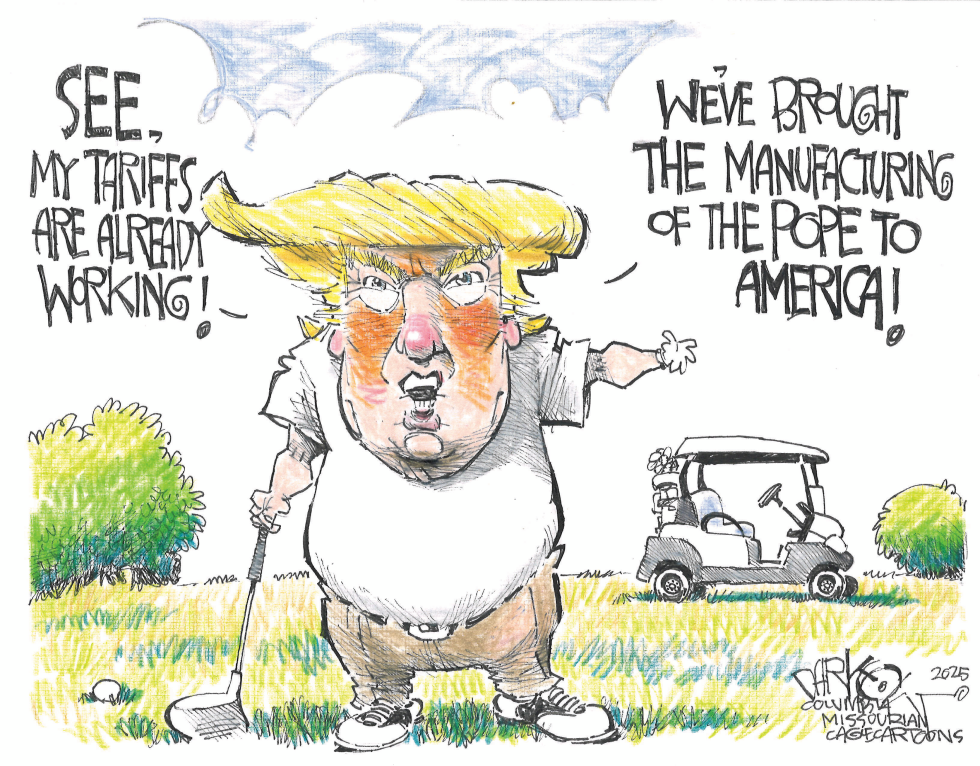
John Darkow's cartoon depicts a caricatured Donald Trump on a golf course, holding a club near a ball, with a golf cart nearby. He exclaims that his tariffs are already working, pointing to a claim about bringing the manufacturing of the pope to America. The image uses dry humor to poke at trade policies, with Trump’s distinctive hair and expression emphasizing the satire. Bushes and grass fill the scene, under a cloudy sky. This piece comments on economic nationalism through absurd exaggeration, fitting into broader discussions of tariffs, manufacturing jobs, America first policies, political cartoons, and satirical art.