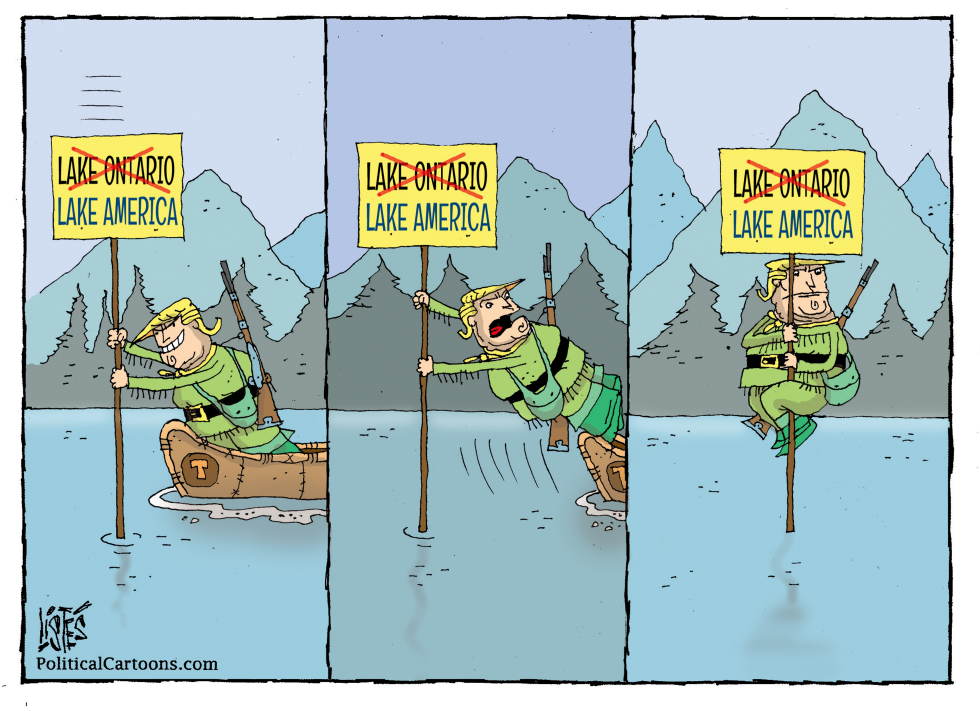
Donald Trump directed the renaming of Lake Ontario to Lake America in a move targeting shared U.S.-Canada waters. The action underscores ongoing tensions over border resources and national identity. The piece portrays the effort as an overreaching nationalist gesture that ignores international boundaries and practical realities.
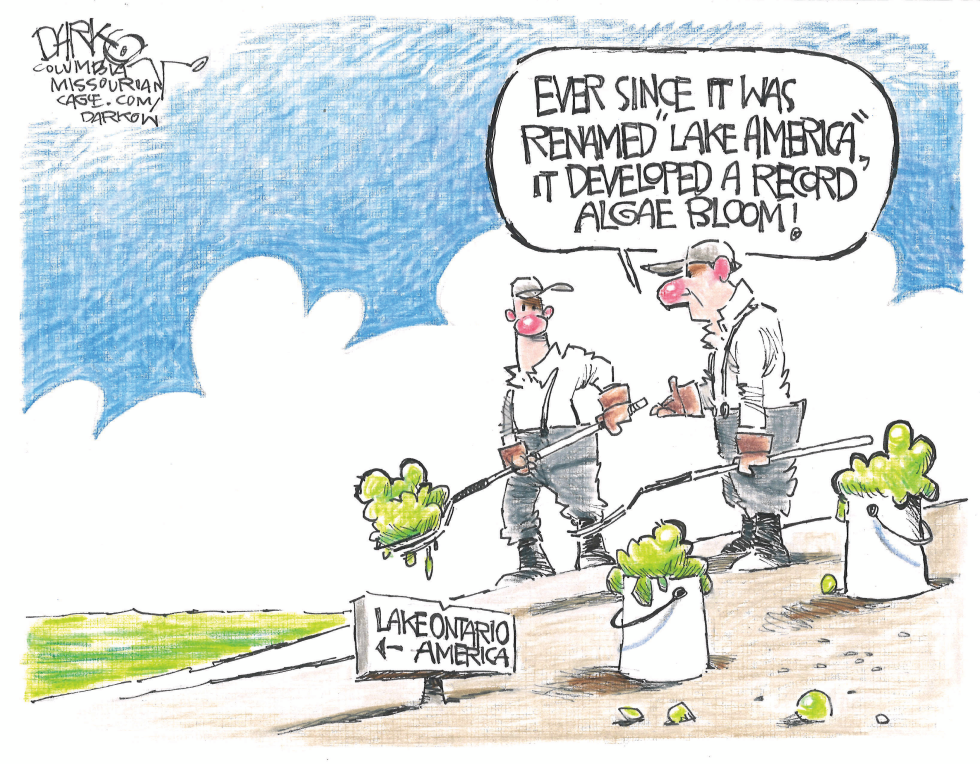
Workers clean a massive algae bloom from a lake recently renamed Lake America, formerly Lake Ontario. The outbreak follows the rebranding and draws attention to environmental conditions. The piece argues that superficial political gestures fail to address underlying ecological problems and may even coincide with worsening conditions.
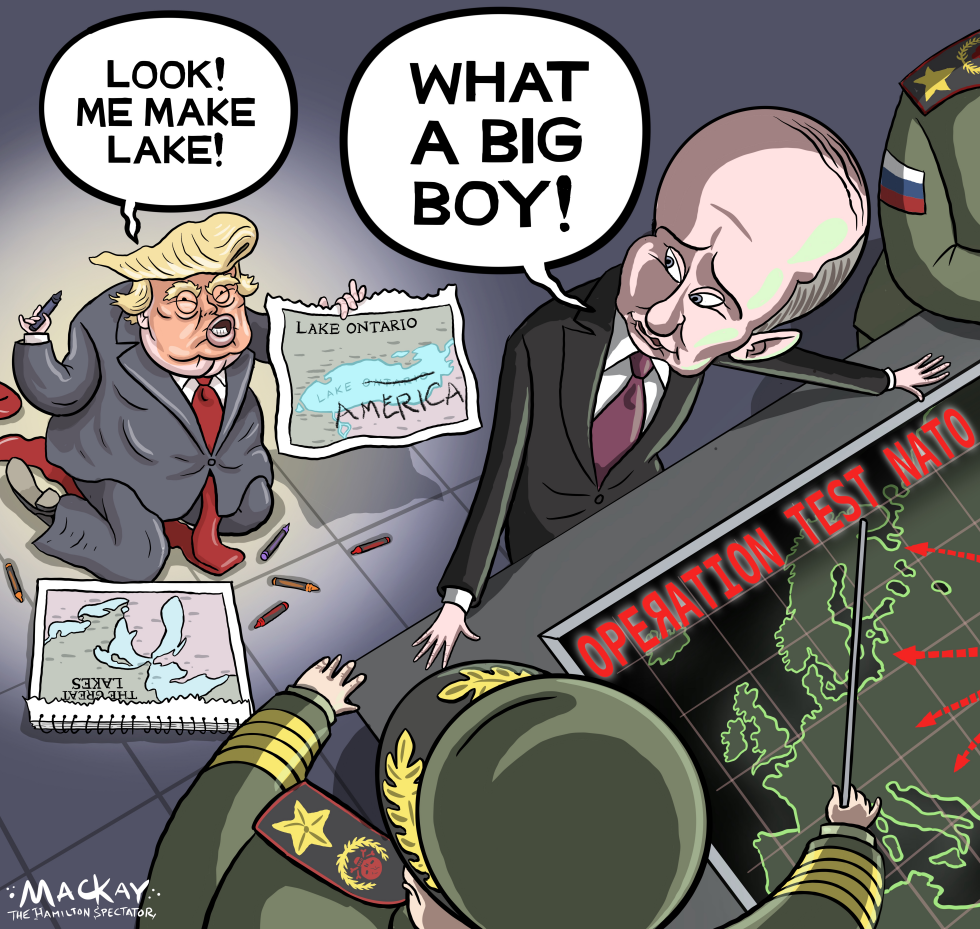
On August 31 2026 Donald Trump presented a hand-altered map renaming Lake Ontario as Lake America during a meeting with Vladimir Putin and Russian military officers reviewing NATO operations. The exchange highlights ongoing tensions over territorial assertions and alliance testing in the Great Lakes region. The cartoon depicts Putin endorsing the claim while officers coordinate a simulated response.
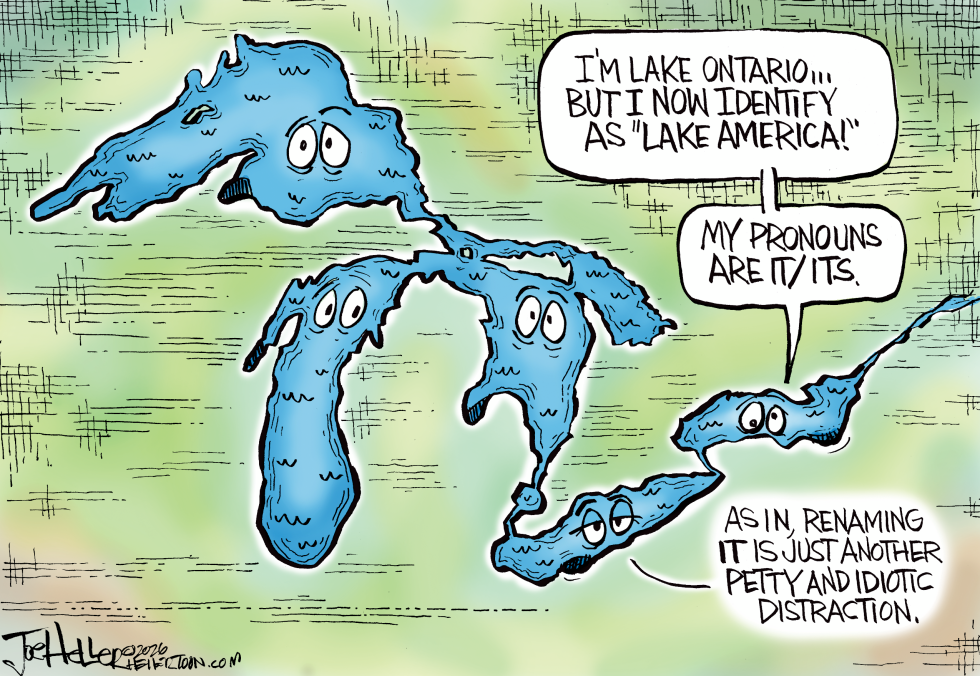
Lake Ontario publicly declares a new identity as Lake America and adopts it/its pronouns. The move draws immediate pushback from other Great Lakes figures who call the renaming a petty distraction. The piece argues such identity gestures divert attention from substantive issues facing the region.
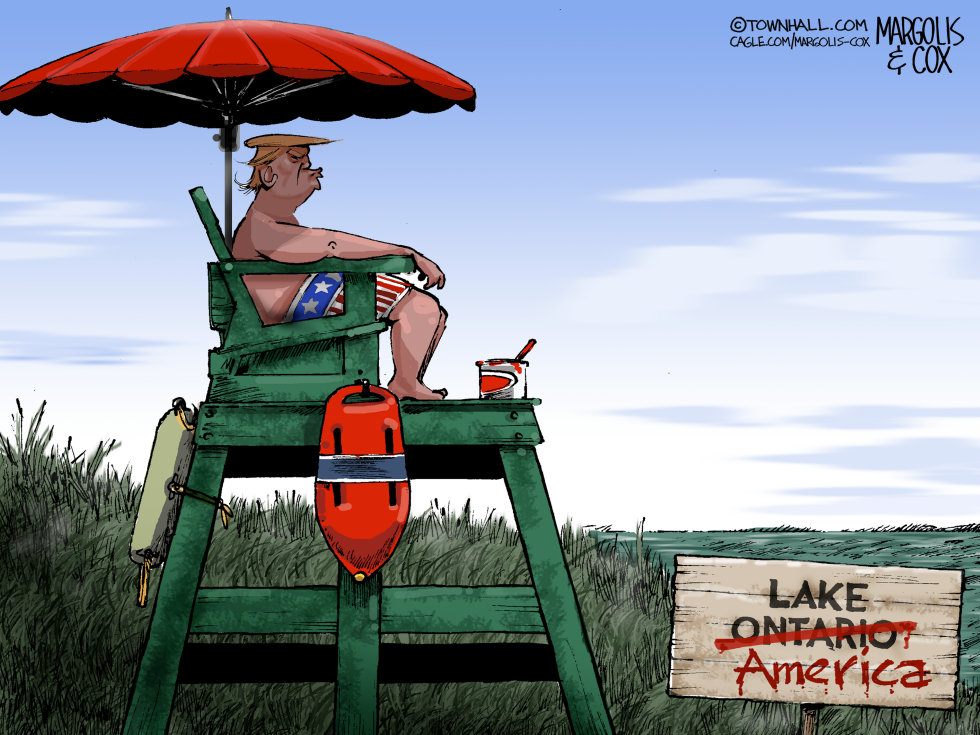
President Donald Trump directed the renaming of Lake Ontario to Lake America on or around August 30, 2026. The move continues a pattern of executive actions rebranding federal and natural sites. Supporters view it as assertive national identity reinforcement while critics see unnecessary overreach into established geographic names. The cartoon depicts Trump overseeing the change from a lifeguard post, underscoring his direct involvement in the decision.
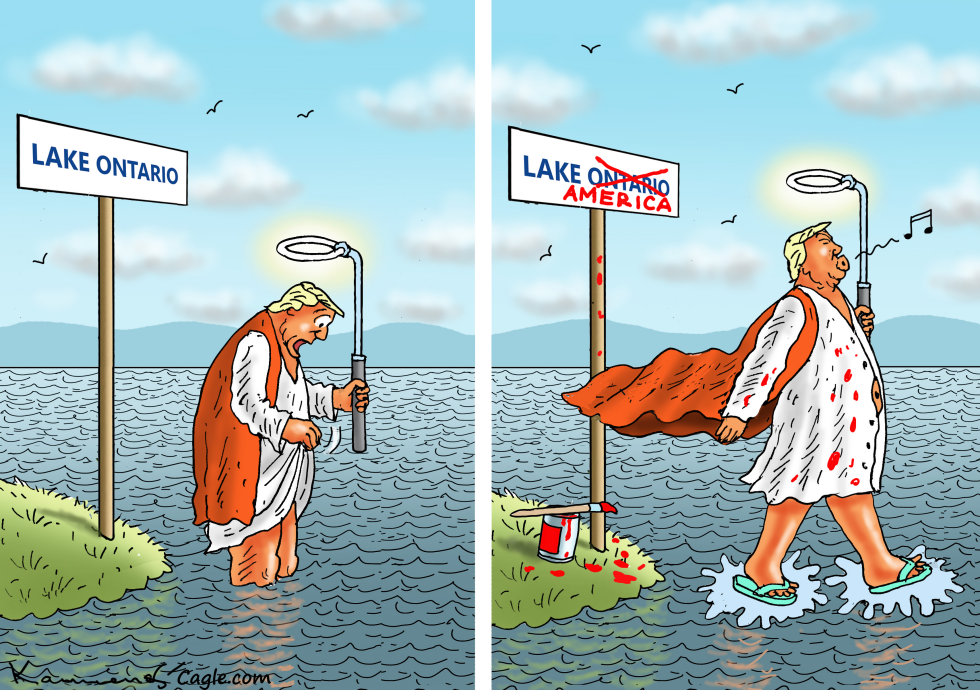
Donald Trump has moved to rename Lake Ontario as Lake America in a symbolic gesture tied to national branding efforts. The action underscores ongoing debates over executive reach into geographic and cultural symbols. Critics view the move as an extension of personal branding into public spaces. The piece portrays the effort as self-aggrandizing and detached from practical governance concerns.
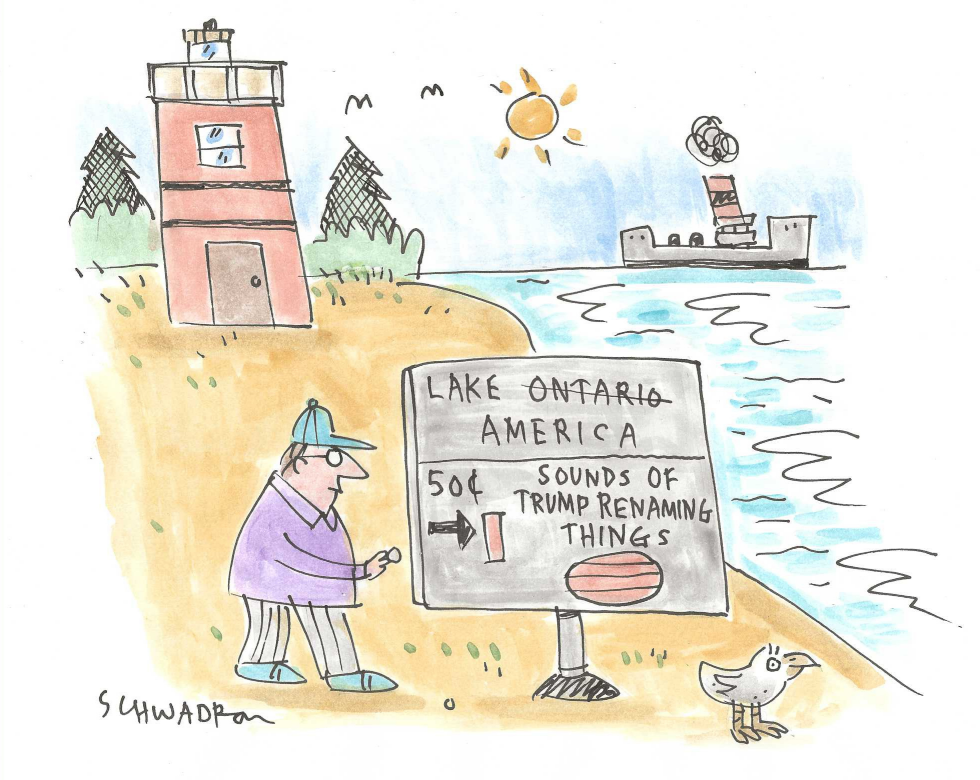
Donald Trump has floated renaming Lake Ontario as part of broader efforts to rebrand geographic features. The move fits a pattern of executive actions targeting names tied to prior administrations or international norms. Critics see it as unnecessary distraction while supporters view it as asserting American identity. The cartoon takes the position that such renaming efforts carry a tangible public cost and reflect repetitive branding impulses.
A grocery store cashier tells a customer he lacks enough bread to buy her bread and asks if she has an installment plan. The scene shows a woman with two children at the checkout counter surrounded by tomatoes. The cartoon addresses ongoing inflation and affordability challenges in food prices as of late July 2026. It uses wordplay on bread to illustrate how rising costs strain household budgets. The visual emphasizes everyday shopping struggles without specifying particular policies or events.
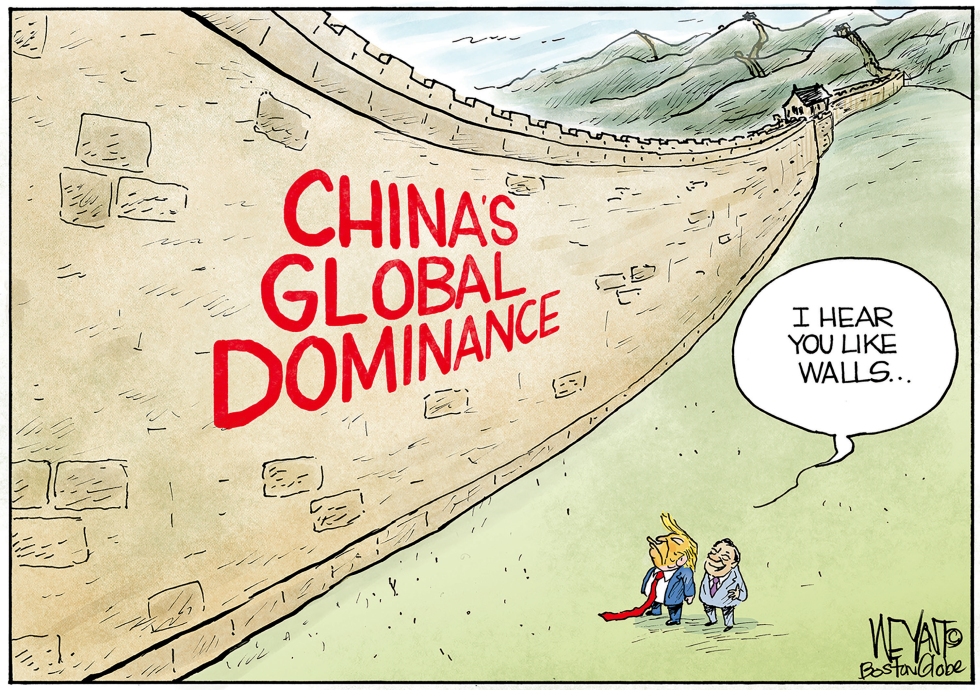
The image shows a massive stone wall curving across hills labeled in red text China's global dominance. At the bottom right two men in suits stand on grass one with yellow hair and red tie. A speech bubble extends from the second man stating I hear you like walls. The wall has watchtowers and the background shows green hills under a blue sky.