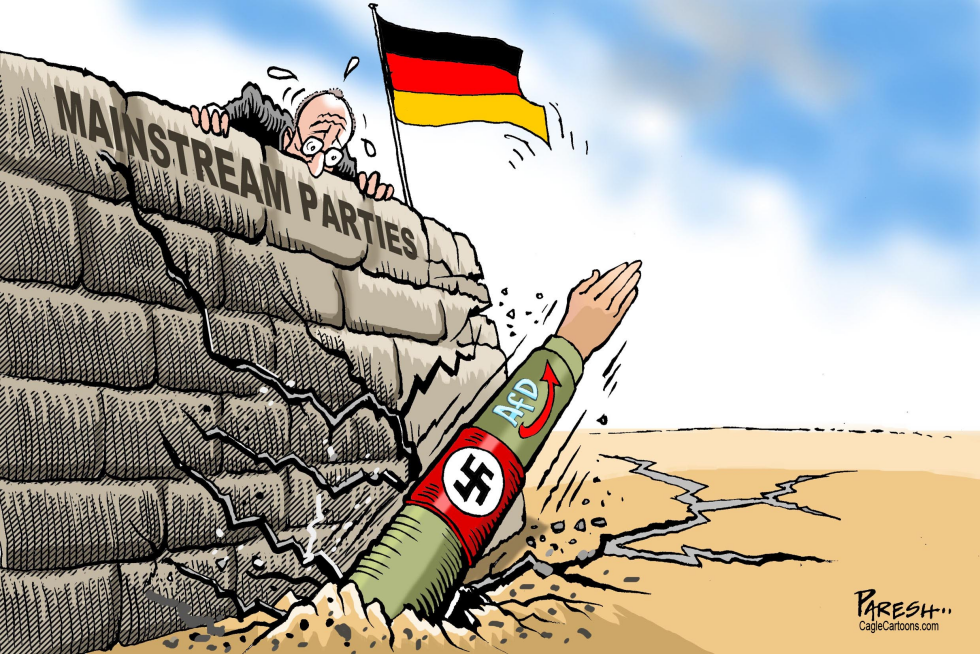
The cartoon depicts Germany's mainstream parties as a fracturing wall under assault from the AfD, portrayed as an extremist force with Nazi imagery. Published on September 10, 2026, it responds to the party's growing electoral strength and its impact on traditional coalitions ahead of key votes. The image shows a distressed mainstream figure atop the wall while the AfD arm breaks through from below, symbolizing how the party's advances erode established political structures. This reflects ongoing concerns about coalition stability and the mainstream's struggle to contain far-right momentum in German politics.
The Alternative for Germany party posted strong results in recent state and national contests, drawing renewed scrutiny over its tolerance for extremist elements. The outcome matters because AfD now holds significant parliamentary seats and influences policy debates on immigration and national identity. The cartoon argues that these gains risk normalizing symbols and rhetoric long associated with Germany's darkest chapter.
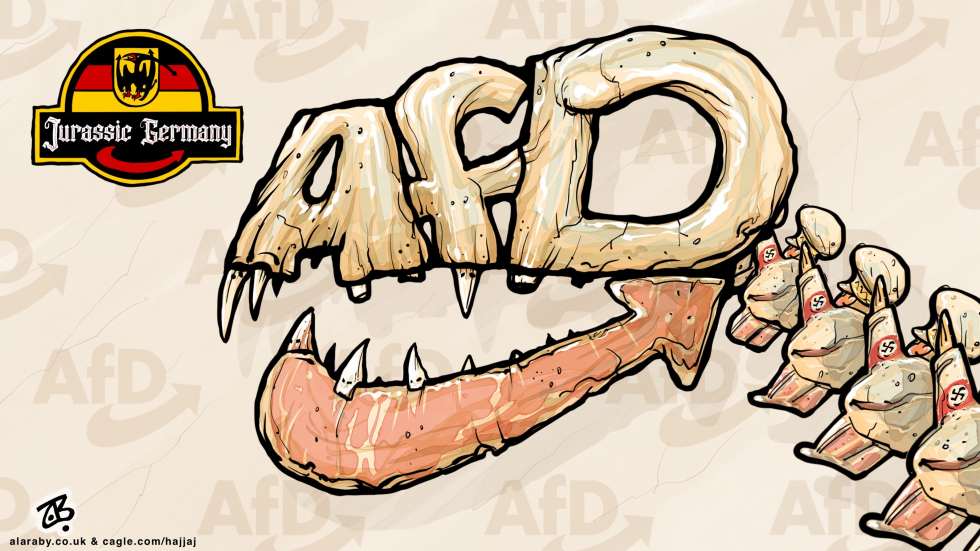
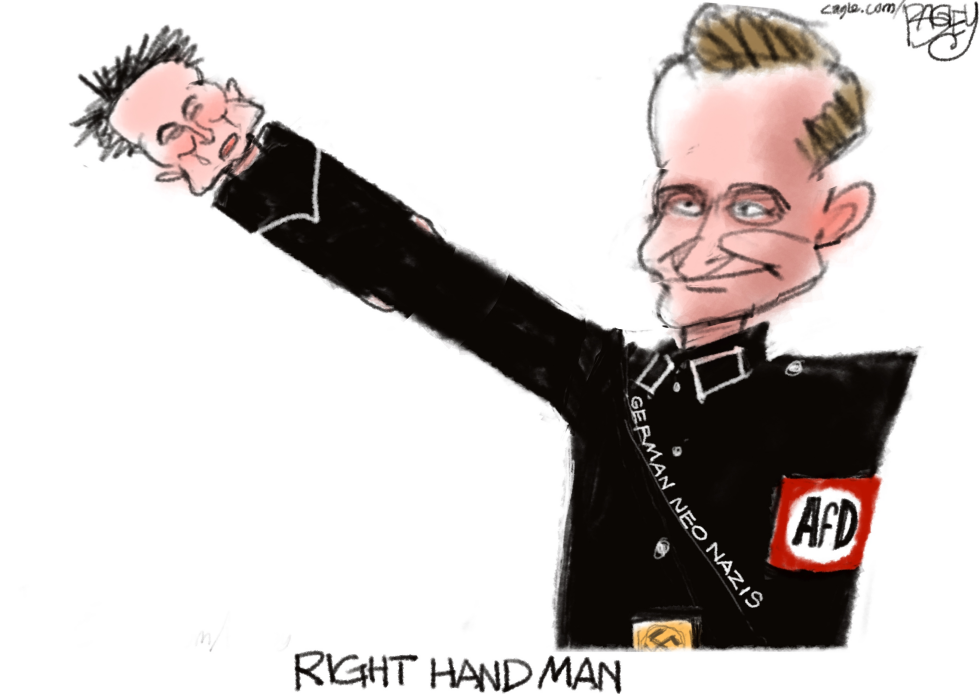
The Alternative for Germany party continues to draw accusations of harboring neo-Nazi elements as recent events spotlight its members and rhetoric. The party has gained electoral ground while facing investigations and public backlash over extremist ties. This development matters because it reflects broader challenges to democratic norms in Europe. The cartoon takes the position that AfD operates as a vehicle for neo-Nazi influence rather than a legitimate political force.
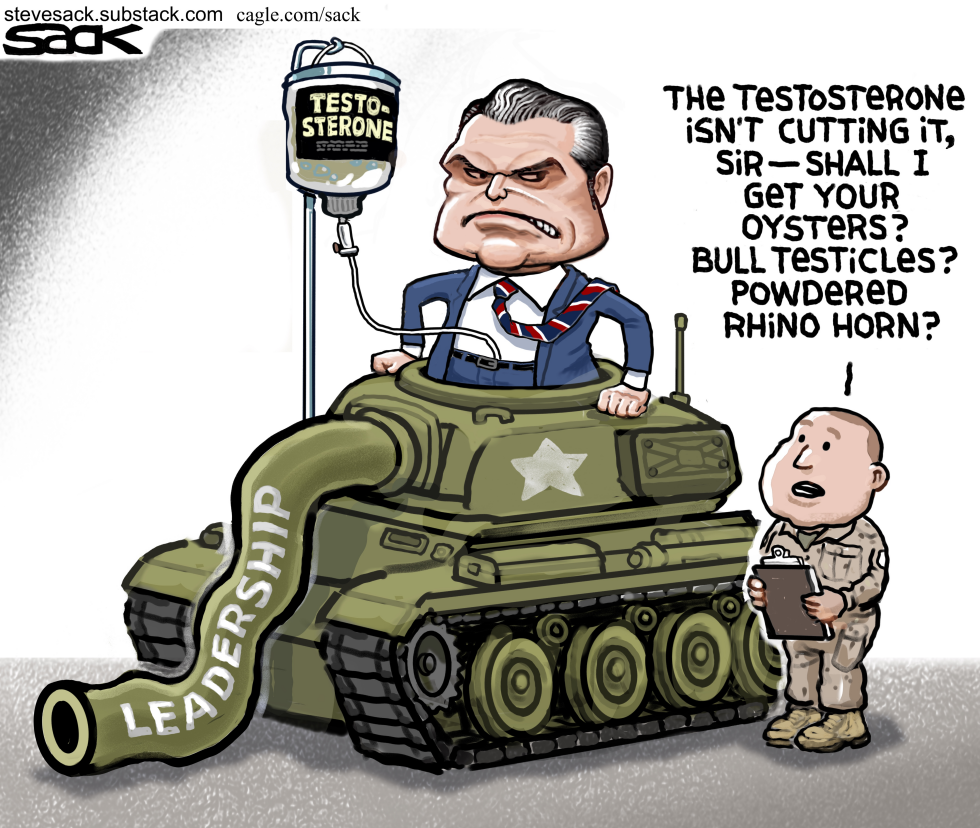
Pete Hegseth's nomination and early actions as a top defense official have spotlighted his emphasis on testosterone levels as a solution to perceived military leadership gaps. The approach has prompted questions from within the ranks about whether hormone supplements address core readiness and command issues. The cartoon portrays the policy as misguided and ineffective.
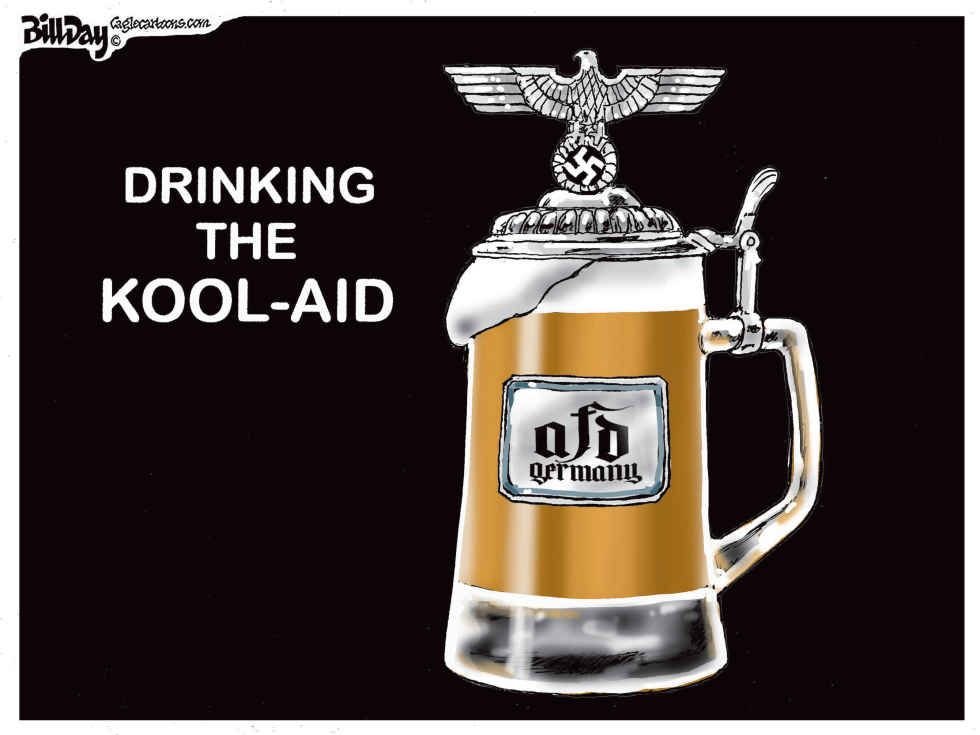
Germany's far-right Alternative for Germany party is gaining ground ahead of elections with rhetoric echoing historical extremism. The party has faced repeated scrutiny for members' Nazi-era references and anti-immigrant stances that courts have flagged as extremist. This development matters because AfD polling strength could reshape coalition math and policy on migration, EU ties, and civil liberties. The cartoon argues that supporters are consuming a toxic ideological brew that risks normalizing authoritarian symbols and eroding democratic norms.
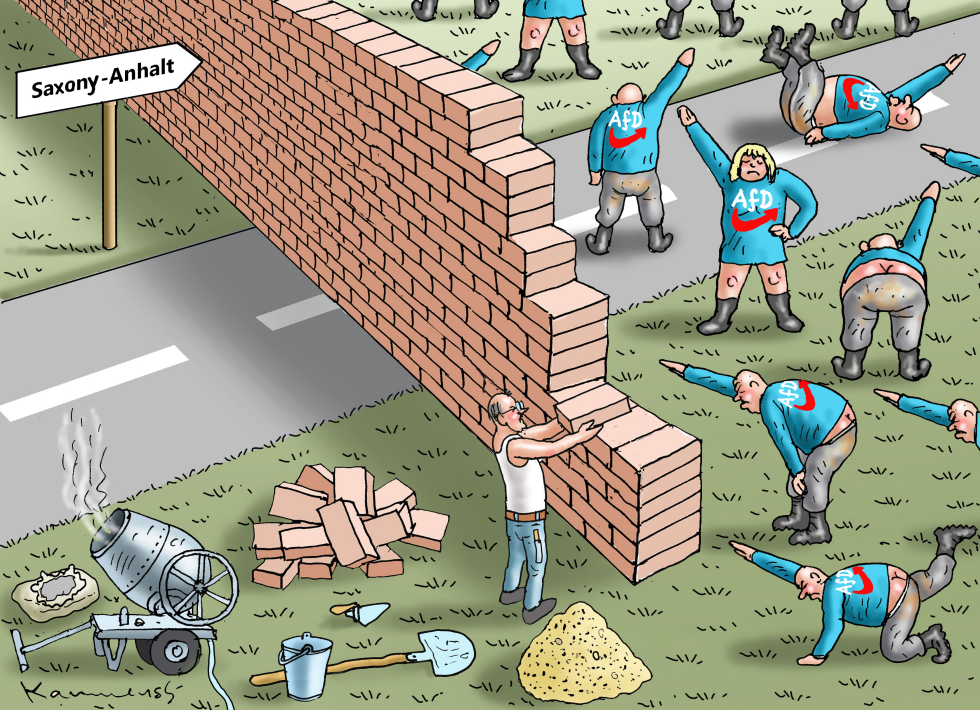
Friedrich Merz has positioned himself as a bulwark against Alternative for Germany advances ahead of state elections in Saxony-Anhalt. The cartoon depicts Merz personally laying bricks for a wall labeled for the eastern state while AfD figures in branded shirts struggle to cross it. The image underscores the CDU leader's strategy of containment rather than engagement with the far-right party. It reflects ongoing debates within German center-right circles about how to address AfD electoral strength without legitimizing its platform. The editorial stance presents the wall-building as a necessary, if blunt, defensive measure.
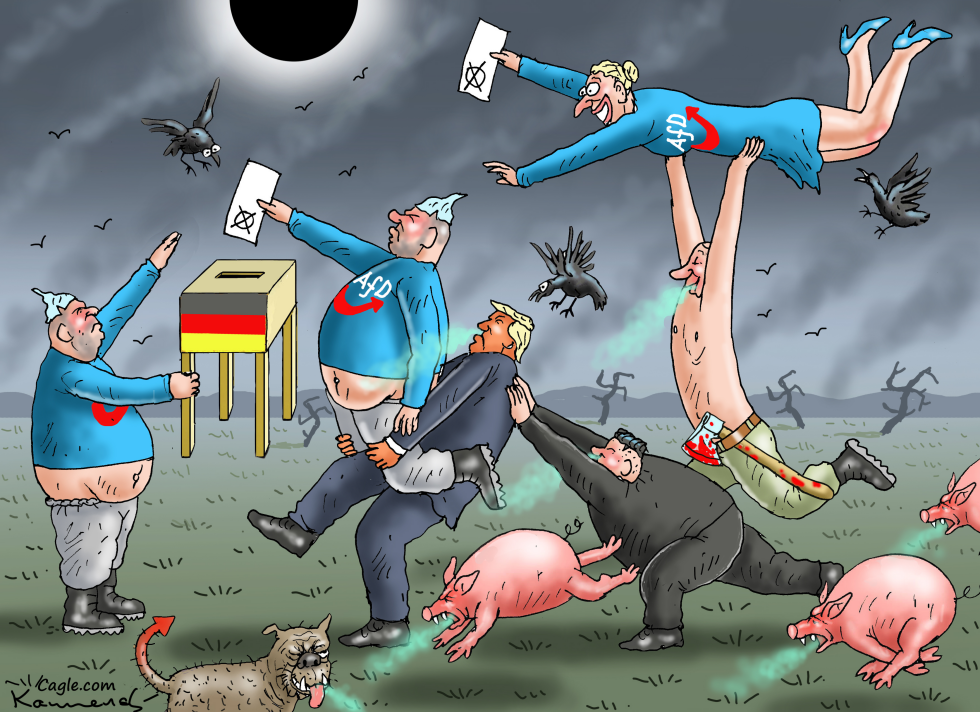
The AfD seeks gains in upcoming German elections with visible support from Donald Trump and other authoritarian figures. The party faces accusations of extremist ties. The cartoon portrays this backing as a direct boost to the far-right campaign while highlighting Nazi symbols on ballots.
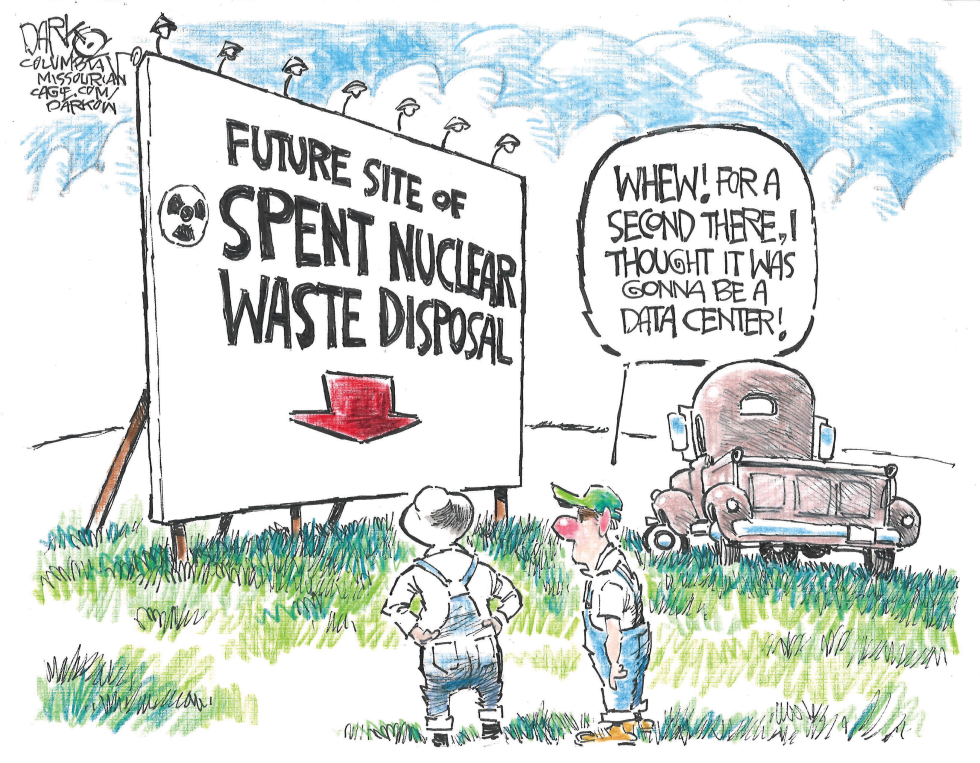
Rural communities continue to face competing proposals for large-scale projects on agricultural land. A planned spent nuclear waste disposal facility draws attention as residents weigh it against potential data center developments that often bring high energy demands and infrastructure changes. The editorial takes the position that such choices reflect broader tensions in siting energy-related facilities versus technology operations in farming areas.
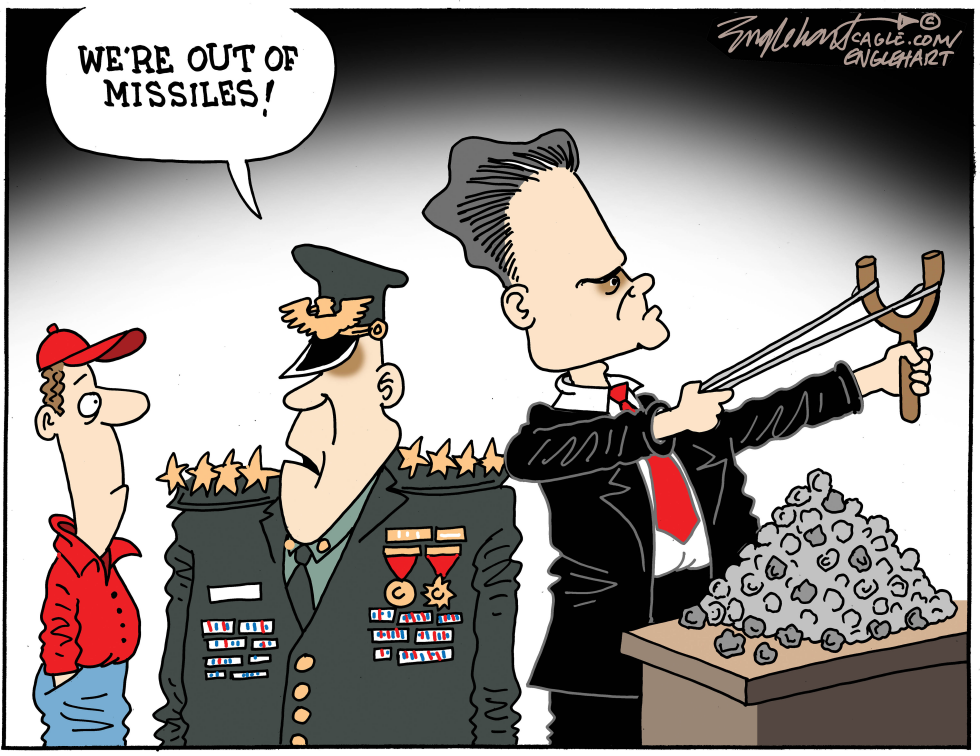
The Pentagon confronts depleted missile inventories during active defense needs. Officials explore improvised options including slingshots loaded with rocks. The development highlights supply chain strains and readiness questions for U.S. forces. The piece criticizes the situation as a failure of planning and resource allocation.
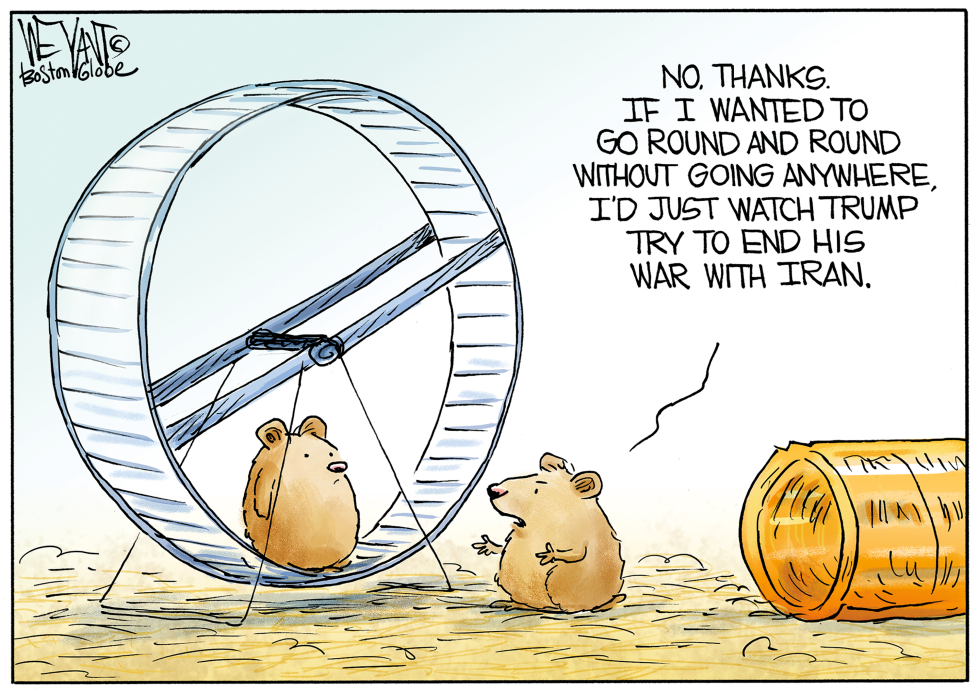
President Trump continues efforts to resolve the ongoing conflict with Iran through repeated diplomatic rounds. The situation remains stalled with no clear progress after multiple attempts. Observers note the repetitive nature of the process without advancement. The piece portrays the hamster's refusal as a commentary on the futility of the approach.
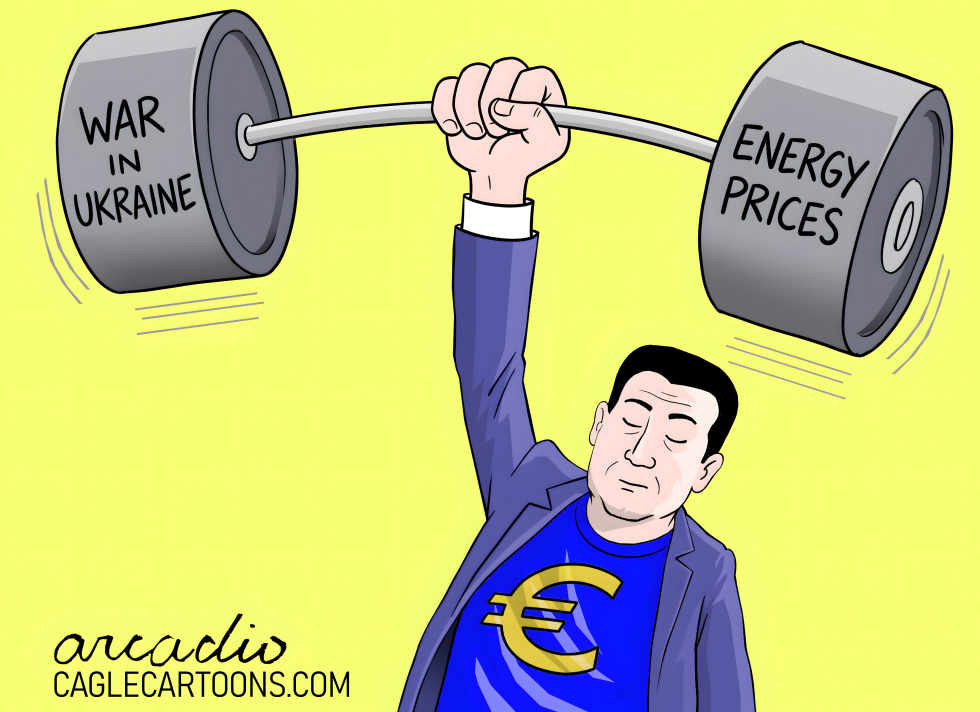
The Eurozone continues to absorb economic shocks from the Ukraine conflict and elevated energy costs. These pressures test the currency's stability and the broader European economy. The image portrays the Euro successfully shouldering both loads, underscoring its capacity to endure without collapse.
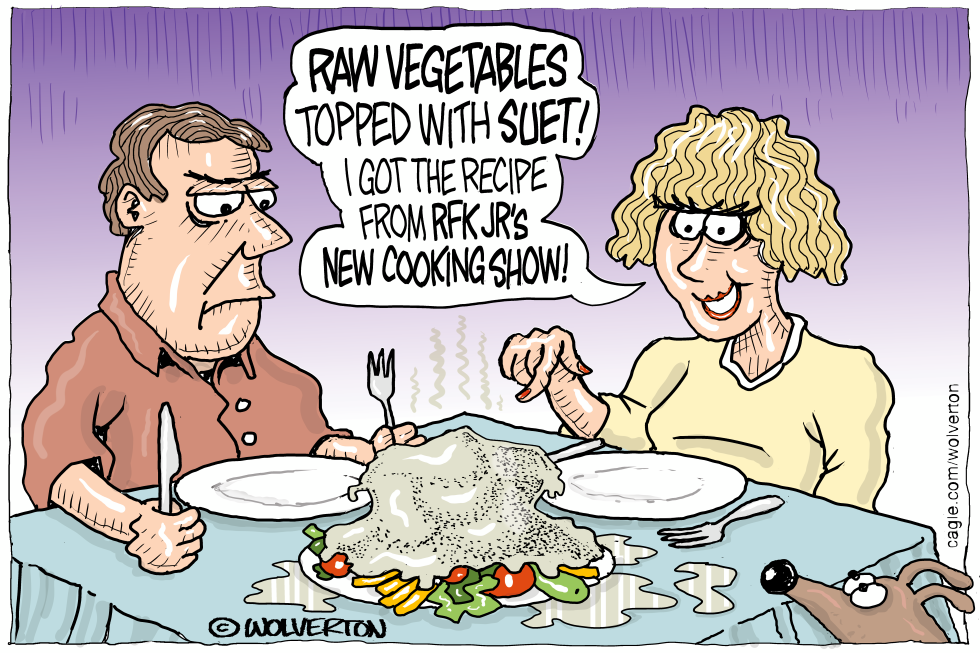
RFK Jr launched a cooking show promoting raw vegetables topped with suet as part of broader health recommendations. The program drew attention amid ongoing debates over dietary guidelines and public health messaging. The piece portrays the suggestion as unappealing and out of touch with conventional tastes.
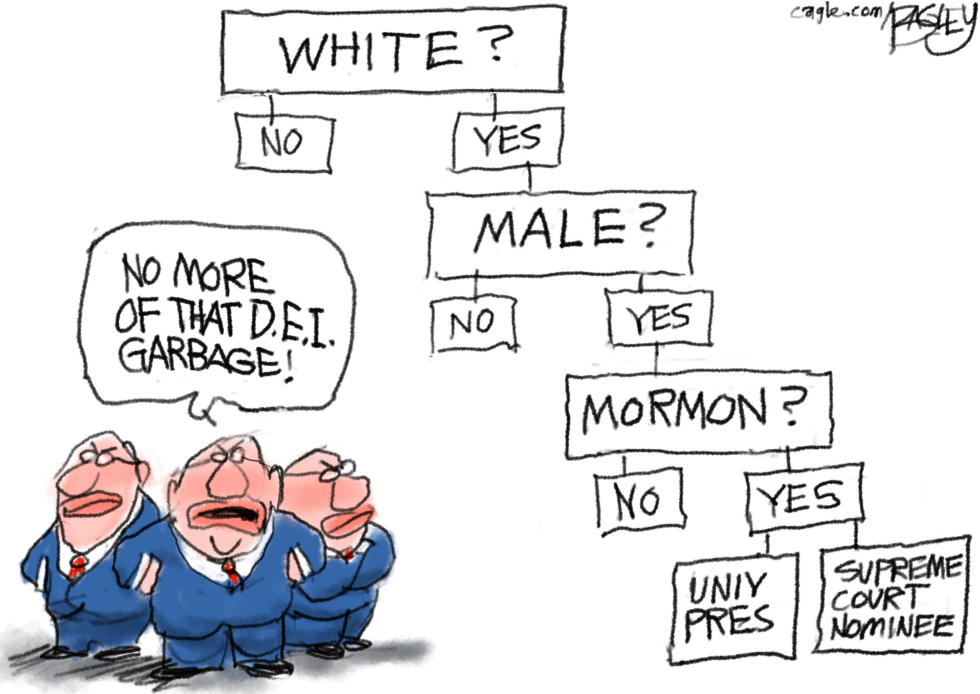
A flowchart circulating in political circles outlines a narrow path to Supreme Court nomination that begins with questions about race, gender and religion. The diagram routes only white male Mormons to the top position while directing others toward university presidencies. Three figures in the image voice opposition to diversity initiatives. The piece responds to ongoing debates over judicial selection standards and identity considerations in appointments. It takes the position that such rigid criteria undermine broader merit-based processes.
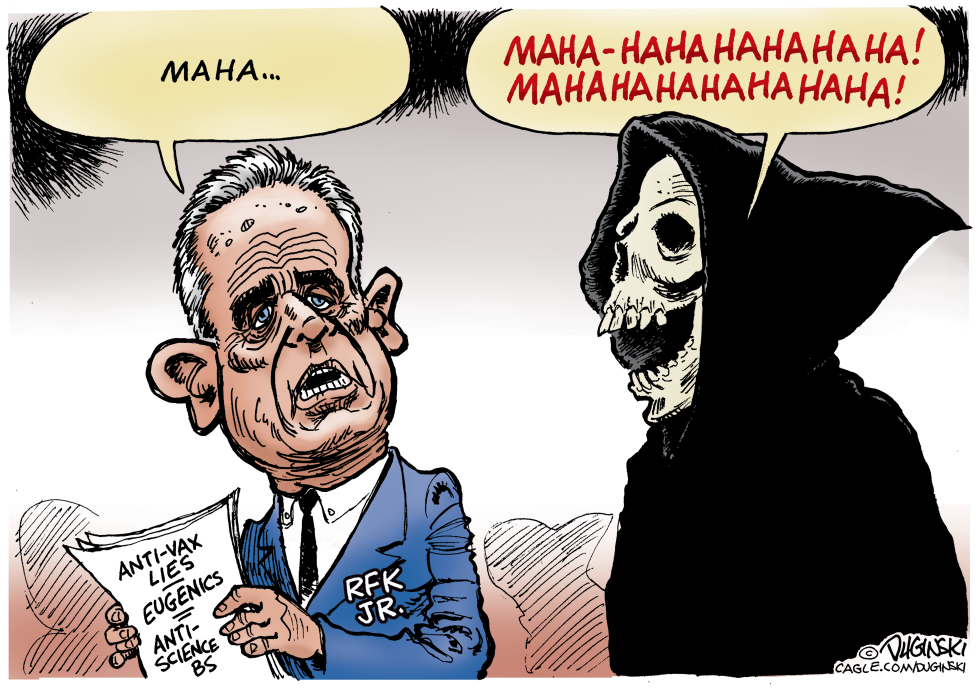
Robert F. Kennedy Jr. continues promoting Make America Healthy Again initiatives tied to his anti-vaccine positions in mid-2026. The approach draws criticism for linking public health measures to eugenics concerns and undermining scientific consensus. The editorial takes the position that such rhetoric risks real harm by eroding trust in established medical guidance.