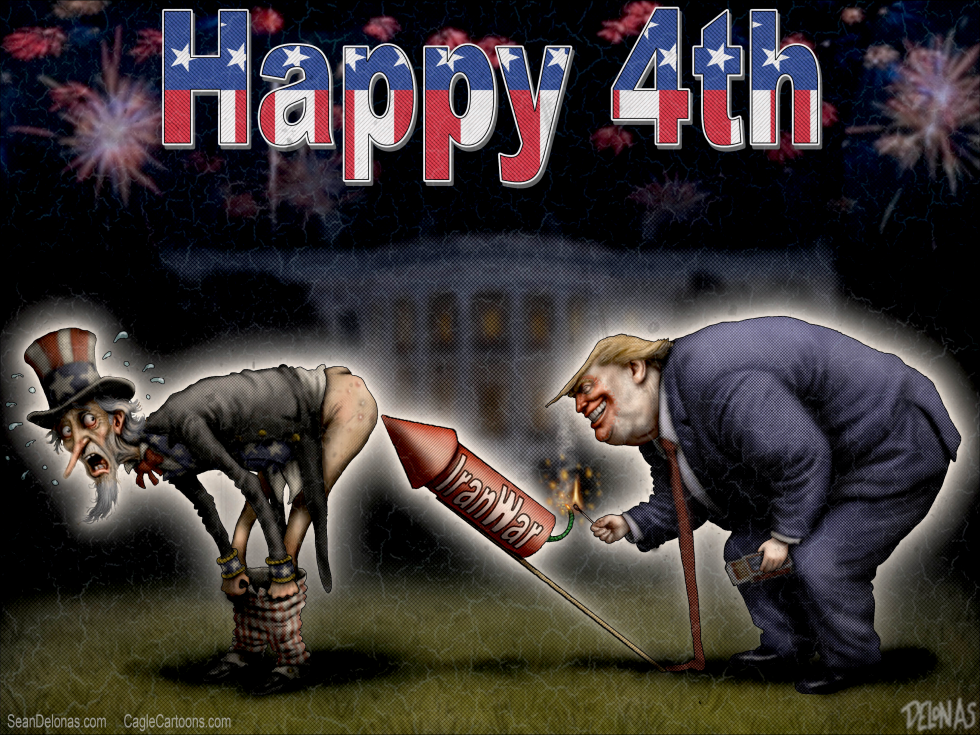
Donald Trump bends to light a large firework labeled Iran War on July 2 2026. The rocket points at a startled Uncle Sam figure in front of the White House. Fireworks burst in the night sky above the lawn. The image ties the ignition directly to the Independence Day setting.
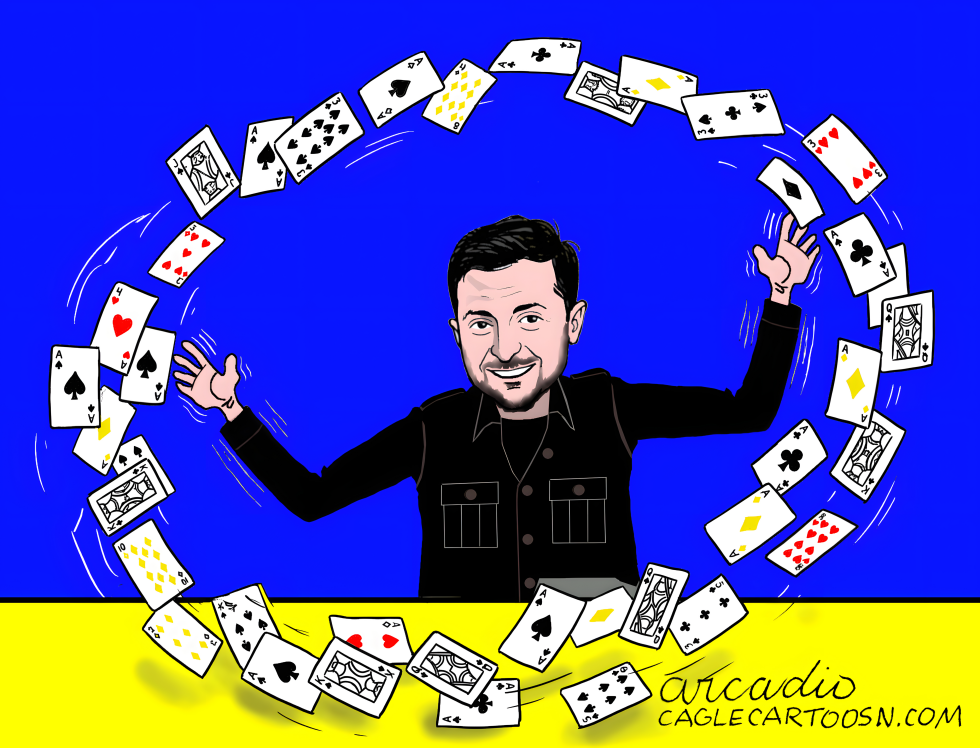
Volodymyr Zelensky appears centered in the image juggling playing cards that form a large circle around him. Cards of various suits fall onto a yellow surface below. The composition from June 30 2026 emphasizes the Ukrainian president maintaining multiple positions at once during ongoing foreign policy developments with Russia.
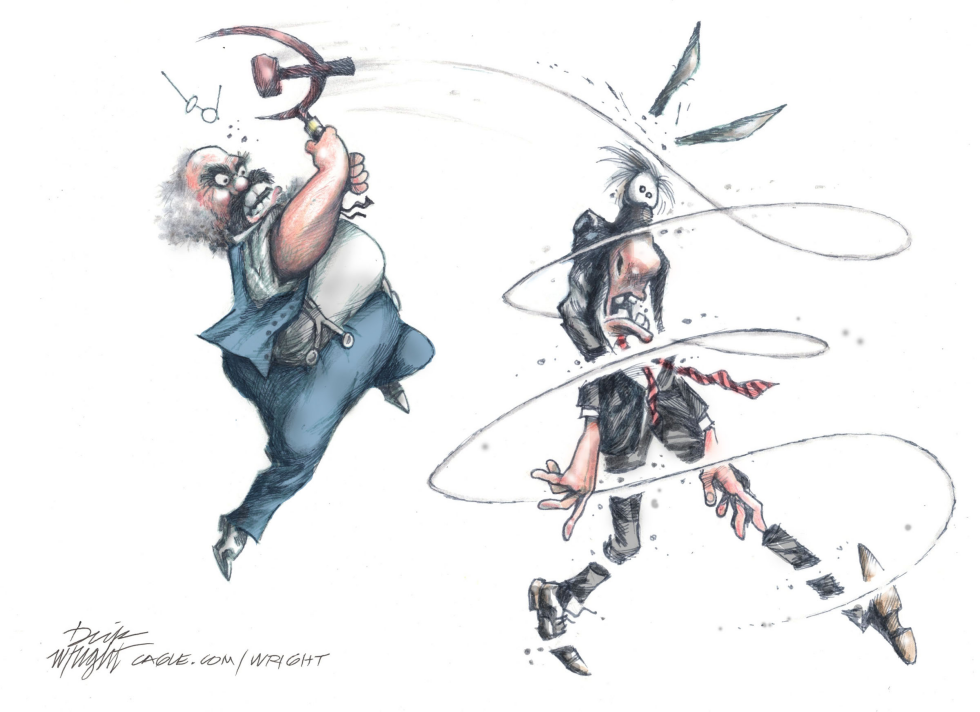
On June 30 2026 Dick Wright depicts a hammer and sickle wielding figure lunging at a suited Democrat form. The strike sends the target figure flying apart in fragments. The image responds to ongoing debates over ideological influences within the Democratic Party during the 2026 election cycle.
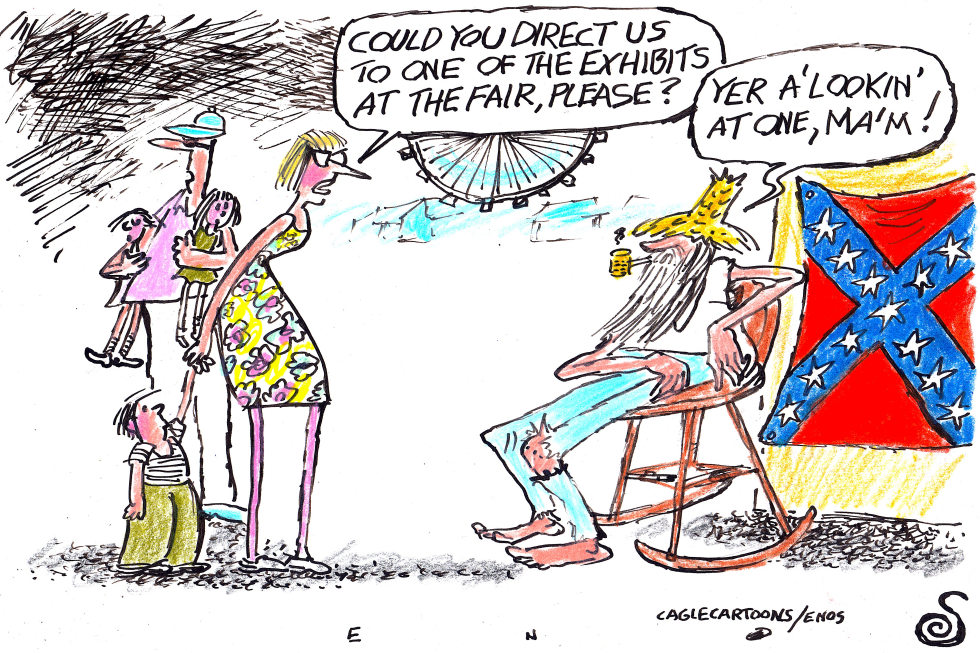
A family approaches a man seated in a rocking chair beside a large Confederate battle flag at a fairground and asks for directions to exhibits. The man replies that they are already looking at one. The scene includes a Ferris wheel in the background and several children with the parents.
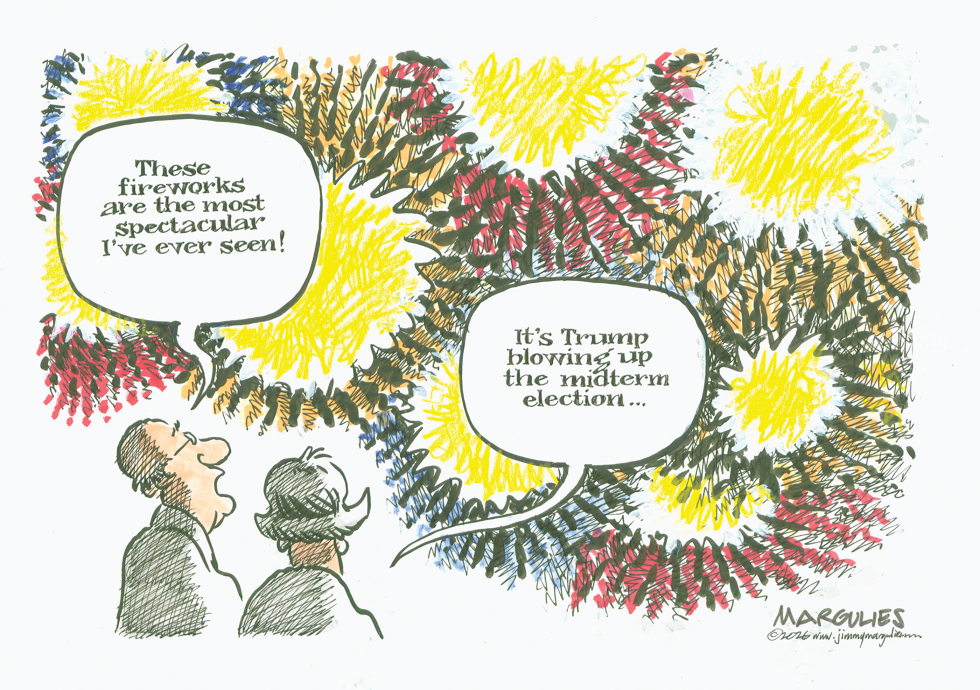
On June 29 2026 two figures stand in the foreground watching a burst of red yellow and blue fireworks fill the sky. One speech bubble praises the spectacular display while the second attributes the chaos to Trump blowing up the midterm election. The scene captures public attention on the upcoming November contests and the former president's continued influence on the political landscape.
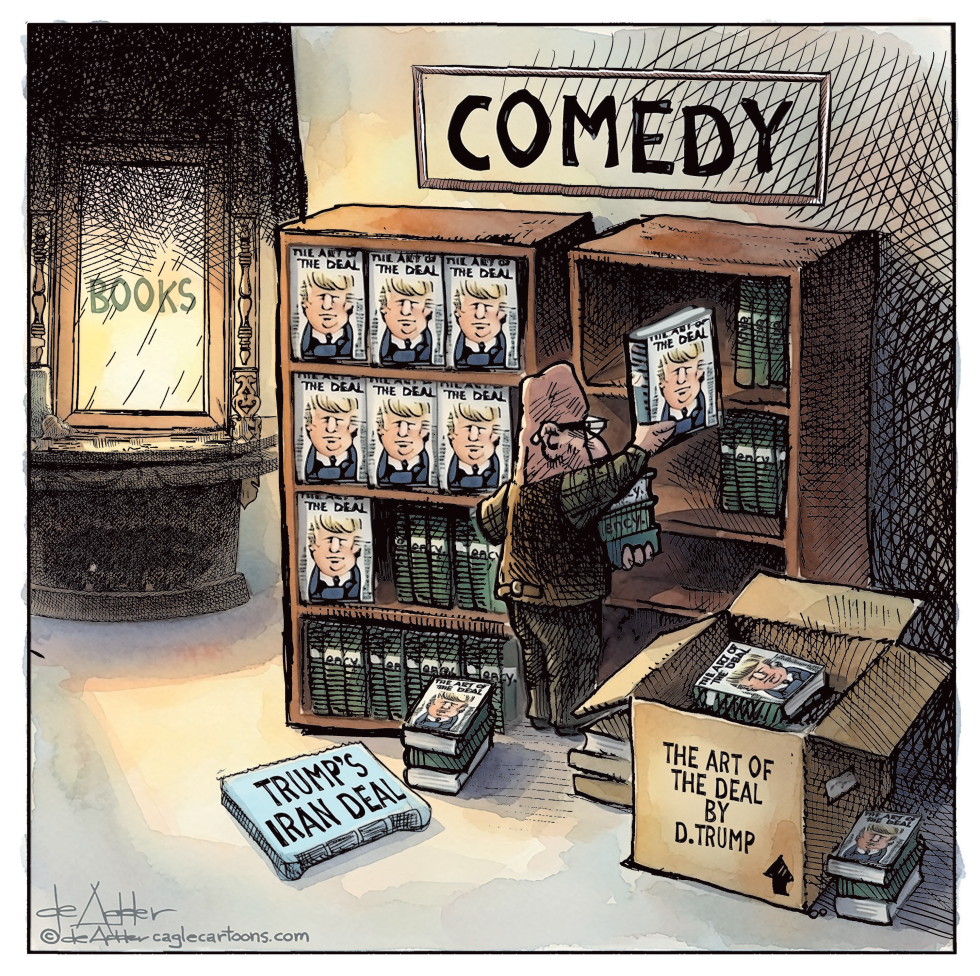
A bookstore worker moves stacks of Donald Trump's The Art of the Deal from the main bookshelves into the comedy section. Additional copies sit in open cardboard boxes labeled with the author's name. One volume on the floor is titled Trump's Iran Deal. The scene is set beneath a prominent comedy sign.
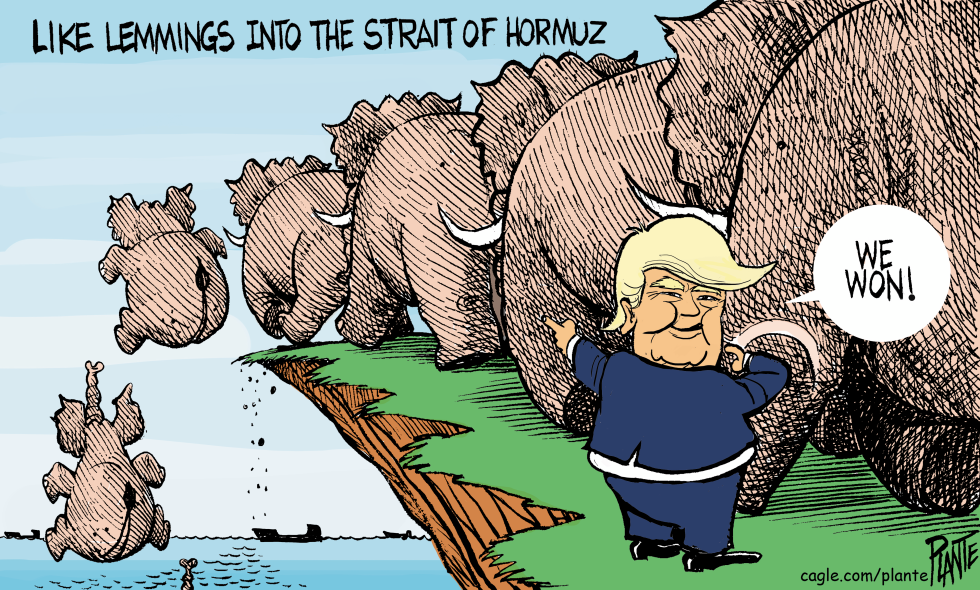
Donald Trump stands on a green cliff edge pointing toward a herd of tusked animals marching off the drop into the water below a ship. The animals fall one after another as Trump smiles with a speech bubble reading WE WON! The title references the Strait of Hormuz.
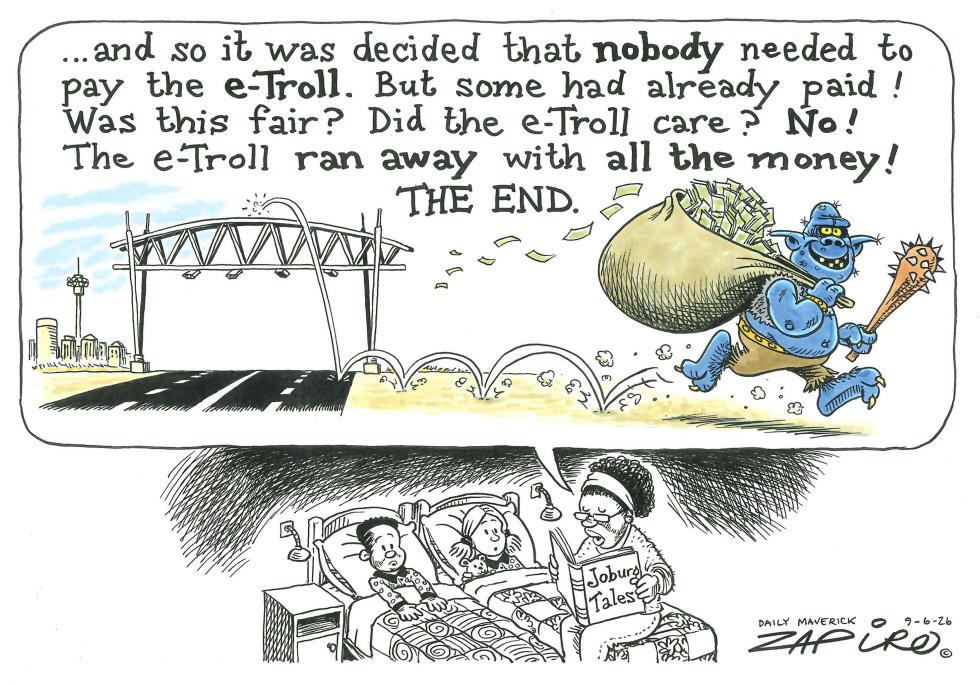
Zapiro's June 2026 cartoon shows an e-troll fleeing a Johannesburg toll plaza with a sack of cash while a grandmother reads the tale to children. The image references ongoing disputes over Gauteng's electronic toll system and missing revenue. The upper panel depicts the toll gantry and city skyline with the troll escaping. The lower panel shows the domestic bedtime scene with the book titled Joburg Tales. The cartoon uses a children's story format to highlight public frustration with the toll collection process.
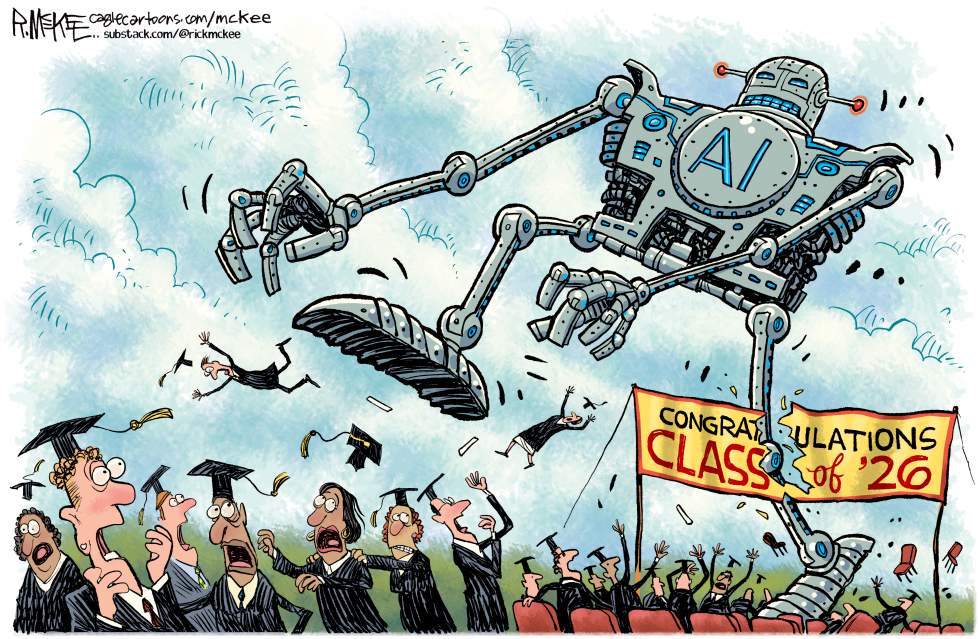
A massive robot marked AI looms over a 2026 graduation ceremony, swatting at fleeing graduates and tearing their congratulations banner. The scene captures growing public anxiety about artificial intelligence displacing human roles in education and the workforce. Graduates in caps and gowns look up in alarm as the mechanical figure dominates the sky above them.
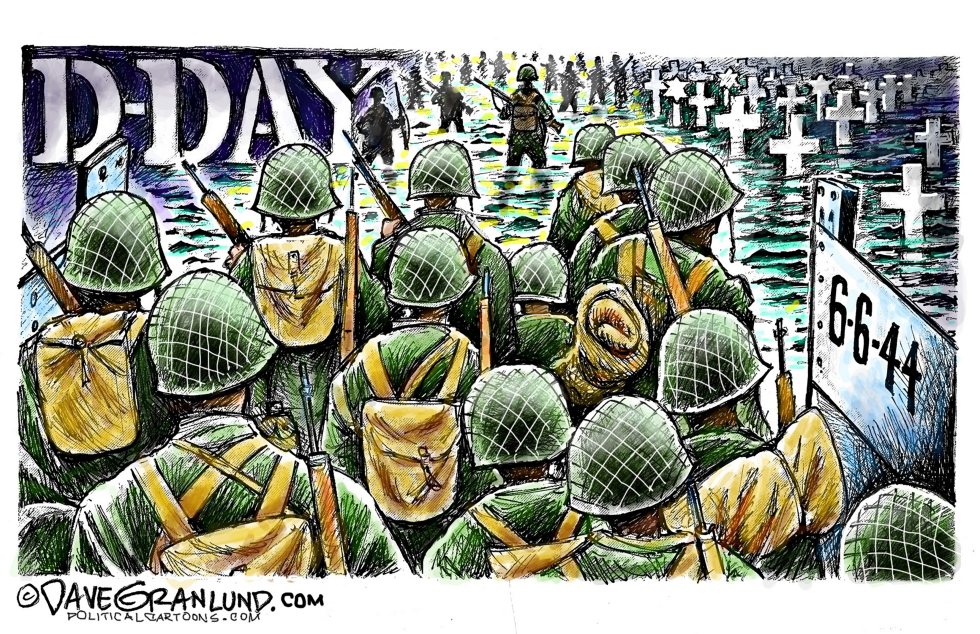
The image marks the June 6 1944 D-Day landings. Soldiers in green helmets and packs move through shallow water. Rows of white crosses stand in the surf behind them. A sign displays 6-6-44 on the right. The scene recalls the Allied invasion of Normandy during World War II.
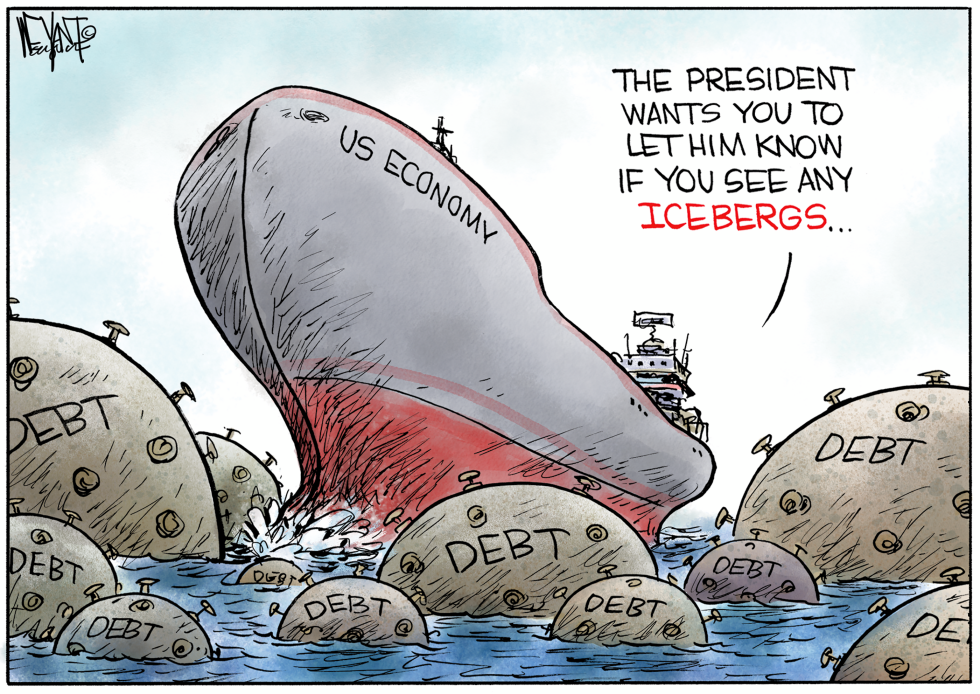
This political cartoon illustrates the US Economy as a massive ship labeled accordingly, dramatically sinking after colliding with numerous icebergs each marked 'DEBT.' A speech bubble from the ship warns to alert the president about icebergs, evoking the Titanic disaster in a clear metaphor for economic peril. Incorporating tags such as economy, debt, budget, inflation, prices, and costs, the image critiques fiscal irresponsibility. The artwork by Christopher Weyant uses simple lines and colors to emphasize the collision's impact, with water splashing and the ship's hull damaged. Such cartoons often highlight how mounting debt threatens stability, drawing parallels to historical maritime tragedies for satirical effect. The composition places the ship at an angle, surrounded by floating debt bergs, underscoring inevitable crisis if warnings go unheeded.
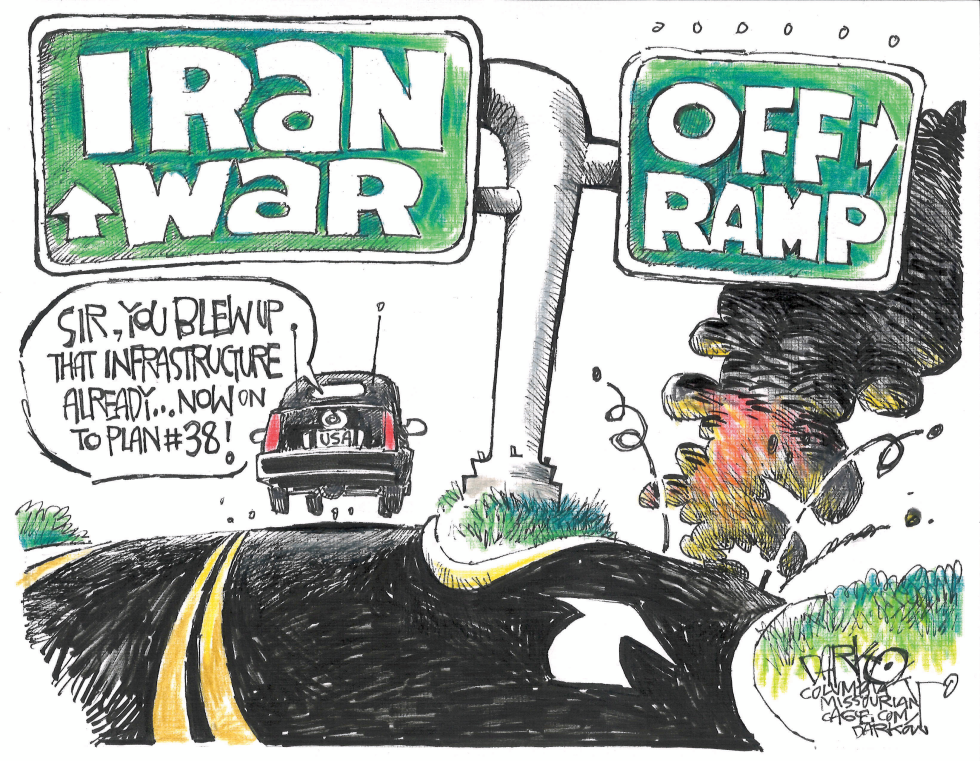
This daryl cagle political cartoon shows a highway split with signs for iran war upward and off ramp rightward, where a usa license plate car drives into an explosion. The car\'s speech bubble says, \'SIR, YOU BLEW UP THAT INFRASTRUCTURE ALREADY... NOW ON TO PLAN #38!\' highlighting satirical destruction. Amid grass and road lines, the image mocks usa iran conflict satire through off ramp infrastructure destruction cartoon, emphasizing failed exits in political cartoon usa foreign policy. The irreverent style captures highway to iran war illustration with humorous despair over repeated plans.
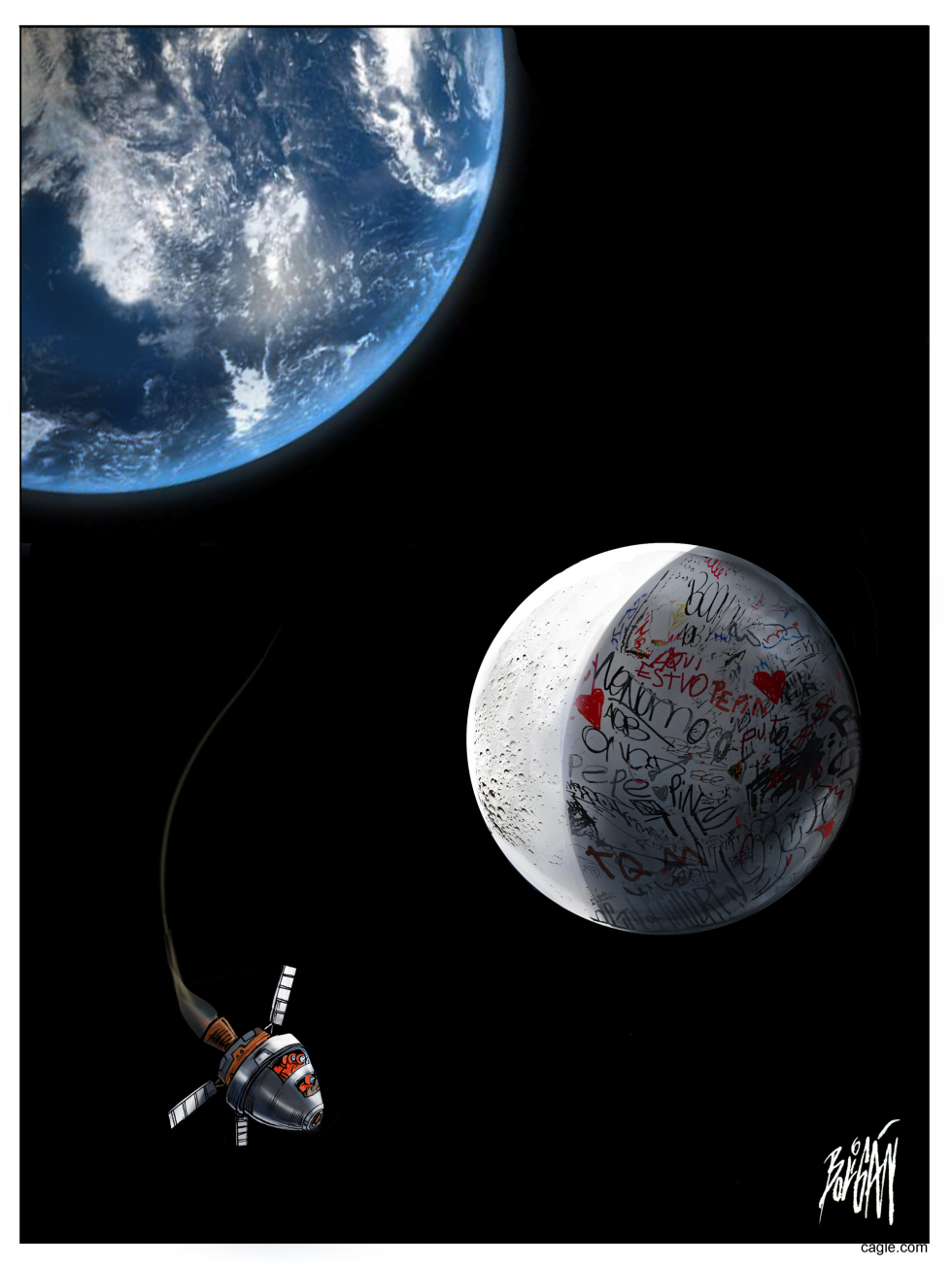
The image shows a spacecraft approaching the moon, whose near side displays extensive graffiti including words like bully and amor alongside hearts and scribbles. Earth is visible in the upper left against black space. The scene references ongoing lunar missions such as Artemis and Orion under NASA. The date of April 3 2026 places the work amid continued space exploration efforts. The visual highlights the contrast between pristine celestial bodies and terrestrial markings.
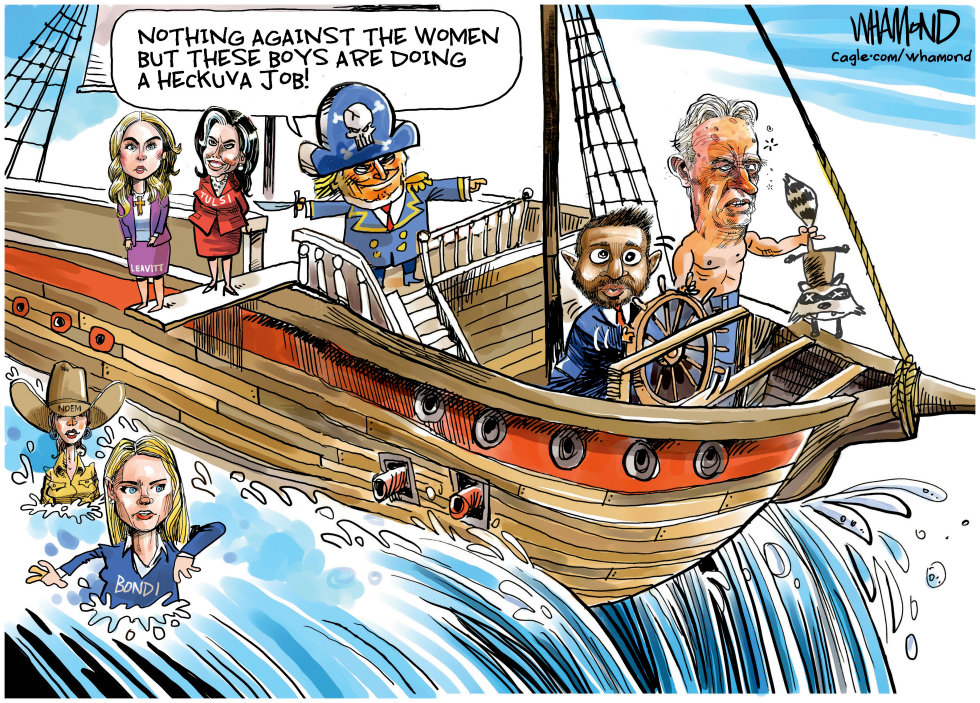
Dave Whamond's cartoon shows a wooden pirate ship tilting over waves, with a figure resembling Trump in a skull cap saying 'Nothing against the women but these boys are doing a heckuva job!' Women labeled Leavitt and Tulsi stand on a plank, another labeled Bondi splashes in water wearing a cowboy hat. A suited man steers, a shirtless man holds a raccoon, tying into tags like AG Pam Bondi ousted, Trump loyalist, walking the plank, Kristi Noem, Tulsi Gabbard, dead women walking, Kash Patel, incompetence, Trumps kooky cabinet, and ship metaphor for political upheaval.
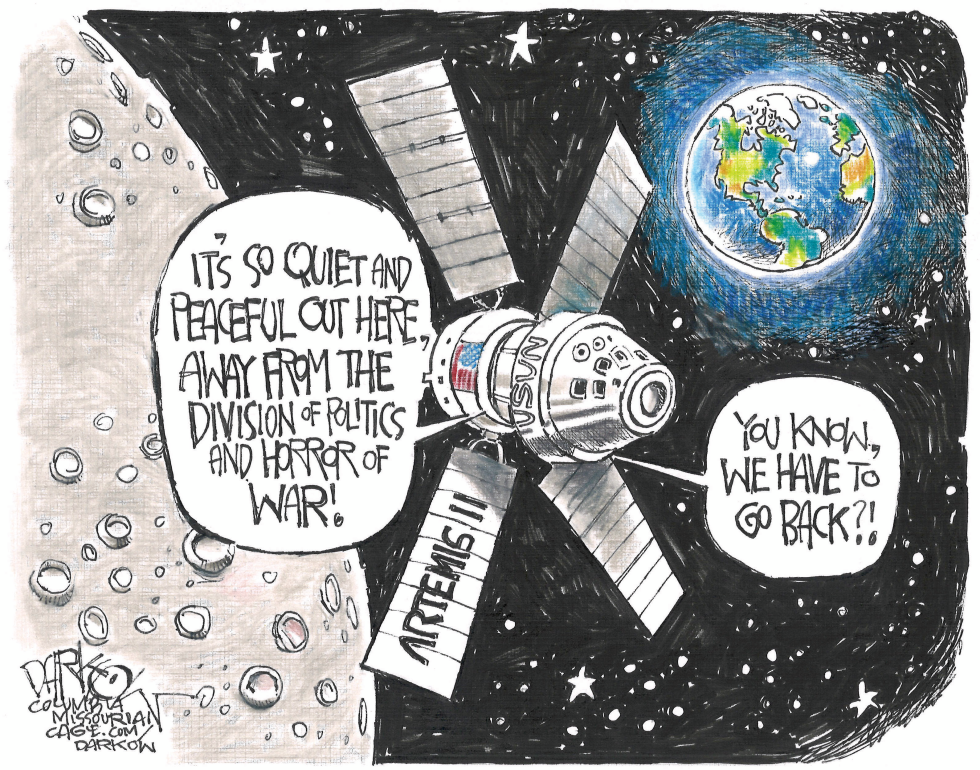
This Daryl Cagle political cartoon analysis features the Artemis II spacecraft floating in serene space, with Earth glowing in the background and the moon nearby. The left speech bubble extols the quiet peace away from division of politics and horror of war, while the right one resignedly notes the need to go back. It's a satirical cartoon on politics and war division, poking fun at how space exploration escaping earthly conflicts offers temporary respite. The NASA Artemis program humor illustration underscores the irony of advanced space missions contrasting with unresolved human divisions on Earth. Through this humorous take on returning to political division, the cartoon cleverly comments on the allure of peaceful space vs chaotic Earth without delving into specifics.