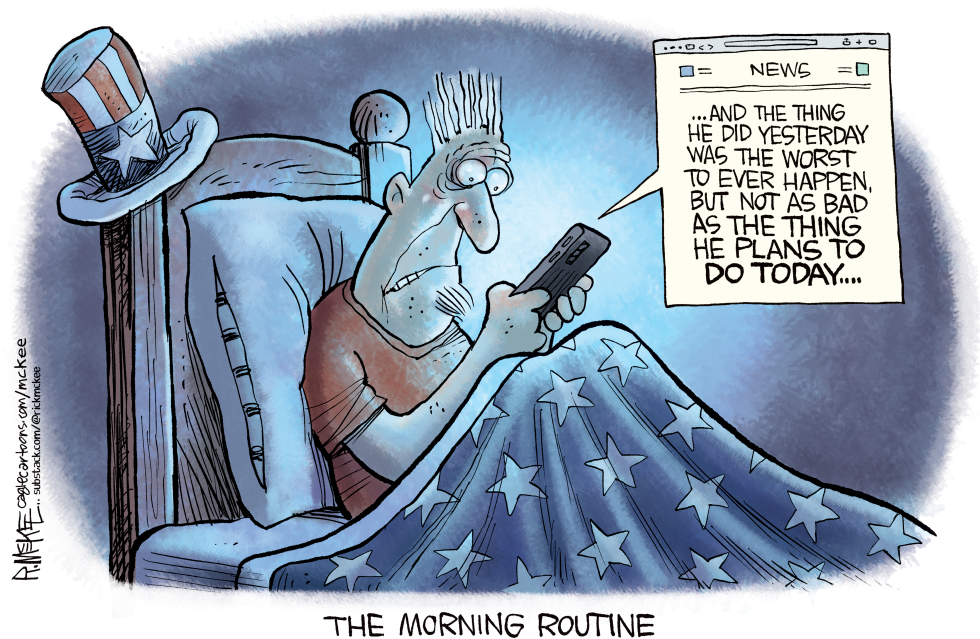
A man in bed examines a phone displaying a news alert about recent and upcoming events. The scene includes an Uncle Sam style hat and a blanket patterned with stars. The bottom text labels the scene as a morning routine. Publication occurred on May 20 2026.
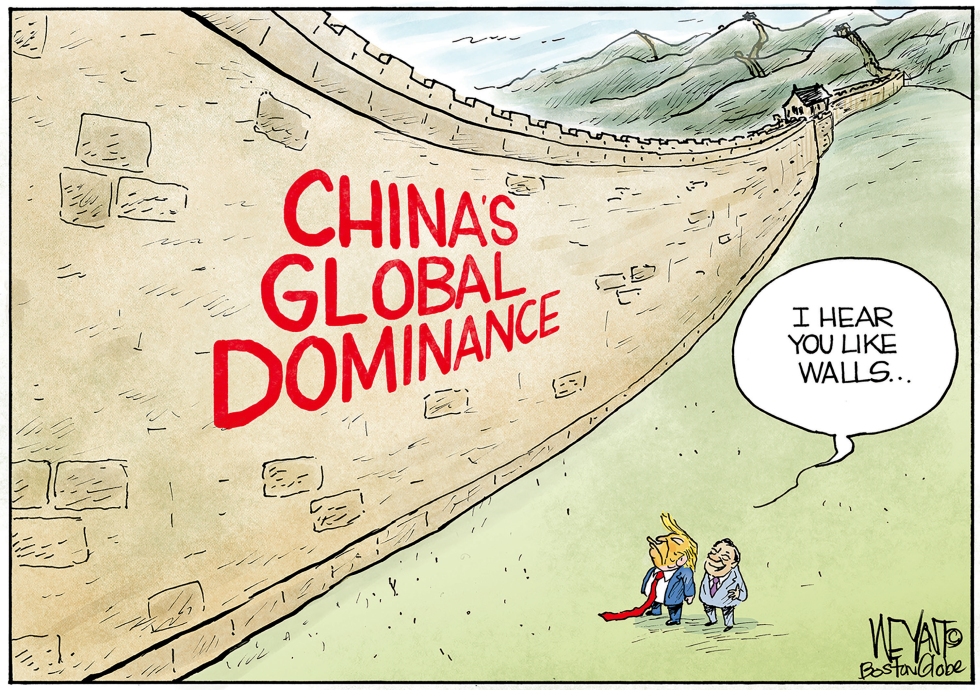
The image shows a massive stone wall curving across hills labeled in red text China's global dominance. At the bottom right two men in suits stand on grass one with yellow hair and red tie. A speech bubble extends from the second man stating I hear you like walls. The wall has watchtowers and the background shows green hills under a blue sky.
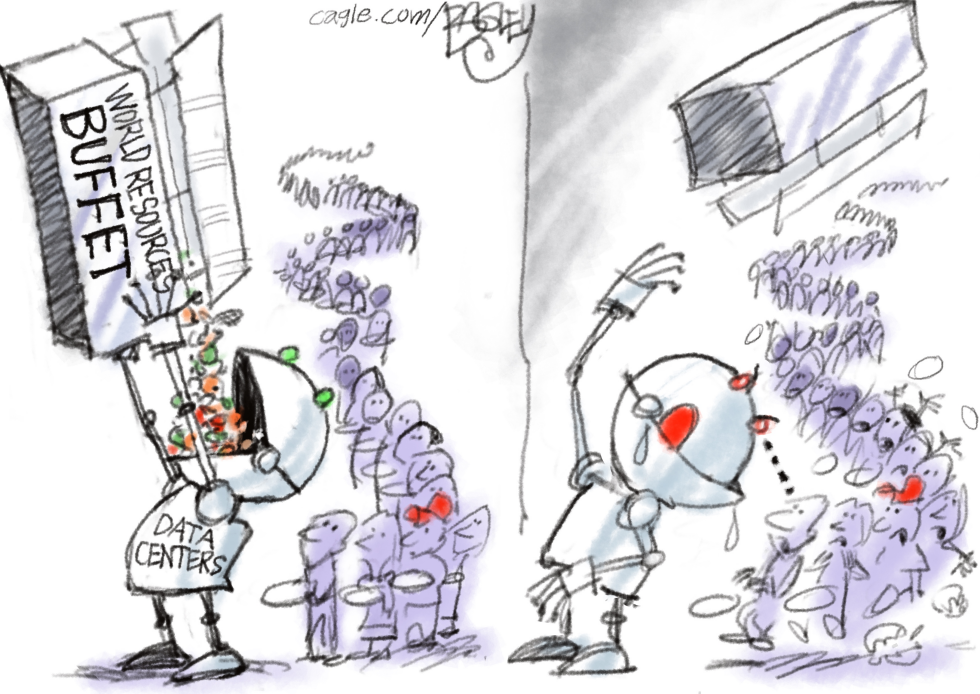
The cartoon depicts two robotic figures managing data centers. One empties a buffet of world resources into a labeled bin while crowds wait with bowls. The second figure waves from a window as groups with red hearts react below. The scene addresses expanding data center operations in Utah and their demands on water, electricity and other supplies amid ongoing climate concerns.
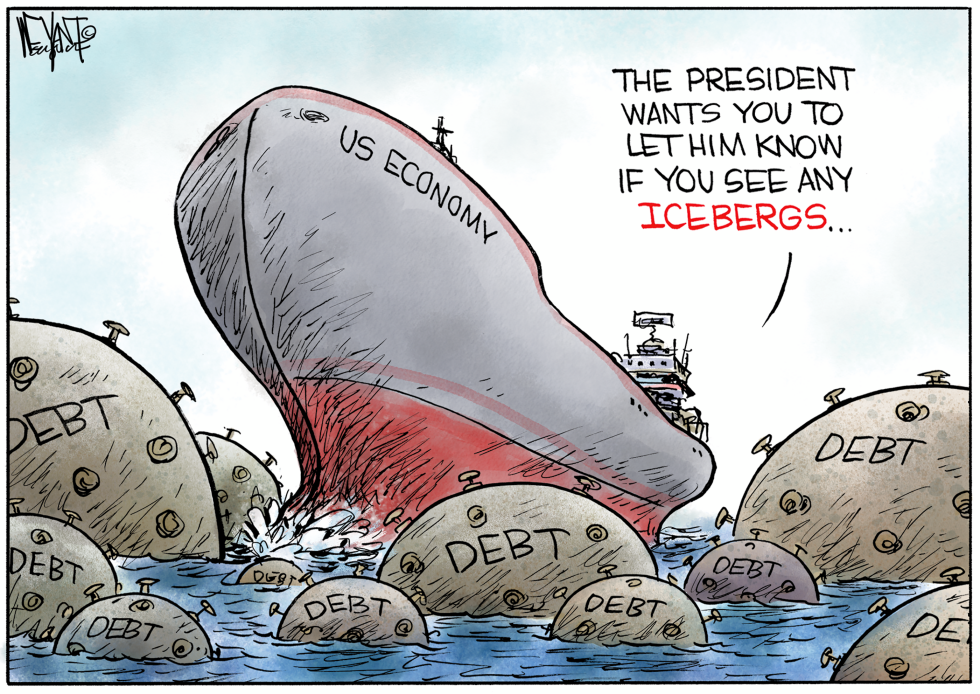
This political cartoon illustrates the US Economy as a massive ship labeled accordingly, dramatically sinking after colliding with numerous icebergs each marked 'DEBT.' A speech bubble from the ship warns to alert the president about icebergs, evoking the Titanic disaster in a clear metaphor for economic peril. Incorporating tags such as economy, debt, budget, inflation, prices, and costs, the image critiques fiscal irresponsibility. The artwork by Christopher Weyant uses simple lines and colors to emphasize the collision's impact, with water splashing and the ship's hull damaged. Such cartoons often highlight how mounting debt threatens stability, drawing parallels to historical maritime tragedies for satirical effect. The composition places the ship at an angle, surrounded by floating debt bergs, underscoring inevitable crisis if warnings go unheeded.
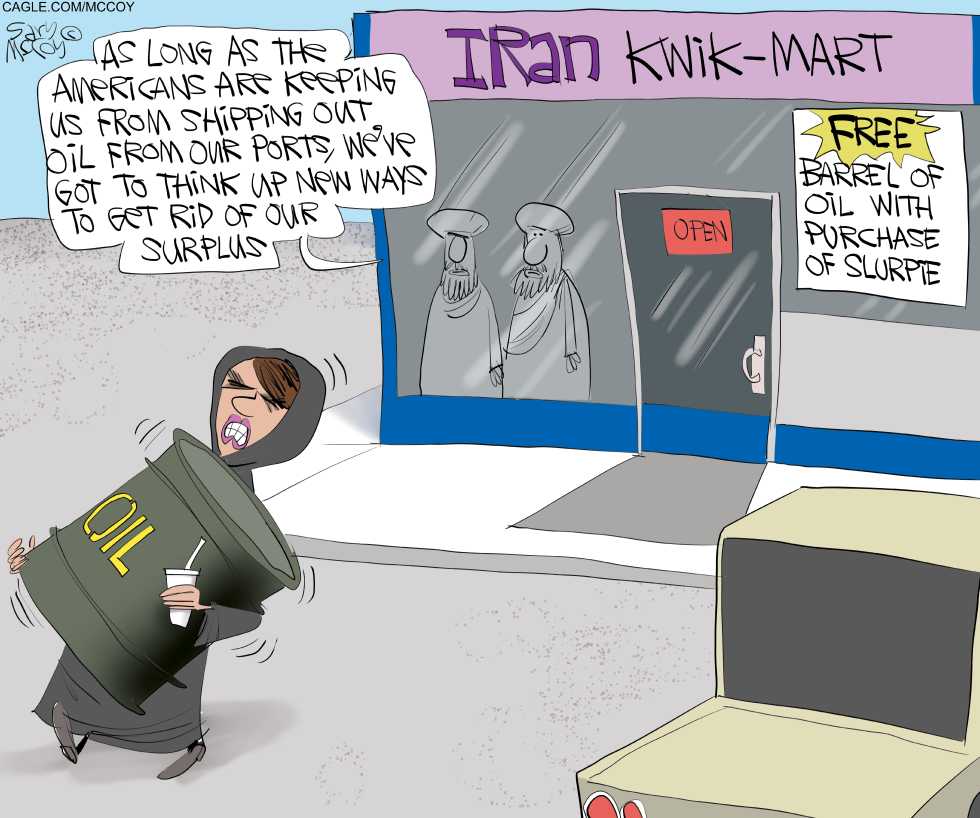
Gary McCoy's cartoon depicts two bearded Iranian clerics inside the Iran Kwik-Mart, promoting a free barrel of oil with Slurpee purchase to handle surplus crude. Outside, a hooded figure dumps an oil barrel into a car trunk, lamenting U.S. blockades on shipping ports. The image ties into Strait of Hormuz tensions, oil prices, Trump-era policies, Iran's Revolutionary Guard, and Middle East conflicts, highlighting ironic solutions to energy surplus amid international sanctions and naval standoffs. Commercial ships and tankers face barriers, forcing creative disposal methods in this dryly humorous take on global oil dynamics.