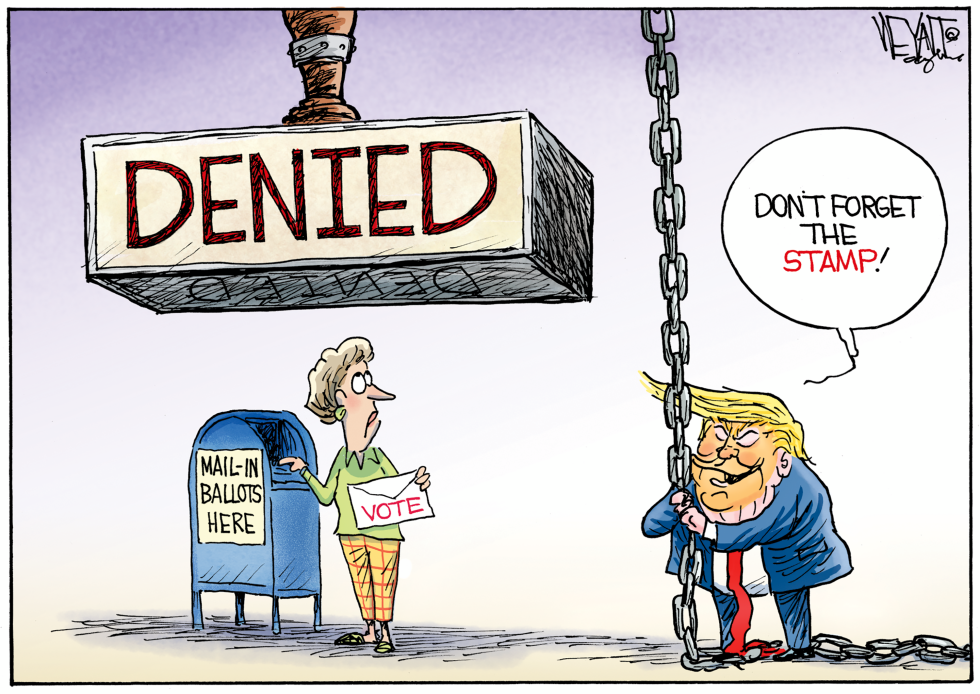
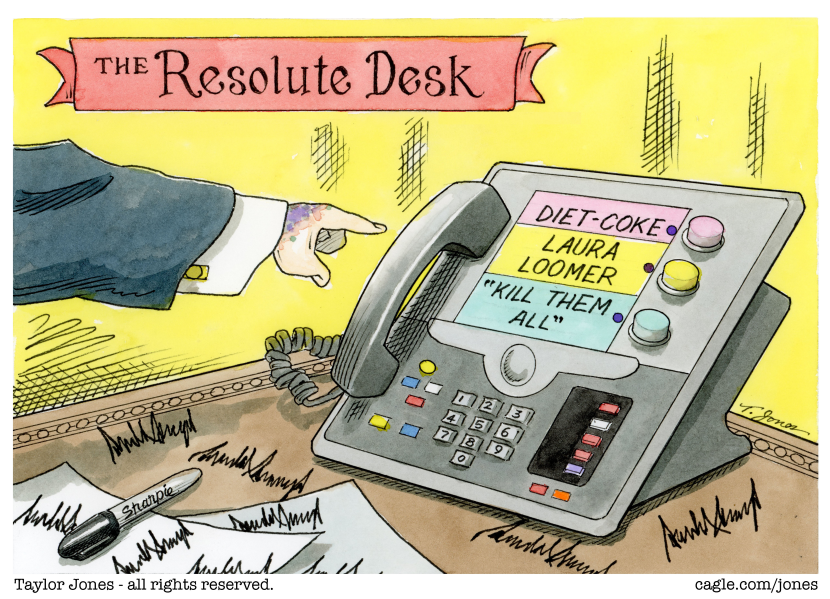
President Trump has directed efforts to deny mail-in ballots in the 2026 election cycle, citing concerns over fraud and integrity. The move affects millions of voters who rely on absentee and mail voting. Critics argue the policy suppresses turnout and favors in-person Republican voters. The cartoon portrays Trump personally enforcing the denial mechanism.
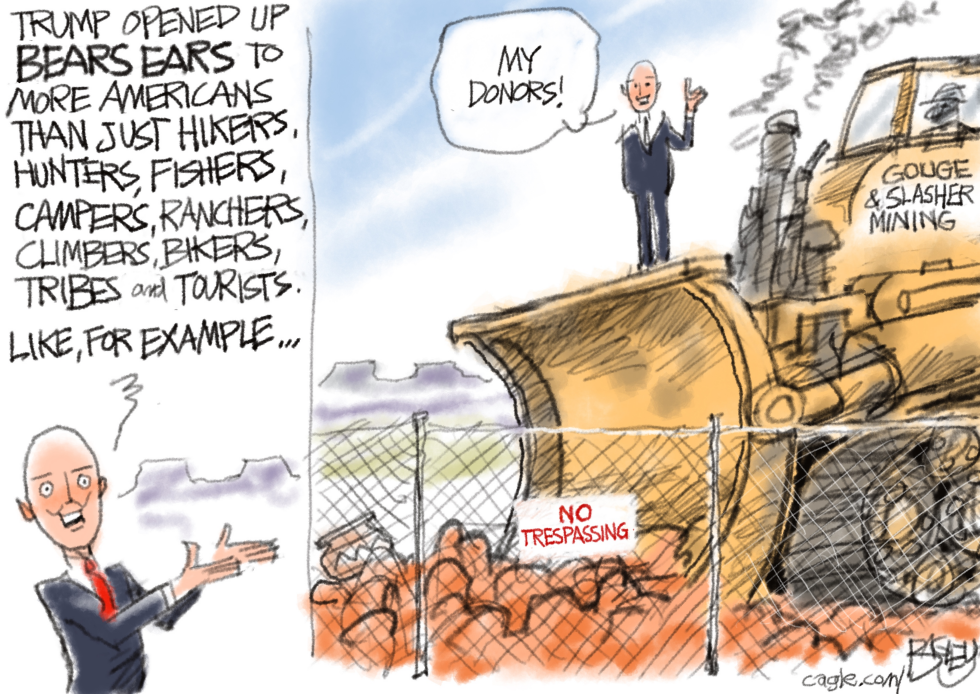
President Trump opened Bears Ears National Monument to expanded mining operations, citing broader public access. The move benefits mining companies and political donors while limiting protections for hikers, tribes and recreational users. The cartoon criticizes the decision as donor-driven favoritism over conservation.
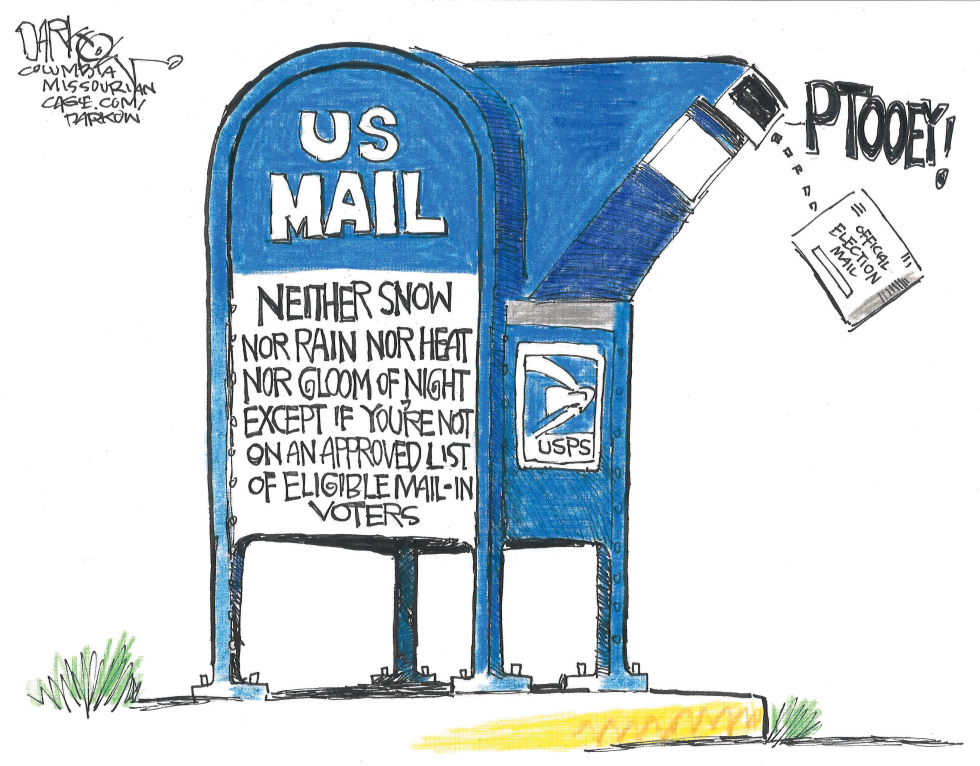
A USPS mailbox rejects mail-in ballots unless the sender appears on an approved list of eligible voters. The action highlights ongoing debates over mail voting security and access ahead of elections. Critics argue such restrictions disproportionately affect certain voter groups and undermine confidence in the postal system. Supporters claim the measures prevent fraud. The cartoon portrays the mailbox as actively enforcing these limits, suggesting institutional barriers to participation.
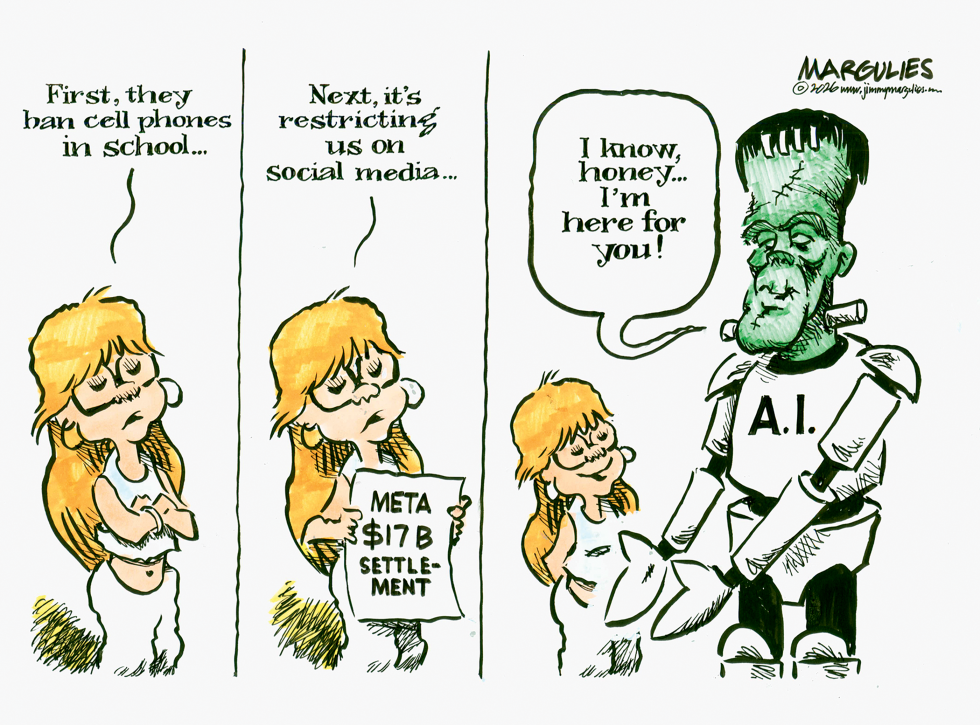
A $17 billion Meta settlement and expanding school cell phone bans have accelerated restrictions on teen social media use. The developments raise questions about how young users will fill the gap left by reduced platform access. The cartoon frames artificial intelligence as the unexpected beneficiary, positioning an AI Frankenstein figure as a comforting presence for a disappointed girl. This visual argument suggests that limits on social media may simply shift reliance toward unregulated AI tools rather than solving underlying concerns about youth screen time.
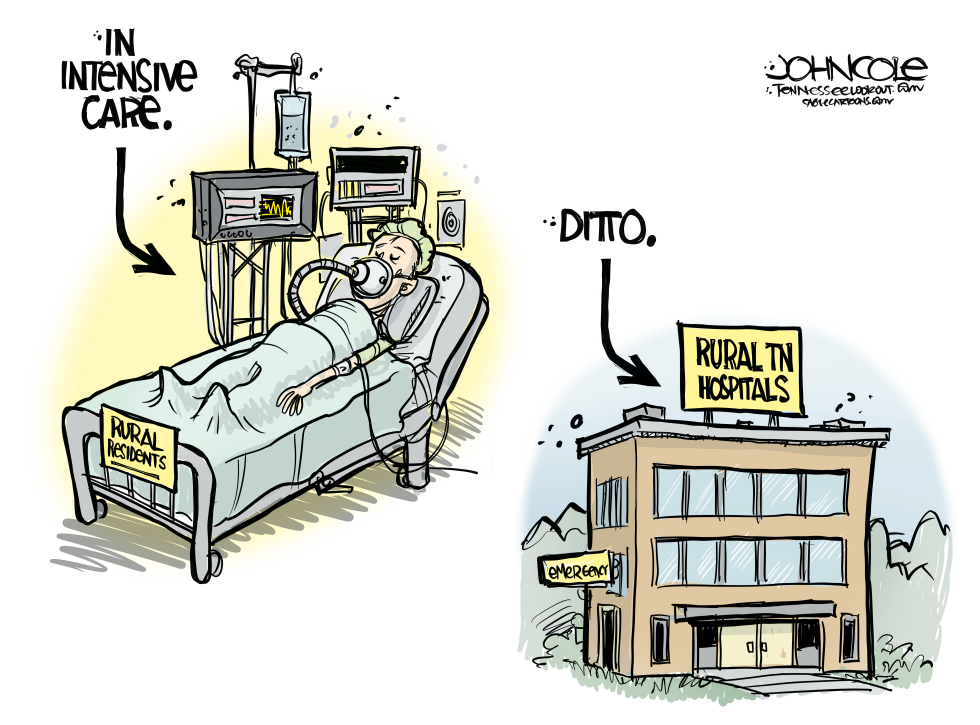
Rural hospitals across Tennessee continue to operate under severe financial pressure, with several facilities at risk of reducing services or closing. The situation affects access to emergency and intensive care for residents in remote areas. The piece argues that the hospitals themselves require urgent intervention to remain viable.
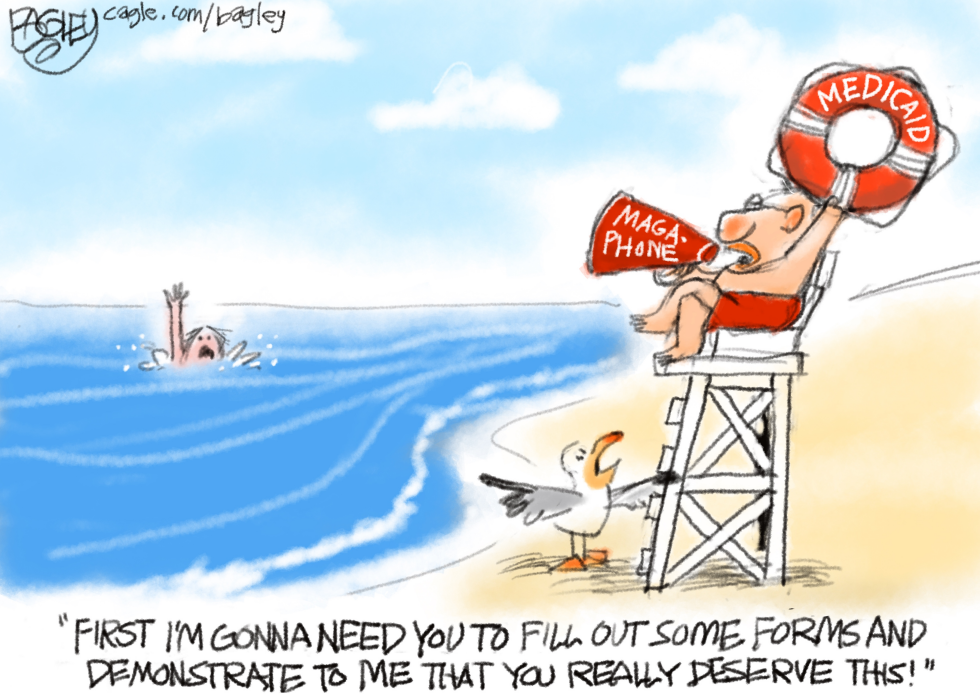
A Medicaid administrator requires extensive paperwork and proof of eligibility before providing aid to an eligible recipient. The situation highlights ongoing tensions over administrative hurdles in public health programs. The piece criticizes such requirements as barriers that undermine the purpose of assistance.
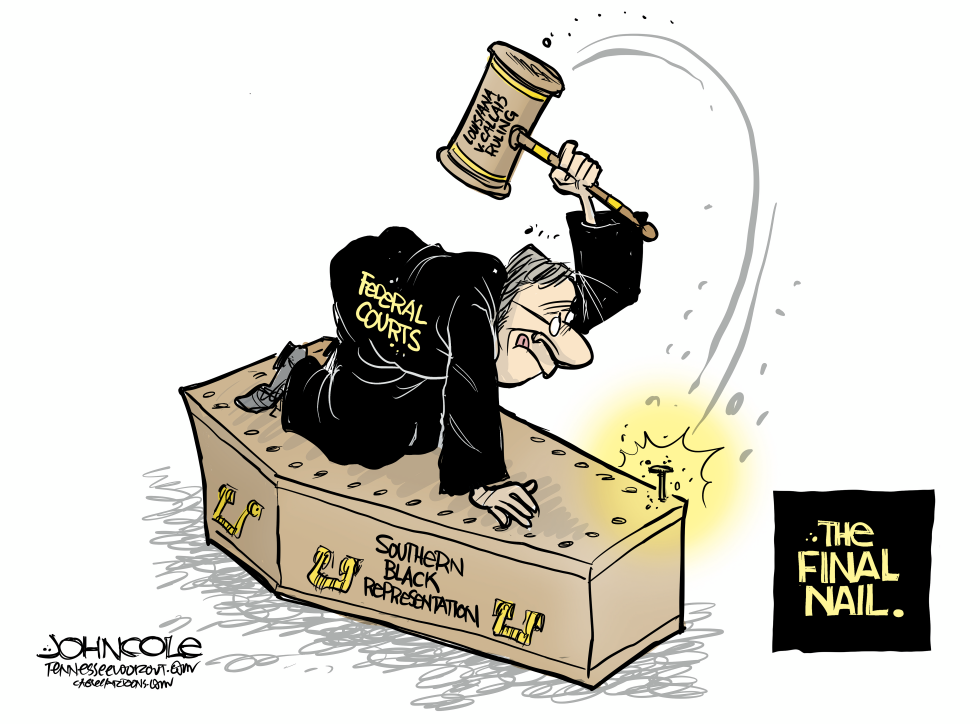
A federal court ruling on Louisiana redistricting has reduced black congressional representation across southern states. The decision follows ongoing litigation over district maps and voting access. It matters because it alters the number of majority-minority seats available in Congress. The piece argues the ruling delivers a decisive setback to those representation gains.
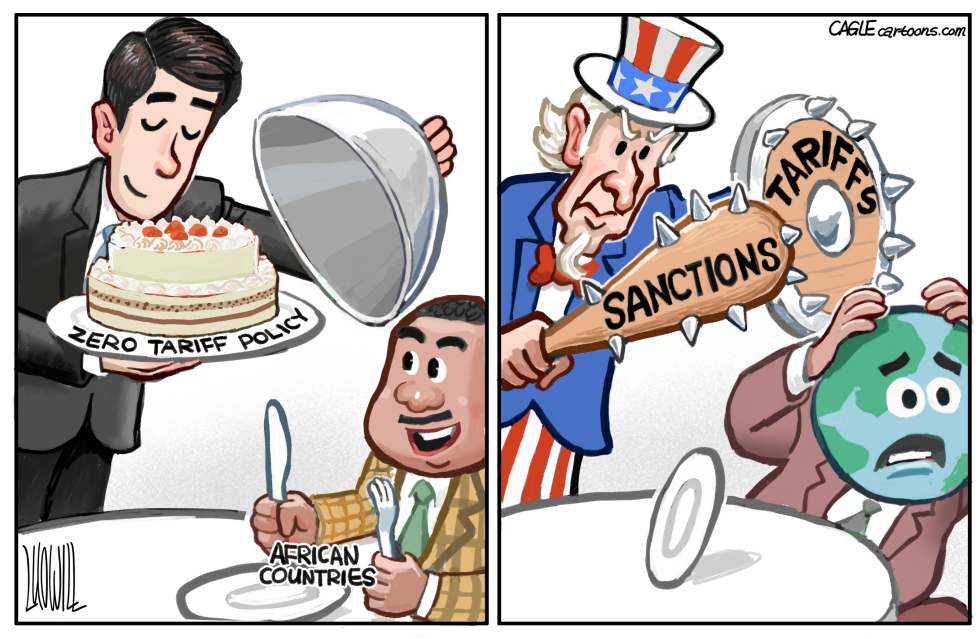
The United States has extended a zero-tariff policy offer to African nations amid ongoing global trade tensions. This move stands in contrast to simultaneous use of tariffs and sanctions against other trading partners. The policy highlights selective economic engagement by Washington. The editorial position criticizes the inconsistency between the overture to Africa and the punitive approach applied more broadly.
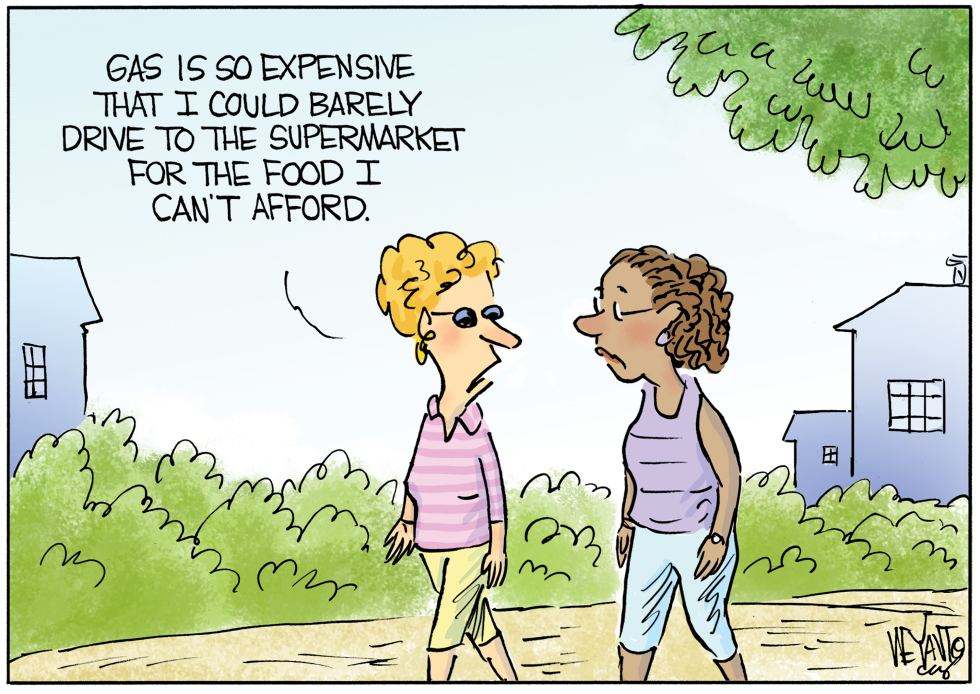
Elevated gasoline prices continue to squeeze household budgets by raising the cost of essential travel for groceries. Families report that filling the tank now competes directly with buying food, amplifying the effects of broader inflation on daily necessities. The editorial highlights how these intertwined expenses limit mobility and purchasing power for average consumers.
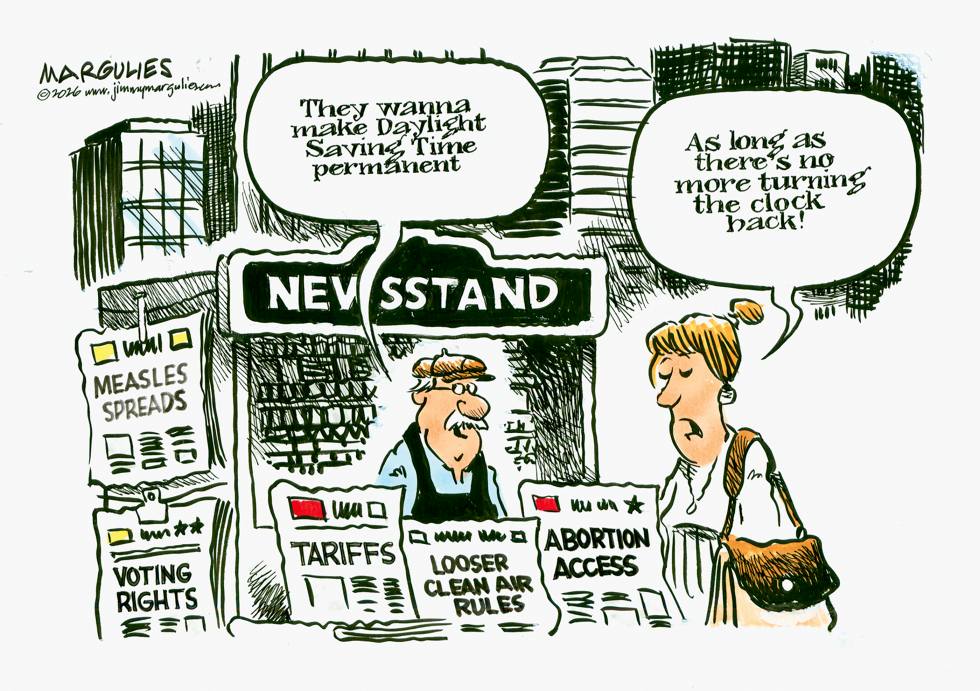
Proposals to make daylight saving time permanent coincide with debates over tariffs, abortion access, voting rights and environmental rules. The cartoon frames these as part of a broader pattern of policy shifts that some view as steps backward.
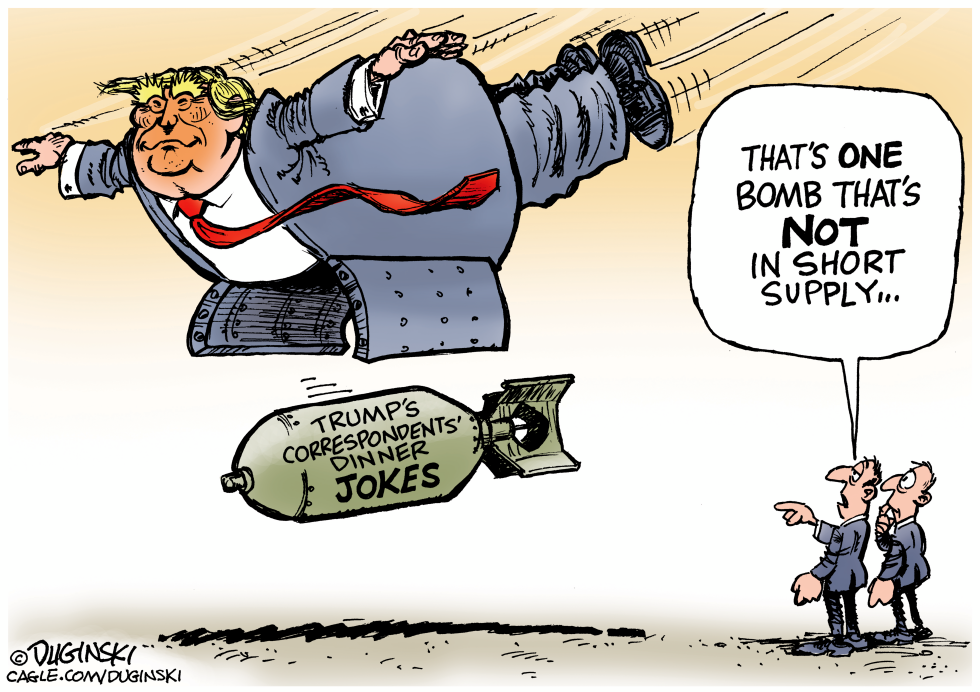
Donald Trump delivered jokes at the 2026 White House Correspondents Dinner that landed poorly with the audience. The event drew attention for the president's comedic missteps amid ongoing tensions with the press. The piece argues the routine exposed a persistent pattern of tone-deaf delivery rather than isolated misfires.
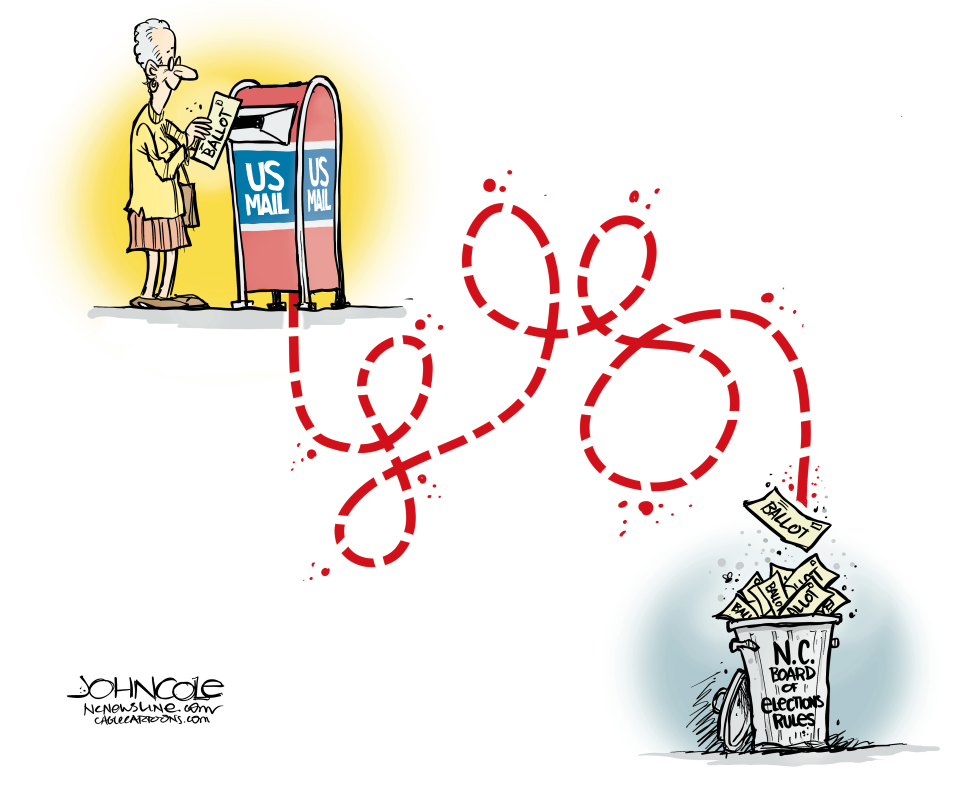
North Carolina election officials have implemented rules that invalidate or discard large numbers of mail ballots. The changes affect voter access in the state. The editorial criticizes the policy as an unnecessary barrier to participation.
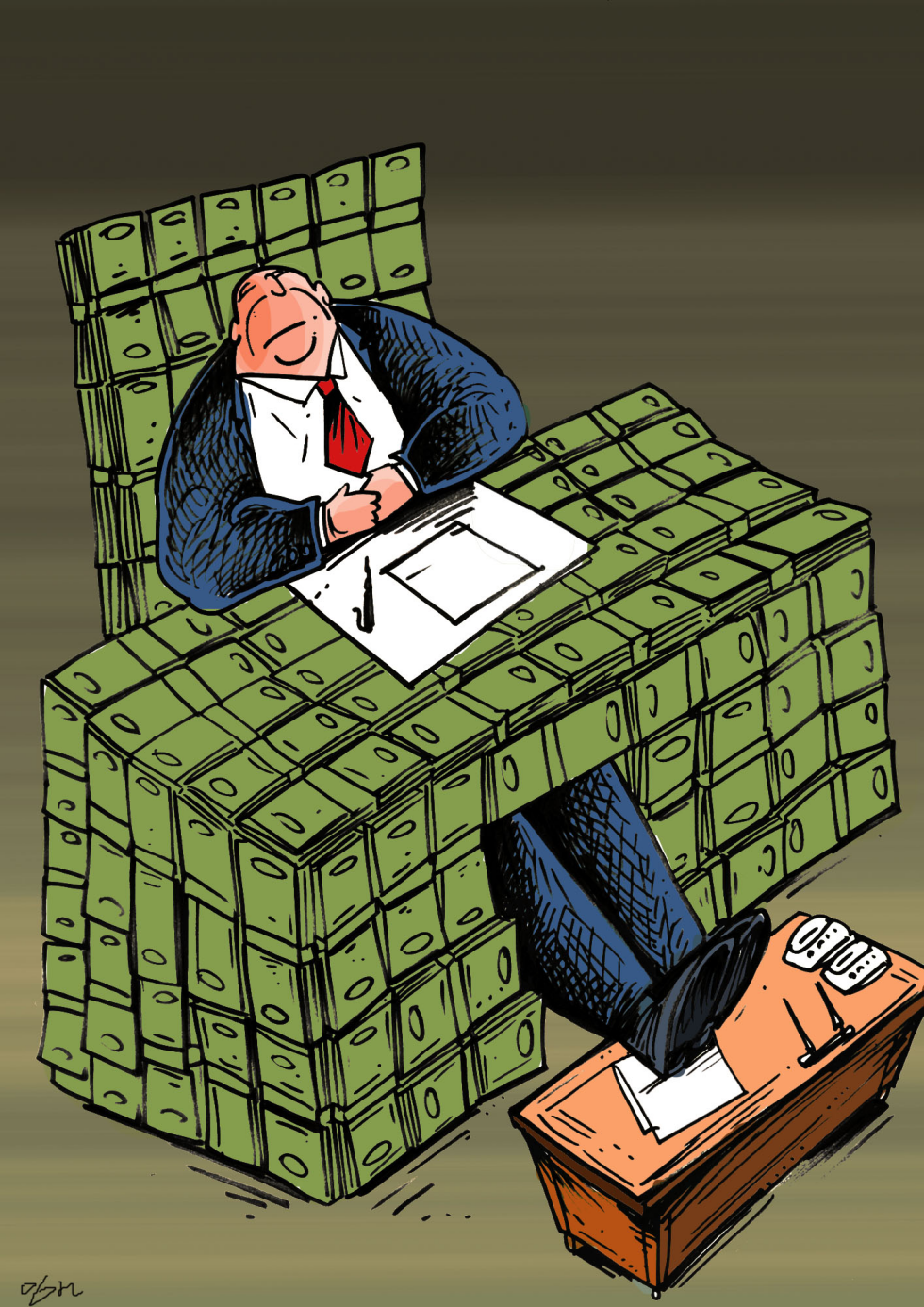
Public officials and business leaders often operate amid substantial financial resources that shape their daily environments and decisions. Recent developments in campaign finance and corporate influence have kept scrutiny on how wealth intersects with governance. The piece portrays an executive fully at ease within a setting constructed entirely from currency, underscoring the normalization of money's central role in positions of authority.
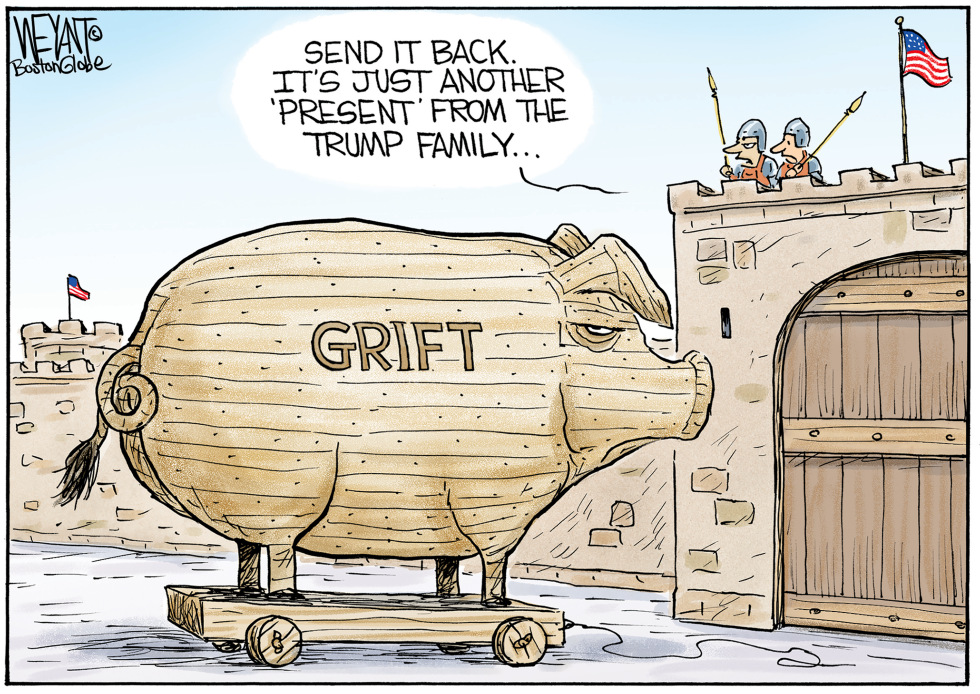
The Trump family faces renewed scrutiny over business dealings and influence peddling. Guards at a symbolic fortress receive a large wooden pig marked grift and immediately demand its return. The episode highlights ongoing concerns about gifts and favors tied to the family name.