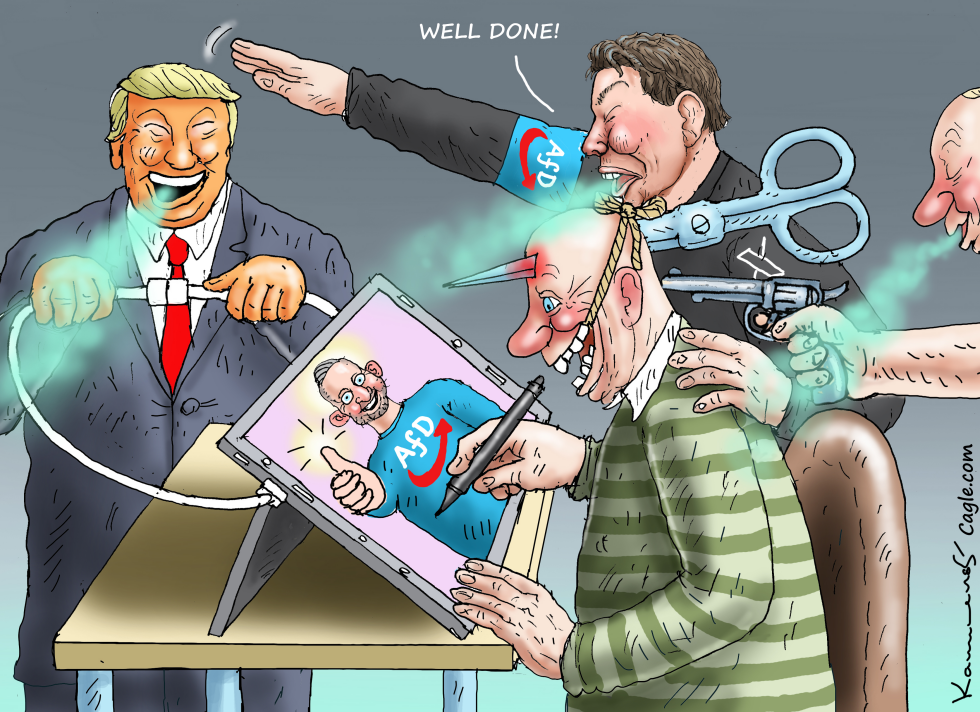
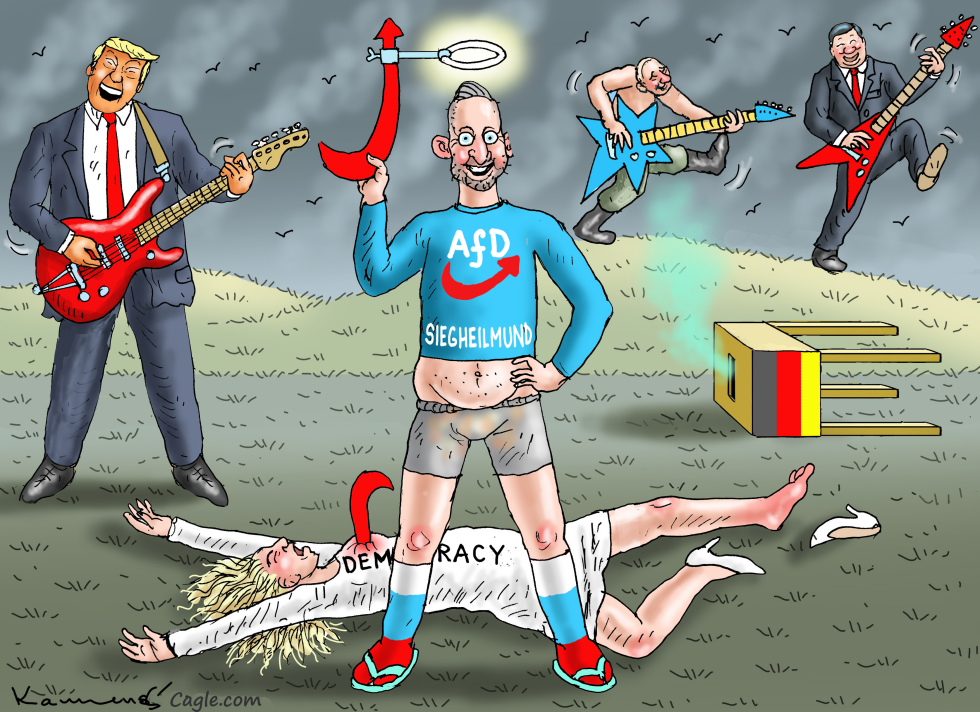
Donald Trump publicly aligned with Germany's Alternative for Germany party in the run-up to federal elections. The move drew scrutiny over foreign influence in European politics. The cartoon portrays the endorsement as reckless and dangerous, highlighting the risks of legitimizing extremist elements.
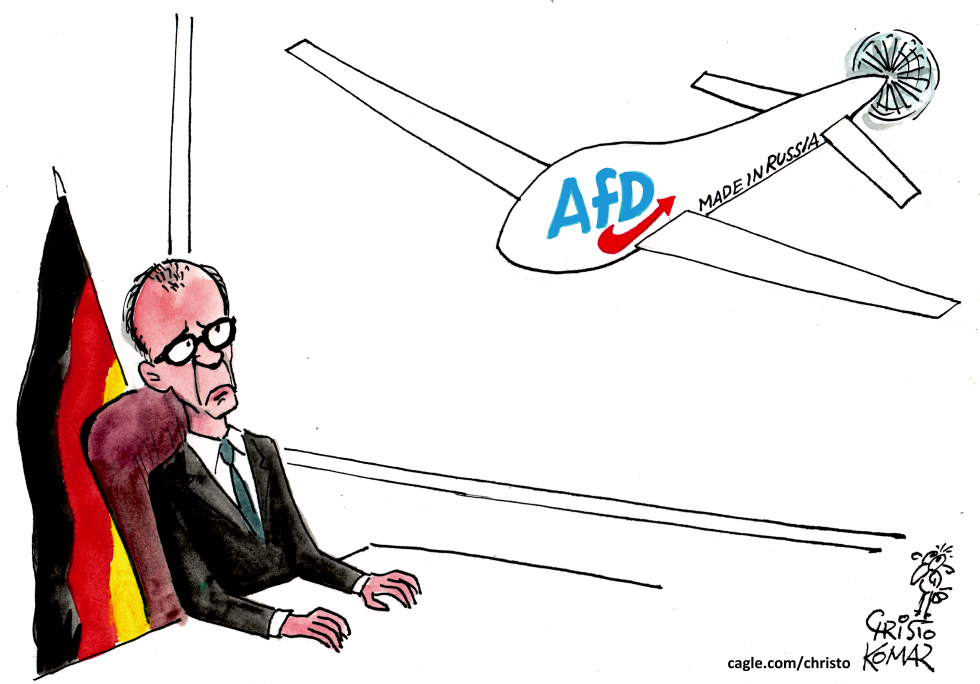
Germany's Alternative for Germany party draws renewed attention for its pro-Russia stance and possible external support. The cartoon uses the image of an AfD-branded plane labeled made in Russia to suggest the party's campaign and positions are shaped by Moscow. This comes amid ongoing debates over foreign interference in European elections and the party's rising poll numbers. Critics argue such ties undermine German sovereignty and democratic processes. The piece takes the view that AfD functions as a vehicle for Russian interests rather than a genuine domestic movement.
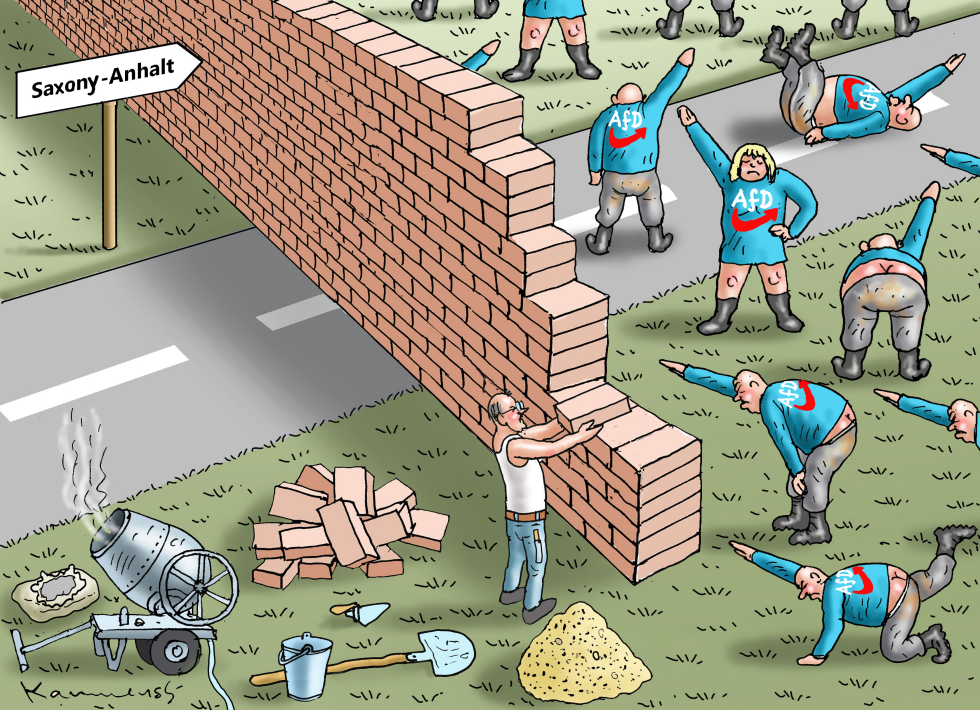
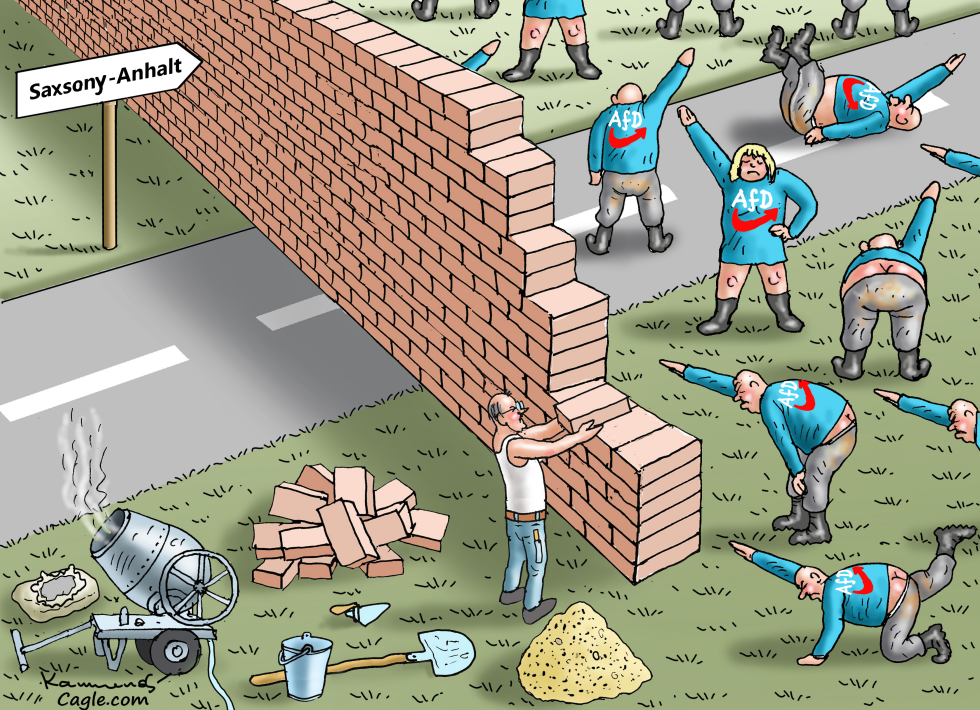
Friedrich Merz has positioned himself as a bulwark against Alternative for Germany advances ahead of state elections in Saxony-Anhalt. The cartoon depicts Merz personally laying bricks for a wall labeled for the eastern state while AfD figures in branded shirts struggle to cross it. The image underscores the CDU leader's strategy of containment rather than engagement with the far-right party. It reflects ongoing debates within German center-right circles about how to address AfD electoral strength without legitimizing its platform. The editorial stance presents the wall-building as a necessary, if blunt, defensive measure.
German opposition leader Friedrich Merz has positioned himself as a bulwark against the Alternative for Germany party ahead of state elections in Saxony-Anhalt. The move comes as AfD polls strongly in eastern regions, prompting mainstream parties to draw sharper lines. Merz's approach emphasizes containment over engagement. The cartoon frames this as literal wall-building, underscoring the defensive posture parties adopt when facing AfD momentum. It highlights the ongoing struggle within German politics to isolate the far-right without ceding ground on immigration and national identity issues that fuel AfD support.
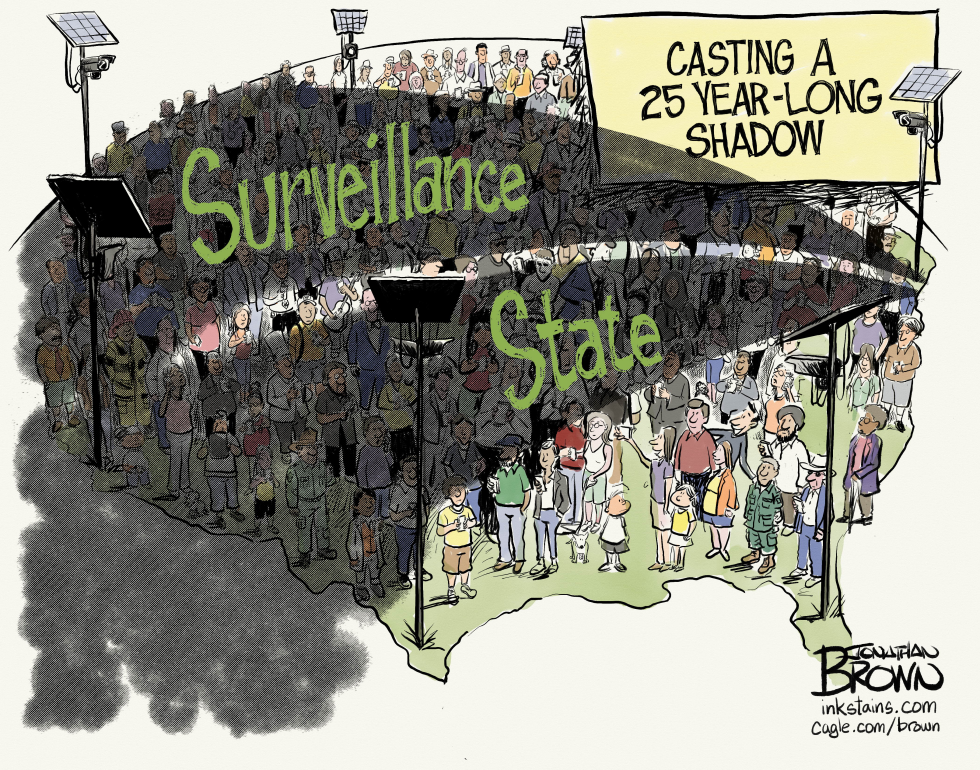
The cartoon depicts a dense crowd of Americans standing on a map of the United States, partially obscured by a large dark shadow cast by surveillance cameras mounted on poles. The words 'Surveillance State' appear prominently in green lettering across the scene, while a sign in the upper right reads 'CASTING A 25 YEAR-LONG SHADOW.' The image comments on the lasting effects of expanded government surveillance programs that began after the September 11 attacks, now spanning a quarter century. It illustrates how these measures continue to influence daily life and public spaces in 2026.
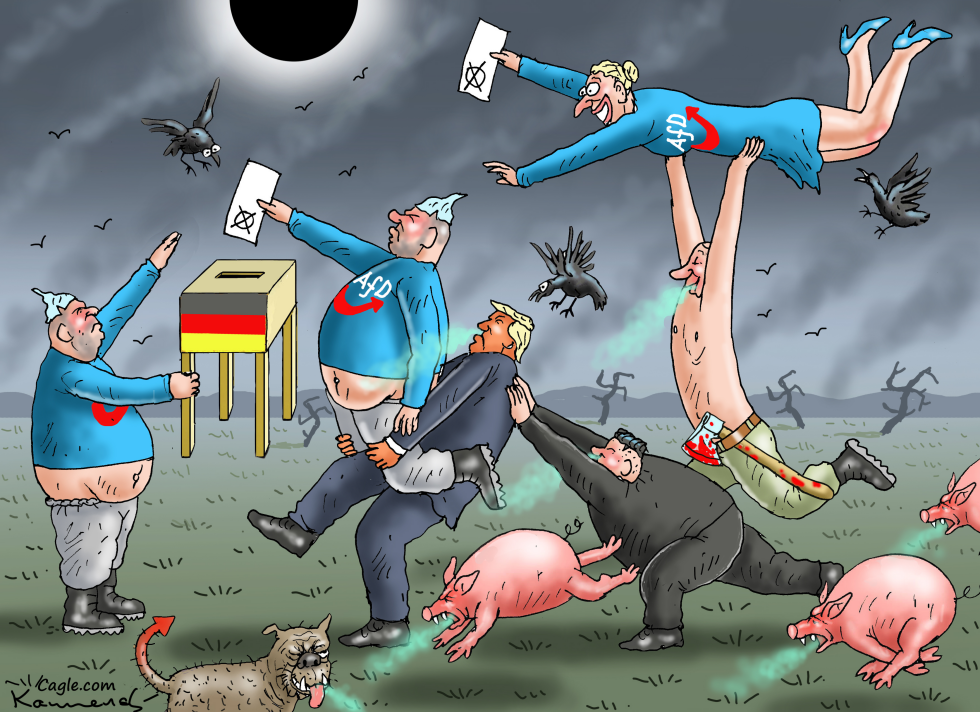
Germany's Alternative for Germany party posted strong results in recent state elections, prompting concern among mainstream parties about the far-right's rising influence. Donald Trump publicly welcomed the outcome, aligning with other international figures who view the AfD favorably. The development matters because it signals potential shifts in EU policy and democratic norms within a key NATO member. The cartoon argues that such gains represent a direct assault on democratic institutions, with external authoritarians celebrating the erosion from the sidelines.
Russian President Vladimir Putin and former President Donald Trump are shown aiding Germany's AfD party in the run-up to elections. The piece argues that external interference from these figures is boosting the far-right German party while harming domestic U.S. political elements.
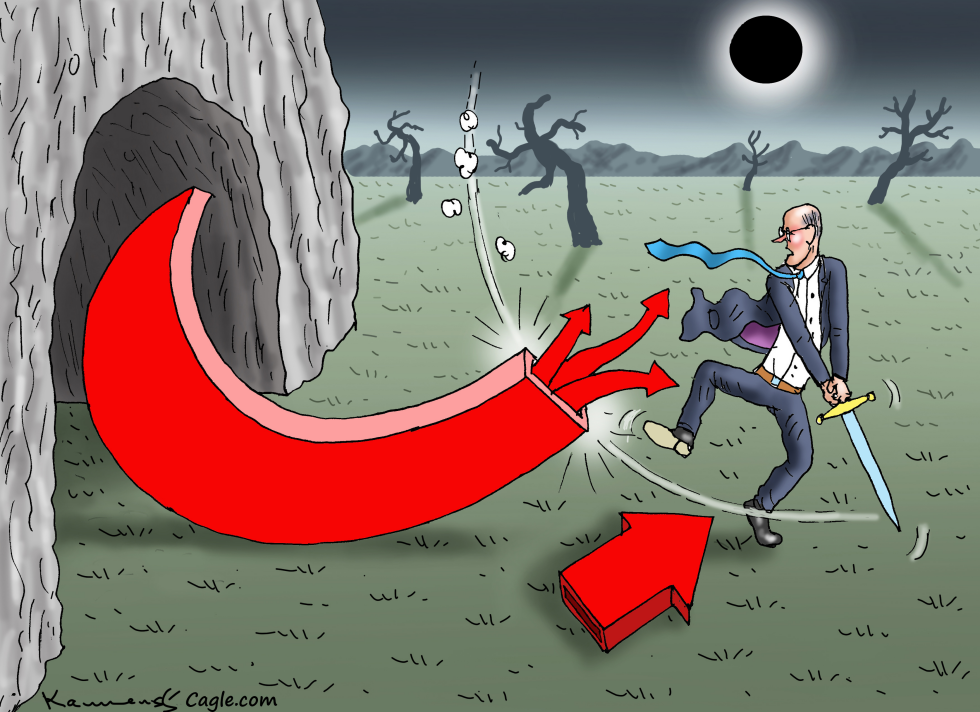
Friedrich Merz, CDU leader, faces a rising challenge from the Alternative for Germany party ahead of upcoming elections. The AfD has gained ground in recent state votes by capitalizing on economic discontent and migration concerns. Merz has positioned himself as the main bulwark against the far-right grouping. The cartoon frames this contest as a direct heroic struggle, with Merz cast as the defender wielding traditional weapons against a powerful, emerging threat. It endorses the view that mainstream conservatives must actively combat the AfD rather than accommodate it.
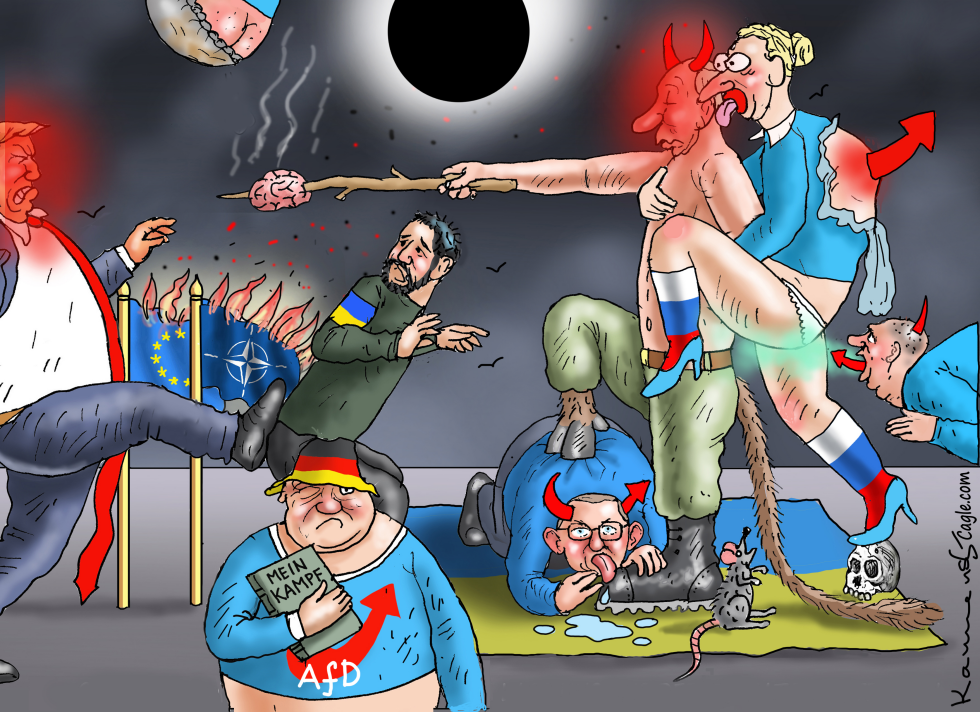
The Alternative for Germany party faces renewed criticism for its associations with international far-right figures including Donald Trump and apparent sympathy toward Vladimir Putin amid the Russia-Ukraine conflict. The cartoon portrays AfD embracing these influences while rejecting NATO and EU structures. It argues that such alignments expose the party's extremist leanings and undermine Germany's democratic commitments.
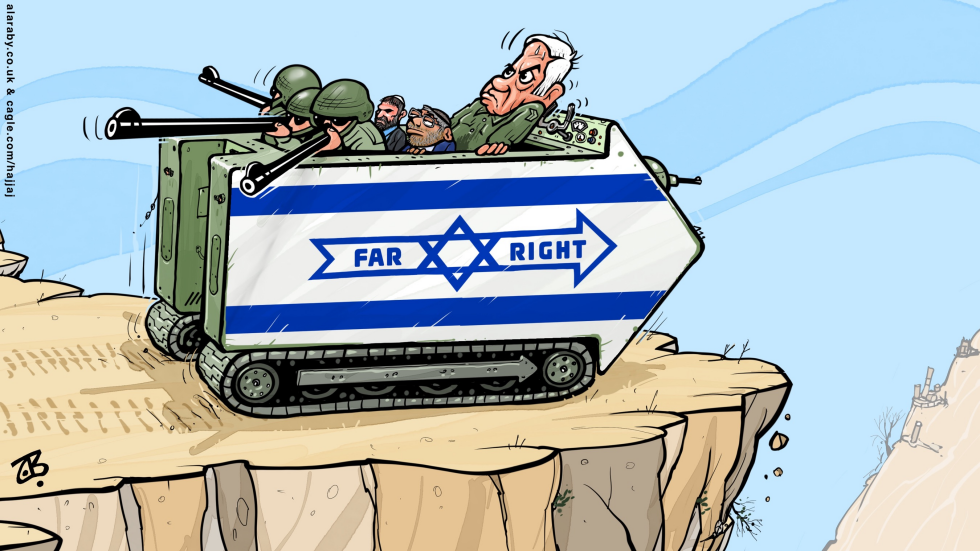
Israeli Prime Minister Benjamin Netanyahu leads a far-right coalition whose policies face mounting domestic and international criticism. The government has pursued aggressive military actions and settlement expansion while navigating coalition partners with extreme views. This direction risks further isolation and internal division. The cartoon argues that Netanyahu's embrace of the far right is propelling the country toward self-inflicted political and strategic damage.
On the eve of German state elections, Donald Trump publicly aligned with the AfD by signaling support for its leader. The move drew attention to foreign influence in European politics and raised questions about the party's direction. The cartoon portrays the endorsement as an attempt to empower a fringe movement through personal patronage.
The AfD seeks gains in upcoming German elections with visible support from Donald Trump and other authoritarian figures. The party faces accusations of extremist ties. The cartoon portrays this backing as a direct boost to the far-right campaign while highlighting Nazi symbols on ballots.
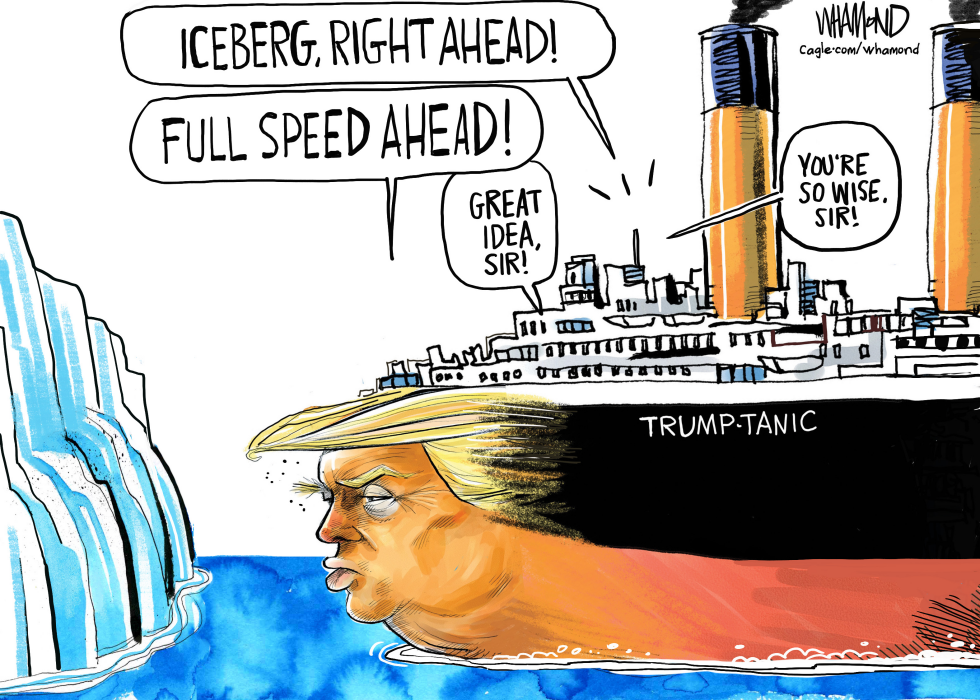
Donald Trump faces mounting leadership challenges in 2026 as critics warn his administration is steering the country toward avoidable crises. The piece portrays him ignoring clear warnings while surrounded by flatterers. It argues that such dynamics risk major political and policy damage.
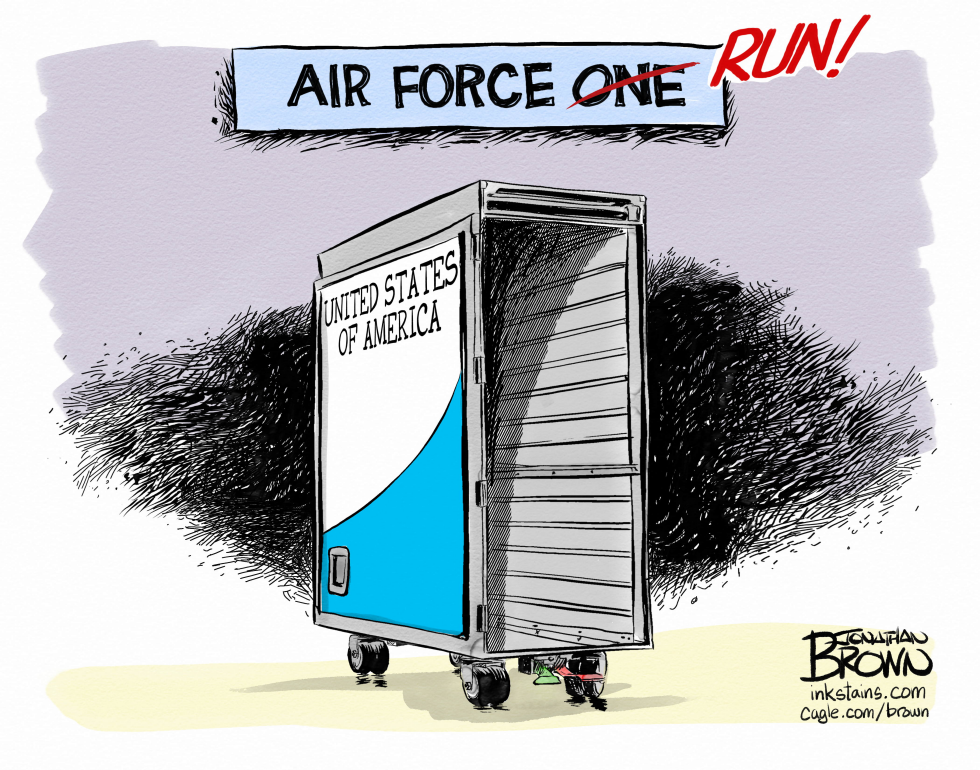
A wheeled airline catering cart occupies the center of the frame, painted in the livery of the presidential aircraft: white upper body, curved blue lower panel, and UNITED STATES OF AMERICA lettered down the side. Its full height door hangs open on empty wire shelving. Above it a pale blue placard reads AIR FORCE ONE, with ONE struck through in red and RUN! added beside that word in the same color. Two neckties poke out from between the casters underneath, one of them the long red tie Donald Trump is known for, the only trace of the men folded up inside. The drawing responds to reports that Trump sheltered in an airline galley cart against an assassination threat traced to Iran, turning the most recognizable branding in presidential aviation into an instruction to flee. Jonathan Brown signed the lower right corner alongside inkstains.com and Cagle.com/brown.
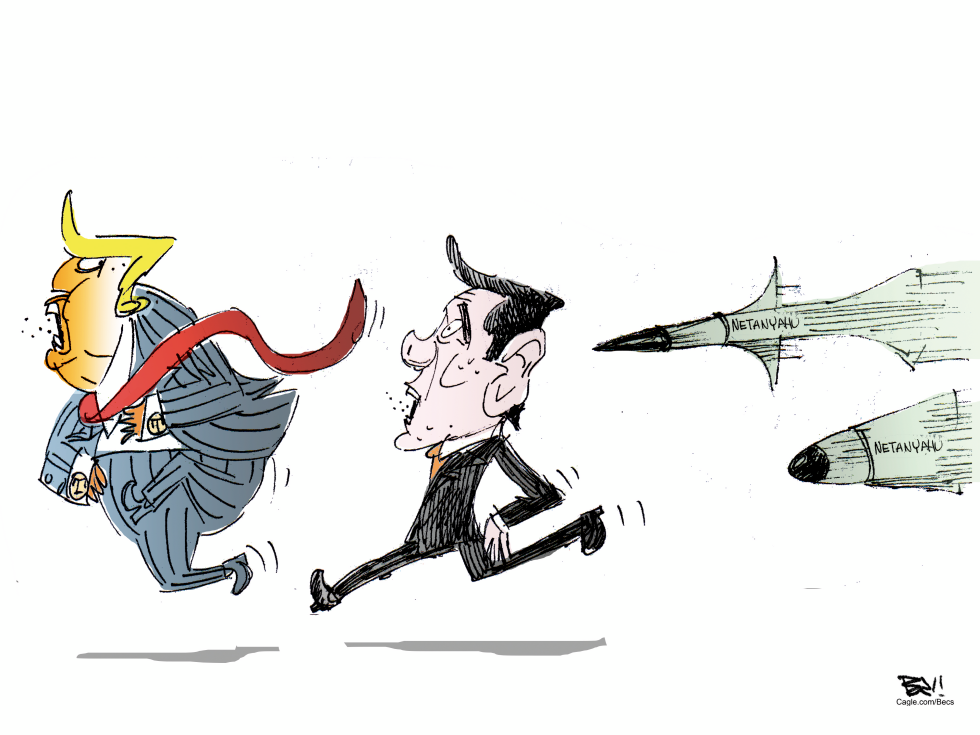
Donald Trump and Benjamin Netanyahu appear under pursuit in a scene tied to ongoing tensions in U.S.-Israel relations and regional security decisions. The image responds to the pattern of policy choices by both leaders that have drawn domestic and international criticism. It frames those choices as returning to affect the two men directly.