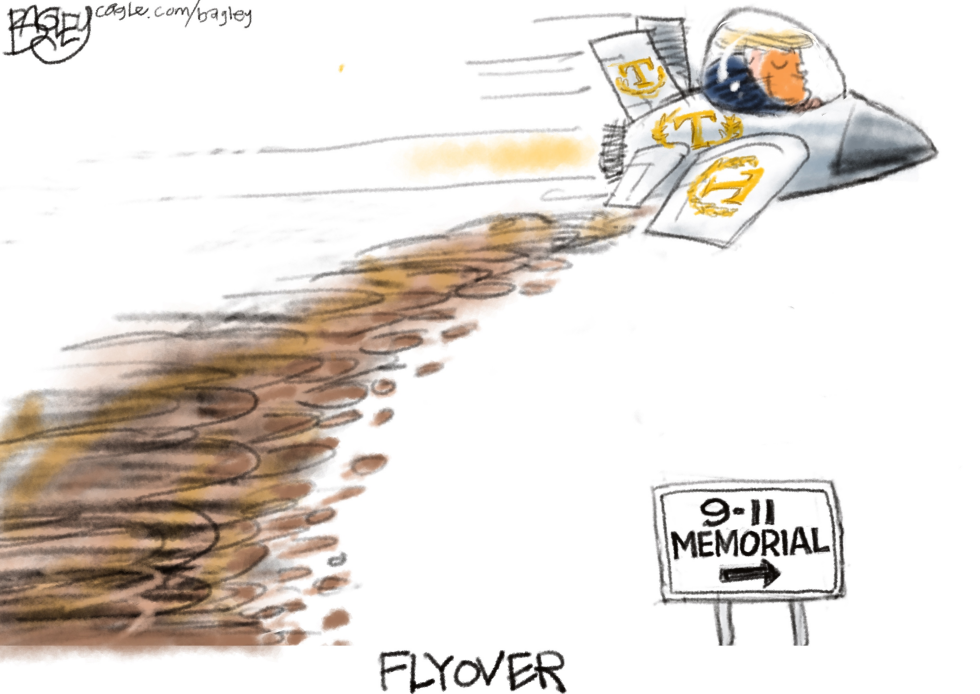
On the eve of the September 11 anniversary in 2026, former President Donald Trump conducted a jet flyover of the 9/11 Memorial. The maneuver drew immediate criticism for perceived disrespect during solemn commemorations. Observers noted the timing and execution as tone-deaf political theater. The cartoon captures this moment by depicting the flyover leaving a visible trail of damage in its wake. It argues that the action prioritizes spectacle over solemn remembrance and risks further polarizing public sentiment around national tragedy.
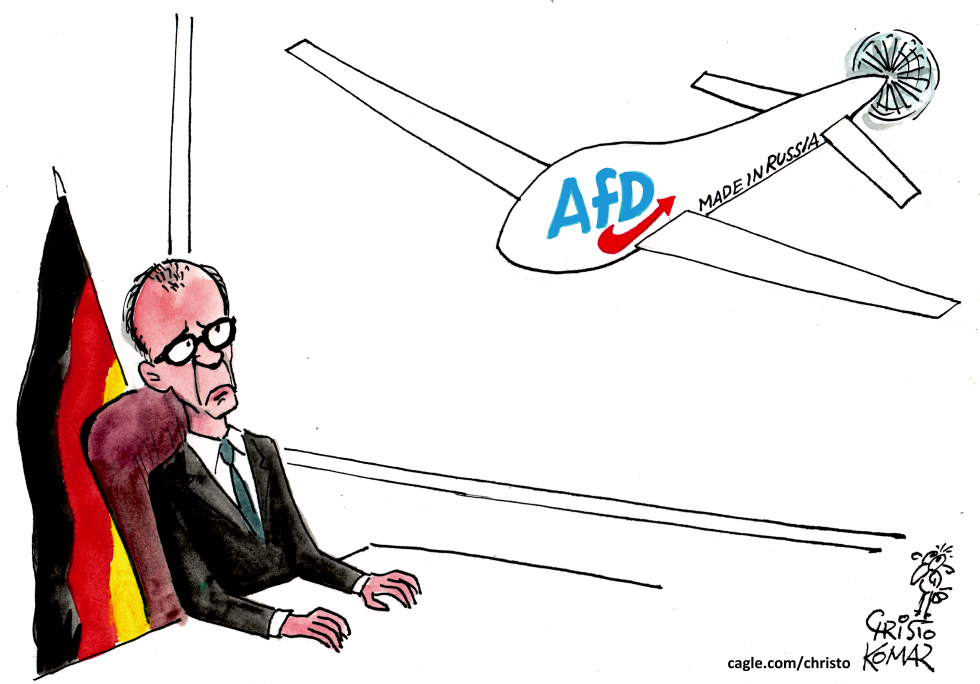
Germany's Alternative for Germany party draws renewed attention for its pro-Russia stance and possible external support. The cartoon uses the image of an AfD-branded plane labeled made in Russia to suggest the party's campaign and positions are shaped by Moscow. This comes amid ongoing debates over foreign interference in European elections and the party's rising poll numbers. Critics argue such ties undermine German sovereignty and democratic processes. The piece takes the view that AfD functions as a vehicle for Russian interests rather than a genuine domestic movement.
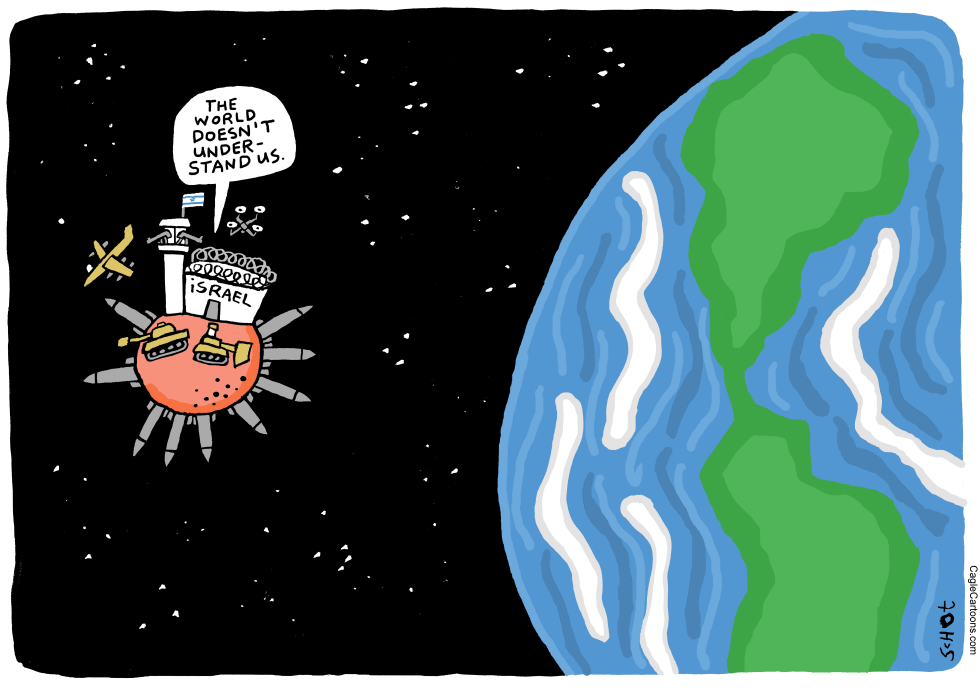
Israel's international standing faces ongoing strain from conflicts in Gaza and tensions with neighbors as of mid-2026. Allies express frustration over military operations and settlement policies while domestic leaders defend actions as necessary for security. The piece presents Israel as a self-contained entity asserting that external observers fail to grasp its circumstances amid growing diplomatic distance.
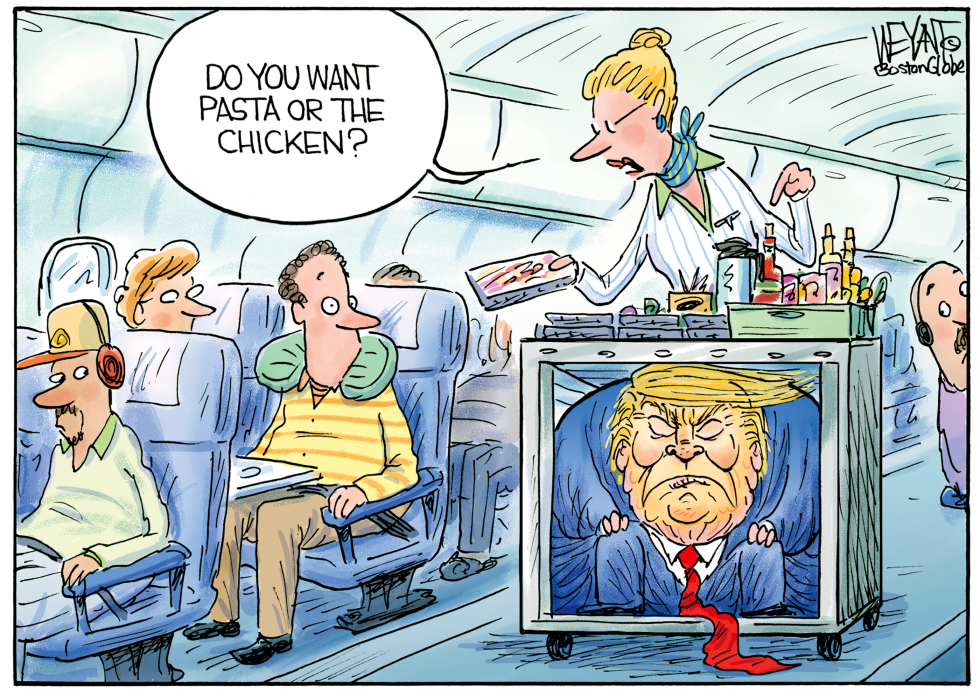
A political figure faces public scrutiny over recent statements and legal matters in the summer of 2026. The situation draws widespread media attention and shapes ongoing debates about leadership and accountability. The piece frames the figure as an unappealing option in a routine service setting to underscore dissatisfaction with his continued prominence.
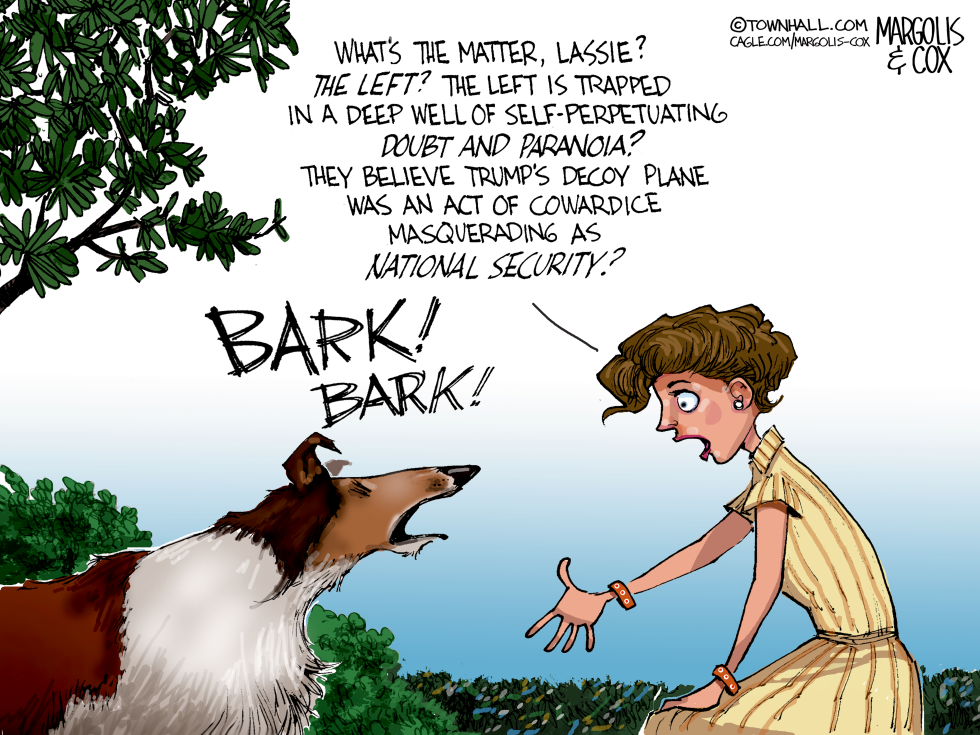
Critics on the left have questioned a decoy plane maneuver tied to Trump security protocols, calling it an act of cowardice. The episode highlights ongoing partisan divides over national security decisions. The piece argues such reactions reflect self-sustaining paranoia rather than substantive policy concerns.
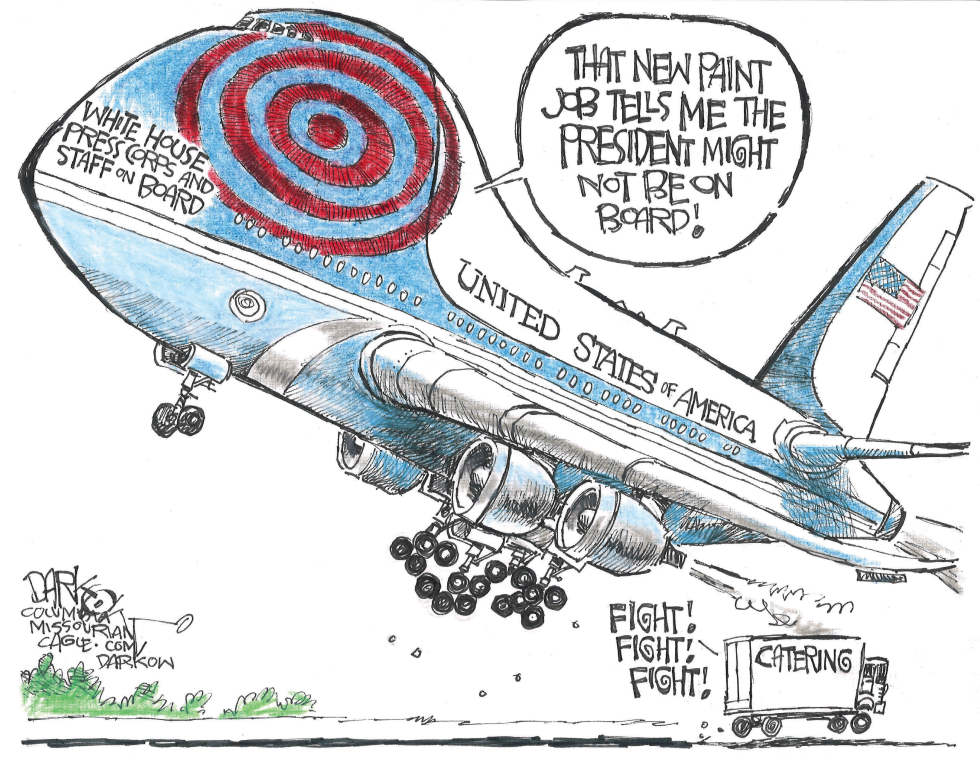
Air Force One appears with a large target painted on its upper fuselage while carrying White House press corps and staff. A nearby catering truck chants fight slogans as the plane descends. The image suggests the president may not be aboard the targeted aircraft. This visual plays on recent tensions surrounding presidential travel and security. The editorial stance highlights perceived risks or distancing from official duties.
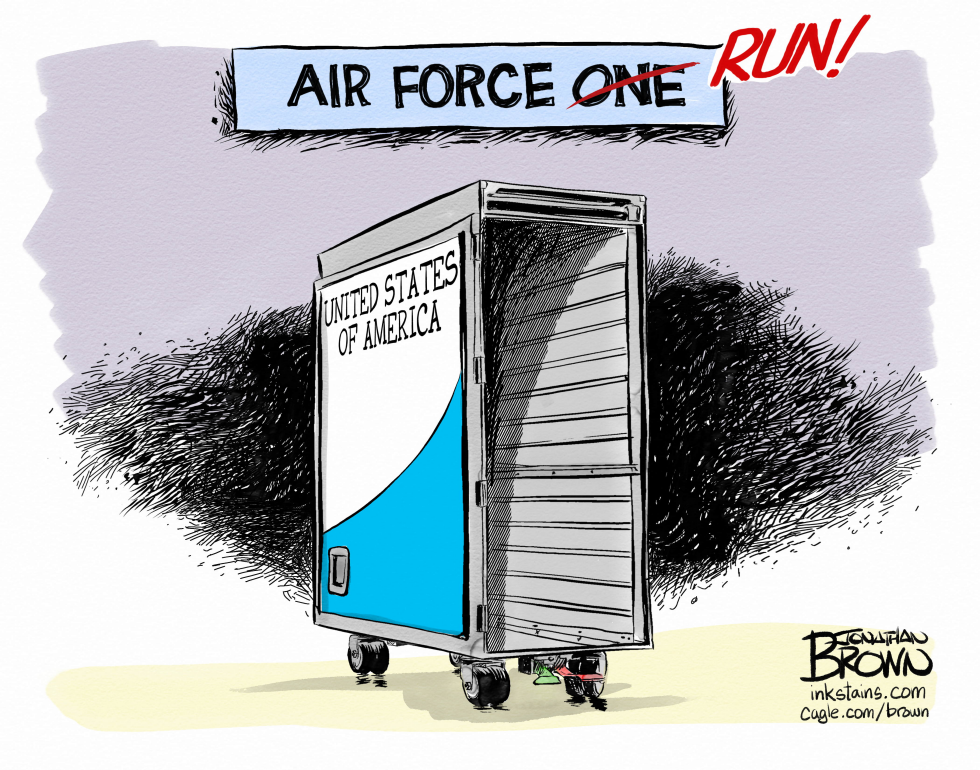
A wheeled airline catering cart occupies the center of the frame, painted in the livery of the presidential aircraft: white upper body, curved blue lower panel, and UNITED STATES OF AMERICA lettered down the side. Its full height door hangs open on empty wire shelving. Above it a pale blue placard reads AIR FORCE ONE, with ONE struck through in red and RUN! added beside that word in the same color. Two neckties poke out from between the casters underneath, one of them the long red tie Donald Trump is known for, the only trace of the men folded up inside. The drawing responds to reports that Trump sheltered in an airline galley cart against an assassination threat traced to Iran, turning the most recognizable branding in presidential aviation into an instruction to flee. Jonathan Brown signed the lower right corner alongside inkstains.com and Cagle.com/brown.
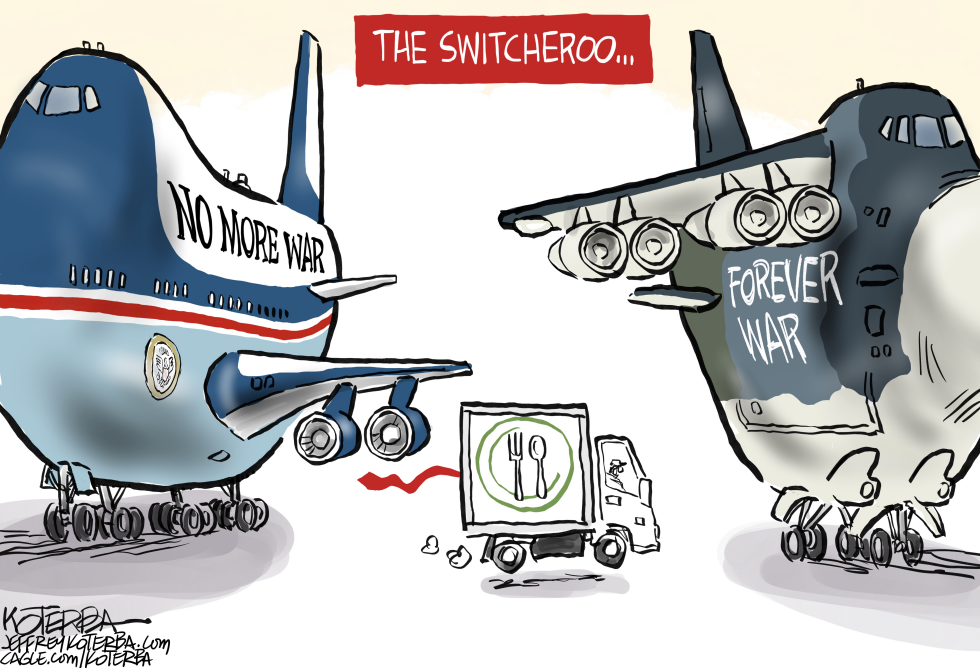
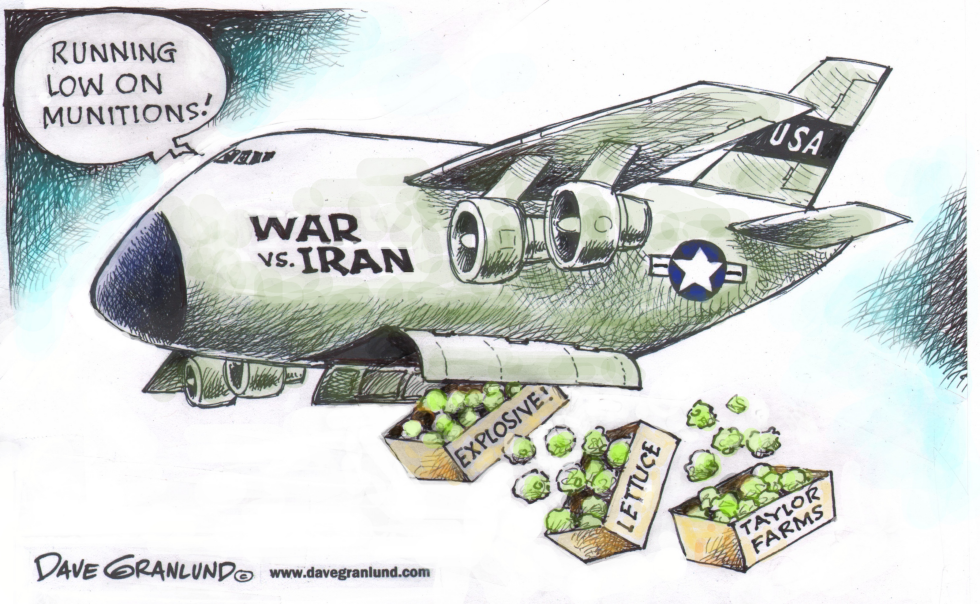
A political shift in military posture draws attention as commitments move from ending wars to sustaining them indefinitely. The editorial critiques the reversal as a cynical about-face on foreign engagements.
Air Force One appears with a prominent target symbol on its fuselage amid questions about an escape vehicle. The image highlights concerns over presidential aircraft security during a period of heightened threats to the presidency. The editorial position critiques vulnerabilities in executive protection protocols.
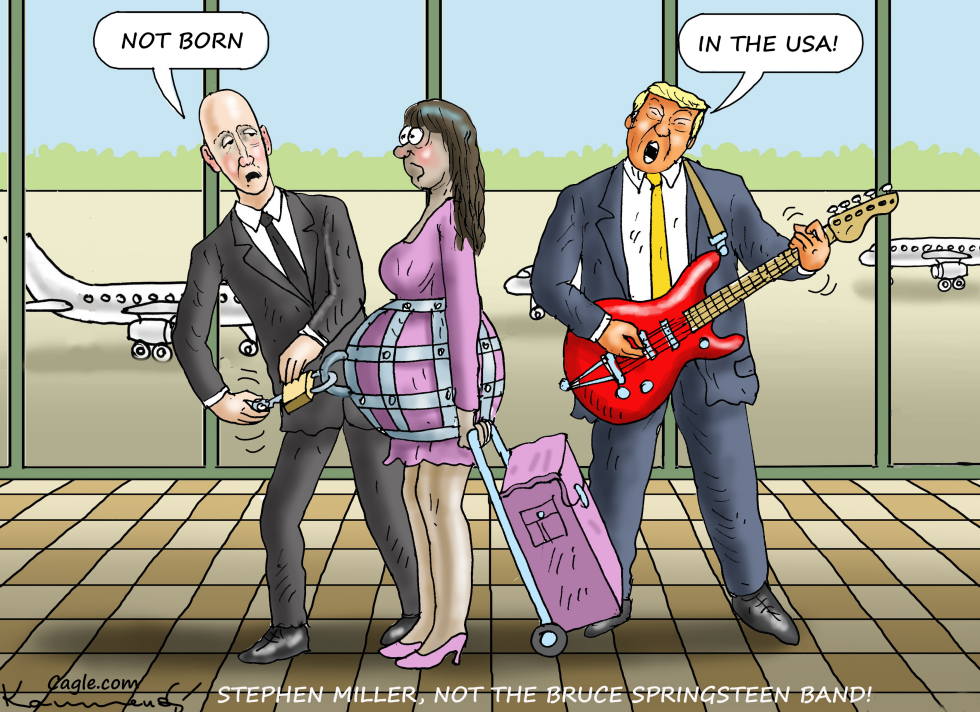
On August 7 2026 the Trump administration renewed focus on ending birthright citizenship through executive action targeting children of non-citizens. Stephen Miller has led policy efforts to reinterpret the 14th Amendment and increase deportations. The cartoon depicts Miller securing a pregnant traveler at an airport while Trump performs a Springsteen parody. It criticizes the administration's approach as overly aggressive and musically off-key.
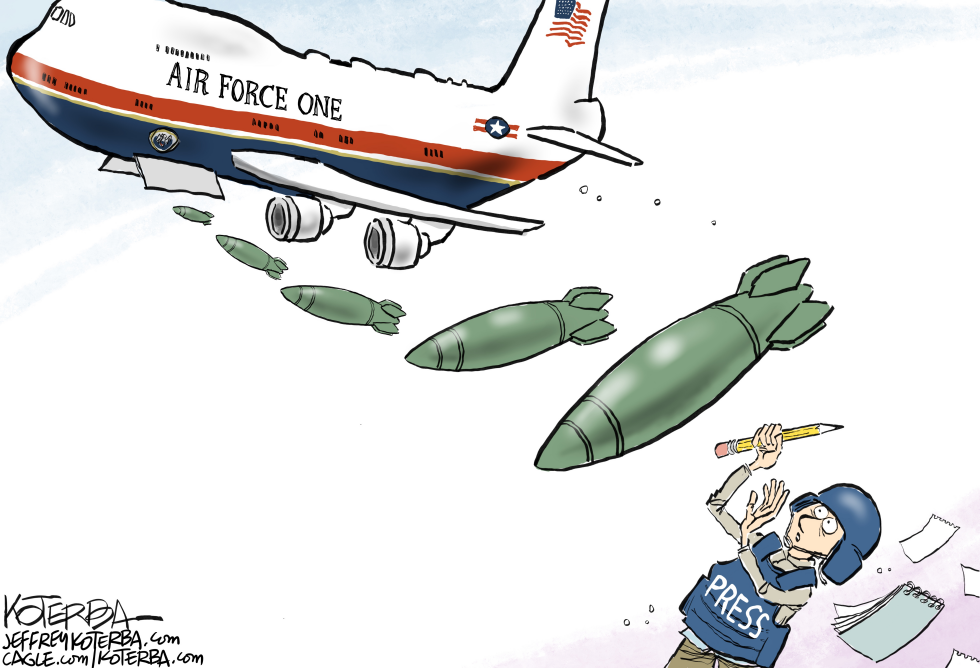
The image shows Air Force One releasing several green missiles from its underside while flying. Below, a person wearing a blue vest labeled PRESS and a helmet raises a pencil overhead with one hand while extending the other palm outward. Papers scatter around the figure. The plane displays the American flag on its tail and standard markings on its fuselage.
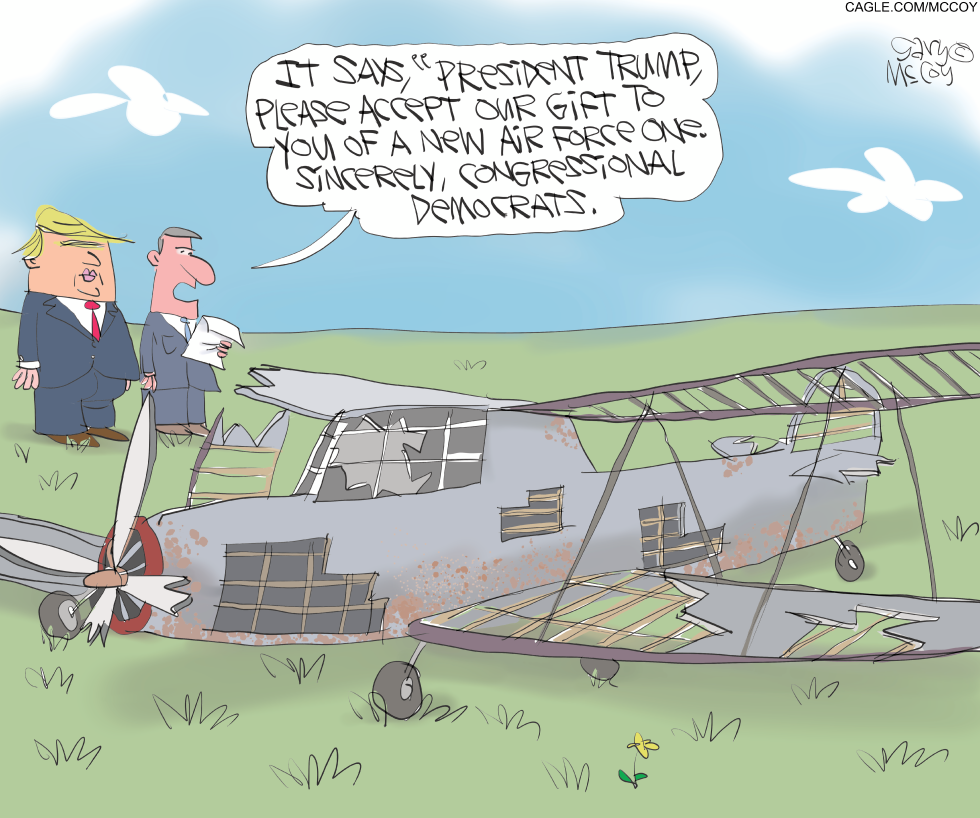
On July 12 2026 President Trump and an aide examine a note from congressional Democrats offering a wrecked biplane as a new Air Force One. The damaged aircraft lies on a grassy field under a clear sky. The scene references current debates over presidential aircraft replacement and partisan relations in Washington.
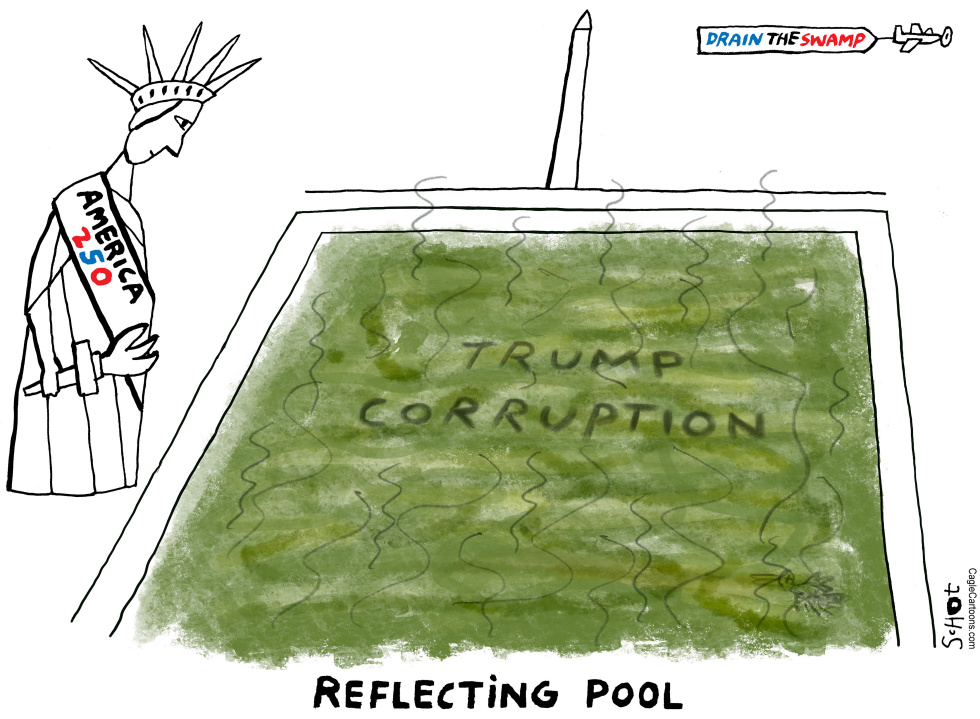
On July 9 2026 the cartoon shows the Statue of Liberty gazing at a reflecting pool filled with green murky water labeled Trump corruption. A banner above reads drain the swamp beside a small airplane. The figure wears an America 250 sash. The scene references ongoing political debates about government ethics and past campaign rhetoric during the America 250 period.
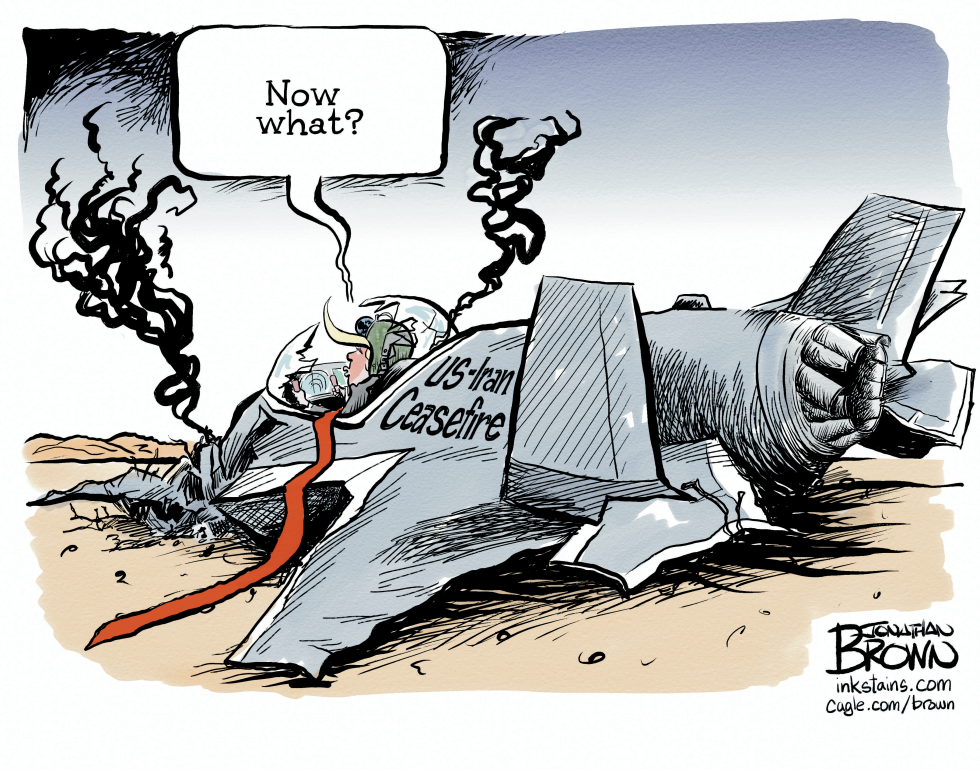
A crashed aircraft labeled US-Iran Ceasefire lies in desert sand with rising smoke. The pilot, visible in the cockpit, asks what comes next after the agreement fails.