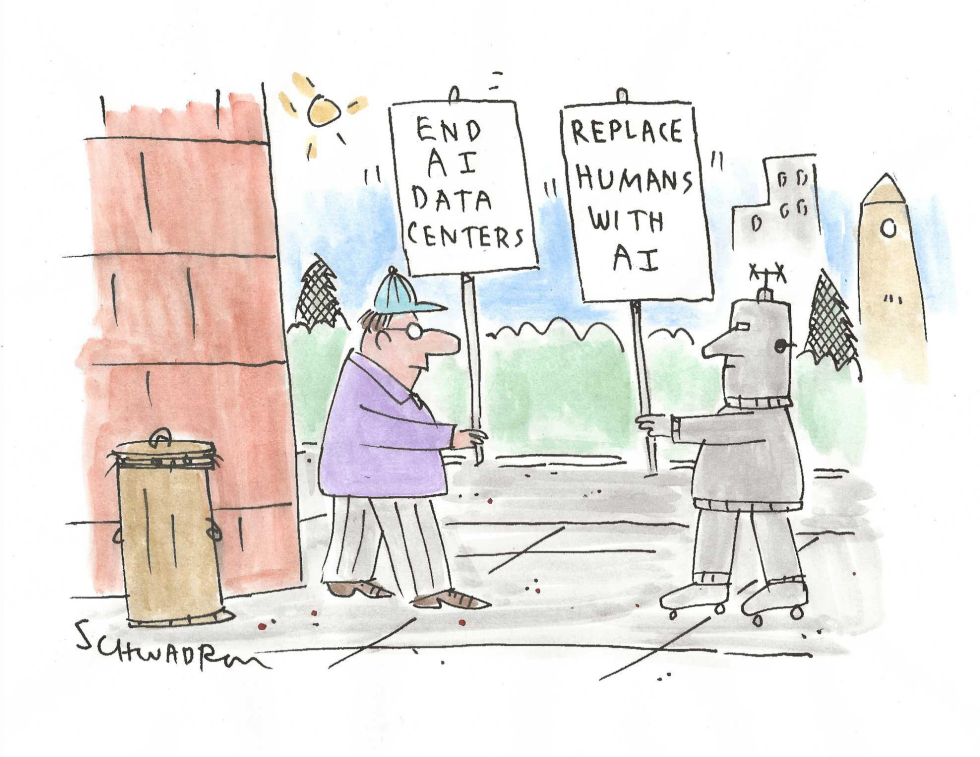
Public demonstrations against AI data centers and for replacing human workers with artificial intelligence underscore growing societal friction over the technology's rapid expansion. Data centers powering AI systems face criticism for energy demands and environmental costs, while automation threatens widespread job losses across sectors. The cartoon illustrates these contradictory positions through direct confrontation between a human protester and a robotic counterpart. This reflects ongoing debates where environmental concerns clash with arguments for efficiency gains from AI. The piece takes a neutral stance, simply presenting the absurdity of simultaneous opposition to and advocacy for AI dominance without resolving the tension.
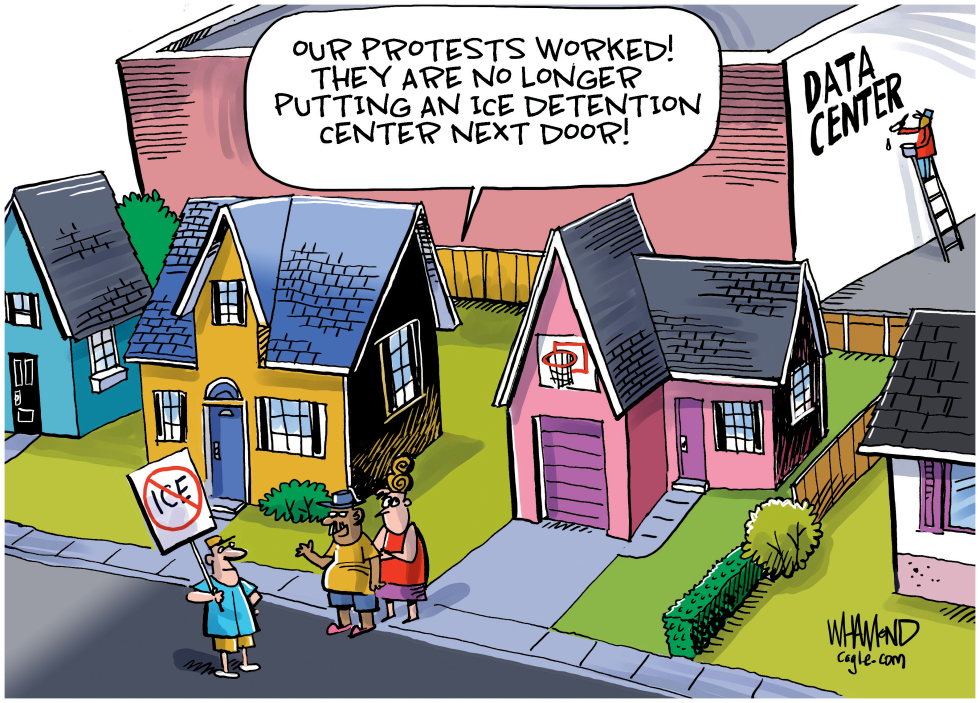
Residents in a suburban neighborhood protested plans for an ICE detention center near their homes. The facility was replaced by a data center, prompting cheers from locals who had opposed the detention site. The editorial highlights community pushback against immigration enforcement infrastructure and the unexpected outcome favoring commercial development instead.
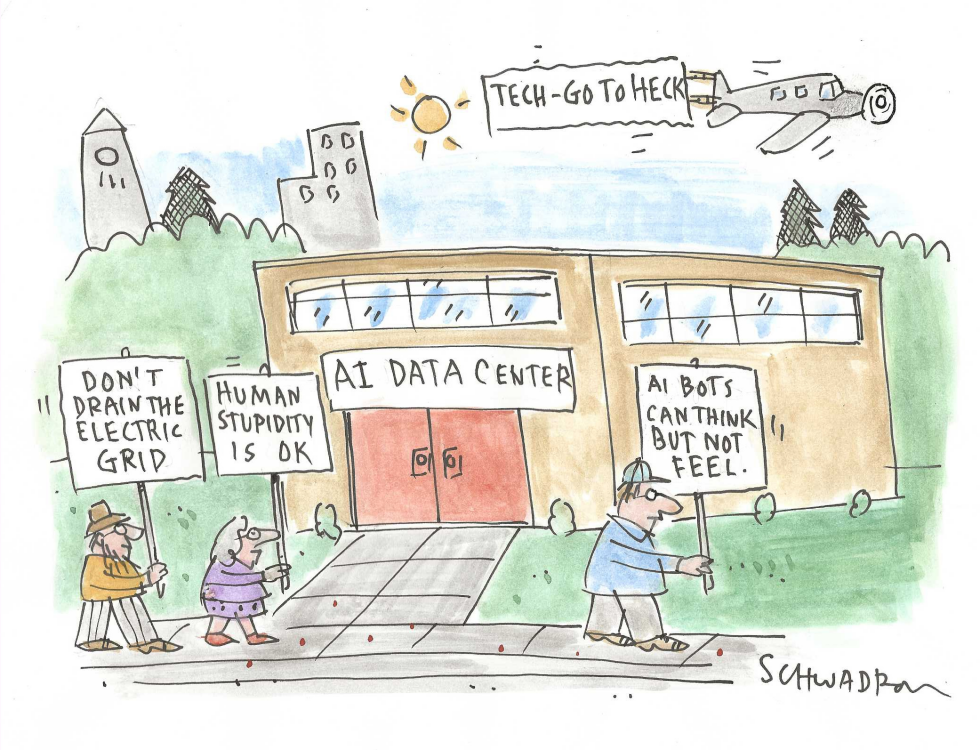
Protesters gather outside an AI data center building holding signs that read 'DON'T DRAIN THE ELECTRIC GRID,' 'HUMAN STUPIDITY IS OK,' and 'AI BOTS CAN THINK BUT NOT FEEL.' An airplane tows a banner reading 'TECH-GO TO HECK' overhead. The cartoon by Harley Schwadron, published July 31, 2026, depicts public opposition to the energy demands of AI facilities amid ongoing debates about data center impacts on electricity grids and technology development.
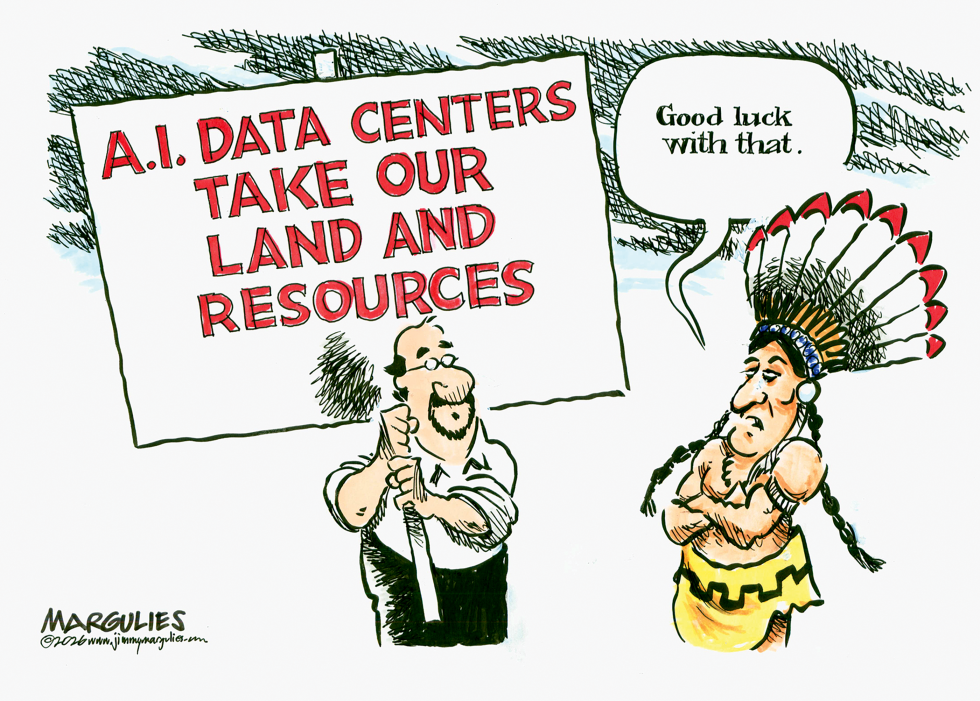
A man holds a sign protesting AI data centers taking land and resources. A Native American protester responds with skepticism. The July 2026 cartoon addresses growing conflicts between technology infrastructure and land use claims.
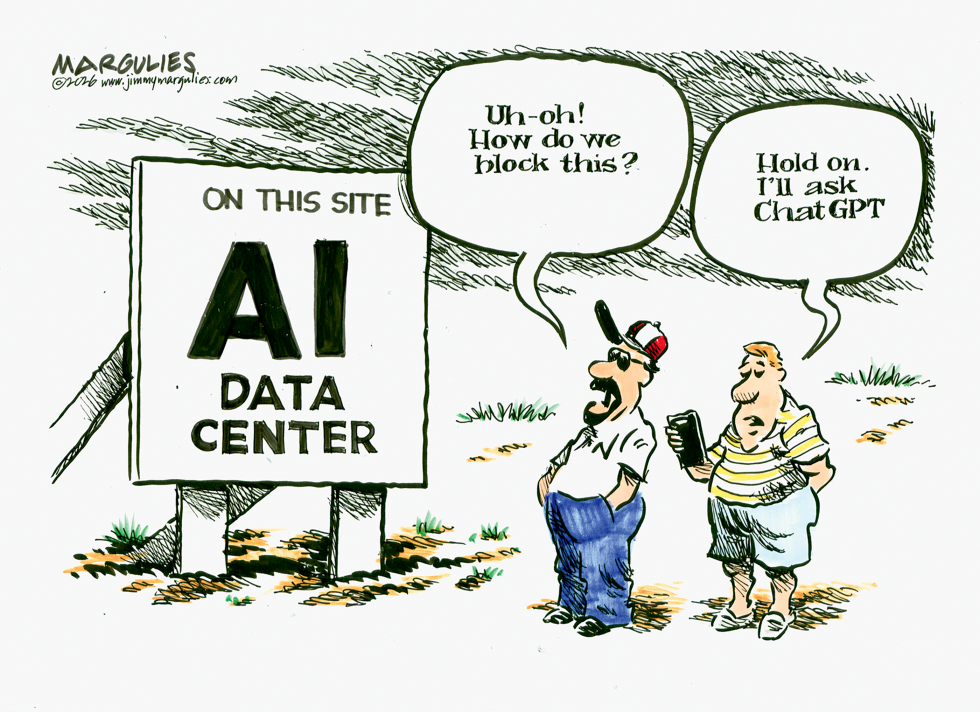
A large sign announces an AI data center on the site. Two men react with concern, one asking how to block access while the other suggests querying ChatGPT on his phone for a solution. The scene highlights the rapid spread of artificial intelligence infrastructure and the reflexive turn to AI tools even when questioning their presence.