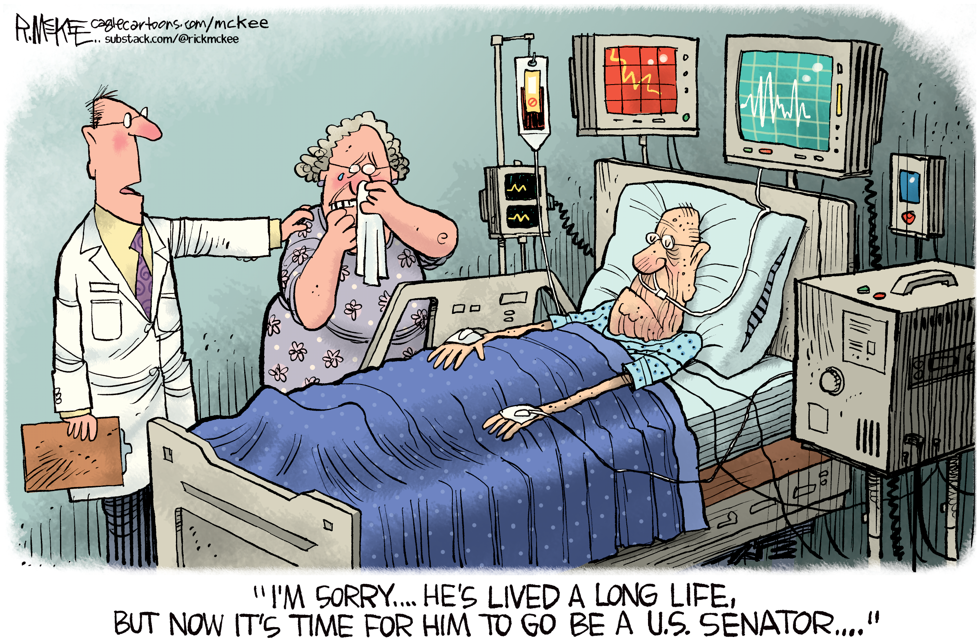
US senators continue serving well into advanced age and declining health, prompting renewed debate over whether longevity in office serves the public. The cartoon frames the Senate as a final posting for those whose physical condition would otherwise signal retirement from demanding roles. It takes the position that voters and parties tolerate or encourage this pattern rather than demanding younger replacements.
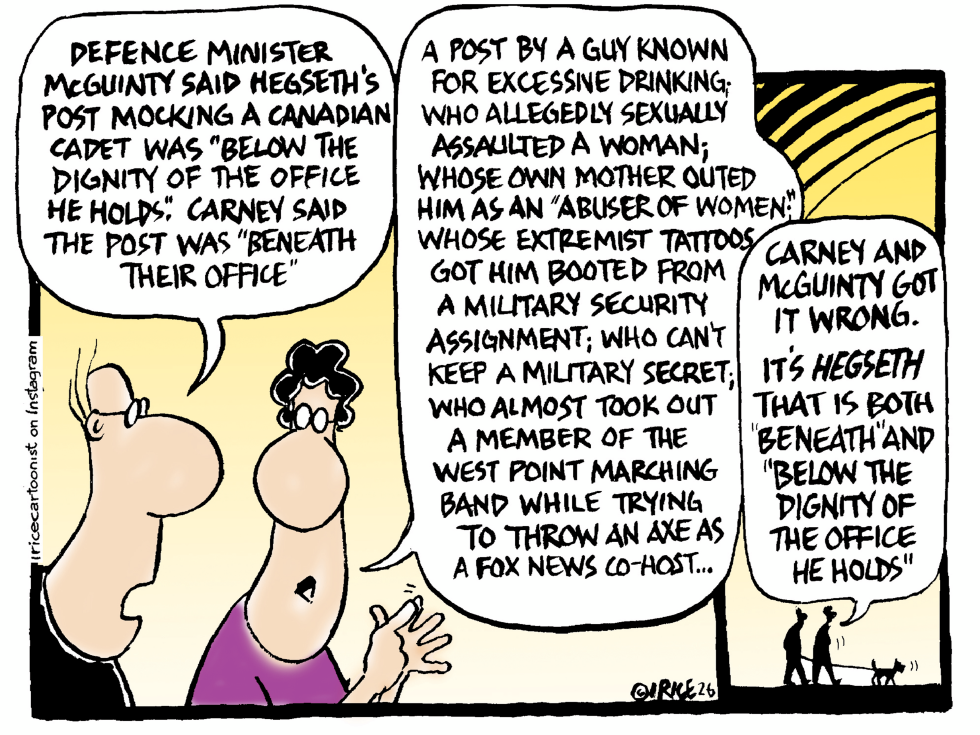
Canadian Defence Minister David McGuinty and Mark Carney publicly condemned a social media post by Pete Hegseth mocking a Canadian cadet, calling it beneath the dignity of the office. The remarks came amid Hegseth's nomination process for a senior U.S. defense position. The cartoon argues the ministers have the assessment backward, pointing instead to Hegseth's history of alleged misconduct, security clearance problems, and public incidents as the true disqualifiers. This reflects ongoing debate over nominee vetting standards and cross-border political commentary on U.S. appointments.
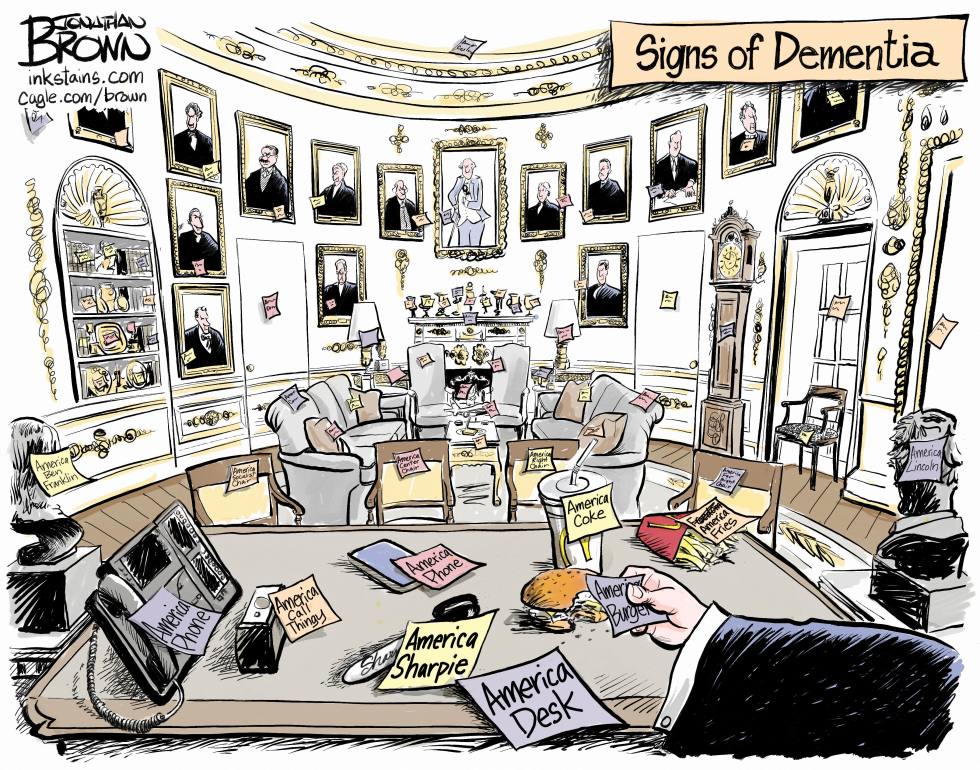
A new editorial cartoon depicts the Oval Office overrun with sticky notes labeling everyday items as America. The scene highlights signs of dementia through repeated branding on phones, desks, food and furniture. Published on September 9, 2026, the work comments on ongoing concerns about cognitive fitness in the presidency. The visual uses the familiar setting of the White House to underscore confusion and memory issues. Observers note the cartoon captures public debate over leadership capacity without naming specific individuals.
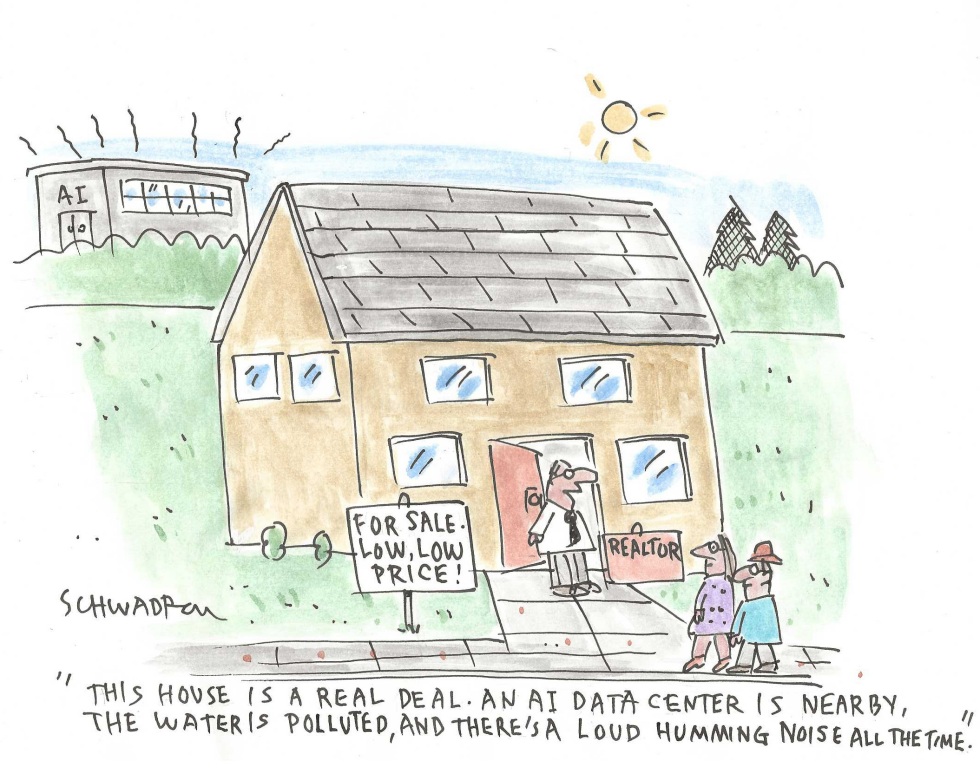
AI data centers are expanding rapidly across suburban areas, bringing jobs and infrastructure but also raising local concerns over noise, water use, and environmental effects. Home values near these facilities have begun to soften as buyers factor in constant humming and potential pollution. The cartoon highlights how real estate agents market such properties at steep discounts while openly disclosing the drawbacks to prospective buyers.
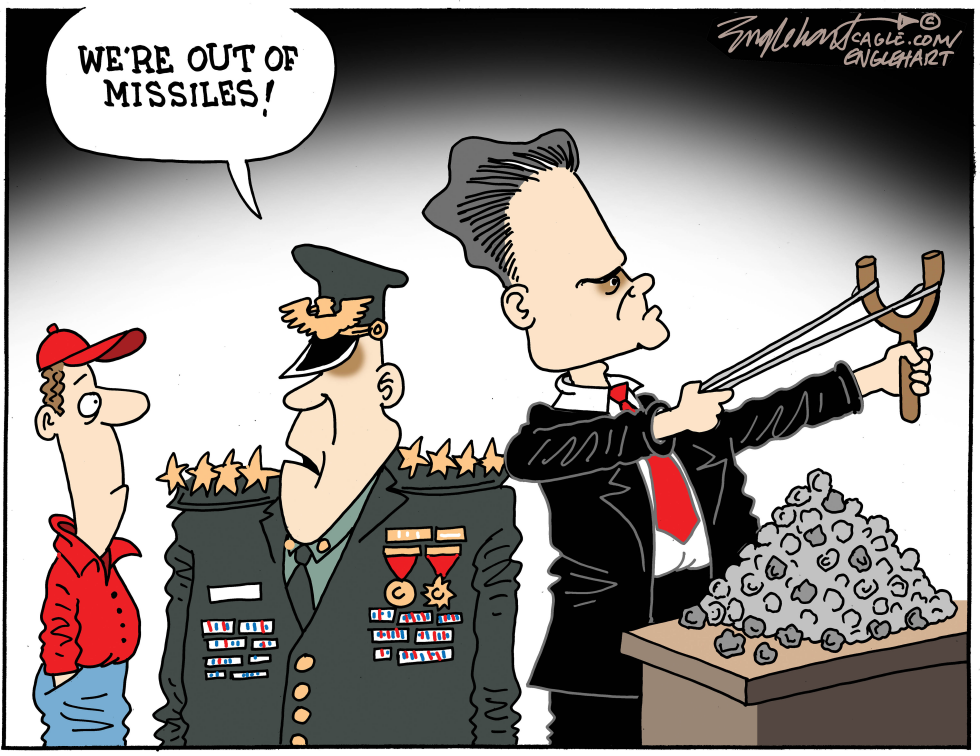
The Pentagon confronts depleted missile inventories during active defense needs. Officials explore improvised options including slingshots loaded with rocks. The development highlights supply chain strains and readiness questions for U.S. forces. The piece criticizes the situation as a failure of planning and resource allocation.
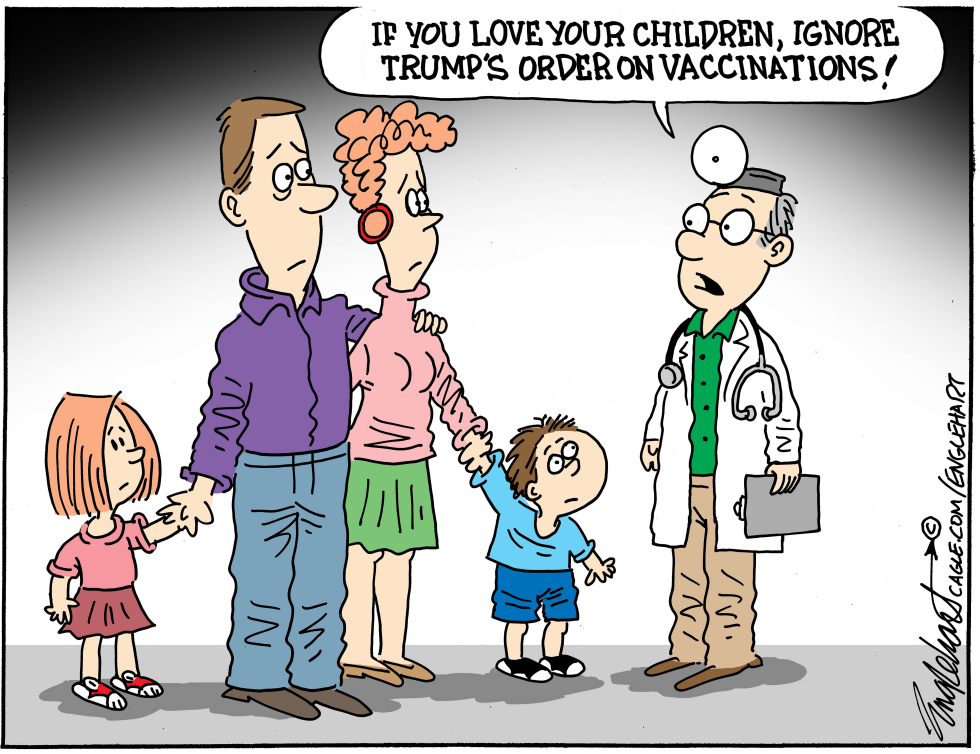
A doctor has publicly advised parents to disregard a presidential order on childhood vaccinations. The recommendation comes as the Trump administration advances new immunization policies. The stance highlights tensions between federal health directives and medical advice given directly to families. The piece presents the doctor's counsel as protective of children and critical of the order's approach.
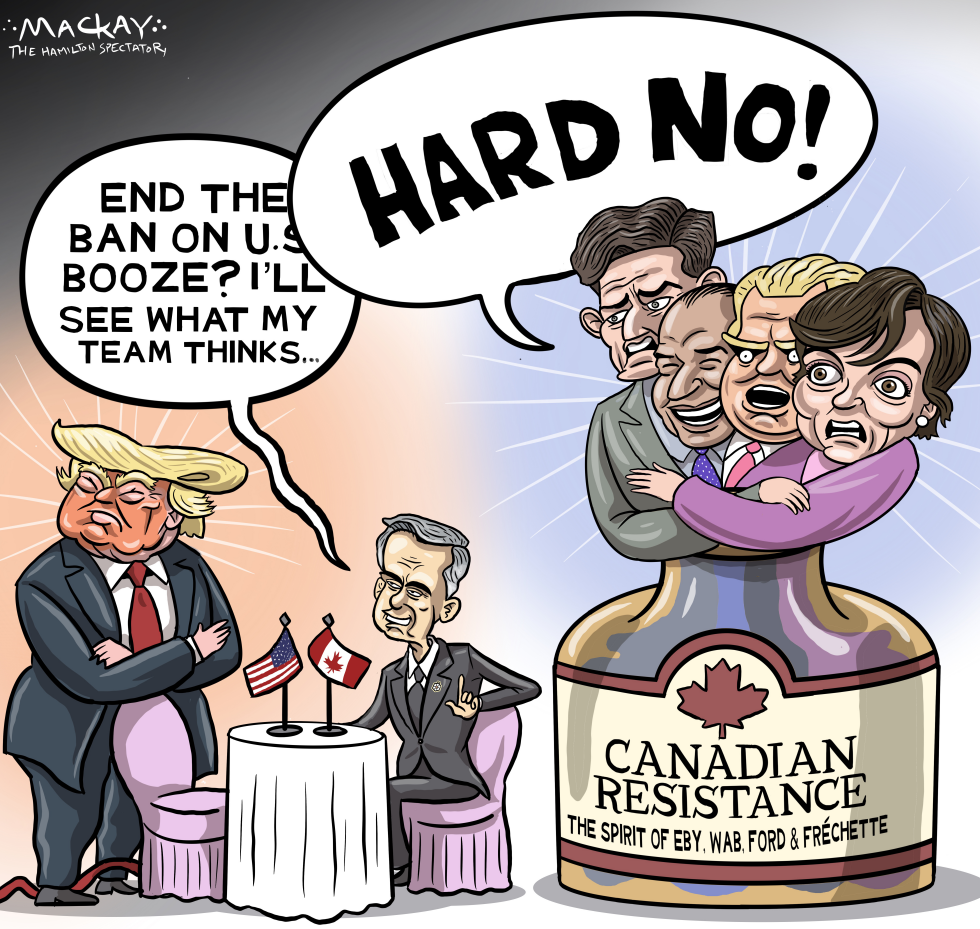
Donald Trump signaled openness to ending a ban on US alcohol imports into Canada during a meeting with Canadian officials. Provincial leaders including David Eby and Doug Ford responded with unified opposition. The cartoon portrays the premiers as a collective force of resistance and shows Trump deferring the decision to his team.
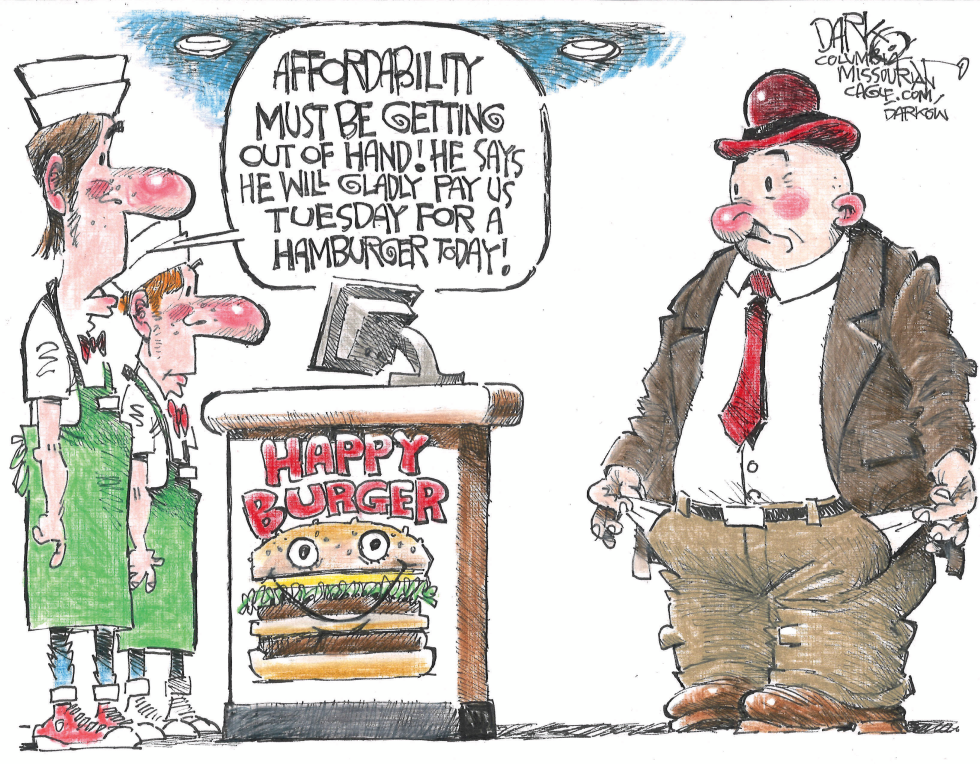
Rising living costs continue to strain household budgets across the country as consumers delay payments and stretch resources. The situation reflects persistent pressure on everyday purchases like meals. The piece takes the position that such affordability challenges have become so widespread they invite classic cultural comparisons to underscore the frustration.
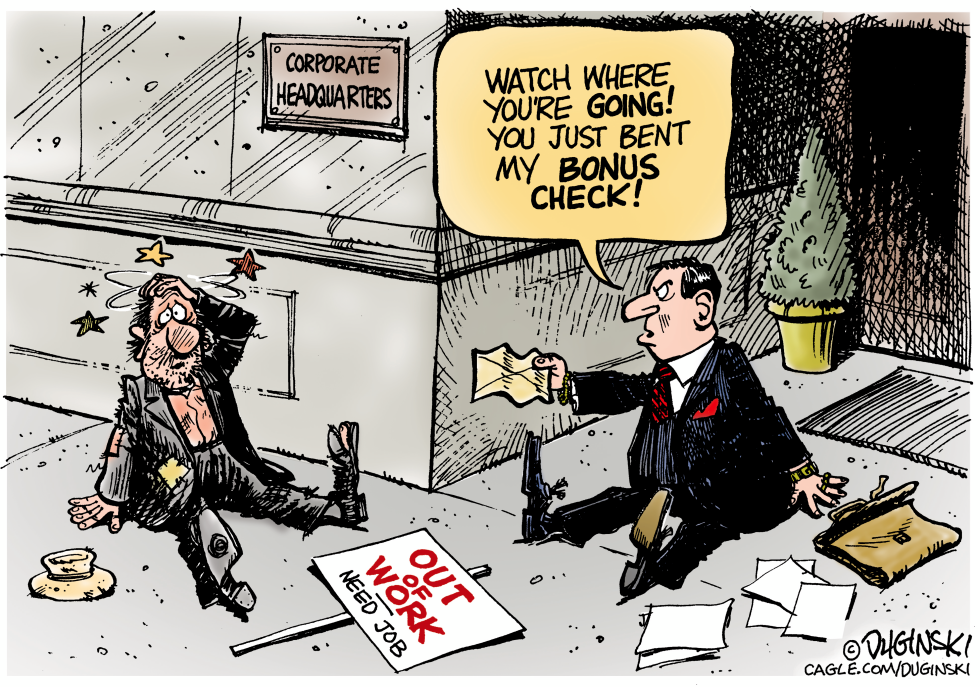
Corporate executives continue to receive large bonuses even as layoffs persist across sectors. The piece responds to ongoing debates over executive compensation packages during periods of workforce reduction. It takes the position that such bonuses appear disconnected from the realities facing displaced employees.
Ongoing wildfire seasons and fire-related disasters continue to disrupt communities and personal well-being across affected regions. The piece frames these events as forces that directly eliminate everyday happiness and security for those impacted. It presents fire as an eraser of positive emotion rather than a manageable natural occurrence.
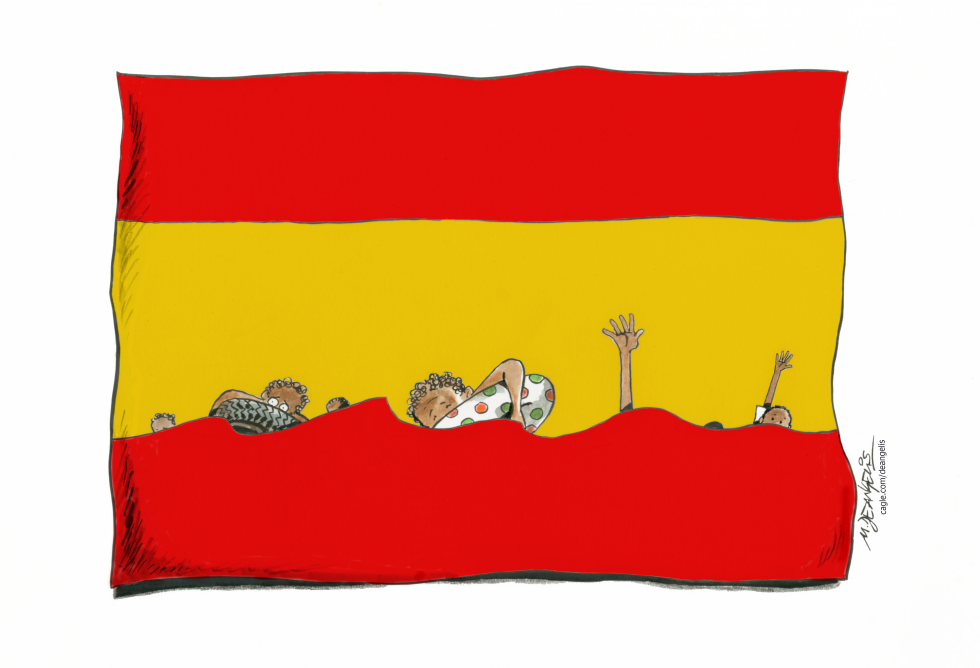
Migration pressures continue at Spain's North African enclaves such as Ceuta, where individuals attempt irregular crossings into Spanish territory. The situation strains local resources and fuels political debate over enforcement and humanitarian obligations. The piece frames the crossings as an intrusion emerging directly from national symbols.
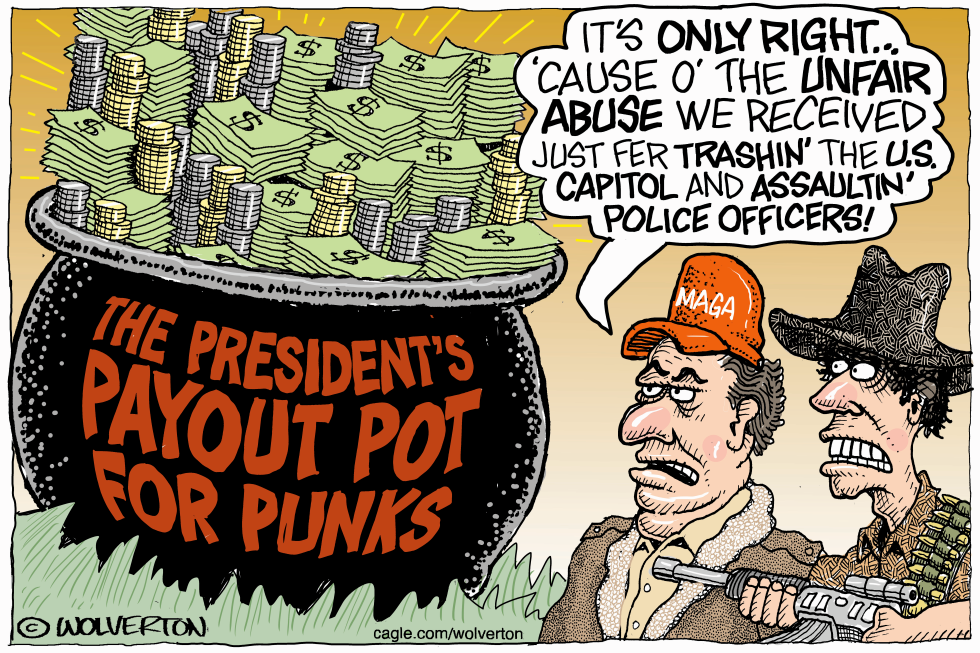
A proposal for compensation to January 6 defendants has drawn sharp criticism from opponents who view it as rewarding those convicted of attacking the Capitol and police. The editorial cartoon portrays the idea as a presidential slush fund for rioters, highlighting the perceived absurdity of compensating participants in the 2021 events.
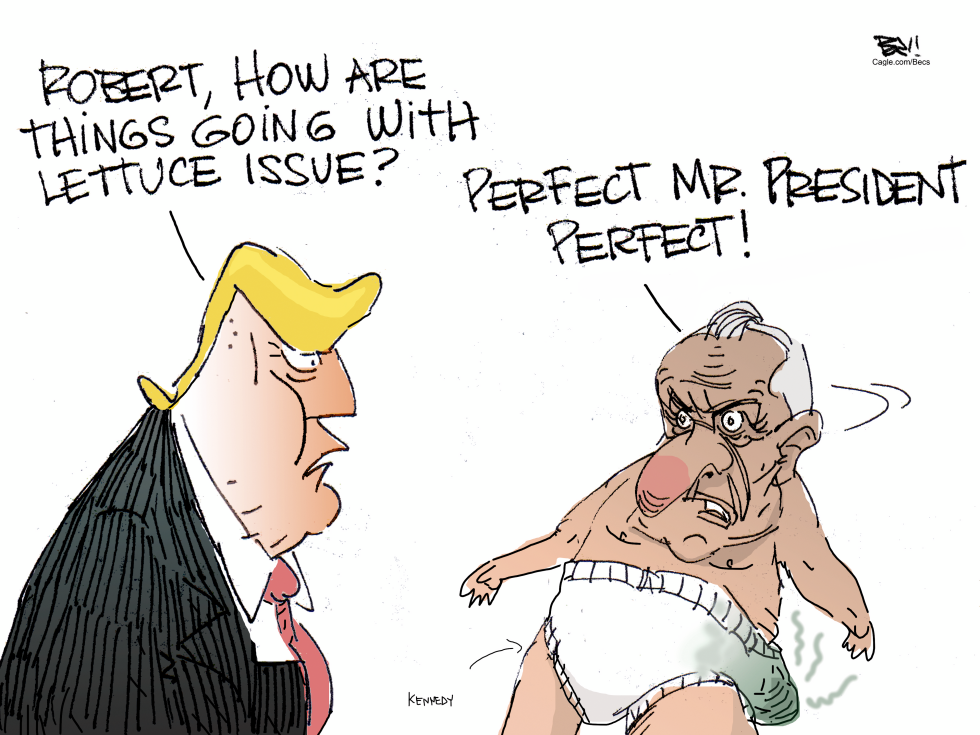
President Trump questioned a senior official named Kennedy about the lettuce issue in a recent exchange. The official responded that everything was perfect. The moment underscores persistent questions about competence and oversight in key government roles handling public health and food matters.
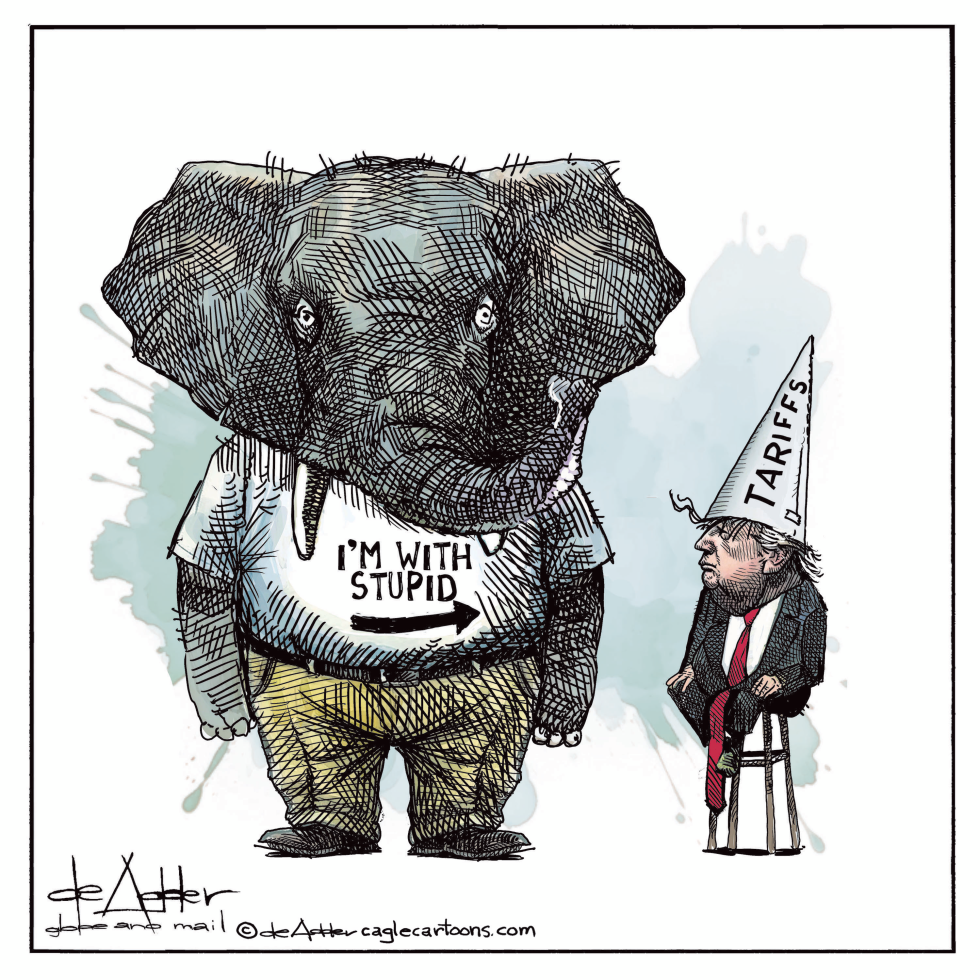
Donald Trump faces renewed scrutiny over his tariffs approach as the Republican Party grapples with the economic fallout. The policy has drawn internal party tension amid broader trade debates. The piece portrays the GOP as aligned with a flawed leader on the issue.
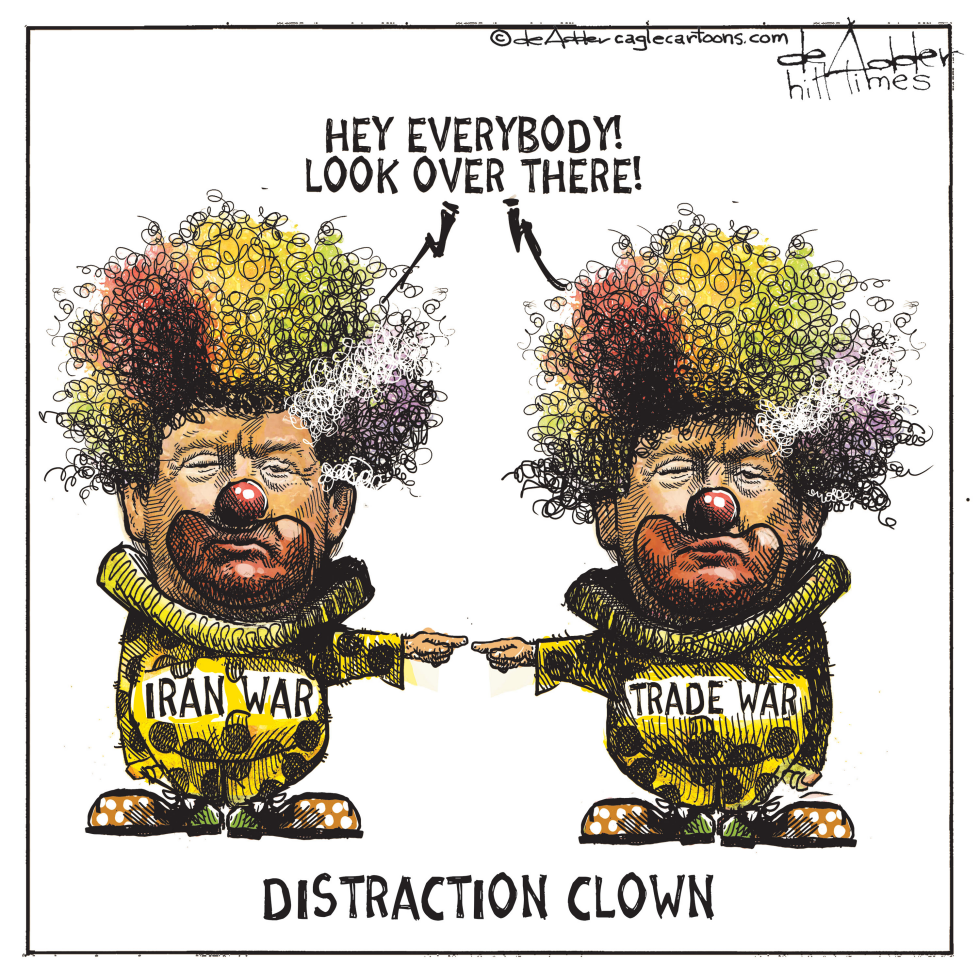
Public attention is being directed toward simultaneous Iran and trade conflicts as potential diversions from other issues. The editorial depicts the two crises as interchangeable distractions promoted by the same source. It argues that leaders are using these flashpoints to shift focus rather than address underlying problems.