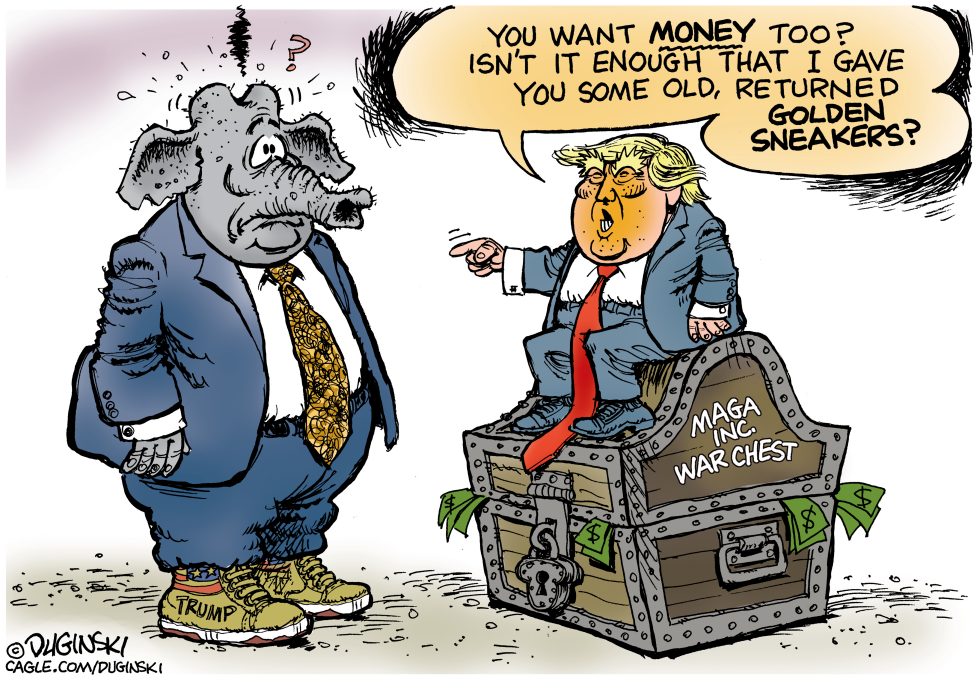
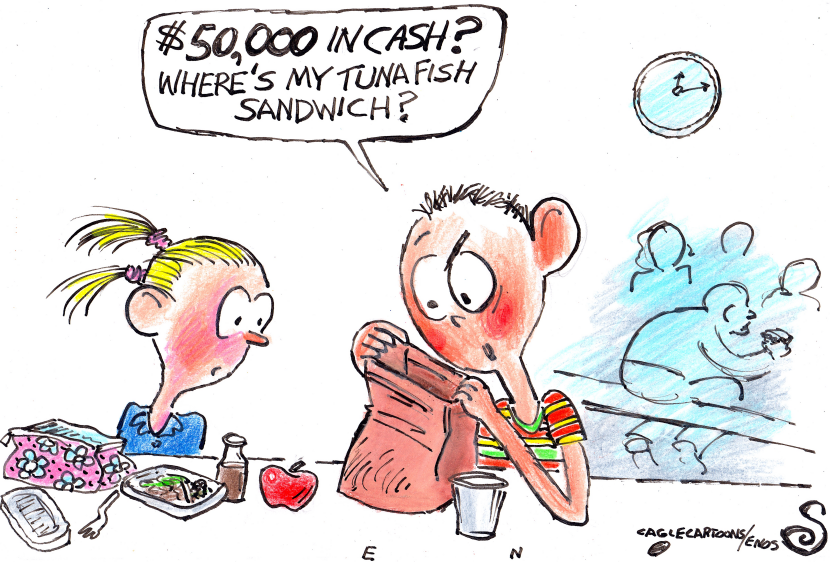
Donald Trump maintains tight control over his substantial campaign funds in the lead-up to the 2026 elections. Fellow Republicans have expressed frustration that he is unwilling to distribute resources from his war chest to support their races. The dynamic highlights ongoing tensions within the party over access to donor money. Trump has instead pointed to past gestures such as distributing returned merchandise. The cartoon criticizes this reluctance as self-serving and detrimental to broader Republican efforts.
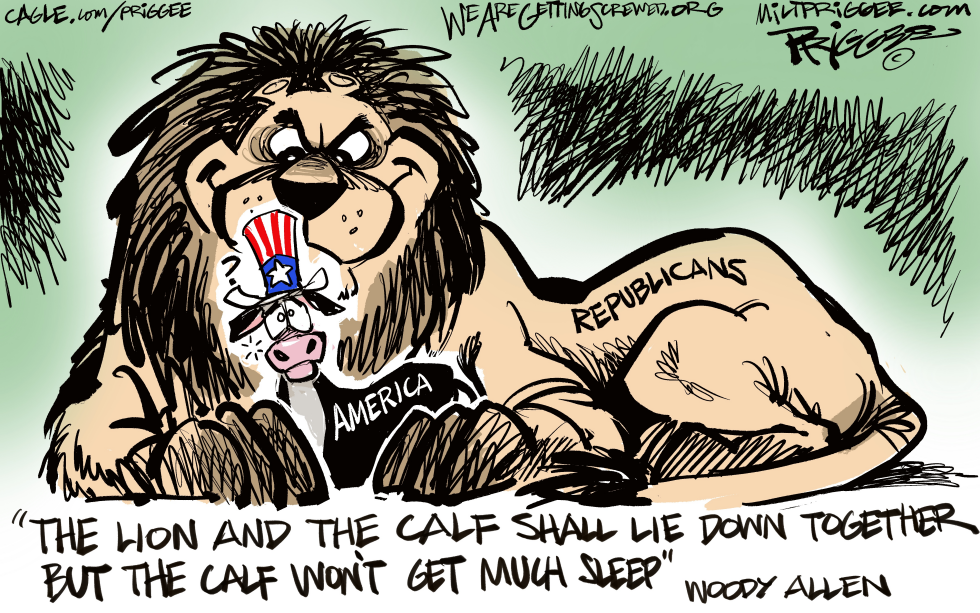
The cartoon shows a lion marked Republicans with an American calf in its mouth. A Woody Allen quote about the lion and calf lying down together runs along the bottom. The image uses the biblical reference to comment on political power dynamics as of the September 2026 publication date.
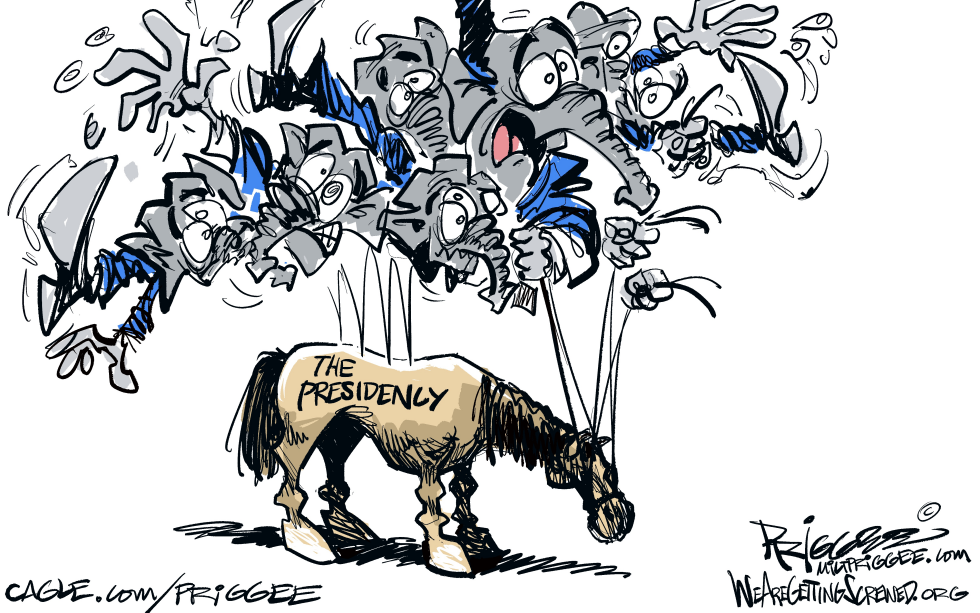
A political cartoon depicts several puppet-like figures with elephant features holding strings attached to a horse labeled THE PRESIDENCY. The image illustrates competing pulls on the office amid disarray. It responds to ongoing discussions about party influence and leadership dynamics around the 2026 period.
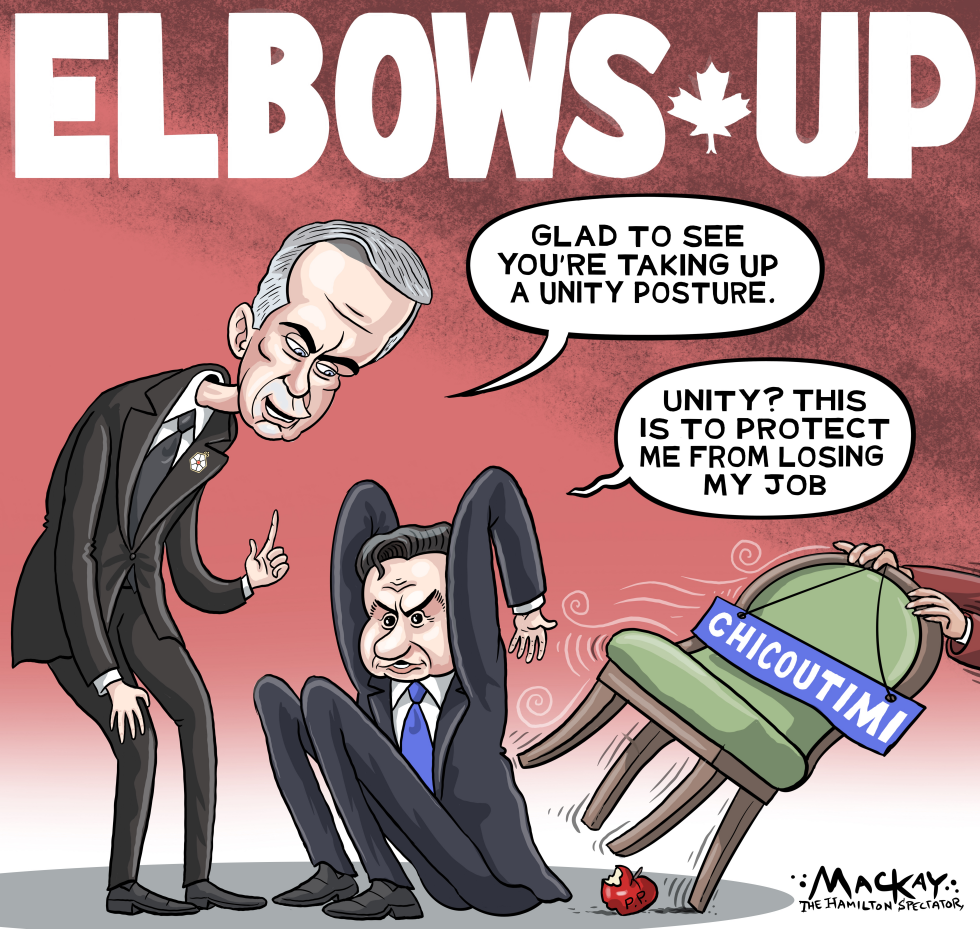
Pierre Poilievre assumes an elbows-up defensive posture in response to mounting leadership questions within the Conservative Party. The visual ties the hockey-derived stance to efforts to retain his position as party leader ahead of future electoral tests. The piece portrays the move as self-preservation rather than genuine unity.
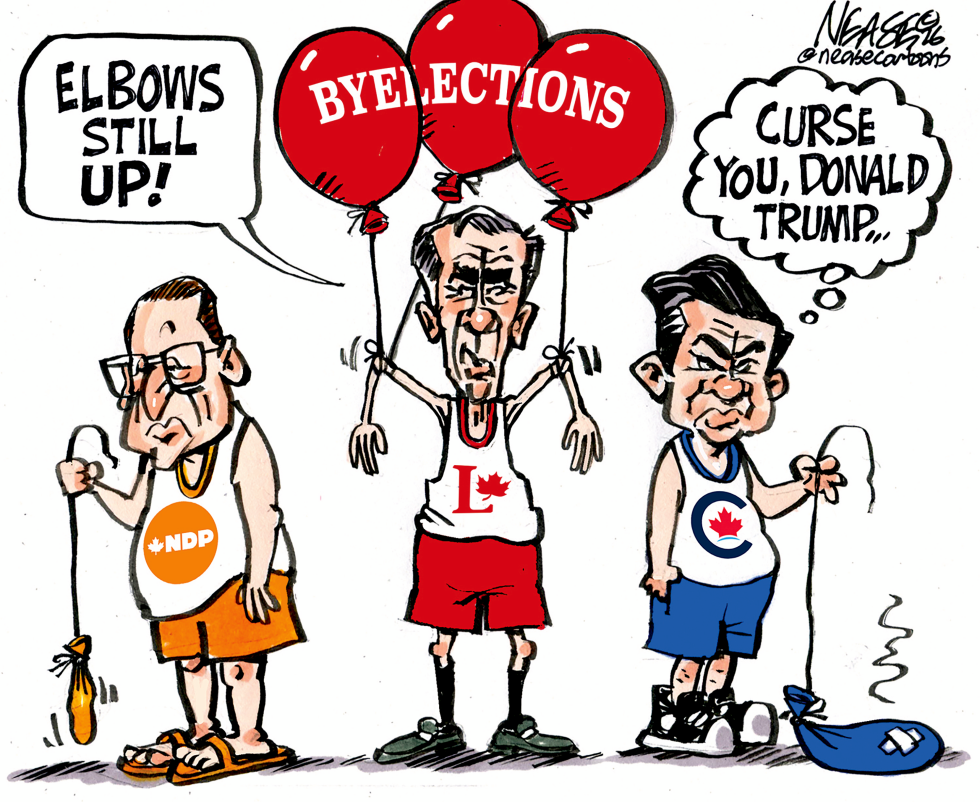
Canadian by-elections delivered gains for the Liberal Party, energizing its base and leaving the Conservatives deflated. The NDP maintained its position with a defiant stance. The results highlight shifting voter sentiment in key ridings and underscore external factors like U.S. political influence on Canadian discourse. The cartoon portrays the Liberals celebrating while the other parties react with frustration and resilience.
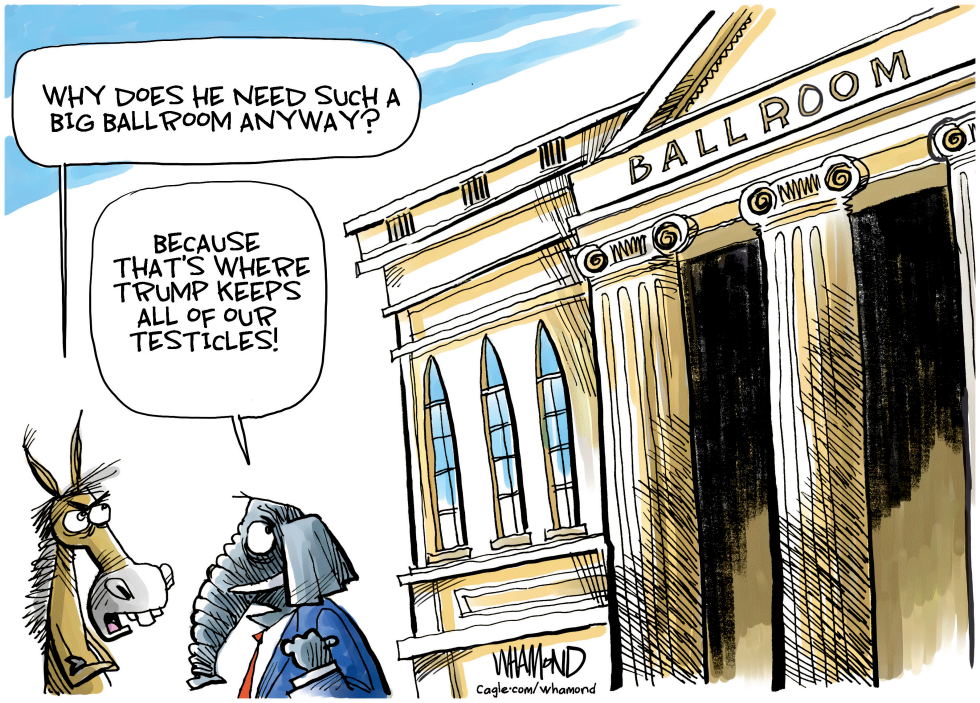
Republicans continue to align closely with Donald Trump on key issues as of early September 2026. The former president maintains strong influence over the party despite leaving office years earlier. This dynamic raises questions about independent decision-making within GOP ranks. The cartoon portrays the Republican elephant explaining to the Democratic donkey that Trump stores the party's resolve in a large ballroom. It critiques the perceived lack of autonomy among Republican leaders.
On the eve of German state elections, Donald Trump publicly aligned with the AfD by signaling support for its leader. The move drew attention to foreign influence in European politics and raised questions about the party's direction. The cartoon portrays the endorsement as an attempt to empower a fringe movement through personal patronage.
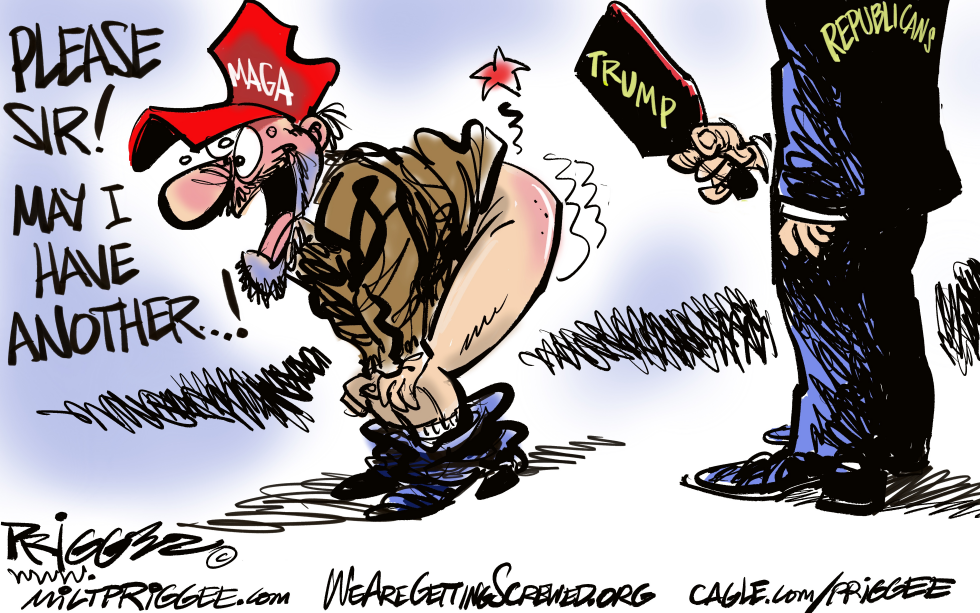
The cartoon depicts a caricature of Donald Trump bent over with pants down, pleading 'Please sir! May I have another!' while a Republican figure holds a Trump-labeled book ready to strike. Published September 1, 2026, the image comments on the power relationship between Trump and the Republican Party after recent electoral events.
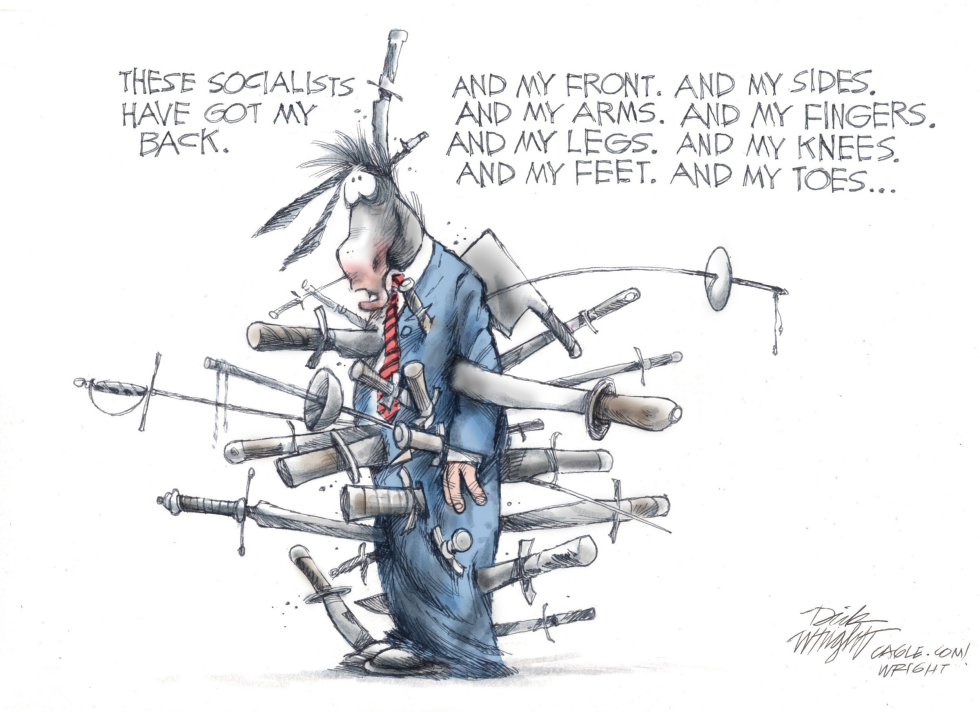
Tensions between socialist factions and mainstream Democrats continue to strain party cohesion ahead of future elections. The cartoon depicts socialists as actively harming the Democratic brand through relentless internal attacks. It argues that such infighting weakens the party's ability to govern effectively and appeal to broader voters.
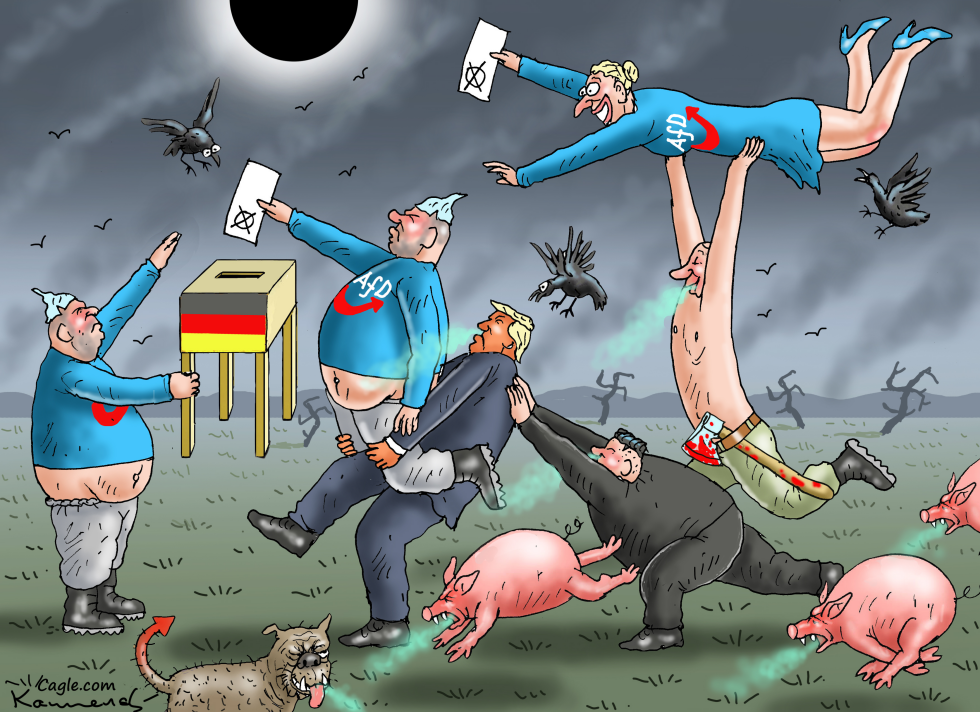
The AfD seeks gains in upcoming German elections with visible support from Donald Trump and other authoritarian figures. The party faces accusations of extremist ties. The cartoon portrays this backing as a direct boost to the far-right campaign while highlighting Nazi symbols on ballots.
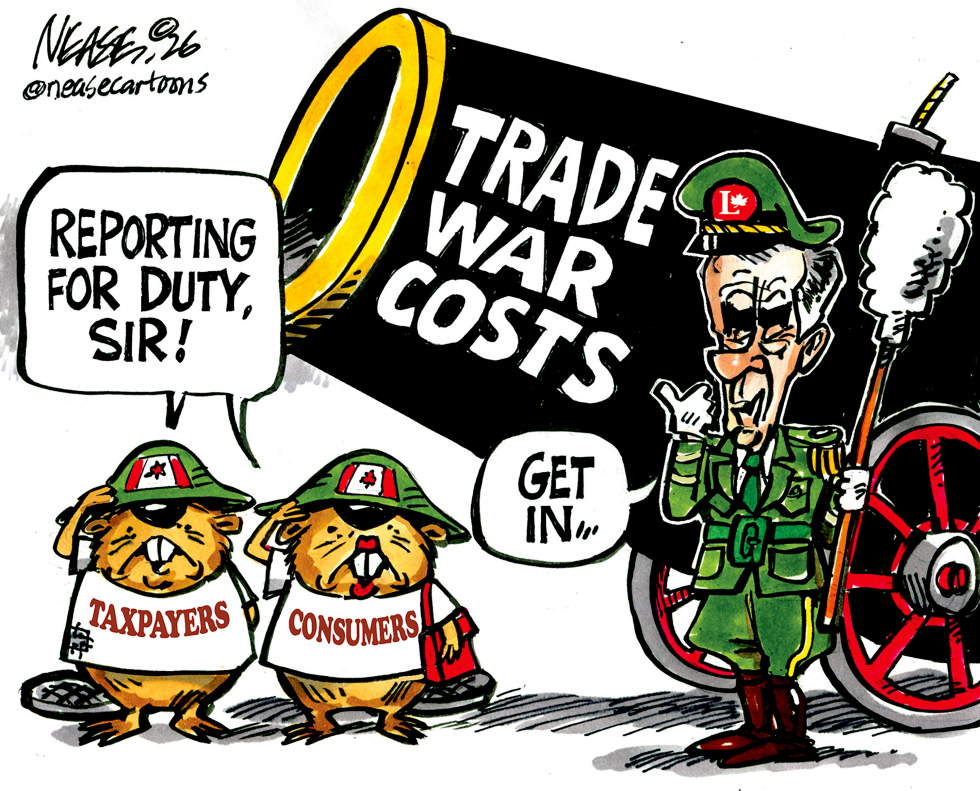
Canadian taxpayers and consumers face rising costs from an ongoing trade dispute. The situation places direct financial pressure on households through higher prices and economic measures. The editorial takes the position that ordinary citizens bear the burden while leadership directs the effort.
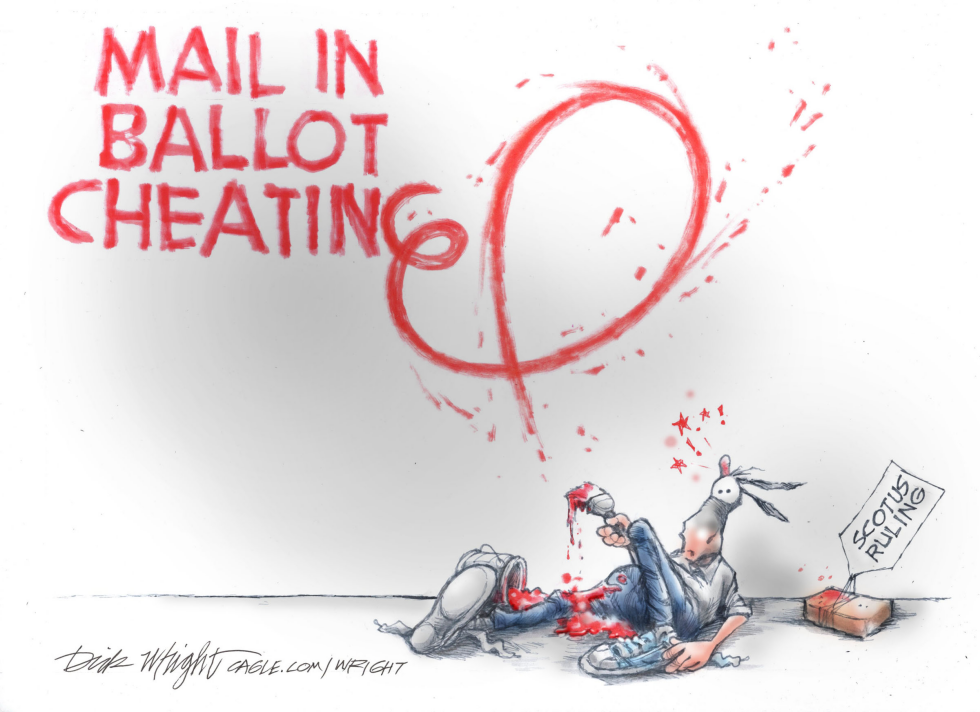
The image depicts the Democratic Party symbol as a donkey lying wounded on the ground with red liquid visible near its body. A large red prohibition symbol covers the words mail in ballot cheating at the top. A sign reading SCOTUS ruling stands nearby next to a box. The composition responds to a Supreme Court decision limiting certain mail-in ballot procedures. The visual argument centers on claims of reduced opportunities for improper voting practices. Publication occurred on August 25 2026. The work uses the party emblem to illustrate the effect of the ruling on one political side. No specific prior case details appear in the image itself.
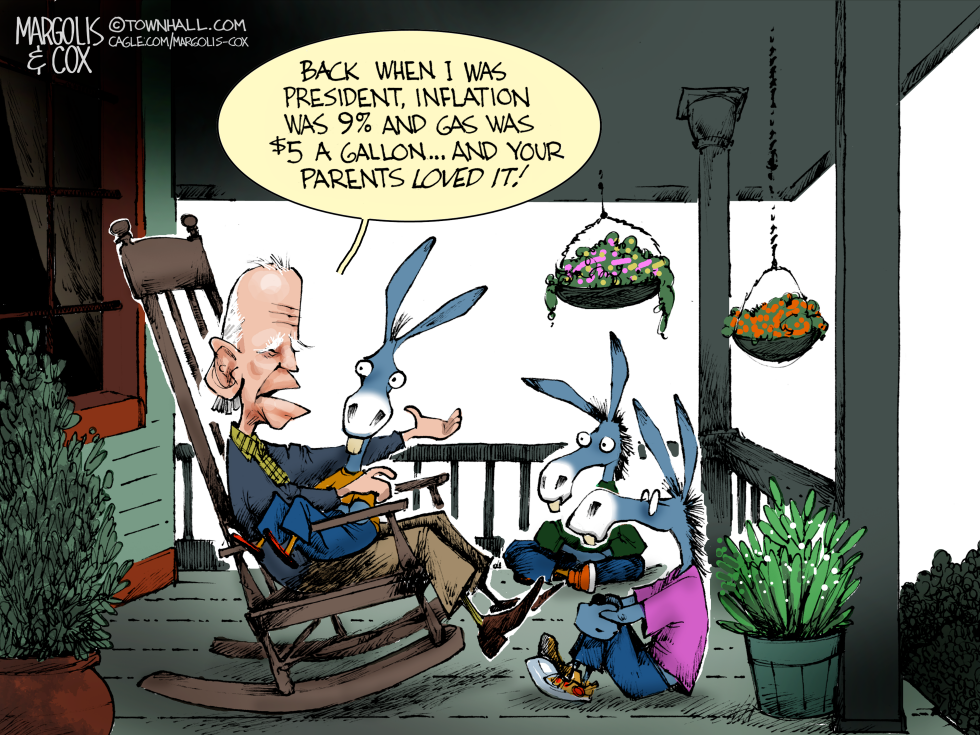
Former President Joe Biden addressed young Democrats on a porch, recalling the 9 percent inflation and $5-per-gallon gas prices from his term as something their parents loved. The remark comes amid ongoing Democratic efforts to move past the economic record of the Biden years. The cartoon presents the comment as tone-deaf revisionism that highlights the party's difficulty distancing itself from those results.
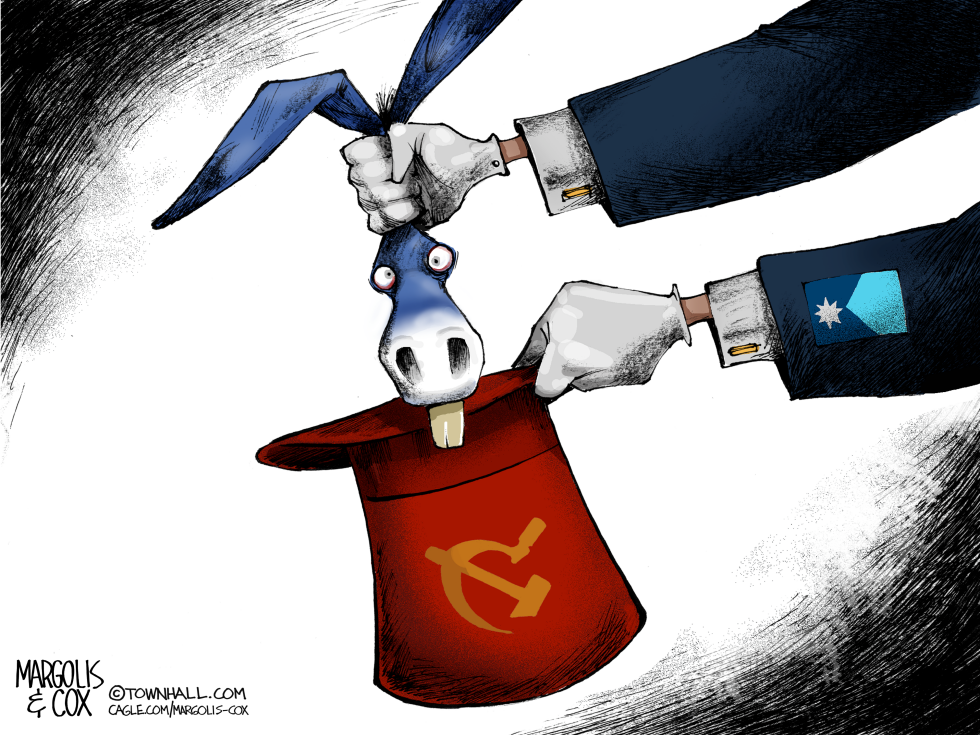
Accusations that Democratic policies carry communist undertones have persisted in partisan debate for years. The image frames the party as emerging directly from a communist emblem through a conjurer's reveal. This visual argument underscores ongoing conservative critiques that Democratic governance veers toward authoritarian economic controls rather than traditional American principles.
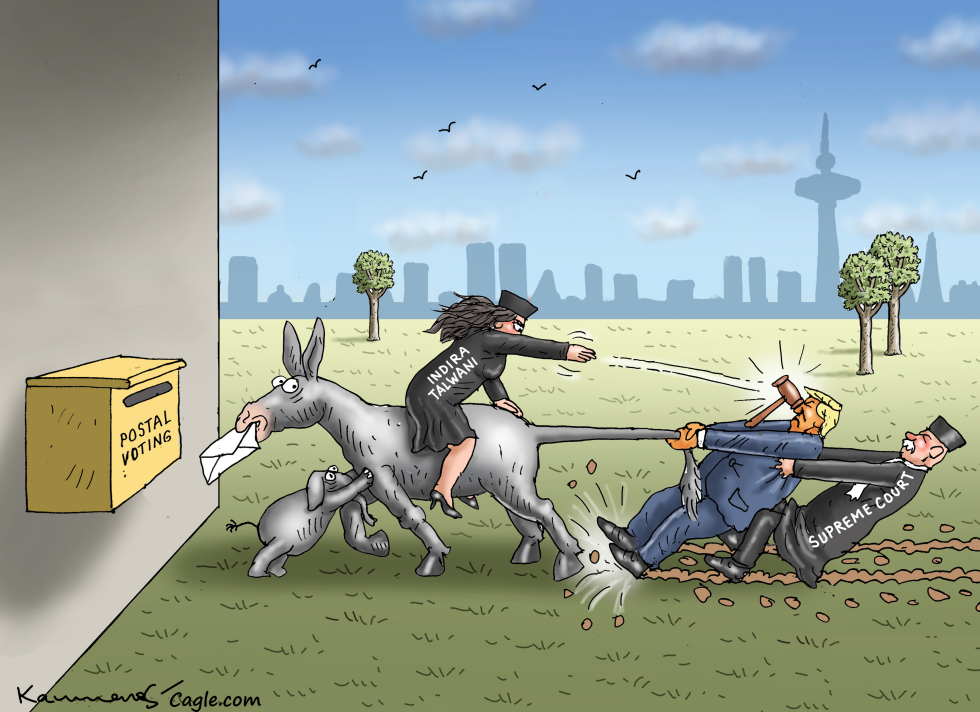
A political cartoon shows federal Judge Indira Talwani riding a Democratic donkey labeled with postal voting while dragging two Supreme Court justices across a field near the Space Needle. The image responds to ongoing disputes over postal voting rules and federal court involvement in election procedures. Talwani, a U.S. District Judge, has issued rulings affecting voting access in recent cases. The cartoon uses the donkey as a party symbol and a yellow ballot box to illustrate the conflict between lower court decisions and the Supreme Court. The visual argument centers on judicial power in election law matters active in 2026.