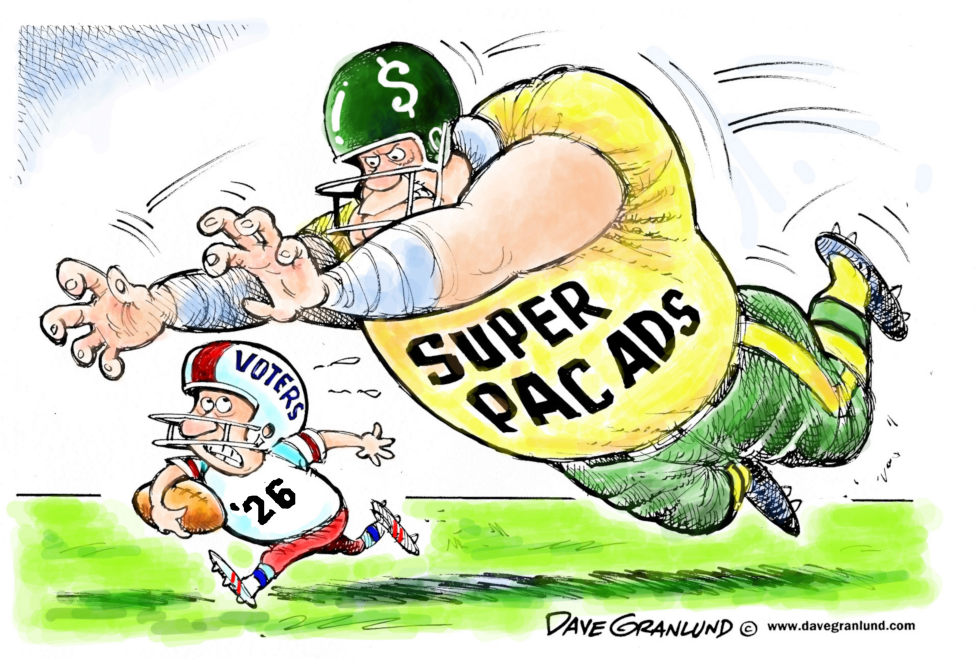
The cartoon depicts a large football player representing Super PAC ads pursuing a much smaller voter figure on a football field. Published on September 11, 2026, the image comments on the growing influence of Super PAC spending in U.S. elections. The oversized player wears a helmet marked with a dollar sign and a jersey labeled Super PAC Ads, while the smaller figure wears a helmet reading Voters and a jersey with the number 26. The visual emphasizes the imbalance between well-funded political advertising and ordinary voters. This reflects ongoing debates about campaign finance and the role of independent expenditure groups following recent election cycles.
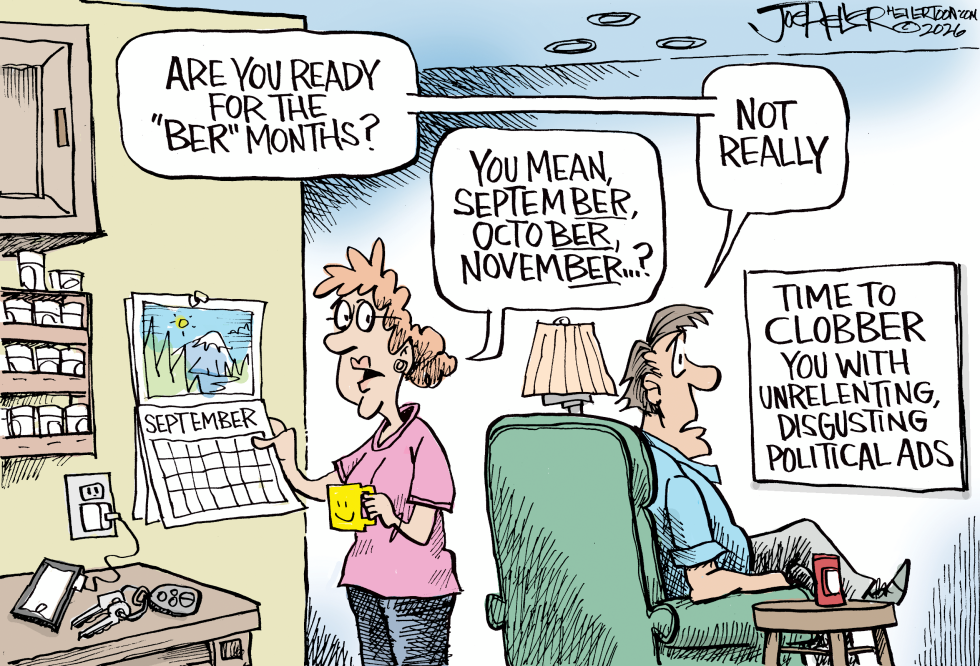
As September begins, the annual cycle of fall political advertising intensifies ahead of November elections. Candidates and outside groups ramp up spending on television, digital and mail campaigns to reach voters. The volume of messages creates widespread fatigue among the public. The cartoon highlights the predictable dread that accompanies the shift from summer to the final stretch of the campaign calendar.
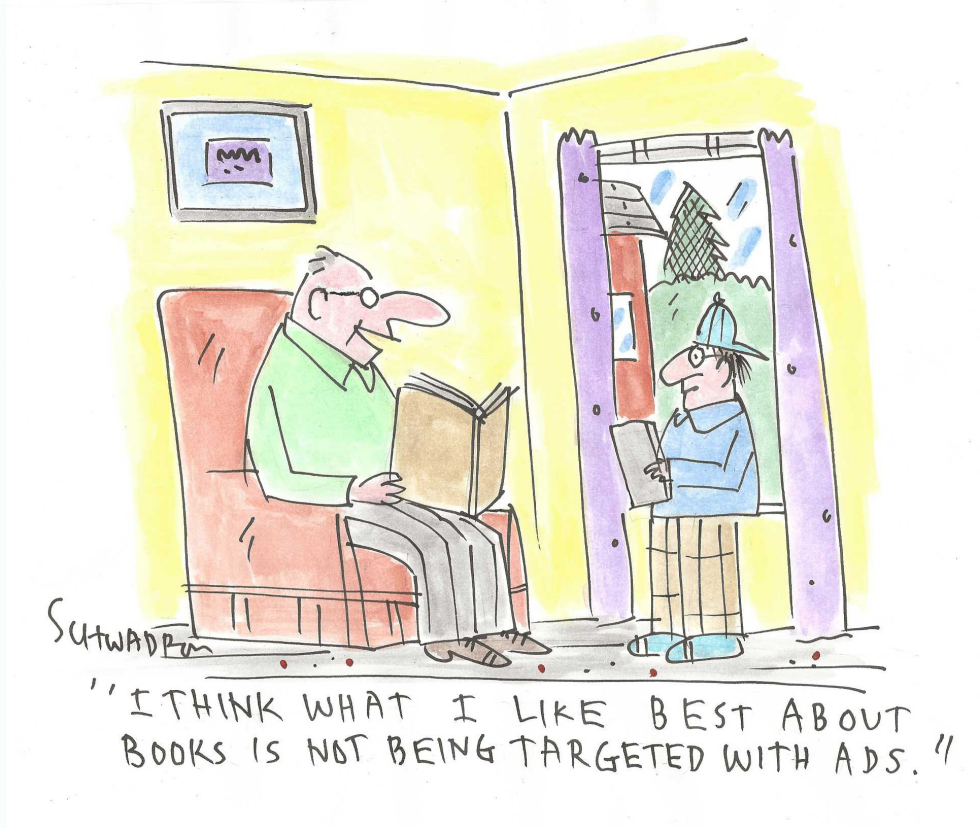
An elderly reader seated comfortably expresses a clear preference for traditional books precisely because they spare him from targeted advertising that follows users across digital platforms. The comment underscores a broader tension between print media and online content delivery systems that rely on data tracking. The piece takes the position that this ad-free quality remains one of books' strongest advantages in an era of constant commercial interruption.
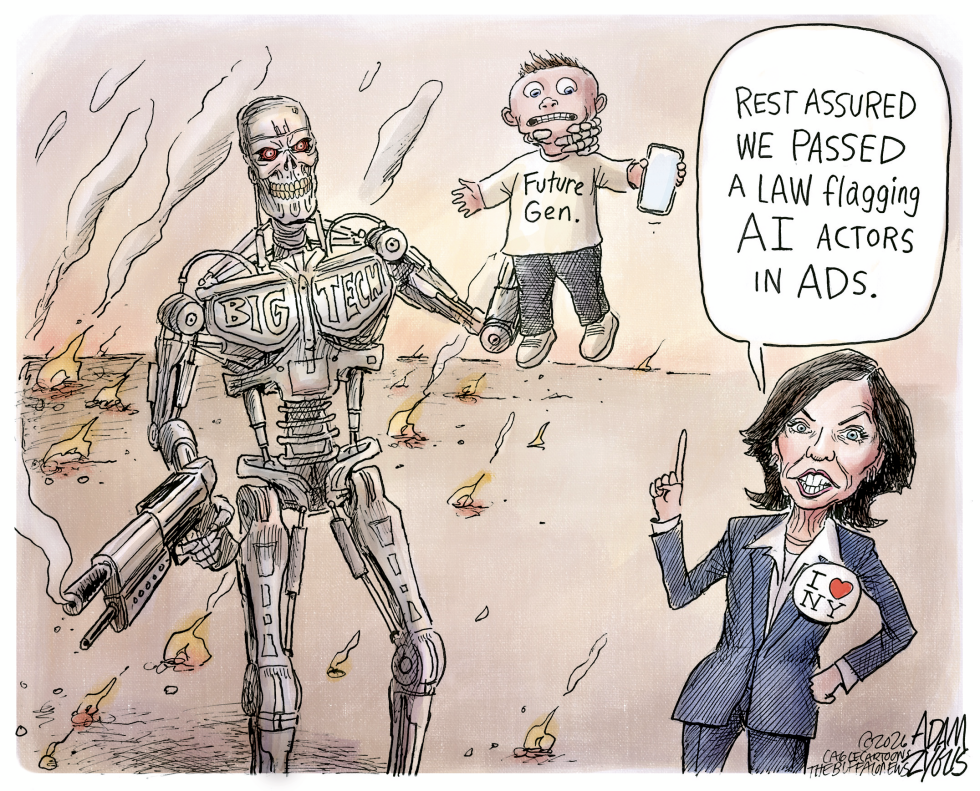
A Terminator-style robot marked Big Tech clutches a child labeled Future Gen. in a scorched landscape. The child holds a smartphone. A woman resembling New York Governor Kathy Hochul stands nearby, raising a finger and declaring that lawmakers passed a measure to flag AI actors in advertisements.
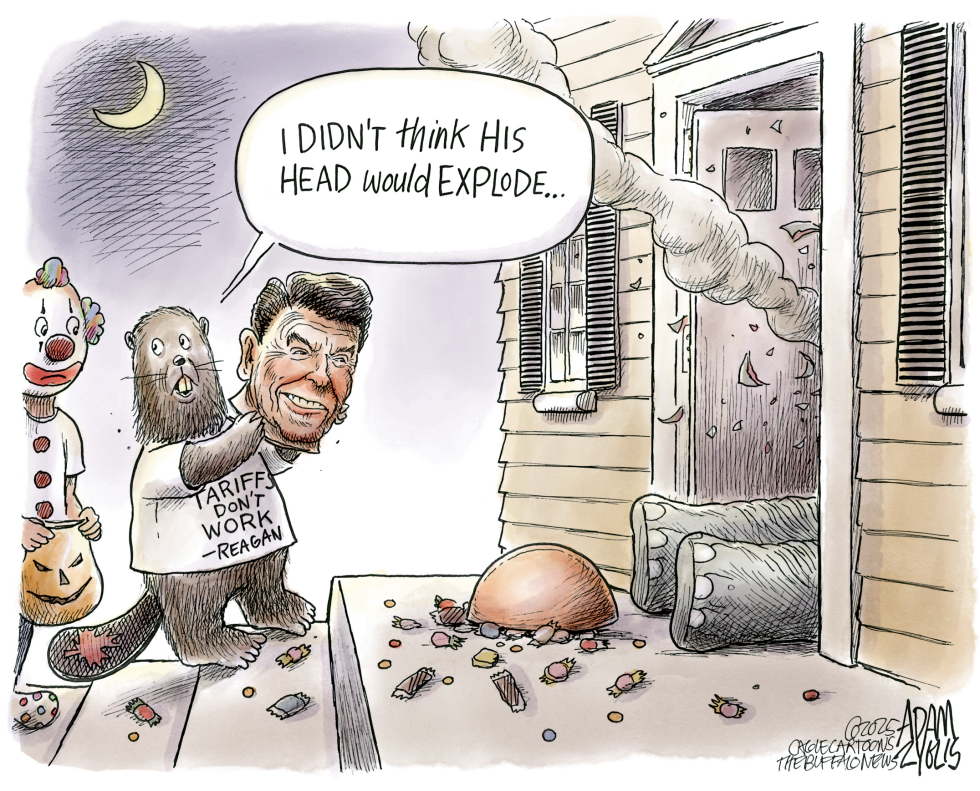
The cartoon depicts a beaver costumed as Ronald Reagan holding a prop head on a damaged porch while a clown stands nearby with a pumpkin bucket. Debris litters the steps after an apparent explosion inside the house. The beaver's shirt quotes Reagan against tariffs. The scene responds to recent Ontario ads criticizing proposed tariffs and their economic effects on Canada-US trade relations around late October 2025.
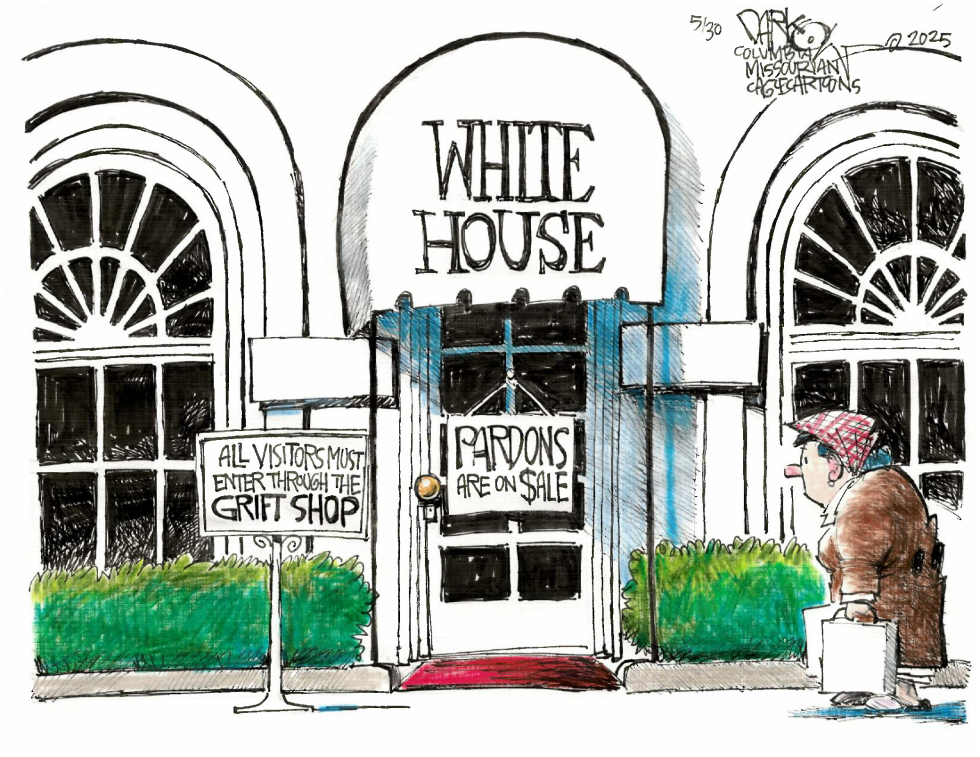
On May 29, 2025, John Darkow's cartoon portrays the White House as a commercial operation where pardons are sold and all visitors must pass through a grift shop. The drawing responds to ongoing concerns about monetization of presidential powers during the Trump administration. A figure carrying a briefcase approaches the entrance beneath signs advertising pardons for sale.