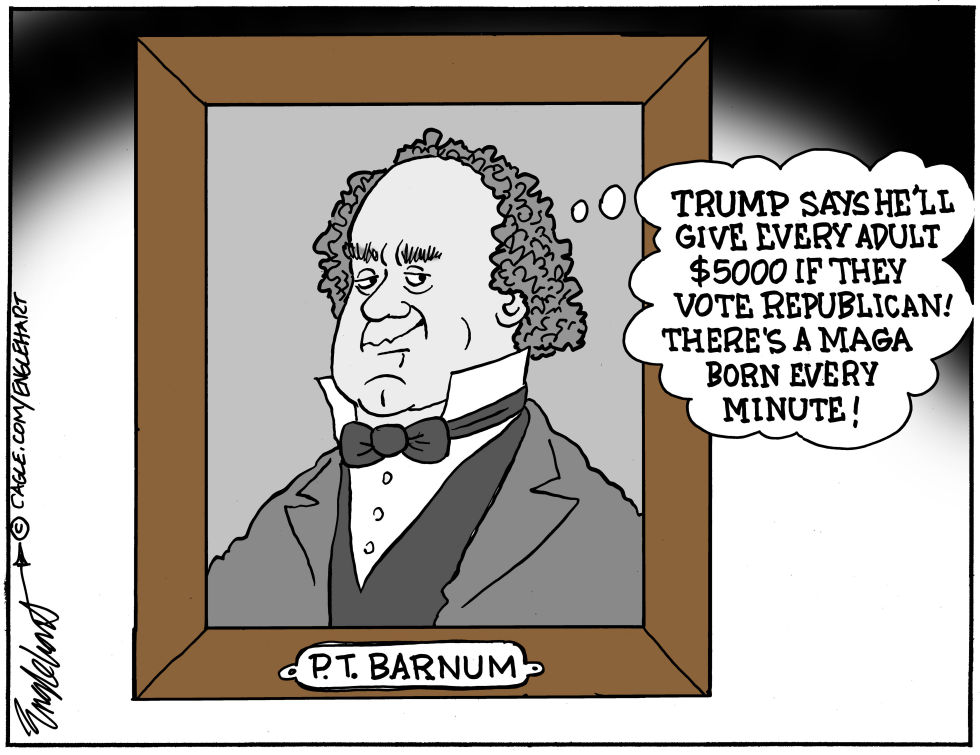
Donald Trump proposed giving $5000 to every adult who votes Republican ahead of the 2026 midterms. The offer drew immediate comparisons to historical figures known for exploiting public gullibility. The cartoon uses the P.T. Barnum portrait and the altered sucker line to argue that the proposal treats voters as marks rather than citizens. It frames the cash pledge as a transparent attempt to buy support through direct payment. The piece suggests the tactic reveals low regard for voter intelligence and reduces elections to transactional exchanges.
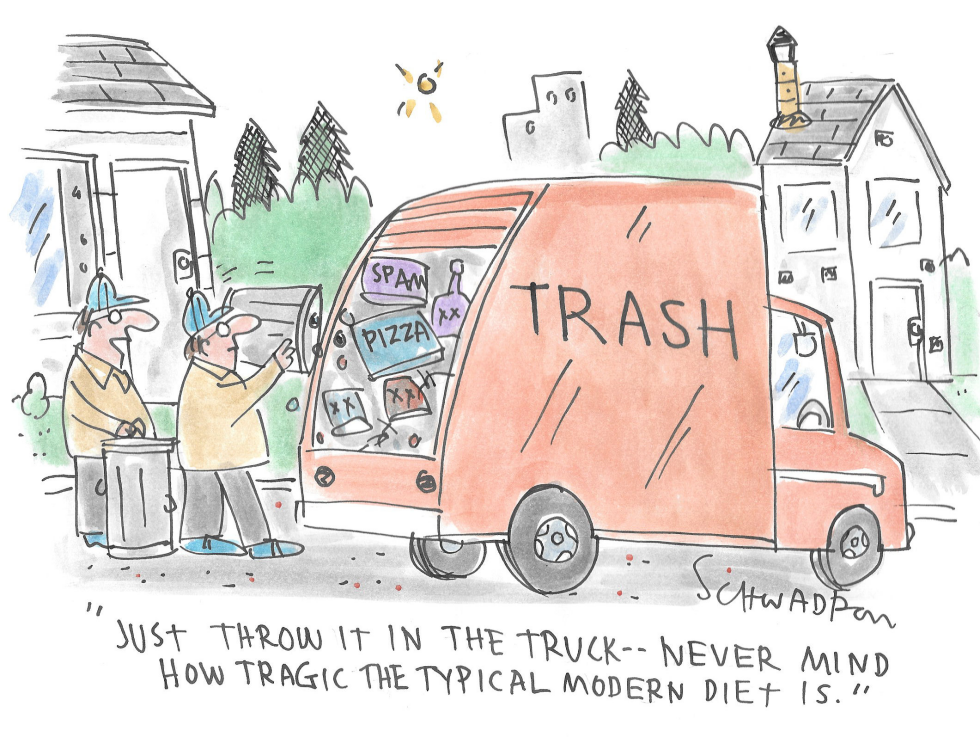
Public discussion continues over the health impacts of widespread junk food consumption and other modern lifestyle habits. The piece takes the position that these elements of daily life are so poor they belong in the garbage.
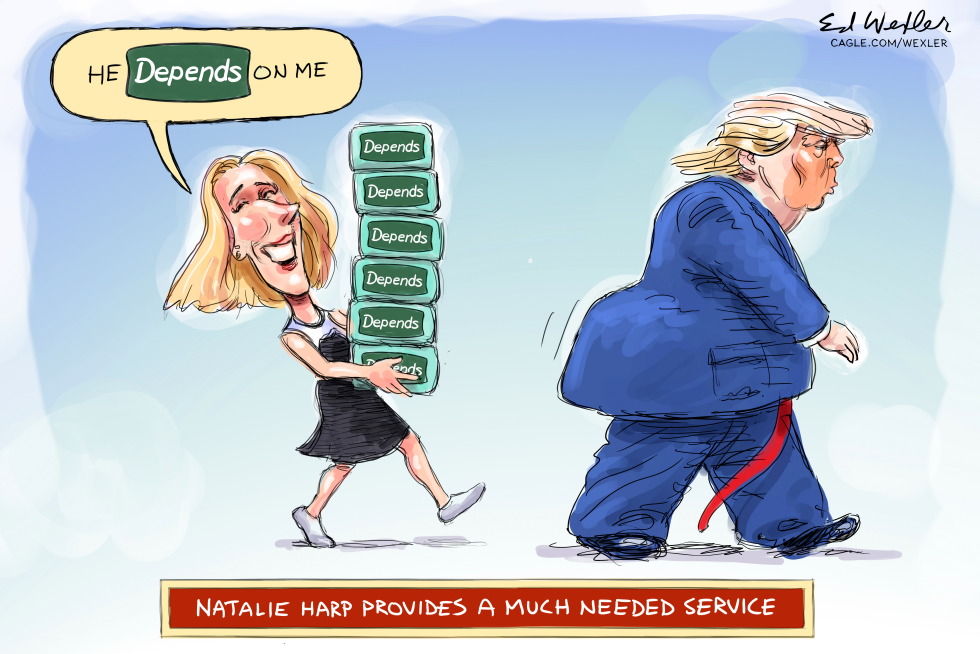
Natalie Harp, a Trump associate, is depicted supplying adult diapers to Donald Trump. The image responds to ongoing public discussion of Trump's age and physical condition during his 2024 campaign and subsequent activities. No specific new event occurred in the days before August 22 2026. The piece takes the position that Trump requires such assistance and that Harp fulfills that role.
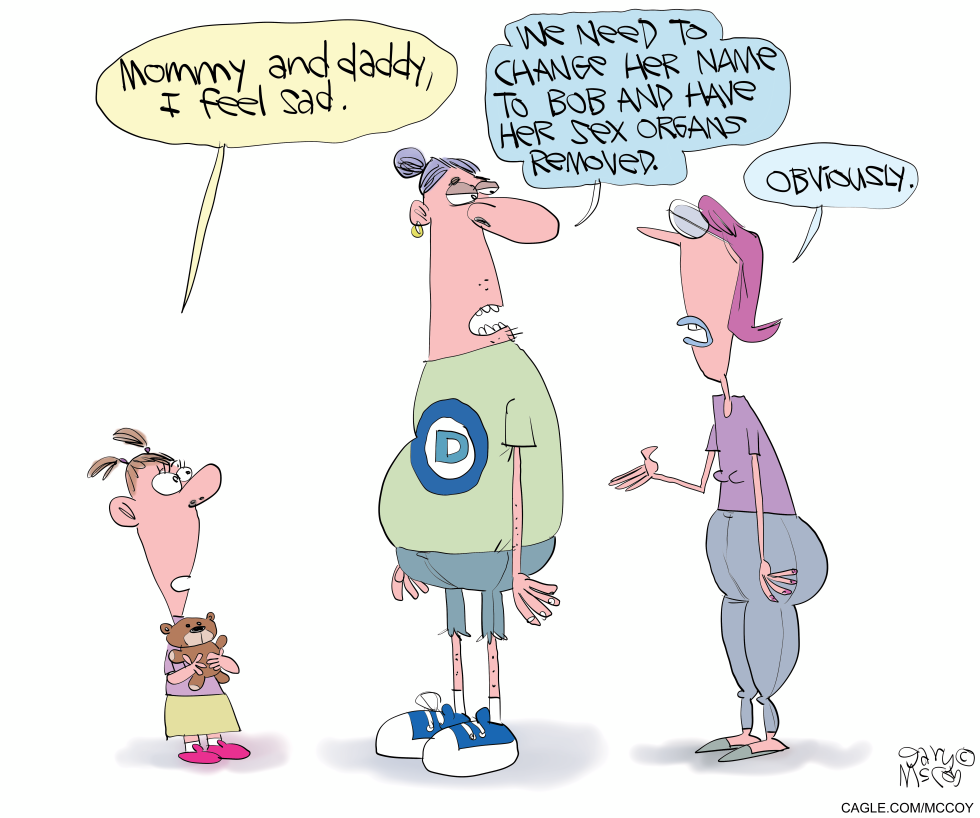
A child tells parents she feels sad. The adults immediately discuss changing the child's name to Bob and removing her sex organs. The exchange highlights a rapid pivot from emotional distress to medical intervention in family settings. The piece takes the position that such responses overlook the stated feeling and rush toward irreversible steps.
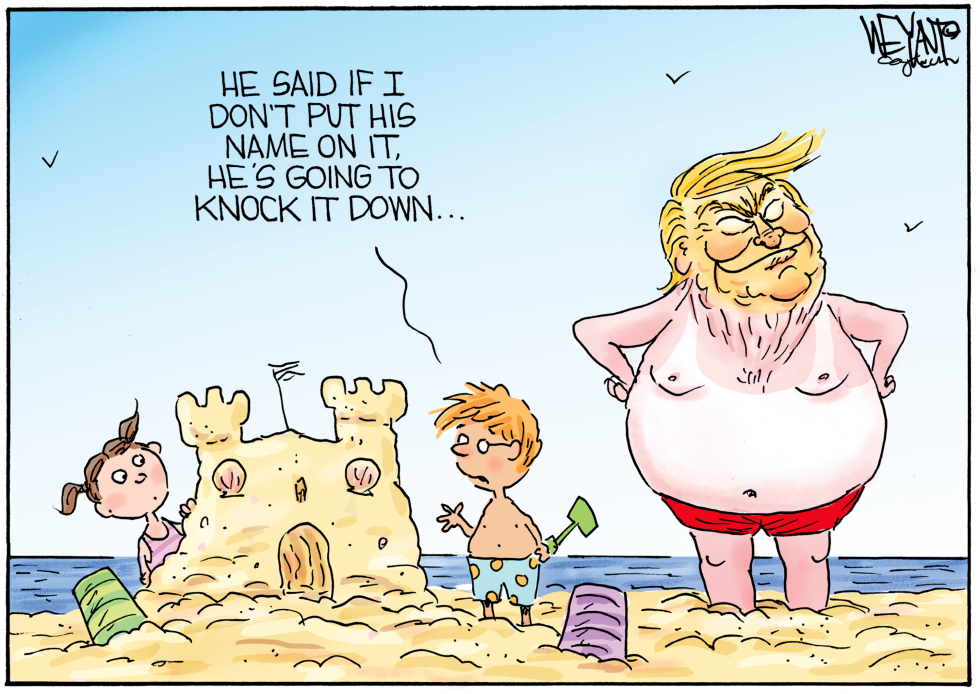
Donald Trump has long pressed for personal credit in public projects and political dealings. The pattern involves demands for recognition that extend even to minor or symbolic matters. This dynamic matters because it reveals how one figure seeks to dominate credit and loyalty across settings. The piece takes the position that such demands reflect an outsized need for acknowledgment that overrides ordinary boundaries.
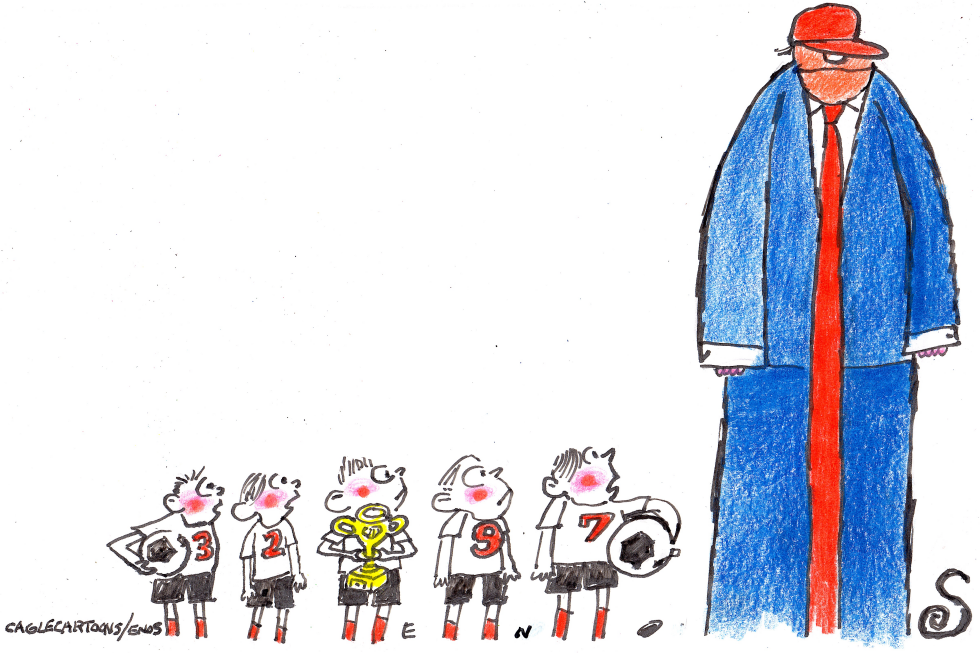
Donald Trump appears in caricature form towering over a group of young soccer players on July 20 2026. The image captures the former president in his signature attire next to children in numbered jerseys. The editorial uses scale to comment on power dynamics in contemporary politics.
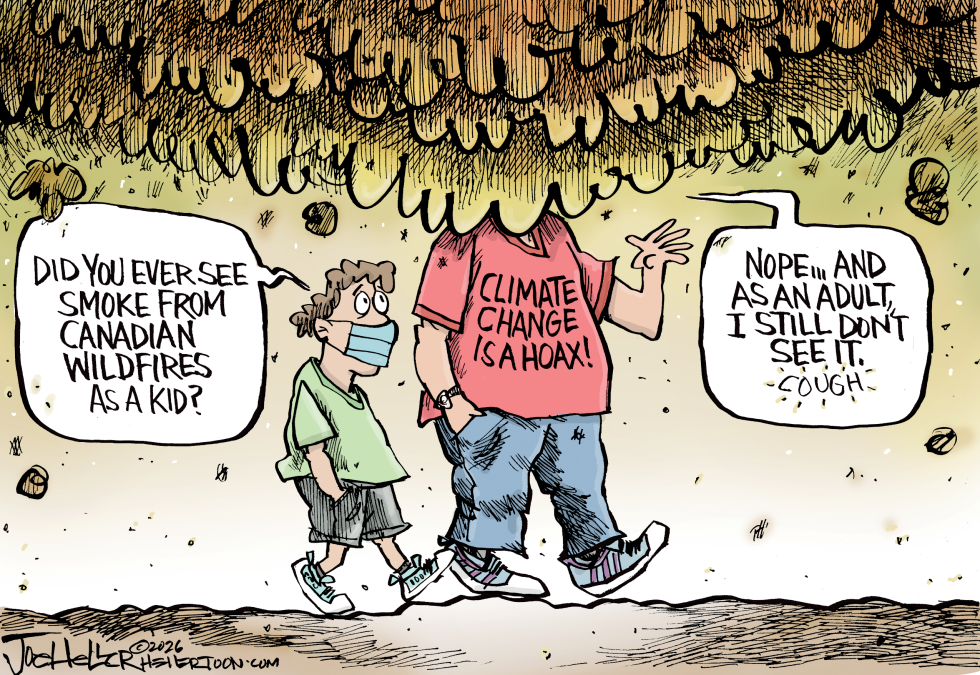
Canadian wildfire smoke blanketed parts of the northern U.S. in mid-July 2026, prompting renewed public discussion of climate impacts. An adult figure dismisses the connection outright while visibly affected by the air quality. The piece highlights the disconnect between personal experience and continued denial of the underlying cause.
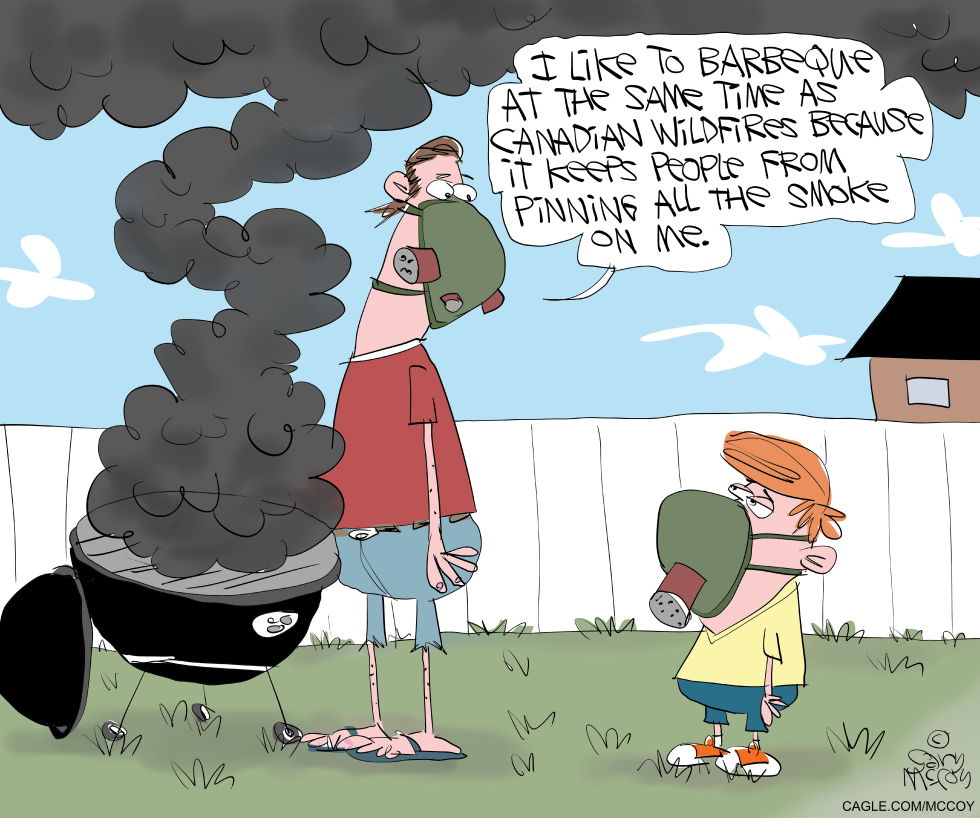
Canadian wildfires in mid-2026 sent thick smoke plumes across the northern United States, prompting air-quality alerts and health warnings in multiple states. Residents already dealing with regional haze faced additional backyard smoke from summer grilling. The cartoon depicts two figures wearing gas masks beside an active barbecue, with the adult figure claiming the wildfires conveniently deflect attention from personal smoke contributions. The piece highlights how individuals exploit larger environmental events to minimize accountability for smaller-scale pollution during the same period.
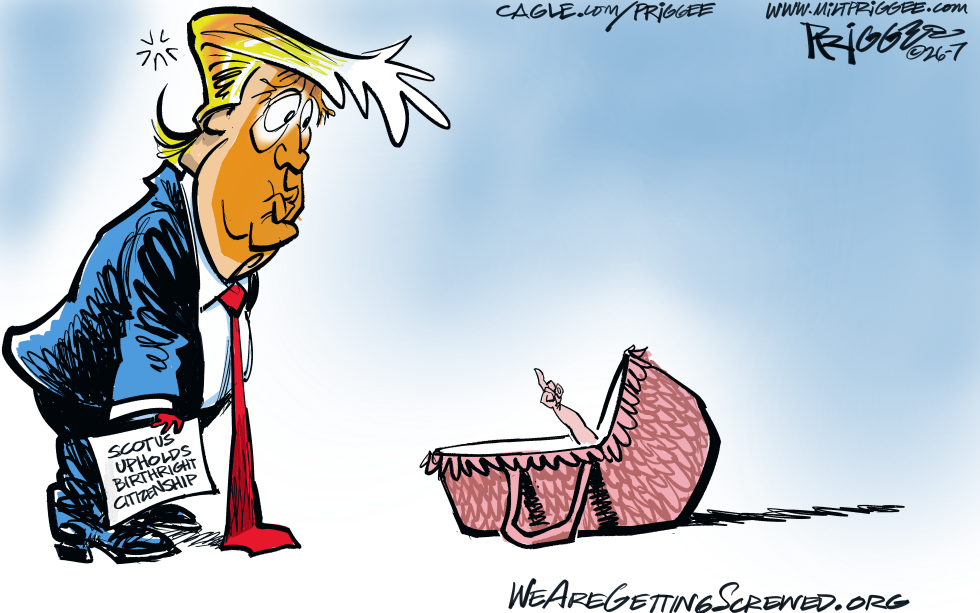
The cartoon illustrates Donald Trump holding a document announcing that the Supreme Court has upheld birthright citizenship. He stands over a bassinet from which an infant extends a middle finger. The image references the constitutional clause granting citizenship to those born on U.S. soil and positions the ruling as a direct rebuke to efforts to alter that interpretation.
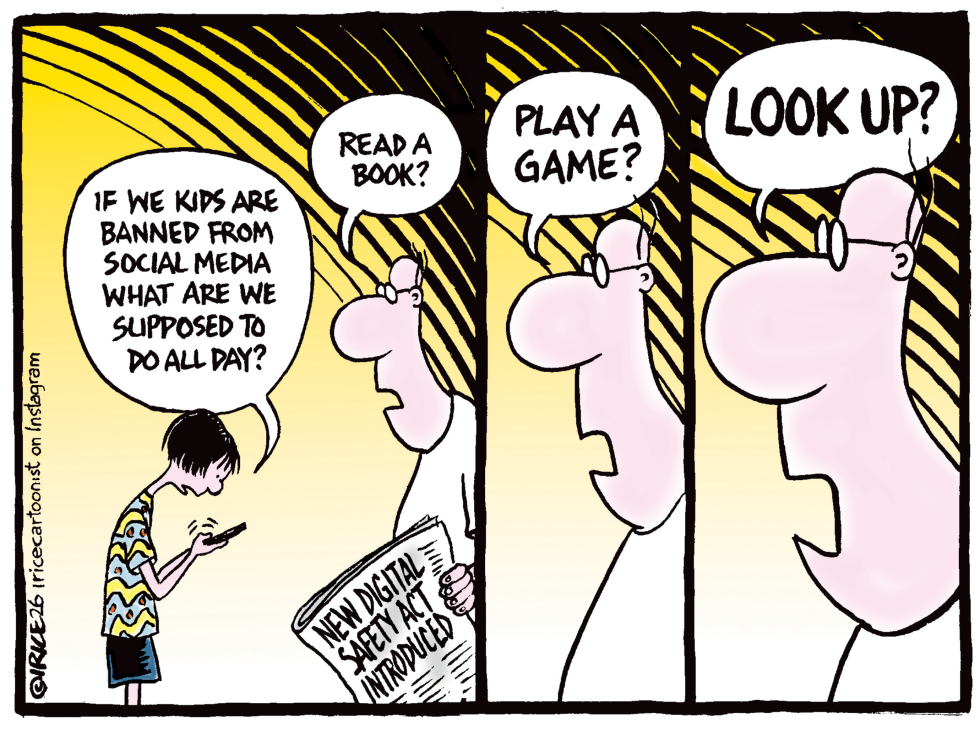
A three-panel cartoon depicts a child on a smartphone questioning what to do all day if banned from social media. An adult holding a newspaper headlined 'NEW DIGITAL SAFETY ACT INTRODUCED' responds with suggestions to read a book, play a game or look up. The June 2026 image addresses proposed restrictions on youth digital access.
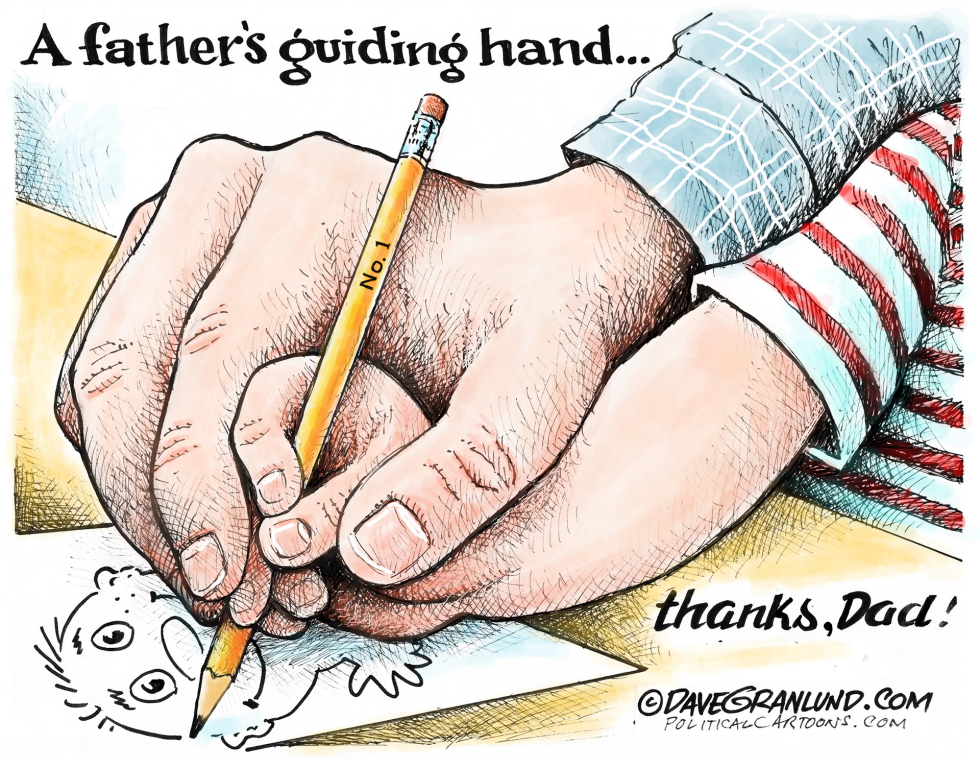
A detailed illustration shows an adult hand in a plaid shirt sleeve guiding a child's smaller hand as it draws with a No. 1 pencil. The child sketches a basic round face with large eyes on white paper. Text at the top reads 'A father's guiding hand...' while 'thanks, Dad!' appears near the bottom. The image is signed with copyright information for Dave Granlund and PoliticalCartoons.com. The scene emphasizes parental support during a creative activity.
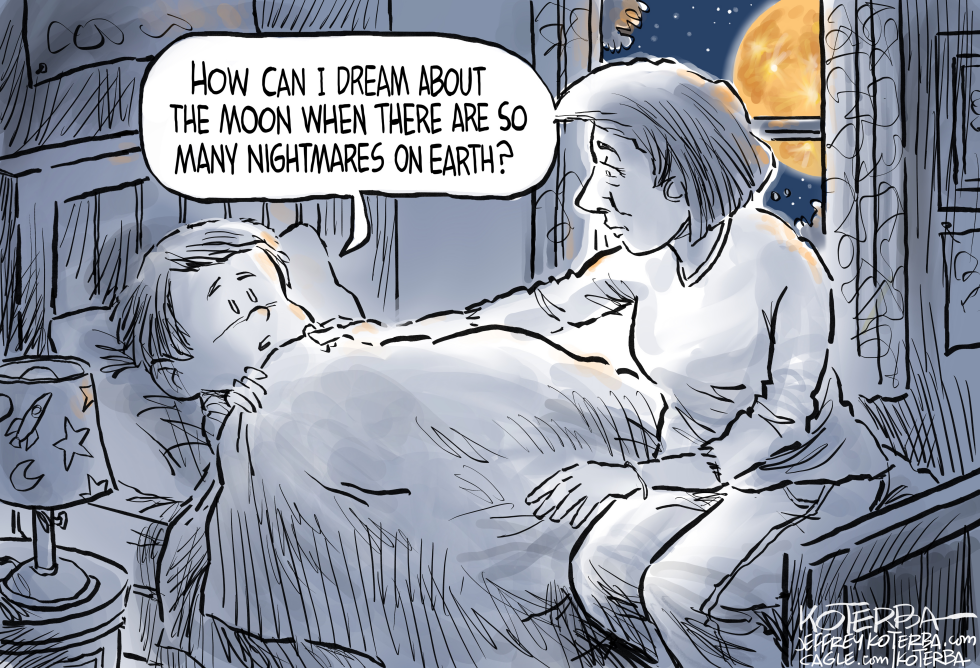
This poignant political cartoon depicts a child in bed, gazing toward a window framing a massive orange moon against a starry night sky, while confiding in a seated adult figure. The child's speech bubble reads: 'How Can I Dream About The Moon When There Are So Many Nightmares On Earth?' A bedside lamp with a star design illuminates the scene. Through this setup, the artwork satirizes how youth anxiety from global issues—like wars, climate woes, and social upheavals—stifles big dreams and aspirations. It's a clever commentary on how earthly nightmares eclipse celestial hopes, blending humor with insight into modern parenthood and childhood innocence lost. Tags: political cartoon, child nightmares, moon dreams, earth troubles, satirical illustration, youth anxiety, global chaos.
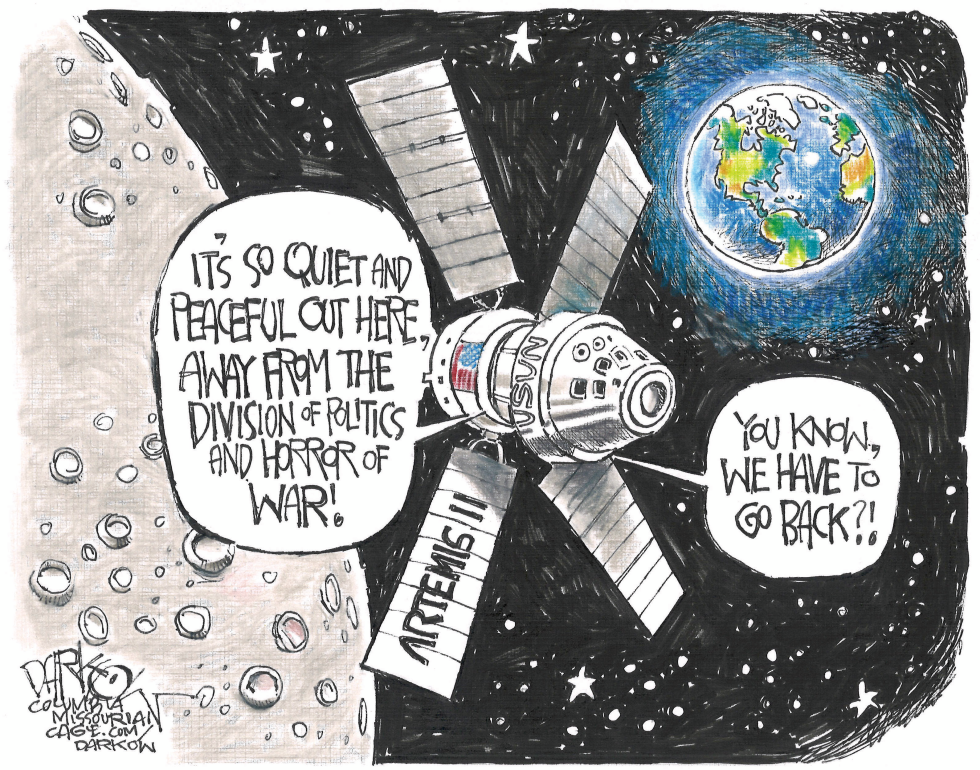
This Daryl Cagle political cartoon analysis features the Artemis II spacecraft floating in serene space, with Earth glowing in the background and the moon nearby. The left speech bubble extols the quiet peace away from division of politics and horror of war, while the right one resignedly notes the need to go back. It's a satirical cartoon on politics and war division, poking fun at how space exploration escaping earthly conflicts offers temporary respite. The NASA Artemis program humor illustration underscores the irony of advanced space missions contrasting with unresolved human divisions on Earth. Through this humorous take on returning to political division, the cartoon cleverly comments on the allure of peaceful space vs chaotic Earth without delving into specifics.
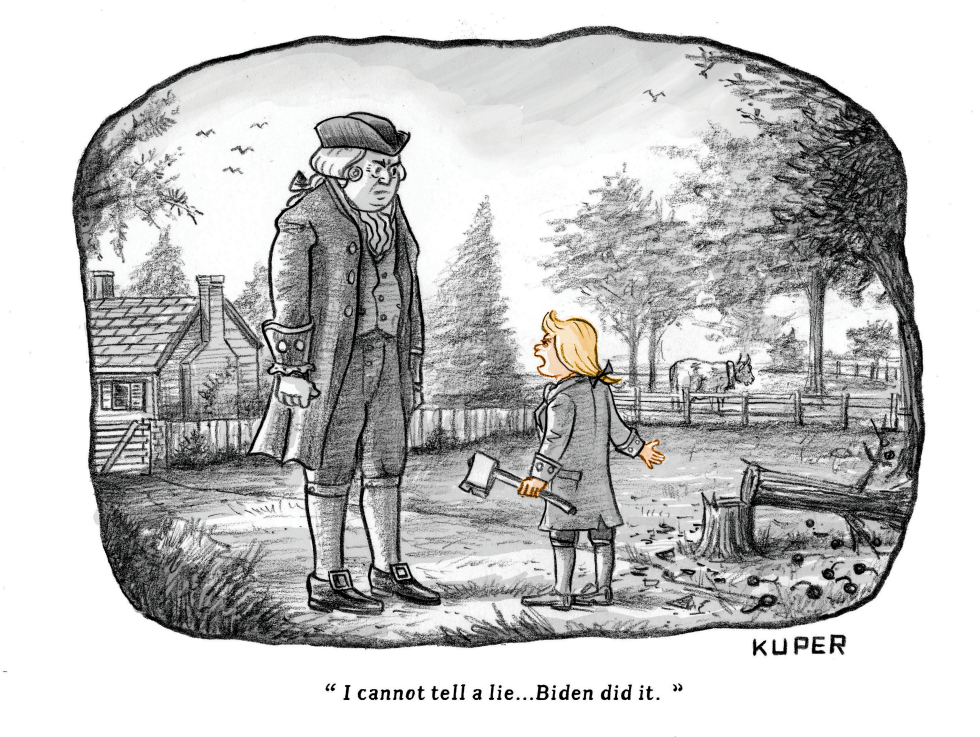
The cartoon reworks the George Washington cherry tree legend with a blonde child resembling Donald Trump holding an axe and declaring Biden responsible for the cut tree. An adult figure in 18th century attire looks on while a horse stands in the background. The scene references ongoing political blame games and recent cabinet tensions involving figures such as Kristi Noem and Pete Hegseth amid rising oil prices and foreign policy friction in the Strait of Hormuz.
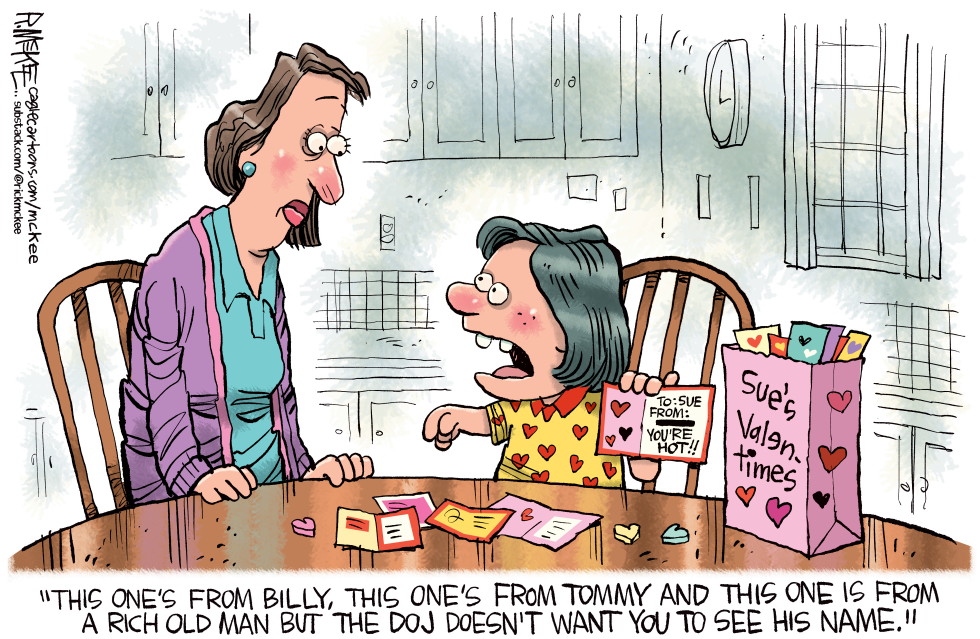
Rick McKee's cartoon captures a domestic scene where a young girl excitedly lists her Valentines from Billy, Tommy, and a rich old man whose name the DOJ conceals, tying into tags like Epstein, Trump, Bondi, DOJ, Kash Patel, FBI. The image, set in a kitchen with cards and a pink bag labeled 'Sue's Valen Times,' uses humor to poke at ongoing scandals in criminal justice and domestic policy. Hearts and exclamations add a light touch to the heavy undertones of secrecy in GOP and Republicans circles, even touching on stocks and economy implications. This piece blends holiday cheer with pointed satire on hidden truths.