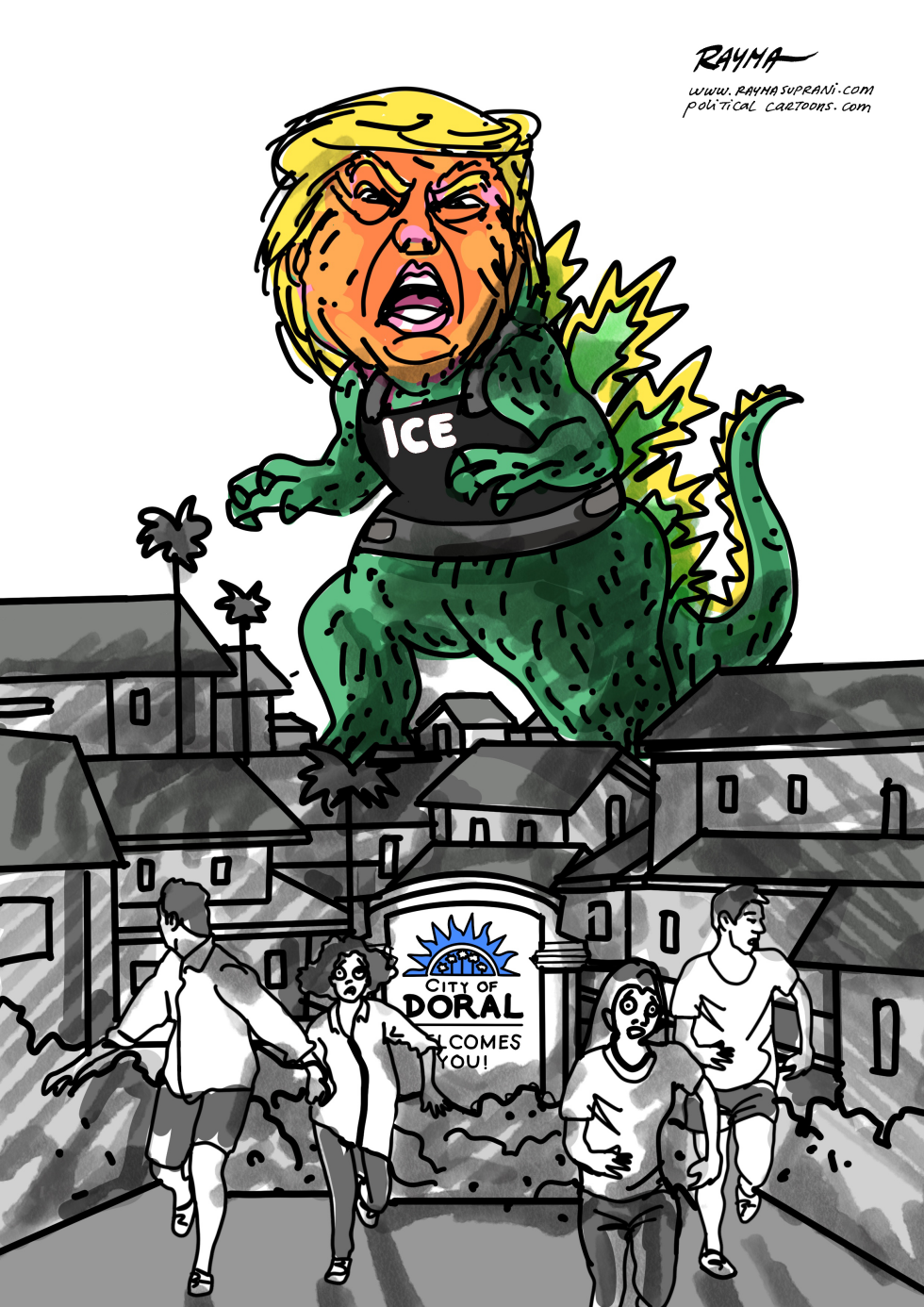
The image shows a large figure resembling Donald Trump dressed as an ICE agent towering over the city of Doral. People run from the scene near a welcome sign. The work addresses immigration enforcement policies active in Florida during 2026.
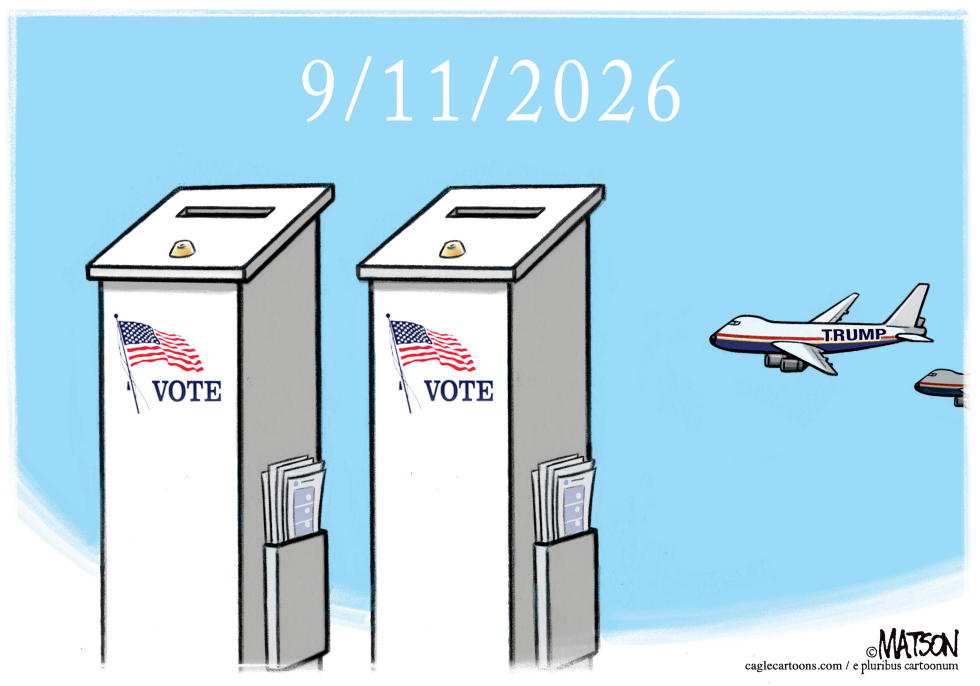
Donald Trump has signaled plans to impose new voting restrictions before the 2026 midterm elections. The moves come as Republicans seek advantages in key races. Critics argue the changes would suppress turnout among Democratic-leaning voters. Supporters claim the steps address fraud concerns. The cartoon frames the timing as an attack on voting access itself.
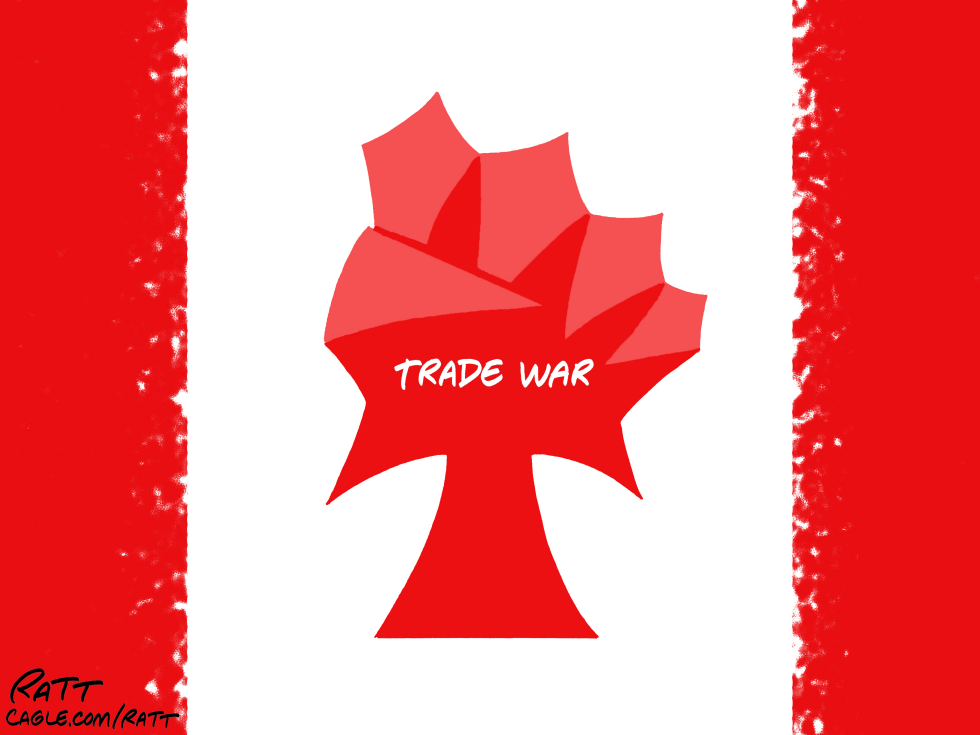
Ongoing US-Canada trade tensions escalated in 2026 with new tariff threats targeting Canadian exports. The dispute threatens key sectors including autos, lumber and agriculture, raising costs for consumers on both sides of the border. Canada has signaled plans to diversify markets and strengthen domestic industry. The cartoon frames the conflict as a direct assault on Canadian sovereignty and economic stability. It portrays the trade war as fracturing national symbols while urging a stronger northern response.
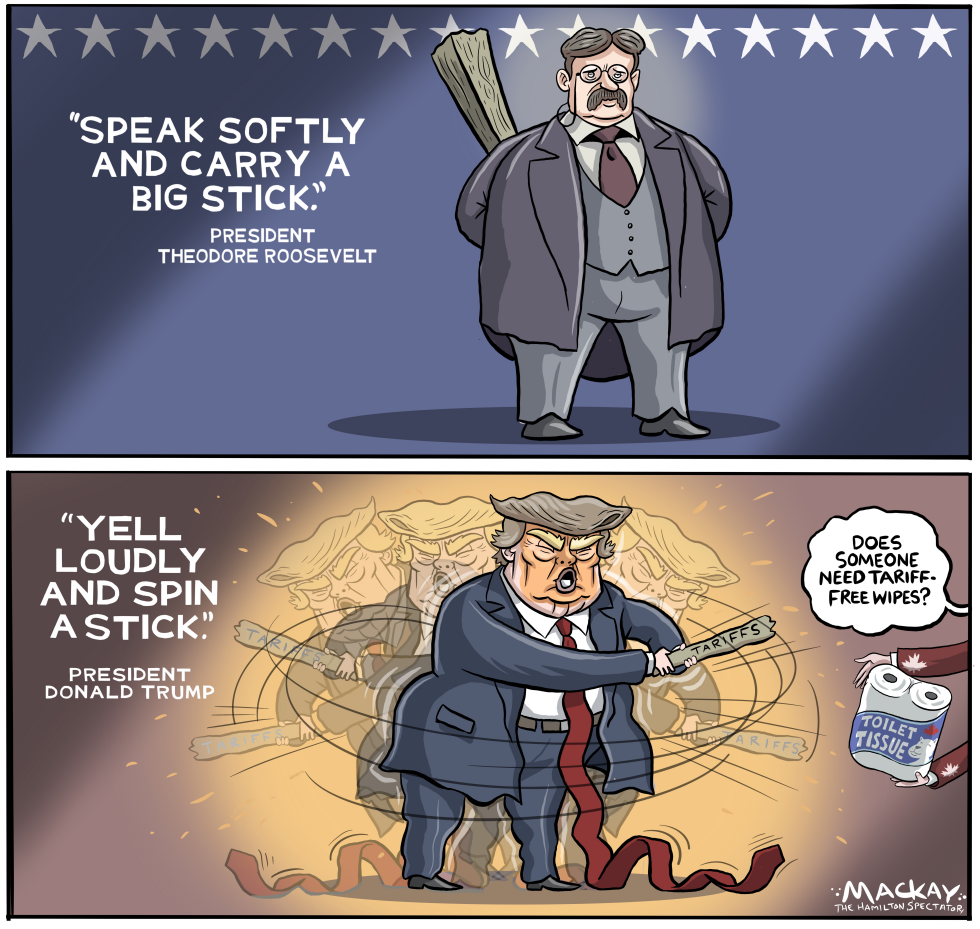
The cartoon by Graeme MacKay contrasts Theodore Roosevelt's famous speak softly and carry a big stick approach with Donald Trump's version of yelling loudly and spinning a stick covered in tariffs. In the lower panel Trump appears dizzy from the motion as a Canadian hand offers toilet tissue labeled tariff-free wipes. The image comments on recent US tariff actions and their impact on Canadian trade relations as of the September 2026 publication date.
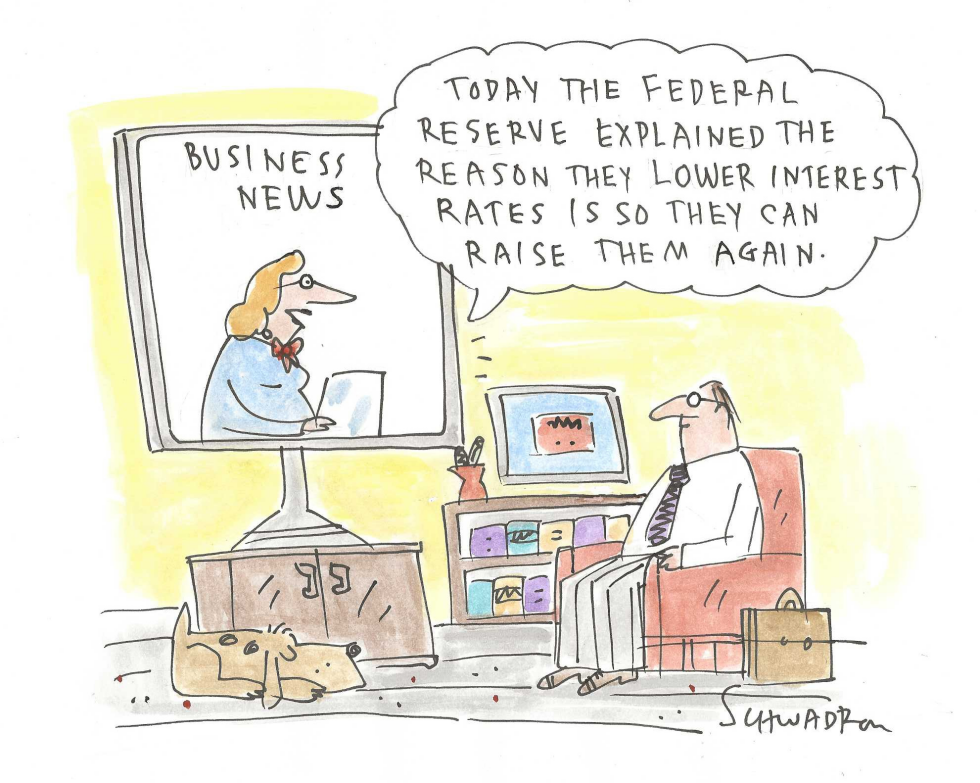
The Federal Reserve announced interest rate reductions in late summer 2026 to support economic conditions. Observers noted the central bank's stated goal of eventual rate increases created confusion about policy direction. The move affects borrowing costs for businesses and households nationwide. Markets reacted with mixed signals on inflation control and growth prospects. The cartoon presents the explanation as self-contradictory, underscoring public doubt about the clarity of Fed communications.
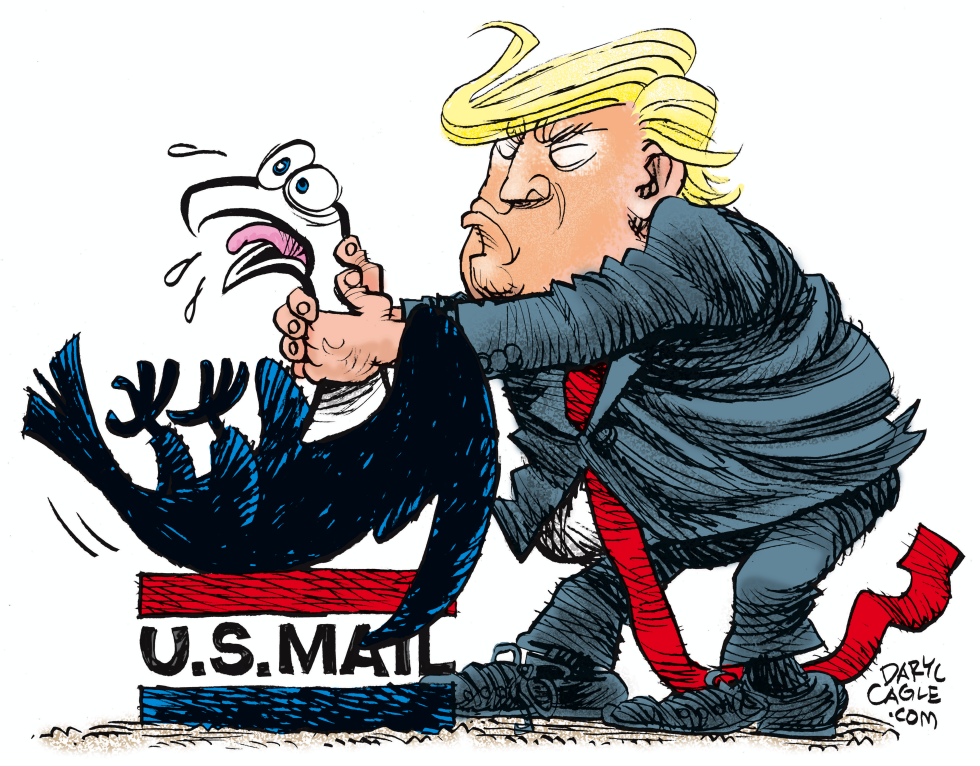
Donald Trump has renewed criticism of the U.S. Postal Service, calling for major operational changes amid reports of delivery slowdowns and budget shortfalls. The agency faces pressure to cut costs while maintaining universal service standards. Lawmakers from both parties have pushed back, arguing that further reductions would harm rural communities and election mail. The editorial takes the position that such attacks weaken a vital public institution without addressing root causes like underfunding and outdated infrastructure.
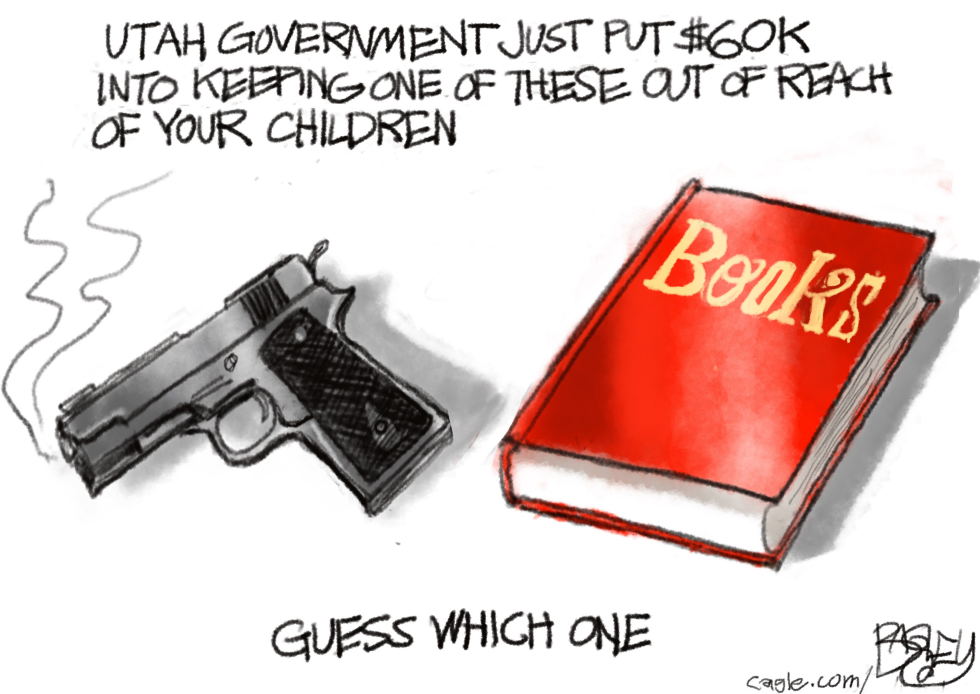
Utah officials directed $60,000 toward measures keeping certain books from children. Firearms remain readily available in the state. The decision highlights priorities in public safety and education policy. The piece criticizes the allocation as misplaced emphasis on censorship instead of addressing gun risks.
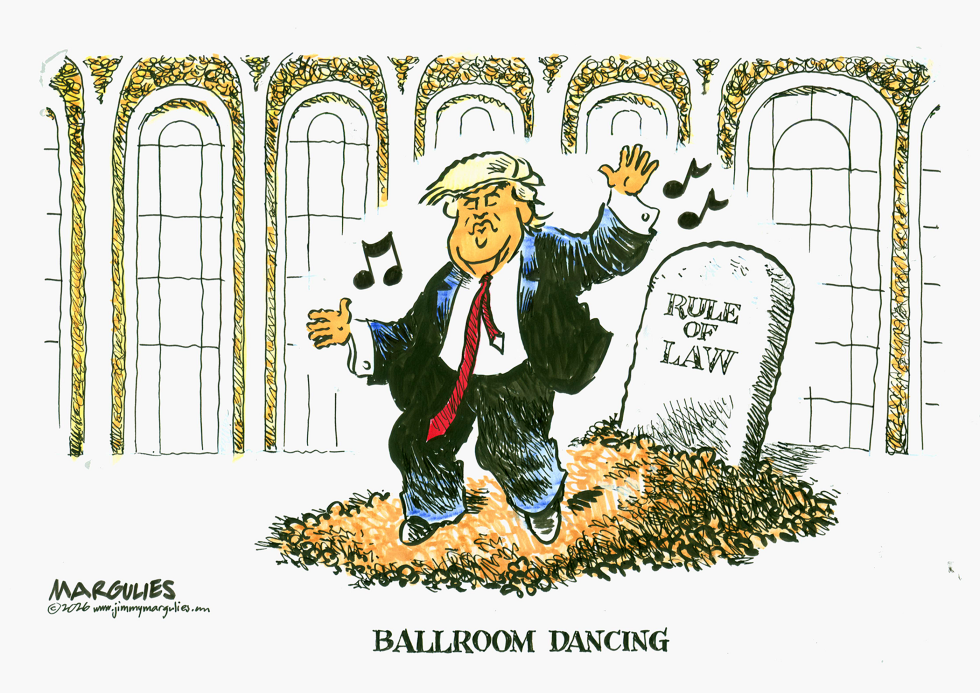
Donald Trump has repeatedly challenged legal institutions through public statements and actions questioning judicial authority. The cartoon responds to this pattern by showing him dancing on the grave of the rule of law. It argues that such behavior undermines core democratic safeguards and normalizes attacks on established legal boundaries.
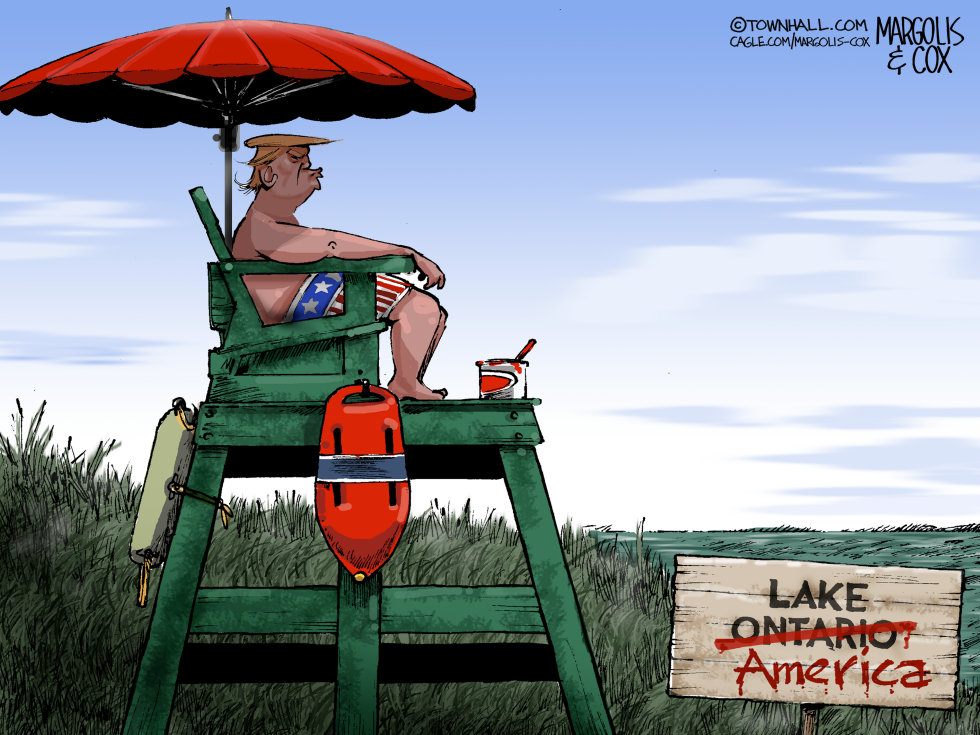
President Donald Trump directed the renaming of Lake Ontario to Lake America on or around August 30, 2026. The move continues a pattern of executive actions rebranding federal and natural sites. Supporters view it as assertive national identity reinforcement while critics see unnecessary overreach into established geographic names. The cartoon depicts Trump overseeing the change from a lifeguard post, underscoring his direct involvement in the decision.
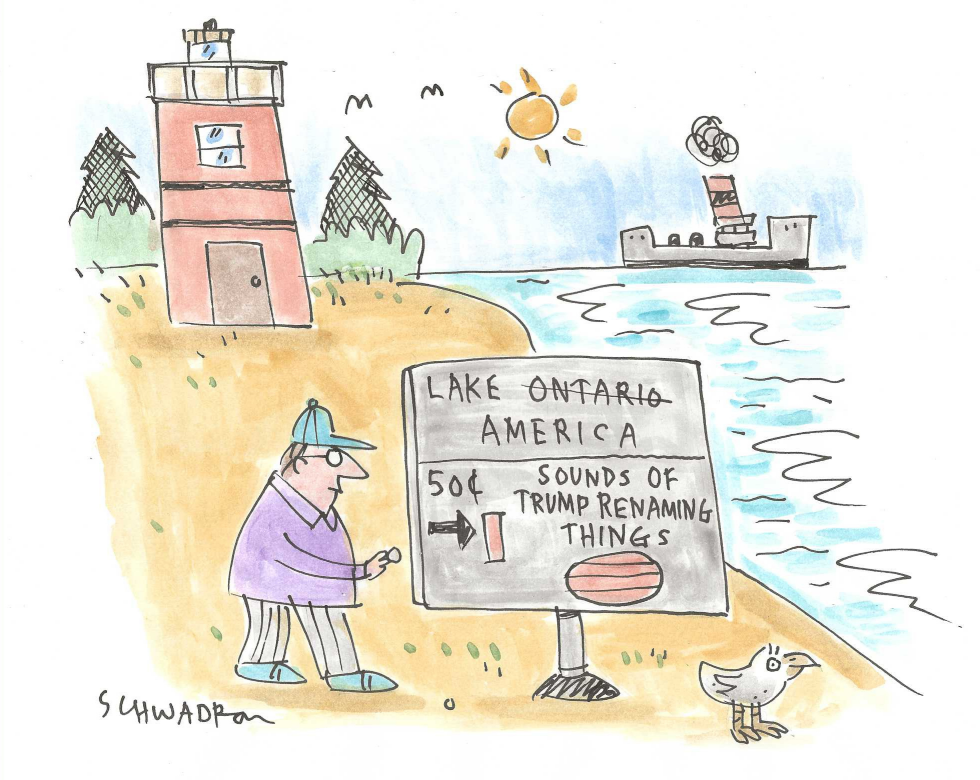
Donald Trump has floated renaming Lake Ontario as part of broader efforts to rebrand geographic features. The move fits a pattern of executive actions targeting names tied to prior administrations or international norms. Critics see it as unnecessary distraction while supporters view it as asserting American identity. The cartoon takes the position that such renaming efforts carry a tangible public cost and reflect repetitive branding impulses.
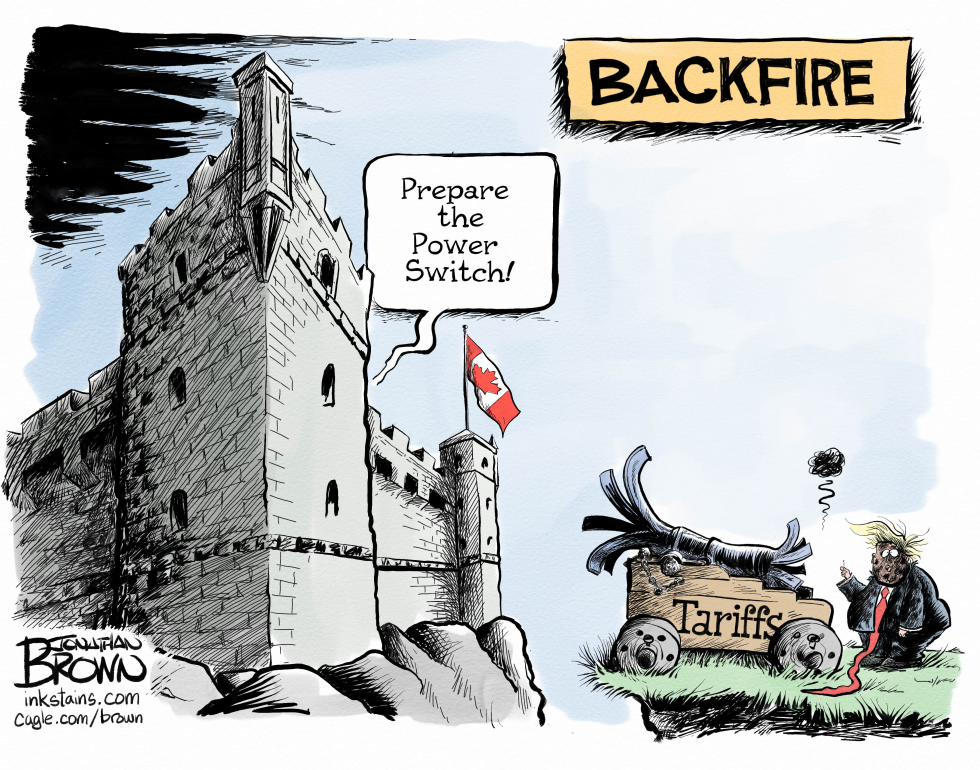
The cartoon shows a Canadian castle flying its flag while a cannon labeled Tariffs explodes backward toward a figure resembling Donald Trump. The scene responds to ongoing trade tensions where U.S. tariffs on Canadian goods prompted retaliatory measures. The visual emphasizes the policy rebounding on its originator rather than achieving intended pressure.
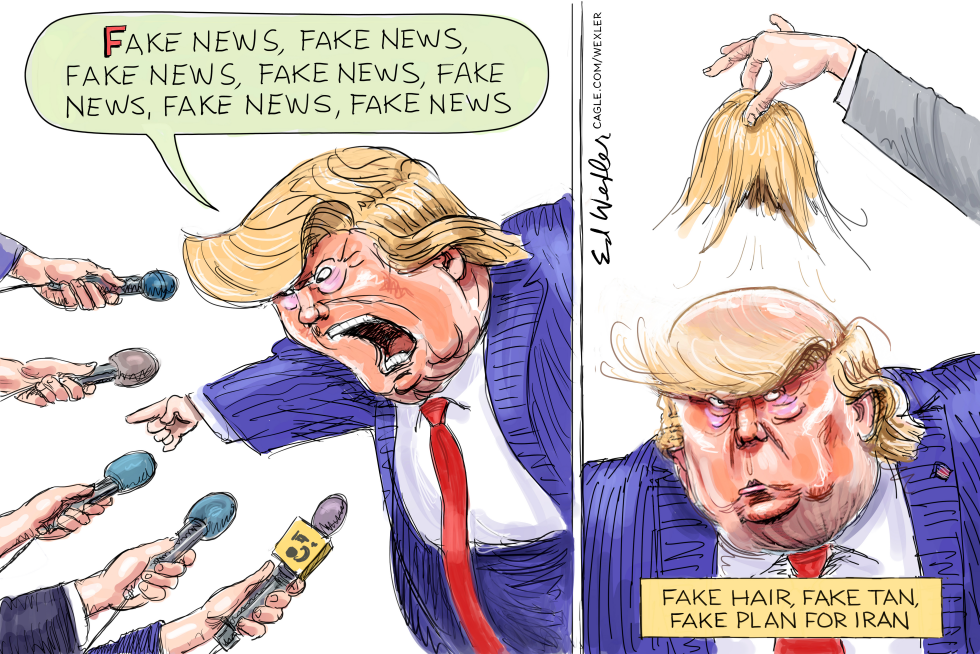
Donald Trump repeatedly labels media coverage as fake news during press encounters. The cartoon responds by questioning the authenticity of his appearance and his approach to Iran policy. It portrays the disconnect between his public statements and underlying realities.
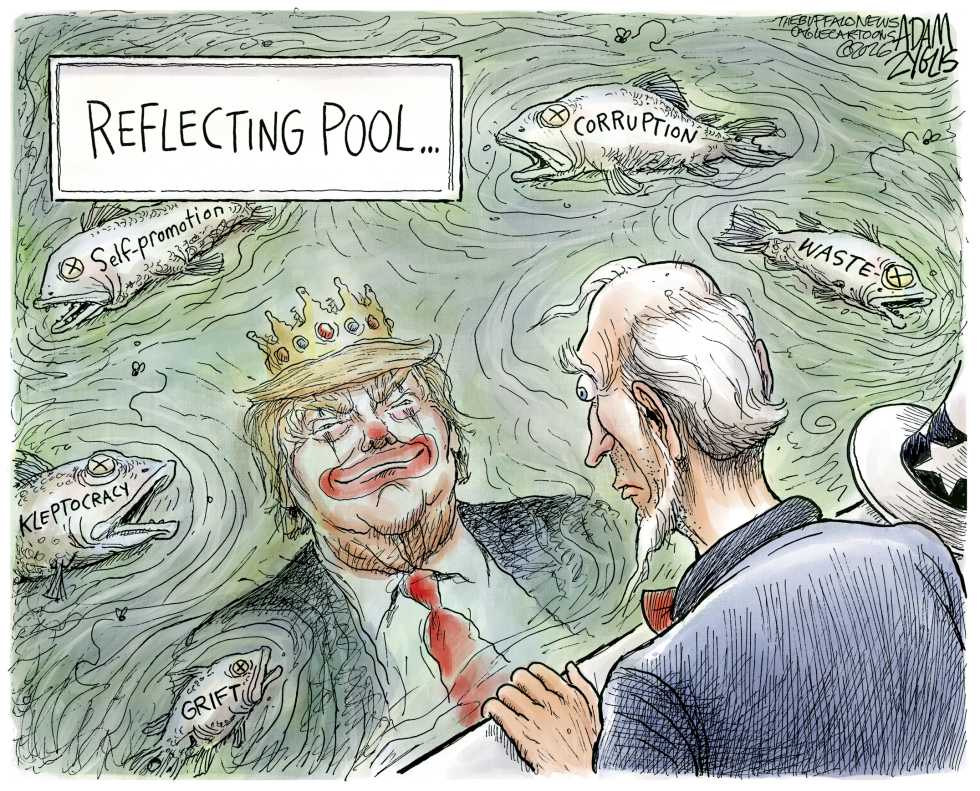
Accusations of kleptocracy and self-dealing have followed Donald Trump through multiple phases of his political career. Critics point to patterns of self-promotion and waste in government dealings. The cartoon frames these issues as dead fish surfacing in a reflecting pool, with Trump depicted wearing a crown and clown makeup while an older observer looks on. The editorial position criticizes Trump as emblematic of corruption and grift.
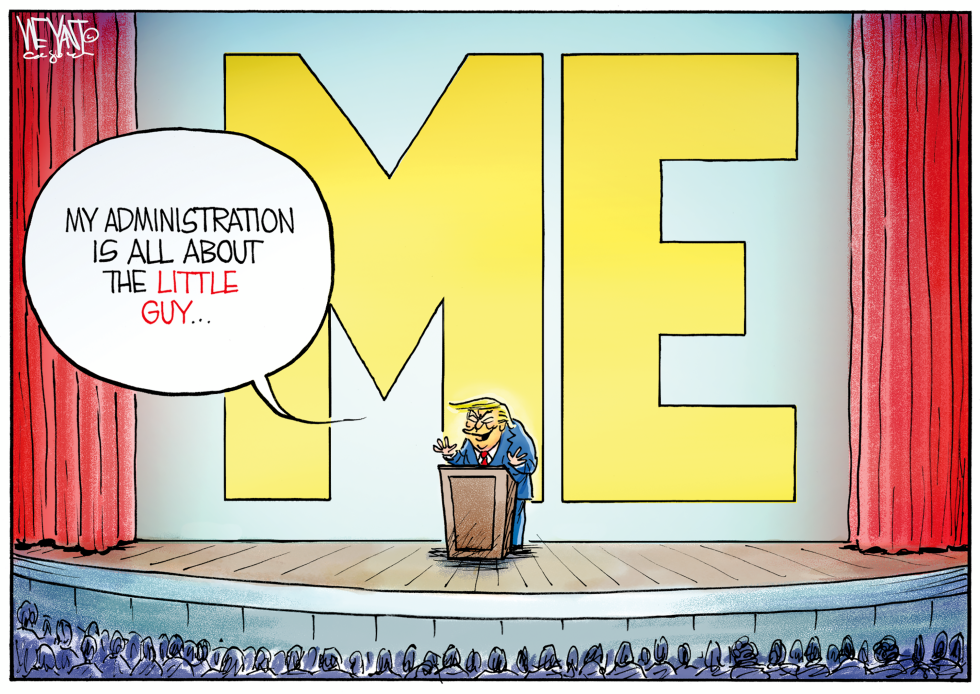
Donald Trump has repeatedly positioned his administration as champion of ordinary Americans during public addresses. The claim comes amid ongoing debates over policy priorities and personal branding in the White House. The piece portrays the rhetoric as centered on the speaker rather than the public.
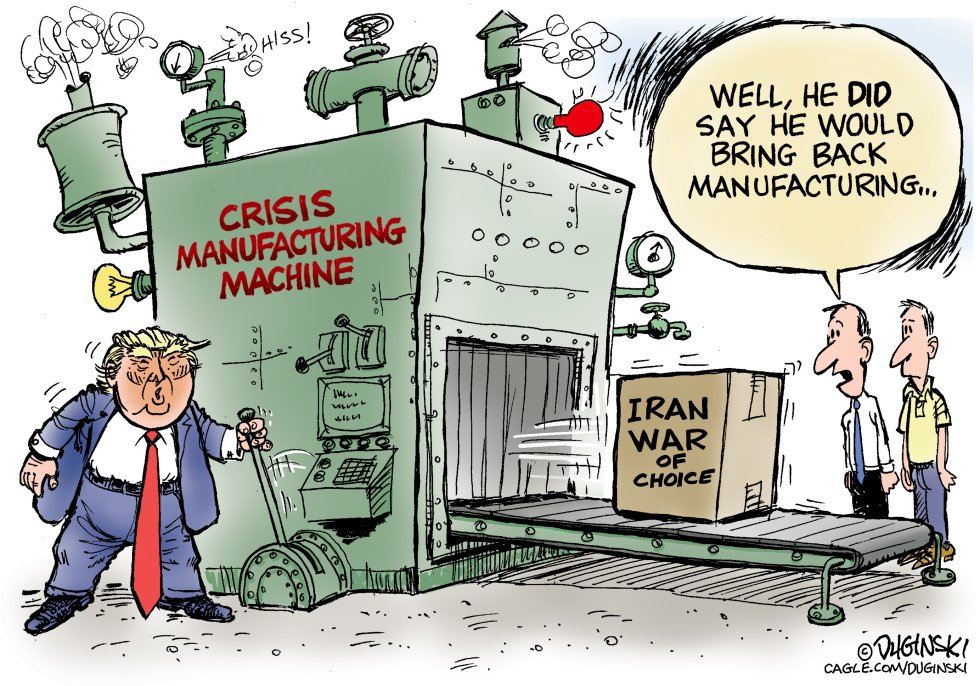
Donald Trump, holding the presidency in 2026, faces renewed scrutiny over foreign policy toward Iran. Recent statements revive campaign pledges to restore domestic manufacturing while tensions with Tehran escalate. The administration\\\'s approach draws criticism for prioritizing confrontation over diplomacy. Observers note the pattern of generating external crises rather than economic gains at home. The cartoon argues that Trump\\\'s actions fulfill a literal version of his manufacturing rhetoric by producing conflict instead of jobs.