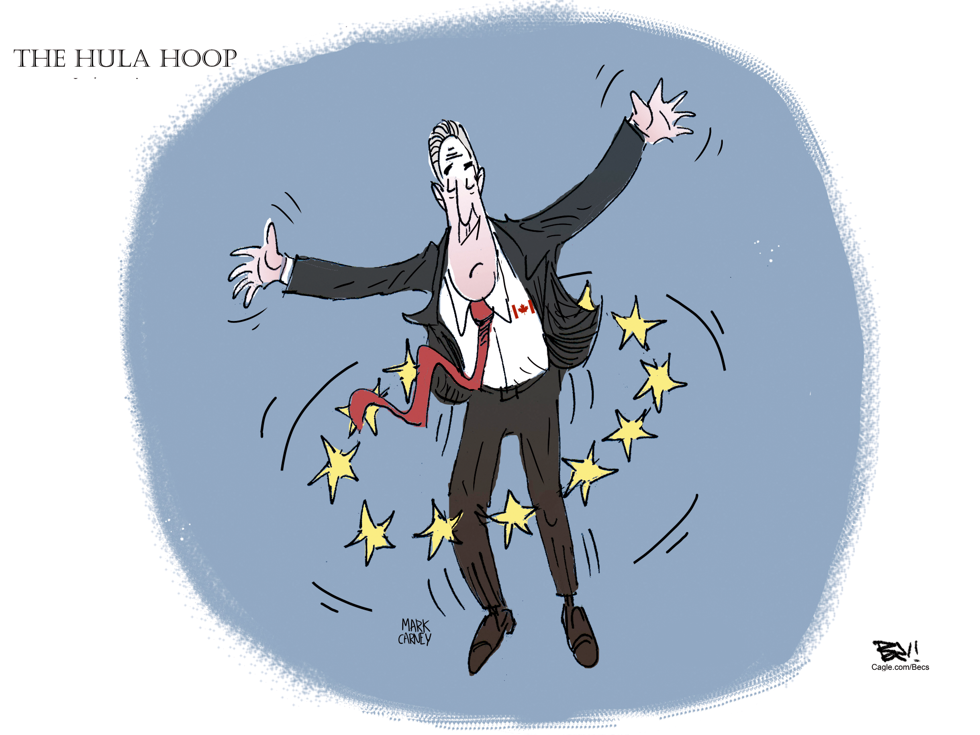
Mark Carney, a prominent Canadian figure with central banking experience, has positioned himself at the center of efforts to strengthen economic and diplomatic links between Canada and the European Union. Recent developments in trade negotiations and regulatory alignment have placed renewed focus on these ties, which matter for supply chains, investment flows, and geopolitical stability. The cartoon frames Carney's role as one of active management in this relationship, suggesting both opportunity and the need for careful coordination.
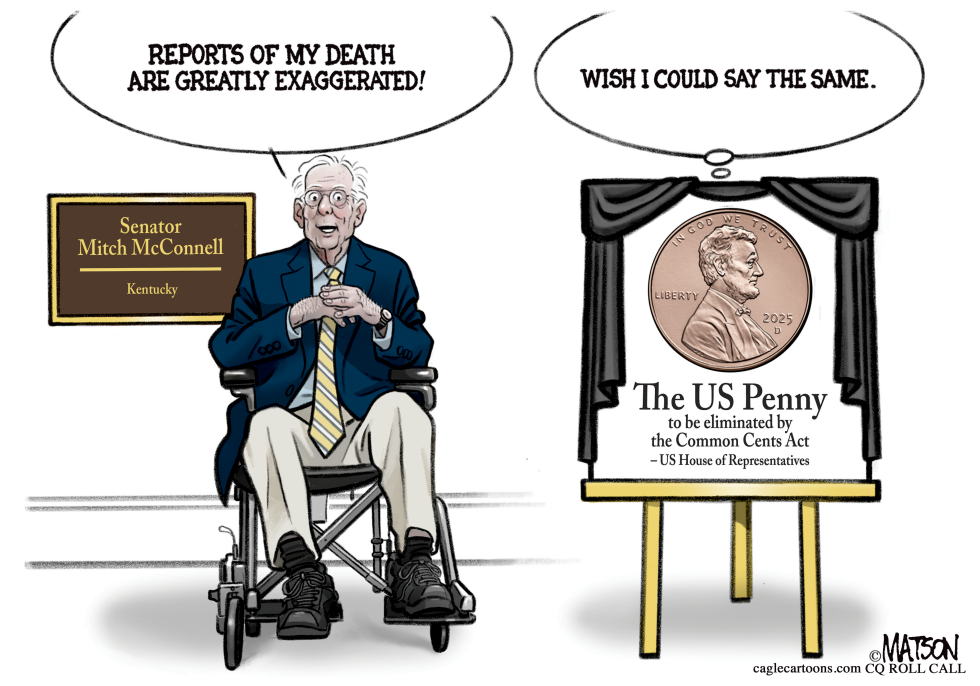
Senator Mitch McConnell returned to the Senate floor on September 15, 2026, after health-related absences, directly addressing rumors of his political demise. At the same time the House has advanced the Common Cents Act to eliminate the US penny. The move reflects ongoing efforts to modernize currency amid rising production costs. McConnell's return underscores his enduring influence in the chamber despite physical challenges. The cartoon uses a classic quote to juxtapose the senator's resilience against the penny's planned demise, suggesting one survives while the other does not.
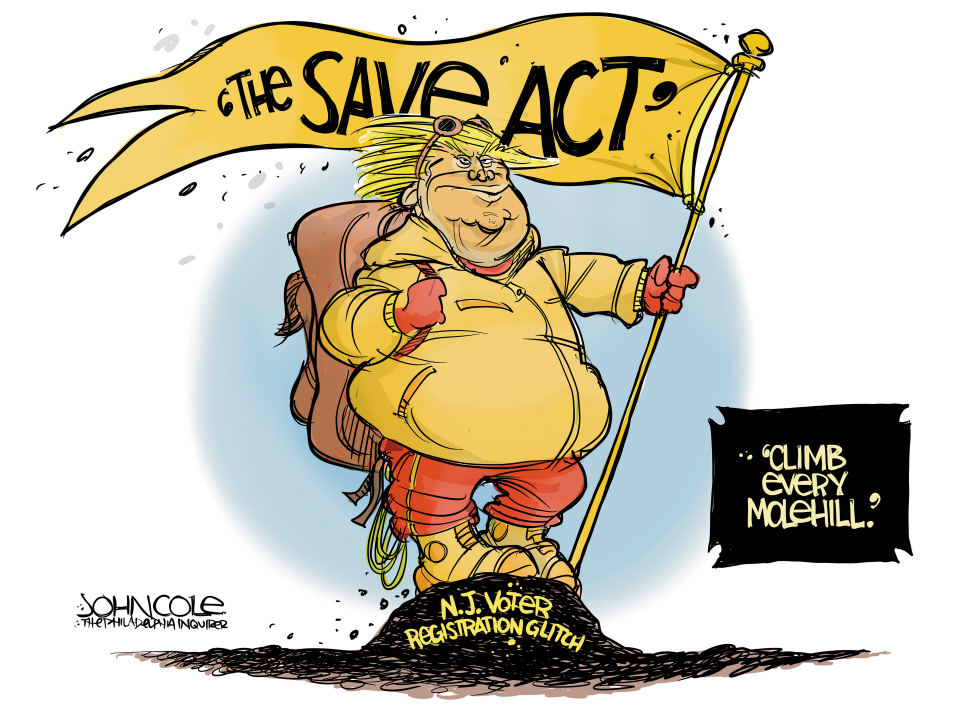
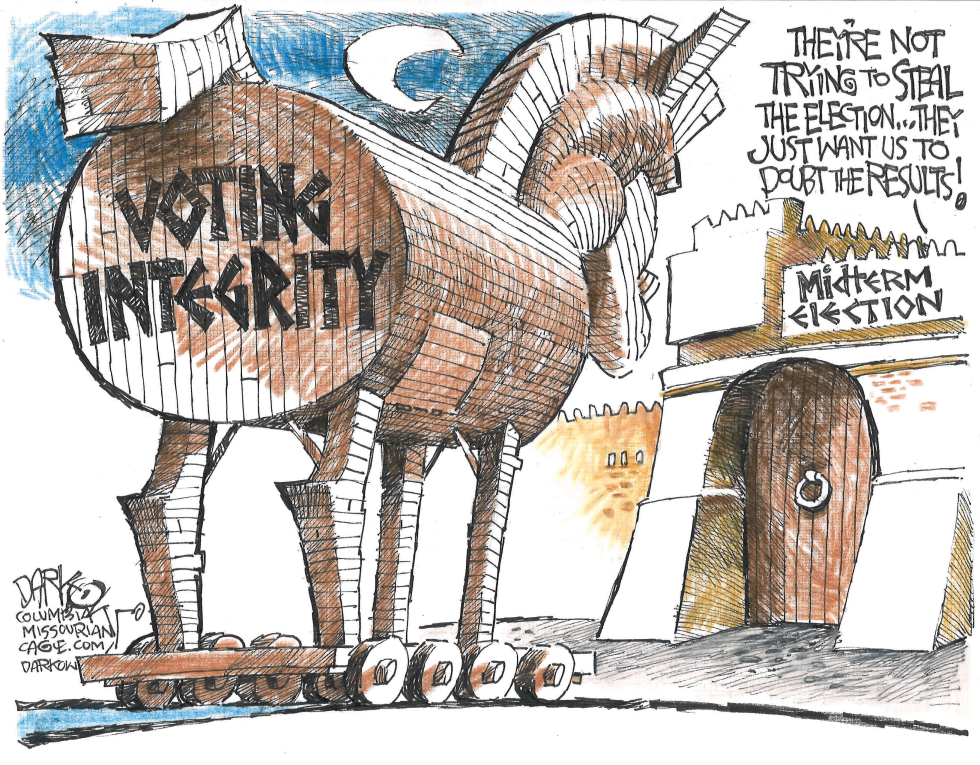
A minor voter registration glitch in New Jersey drew outsized attention from former President Trump and supporters of the SAVE Act in September 2026. The episode highlighted ongoing partisan disputes over election administration and voter ID rules. The cartoon portrays the reaction as an overreaction that turns a small problem into a symbolic crusade, arguing that such emphasis distracts from actual election security needs.
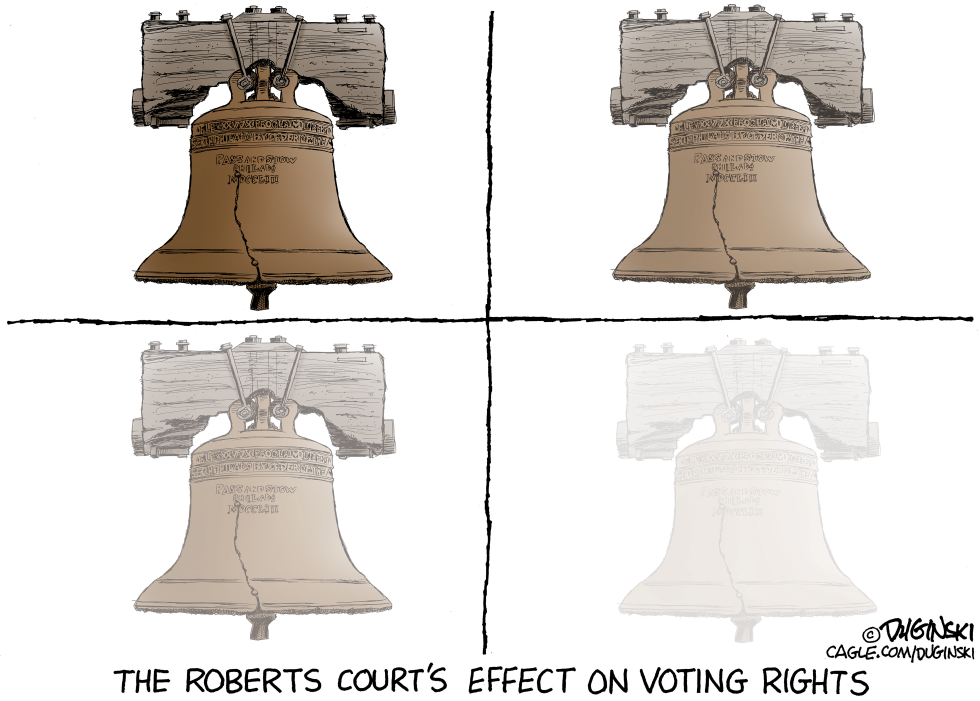
The Supreme Court under Chief Justice John Roberts has issued a series of decisions that have curtailed key provisions of the Voting Rights Act, most notably in Shelby County v. Holder and subsequent cases limiting federal oversight of state election laws. These rulings have shifted power to states, enabling new voting restrictions in multiple jurisdictions. The editorial cartoon frames this judicial trend as a deliberate fading of the Liberty Bell, a symbol of American liberty, to argue that the court's actions are systematically undermining voting access and protections established decades earlier.
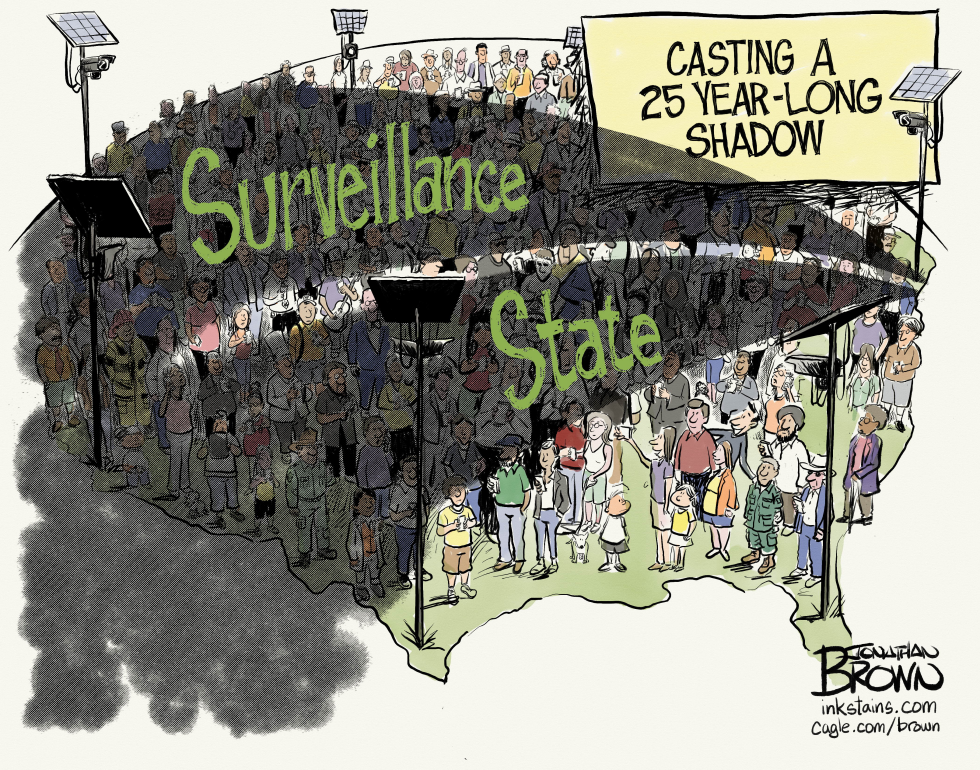
The cartoon depicts a dense crowd of Americans standing on a map of the United States, partially obscured by a large dark shadow cast by surveillance cameras mounted on poles. The words 'Surveillance State' appear prominently in green lettering across the scene, while a sign in the upper right reads 'CASTING A 25 YEAR-LONG SHADOW.' The image comments on the lasting effects of expanded government surveillance programs that began after the September 11 attacks, now spanning a quarter century. It illustrates how these measures continue to influence daily life and public spaces in 2026.
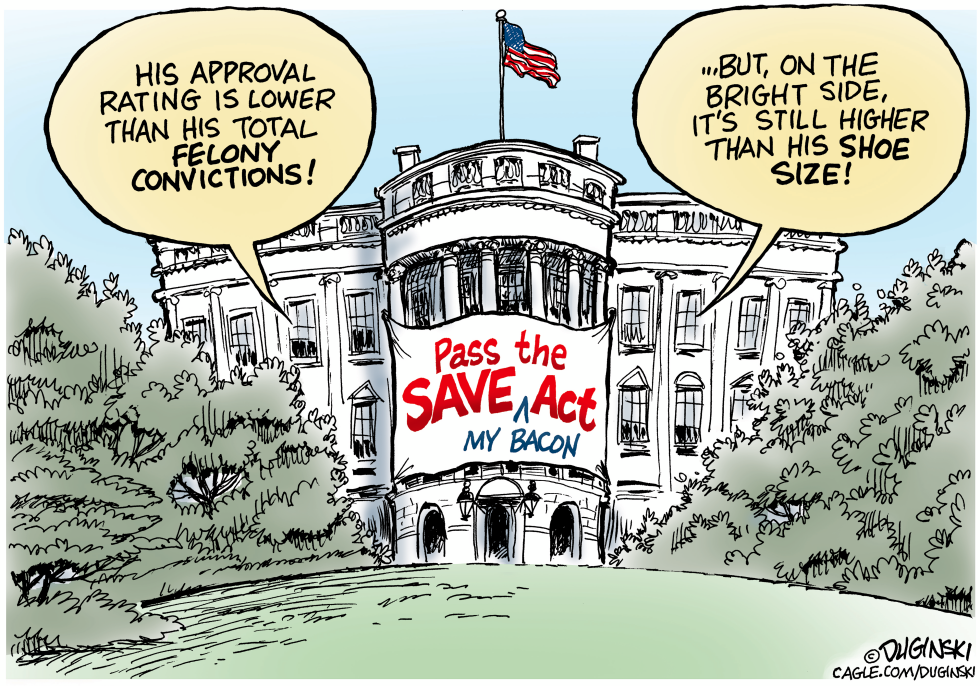
A president facing historically low approval ratings tied to prior felony convictions pushes the SAVE Act through Congress in late summer 2026. The legislation aims to require proof of citizenship for federal voting. The editorial view holds that the effort serves mainly as a lifeline for an embattled administration rather than a substantive reform.
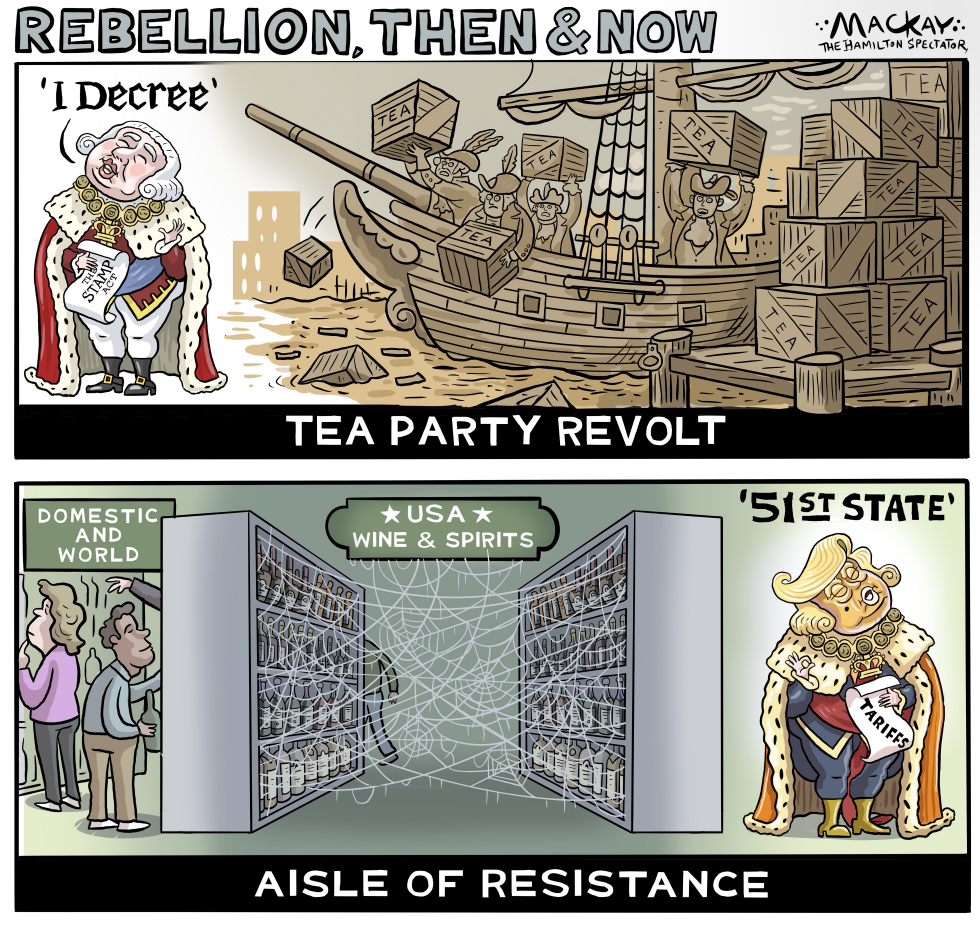
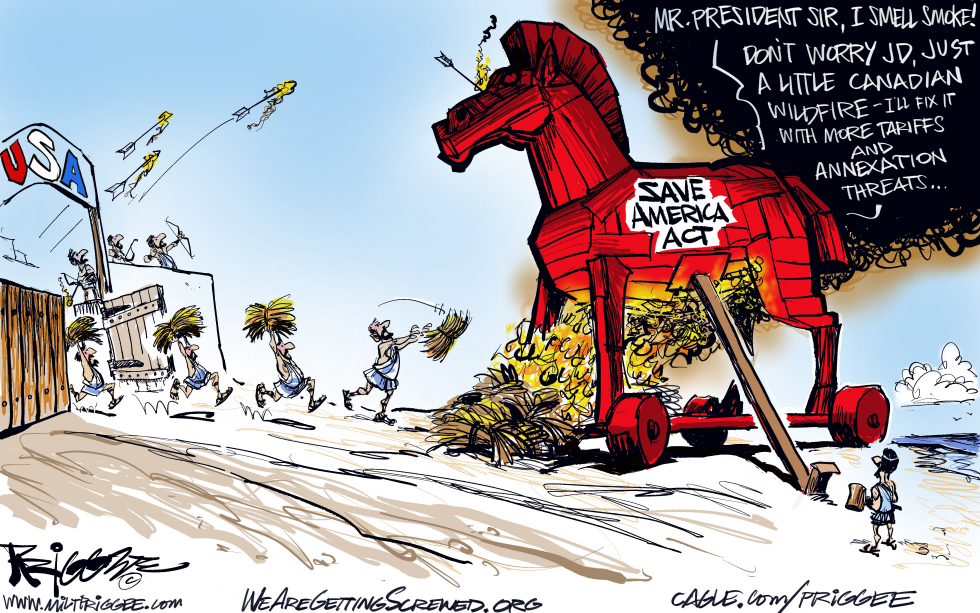
President Trump renewed tariff threats against Canada while floating the idea of the country becoming the 51st state. Canadian consumers responded with a boycott of American wine and spirits, leaving store shelves empty. The cartoon draws a parallel to the Boston Tea Party, casting the tariff policy as a modern decree provoking resistance.
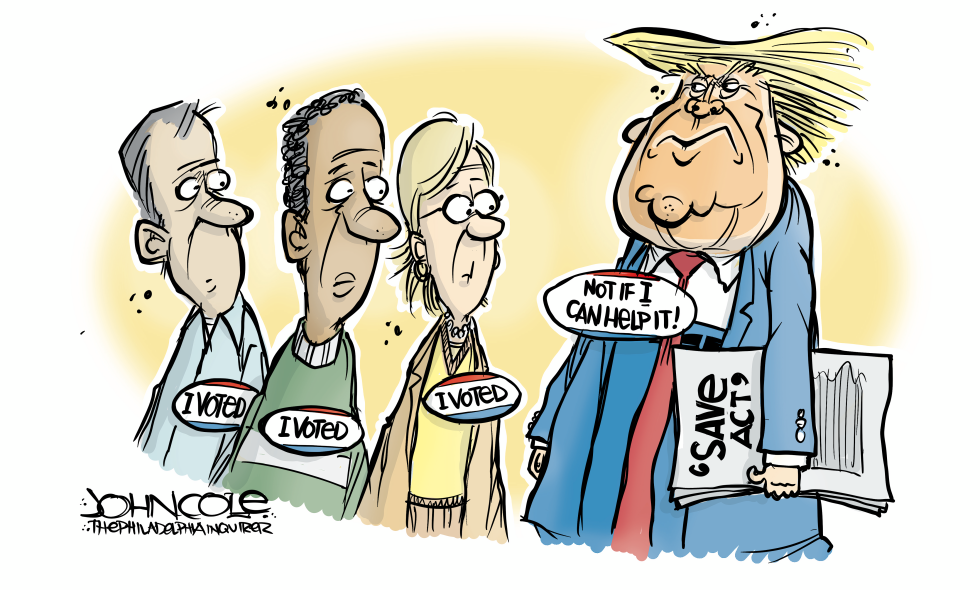
The cartoon shows Donald Trump on the right clutching documents labeled SAVE Act and declaring through a speech bubble, 'NOT IF I CAN HELP IT!' Three voters on the left, an older white man, a Black man and a white woman, each wear prominent I Voted stickers. The composition contrasts the former president's stance against the visible participation of citizens in elections. Published August 16, 2026, the image addresses Trump's resistance to the SAVE Act, a measure aimed at strengthening voter identification requirements. The visual places emphasis on the disconnect between voter engagement and political opposition to related legislation.
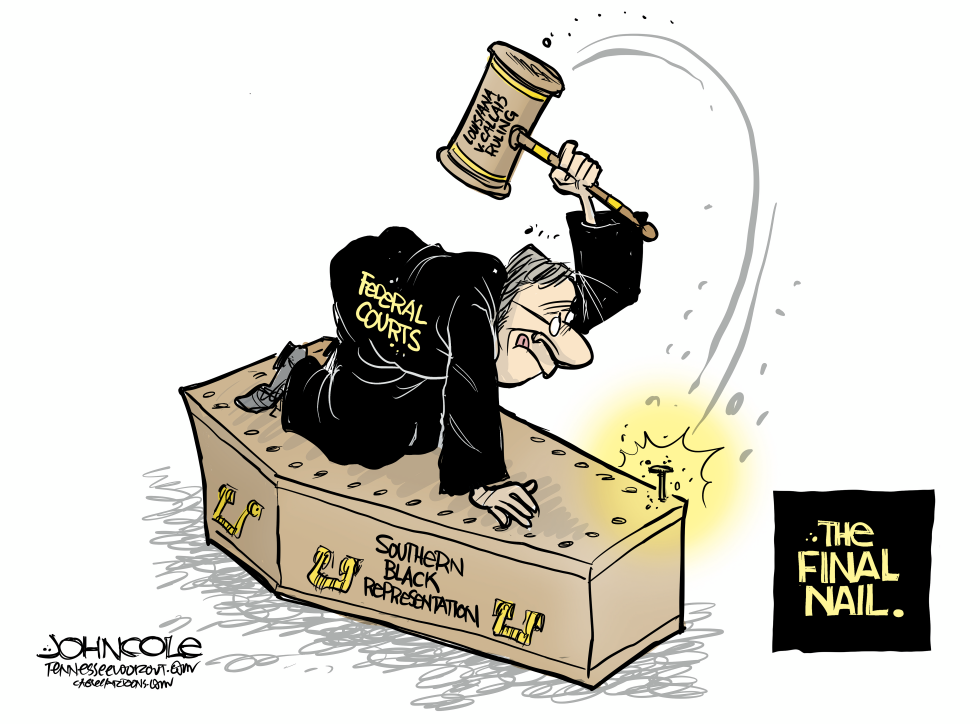
A federal court ruling on Louisiana redistricting has reduced black congressional representation across southern states. The decision follows ongoing litigation over district maps and voting access. It matters because it alters the number of majority-minority seats available in Congress. The piece argues the ruling delivers a decisive setback to those representation gains.
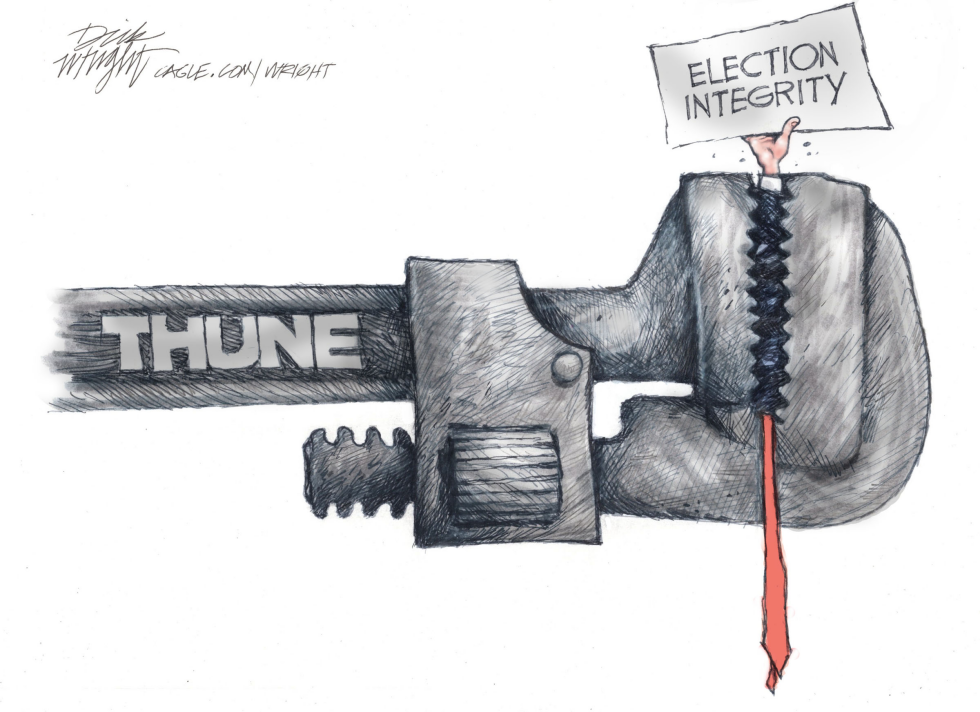
Senate Majority Leader John Thune has placed a procedural hold on the Save America Act, preventing a floor vote on election integrity reforms. The move comes amid ongoing partisan disputes over voting procedures and certification standards. The cartoon portrays Thune as deliberately stalling the measure through institutional leverage.
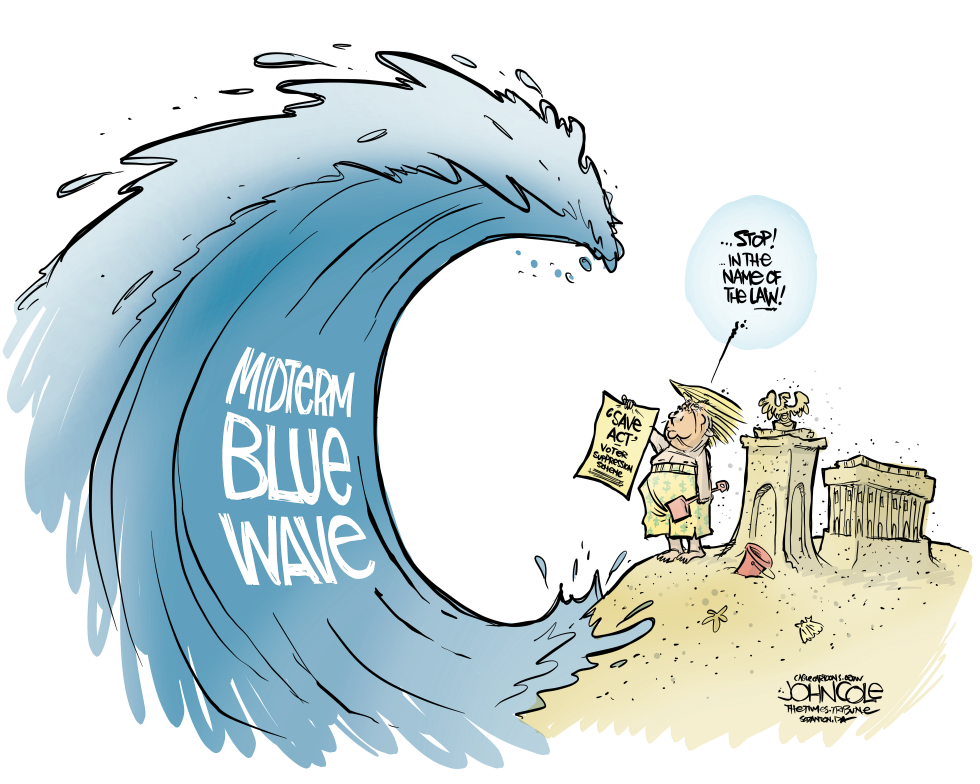
A large midterm electoral surge is projected to challenge Republican-backed election measures including the Save Act ahead of the 2026 contests. The legislation aims to require proof of citizenship for federal voting. Democrats argue the requirements amount to suppression tactics that could disenfranchise eligible voters. Republicans maintain the rules protect election integrity against fraud. The cartoon frames the Save Act defender as standing firm with a law banner while the wave approaches the Capitol steps.
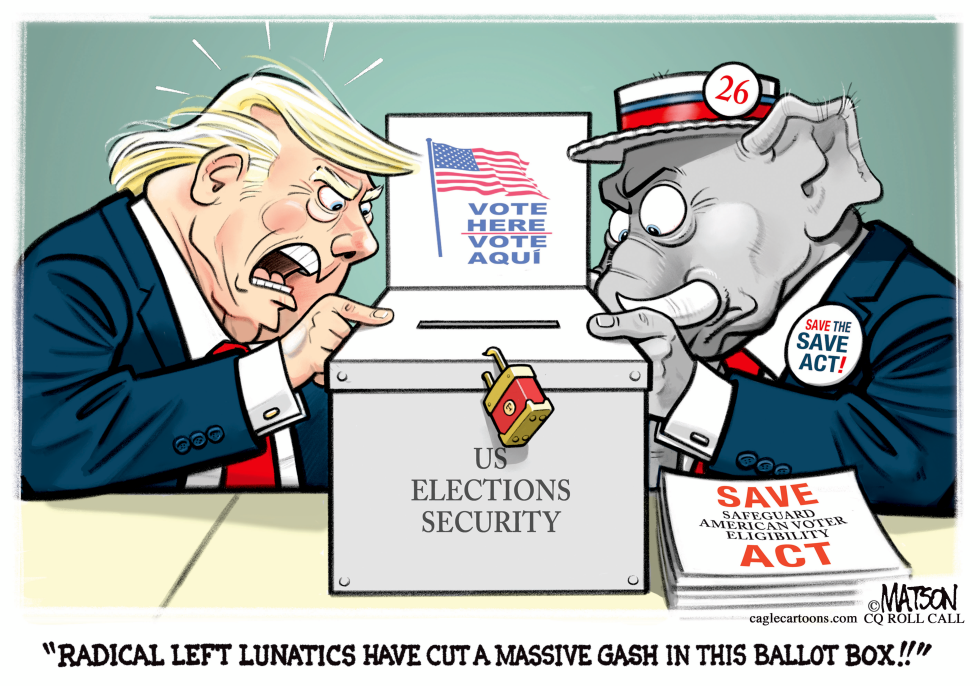
Donald Trump publicly blamed radical left activists for damaging a U.S. elections security ballot box days before key votes on the SAVE Act. The legislation aims to require proof of citizenship for federal voting. Republicans argue the measure prevents fraud while Democrats call it voter suppression. The cartoon frames the debate as partisan finger-pointing over basic safeguards.
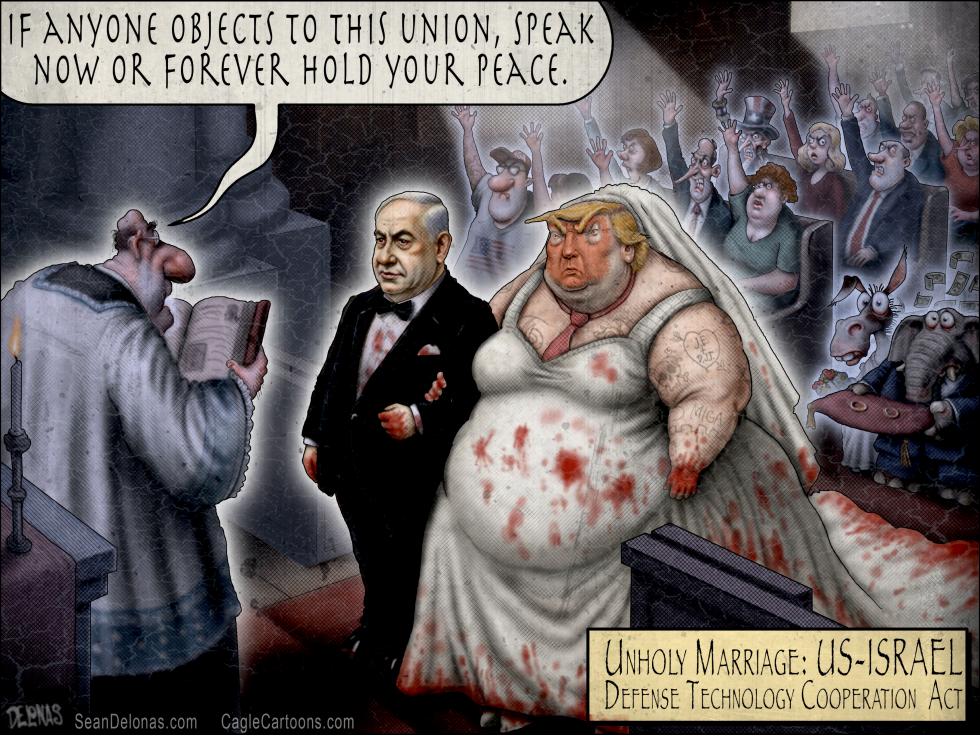
The US-Israel Defense Technology Cooperation Act advances closer military ties between Washington and Jerusalem under the Trump administration. The legislation expands joint technology development and funding streams. Critics view the strengthened partnership as overly entangled and lacking sufficient oversight. The cartoon casts the relationship as an unholy marriage marked by visible stains and public dissent.