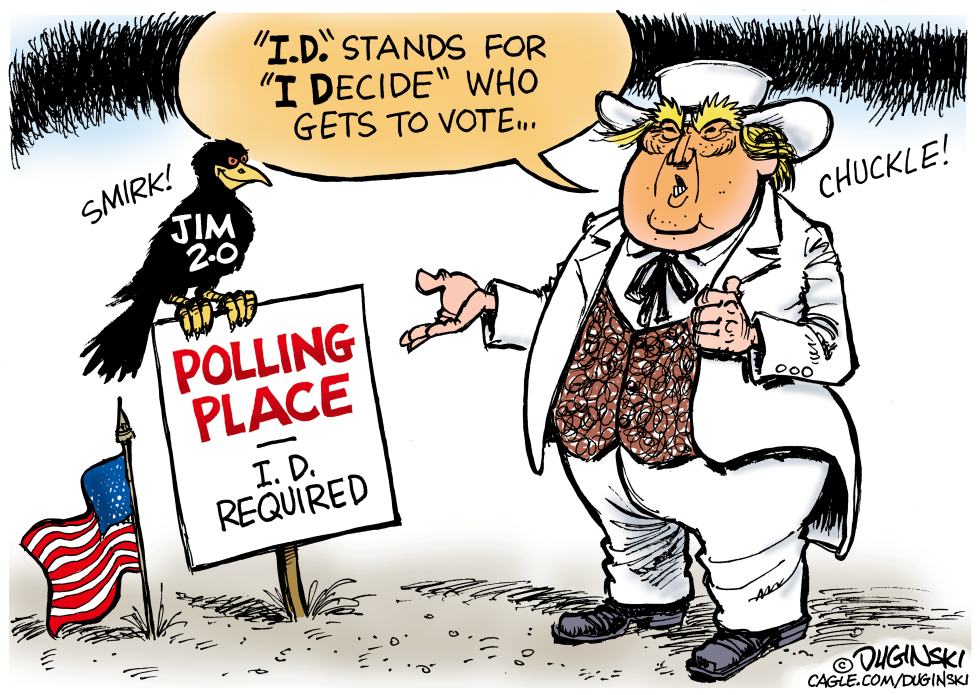
A new political cartoon depicts Donald Trump redefining voter ID requirements at a polling place. The former president, shown in a white suit and hat, gestures toward a sign stating I.D. REQUIRED while a bird labeled JIM 2.0 smirks nearby. The bird's speech bubble states that I.D. stands for I DECIDE who gets to vote. Trump chuckles at the line. The image, published July 8, 2026, uses the Jim Crow reference to comment on ongoing debates over voter identification laws and access to the ballot. The cartoon ties the visual to concerns that such rules could limit participation in elections.
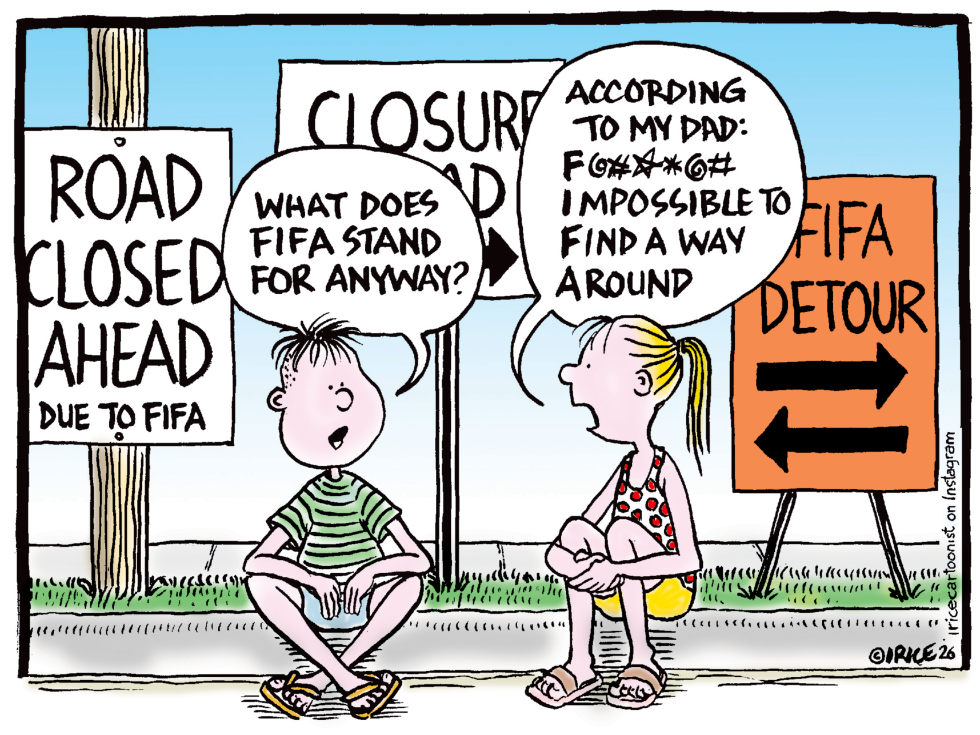
A cartoon shows two children seated beside road closure and detour signs tied to a FIFA event. One child asks what the acronym stands for while the other relays a frustrated, censored remark from a parent about finding alternate routes.
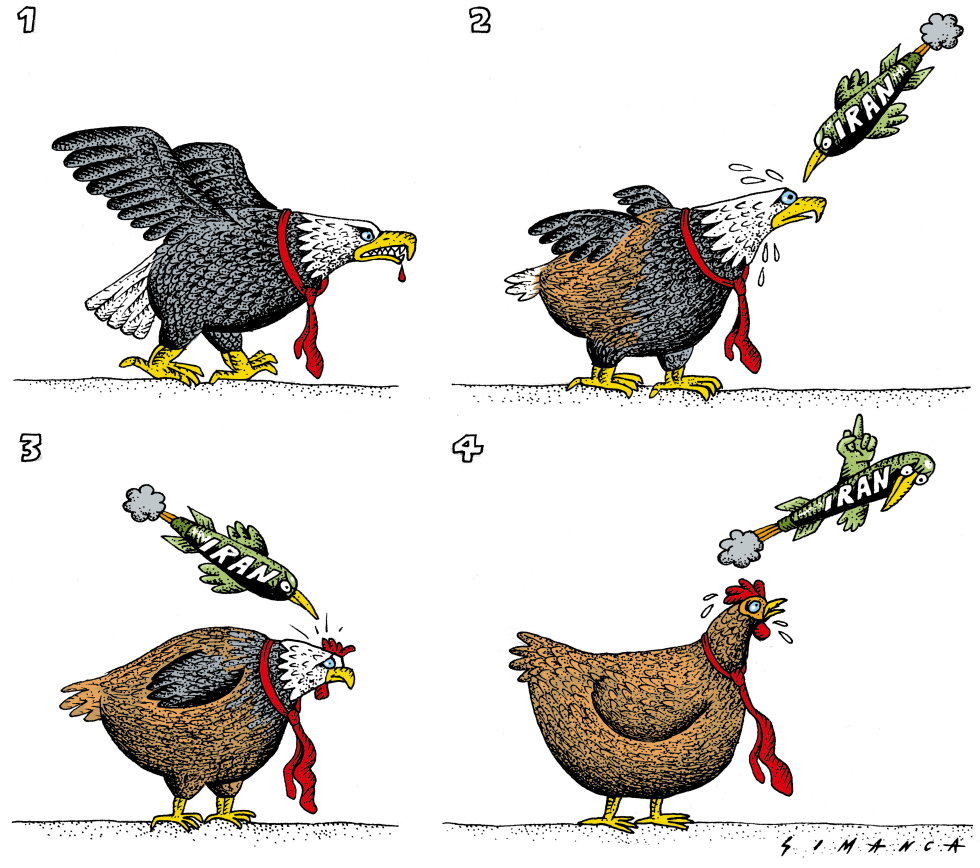
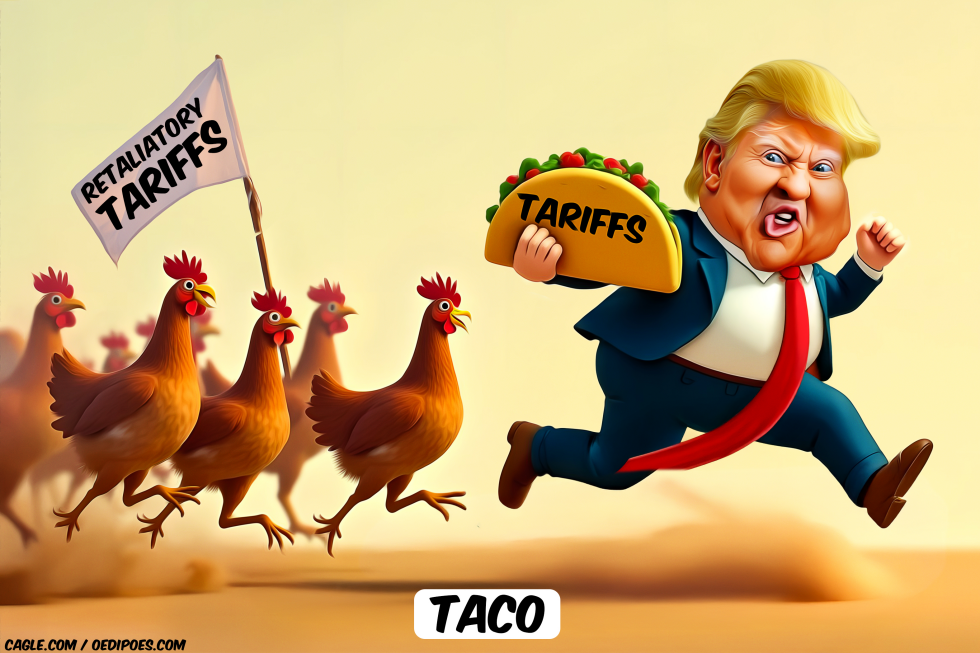
The cartoon illustrates a four-panel progression where an American eagle wearing a red tie transforms into a chicken as an Iran-labeled missile approaches and passes. It responds to recent developments in U.S.-Iran tensions by employing the TACO acronym to suggest hesitation. The work captures the shift from aggressive posture to withdrawal under pressure.
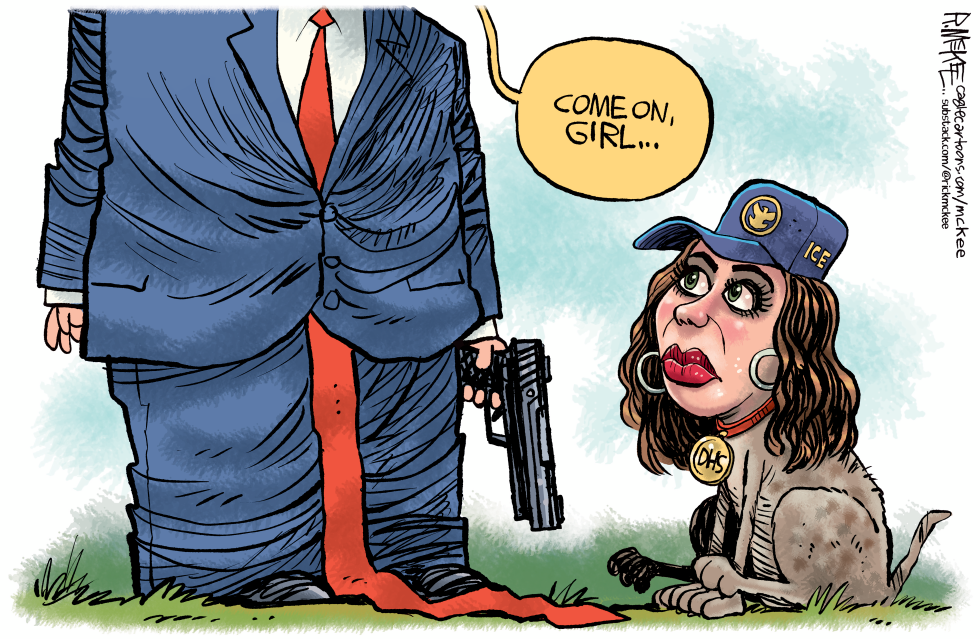
This political cartoon features Donald Trump coaxing a dog-like figure with Alexandria Ocasio-Cortez's face, donned in an ICE cap and DHS tag, gripping a gun on a leash— a sharp satire on immigration enforcement and border control. The image lampoons the Trump administration's hardline stance on deportation and US politics, using caricature to underscore the dehumanizing aspects of border patrol. With elements of political humor, it critiques how figures like AOC are portrayed in opposition, blending viral meme potential with editorial cartoon flair. The scene evokes questions about power dynamics in immigration policy, making it a timely piece for discussions on satire and governance.
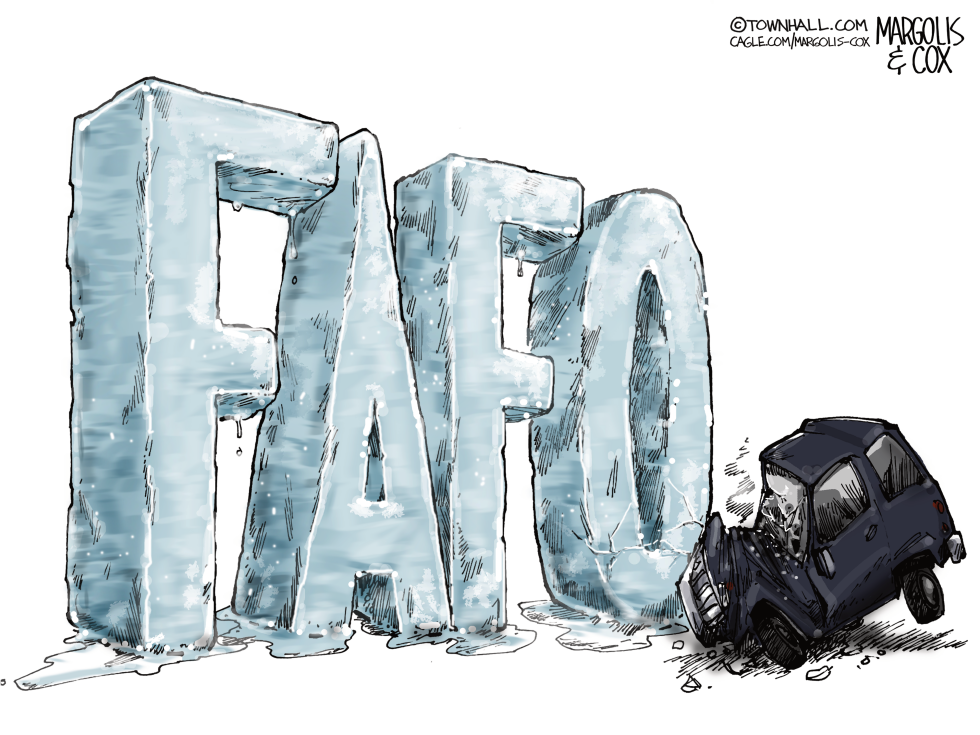
A political cartoon shows a car crashing into a massive ice sculpture spelling FAFO. The image responds to recent incidents involving attacks on ICE agents in sanctuary cities like Minneapolis. The visual uses the acronym to signal consequences for such actions.
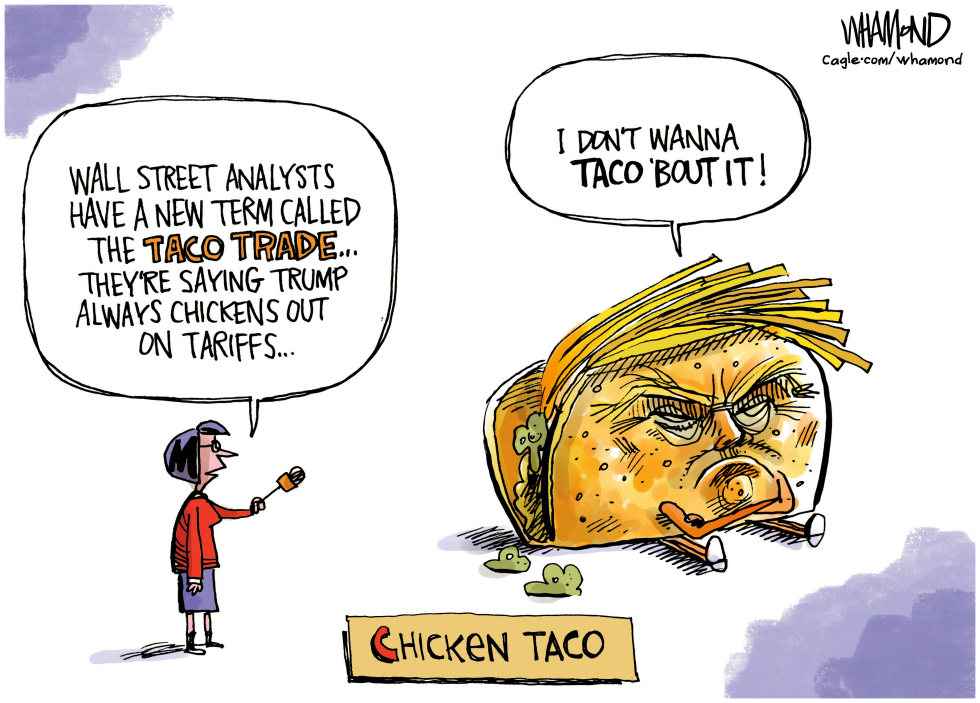
On May 28, 2025, a cartoon depicts Donald Trump as a chicken taco responding to questions about tariff policy. Wall Street analysts have coined the TACO trade acronym for repeated retreats on tariffs. The figure denies wanting to discuss the pattern while surrounded by dropped chicken pieces.
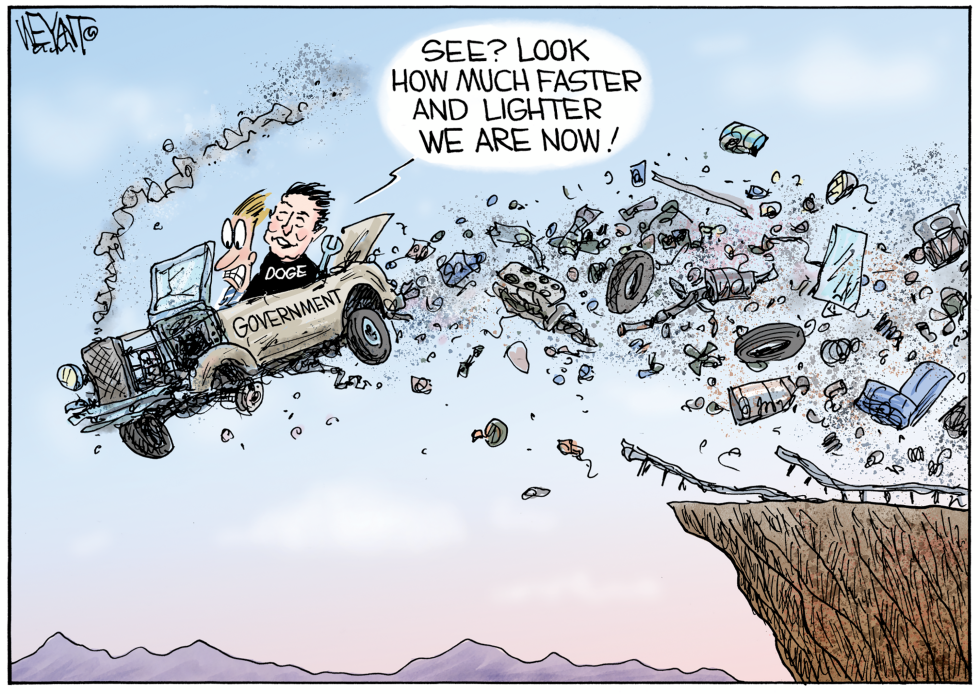
The cartoon published February 28 2025 shows Elon Musk and a companion in a stripped government vehicle labeled DOGE and GOVERNMENT. The vehicle flies off a cliff while shedding parts including wheels and panels. A speech bubble claims the vehicle is now faster and lighter. The image responds to the Trump administration's Department of Government Efficiency initiative targeting federal spending and workforce reductions at agencies including USAID NOAA and the Department of Defense.
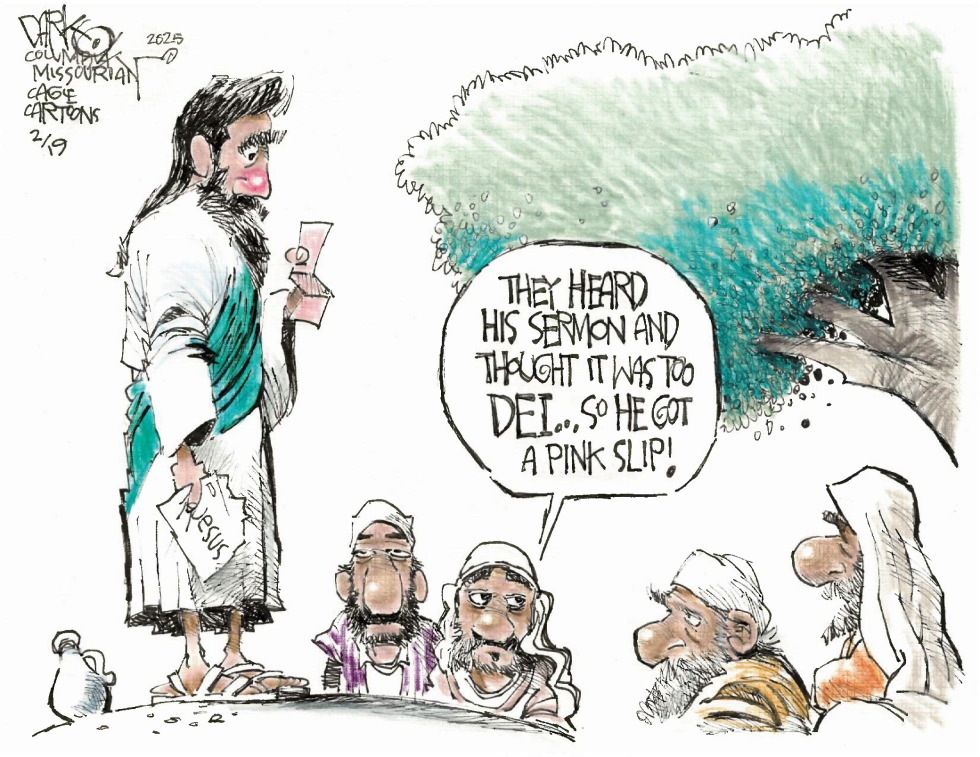
John Darkow's political cartoon portrays a bearded figure resembling Jesus, dressed in robes, holding a pink slip marked 'Jesus' while three seated men in ancient attire discuss his dismissal. One says, 'They heard his sermon and thought it was too DEI... so he got a pink slip!' The scene includes a bush and a jug, set against a simple background. This piece satirizes DEI initiatives by applying them to a biblical context, highlighting perceived overreach in diversity, equity, and inclusion efforts. The dry humor underscores tensions in modern politics, where traditional messages clash with contemporary standards. Tags like political cartoon jesus dei and satirical cartoon pink slip jesus capture its essence for SEO.
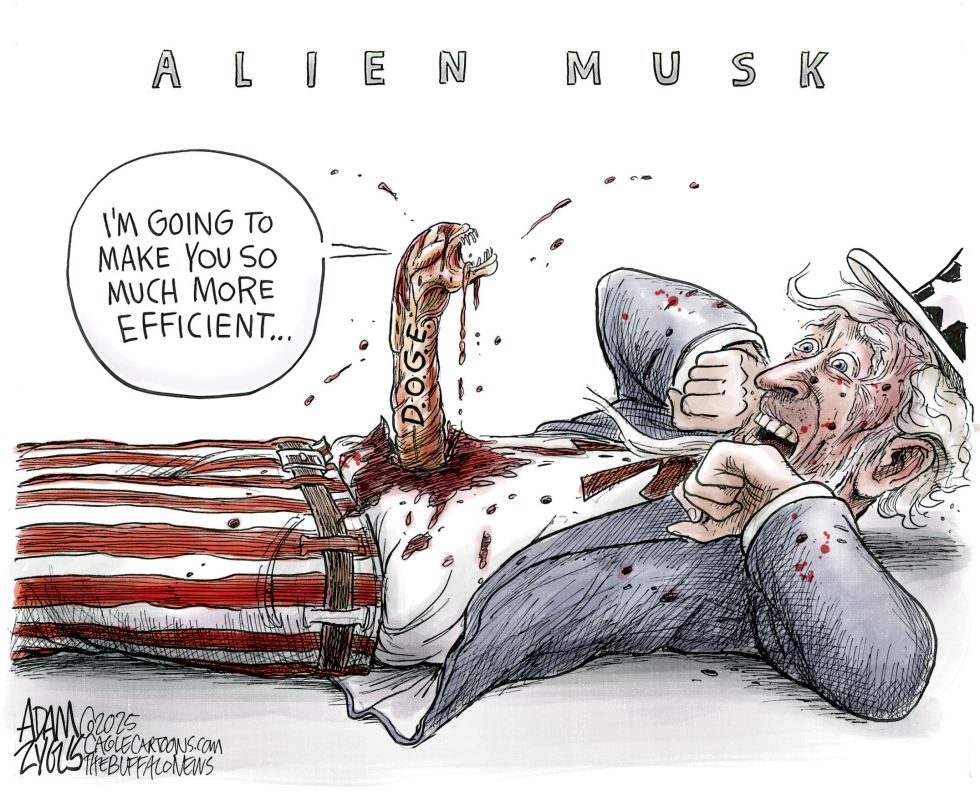
The cartoon shows Uncle Sam supine and bloodied with a DOGE-labeled arm impaling his torso. Elon Musk appears as an alien intruder delivering an efficiency promise through the wound. The image responds to the February 2025 launch of the Department of Government Efficiency under the Trump administration. Musk and Vivek Ramaswamy were tasked with identifying major spending reductions across federal agencies including USAID and Treasury operations. The visual frames those cuts as an external assault on core government functions rather than routine reform.