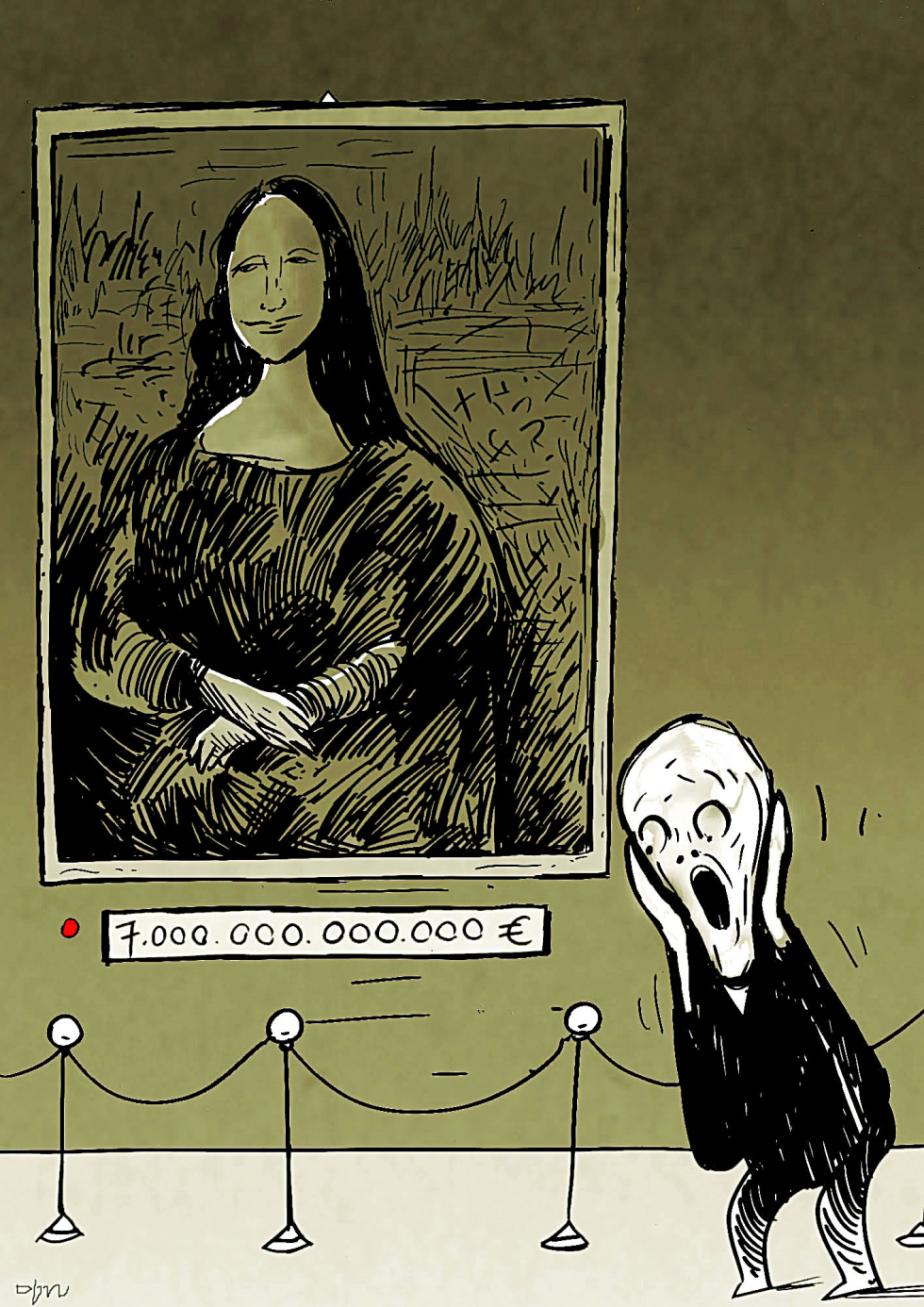
The Mona Lisa receives an eye-popping valuation of seven trillion euros in a museum setting. The figure in the image conveys immediate disbelief at the figure. The piece highlights ongoing debates over astronomical art market prices for cultural treasures.
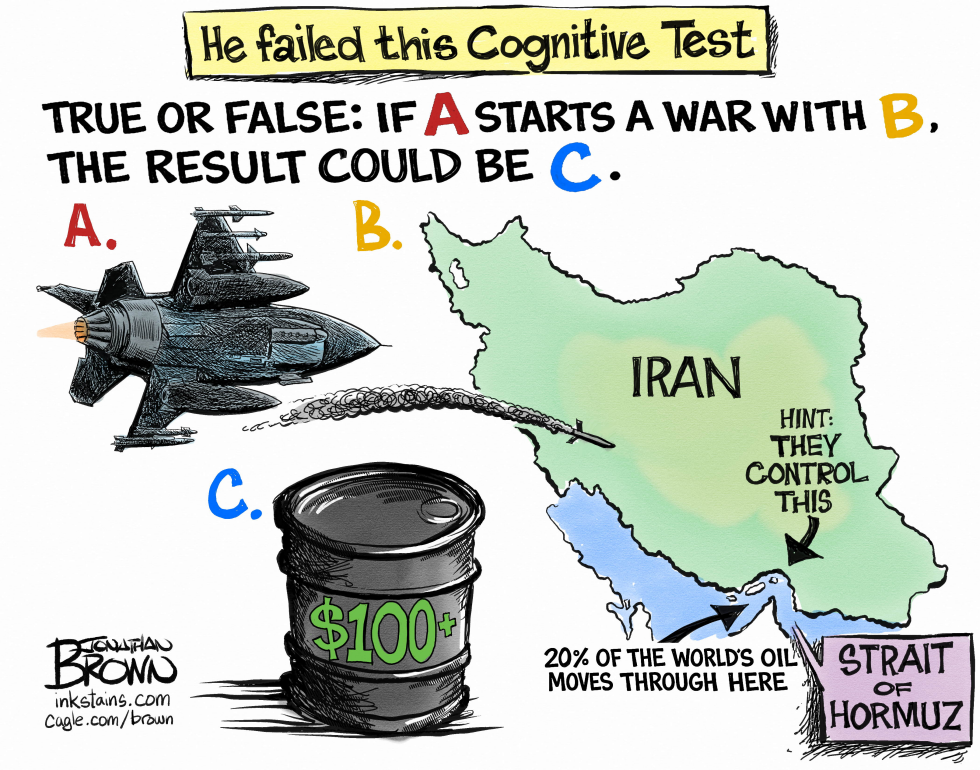
Jonathan Brown's cartoon presents a stark true-or-false cognitive test: if A (a fighter jet) starts a war with B (Iran), the result could be C (an oil barrel marked $100+). The map of Iran includes a hint pointing to the Strait of Hormuz, noting that 20% of the world's oil moves through there, underscoring control over this chokepoint. Tags such as cognitive test, war in Iran, oil prices, Strait of Hormuz, gas prices, and cost of war frame the satire. The artwork warns of economic fallout from conflict, with the jet trailing toward Iran and the oil barrel symbolizing surging costs. This piece captures geopolitical tensions in a simple, visual riddle.
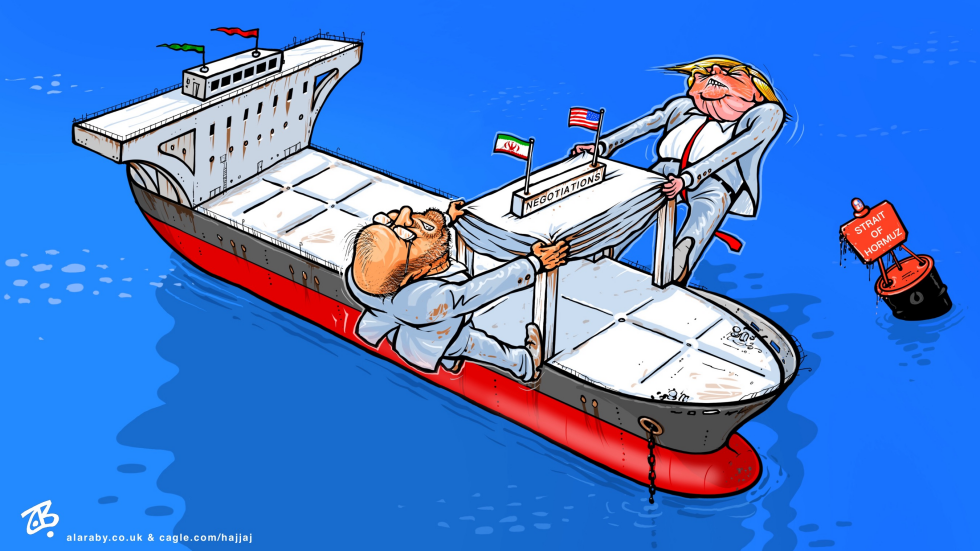
Emad Hajjaj\'s cartoon captures the tense Hormuz Strait negotiations between Trump and an Iranian figure on a massive tanker ship flying US and Iran flags. The scene shows them balancing a \'NEGOTIATIONS\' table on the tilting vessel, with an anchor chain and a leaking \'Strait of Hormuz\' buoy spilling oil. This Gulf war satire highlights the precarious talks amid potential sea block, where the ship appears damaged and unstable. Tags like ship, anchor, Gulf, war, tanker, talks underscore the maritime conflict theme. The dry humor lies in the literal sinking of diplomatic efforts.
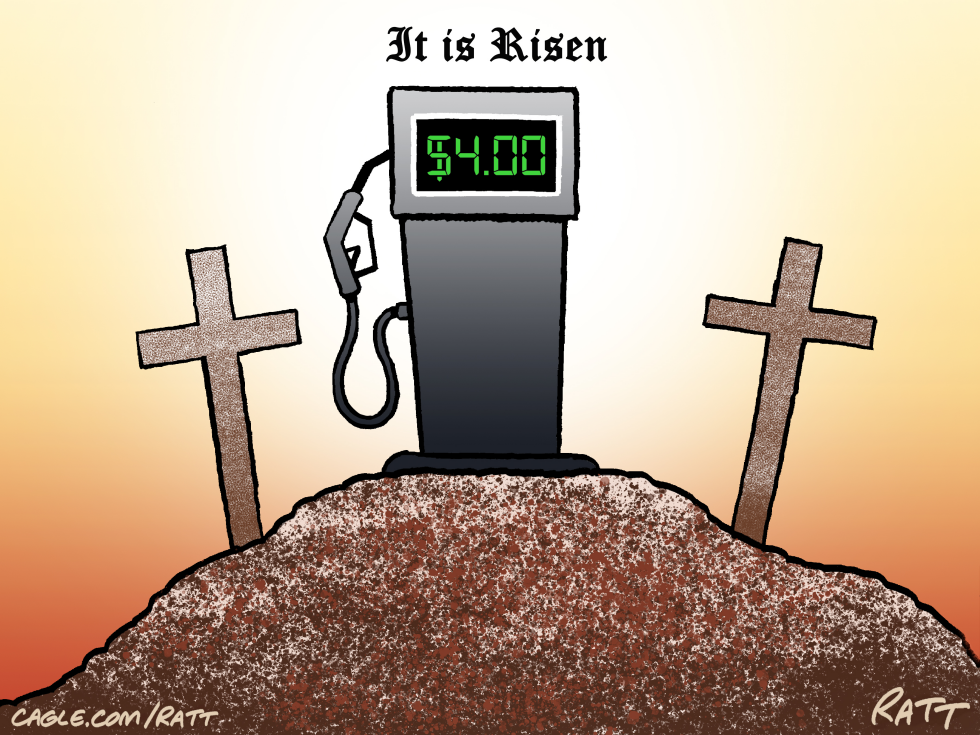
Ratt's cartoon captures Easter in America 2026 with a gas pump standing in for the central cross on a Calvary hill, showing $4.00 on its display and the text 'It is Risen' above, playing on rising gas prices. Tags like Easter, gas prices, oil, Iran war, and Strait of Hormuz suggest a future where geopolitical tensions drive fuel costs skyward. The artwork uses simple lines and a sunset background to evoke the biblical scene, but replaces resurrection with economic pain. This satire highlights how global events, including potential conflicts in the Strait of Hormuz, could lead to exorbitant oil prices by 2026. The dry humor underscores American dependence on foreign oil, making the cartoon timely and shareable amid ongoing energy debates.
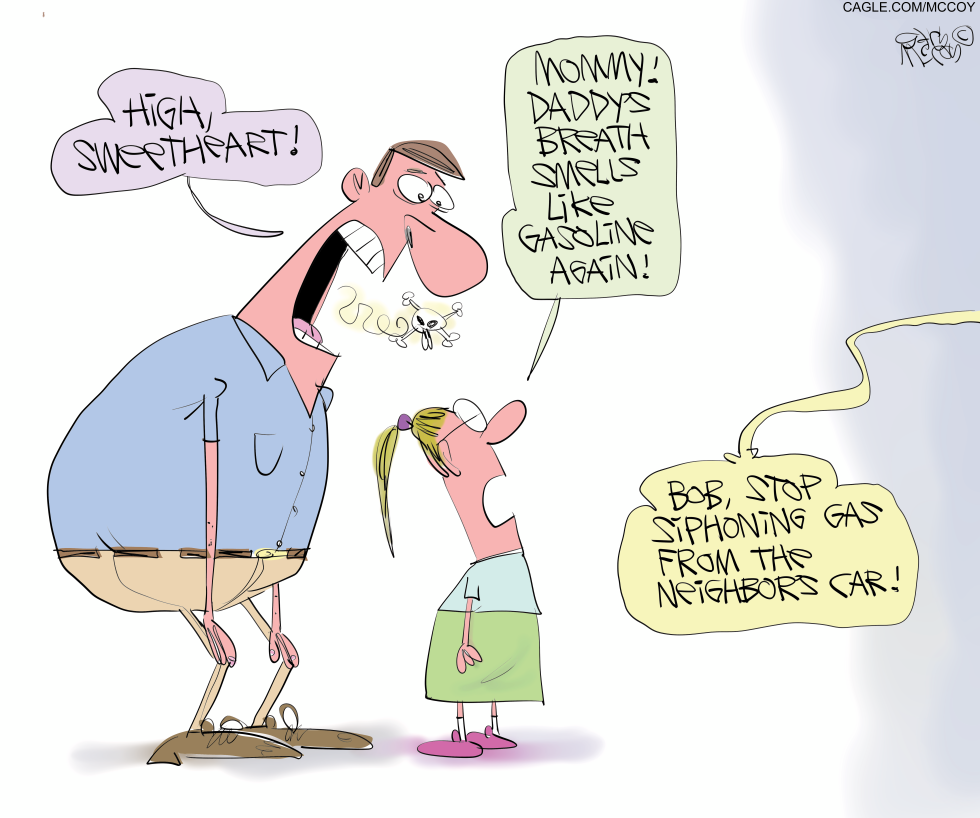
Gary McCoy nails the absurdity of high gas prices in this political cartoon where a dad's breath smells like gasoline after siphoning from the neighbor's car. The daughter's complaint to mommy and the wife's scolding of Bob bring dry humor to economic hardship. Satire on fuel costs and inflation hits home, showing family reactions to desperate measures. Theft due to rising expenses gets a witty twist, making the cartoon sharable amid 2026 gas crisis talks. Cartoonists like McCoy keep it real with straightforward jabs at everyday struggles.
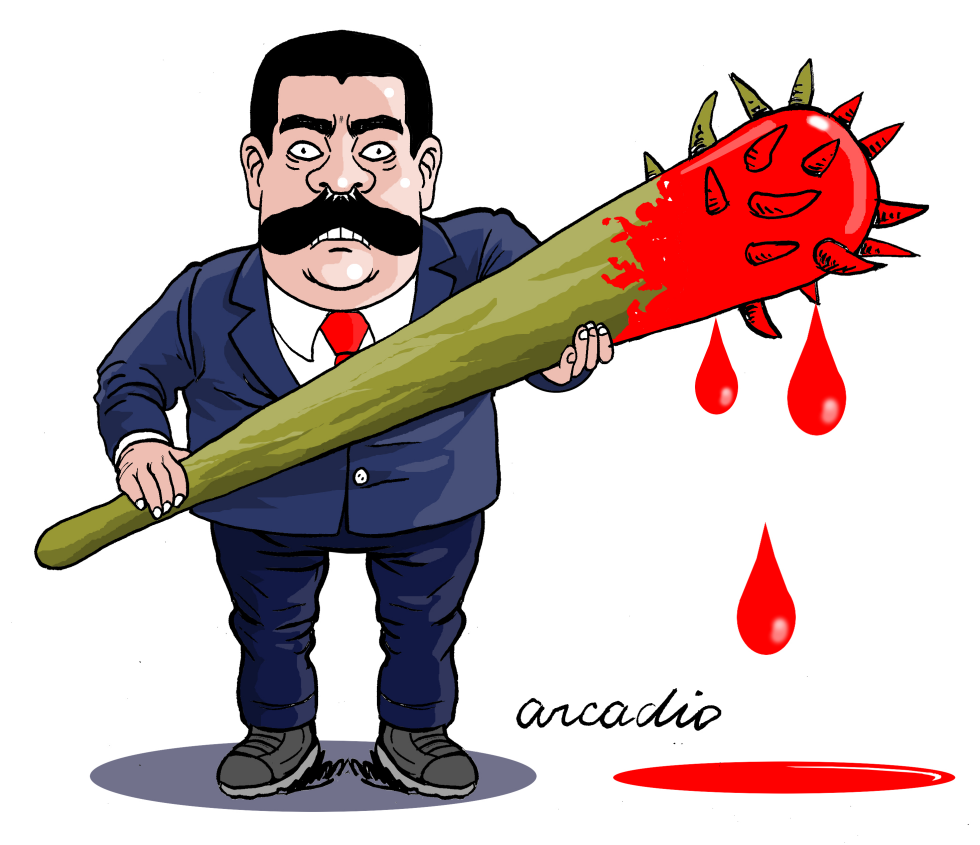
Arcadio Esquivel's 2019 cartoon portrays a figure resembling Nicolás Maduro, the Venezuelan leader, as a tyrant clutching a massive, spiked club smeared in red, dripping blood-like substance. The tags Maduro, Venezuela, tyrant, Latin America, dictator, and socialism frame this piece as a pointed critique of authoritarian rule. The man's stern expression and formal attire contrast with the brutal weapon, highlighting themes of power abuse. Published amid Venezuela's political turmoil, the image uses exaggerated features to satirize dictatorship. No text labels the figure directly, but the visual elements scream oppression. This work fits into broader Latin American political satire, emphasizing the bloody cost of socialist policies under Maduro's regime. The artist's signature anchors the simple composition, making it shareable for editorial pages.