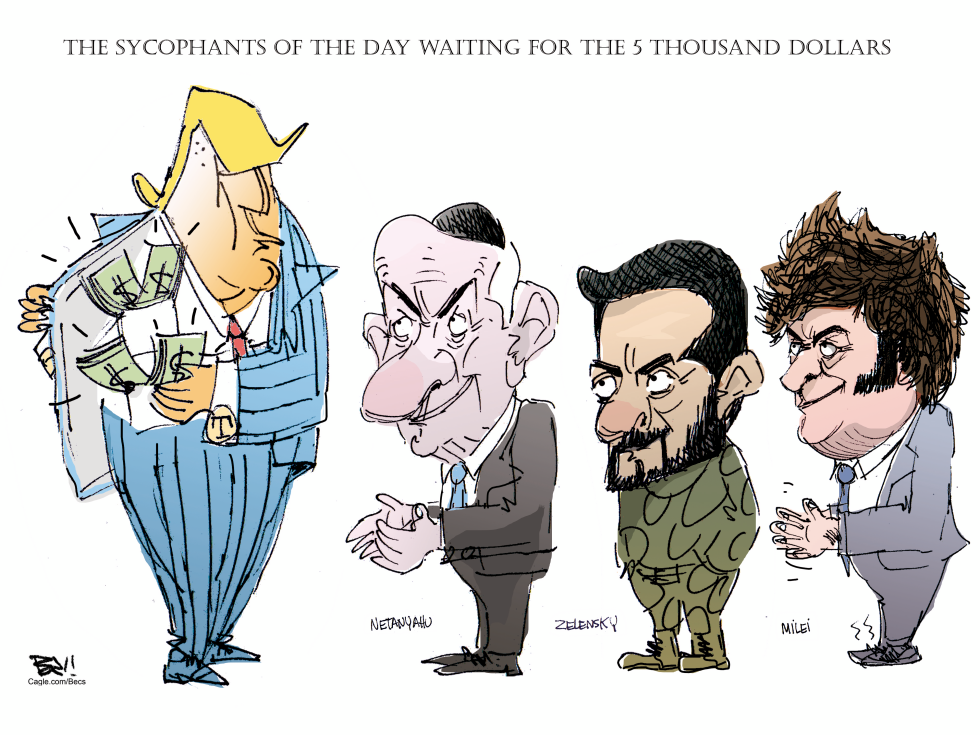
Donald Trump stands at the center of attention from Israeli Prime Minister Benjamin Netanyahu, Ukrainian President Volodymyr Zelensky and Argentine President Javier Milei. The scene reflects ongoing questions about how foreign leaders court favor with the U.S. president through displays of loyalty. The cartoon argues that these relationships reduce international diplomacy to transactional waiting for payoffs.
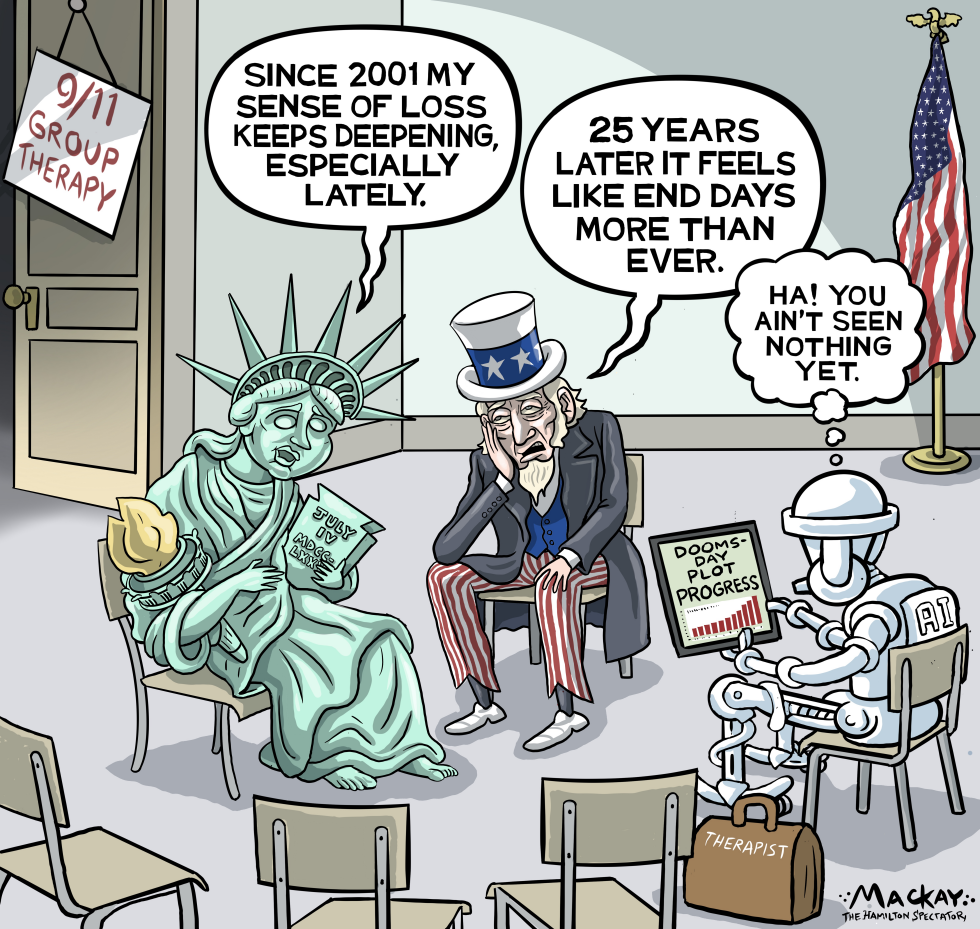
The cartoon depicts the Statue of Liberty, Uncle Sam and an AI robot seated in a 9/11 group therapy session on the 25th anniversary of the attacks. The Statue of Liberty holds a book marked July IV MDCCLXXVI and speaks of deepening loss since 2001. Uncle Sam echoes the sentiment of end days. The AI figure, labeled with a rising doomsday plot progress chart, retorts that the others have seen nothing yet. The scene uses national symbols to reflect persistent national trauma and emerging technological threats two and a half decades after the September 11 attacks.
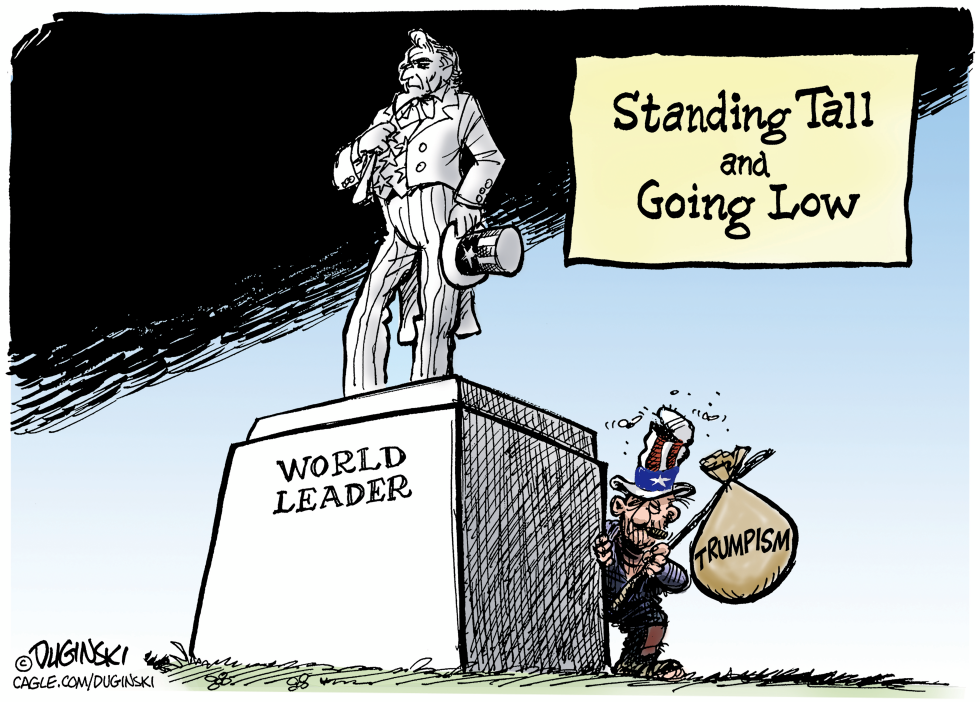
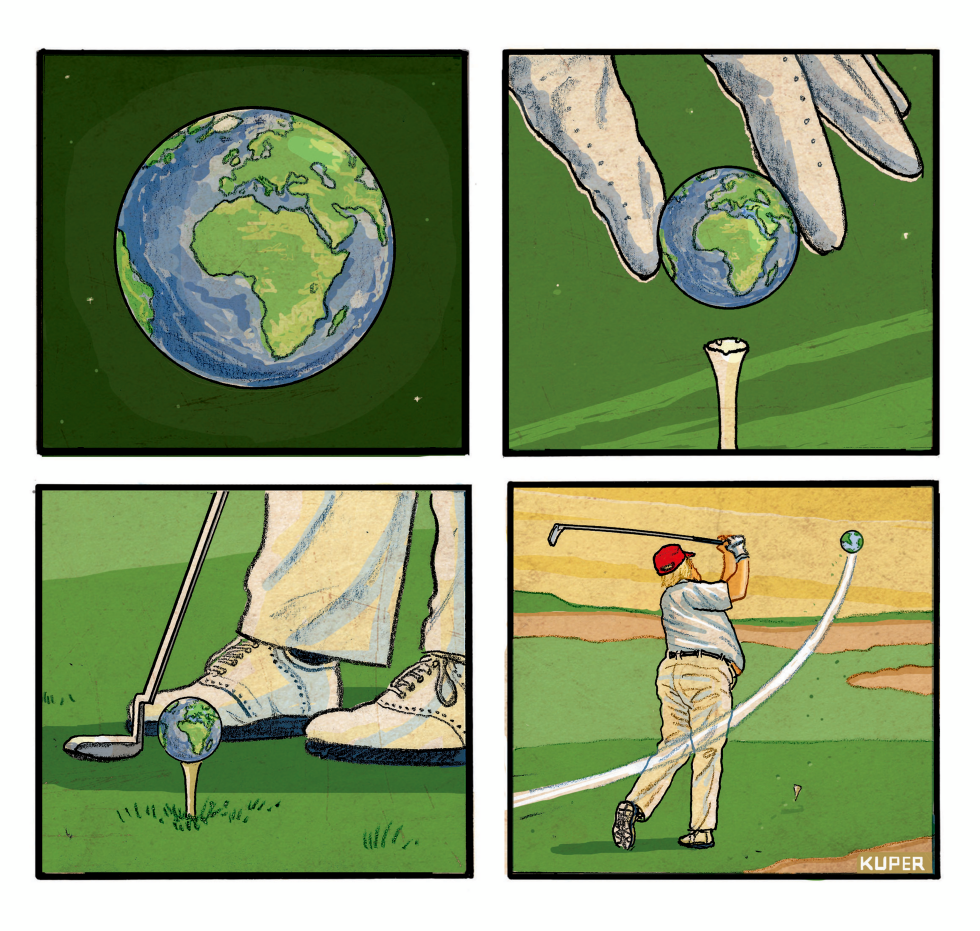
Donald J. Trump’s ideological legacy continues to shape Republican politics and foreign policy debates into 2026. Critics argue that Trumpism’s emphasis on transactional deals and nationalist rhetoric has eroded traditional US alliances and moral authority on the global stage. The cartoon presents this influence as a literal weight pulling the nation downward from its claimed leadership role, underscoring concerns that short-term domestic appeals come at the cost of long-term international credibility.
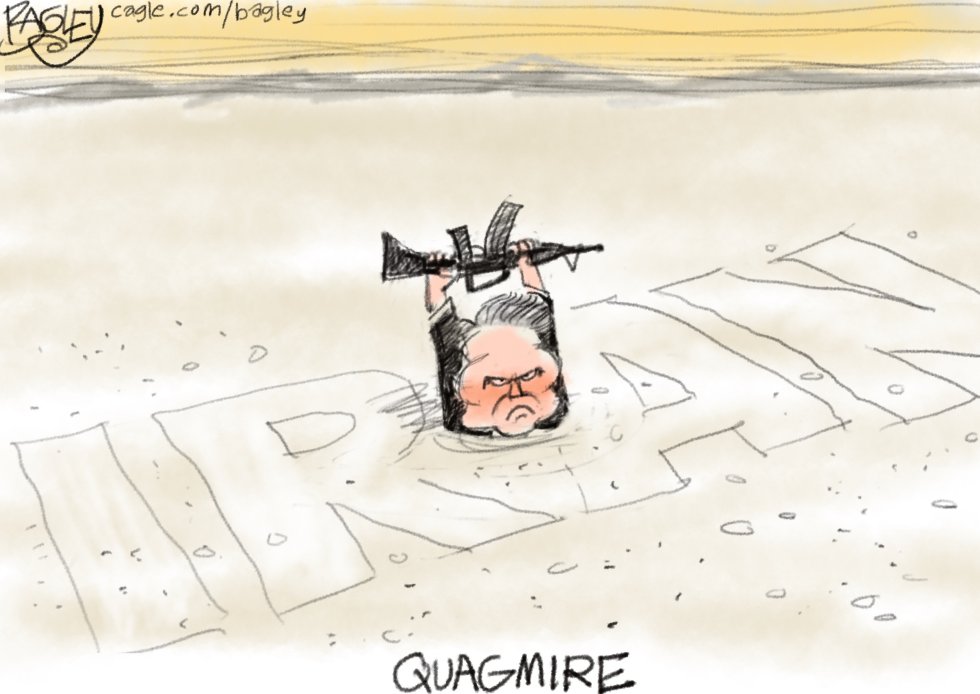
Donald Trump faces mounting difficulties tied to military engagements as of late July 2026. The situation underscores risks of prolonged involvement abroad. The piece portrays these events as a self-inflicted trap that threatens broader stability.
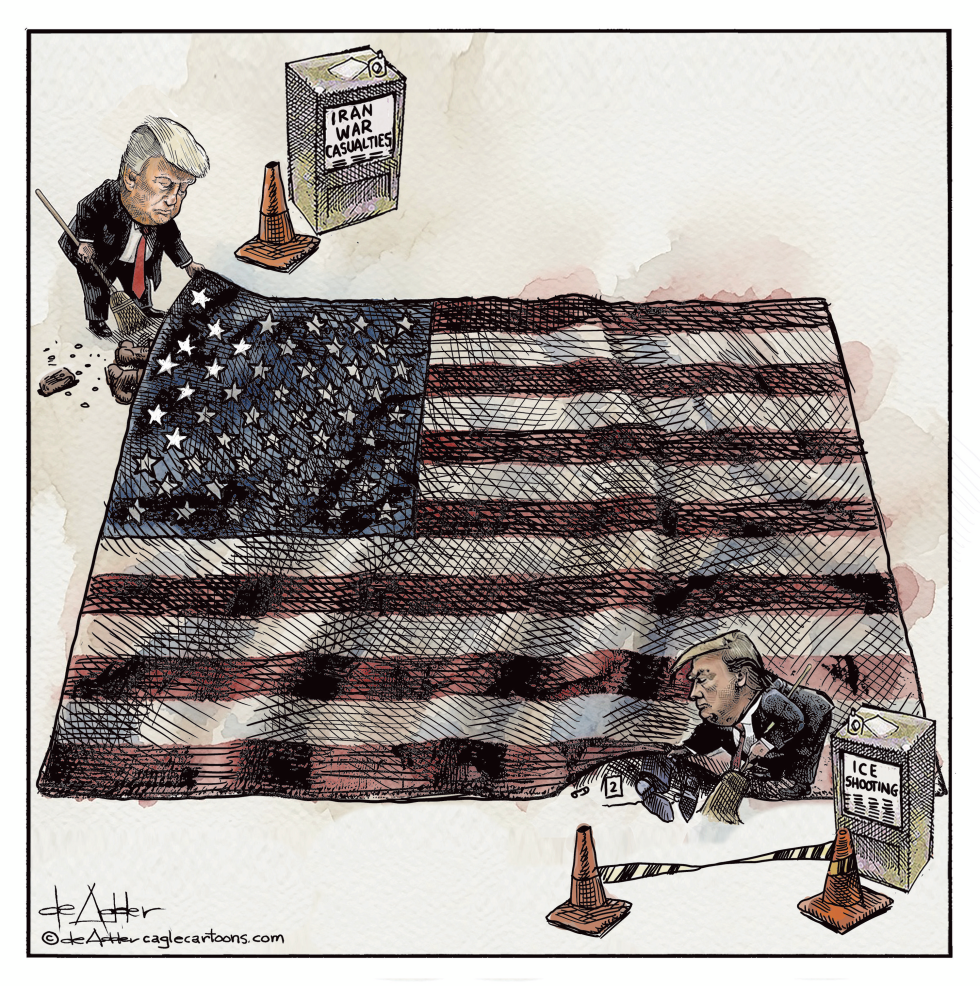
Donald Trump faces scrutiny over reported casualties from potential Iran conflict and an ICE-related shooting incident in mid-2026. The administration's handling of these events draws criticism for downplaying accountability. The piece argues that attempts to minimize these issues undermine public trust in governance.
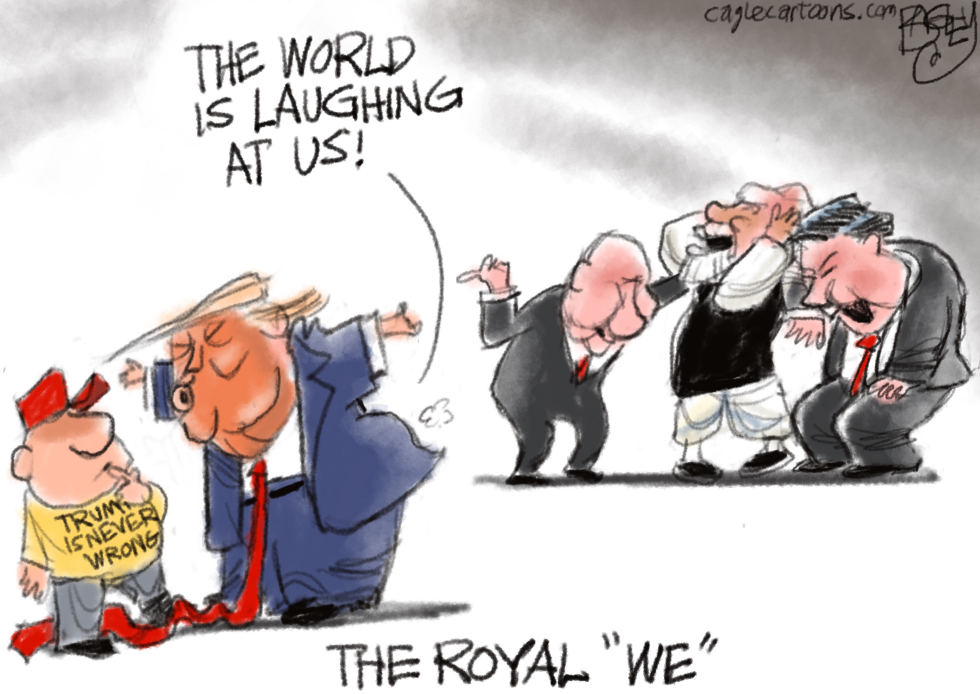
On September 2 2025 Pat Bagley depicts Donald Trump insisting the world laughs at the United States while Indian Prime Minister Modi, Chinese President Xi and Russian President Putin visibly mock him. The cartoon highlights Trump's use of the royal we amid ongoing tariff disputes and diplomatic friction with those nations.
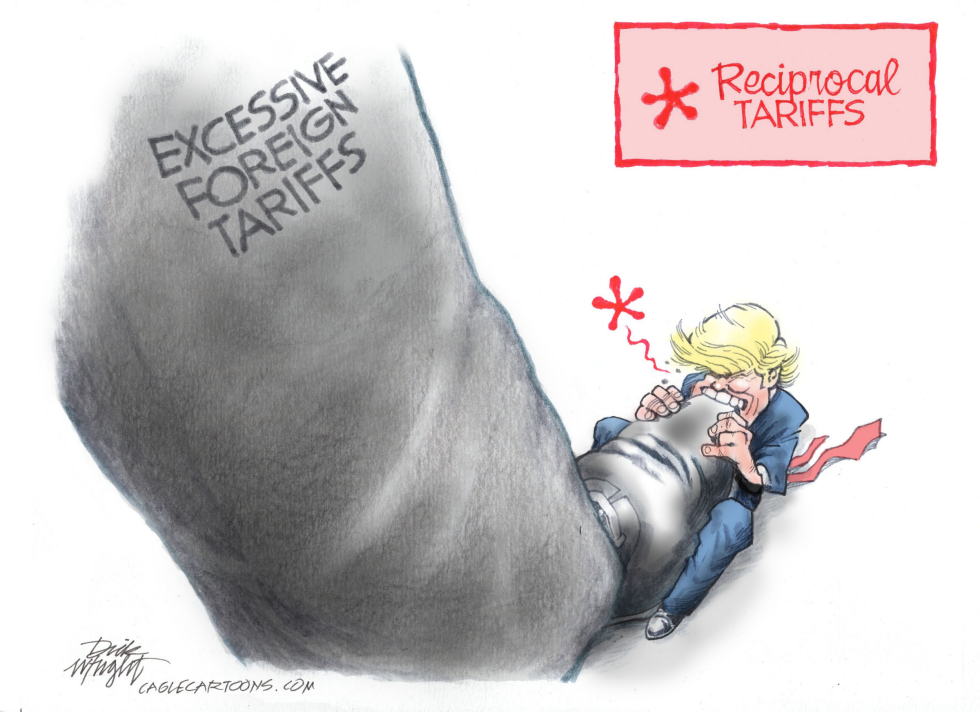
Dick Wright's cartoon captures the irony of reciprocal tariffs with a massive foot marked 'excessive foreign tariffs' descending on a caricatured Trump, who grimaces while clutching a metallic object. The red label 'Reciprocal TARIFFS' floats nearby, emphasizing the backlash from unfair trade policies. Trade deficits loom large as the foot represents international retaliation, potentially sparking a stock market downturn. In a tariff driven economy, the image satirizes how such measures invite excessive foreign tariffs, risking recession. The composition underscores the self-defeating nature of aggressive trade stances, with Trump's strained expression highlighting the pressure on domestic markets. This piece fits into ongoing debates on global trade imbalances.
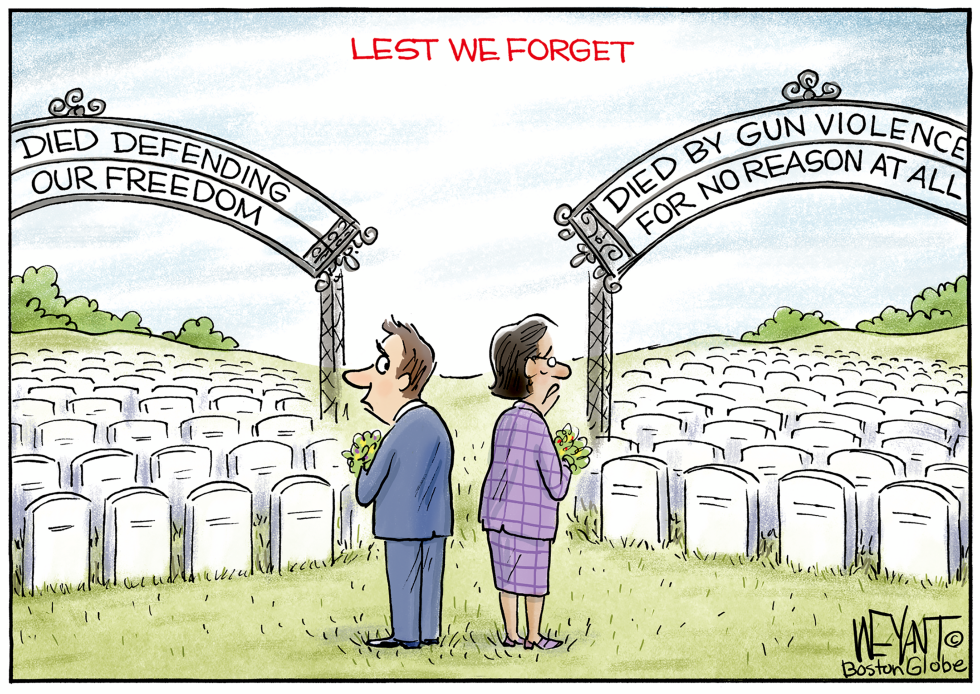
This political cartoon by Christopher Weyant, dated May 24, 2023, features a vast cemetery with rows of white tombstones under a clear sky. Two ornate arches divide the scene: one labeled 'Died Defending Our Freedom' and the other 'Died By Gun Violence For No Reason At All.' A man in a blue suit and a woman in purple hold flowers, standing back-to-back, each facing a side. The red title 'Lest We Forget' looms above. Drawing on Memorial Day themes, the image juxtaposes veterans' sacrifices in war with civilian gun deaths from school shootings and mass shooters. It critiques gun control failures, AR15 proliferation, Congress inaction, and NRA sway, urging remembrance of all needless losses.