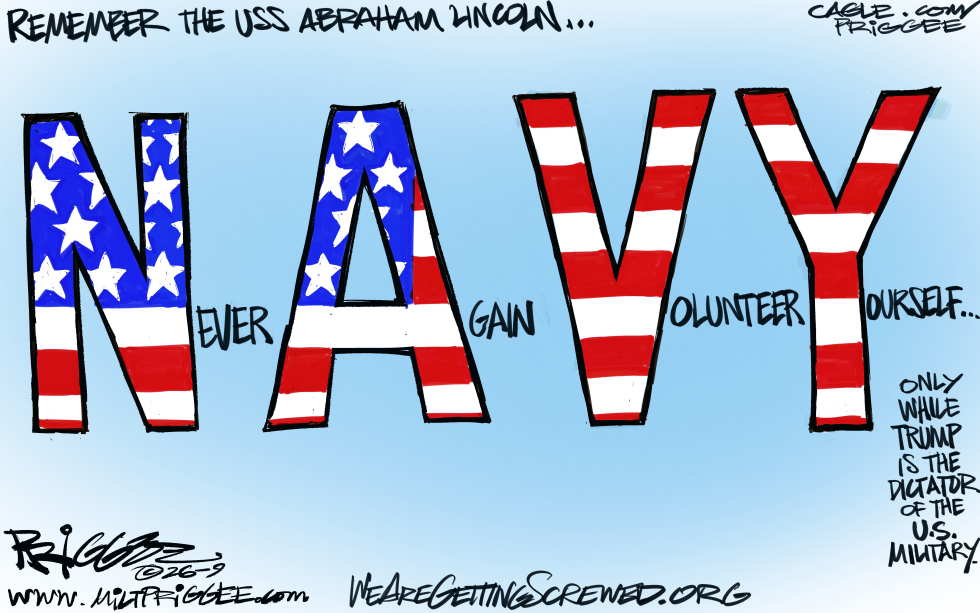
The image reworks the Navy acronym using stars and stripes segments. Inserted words create a full phrase discouraging enlistment. Text at bottom right specifies the condition tied to one individual's role. Top reference recalls a named carrier. Bottom elements include artist credit and website.
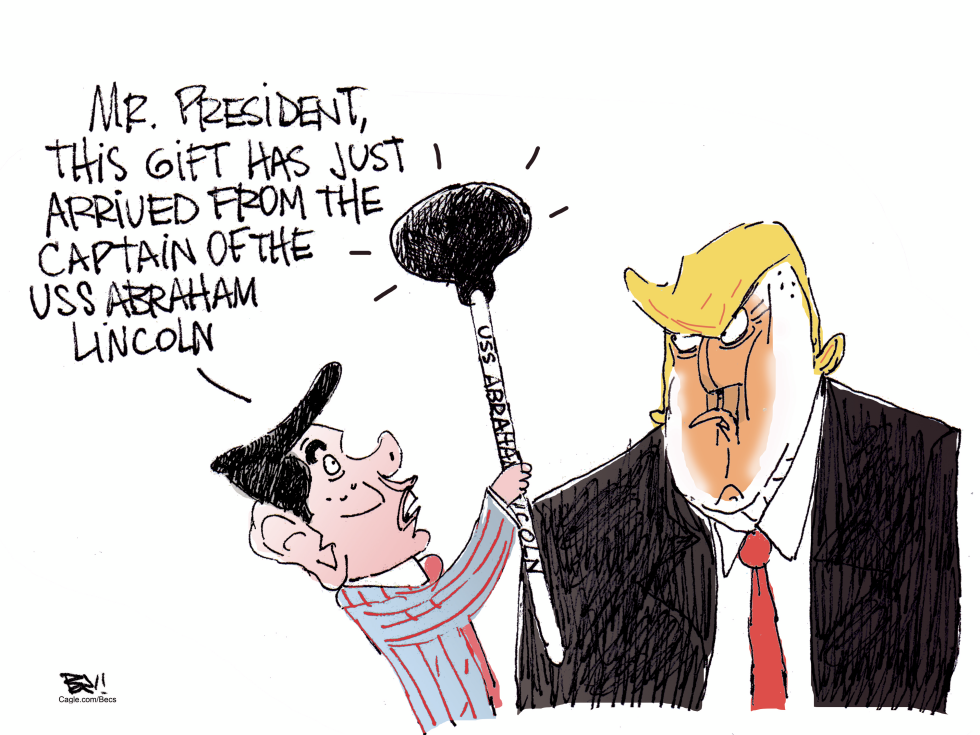
President Trump receives a ceremonial mallet sent by the captain of the USS Abraham Lincoln. The presentation occurs during routine military engagement with the White House. The gift underscores ongoing ties between the administration and naval forces. The editorial highlights the unusual nature of the item and questions its timing and purpose. It suggests the exchange reflects broader patterns in how the president interacts with the armed services.
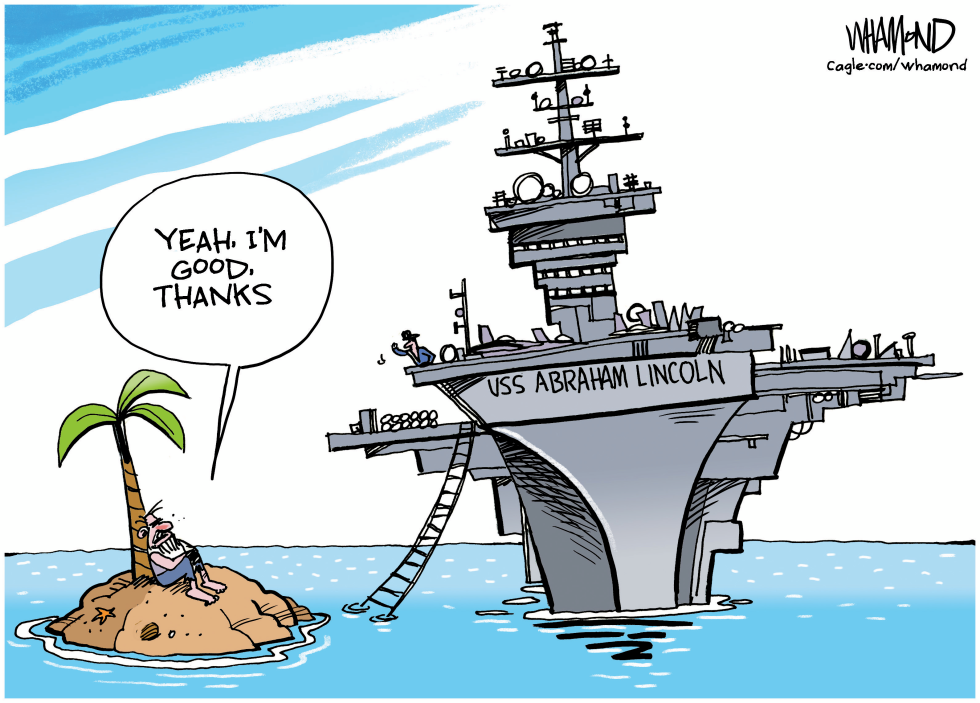
A US Navy aircraft carrier sails past a remote desert island where a lone castaway sits under a palm tree. The ship lowers a ladder in an apparent rescue attempt, yet the stranded figure declines assistance. The scene highlights ongoing debates over US military reach and whether distant outposts or individuals truly seek intervention. The editorial takes the position that such refusals underscore limits to assuming every presence is welcome or needed.
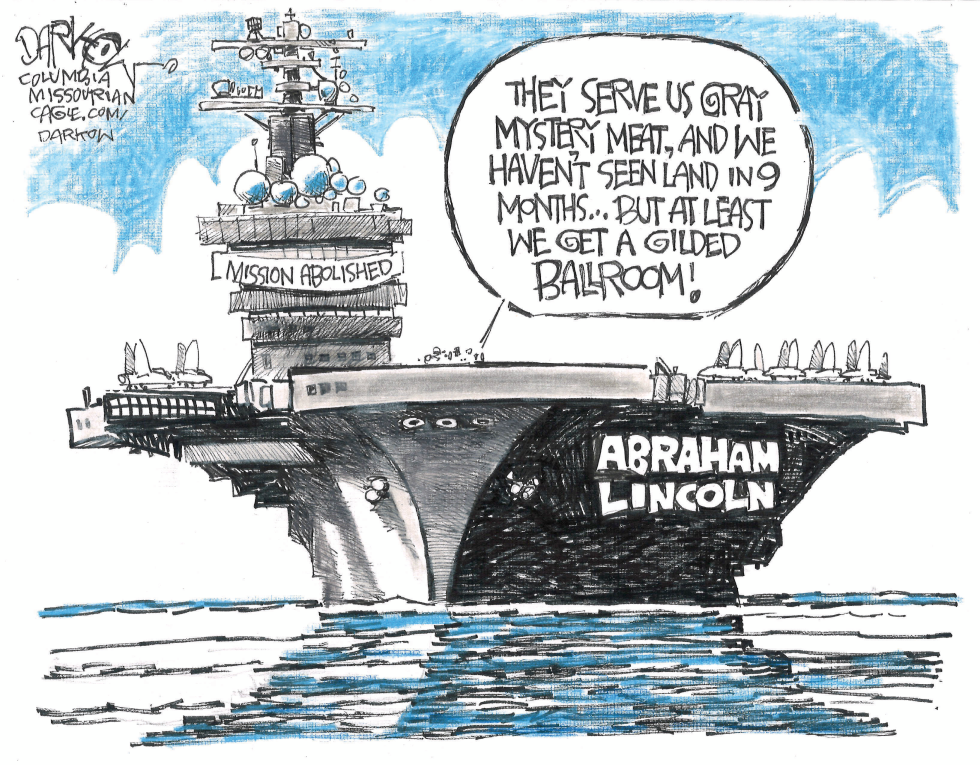
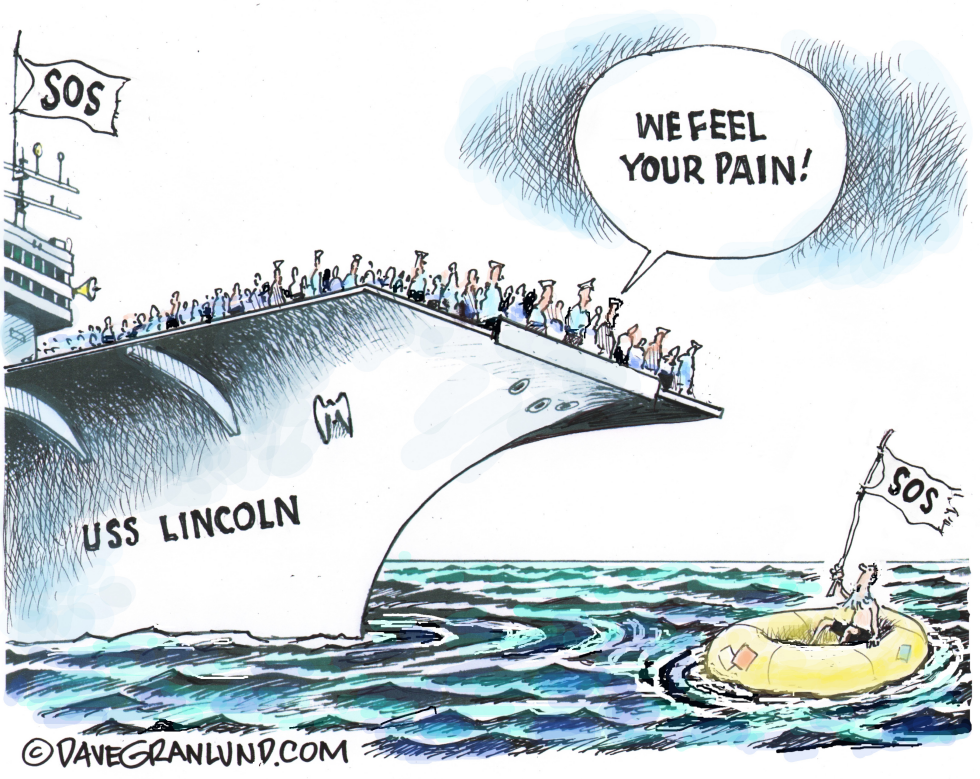
The USS Abraham Lincoln remains on extended deployment with sailors citing ongoing issues with food quality and time at sea. The addition of a gilded ballroom has drawn attention to priorities in naval operations. The piece highlights crew discontent with conditions despite the upgrade.
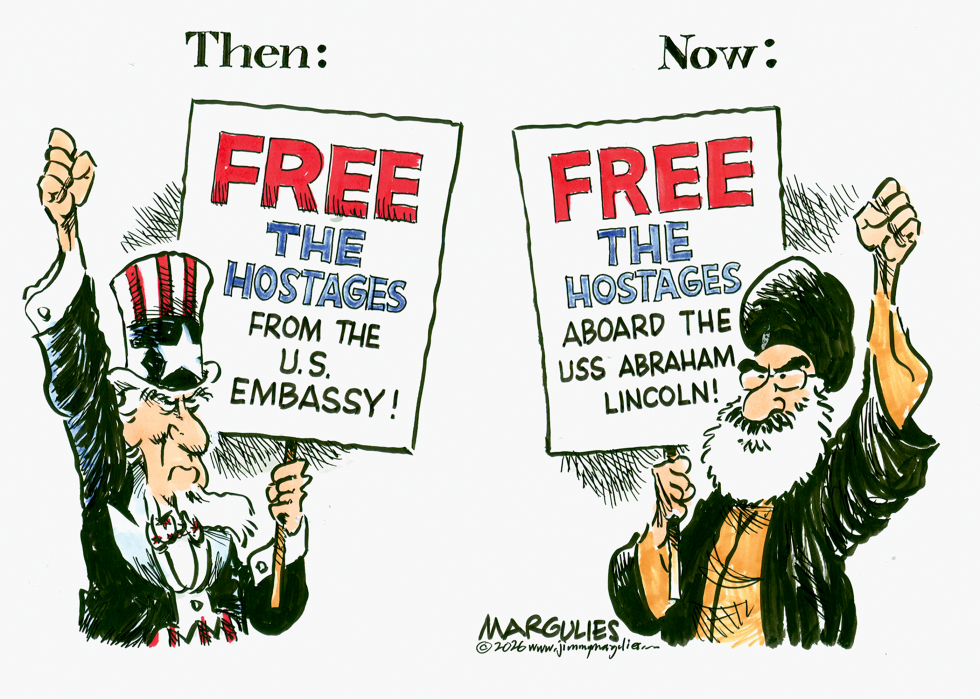
The 1979 Iran hostage crisis saw militants seize the US embassy in Tehran, holding 52 Americans for 444 days. In 2026, renewed tensions involve US naval assets like the USS Abraham Lincoln amid Middle East conflicts. The cartoon draws a parallel between past embassy demands and present calls involving the carrier, critiquing the recurring cycle of hostage rhetoric from Iranian leadership.
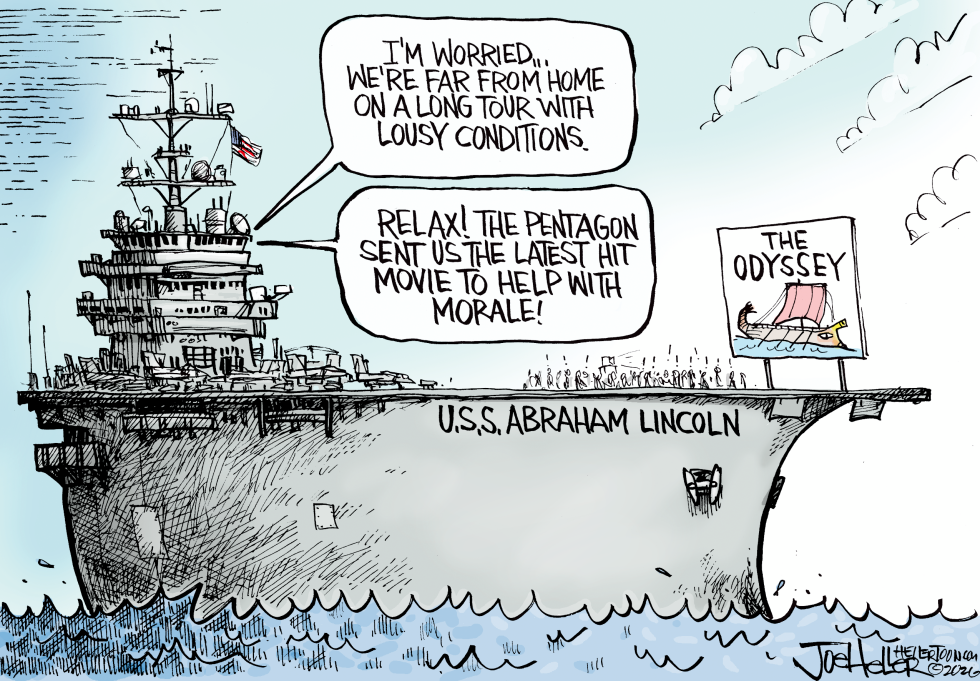
Sailors aboard the USS Abraham Lincoln have raised concerns about extended deployments far from home and substandard living conditions at sea. The Pentagon's response involves screening the film The Odyssey to improve morale among the crew. This approach highlights ongoing challenges in maintaining readiness during prolonged naval operations. The editorial takes the position that such gestures fall short of addressing core issues like crew welfare and rotation schedules.
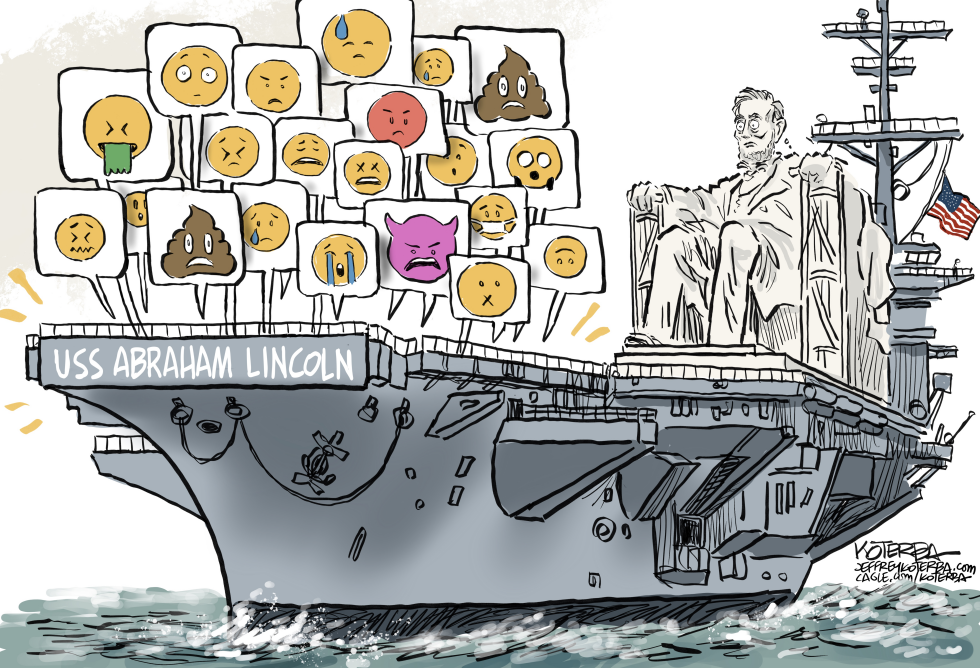
Public reaction to US naval deployments has intensified through social media platforms in recent weeks. Online users have flooded discussions with critical emojis targeting military assets like the USS Abraham Lincoln. The piece portrays this digital deluge as an overwhelming force on longstanding symbols of American leadership and naval power.
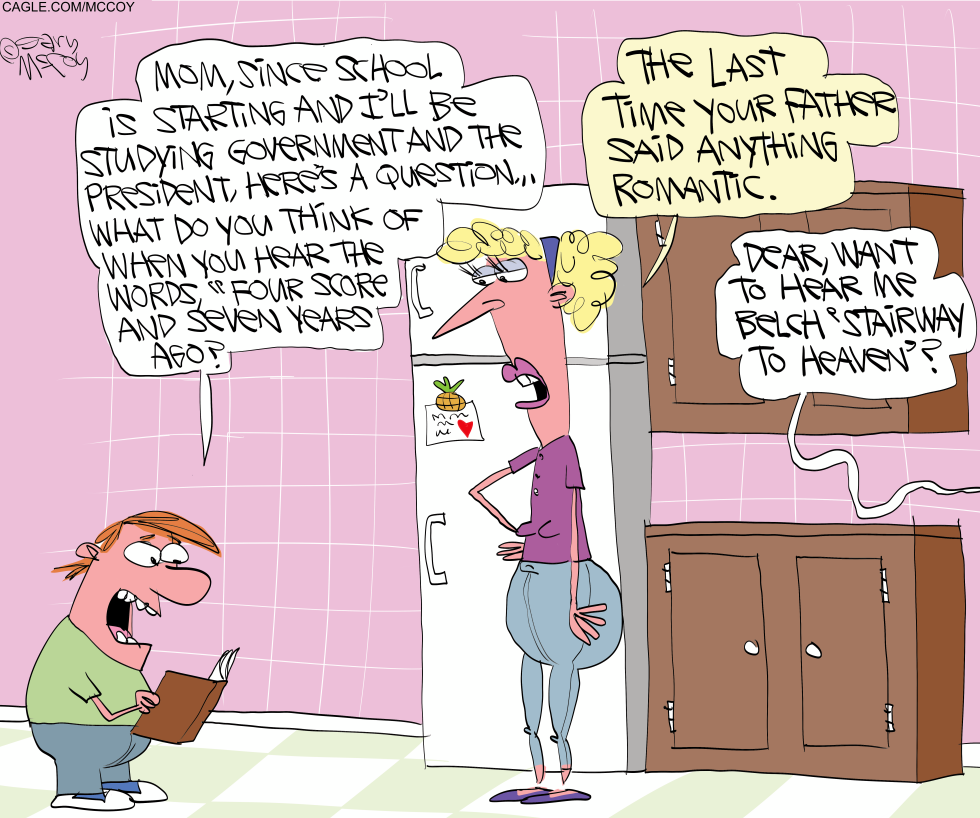
A child preparing for school asks his mother what she thinks of upon hearing Lincoln's famous opening line from the Gettysburg Address. Her reply points directly to the last time her husband said anything romantic. The father, hidden in a kitchen cabinet, responds by offering to belch the lyrics to Stairway to Heaven. The exchange highlights an ongoing household dynamic of mismatched expectations around affection and daily behavior.
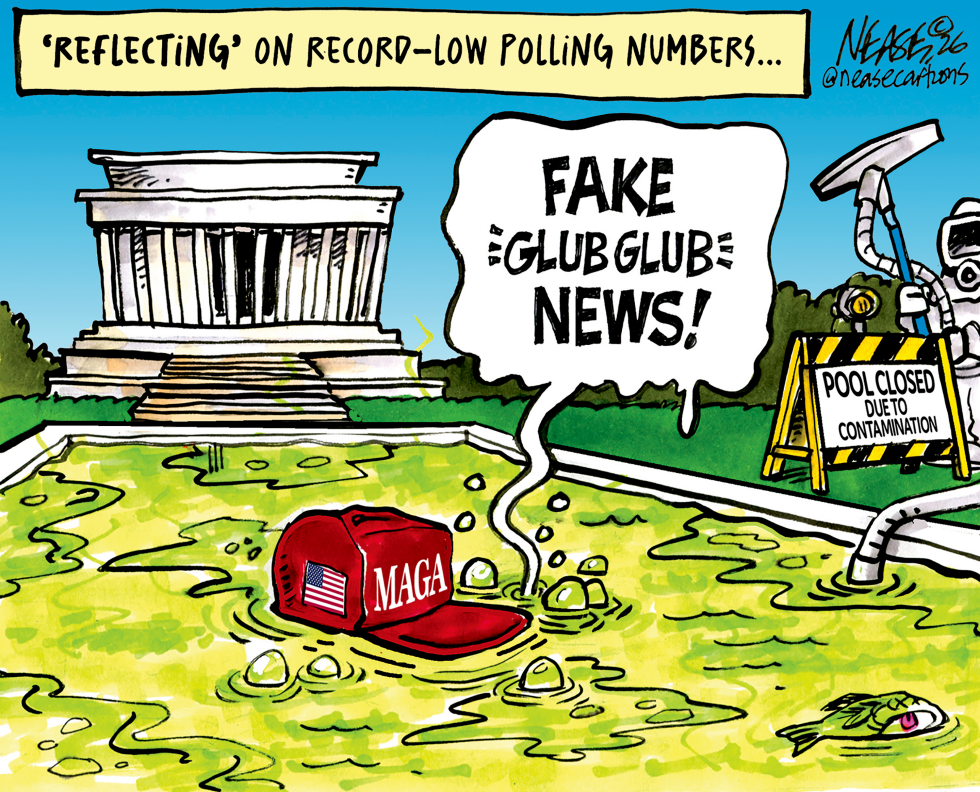
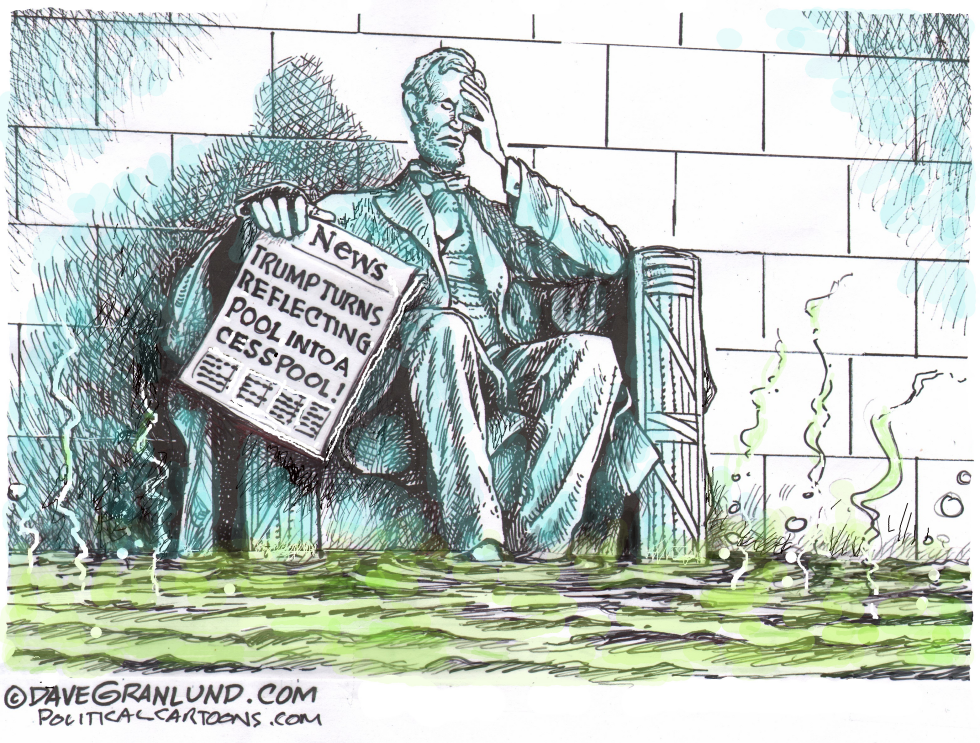
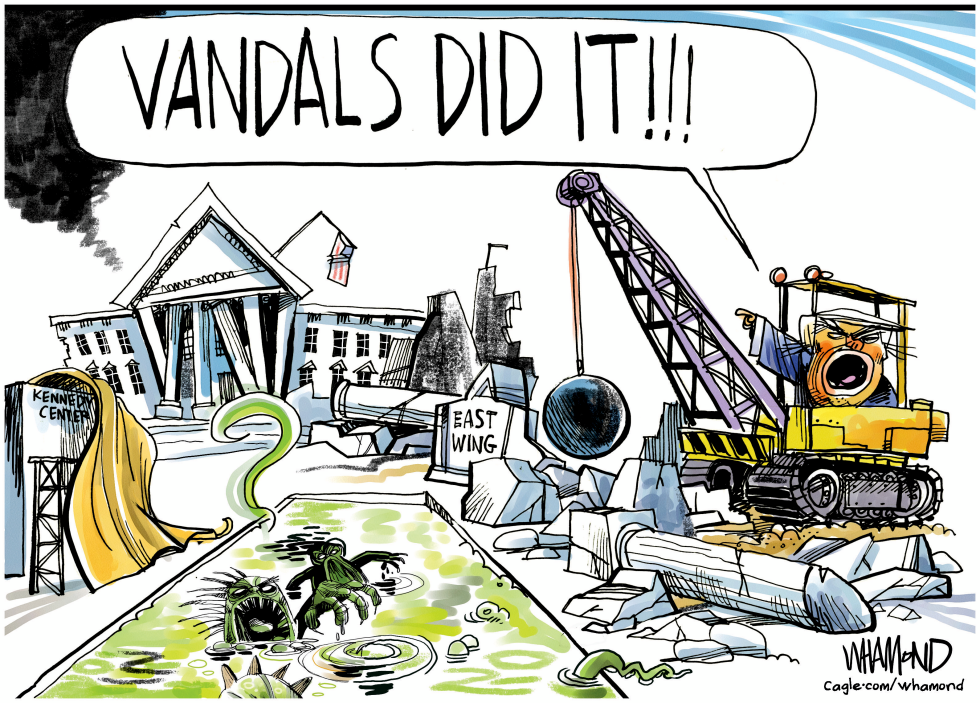
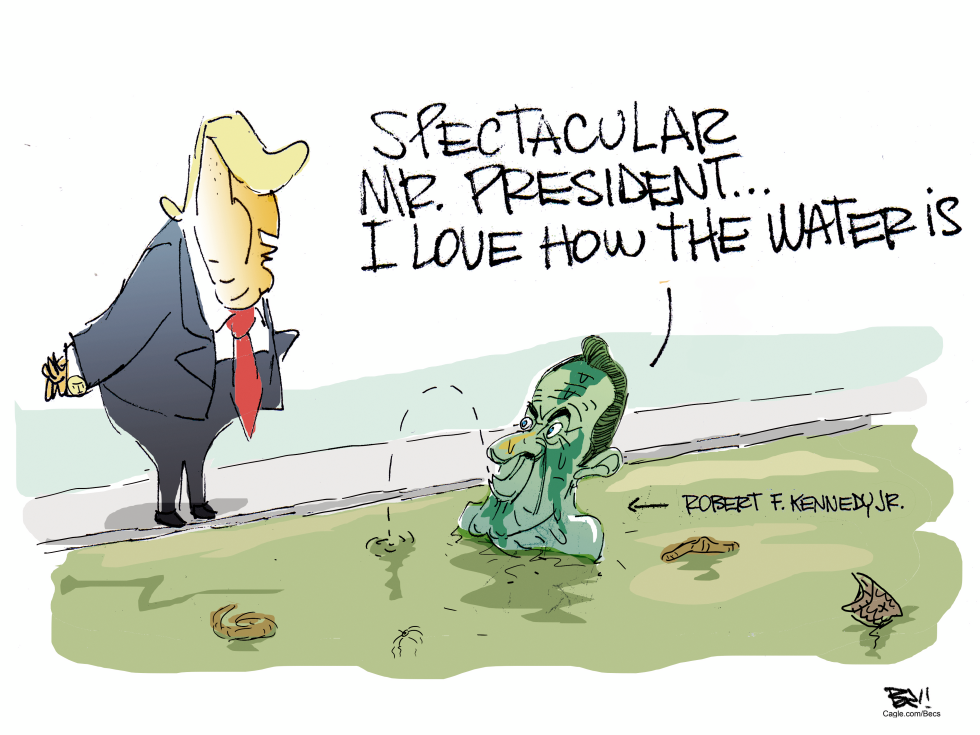
Donald Trump-aligned polling numbers reached record lows in early August 2026. Supporters responded with claims of fake news rather than addressing the data. The piece portrays this denial as occurring in a toxic environment.
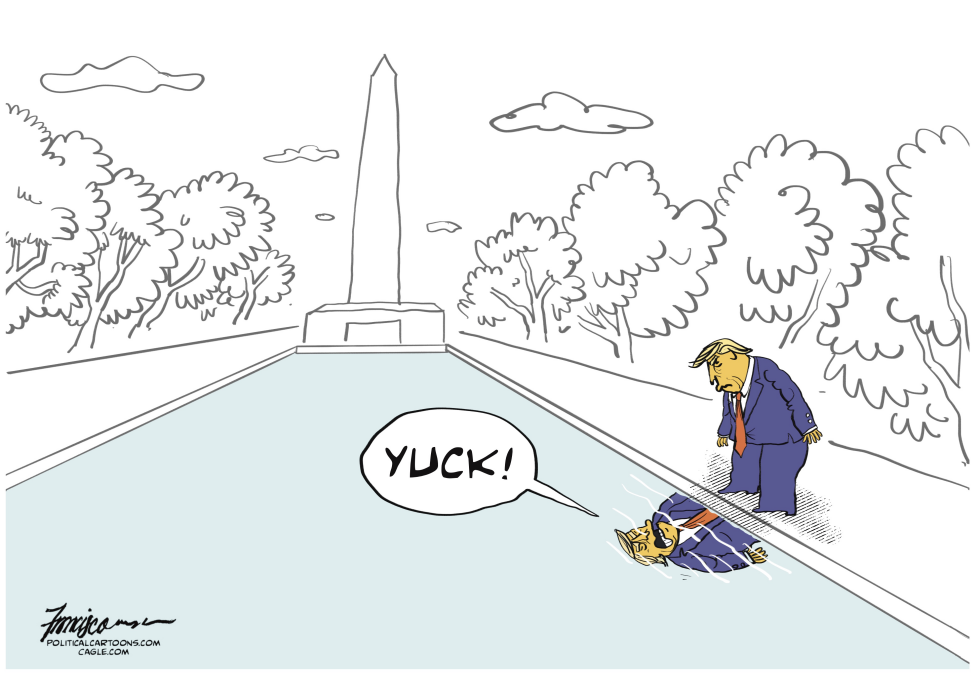
On July 5, 2026, a cartoon depicts Donald Trump standing at the edge of the Lincoln Memorial reflecting pool with the Washington Monument in the background. He looks down at his own image lying in the water and exclaims 'YUCK!' The image shows the president in a blue suit and red tie reacting with clear aversion to the reflection.