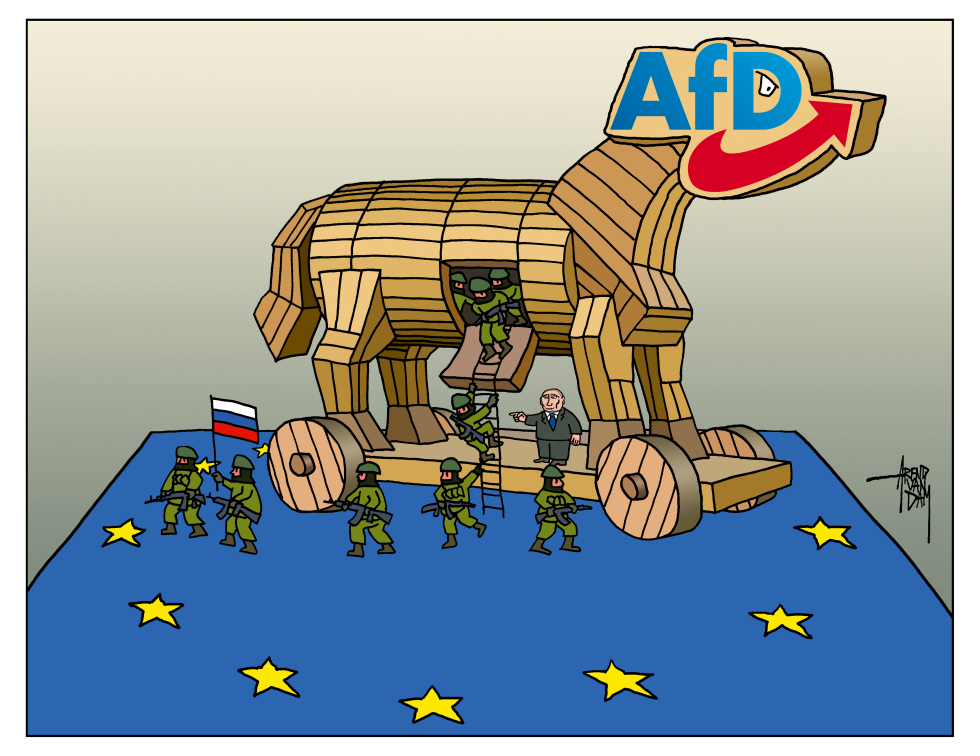
The AfD party in Germany faces accusations of serving as a conduit for Russian influence operations targeting the EU. Vladimir Putin benefits from the far-right group's rising profile ahead of elections, using it to sow division and weaken European unity. The cartoon portrays this dynamic as a classic Trojan horse tactic, with Russian troops emerging from the AfD structure on EU soil. Critics argue the party's policies align too closely with Kremlin interests, undermining NATO and EU cohesion at a critical time. The editorial stance warns that ignoring these ties risks strategic vulnerability for Europe.
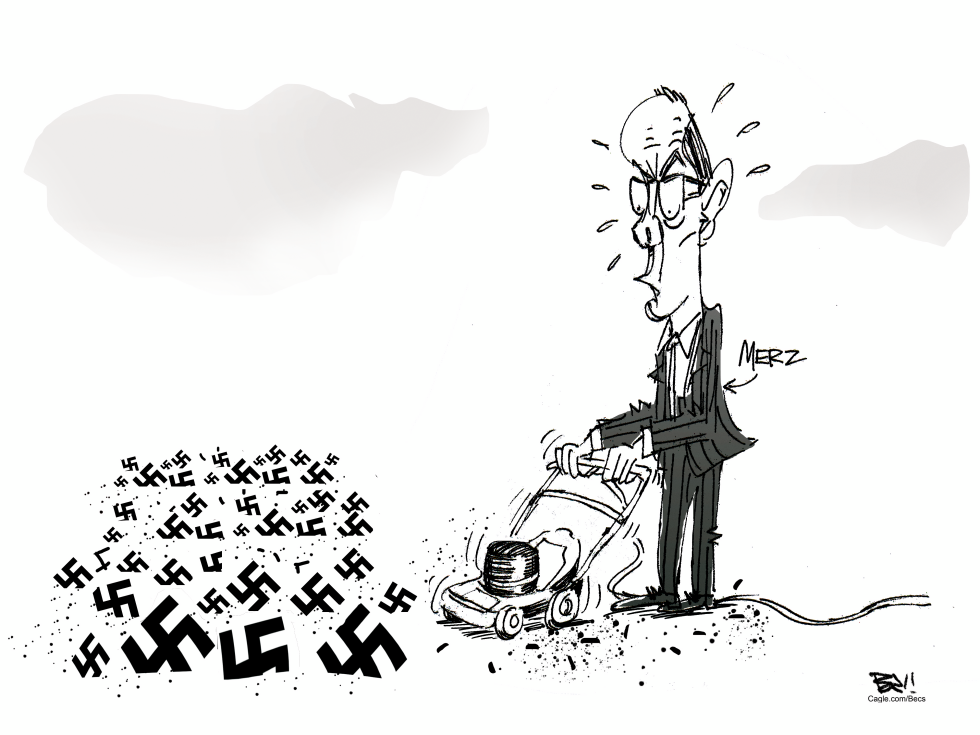
Friedrich Merz, a leading German conservative, has positioned himself against far-right extremism by publicly rejecting Nazi symbols and associated groups. The move comes as Germany faces growing concerns over rising far-right activity ahead of key political contests. Merz's stance aims to draw a clear line separating mainstream conservatism from extremist fringes. The cartoon portrays this effort as a deliberate cleanup of dangerous symbols. It endorses the push to isolate and diminish far-right influence in German politics.
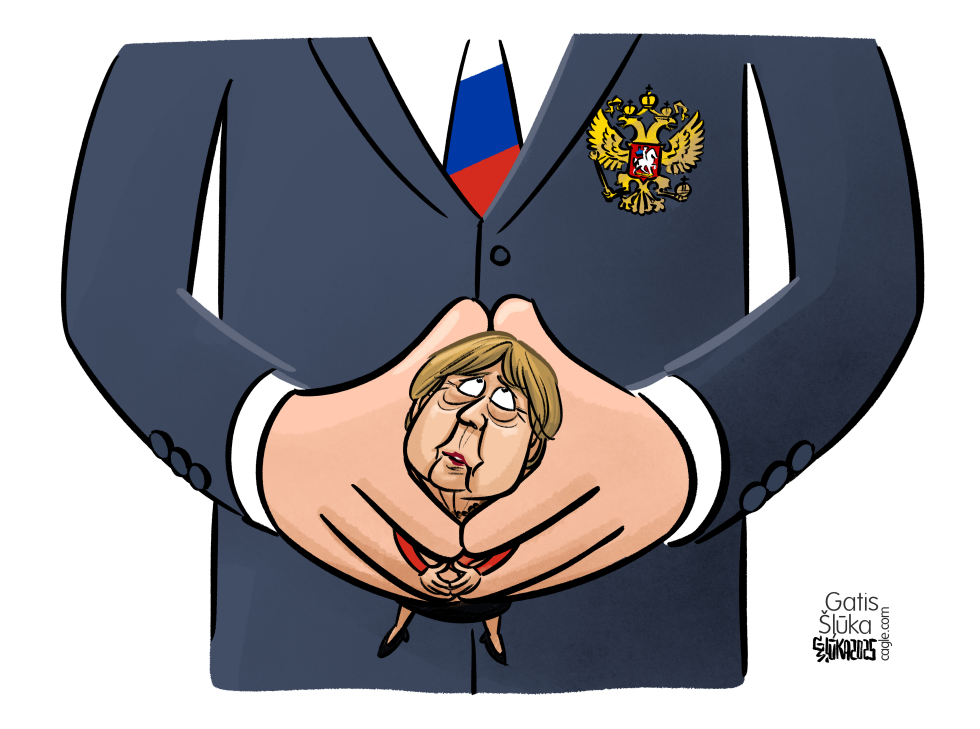
Russian President Vladimir Putin and former President Donald Trump are shown aiding Germany's AfD party in the run-up to elections. The piece argues that external interference from these figures is boosting the far-right German party while harming domestic U.S. political elements.