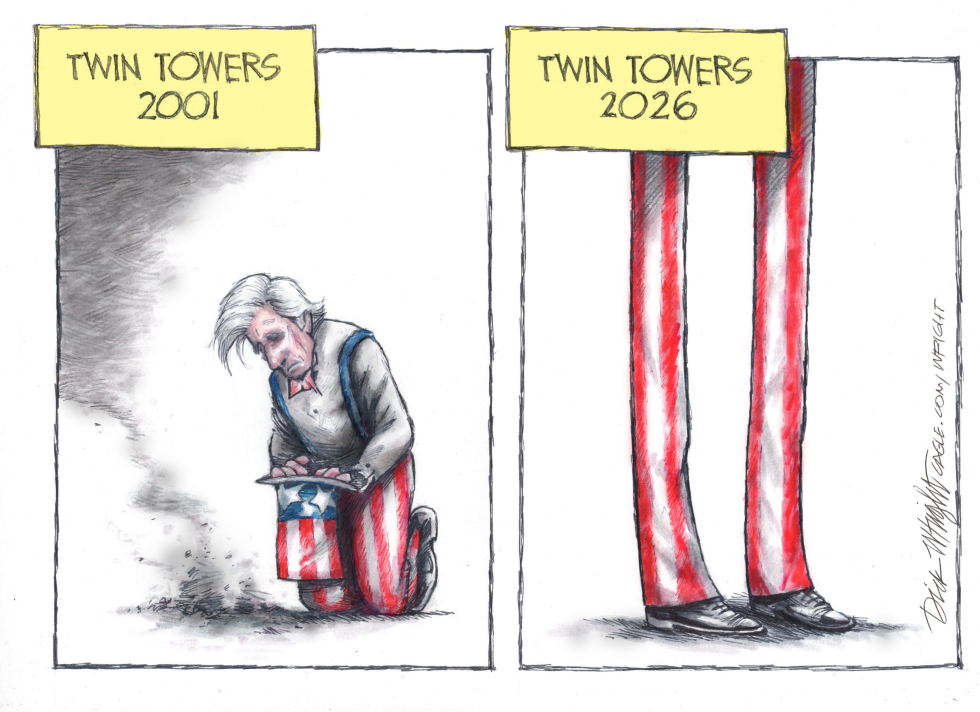
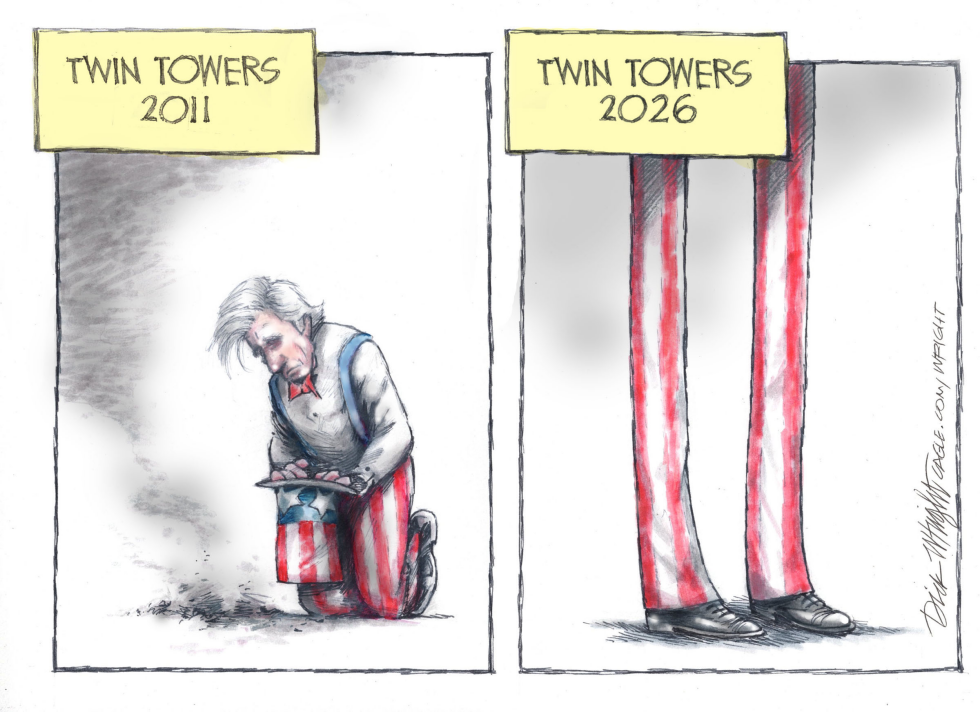
The September 11 attacks struck the United States in 2001, killing nearly 3,000 and leaving the nation in shock. The cartoon contrasts that moment of grief with a 2026 image of standing strength. It marks the 25th anniversary by showing America moving from bowed mourning to upright posture. The editorial position frames the country as resilient and recovered after the tragedy.
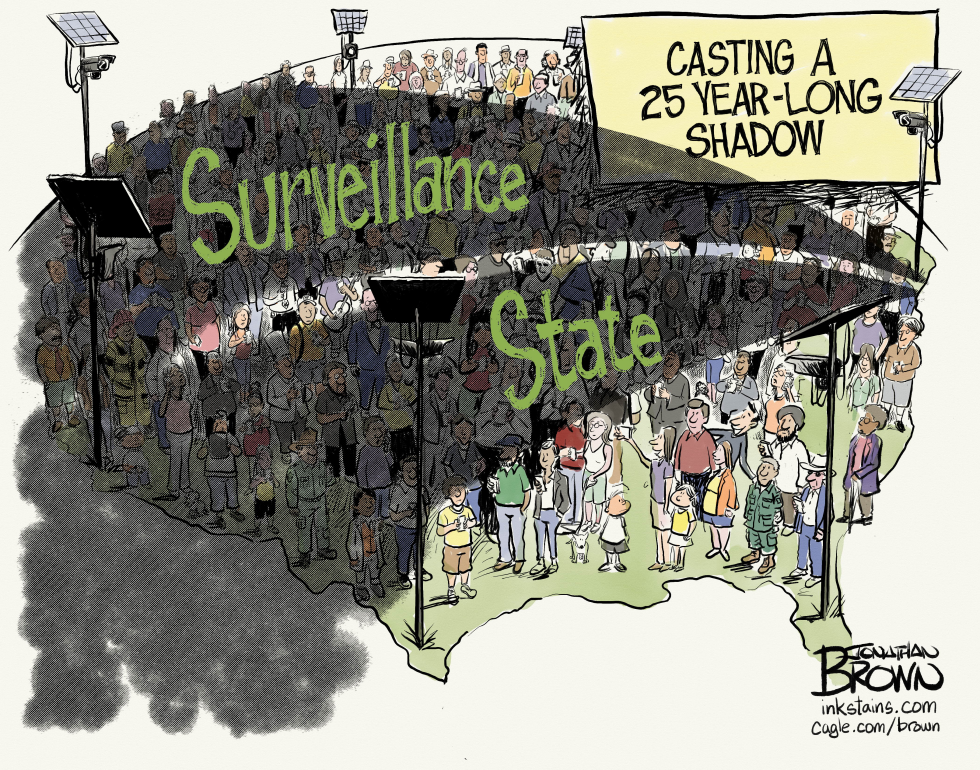
The cartoon depicts a dense crowd of Americans standing on a map of the United States, partially obscured by a large dark shadow cast by surveillance cameras mounted on poles. The words 'Surveillance State' appear prominently in green lettering across the scene, while a sign in the upper right reads 'CASTING A 25 YEAR-LONG SHADOW.' The image comments on the lasting effects of expanded government surveillance programs that began after the September 11 attacks, now spanning a quarter century. It illustrates how these measures continue to influence daily life and public spaces in 2026.
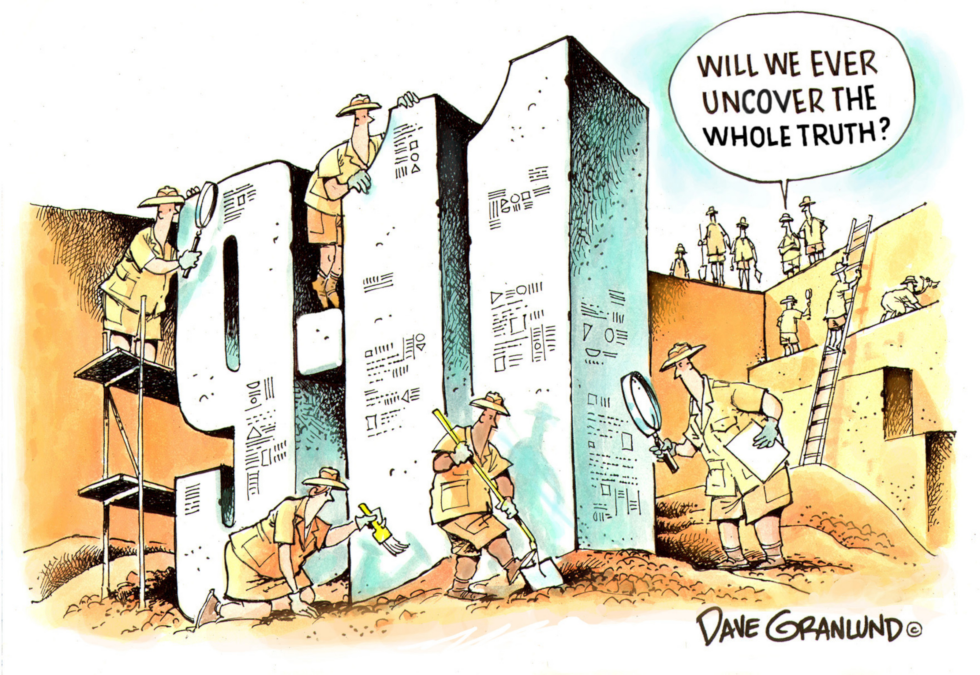
The cartoon by Dave Granlund depicts a team of archaeologists carefully excavating massive stone structures shaped like the numerals 9 and 11. Workers use magnifying glasses, brushes and shovels to examine inscriptions on the surfaces. A speech bubble from one figure asks whether the whole truth will ever be uncovered. The image responds to persistent questions about the September 11 attacks and the completeness of official accounts. It frames the topic as an ongoing historical dig rather than a settled event. The publication date of September 7 2026 places the work near the 25th anniversary of the attacks.
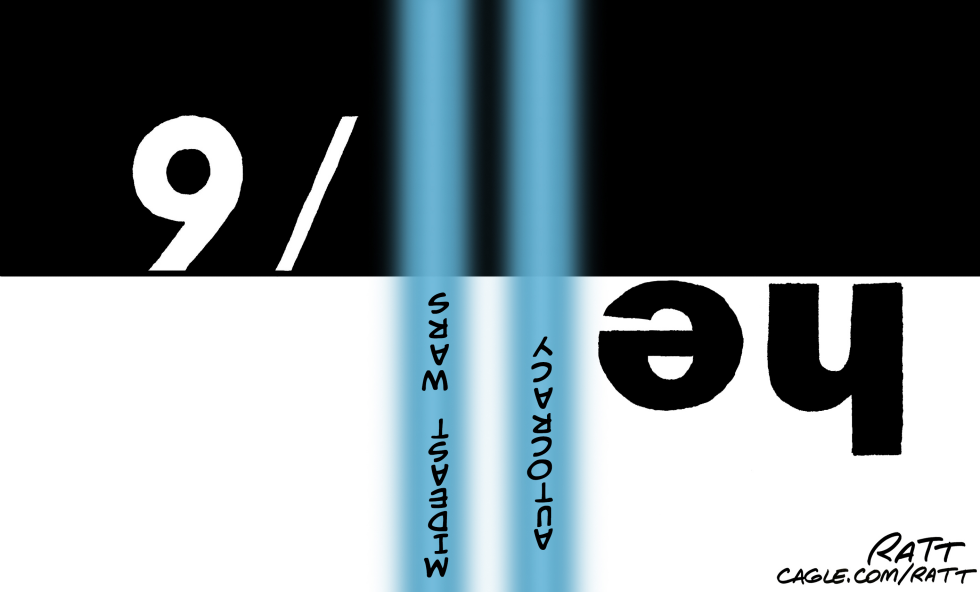
September 11 anniversary observances in 2026 coincide with ongoing debates over the long-term costs of U.S. and European involvement in Middle East conflicts that followed the attacks. The piece underscores how far removed current realities remain from the original site and moment of the 2001 attacks.
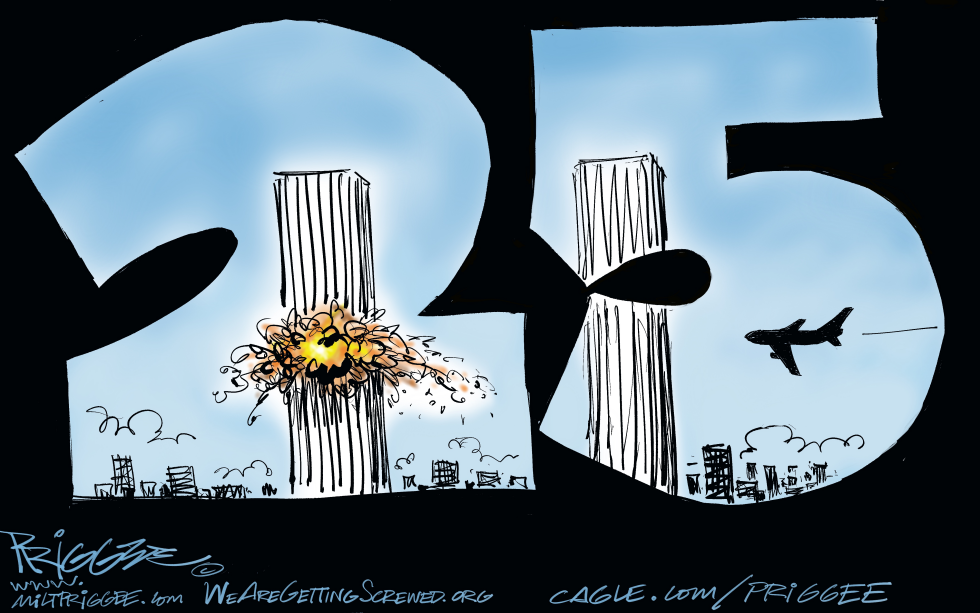
The cartoon commemorates the 25th anniversary of the September 11 attacks by embedding imagery of the Twin Towers and the hijacked plane within the large numerals. It serves as a stark visual reminder of the event's lasting national significance without additional commentary or figures.
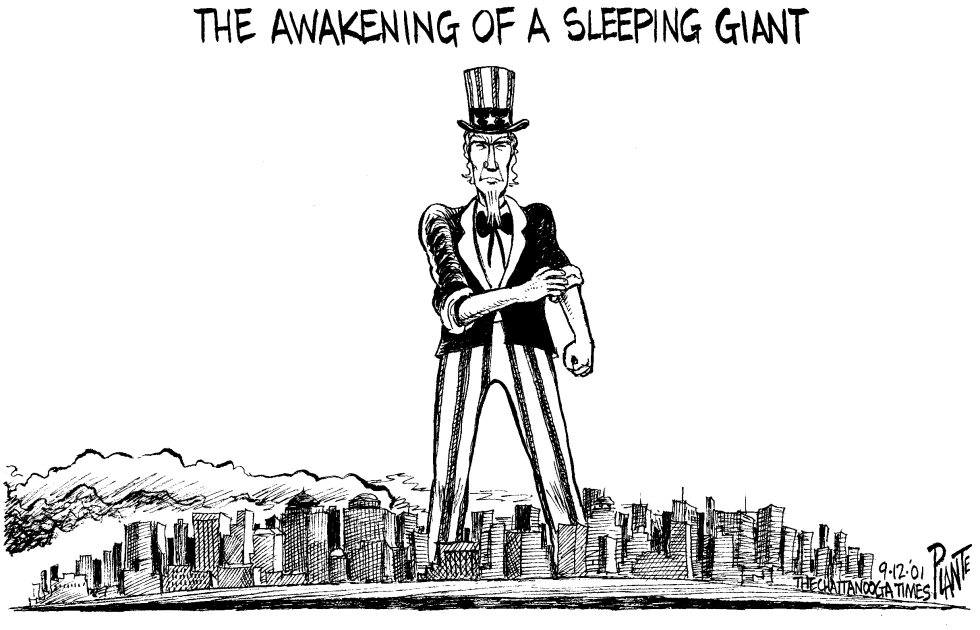
On September 11, 2001, al-Qaeda terrorists flew planes into the World Trade Center and the Pentagon, killing nearly 3,000 people. The attacks prompted an immediate national mobilization and the launch of the war on terror. The cartoon frames the United States as a sleeping giant now roused to action, reflecting the widespread view that the country would respond with unified strength and resolve.
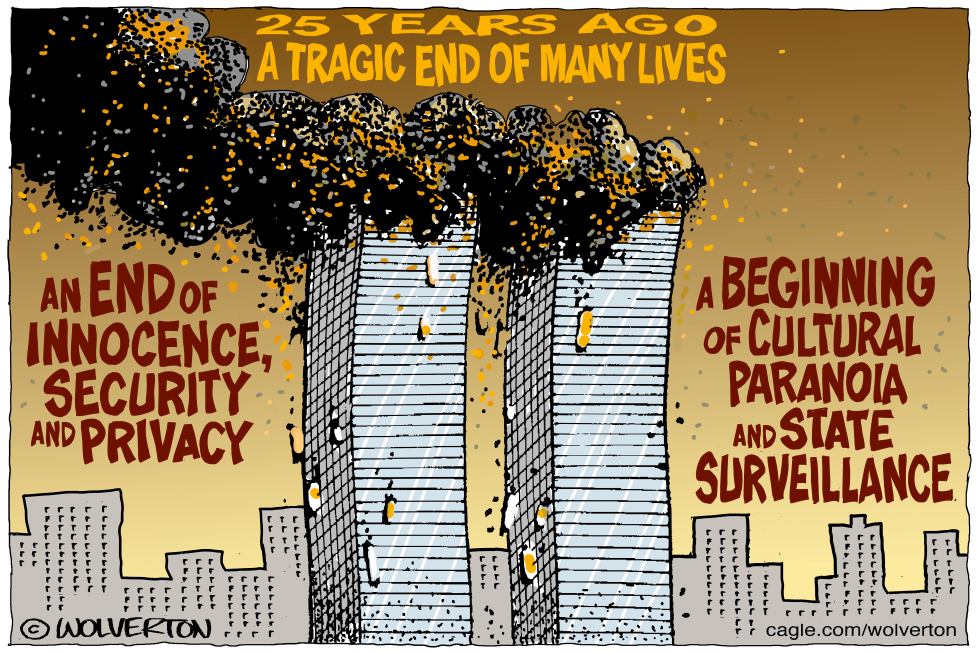
On the 25th anniversary of the September 11 attacks, the cartoon highlights the human tragedy while pointing to the subsequent expansion of state surveillance and erosion of privacy. The editorial position frames the attacks as both an end to national innocence and the start of heightened monitoring.
Fifteen years after the September 11 attacks, the United States continued to rebuild its physical and symbolic infrastructure. By 2026 the nation had completed major reconstruction projects at the World Trade Center site and restored a sense of forward momentum. The cartoon contrasts a bowed national figure in 2011 with an upright stance in 2026 to argue that the country has regained its footing and strength.
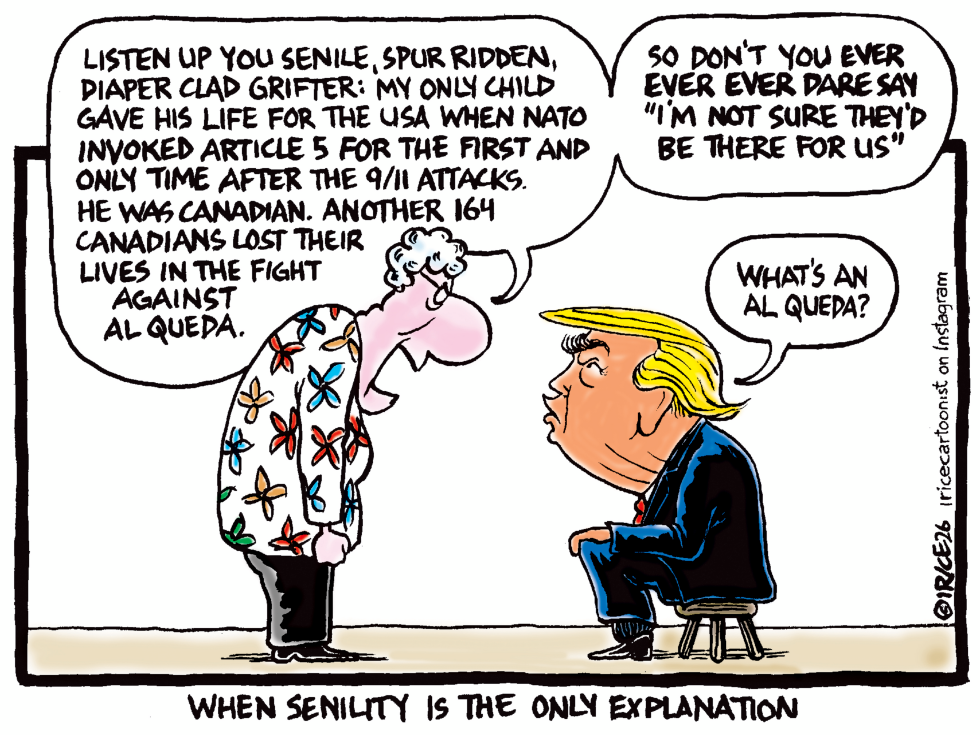
A political cartoon dated July 12, 2026, shows Donald Trump seated on a stool responding to a lecture about Al Qaeda and NATO's Article 5 invocation after 9/11. The standing figure, wearing a floral shirt, recounts the death of a Canadian child and 164 other Canadians in the fight. Trump replies by asking what an Al Qaeda is. The bottom caption reads when senility is the only explanation. The image highlights a direct confrontation over historical facts tied to the 9/11 attacks and alliance commitments.