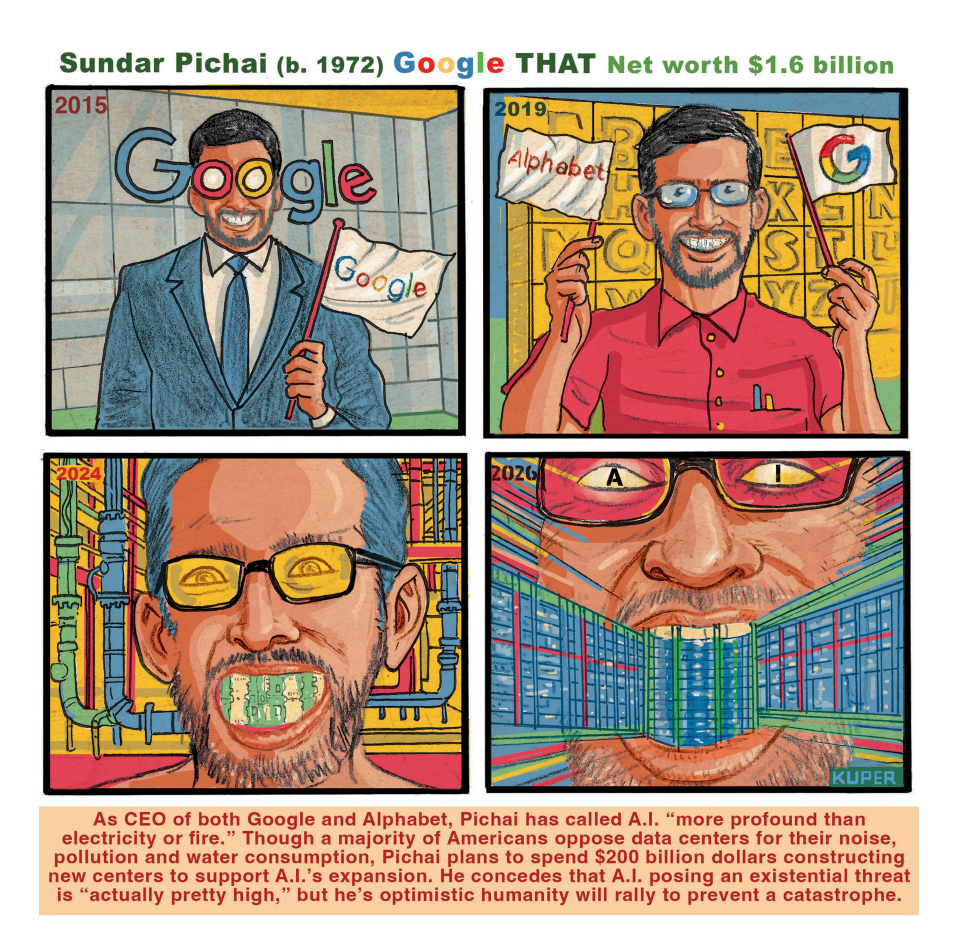
Sundar Pichai, CEO of Google and Alphabet, announced plans to invest $200 billion in new AI data centers to support rapid expansion of artificial intelligence systems. The move comes as polls show most Americans oppose such facilities due to noise, pollution, and heavy water consumption. Pichai has described AI as more transformative than electricity or fire and has acknowledged a high risk of existential threats from the technology, while expressing confidence that humanity can avoid catastrophe. The editorial cartoon frames this corporate push as aggressive and tone-deaf to local opposition and environmental limits.
61 billion aid
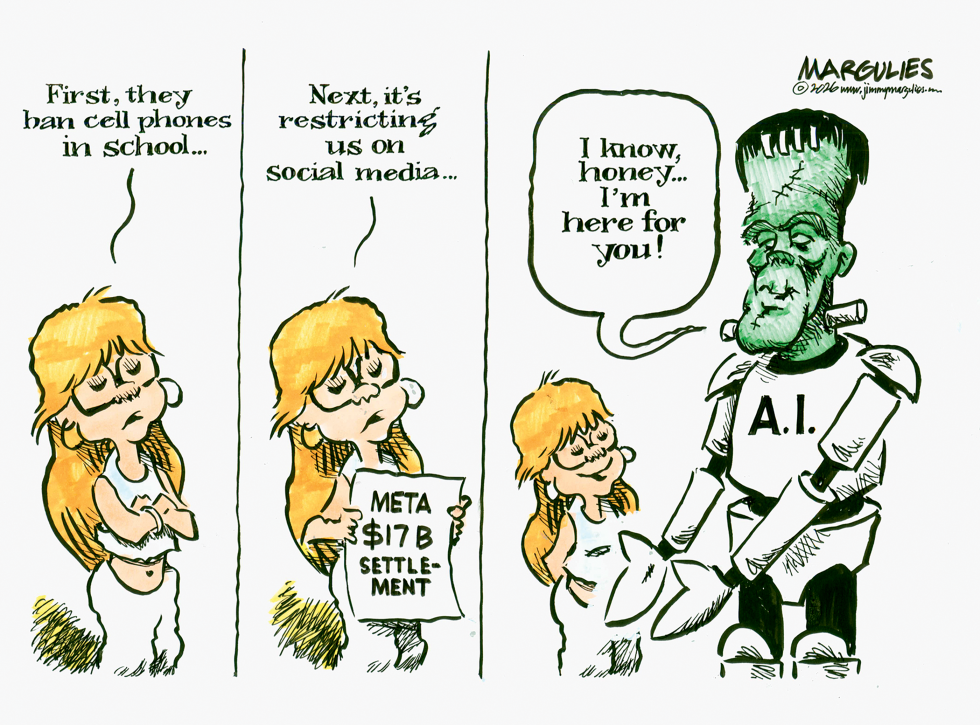
A $17 billion Meta settlement and expanding school cell phone bans have accelerated restrictions on teen social media use. The developments raise questions about how young users will fill the gap left by reduced platform access. The cartoon frames artificial intelligence as the unexpected beneficiary, positioning an AI Frankenstein figure as a comforting presence for a disappointed girl. This visual argument suggests that limits on social media may simply shift reliance toward unregulated AI tools rather than solving underlying concerns about youth screen time.
Aug
26
2026
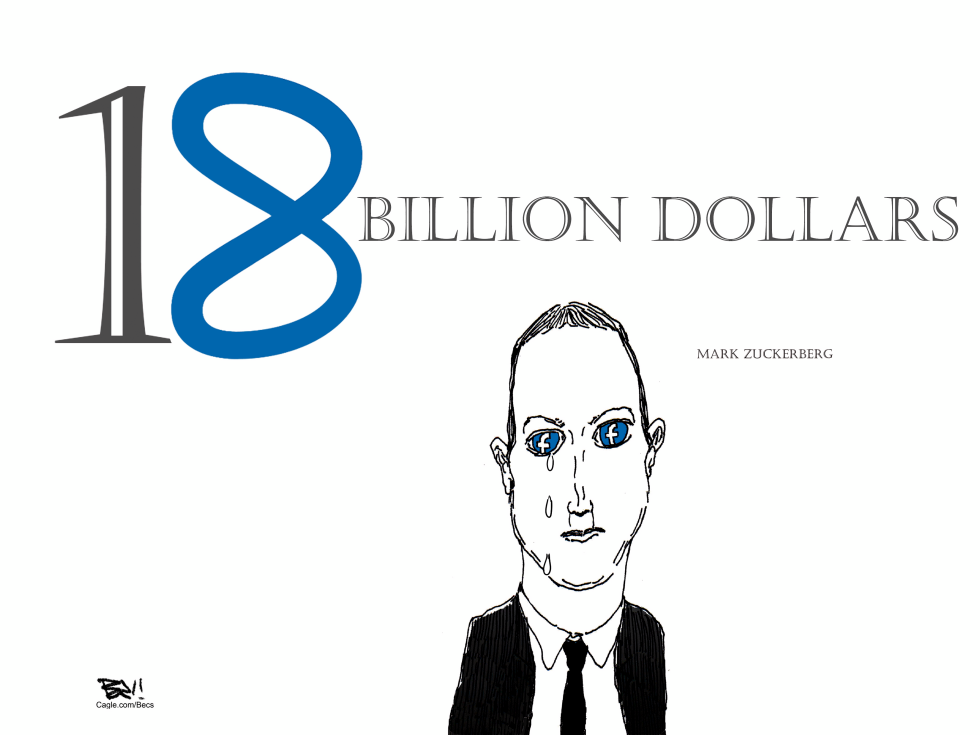
Meta Platforms reported a significant valuation drop that erased 18 billion dollars from Mark Zuckerberg's holdings. The loss reflects broader volatility in social media stocks and investor concerns over advertising revenue. Zuckerberg's public profile makes the personal financial impact a focal point for discussions on tech wealth. The piece portrays the event as a moment of visible distress for the executive. It underscores how quickly billionaire fortunes tied to public companies can shift with market sentiment.
Aug
22
2026
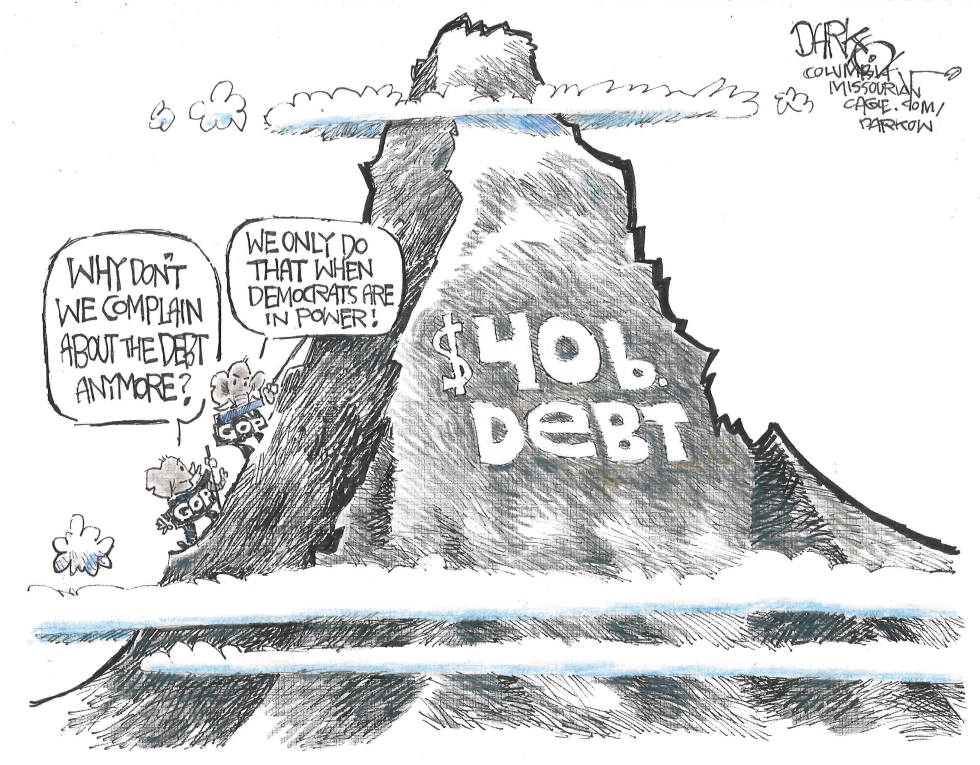
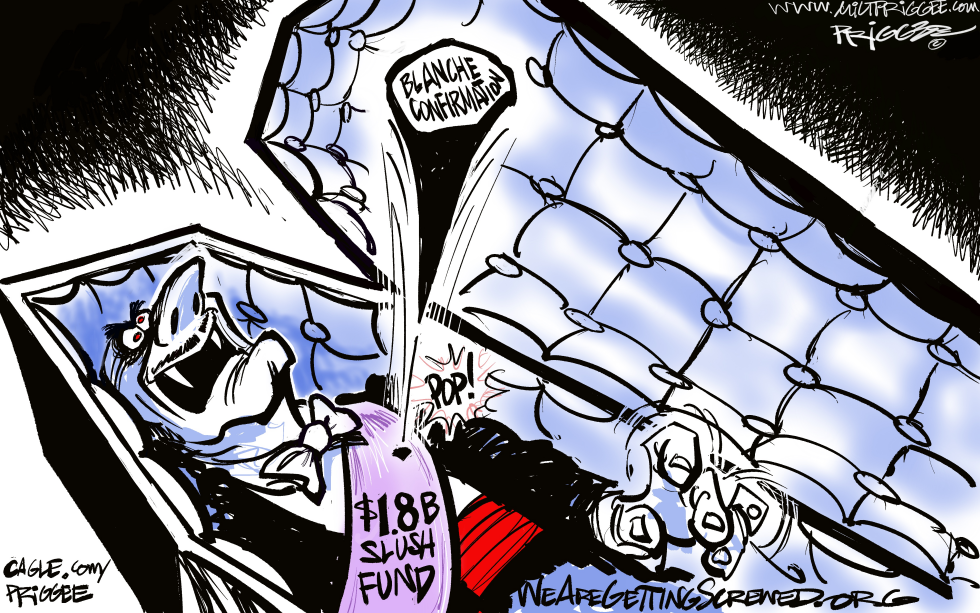
Republicans in power have stopped raising alarms over the national debt, a reversal from their stance during Democratic administrations. The shift highlights how fiscal concerns often serve partisan purposes rather than consistent policy priorities. The piece critiques this selective approach to government spending and borrowing.
Aug
9
2026
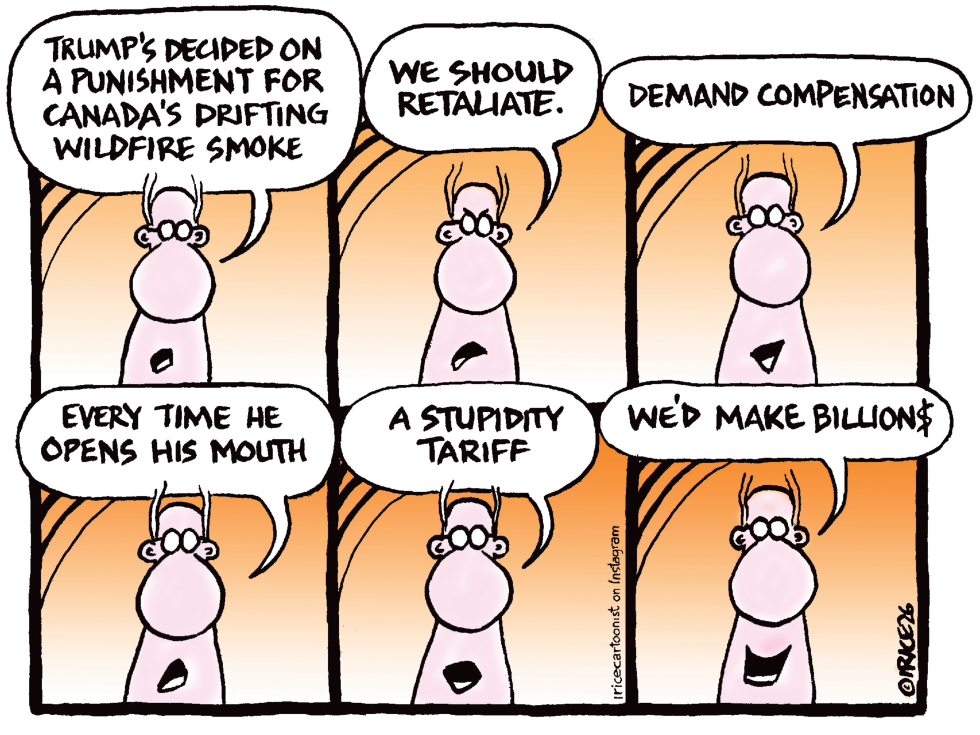
Donald Trump has floated imposing a tariff on Canada as punishment for wildfire smoke drifting across the border. The move draws immediate pushback from Canadian officials who suggest retaliation and compensation demands. The episode highlights ongoing trade tensions between the two neighbors and the economic stakes involved in cross-border disputes. The cartoon frames the tariff idea as a foolish overreaction likely to backfire financially on the United States.
Jul
31
2026
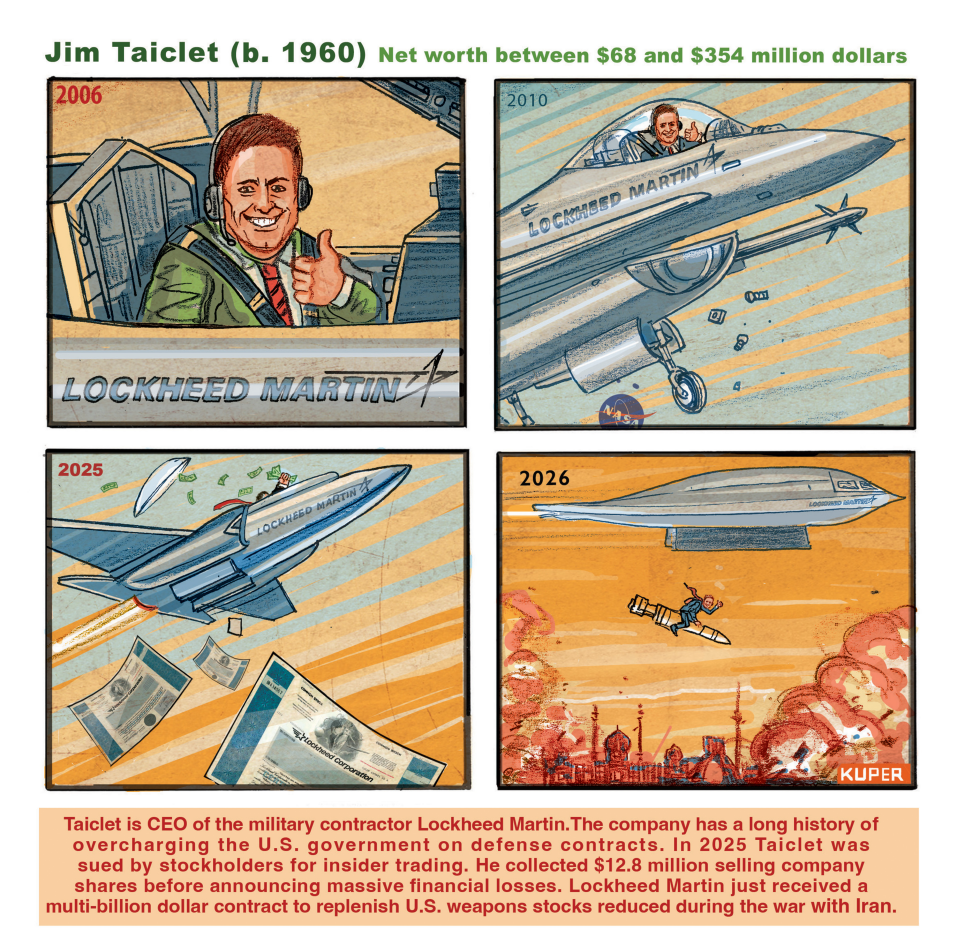
Lockheed Martin CEO Jim Taiclet was sued by stockholders in 2025 for selling $12.8 million in shares before announcing major losses. The company then won a multi-billion contract to replenish weapons depleted in the Iran conflict. The piece criticizes Taiclet and the contractor for insider trading and repeated government overcharging.
Jul
9
2026

On July 9, 2026, Pat Bagley's cartoon depicts Donald Trump pushing a cart loaded with enormous sacks labeled 2026 and $2,000,000,000.00 GRIFT. A woman in a red hat hands him a small handbag while stating that he donates his $400,000 salary. The image contrasts the tiny claimed donation against the massive grift sacks. The scene draws from ongoing discussions of presidential finances and public salary claims during the period.

A large commercial jet labeled Trump Family Grift and marked with a billions seal carries figures in its windows while a small biplane labeled Hunter Biden crashes into its nose. Debris flies as the biplane breaks apart. A speech bubble from the jet asks if anyone heard something. The July 2026 cartoon by Rick McKee uses the collision to contrast family business dealings and past scrutiny on the Biden family.
Jul
6
2026
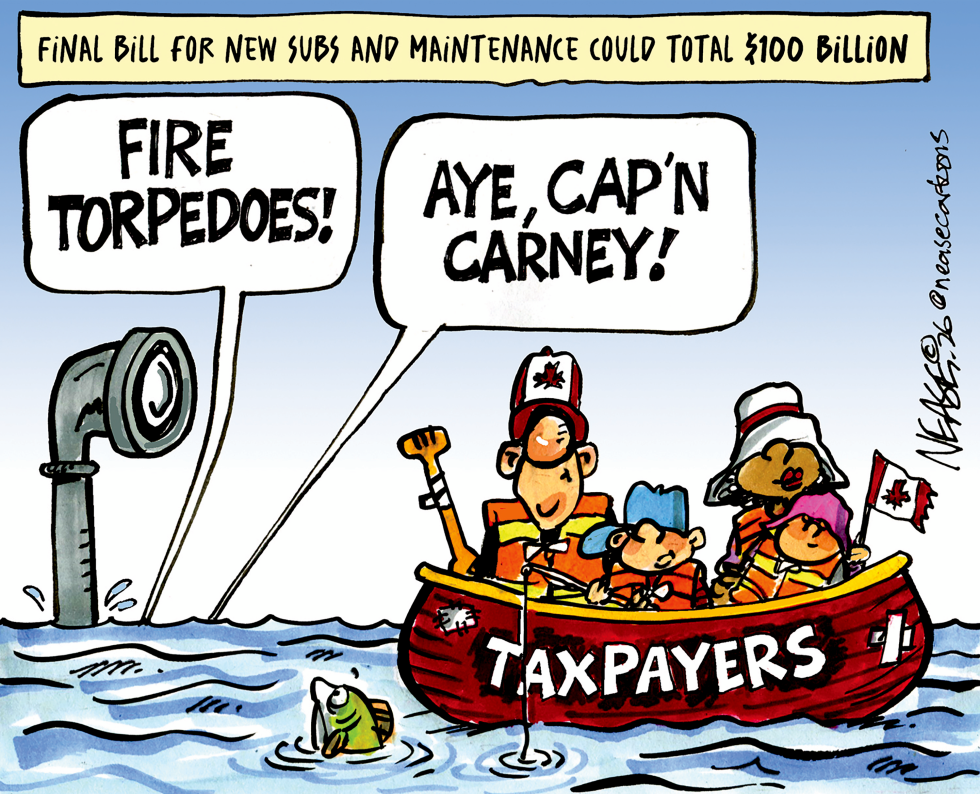
A political cartoon from July 6, 2026, shows a red boat marked TAXPAYERS carrying figures including one identified as Cap'n Carney. Speech bubbles show calls to fire torpedoes and affirm orders. A banner above warns that the final bill for new submarines and maintenance could reach $100 billion. A periscope rises from the water beside the vessel. The image highlights Canadian defense procurement costs borne by the public.
Jul
6
2026
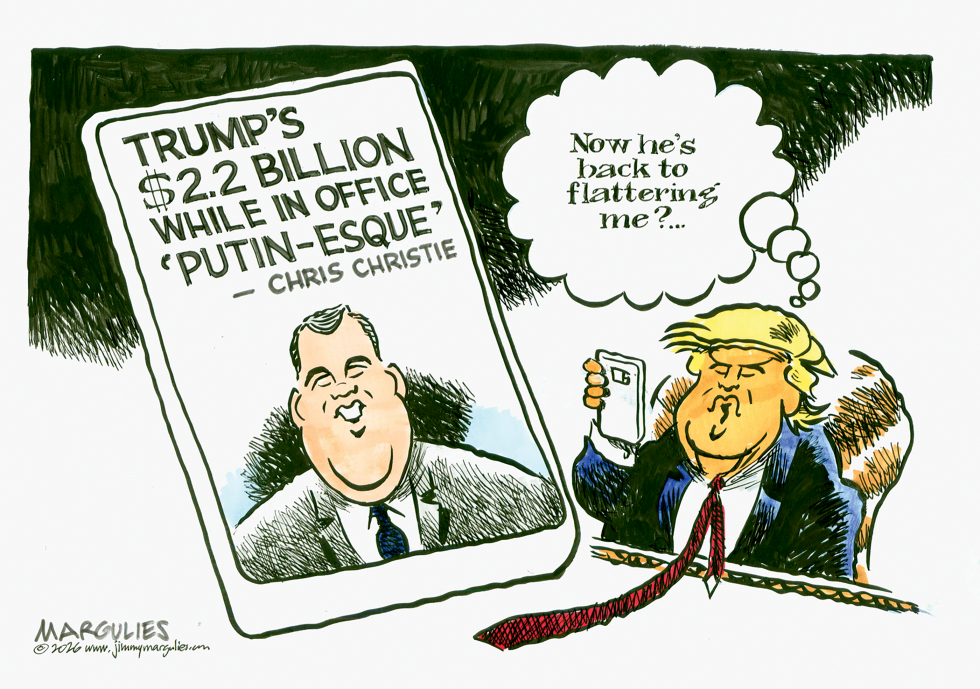
On July 6, 2026, a cartoon depicts Donald Trump examining a phone displaying Chris Christie’s quote labeling his $2.2 billion earnings while in office as Putin-esque. Trump’s thought bubble reveals he interprets the remark as flattery rather than criticism, highlighting an ongoing dynamic between the two figures amid foreign policy references to Russia.
Jun
30
2026
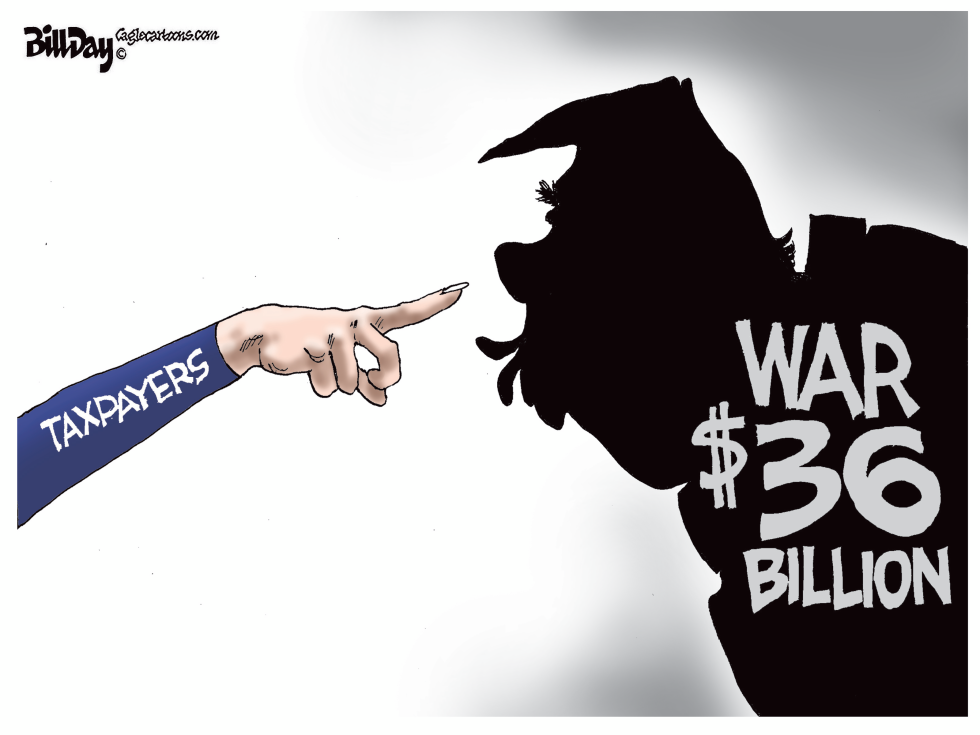
The cartoon depicts a taxpayers arm pointing directly at a dark silhouette bearing the words WAR $36 BILLION. Published on June 30 2026 the image addresses ongoing debates over military expenditures and public accountability for large scale war costs. The visual uses a simple silhouette to represent the recipient of criticism while the pointing gesture emphasizes taxpayer frustration with the scale of spending.
Jun
24
2026
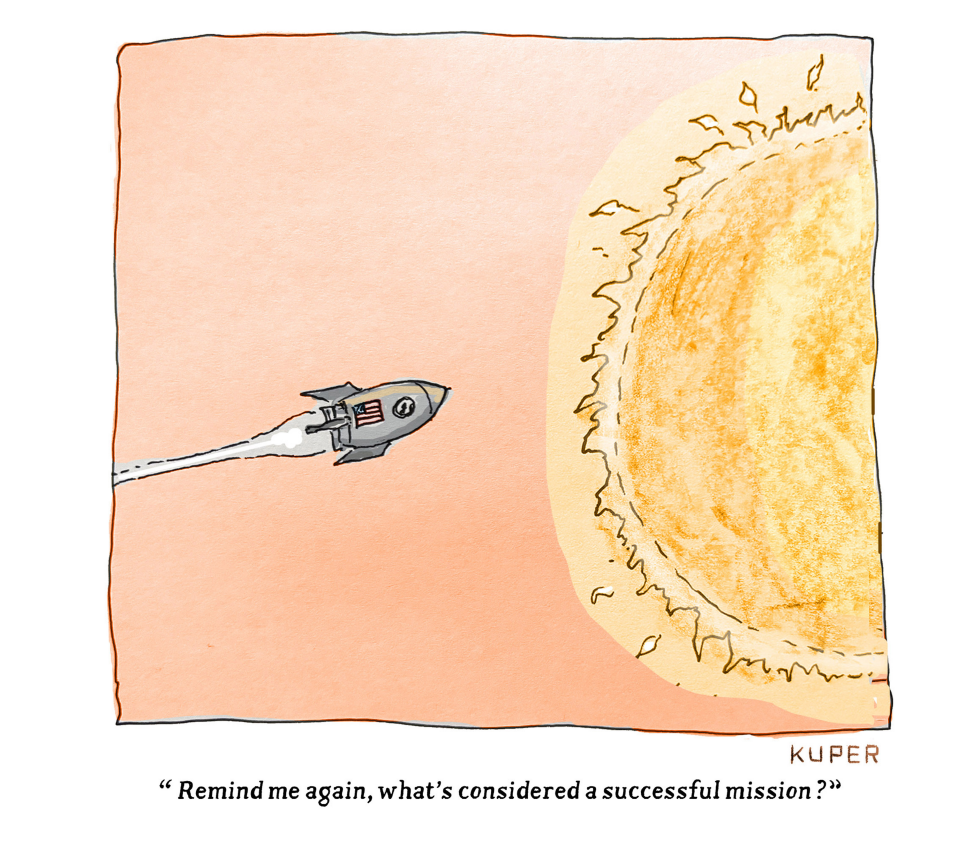
The cartoon shows a US-flagged missile streaking toward a large fiery orb, evoking an ill-defined strike on Iran. The caption questions the meaning of a successful mission. Published amid reports of Iranian nuclear activity and regional tensions, the image critiques the absence of an exit strategy. It references potential economic fallout such as closed shipping lanes and higher oil prices. The work also nods to internal administration finger-pointing involving JD Vance. Overall the piece underscores the hazards of military action without a coherent plan.
Jun
22
2026
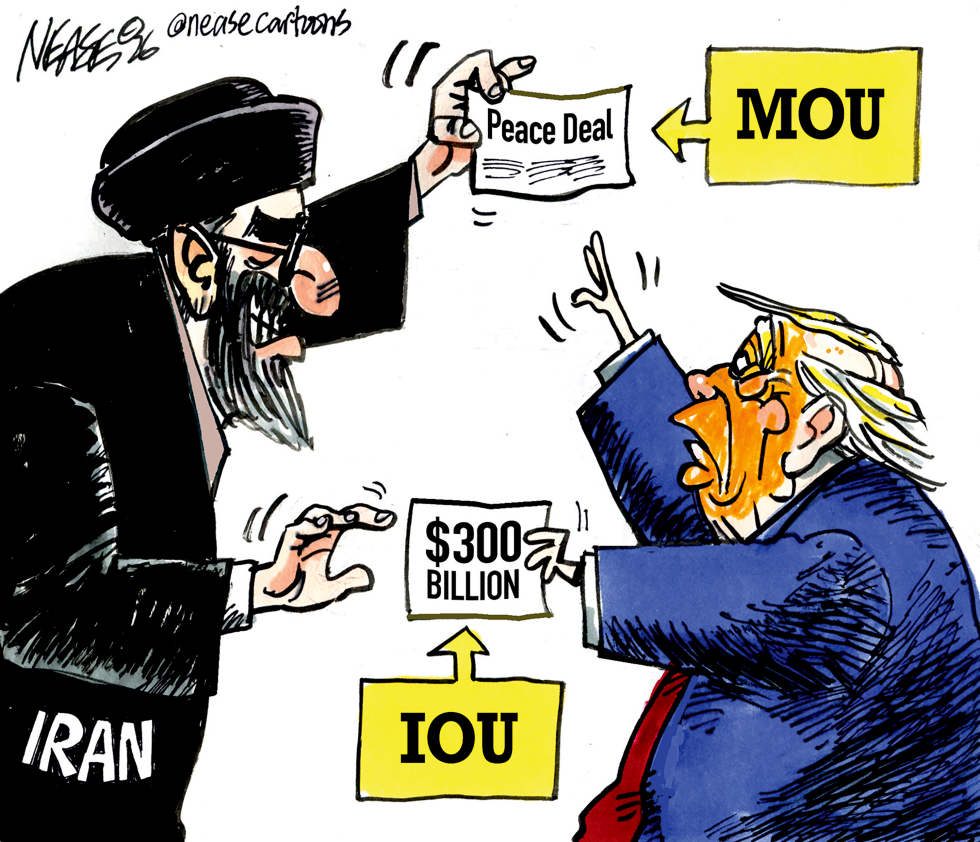
Nease, a Canadian cartoonist, examines the hidden costs of the peace agreements being brokered by Trump across multiple conflict zones. The cartoon suggests that peace achieved through coercion and abandonment of allies carries enormous human costs. The accounting metaphor frames diplomacy as a transactional exercise with losers.





















