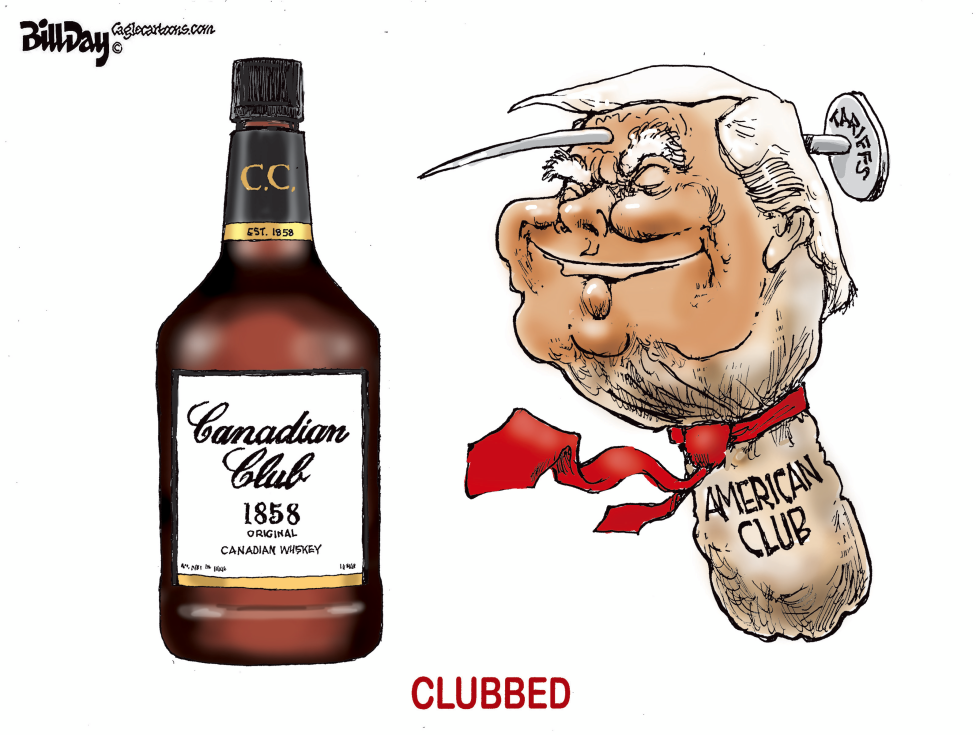
On September 9, 2026, the cartoon responds to ongoing US-Canada trade friction under the second Trump administration. Trump has pursued aggressive tariff policies against Canadian imports, prompting Ottawa to consider reciprocal measures. The piece uses the Canadian Club whiskey brand to illustrate how such policies rebound on American interests. It argues that Trump's approach harms US businesses and consumers rather than strengthening them.
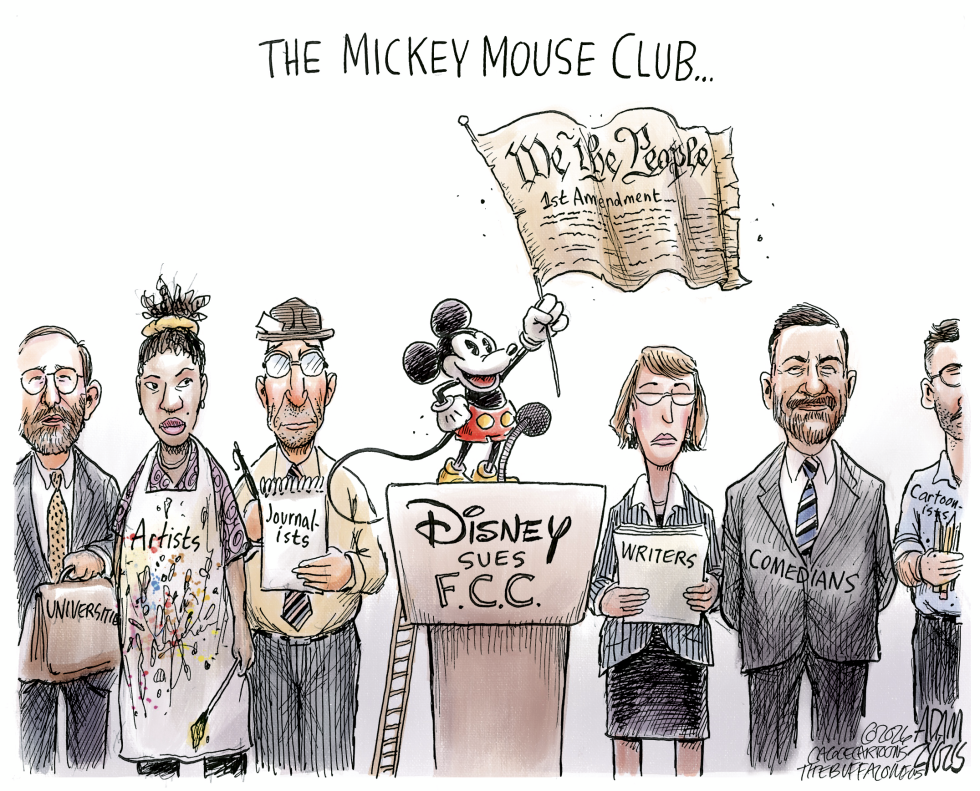
The image shows Mickey Mouse atop a podium marked Disney Sues F.C.C. while holding a scroll labeled We the People 1st Amendment. Surrounding figures represent artists, journalists, writers, comedians and cartoonists. The scene places the Disney character at the center of a legal challenge involving media and creative professionals. The composition highlights the First Amendment document as the focal point of the group. Publication occurred on August 21 2026.
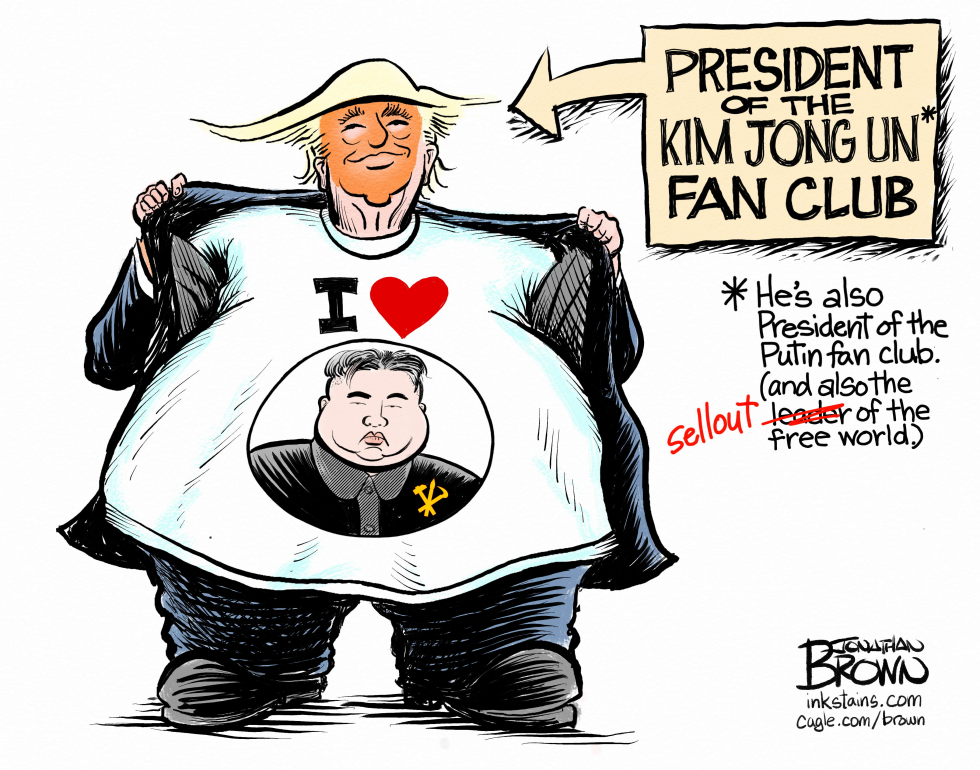
The image shows Donald Trump pulling open his jacket to reveal a white shirt bearing a portrait of Kim Jong Un inside a heart. An arrow points to a sign declaring him president of the Kim Jong Un fan club. Additional text notes his role in a Putin fan club and crosses out the word sellout next to a reference to leadership of the free world. The composition centers on the shirt reveal and the sign in the upper right.
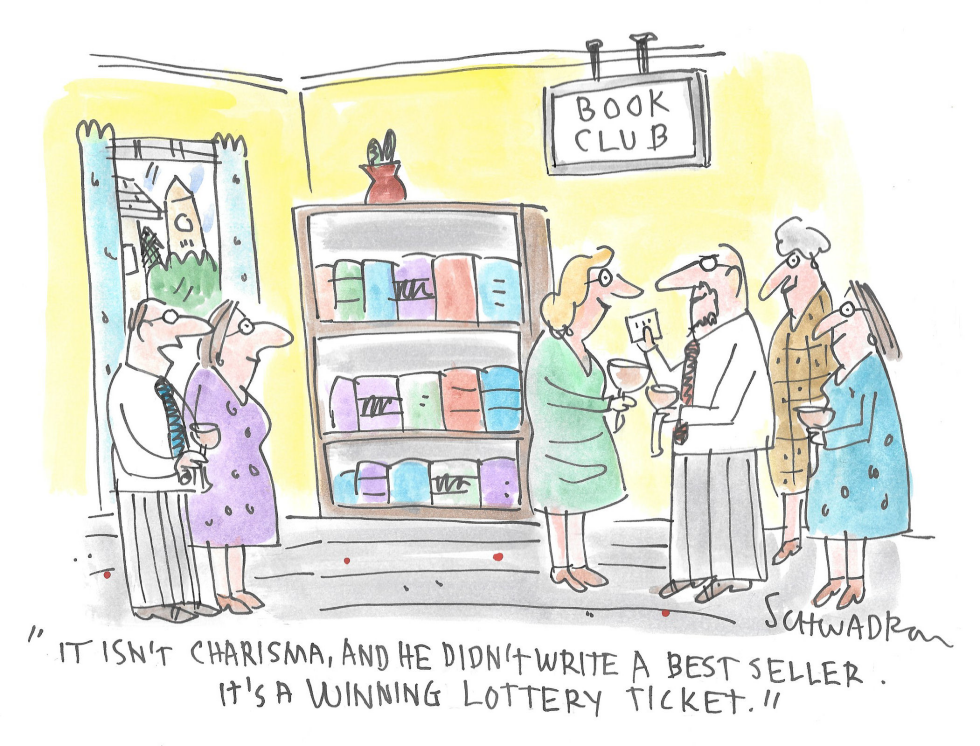
A book club gathering turns on a revelation about its leader's success. Members learn that a winning lottery ticket, not literary achievement or personal charisma, explains the group's draw. The situation highlights how unexpected windfalls can shape social circles and perceived status in casual settings. The piece presents the discovery as a straightforward explanation that undercuts assumptions about talent or appeal driving group interest.
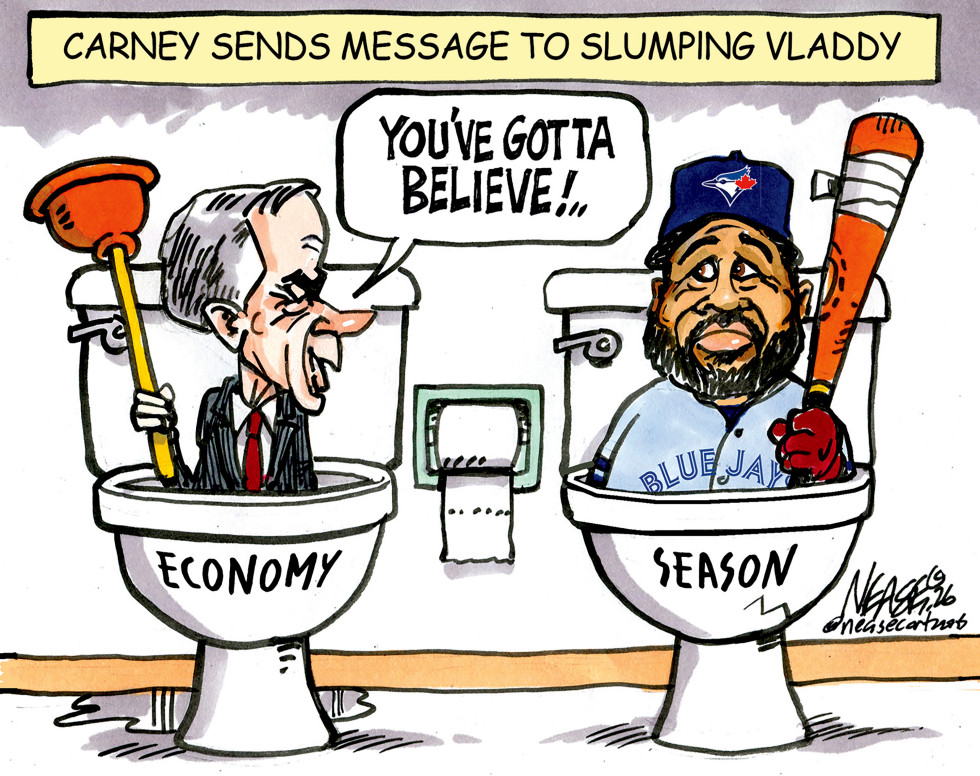
On August 12 2026 Mark Carney addressed Vladimir Guerrero Jr. during simultaneous downturns for the Canadian economy and the Toronto Blue Jays season. The exchange highlights ongoing pressures on both fronts with Carney positioned as a voice of encouragement. The piece frames the interaction as a direct motivational message from the political sphere to the sports world.
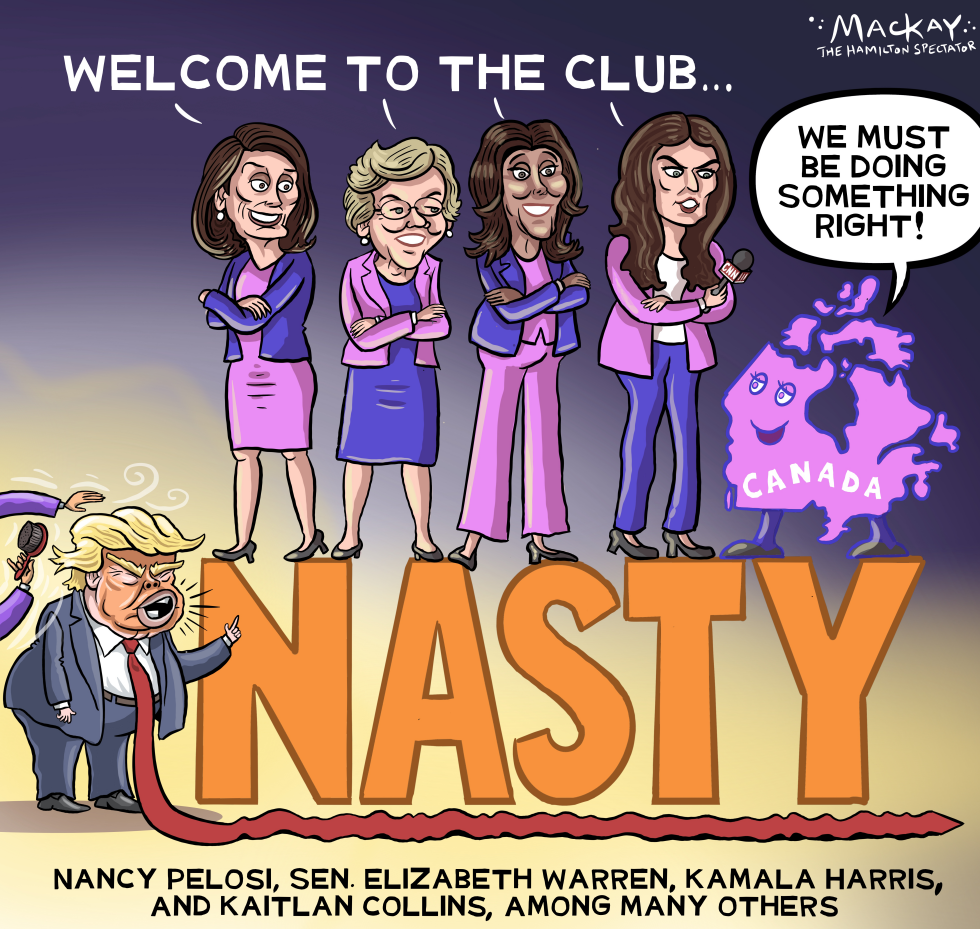
Donald Trump has repeatedly applied the term nasty to female political figures and journalists including Nancy Pelosi, Elizabeth Warren, Kamala Harris and Kaitlan Collins. The August 2026 cartoon depicts those women welcoming a personified Canada into their group, framing the label as a badge of honor rather than an insult. The piece argues that the president's rhetoric has lost its sting and now unites its targets.
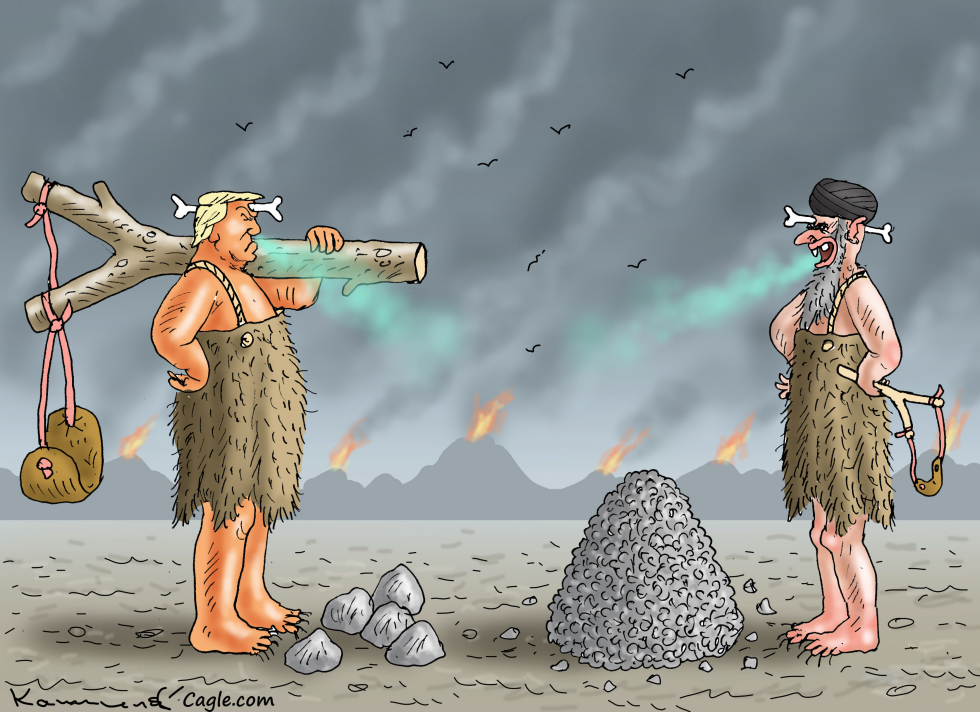
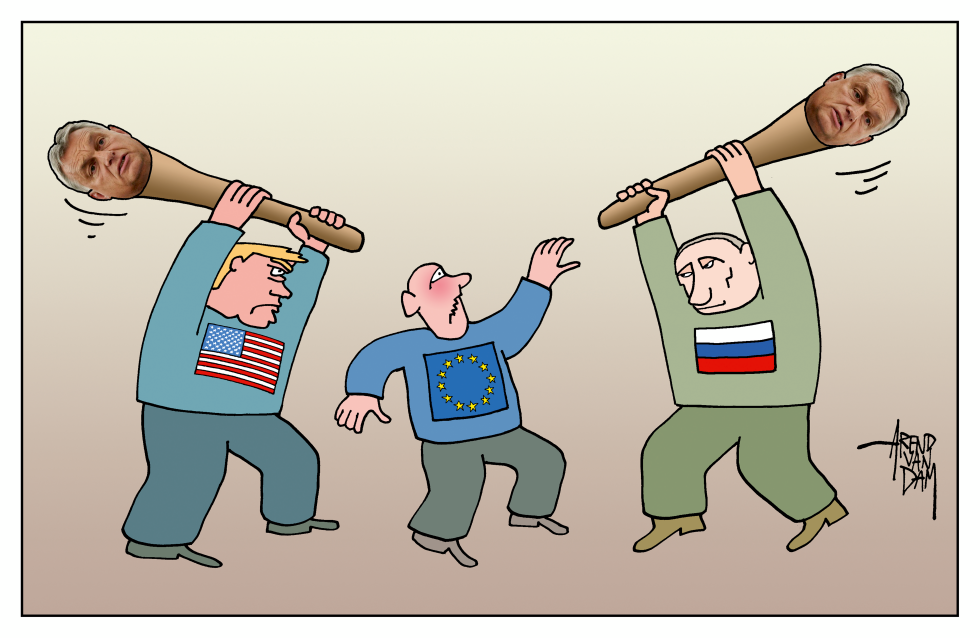
Donald Trump faces a political rival in a heated contest marked by aggressive posturing and primitive tactics. The confrontation underscores deep divisions in leadership style and approach to conflict. The piece portrays these dynamics as regressive and destructive.
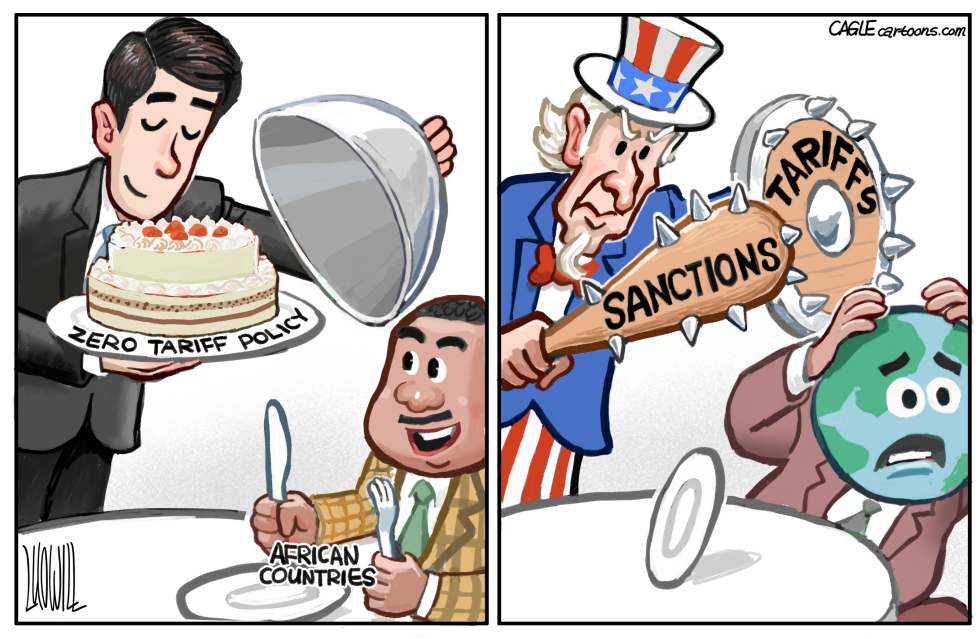
The United States has extended a zero-tariff policy offer to African nations amid ongoing global trade tensions. This move stands in contrast to simultaneous use of tariffs and sanctions against other trading partners. The policy highlights selective economic engagement by Washington. The editorial position criticizes the inconsistency between the overture to Africa and the punitive approach applied more broadly.
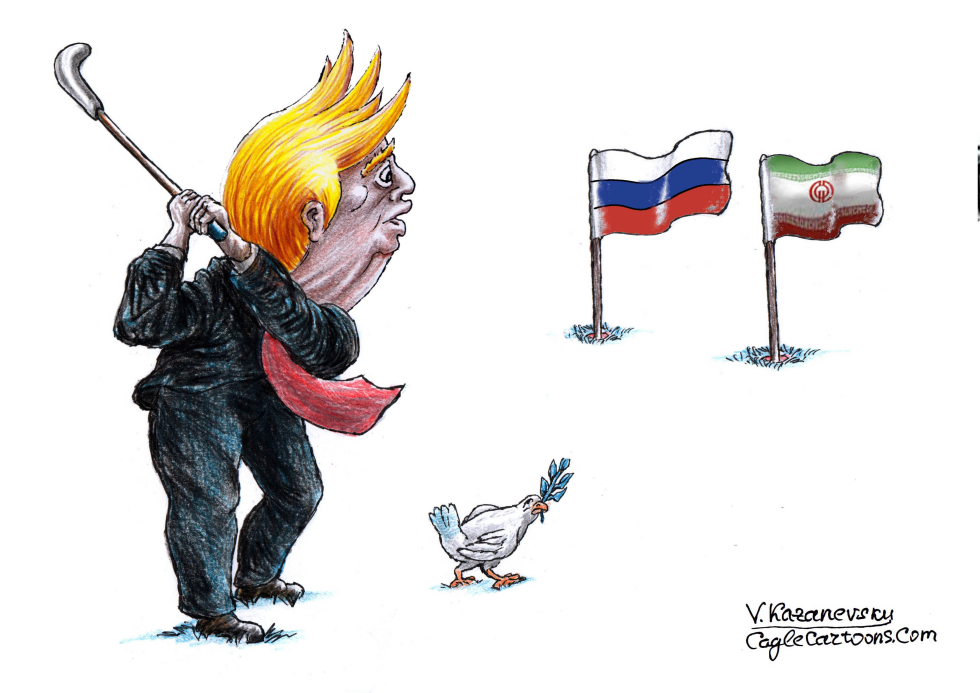
Donald Trump has pursued direct engagement with Russia and Iran on multiple fronts including nuclear talks and regional conflicts. The moves have drawn scrutiny over whether they advance or undermine stability. The editorial takes the position that such efforts amount to an assault on peace rather than a constructive step.
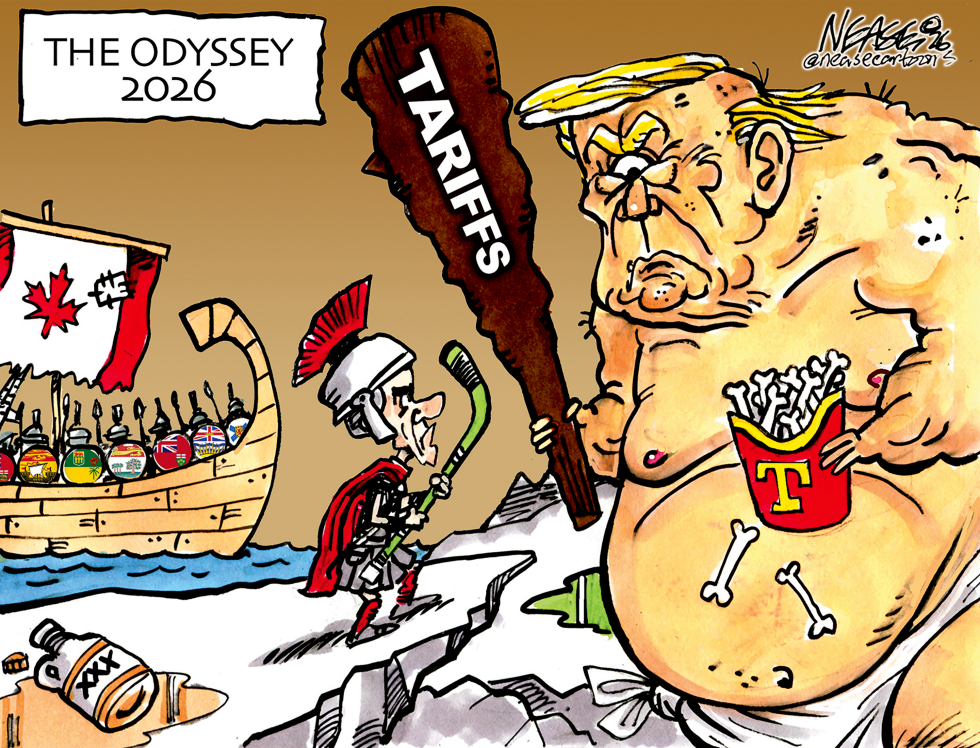
President Trump escalates tariffs on trading partners including Canada in mid-2026. The move targets imports amid ongoing disputes over trade balances and supply chains. Allies respond with coordinated pushback through diplomatic and economic channels. The cartoon casts the confrontation as a one-sided power play by the oversized tariff wielder against smaller coordinated opponents.
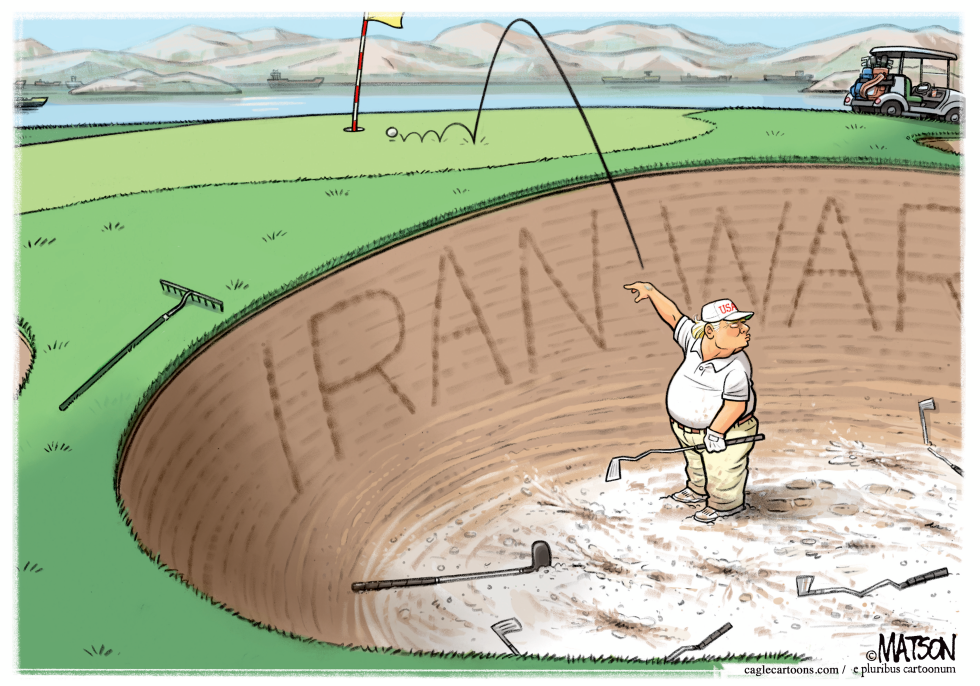
Tensions in the Strait of Hormuz have escalated with increased naval traffic and warnings of potential conflict involving Iran. President Trump, depicted golfing in a sand trap labeled Iran War, faces questions about his administration's handling of the crisis. The situation matters because any disruption to oil shipping lanes could spike global energy prices and draw the United States deeper into regional hostilities. The piece portrays the president as treating a serious foreign policy challenge like a casual round of golf, suggesting misplaced priorities during a period of heightened risk.
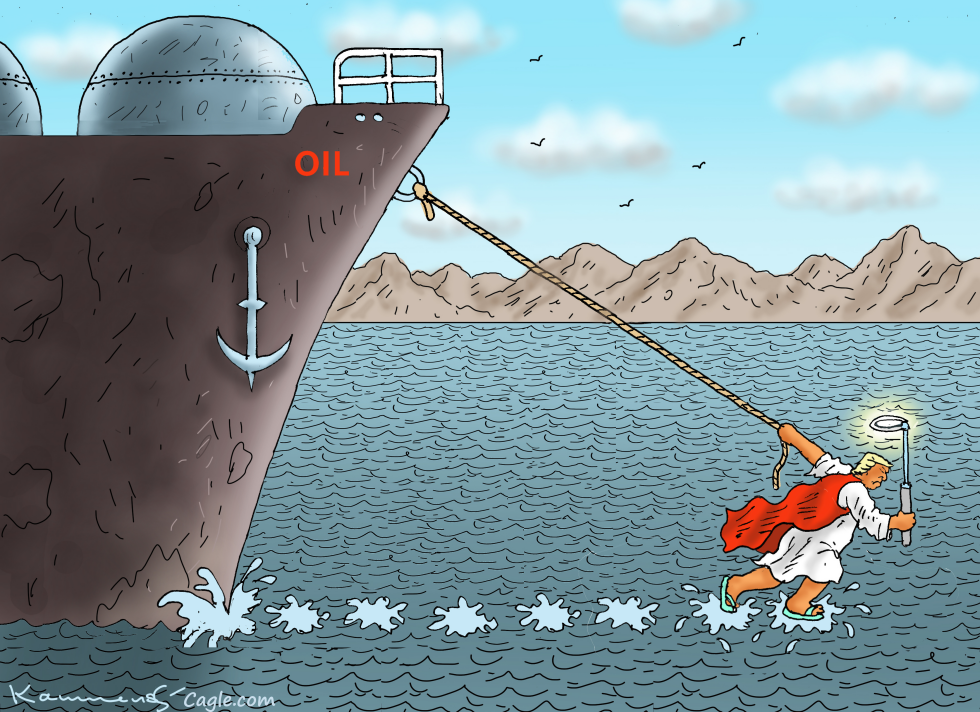
The image depicts a figure dressed in a white robe and red cape, complete with a glowing halo, running across the water while pulling a large oil tanker marked 'OIL' with a rope. He holds a golf club in one hand, splashing water with each step against a backdrop of mountains and a clear sky. This setup draws on tags like Trump, Hormuz, Iran, oil war, MAGA terror, and fascism to satirize political figures intervening in global oil crises. The cartoon's composition emphasizes the absurdity of a divine savior tackling economic and geopolitical issues, with birds flying overhead and distant peaks suggesting a Middle Eastern strait. Kamensky's style brings dry humor to the forefront, poking at notions of messianic leadership in turbulent times.