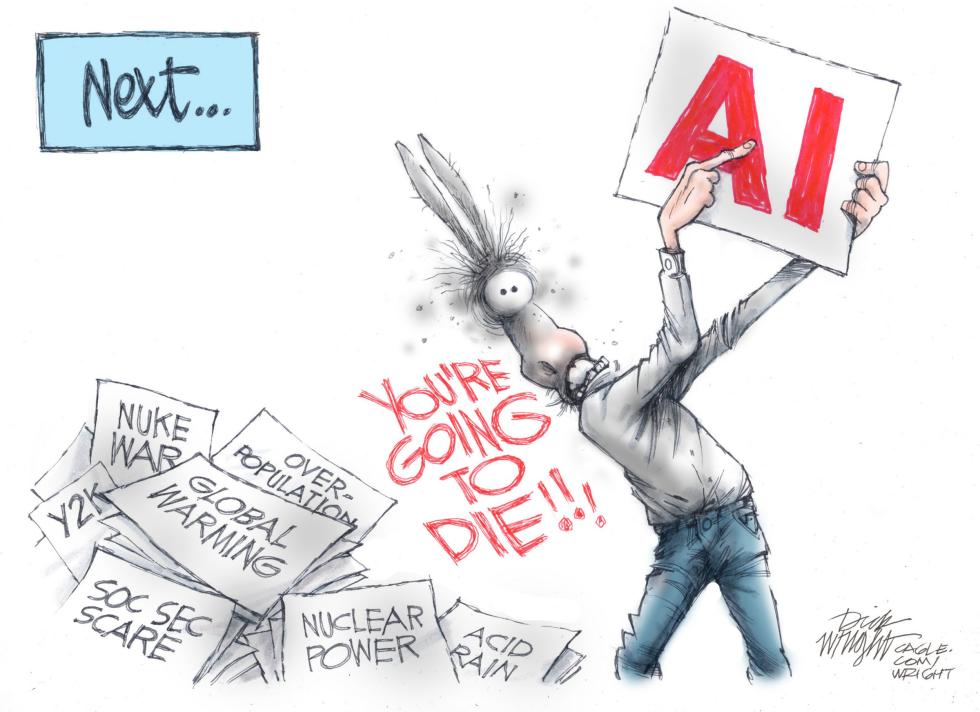
Democrats have renewed warnings that artificial intelligence poses an existential threat, echoing earlier alarms over Y2K, nuclear power, and climate change that later lost urgency. The pattern suggests political use of successive crises to maintain attention. The cartoon argues these claims recycle familiar tactics without new substance.
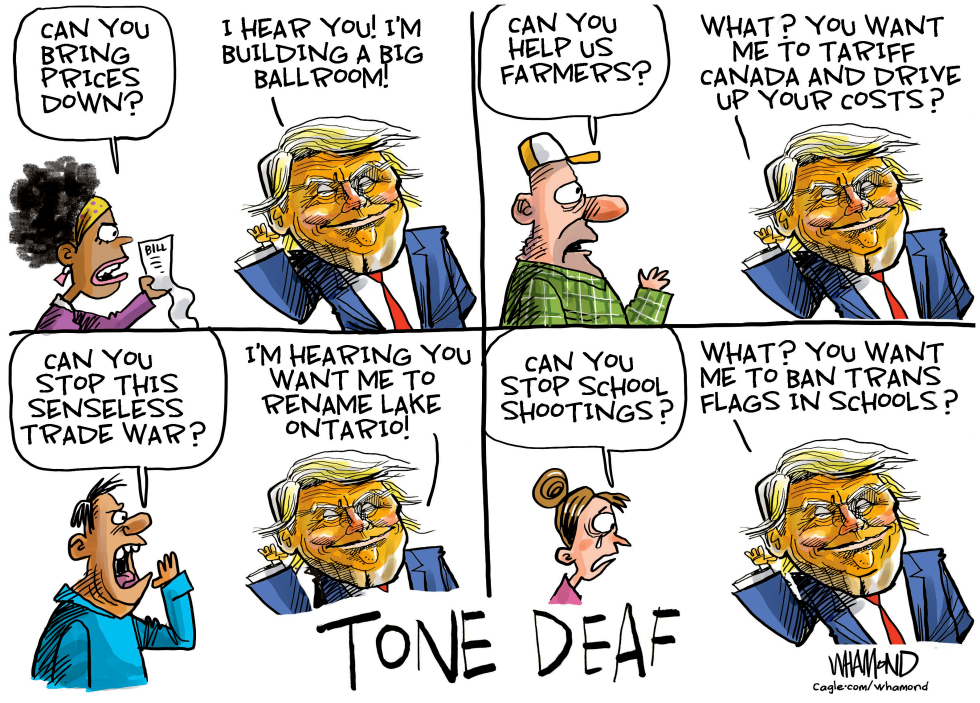
The cartoon by Dave Whamond published September 15, 2026, shows Donald Trump responding to citizen concerns about prices, tariffs on Canada, trade wars, school shootings and transgender flags by pivoting to a ballroom project and renaming Lake Ontario. The four-panel layout underscores a pattern of tone-deaf replies that ignore the original requests.
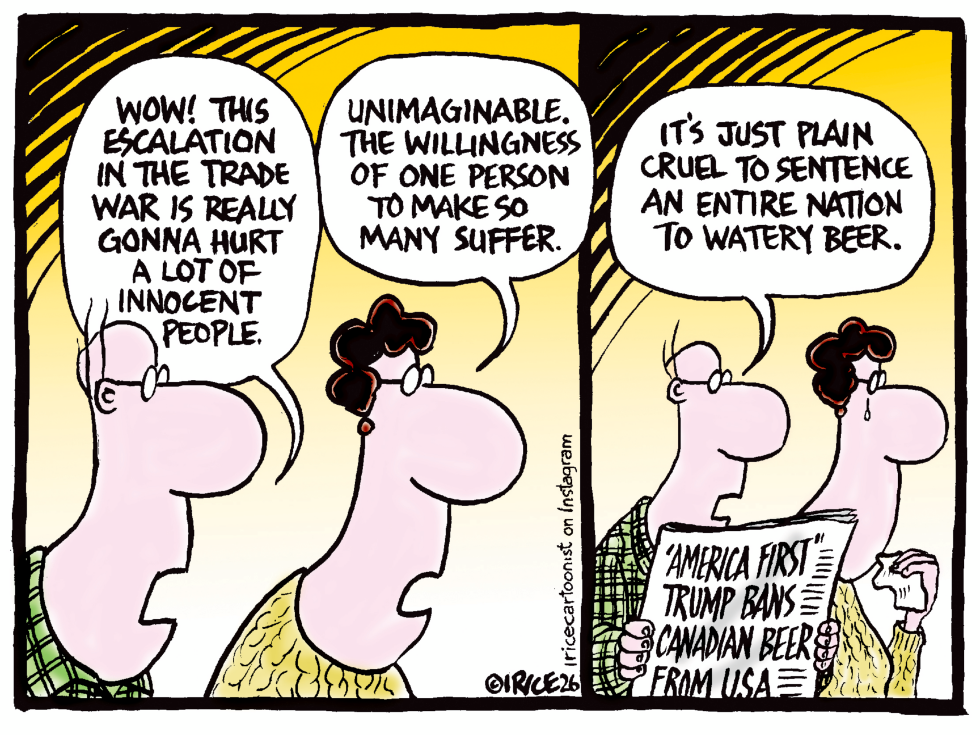
President Trump announced a ban on Canadian beer imports as part of an escalating trade dispute with Canada. The move, framed under the America First banner, immediately drew criticism for punishing ordinary citizens on both sides of the border. The policy extends earlier tariff threats into consumer goods, raising prices and limiting choices for American drinkers. Canadian exporters face sudden market loss while U.S. retailers scramble for alternatives. The editorial cartoon portrays the decision as petty and disproportionate, arguing that one leader's willingness to inflict broad pain reveals the human cost of personal political theater.
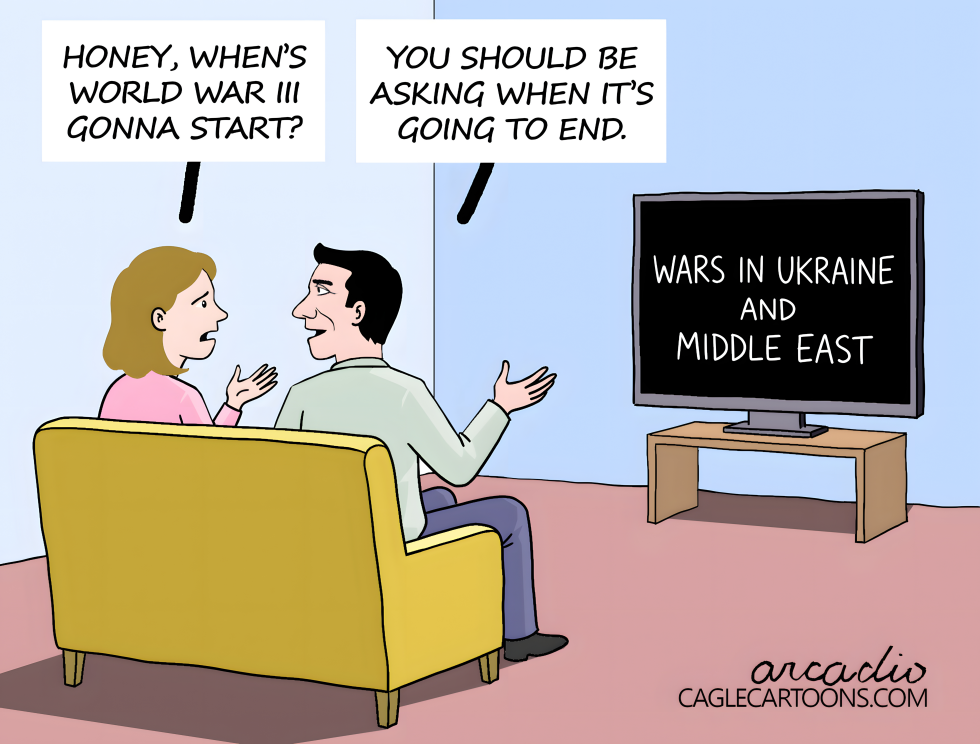
Persistent fighting in Ukraine and the Middle East continues to dominate global attention in September 2026, with no clear end in sight for either theater. The conflicts involve Russia against Ukraine and multiple fronts in the Middle East, raising concerns about wider involvement. Viewers and analysts alike question whether these regional wars risk drawing in additional powers and spiraling into a larger confrontation. The cartoon captures everyday public anxiety over the duration and potential expansion of these wars rather than their origins.
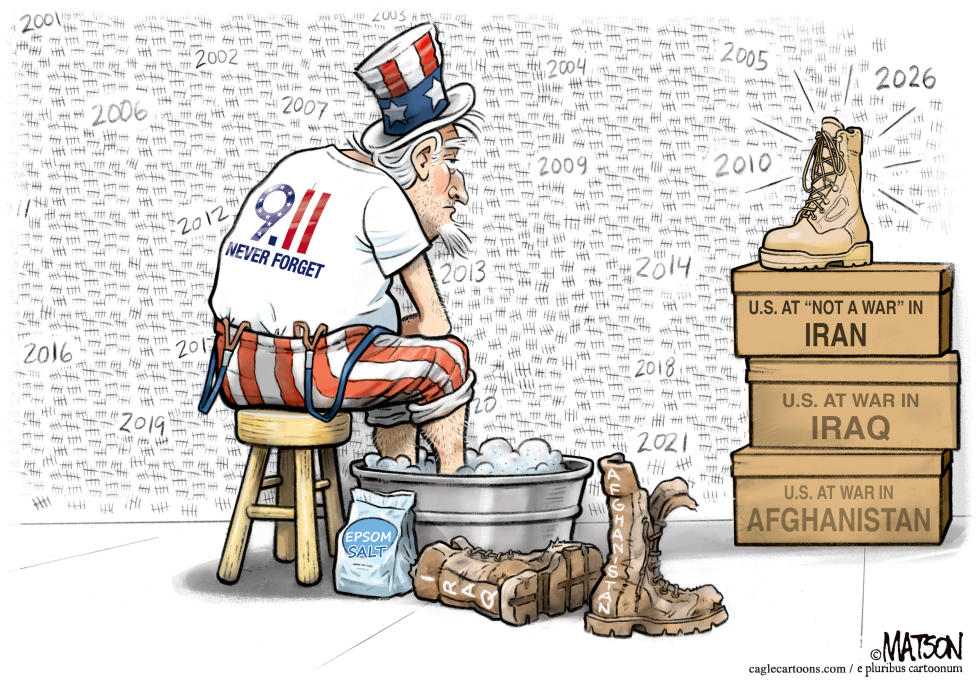
The United States has maintained military involvement across Iraq and Afghanistan for more than two decades following the September 11 attacks. Ongoing regional tensions with Iran now raise the prospect of additional commitments. The cartoon captures public and institutional exhaustion with extended deployments and questions the capacity for another prolonged engagement.
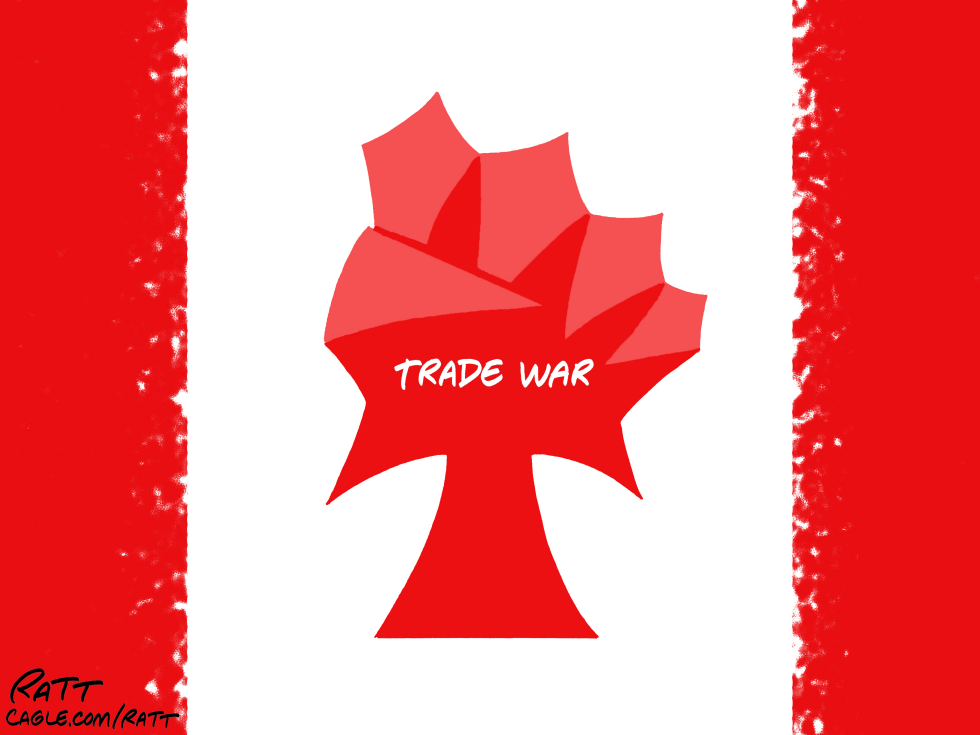
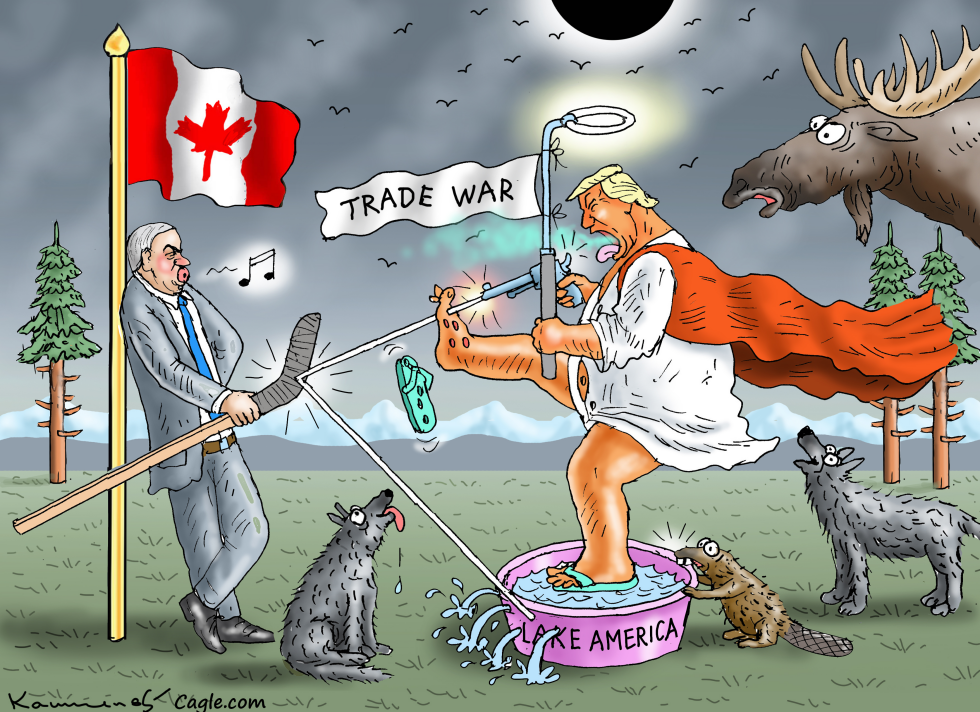
Ongoing US-Canada trade tensions escalated in 2026 with new tariff threats targeting Canadian exports. The dispute threatens key sectors including autos, lumber and agriculture, raising costs for consumers on both sides of the border. Canada has signaled plans to diversify markets and strengthen domestic industry. The cartoon frames the conflict as a direct assault on Canadian sovereignty and economic stability. It portrays the trade war as fracturing national symbols while urging a stronger northern response.
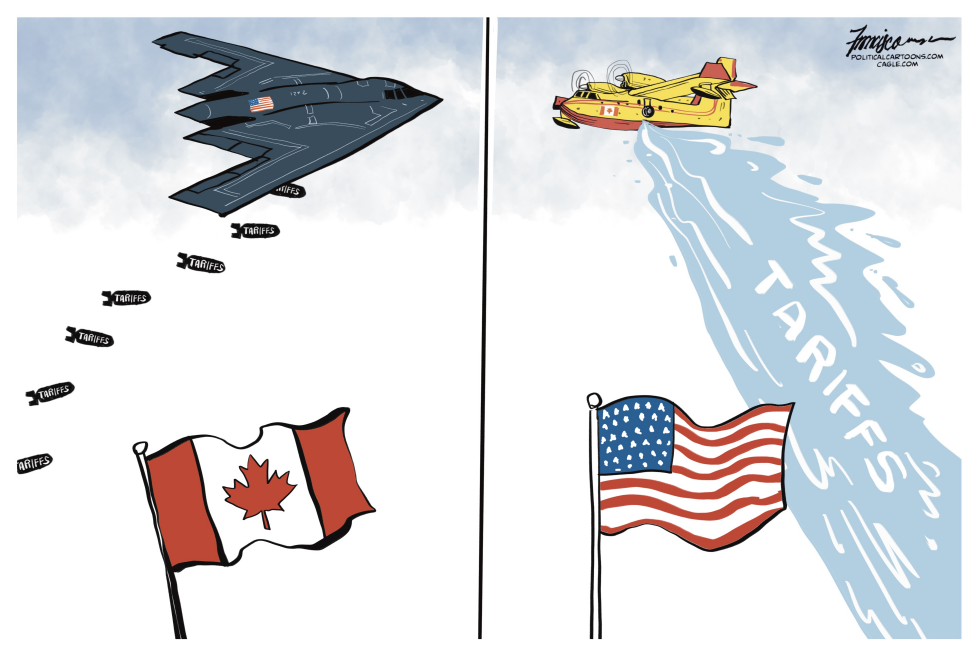
The United States imposed tariffs on Canadian goods, prompting Ottawa to enact matching retaliatory tariffs. The moves risk disrupting integrated supply chains and raising costs for consumers and industries on both sides of the border. The cartoon frames the exchange as mutual escalation with each side deploying tariffs against the other.
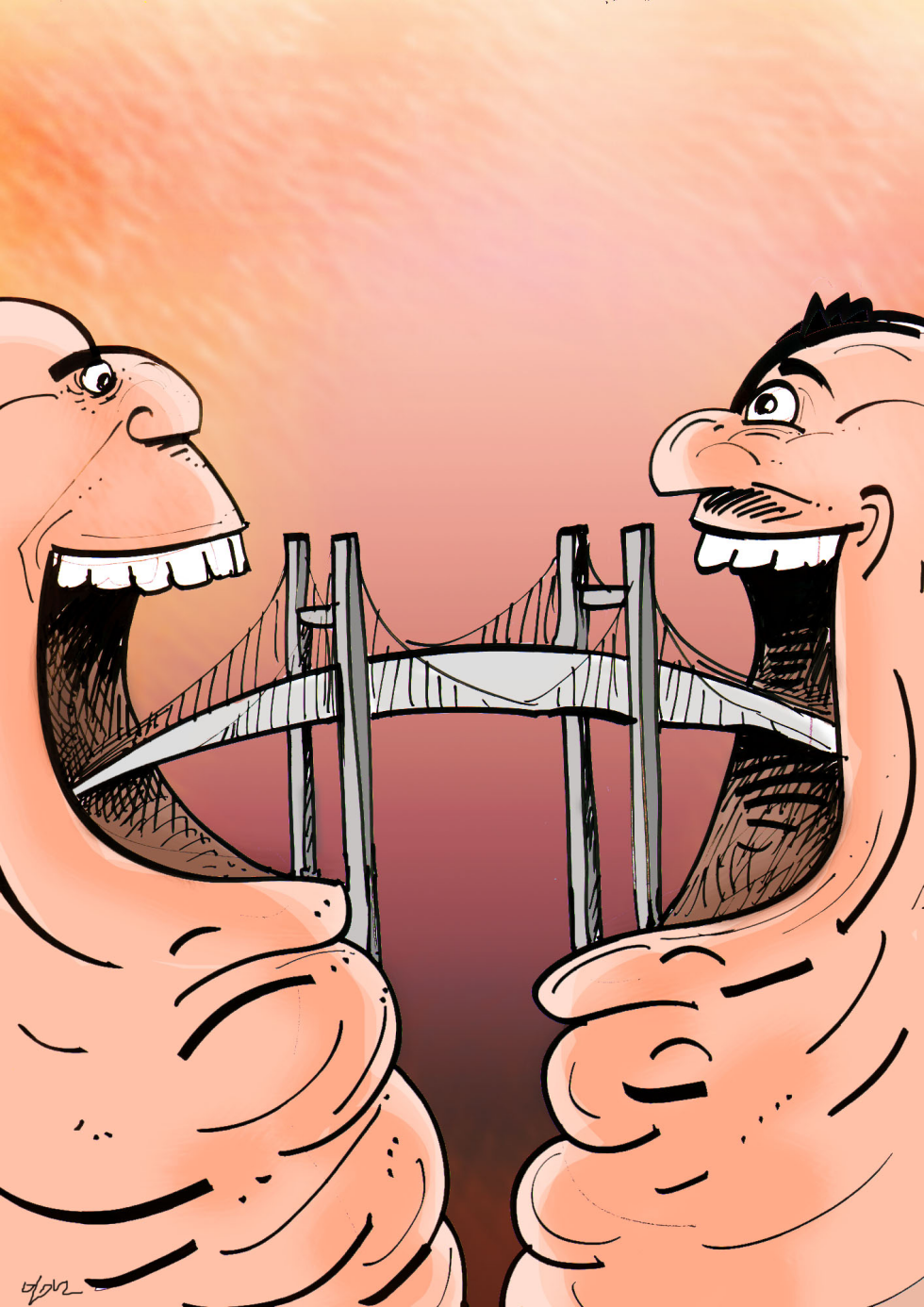
Political leaders from opposing camps are locked in a struggle over control of a major infrastructure initiative. The dispute highlights how shared projects become battlegrounds for influence and credit. The cartoon portrays the tension as each side seeks dominance rather than cooperation, underscoring risks to timely completion and public benefit.
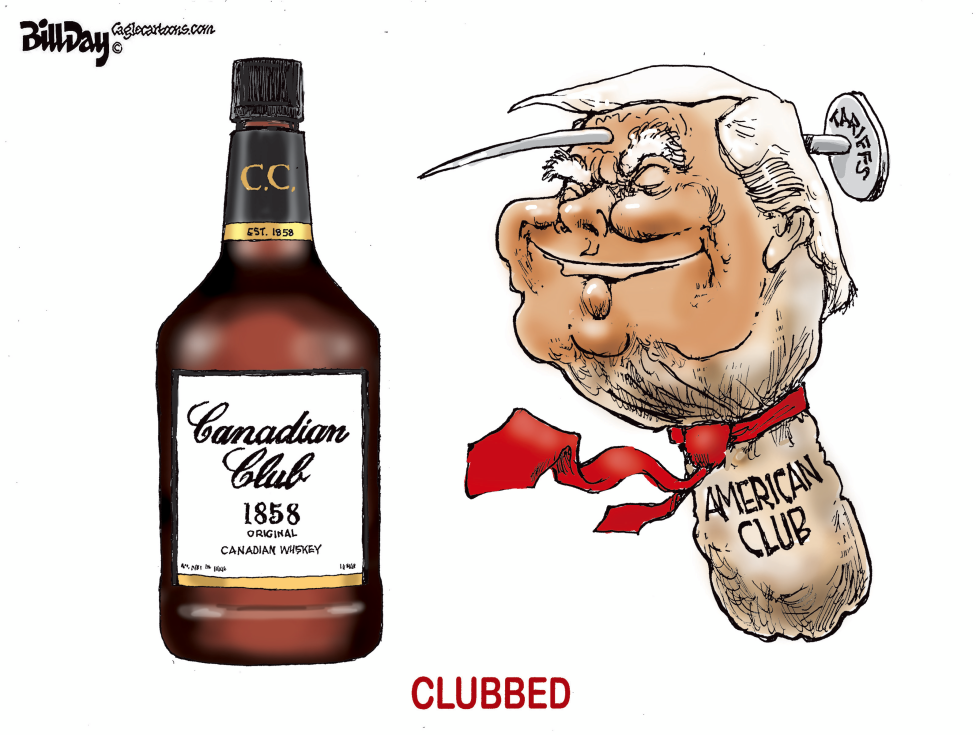
On September 9, 2026, the cartoon responds to ongoing US-Canada trade friction under the second Trump administration. Trump has pursued aggressive tariff policies against Canadian imports, prompting Ottawa to consider reciprocal measures. The piece uses the Canadian Club whiskey brand to illustrate how such policies rebound on American interests. It argues that Trump's approach harms US businesses and consumers rather than strengthening them.
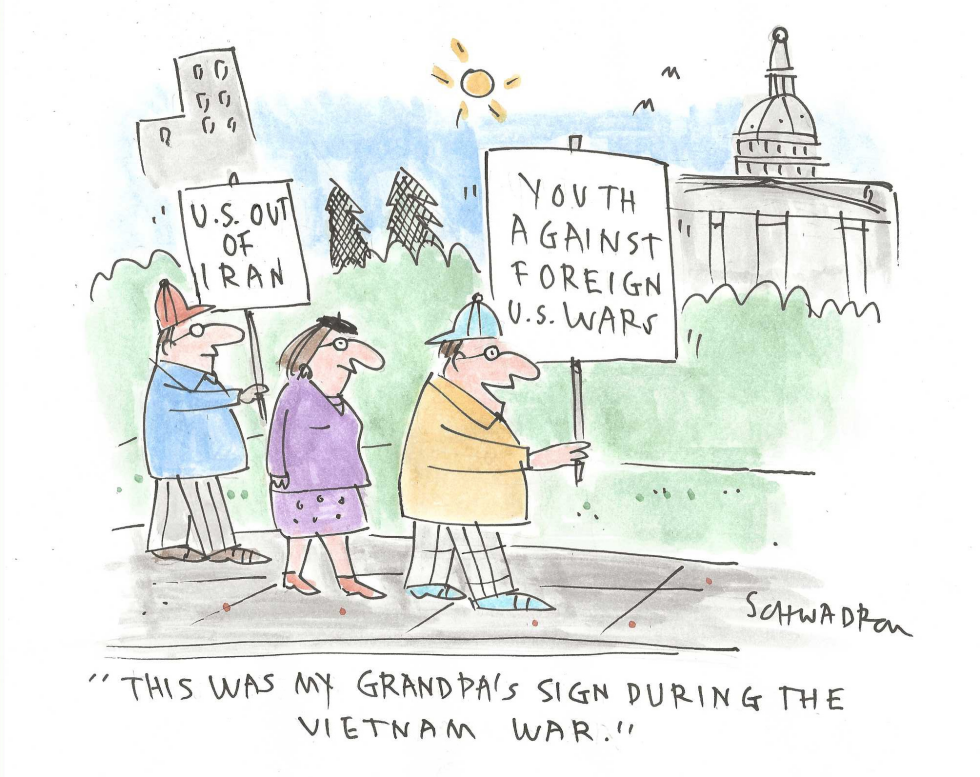
Anti-war demonstrators gather near the Capitol with signs calling for an end to US involvement in Iran and broader foreign conflicts. One protester notes that his sign originated during the Vietnam War, underscoring continuity across generations. The piece highlights persistent public opposition to military engagements abroad and questions the repetition of past policy mistakes.
President Trump launched new tariffs on Canadian goods in early September 2026, citing trade imbalances and border issues. The move immediately prompted Canadian countermeasures including duties on US exports. The policy shift disrupts integrated supply chains in autos, energy and agriculture that support millions of jobs on both sides of the border. Markets reacted with volatility as investors weighed the costs of renewed protectionism. The cartoon portrays the tariff campaign as self-inflicted harm that leaves the US exposed to swift Canadian pushback.
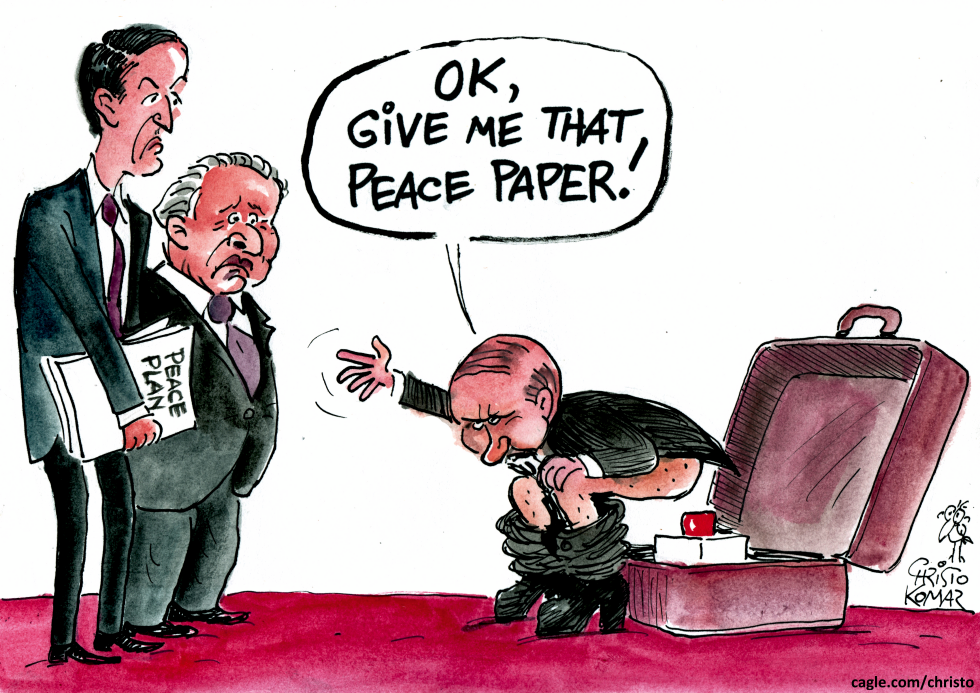
Vladimir Putin has signaled interest in renewed talks to end the war in Ukraine, a conflict that has now stretched for years with heavy costs on all sides. Recent diplomatic overtures have gained little traction as battlefield positions remain entrenched. The cartoon portrays Putin as constrained by his own choices yet eager to claim any available peace document. It underscores the gap between Russian rhetoric and the reality of prolonged fighting. The piece suggests that genuine progress remains unlikely without major concessions from Moscow.
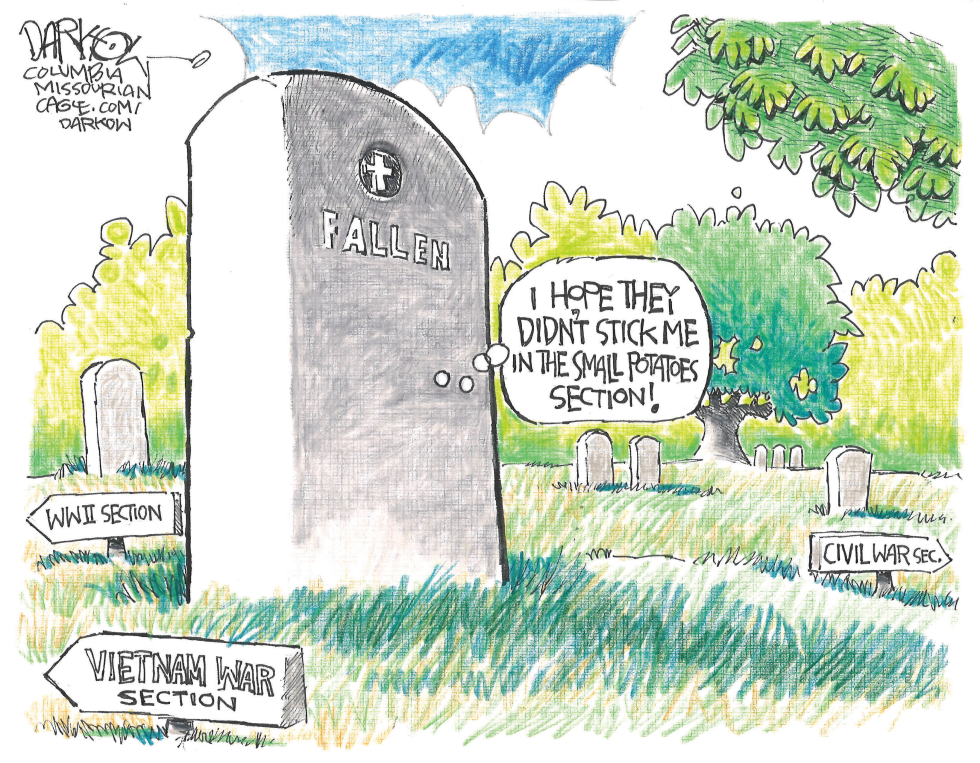
Recent developments in U.S. policy toward Iran have included public statements framing the conflict as limited in scope and consequence. Officials have emphasized de-escalation and avoided comparisons to major 20th-century wars. The approach has drawn criticism from those who see the engagement as carrying substantial long-term costs for American forces and regional stability. The cartoon argues that such framing diminishes the sacrifices involved and places the Iran conflict in a lesser category than earlier wars.
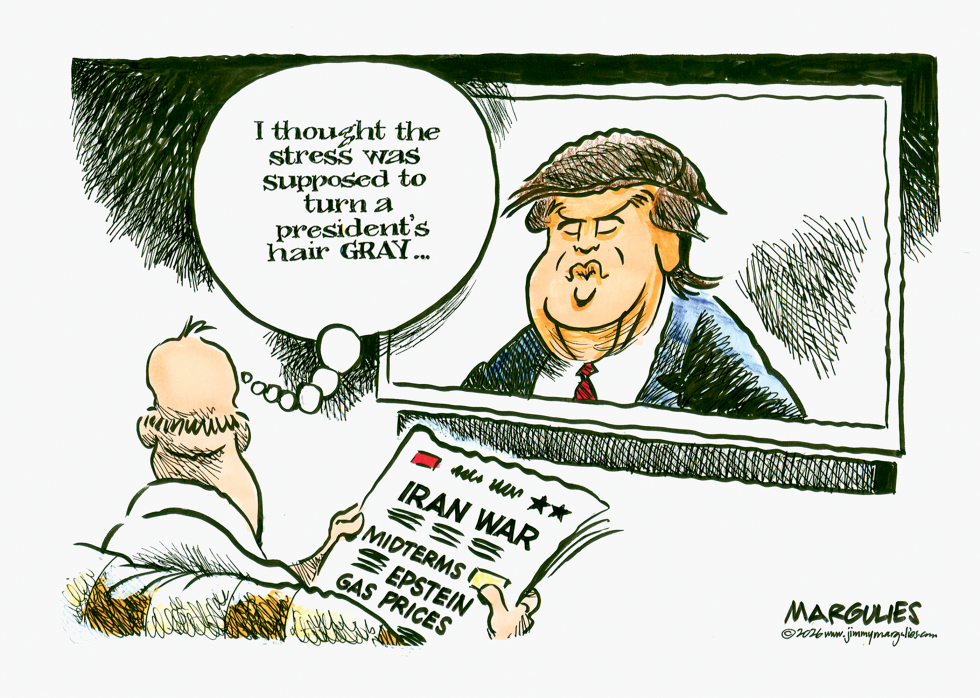
President Donald Trump confronts an Iran war, midterm election pressures, Epstein-related revelations and rising gas prices in September 2026. These overlapping challenges test the administration's capacity to manage foreign conflict and domestic economic strain simultaneously. The cartoon argues that the expected physical toll of such stress on the president has not materialized in the anticipated way.
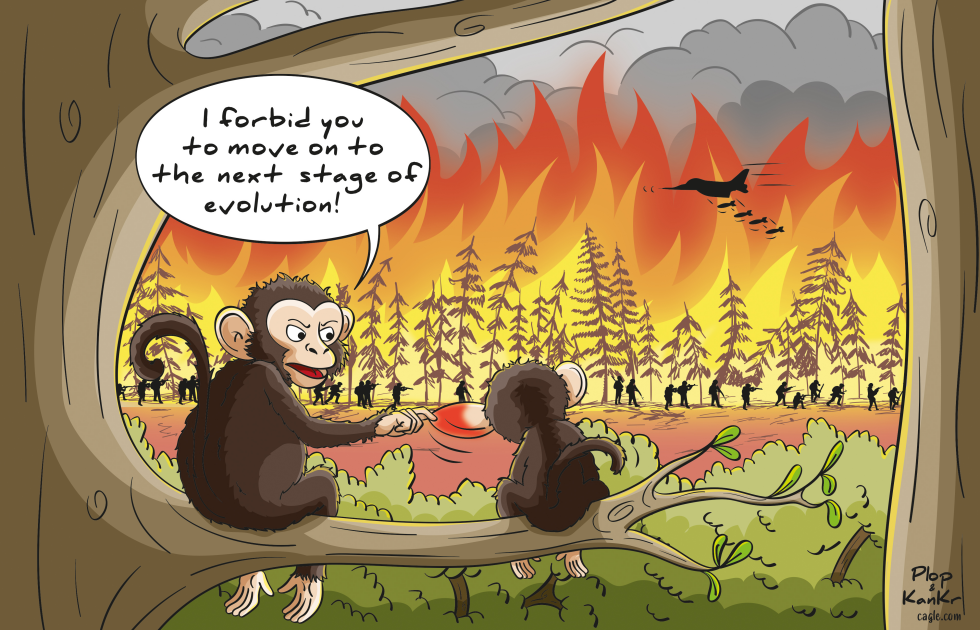
The cartoon published on September 7, 2026, shows two monkeys on a tree branch overlooking a forest fire. One monkey holds a red object and declares it forbids the next stage of evolution. In the background, soldiers stand in formation and a fighter jet flies overhead. The image responds to ongoing themes of war disrupting societal and human development. It uses the monkeys to represent humanity stalled by violence and destruction rather than advancing.