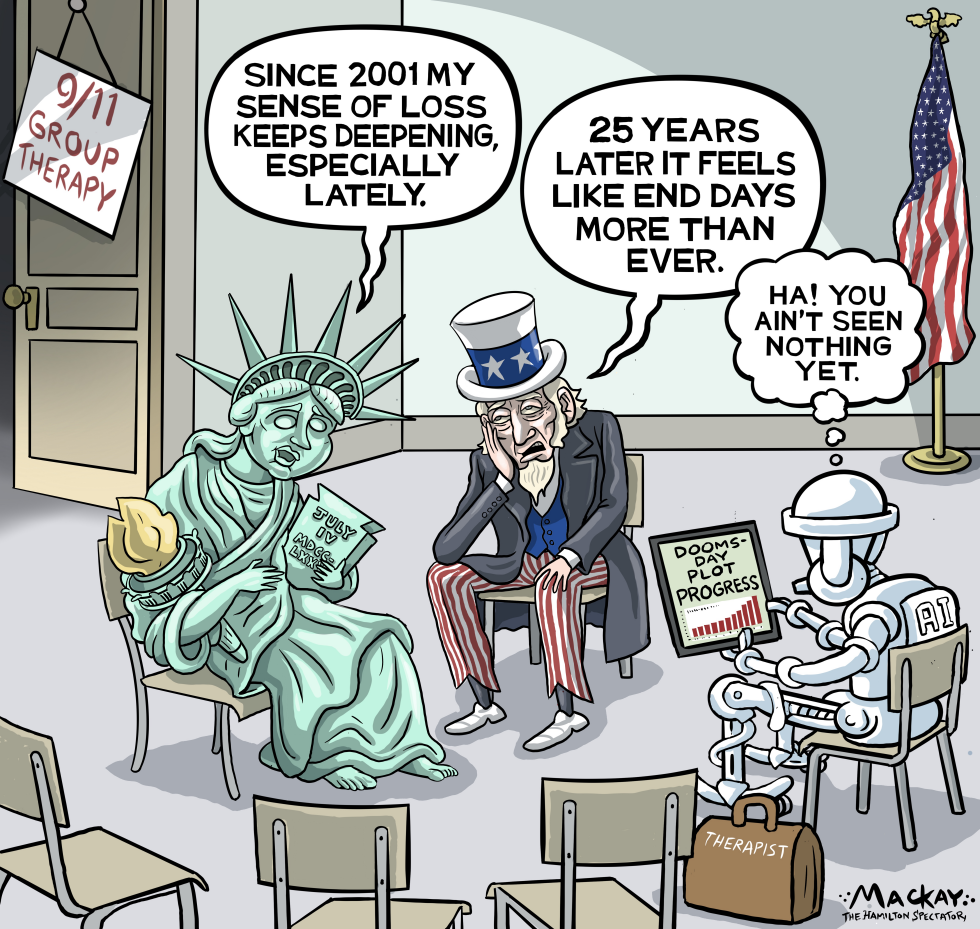
The cartoon depicts the Statue of Liberty, Uncle Sam and an AI robot seated in a 9/11 group therapy session on the 25th anniversary of the attacks. The Statue of Liberty holds a book marked July IV MDCCLXXVI and speaks of deepening loss since 2001. Uncle Sam echoes the sentiment of end days. The AI figure, labeled with a rising doomsday plot progress chart, retorts that the others have seen nothing yet. The scene uses national symbols to reflect persistent national trauma and emerging technological threats two and a half decades after the September 11 attacks.
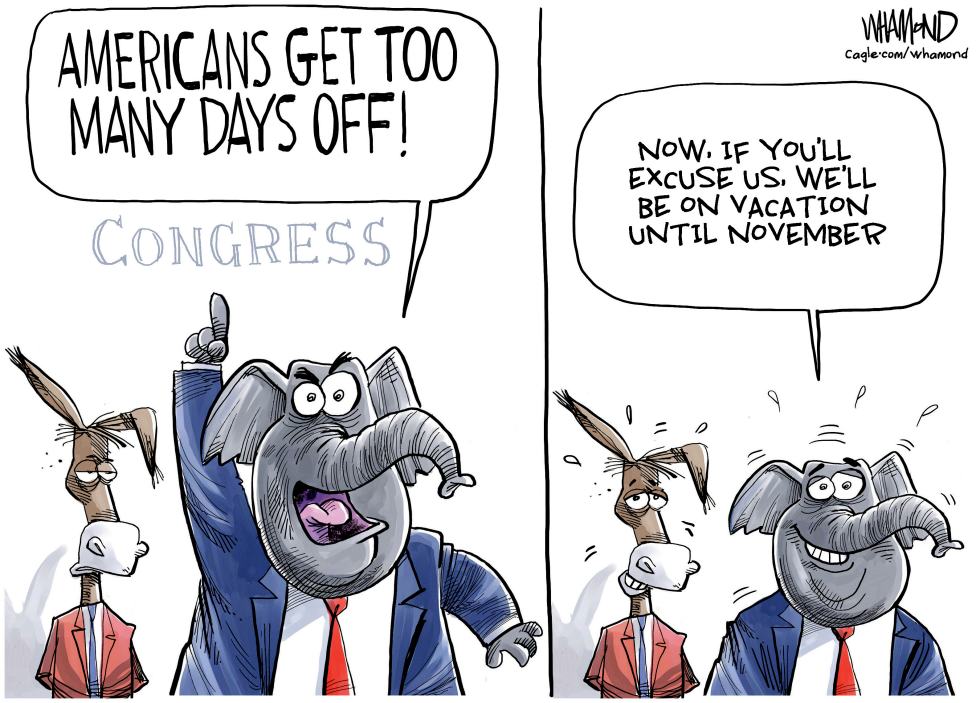
Congressional leaders from both parties have drawn criticism for lecturing American workers about taking too many days off while preparing to recess until November. The move comes as lawmakers face questions over productivity and priorities in an election year. The cartoon highlights the perceived double standard between public statements on labor and the actual schedule of elected officials.
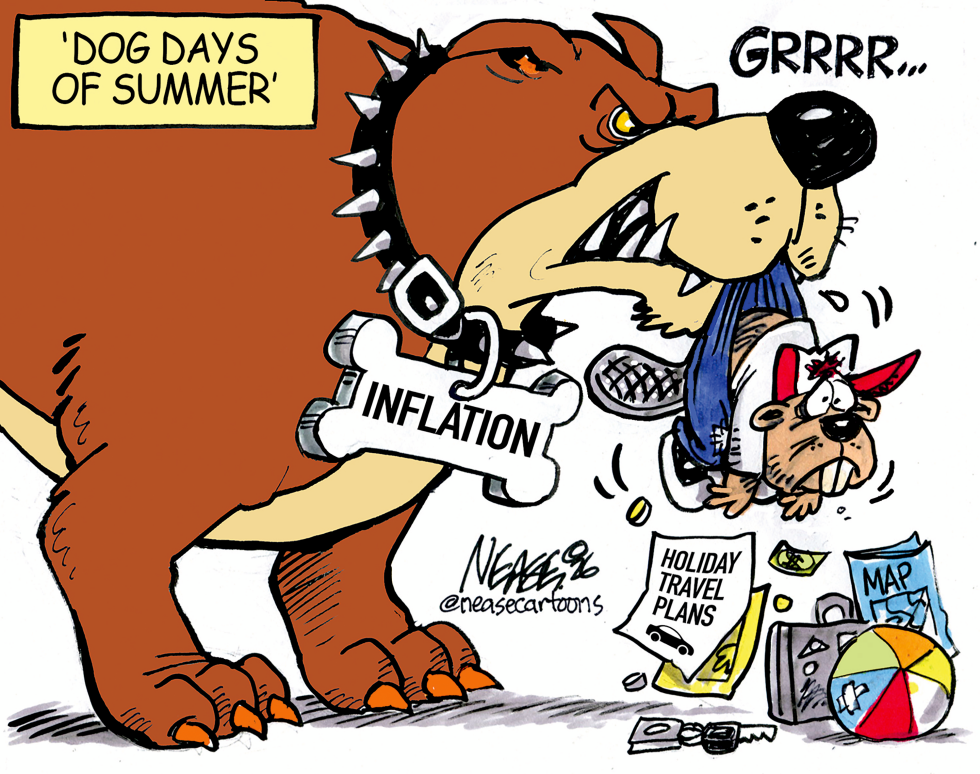
Rising inflation continues to pressure household budgets and summer travel spending in 2026. Consumers face higher costs for fuel, lodging and airfare as the peak vacation season approaches. The situation matters because it directly affects family plans and economic confidence heading into the second half of the year. The piece argues that inflation remains a persistent threat that undercuts holiday preparations and forces difficult choices for travelers.
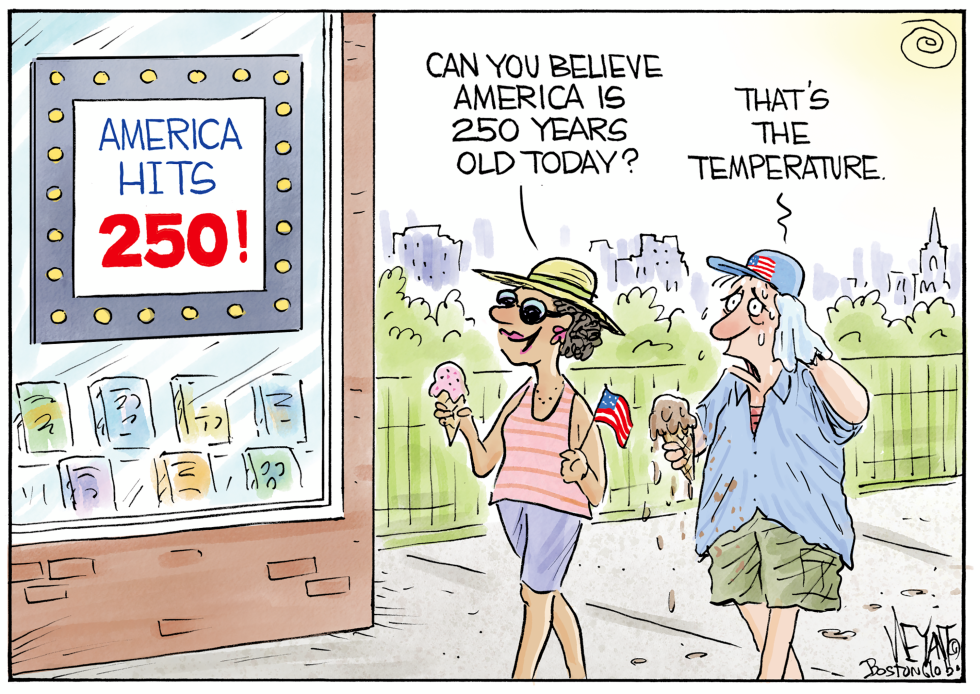
On July 2 2026 two figures pause outside an ice cream shop whose sign proclaims America Hits 250. The woman in a flag tank top asks if anyone can believe the country is 250 years old today. Her companion replies that the figure matches the current temperature as his cone melts onto the pavement. The exchange occurs two days before the July Fourth holiday during a period of elevated summer readings. Background buildings and greenery place the scene in an urban park setting.
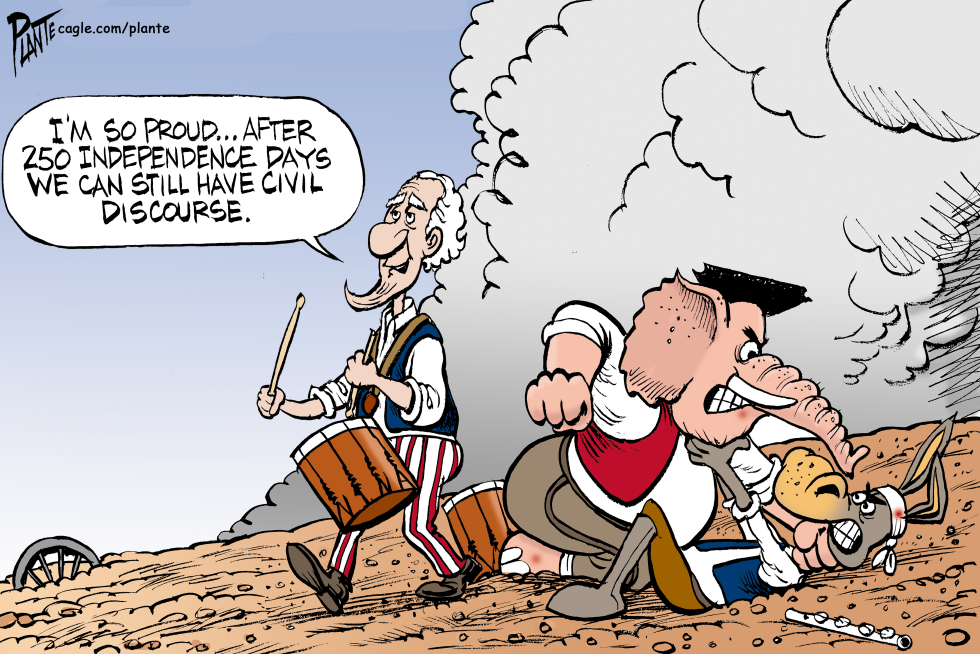
On the 250th anniversary of American independence, a Revolutionary War drummer expresses pride in continued civil discourse even as the Republican elephant and Democratic donkey grapple violently on the ground nearby.
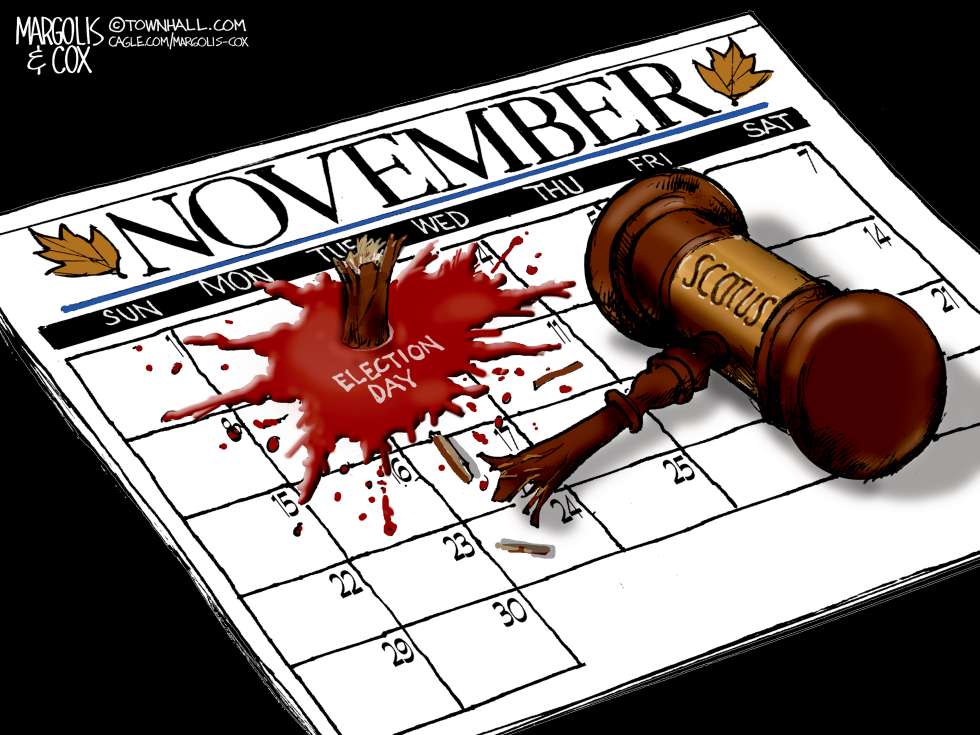
A large wooden gavel marked SCOTUS smashes into a November calendar page, obliterating the square labeled Election Day with a red splatter resembling blood and scattering fragments across surrounding dates.
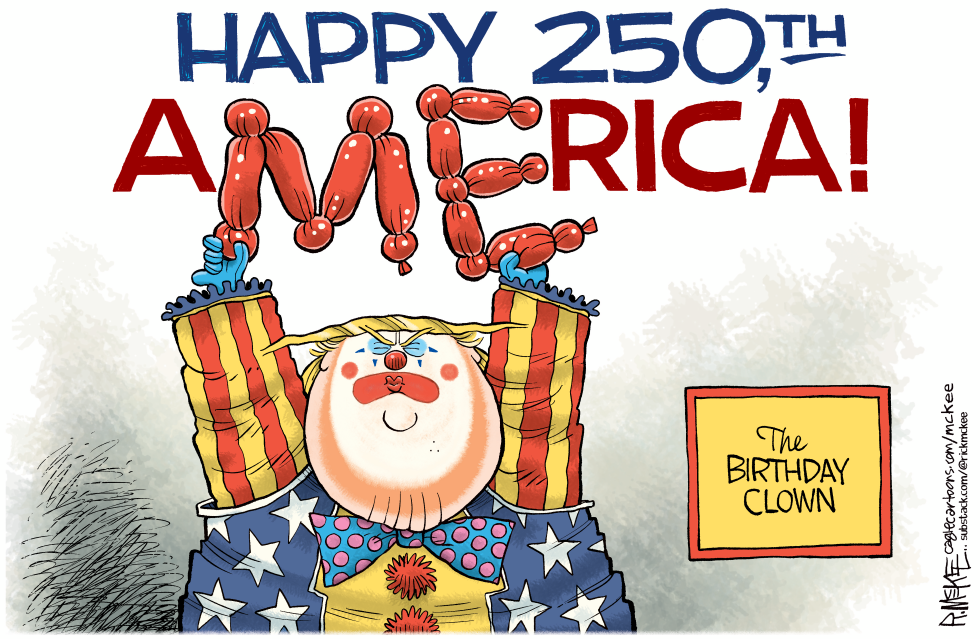
On July 1 2026 Rick McKee depicts a clown-costumed Donald Trump raising balloon letters that spell AMERICA beneath the words HAPPY 250,TH. The figure wears a stars-and-stripes top hat and suit with a polka-dot bow tie and a yellow sign labels him THE BIRTHDAY CLOWN. The image marks the approach of the United States semiquincentennial on July 4 2026.
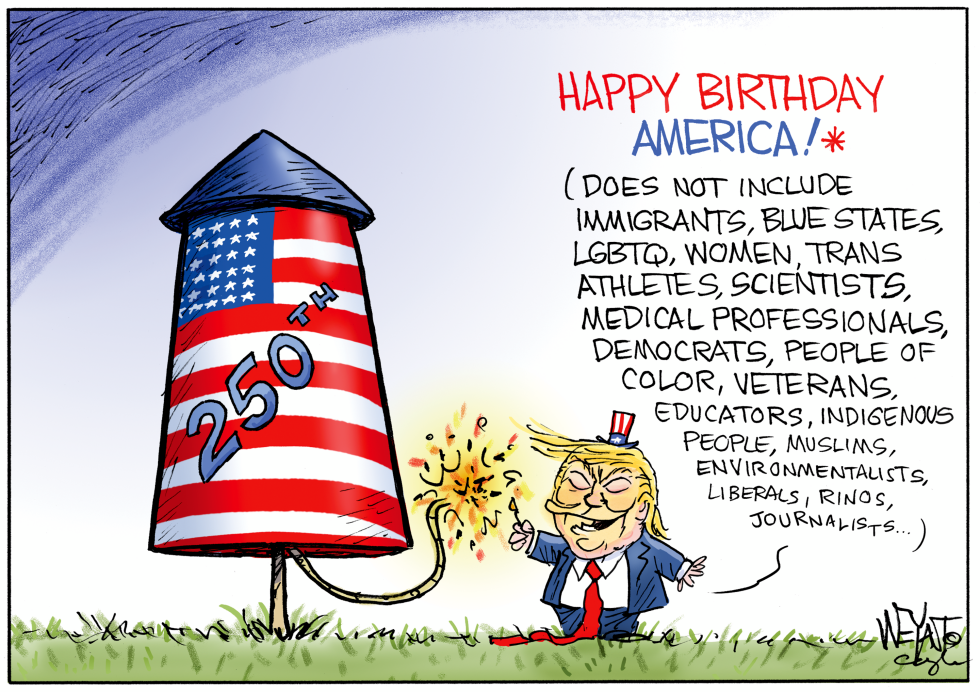
On June 30, 2026, a cartoon depicts Donald Trump lighting the fuse of a large American-flag firework rocket labeled 250th. The greeting Happy Birthday America carries an asterisk that expands into a lengthy parenthetical list of omitted groups including immigrants, blue states, LGBTQ individuals, women, trans athletes, scientists, medical professionals, Democrats, people of color, veterans, educators, Indigenous people, Muslims, environmentalists, liberals, RINOs, and journalists. The image appears days before the July 4, 2026, semiquincentennial.
A sketched dog sits on its haunches and stretches one paw toward a tall cup resting on a low pedestal. The cup carries bold labels reading POW, BANG and BOOM along with starburst graphics. Large capital letters at the bottom of the frame spell out FOR DOG'S SAKE. The drawing appears on a plain white background with minimal shading and loose line work typical of daily comic strips.
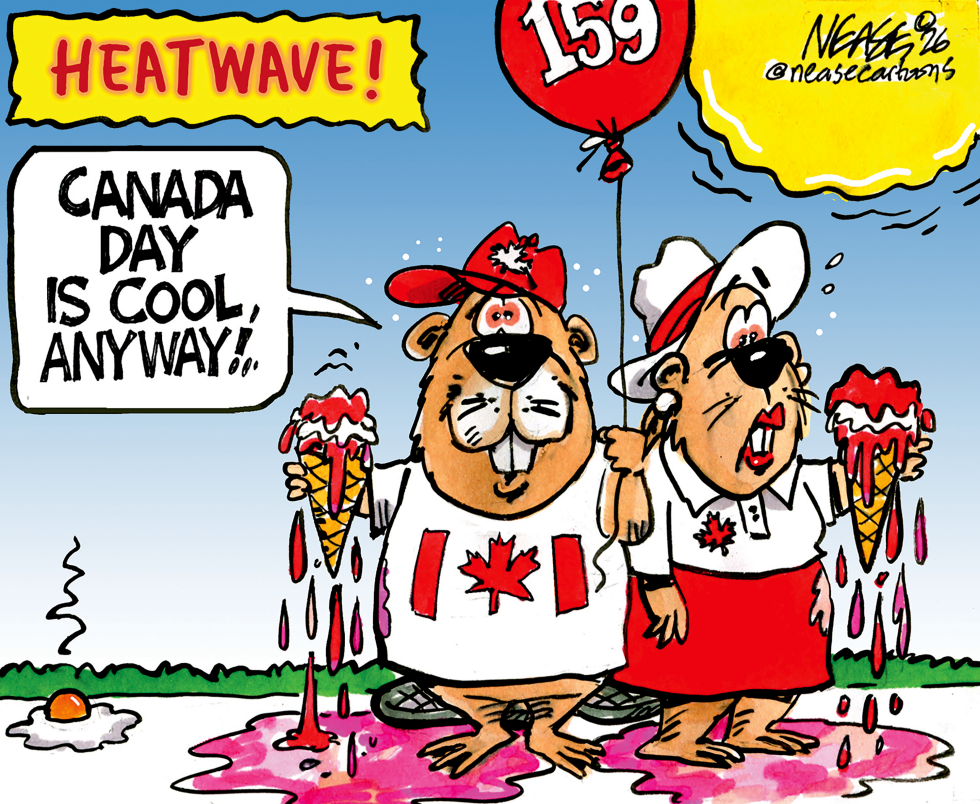
On June 30 2026 two cartoon beavers dressed in Canadian flag attire stand on melting pavement holding ice cream cones that drip heavily during an intense heatwave. A red balloon marked 159 floats above while a speech bubble declares Canada Day cool anyway. A fried egg lies on the ground near the pink puddle formed by the melting treats.
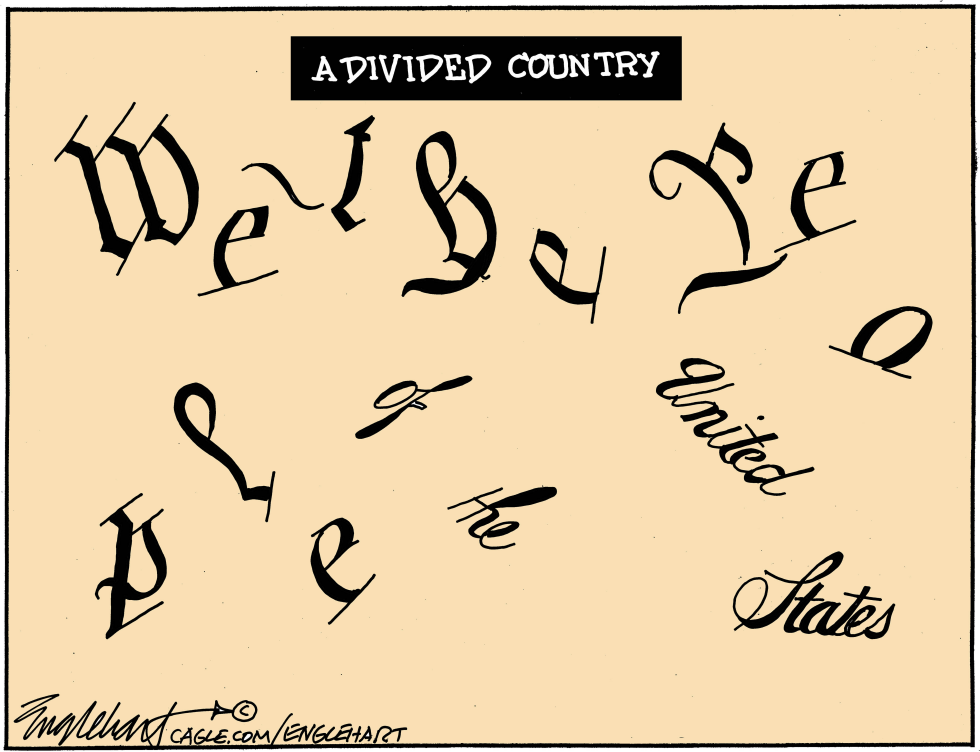
The cartoon displays the opening words of the U.S. Constitution scattered in disconnected segments across a plain background. A black banner at the top reads A DIVIDED COUNTRY. The arrangement of the familiar preamble text visually breaks the phrase into isolated parts. This presentation coincides with the approach of Independence Day on the 2026 calendar. The work draws attention to fractures within the national fabric without naming specific events or figures.
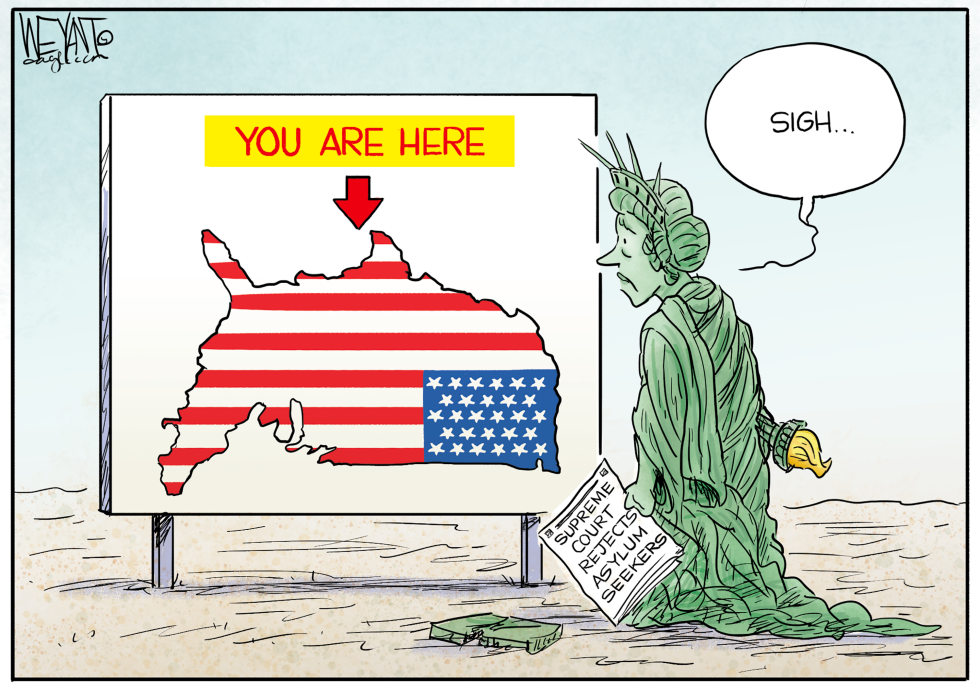
The cartoon depicts the Statue of Liberty seated on the ground beside a large sign displaying a map of the United States marked with a yellow "YOU ARE HERE" label and an American flag design. The figure holds a document reading "SUPREME COURT REJECTS ASYLUM SEEKERS" and exhales a visible sigh in a speech bubble. The image responds to a Supreme Court ruling on asylum policy issued near the June 28 2026 publication date.
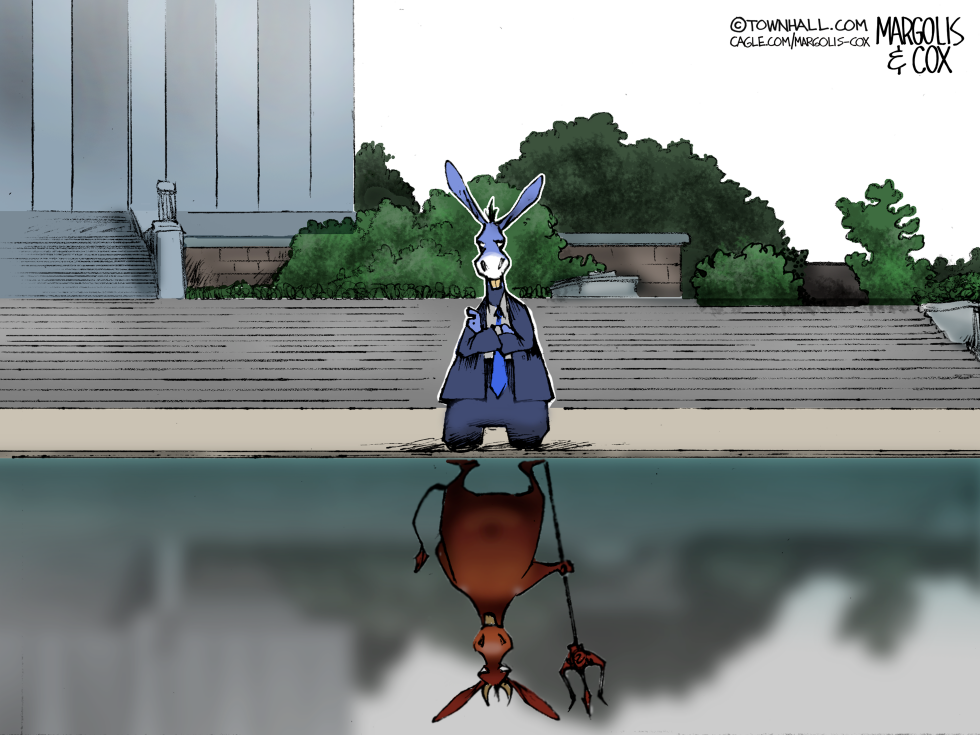
A donkey wearing a blue suit and tie stands with arms crossed on stone steps before a government-style building. Its reflection in the foreground water transforms into a red devil complete with horns, tail and pitchfork. The image from Margolis & Cox dated June 26 2026 uses the classic Democratic Party symbol to present an internal self-view. No specific legislation or election from the prior month is referenced in the visual. The composition places the figure centrally against trees and columns with the credit line in the upper right.
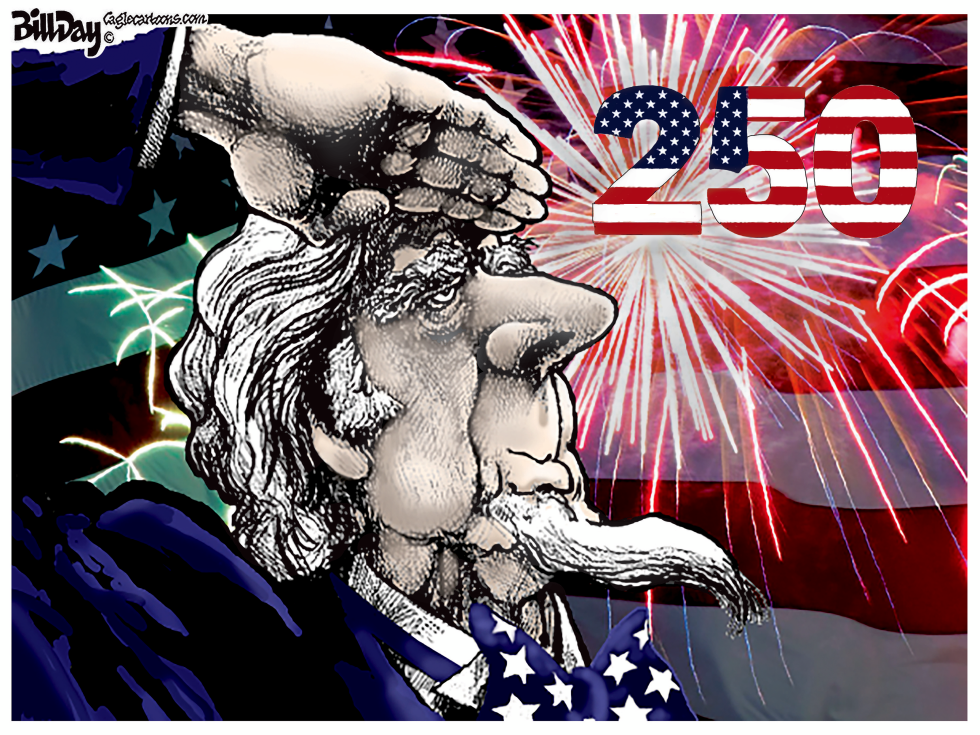
A historical figure depicted in profile raises a hand in salute against a backdrop of bursting fireworks and a large American flag. The stylized number 250 appears prominently in red white and blue. The scene marks the approaching 250th anniversary of American independence on the date of publication.
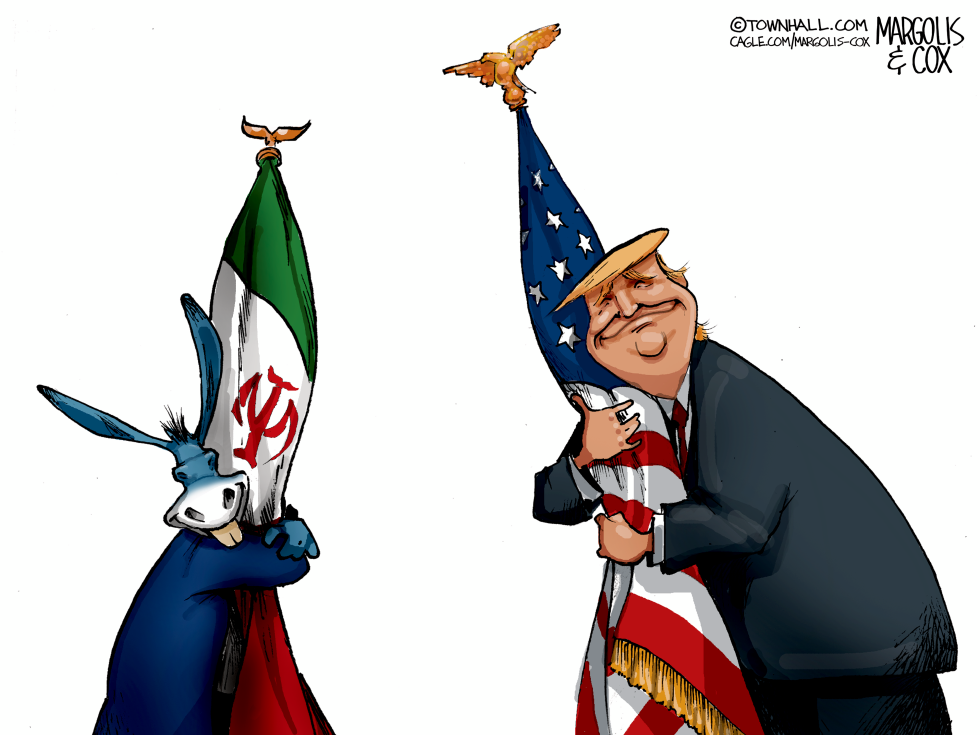
On June 21, 2026, the Margolis & Cox cartoon depicts Donald Trump wrapped in the American flag with an eagle perched above, facing a Democratic donkey wrapped in a flag resembling Italy's but marked with a hammer and sickle. The image responds to ongoing partisan debates over national identity and ideological leanings during the 2026 election cycle. Trump appears in a dark suit, smiling while holding the flag, while the donkey faces away. The visual argument centers on symbols of patriotism versus communism. Publication occurred via Townhall and Cagle.