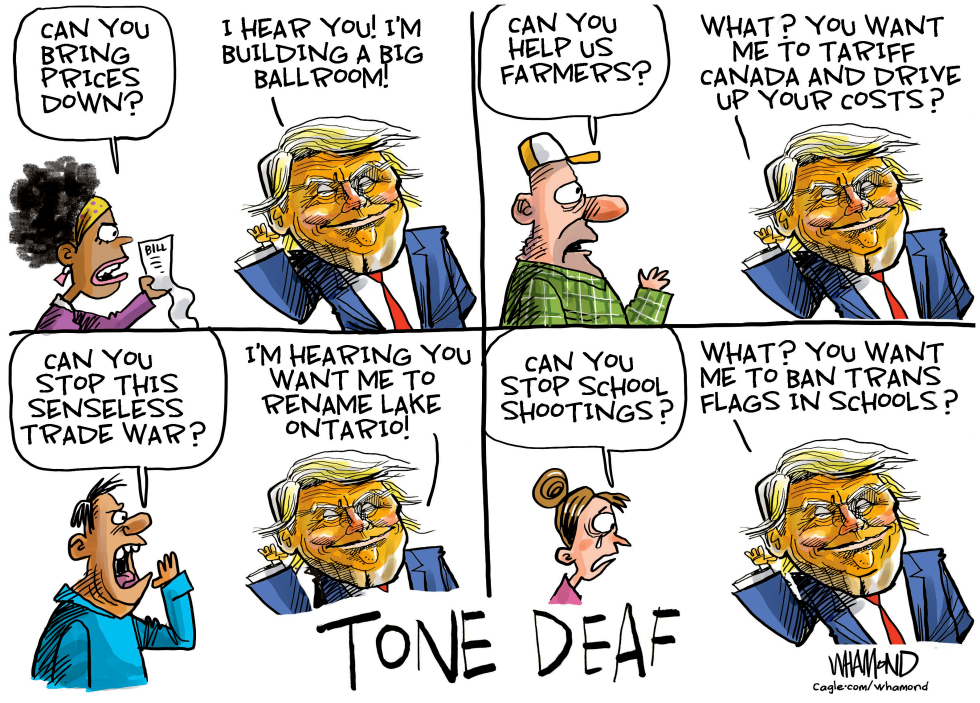
The cartoon by Dave Whamond published September 15, 2026, shows Donald Trump responding to citizen concerns about prices, tariffs on Canada, trade wars, school shootings and transgender flags by pivoting to a ballroom project and renaming Lake Ontario. The four-panel layout underscores a pattern of tone-deaf replies that ignore the original requests.
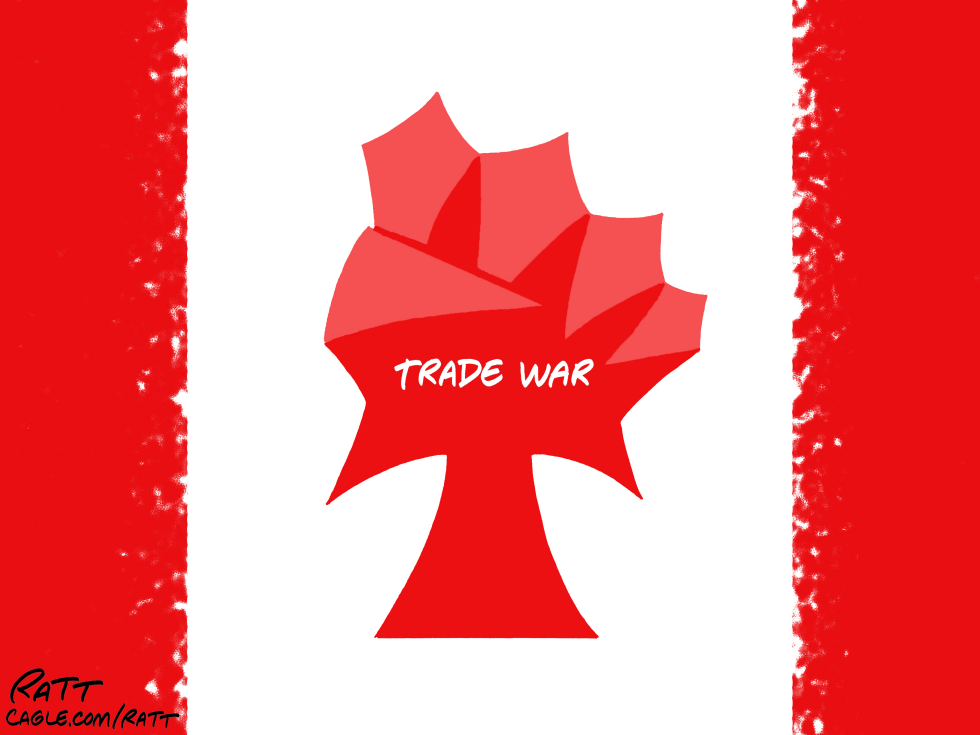
Ongoing US-Canada trade tensions escalated in 2026 with new tariff threats targeting Canadian exports. The dispute threatens key sectors including autos, lumber and agriculture, raising costs for consumers on both sides of the border. Canada has signaled plans to diversify markets and strengthen domestic industry. The cartoon frames the conflict as a direct assault on Canadian sovereignty and economic stability. It portrays the trade war as fracturing national symbols while urging a stronger northern response.
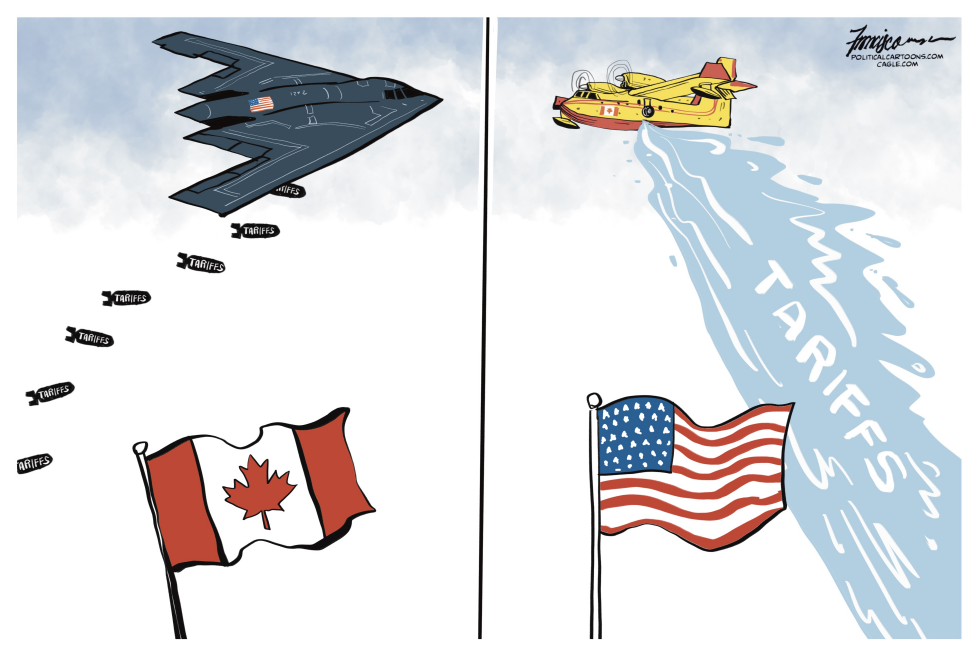
The United States imposed tariffs on Canadian goods, prompting Ottawa to enact matching retaliatory tariffs. The moves risk disrupting integrated supply chains and raising costs for consumers and industries on both sides of the border. The cartoon frames the exchange as mutual escalation with each side deploying tariffs against the other.
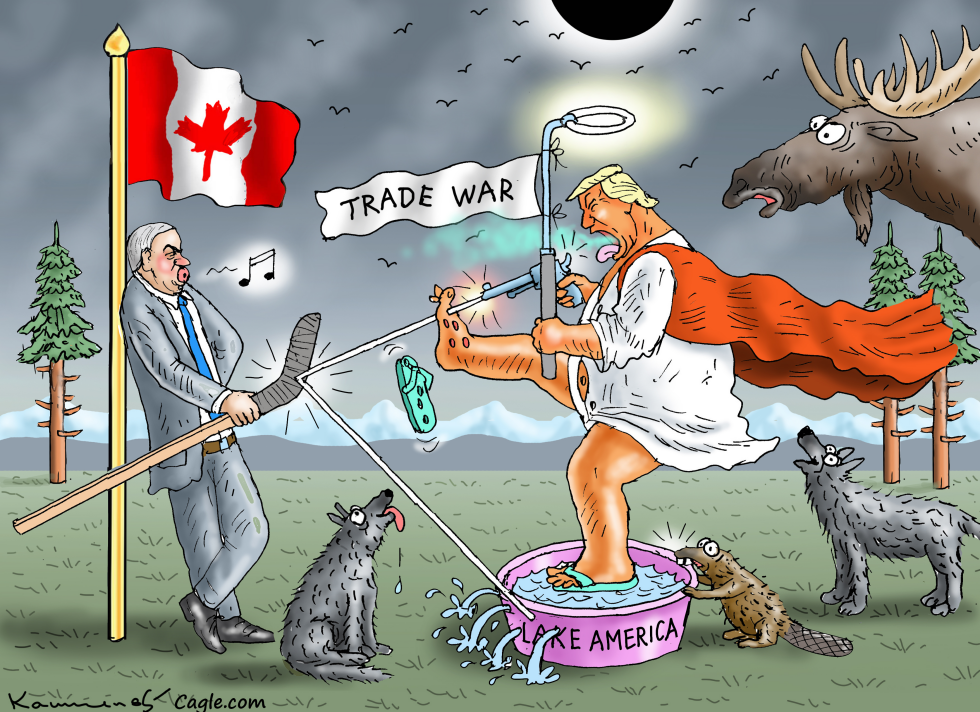
President Trump launched new tariffs on Canadian goods in early September 2026, citing trade imbalances and border issues. The move immediately prompted Canadian countermeasures including duties on US exports. The policy shift disrupts integrated supply chains in autos, energy and agriculture that support millions of jobs on both sides of the border. Markets reacted with volatility as investors weighed the costs of renewed protectionism. The cartoon portrays the tariff campaign as self-inflicted harm that leaves the US exposed to swift Canadian pushback.
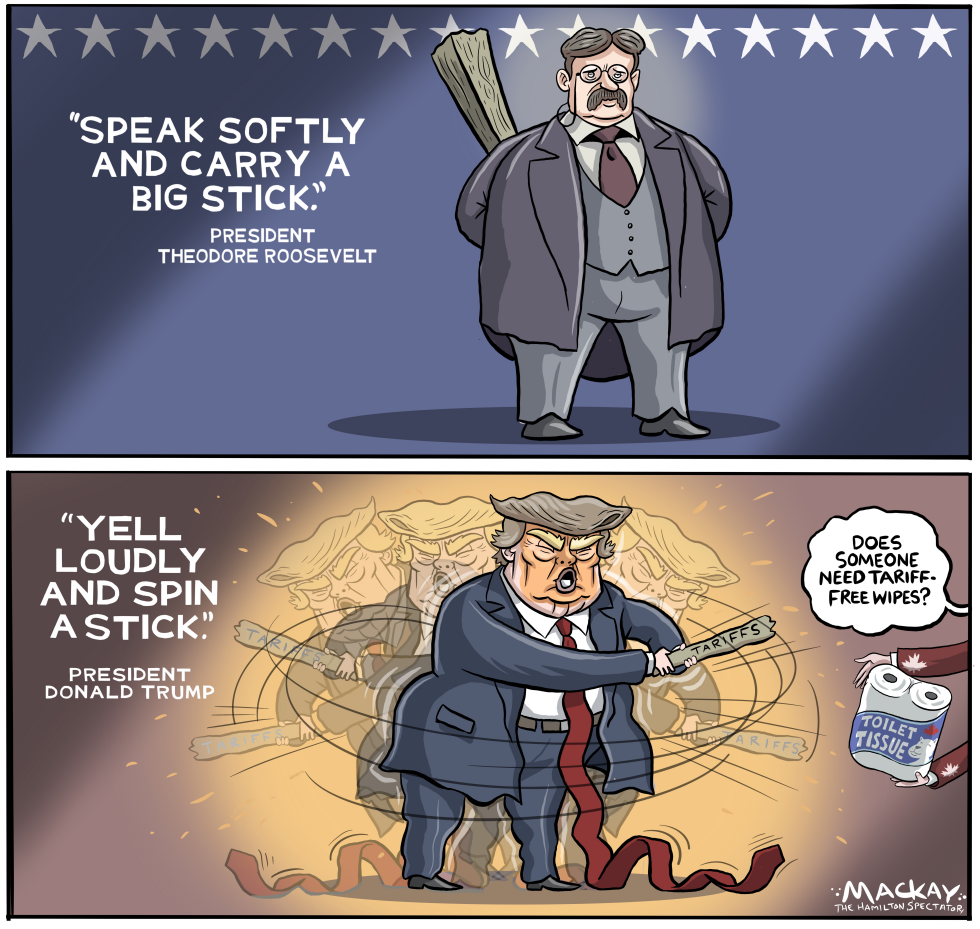
The cartoon by Graeme MacKay contrasts Theodore Roosevelt's famous speak softly and carry a big stick approach with Donald Trump's version of yelling loudly and spinning a stick covered in tariffs. In the lower panel Trump appears dizzy from the motion as a Canadian hand offers toilet tissue labeled tariff-free wipes. The image comments on recent US tariff actions and their impact on Canadian trade relations as of the September 2026 publication date.
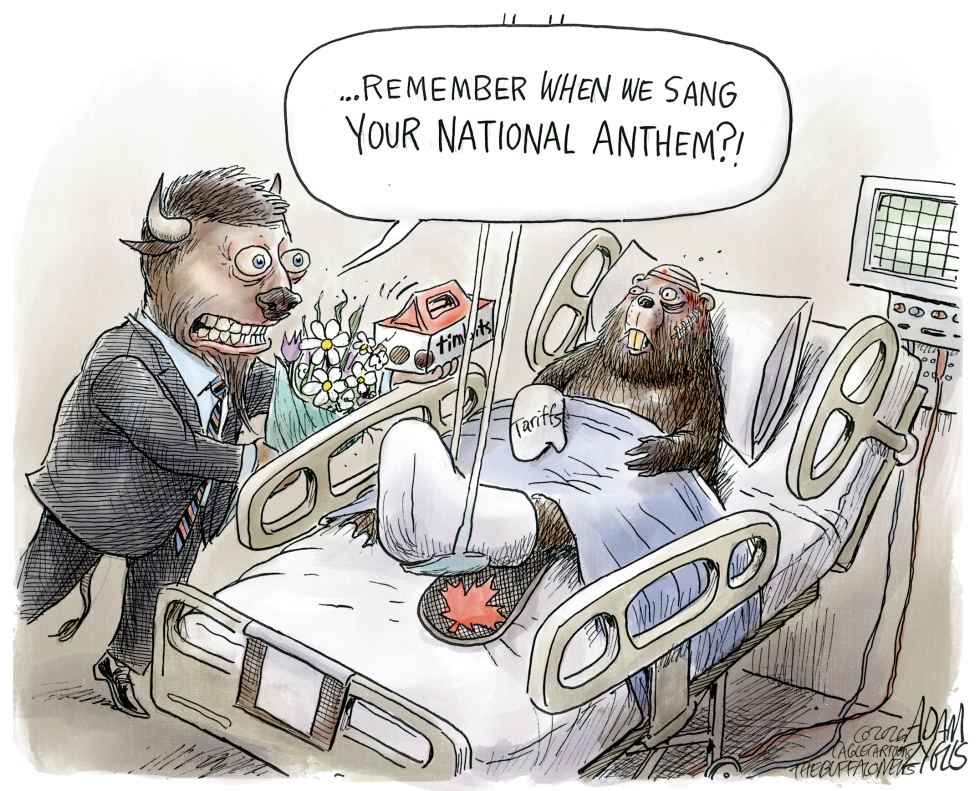
The cartoon depicts a suited bull figure at the bedside of an injured beaver wearing a hospital gown labeled Tariffs. The beaver lies in a hospital bed with a maple leaf emblem visible. A speech bubble from the bull references singing the national anthem. Medical equipment and a Tim Hortons box appear in the room. The image addresses ongoing tariff policies affecting US Canada trade relations as of the September 2026 publication date. The visual metaphor highlights economic harm to the Canadian side of the partnership while recalling past cooperative gestures between the two nations.
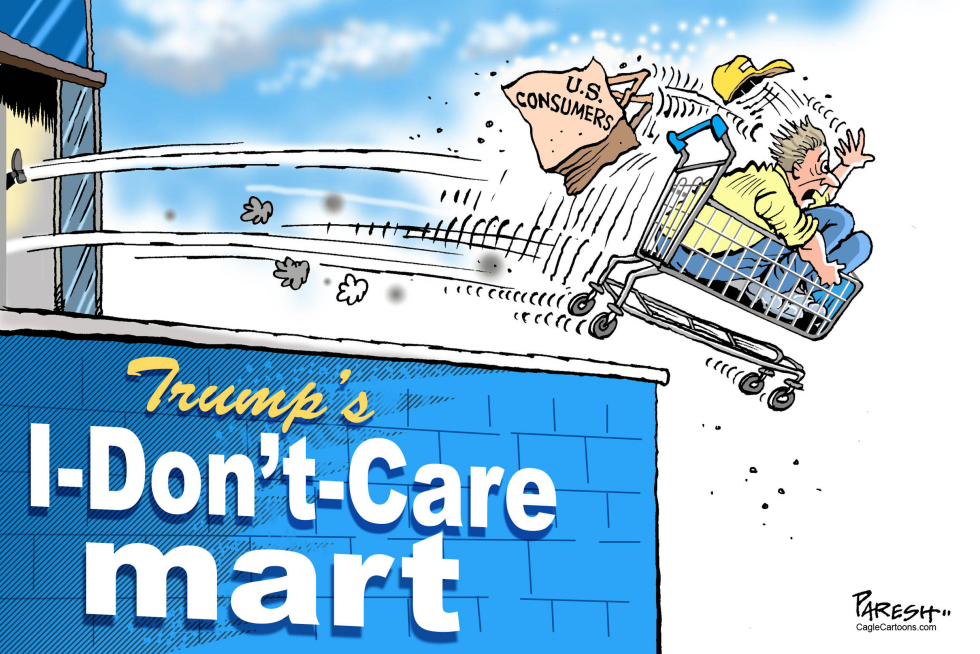
Trump administration policies on trade and spending have contributed to higher prices for everyday goods. American households face increased costs at stores as tariffs and other measures take effect. The cartoon argues these policies prioritize other goals over consumer welfare and leave families paying more.
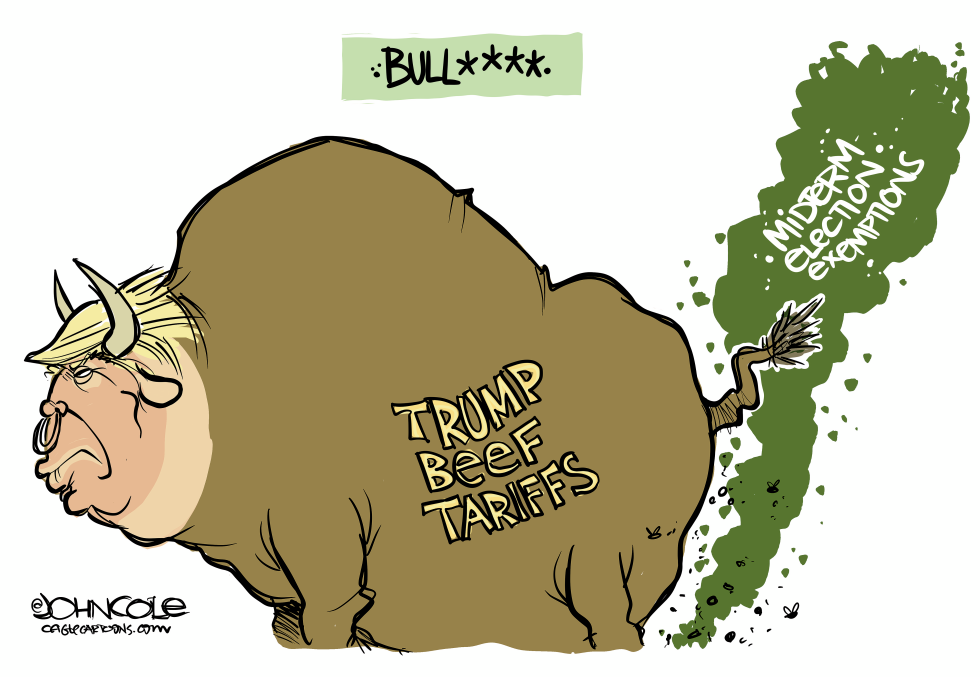
Tariff policy under the Trump administration faces scrutiny as midterm elections near. Exemptions tied to political timing draw criticism for undermining consistent trade enforcement. The piece portrays the approach as inconsistent and driven by electoral concerns rather than economic principle.
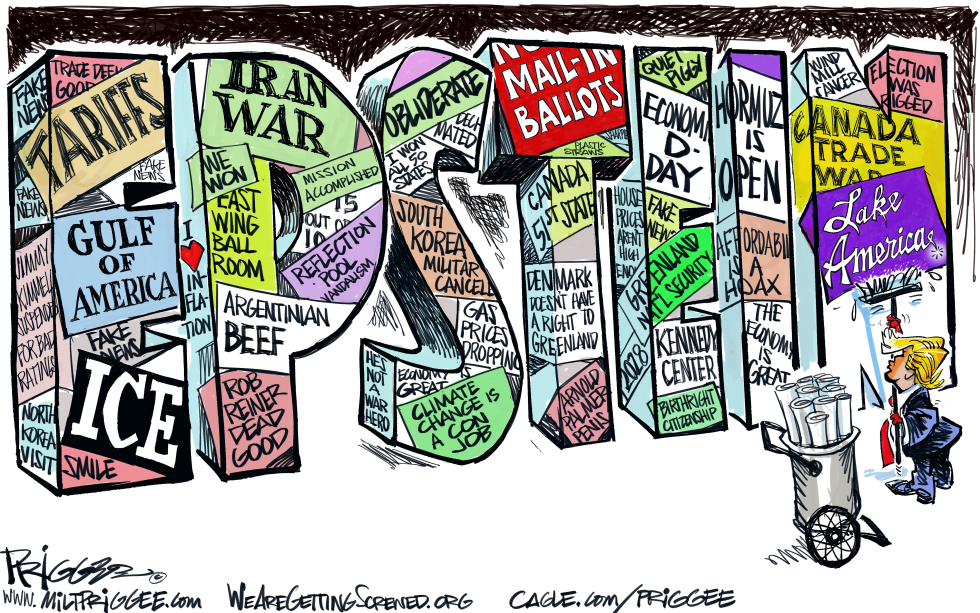
Donald Trump appears in a September 2026 cartoon pushing a cart stacked with signs promoting tariffs, questioning mail-in ballots, and asserting claims about Iran, Canada trade, and domestic issues. The image captures a pattern of public messaging that blends economic nationalism with repeated challenges to established processes. The editorial position frames these statements as a deliberate strategy to keep multiple controversies in motion at once.
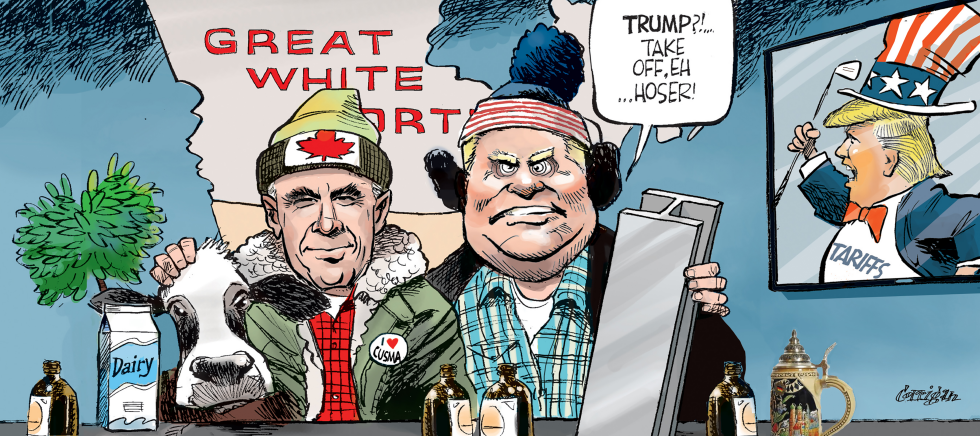
President Trump renewed tariff threats against Canada focused on dairy imports in late August 2026. Canadian leaders responded by highlighting domestic protections and cultural stakes. The move risks straining long-standing trade ties under existing agreements. The cartoon frames the confrontation as a direct challenge to Canadian sovereignty in agriculture. It portrays US policy as aggressive posturing that ignores mutual economic interests.
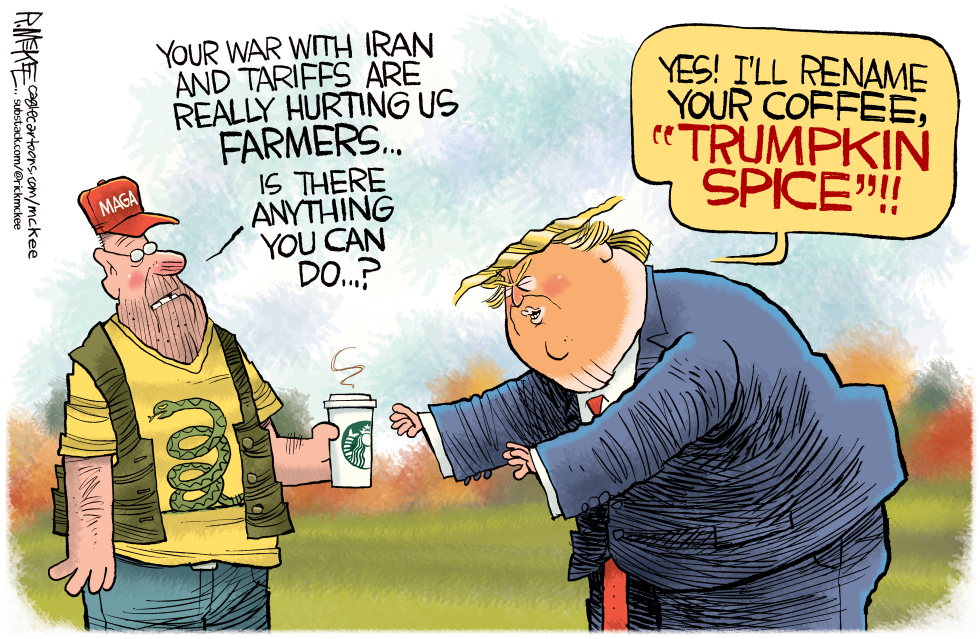
Farmers have raised concerns over the effects of tariffs and tensions with Iran on their livelihoods. President Trump responded by proposing to rename their coffee Trumpkin Spice rather than adjusting policy. The exchange underscores the administration's approach to addressing rural economic complaints through branding gestures instead of substantive relief measures. Critics argue this misses the core issues facing agricultural communities. The cartoon presents the interaction as emblematic of misplaced priorities in handling trade disputes and international relations.
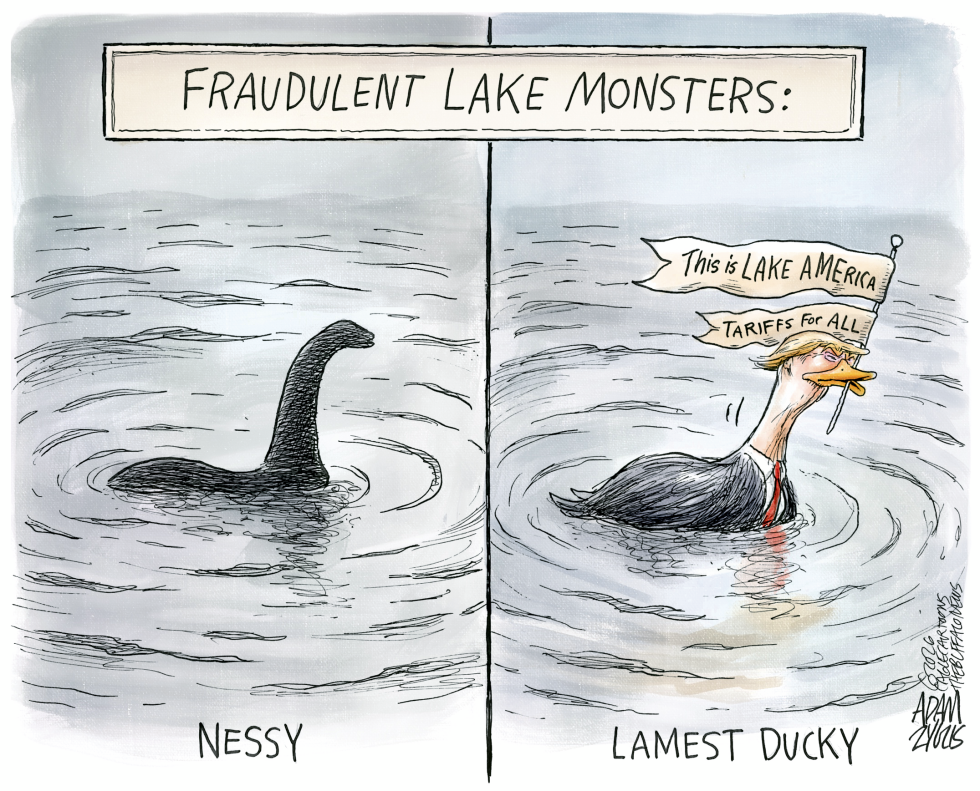
The cartoon published August 31, 2026, shows Donald Trump with the head of a duck body floating in water labeled Lake America. Banners read This is Lake America and Tariffs for All. It is placed beside an image of the Loch Ness Monster labeled Nessy under the heading Fraudulent Lake Monsters. The work comments on Trump's tariff agenda during his time in office.
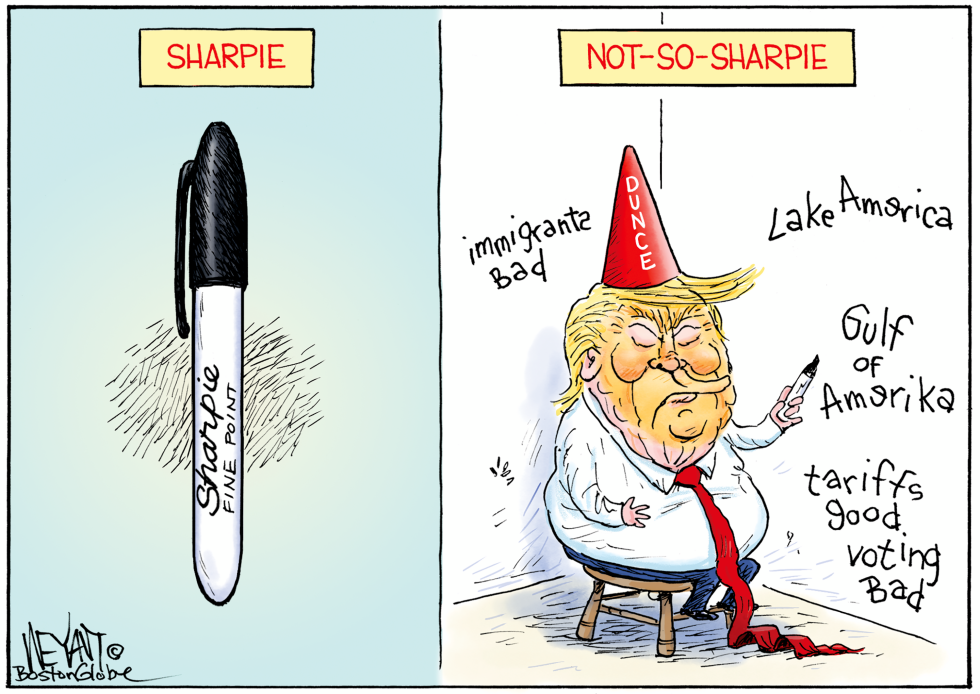
Donald Trump has continued to issue statements on tariffs, immigration enforcement and voting procedures that contain repeated factual inaccuracies. These comments have drawn renewed attention to his approach to governance. The cartoon portrays him as uninformed on these topics through the dunce cap and misspelled labels.
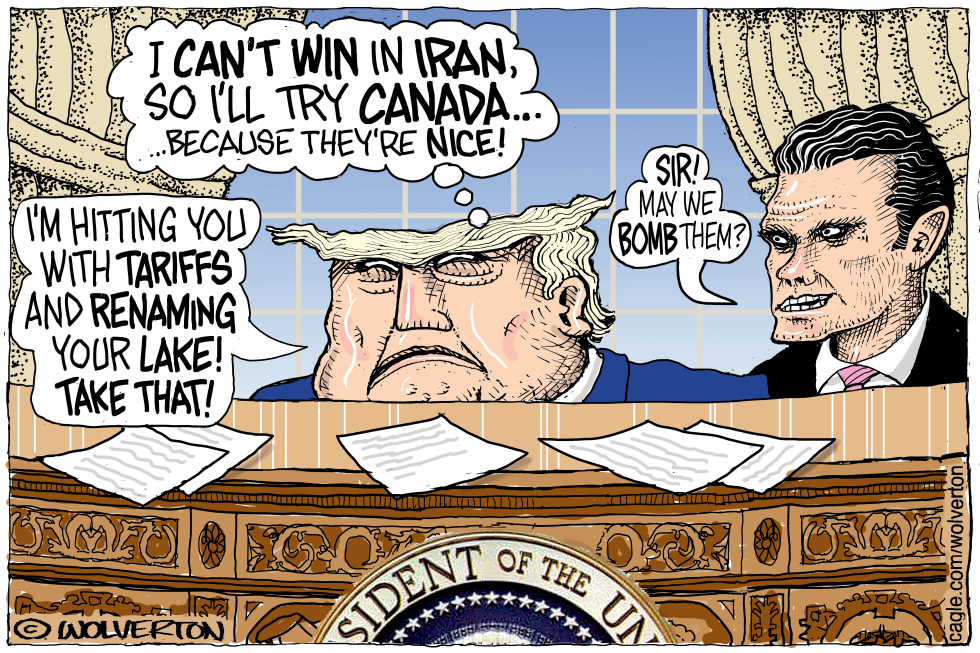
In the cartoon, President Trump appears frustrated at his desk, declaring tariffs and a lake renaming against Canada after setbacks in Iran. His advisor interjects with a suggestion to bomb the northern neighbor. The scene plays on recent trade tensions and foreign policy frustrations as of late August 2026. The visual uses speech and thought bubbles to highlight the shift in targets from a difficult adversary to a more cooperative one. This reflects ongoing debates over tariffs as leverage in international relations.
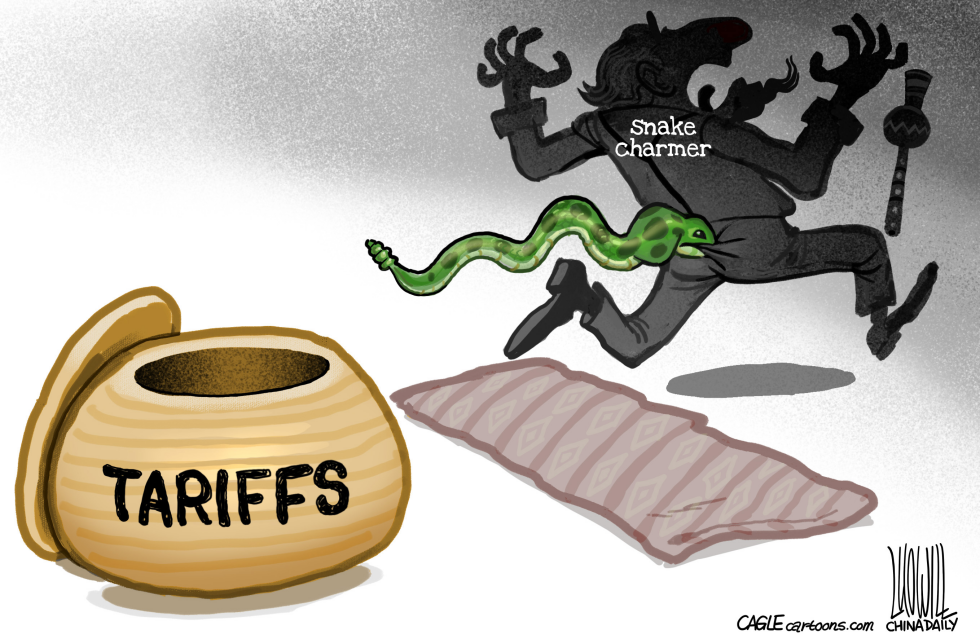
A political cartoon published August 28, 2026, shows a snake charmer fleeing as a green snake emerges from a pot labeled tariffs. The image uses the snake charmer metaphor to comment on tariff policies. The cartoon appeared in China Daily and was distributed via Cagle Cartoons. It responds to ongoing trade tensions involving tariffs. The visual suggests tariffs carry uncontrolled risks similar to an escaped snake.