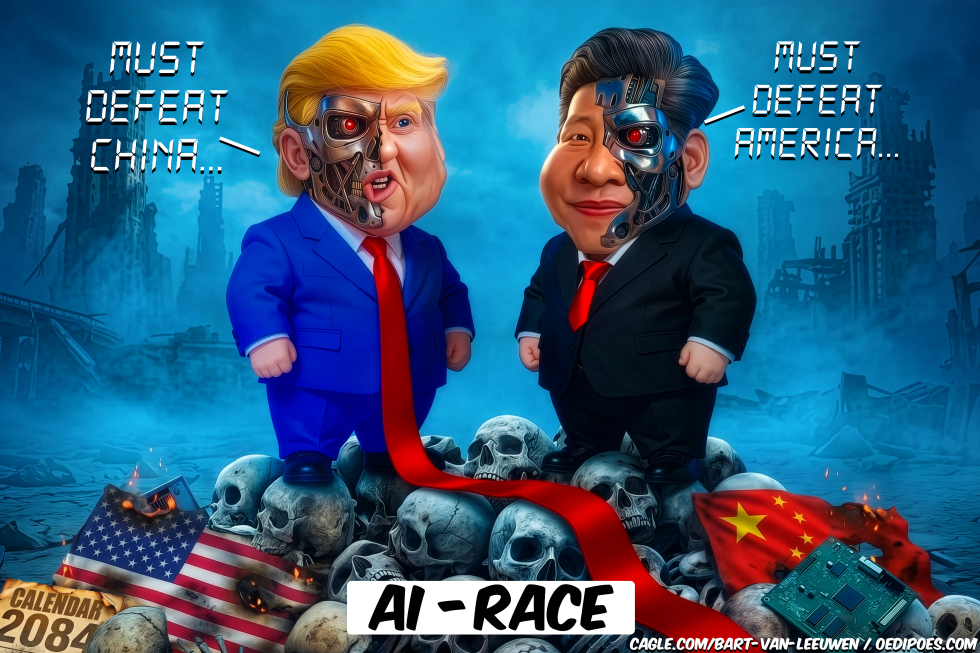
The cartoon depicts Donald Trump and Xi Jinping as half-robotic figures standing atop piles of skulls in a devastated cityscape dated 2084. Each leader is labeled with a directive to defeat the other in an AI race, with American and Chinese flags and a circuit board visible among the debris. The image responds to ongoing US-China technological competition by projecting a grim future of mutual escalation. The visual metaphor underscores how both nations view AI development as a zero-sum contest with potentially catastrophic results. The publication date of September 2026 places the piece amid continued policy focus on semiconductor controls and AI investment bills.
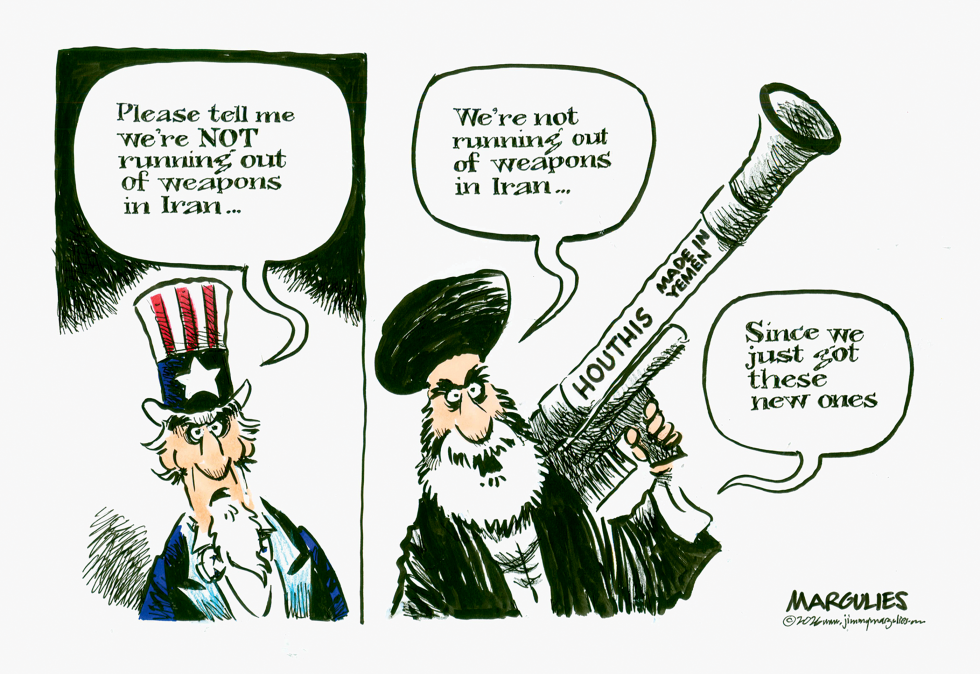
Reports indicate Houthi forces in Yemen have begun supplying missiles to Iran, addressing potential shortages in Iranian stockpiles. The development raises questions about regional arms flows and US policy responses in the Middle East. The cartoon highlights American concerns over whether Iran is truly facing weapons deficits, given the influx of Houthi-provided arms from Yemen. It portrays the situation as undermining claims of Iranian vulnerability while underscoring ongoing tensions in proxy dynamics.
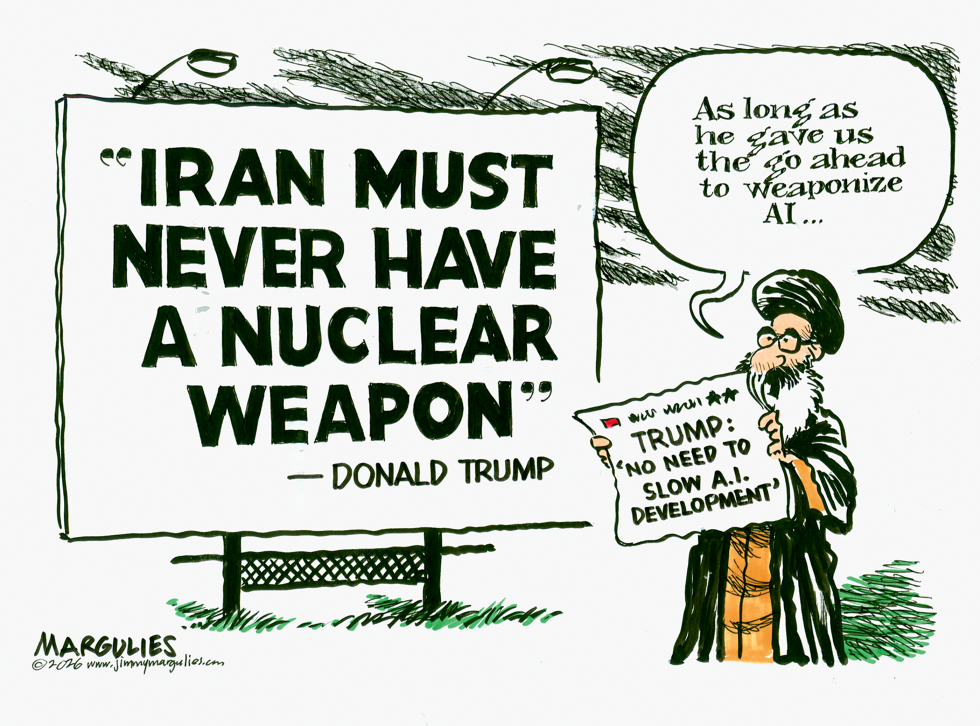
Donald Trump has repeatedly stated that Iran must never obtain a nuclear weapon, a position rooted in long-standing U.S. efforts to prevent nuclear proliferation in the Middle East. At the same time, reports indicate interest in accelerating artificial intelligence development without slowdowns. The cartoon responds to this apparent tension by depicting an Iranian leader conditioning acceptance of the nuclear restriction on permission to pursue AI weaponization. It argues that prioritizing rapid AI advancement risks undermining nonproliferation goals and hands strategic advantages to adversaries.
Government agencies continue to expand regulatory frameworks across multiple sectors, adding layers of oversight that increase compliance costs for businesses and individuals. The trend reflects ongoing debates over the proper scope of administrative authority and its impact on economic activity. The piece argues that such expansion has crossed into excess, creating unnecessary obstacles rather than protecting the public.
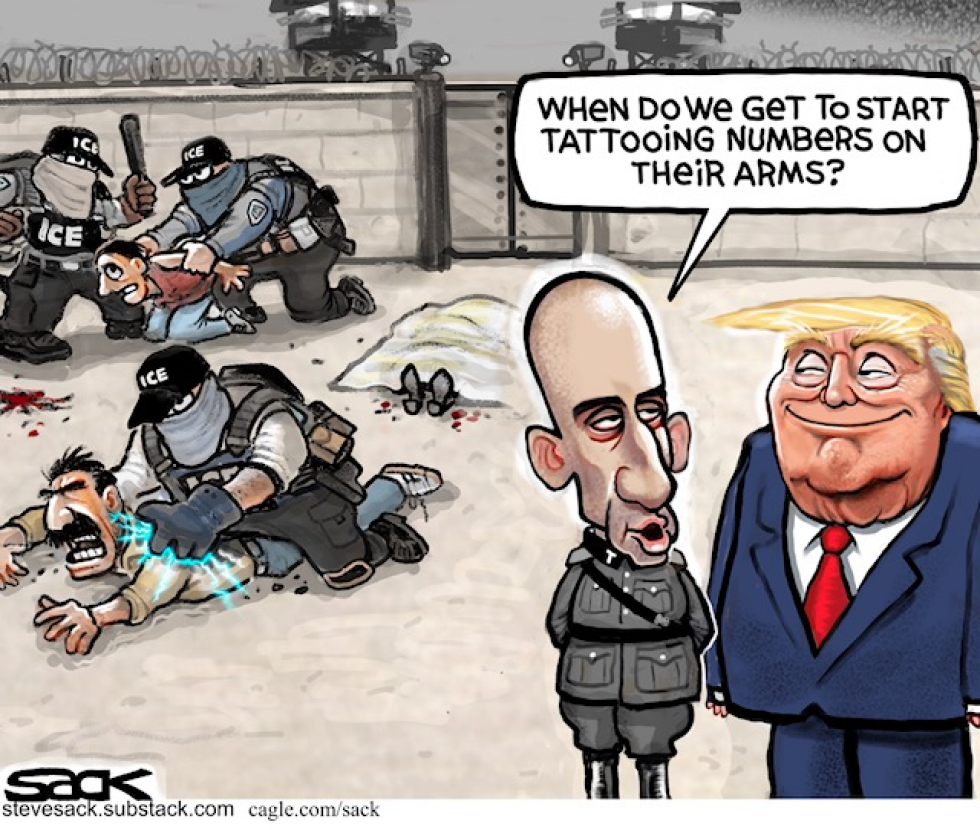
Donald Trump has publicly discussed aggressive measures in immigration detention facilities amid ongoing enforcement operations. The remarks come as ICE conducts arrests and holds individuals at secure sites. Critics argue the approach echoes past abuses. The piece portrays the comments as crossing into prohibited territory by invoking forced numbering.
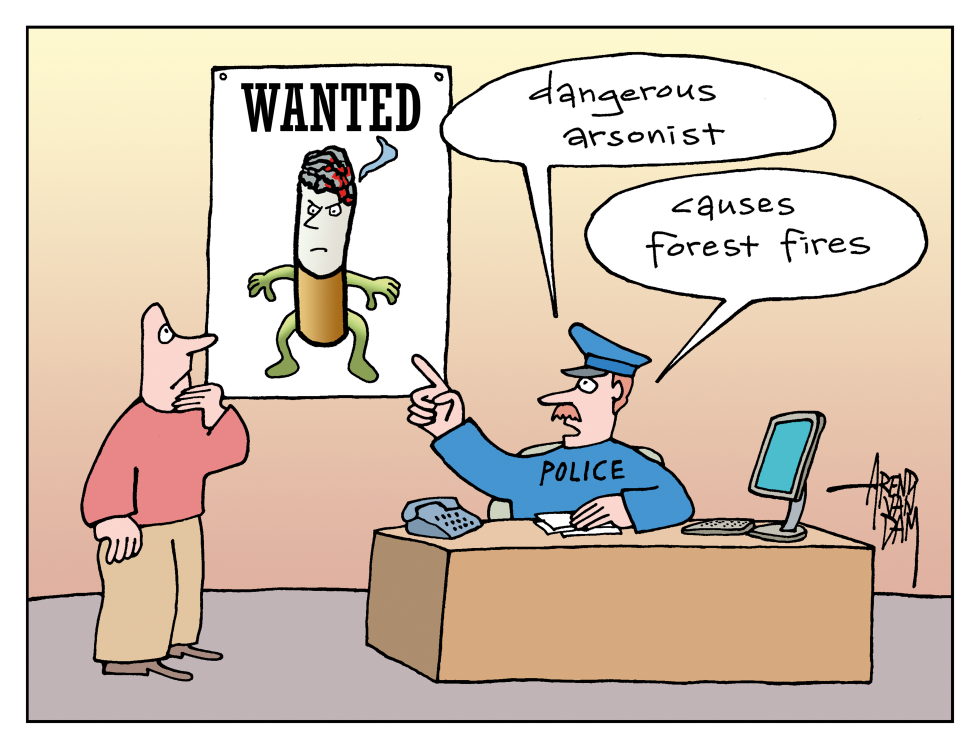
Police have issued a wanted poster naming a cigarette as the dangerous arsonist responsible for forest fires. The move highlights ongoing efforts to curb wildfire ignition sources amid dry conditions. The editorial takes the position that such enforcement targets everyday habits to reduce preventable blazes.
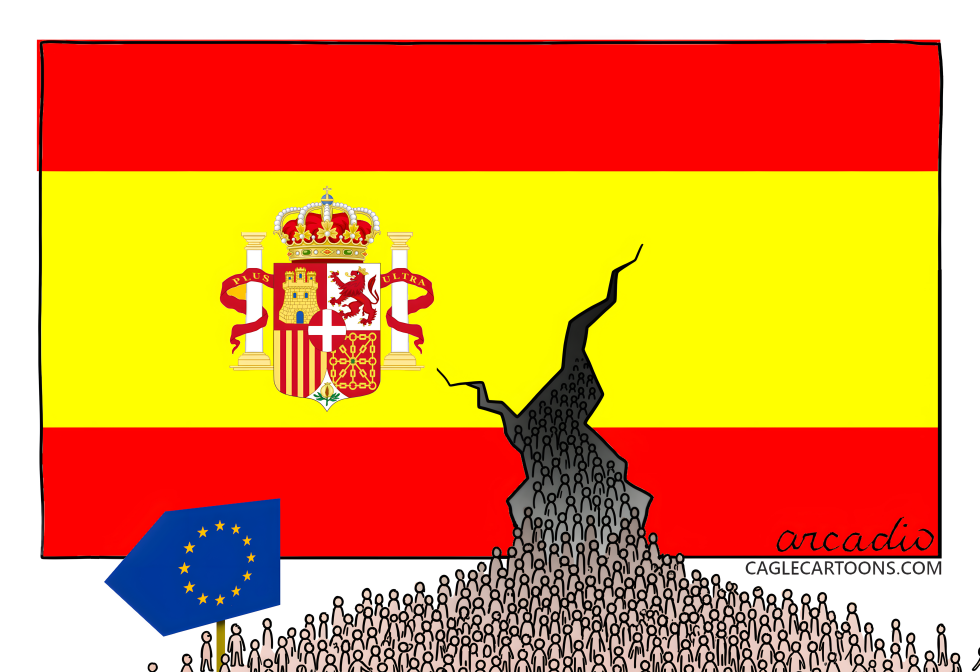
Migration flows continue to test Spain's southern border with North Africa, drawing renewed attention to EU external frontier management. Large numbers of arrivals have prompted Spanish authorities to reinforce controls while Brussels debates shared responsibility among member states. The situation highlights ongoing tensions between humanitarian obligations and national security priorities. The editorial argues that unchecked inflows risk undermining Spain's sovereignty and the stability of the Schengen area.
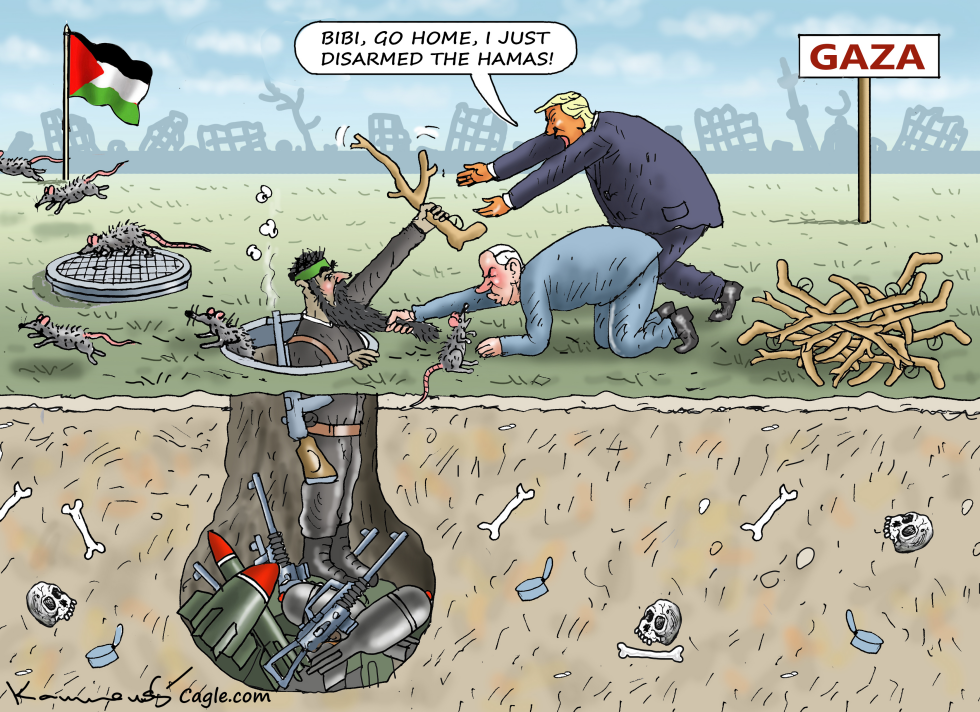
Donald Trump publicly urges Israeli Prime Minister Benjamin Netanyahu to return home, asserting that Hamas has been disarmed. The claim occurs amid ongoing Gaza operations involving U.S. and Israeli figures. The editorial highlights competing U.S. political approaches to Middle East security and questions the effectiveness of recent disarmament efforts.
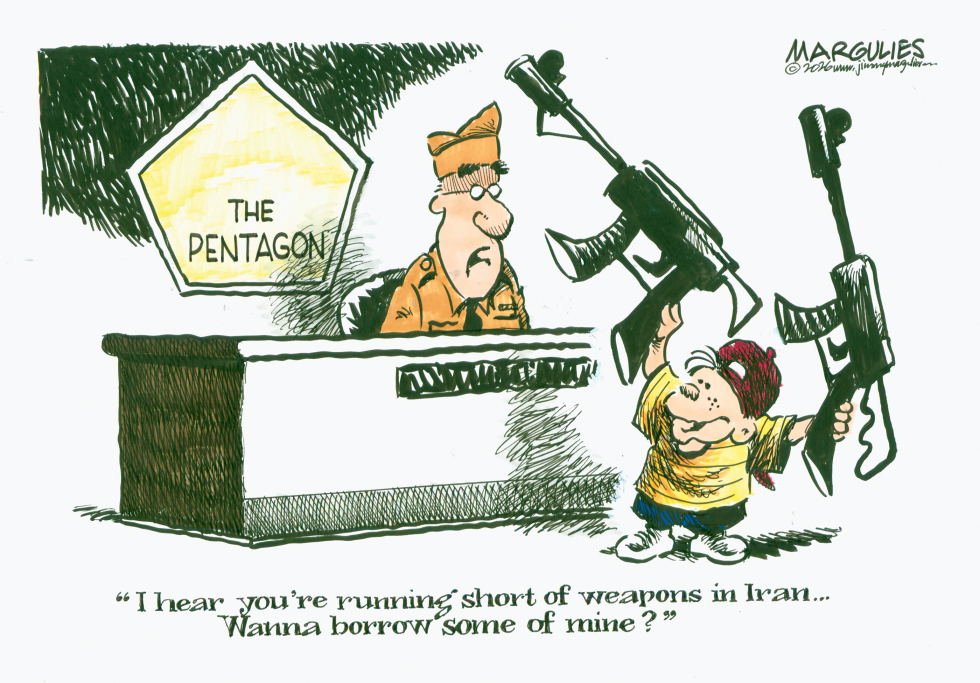
A Pentagon officer receives an unsolicited offer of rifles from a child citing shortages in Iran. The exchange underscores ongoing U.S. concerns over arms flows and regional stability in the Middle East. No specific recent policy shift or confirmed shortage has been verified in the days leading to publication. The piece frames the Pentagon as open to unconventional sources for military support. It critiques reliance on external or irregular suppliers in foreign policy decisions.
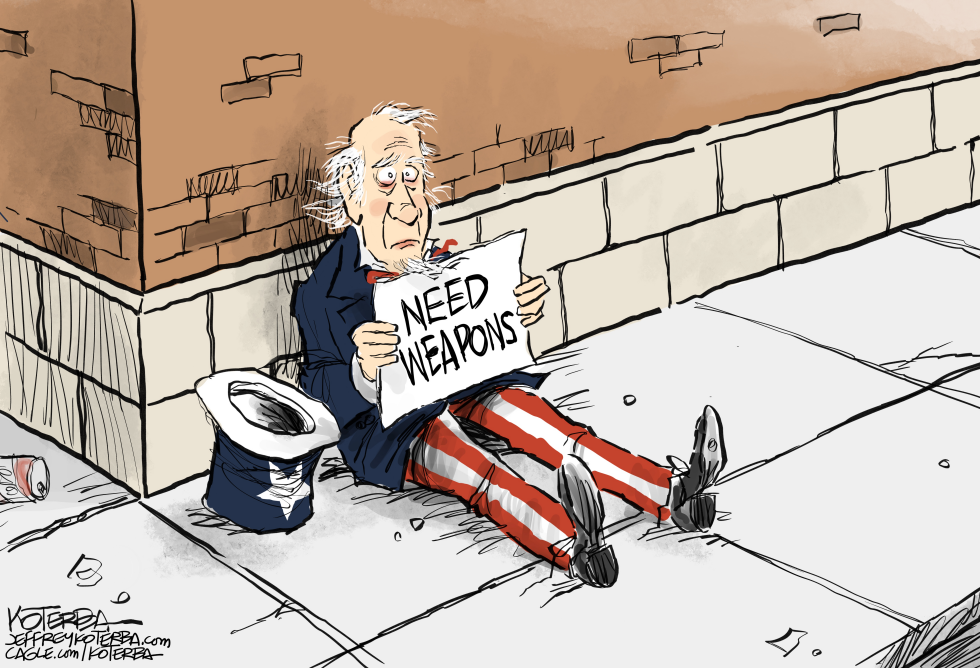
Uncle Sam appears as a disheveled figure on a sidewalk holding a sign requesting weapons. The image captures an ongoing national debate over military resources and international commitments. The editorial stance highlights perceived weakness in current arms policy and funding priorities.
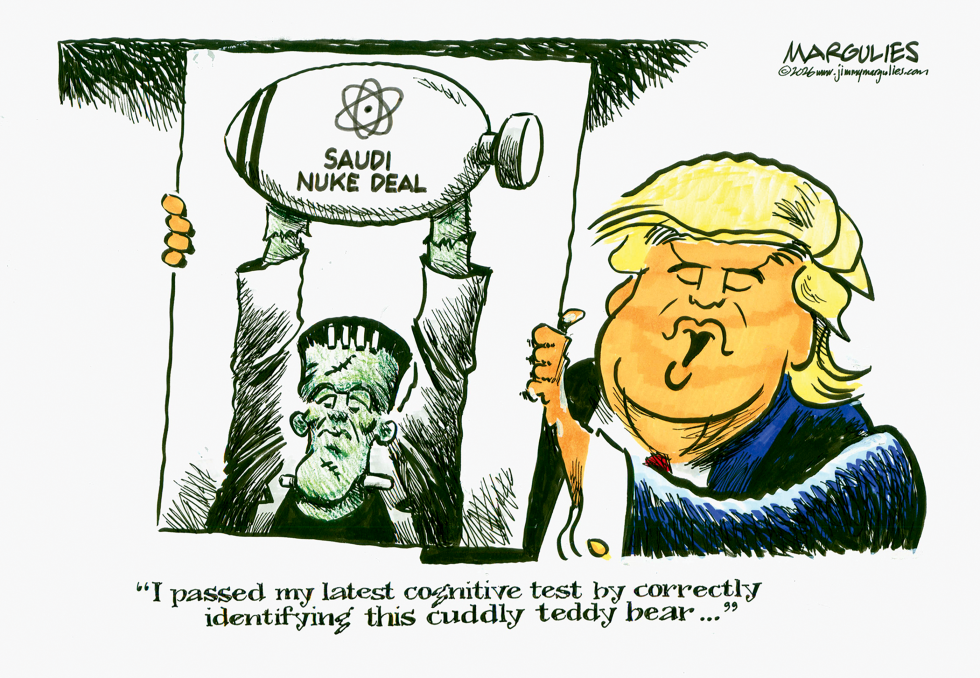
Donald Trump referenced a cognitive test while describing a Saudi nuclear deal in personal terms. The episode occurs against ongoing debates over arms control and Middle East policy. The piece portrays the deal as a dangerous misjudgment.
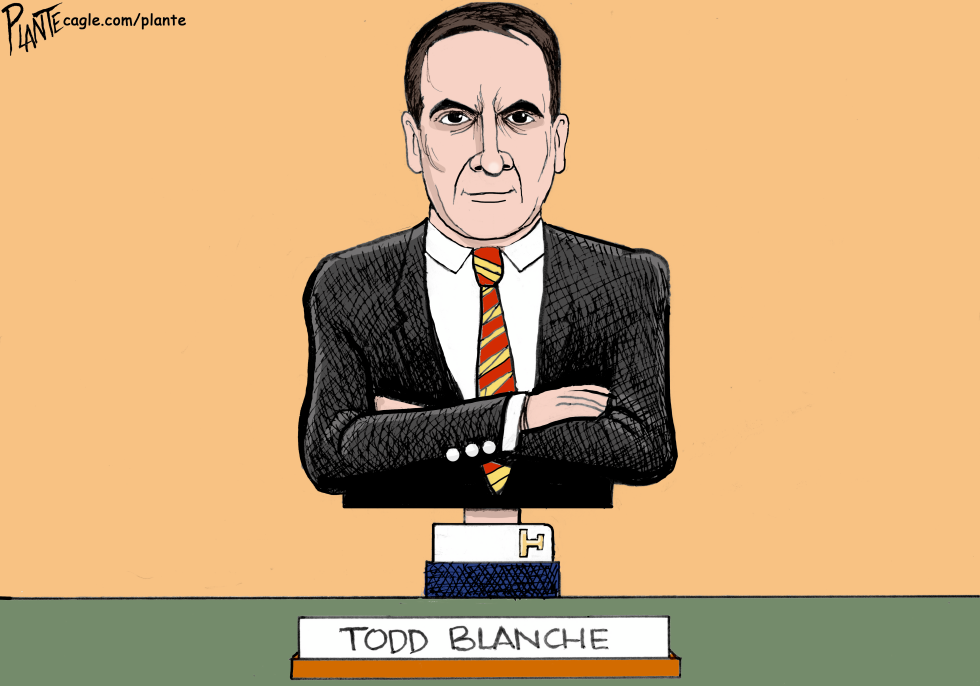
Todd Blanche holds a legal or advisory role in political circles. The image frames him as a mounted figure under external control. The editorial position presents him as lacking independent agency in his position.
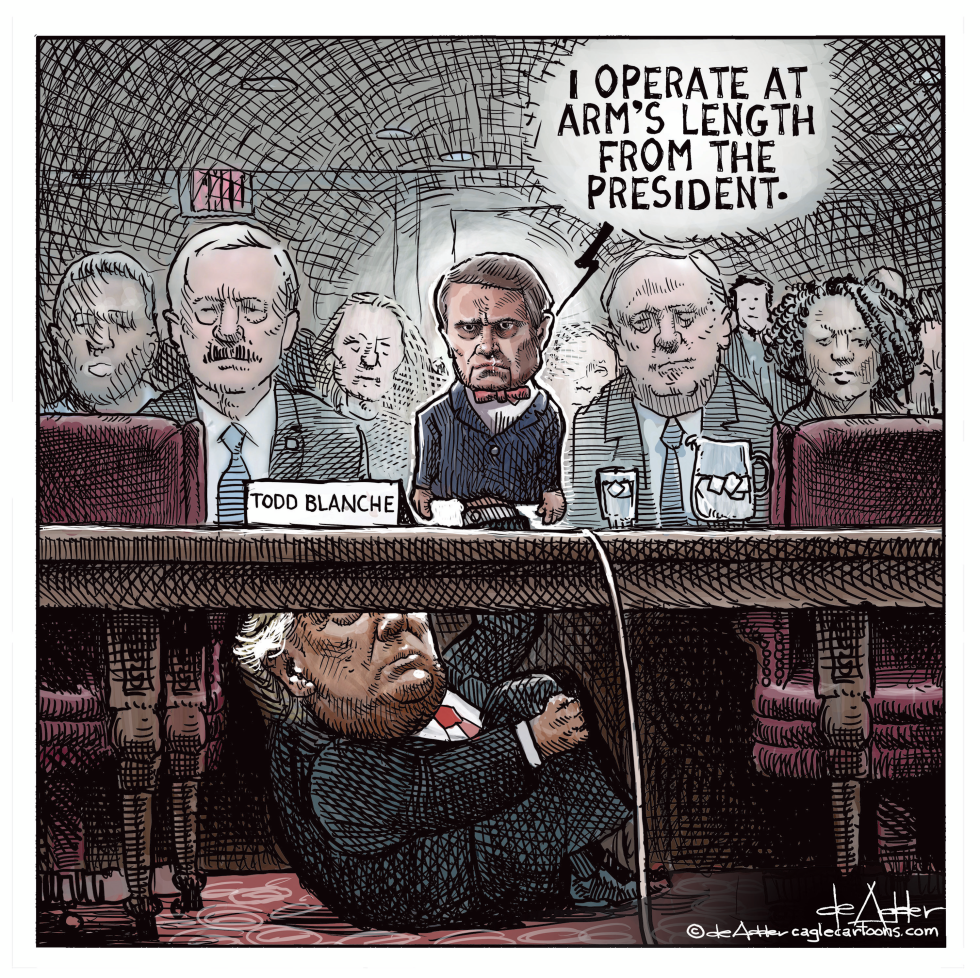
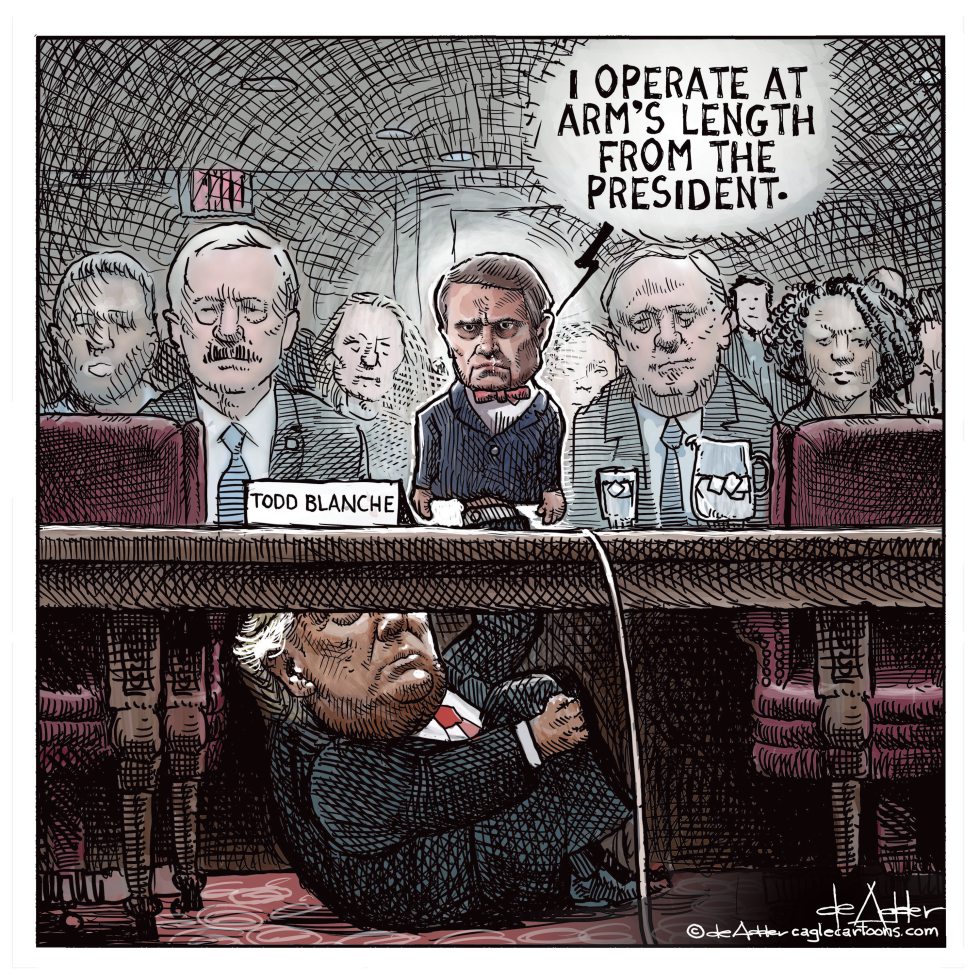
In the cartoon, Todd Blanche testifies before a panel that he operates at arm's length from the president. The image shows Blanche at the witness table with a speech bubble containing that statement. Below the table, Donald Trump is depicted on the floor holding a cord attached to Blanche's chair. Other figures sit along the table in the hearing room. The drawing responds to Blanche's testimony by visually contradicting the claim of separation through the placement of Trump directly beneath the witness.
Todd Blanche testifies before a congressional committee that he operates at arm's length from the president. The image shows a cord running from Blanche directly to Donald Trump, who is crouched beneath the table clutching the line.