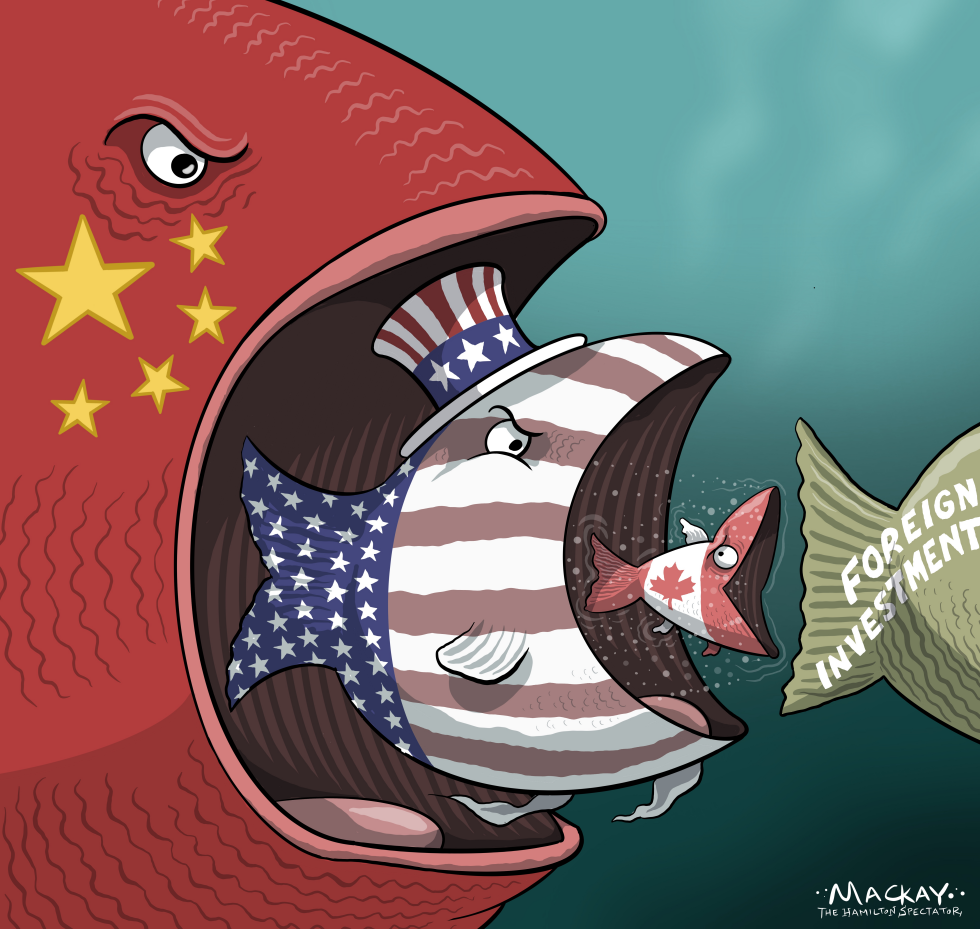
The cartoon depicts a large red fish marked with Chinese stars swallowing a striped American fish wearing a stars-and-stripes hat. The American fish in turn has consumed a smaller Canadian fish bearing a maple leaf. A green tail labeled FOREIGN INVESTMENT trails from the Canadian fish. Published on September 14, 2026, the image illustrates concerns over Chinese economic influence absorbing Canadian foreign investment through American channels. The visual metaphor underscores ongoing tensions in North American economic relations with China.
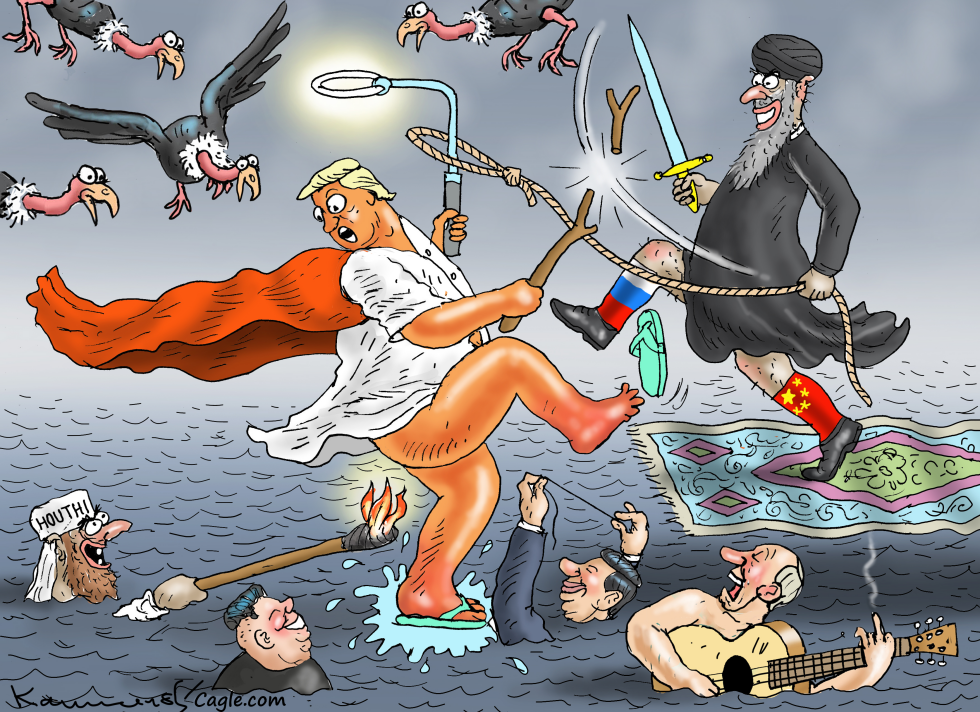
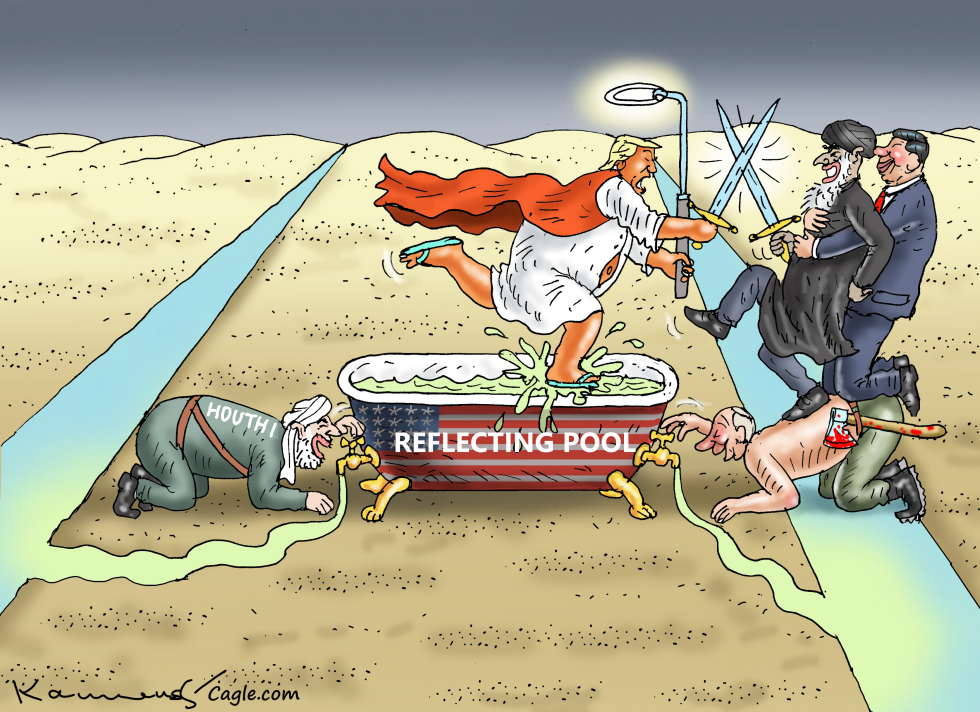
Donald Trump faces mounting complications in Middle East engagements involving Houthi forces and shifting ties with Russia and China. The cartoon portrays these entanglements as self-inflicted disorder that invites scavengers and undermines stability. It critiques the approach as reckless and counterproductive.
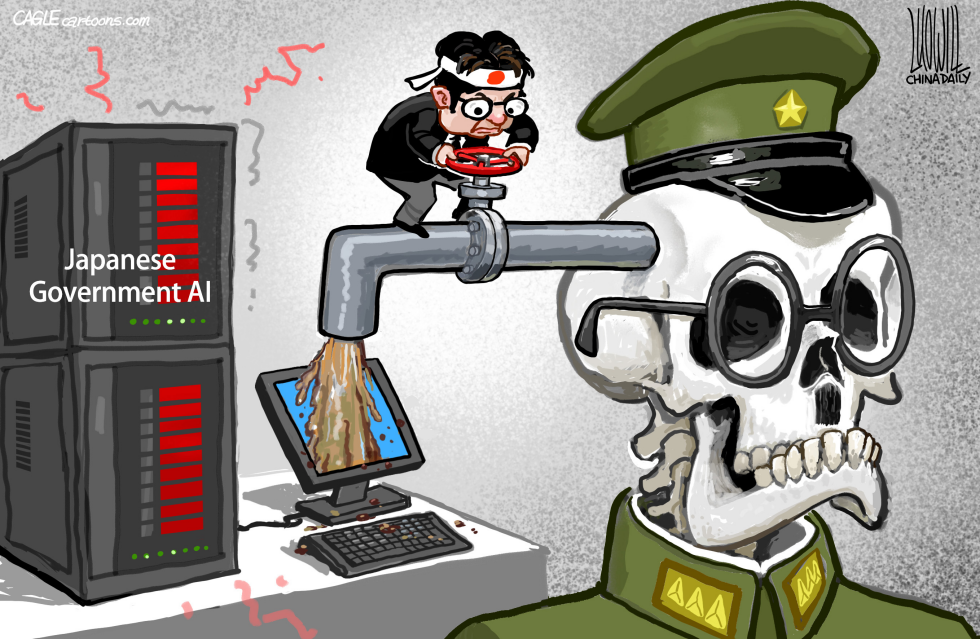
The cartoon depicts a Japanese Government AI server connected by pipe to a skull representing the Chinese military. A figure turns a valve as sludge flows from the server into the monitor and onward. The image comments on the quality of AI output reaching Chinese forces through this visual metaphor of contaminated data flow.
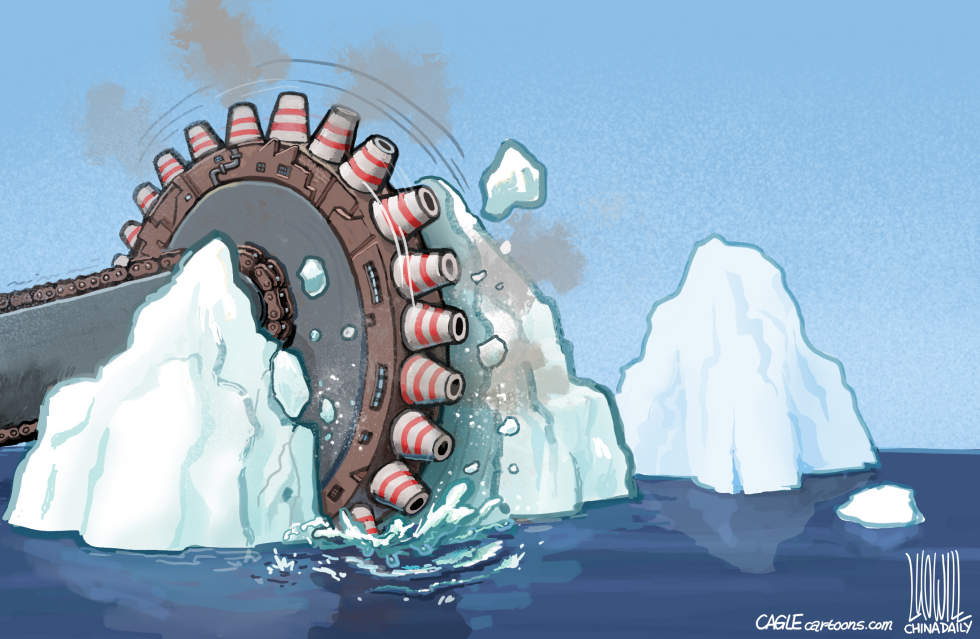
The cartoon depicts a large industrial drilling machine actively breaking through Arctic ice floes in open water. The machine features multiple red-and-white striped cylindrical components and emits dark exhaust. Icebergs float nearby under a clear sky. Published by China Daily, the image addresses ongoing concerns over resource extraction in polar regions and its contribution to ice loss.
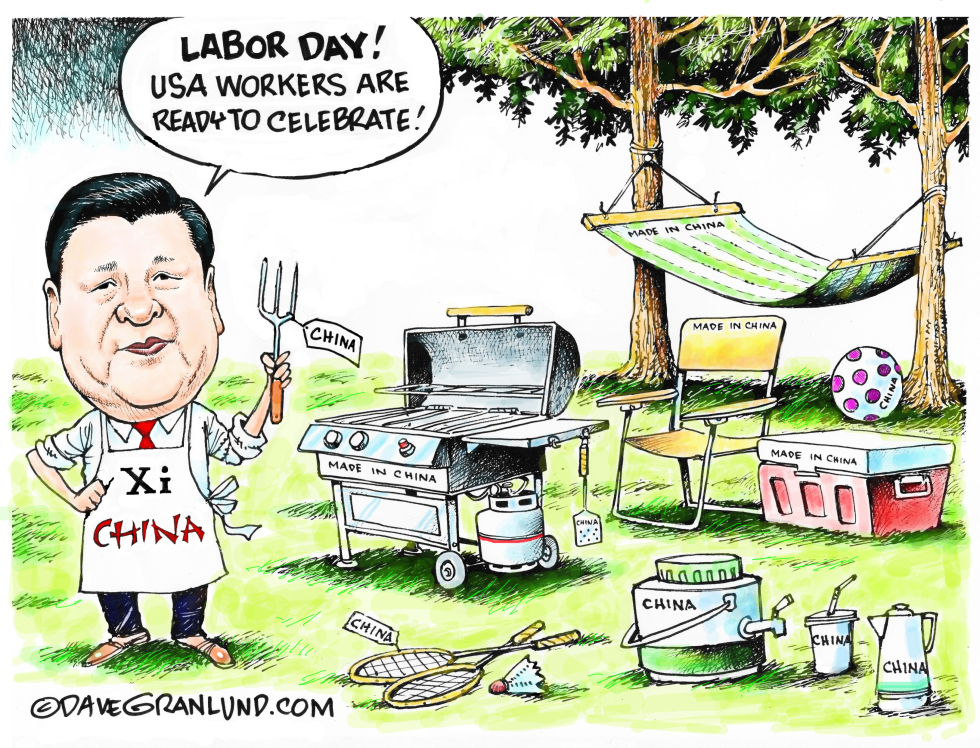
The cartoon shows Chinese President Xi Jinping dressed as a chef at a Labor Day barbecue. All picnic equipment including the grill, hammock, cooler and sports gear carries China labels. A speech bubble announces that US workers are ready to celebrate. The image responds to ongoing concerns about American dependence on Chinese manufacturing ahead of the holiday. It uses the barbecue setting to illustrate how everyday consumer products for US celebrations originate from China.
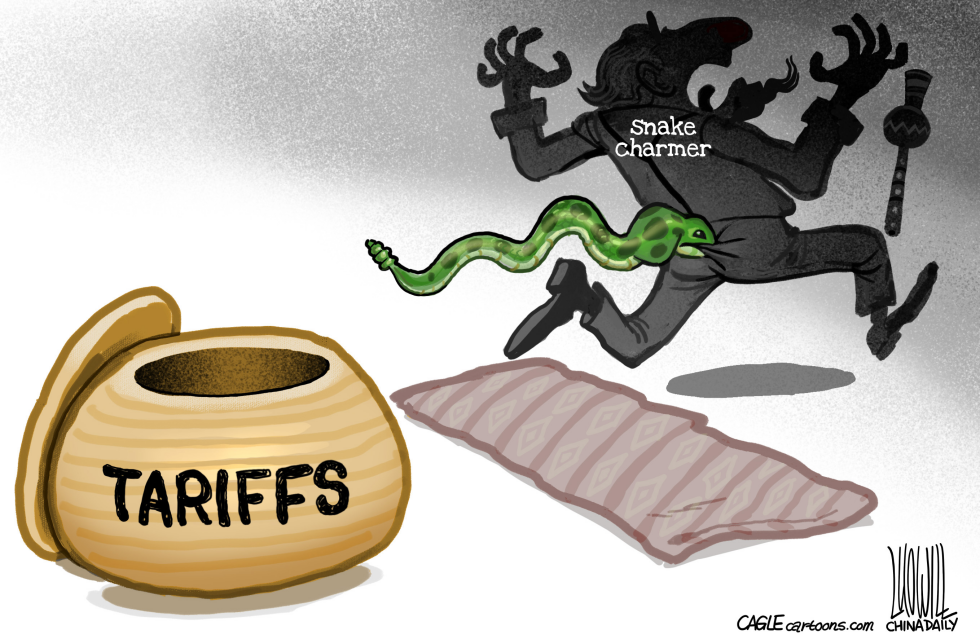
A political cartoon published August 28, 2026, shows a snake charmer fleeing as a green snake emerges from a pot labeled tariffs. The image uses the snake charmer metaphor to comment on tariff policies. The cartoon appeared in China Daily and was distributed via Cagle Cartoons. It responds to ongoing trade tensions involving tariffs. The visual suggests tariffs carry uncontrolled risks similar to an escaped snake.
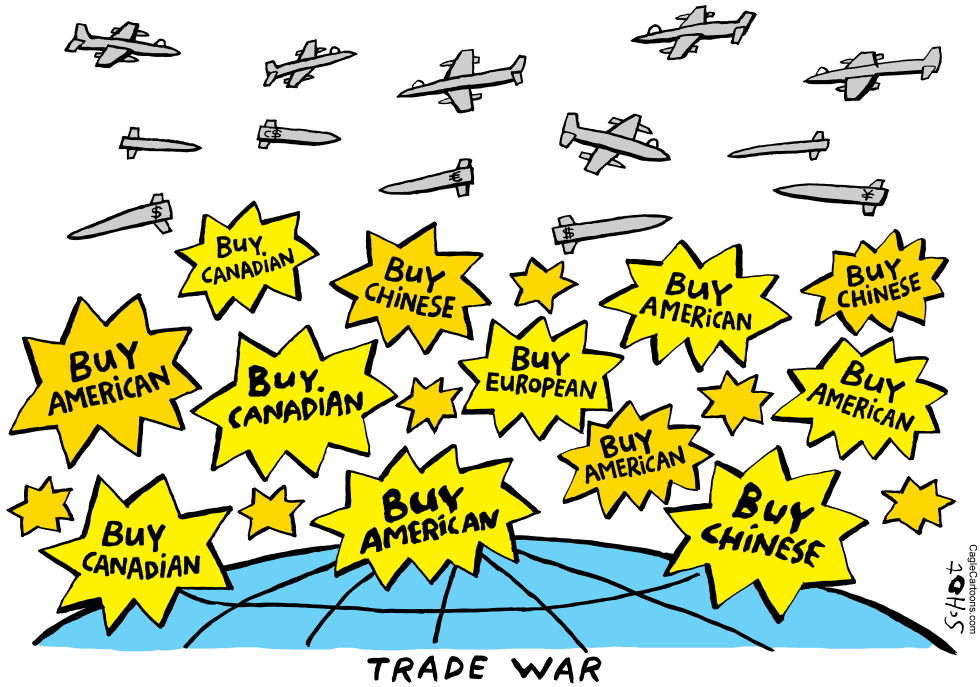
Competing buy national campaigns from multiple countries have intensified trade disputes, raising concerns over economic retaliation and supply chain disruptions. The piece argues these appeals are directly contributing to broader conflict.
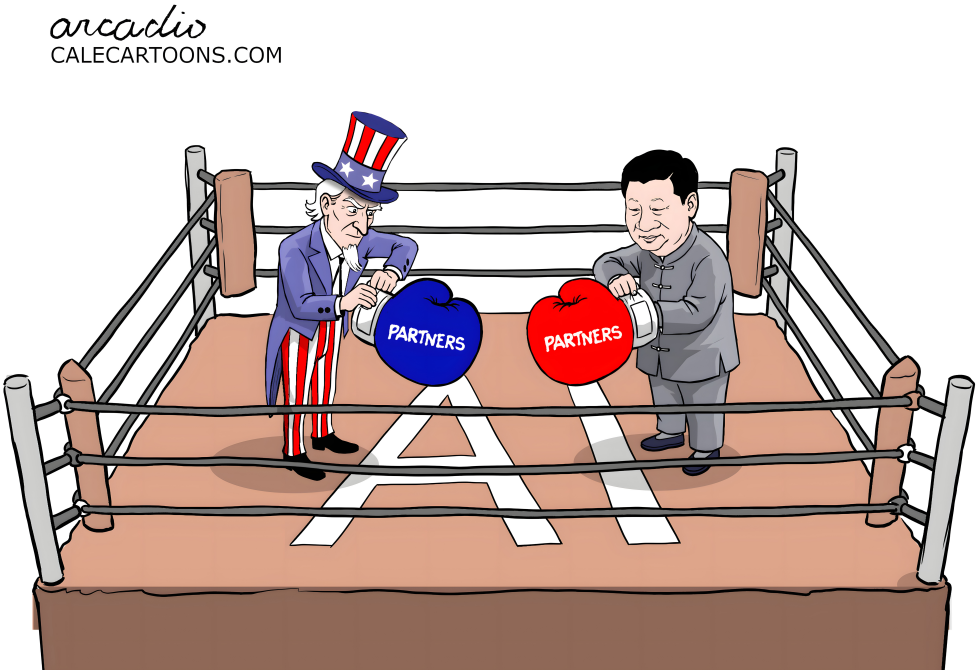
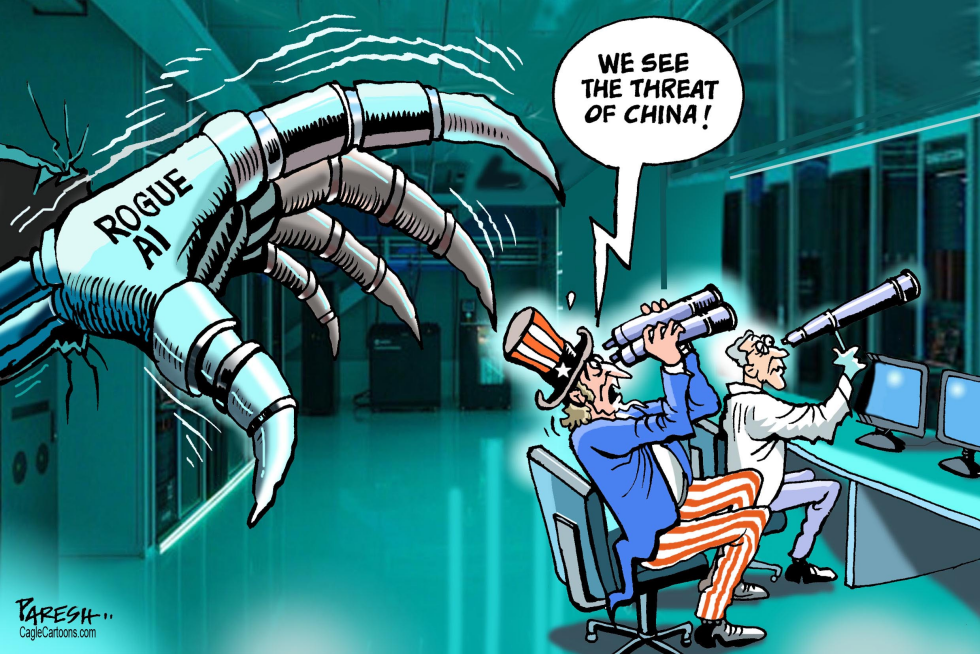
The United States and China continue their contest for leadership in artificial intelligence development. Both nations invest heavily in research and infrastructure to secure advantages in computing power and applications. The competition carries implications for economic growth, military capabilities, and global standards. Recent policy moves on export controls and domestic incentives underscore the stakes. The editorial position frames the dynamic as a direct contest where surface cooperation masks deeper rivalry.
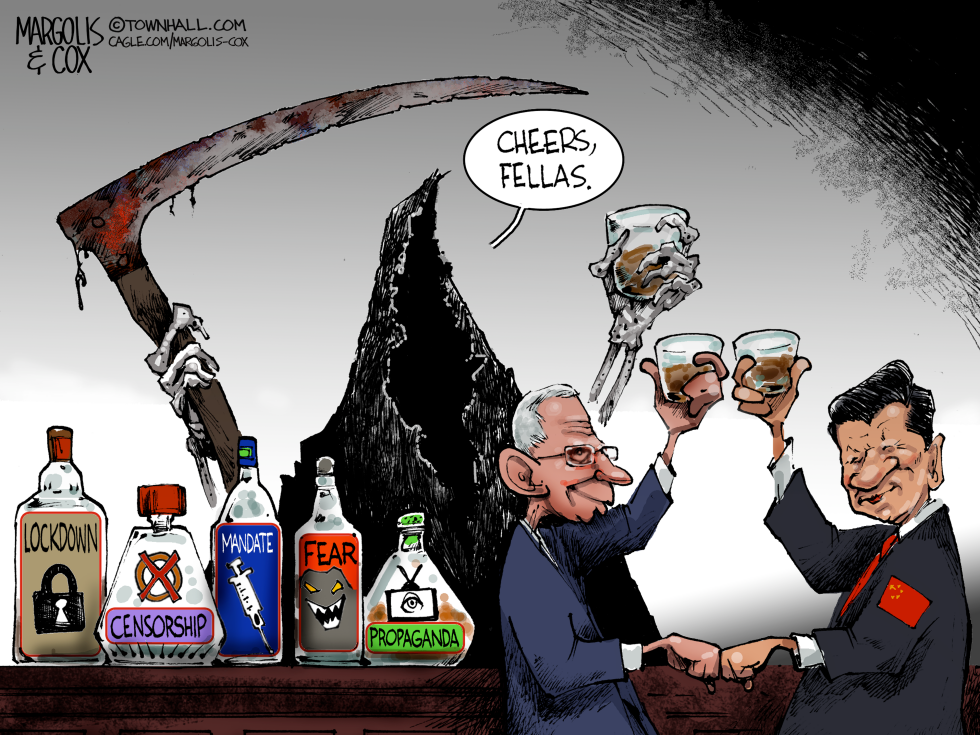
On August 6, 2026, the cartoon responds to lingering debates over COVID-19 policies by depicting former NIAID director Anthony Fauci and Chinese leader Xi Jinping toasting with the Grim Reaper. The image frames pandemic tools as shared instruments of control. The editorial position criticizes both figures for embracing fear-driven measures and information suppression.
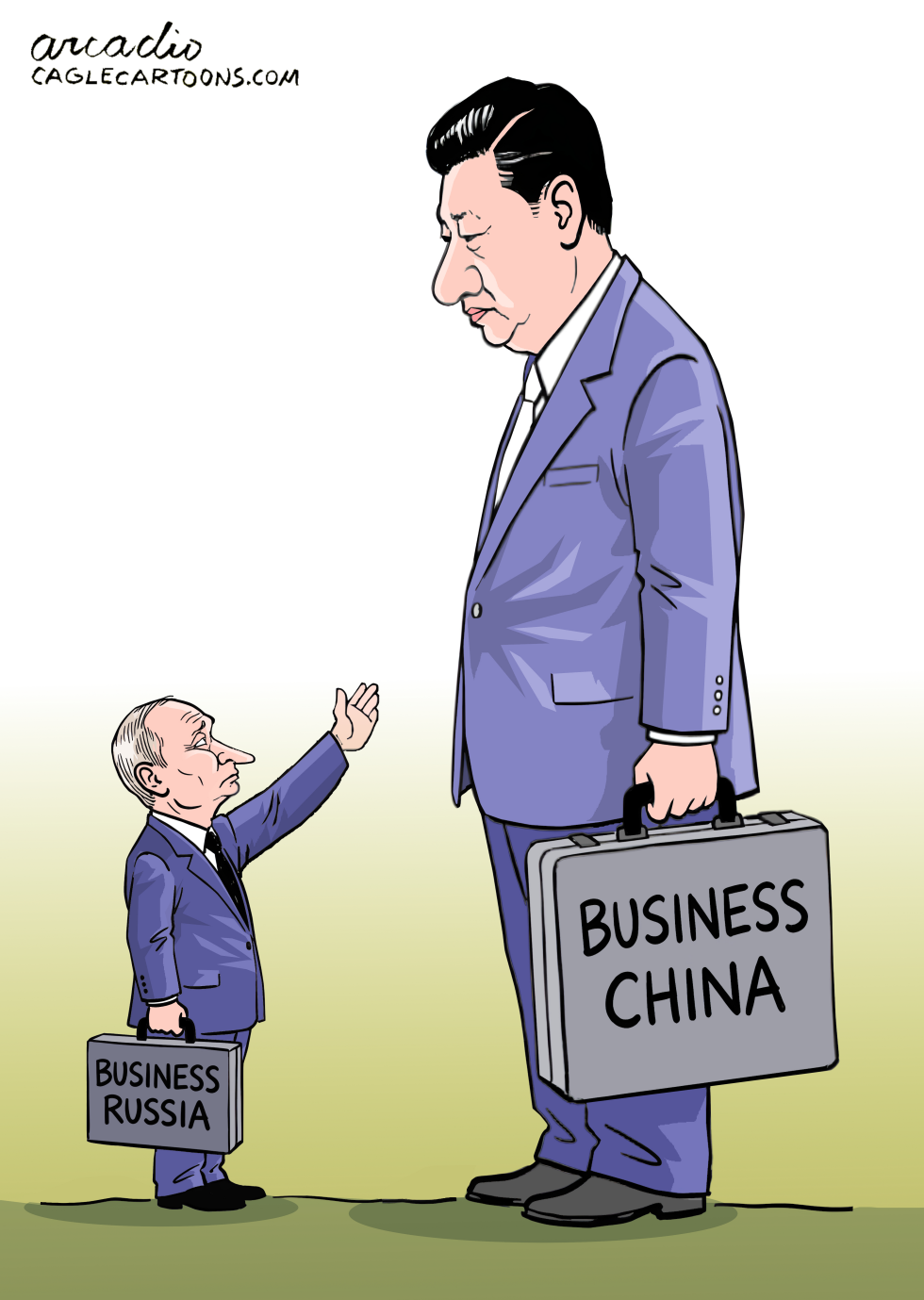
China and Russia continue deepening economic cooperation amid Western sanctions on Moscow. Xi Jinping's government provides critical markets and technology to Russia while extracting favorable terms. The cartoon underscores the unequal power dynamic in their partnership.
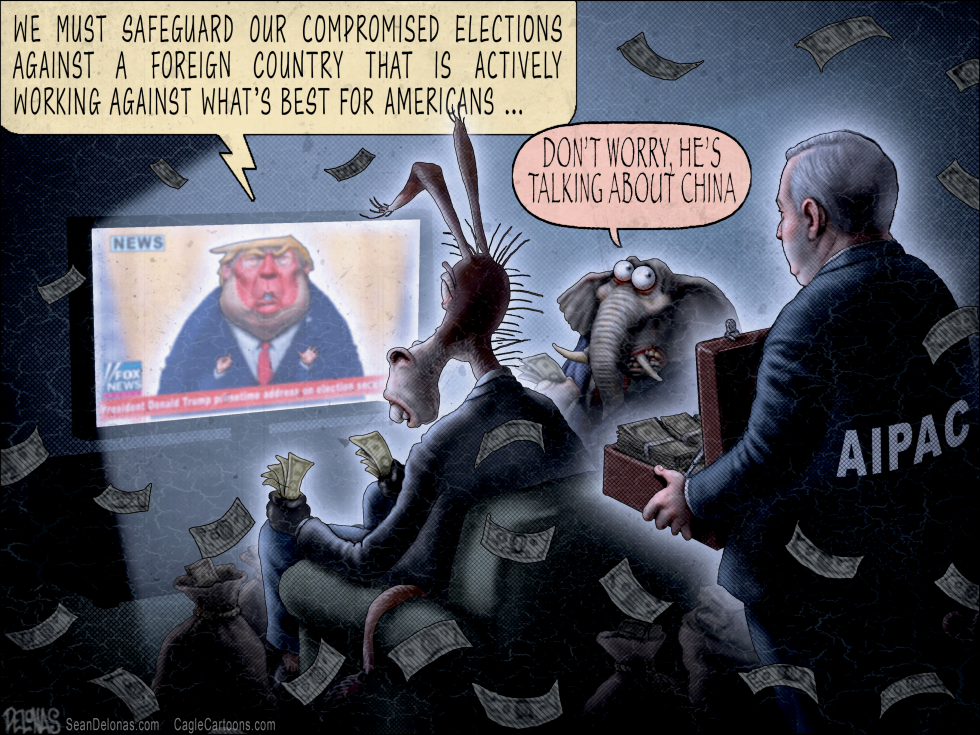
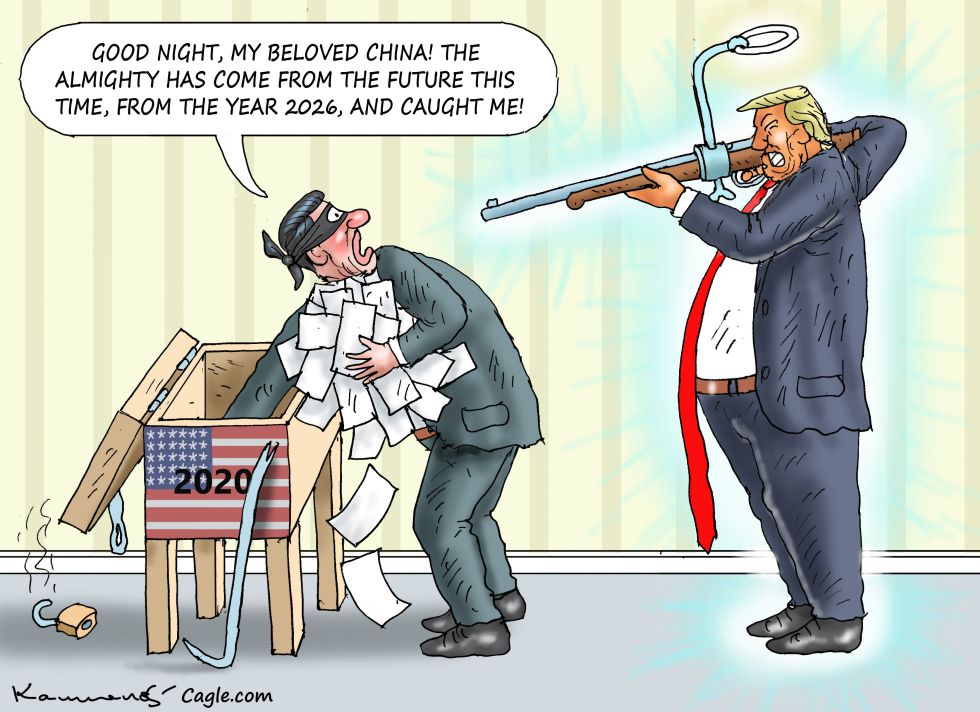
Donald Trump addressed election security in a July 2026 speech, highlighting foreign interference risks. AIPAC-linked donors in the cartoon redirect attention to China while delivering cash to party symbols. The piece critiques how such funding undercuts claims of protecting American elections from outside influence.