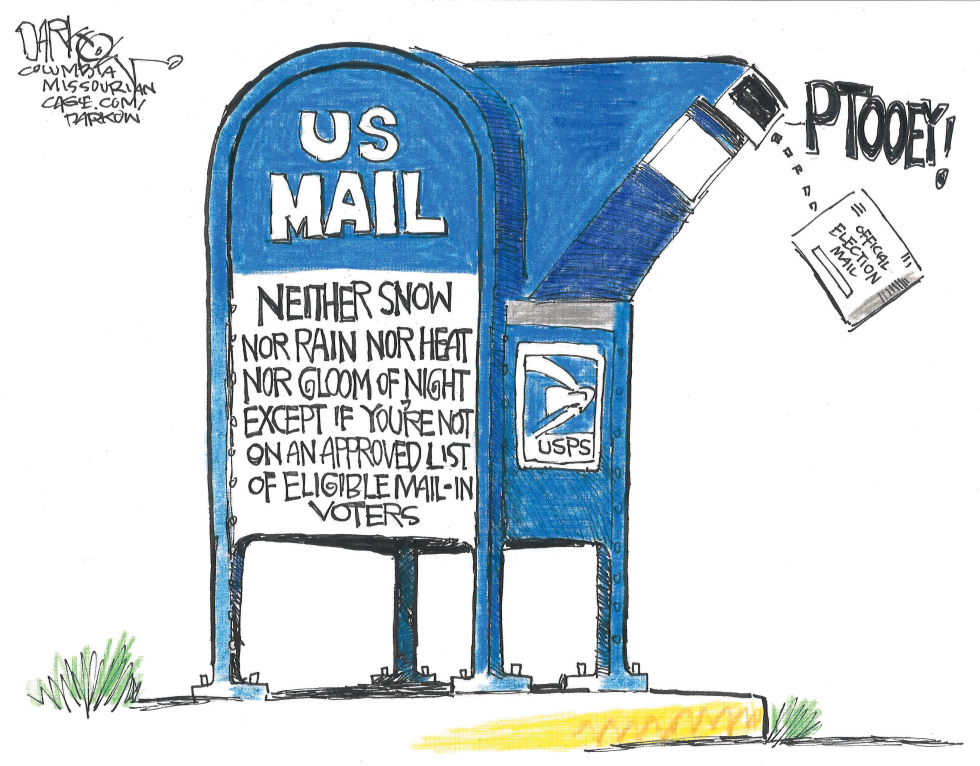
A USPS mailbox rejects mail-in ballots unless the sender appears on an approved list of eligible voters. The action highlights ongoing debates over mail voting security and access ahead of elections. Critics argue such restrictions disproportionately affect certain voter groups and undermine confidence in the postal system. Supporters claim the measures prevent fraud. The cartoon portrays the mailbox as actively enforcing these limits, suggesting institutional barriers to participation.
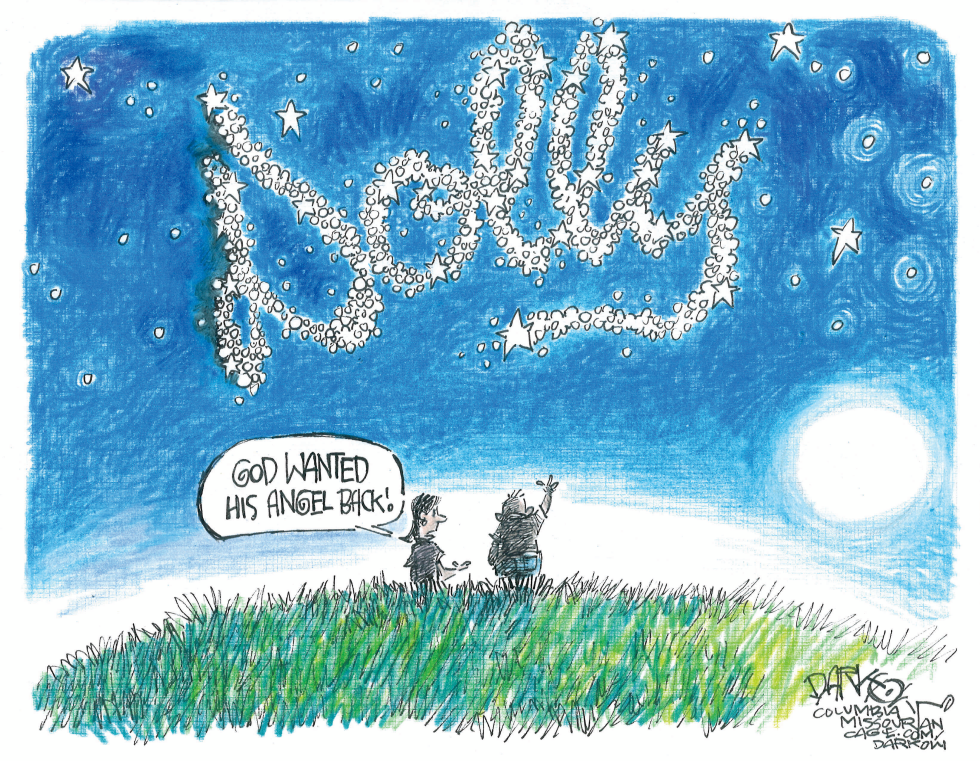
The entertainment world marks the passing of a beloved icon whose name appears spelled in stars as a celestial tribute. The phrase God wanted his angel back captures widespread sentiment of loss. The piece reflects public admiration and the sense of a divine claim on the departed star.
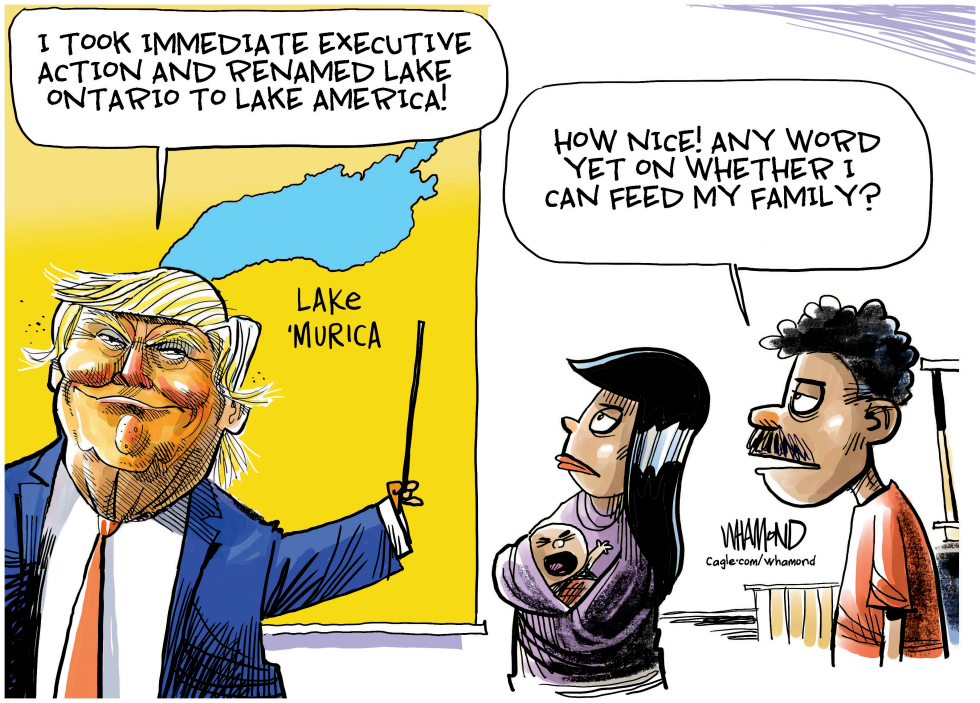
President Trump issued an executive order renaming Lake Ontario as Lake America. The move highlights his focus on symbolic gestures over practical governance. Critics note it distracts from economic pressures facing American households. The cartoon portrays the disconnect between such announcements and urgent family concerns like food security. It critiques the administration's priorities in the current political climate.
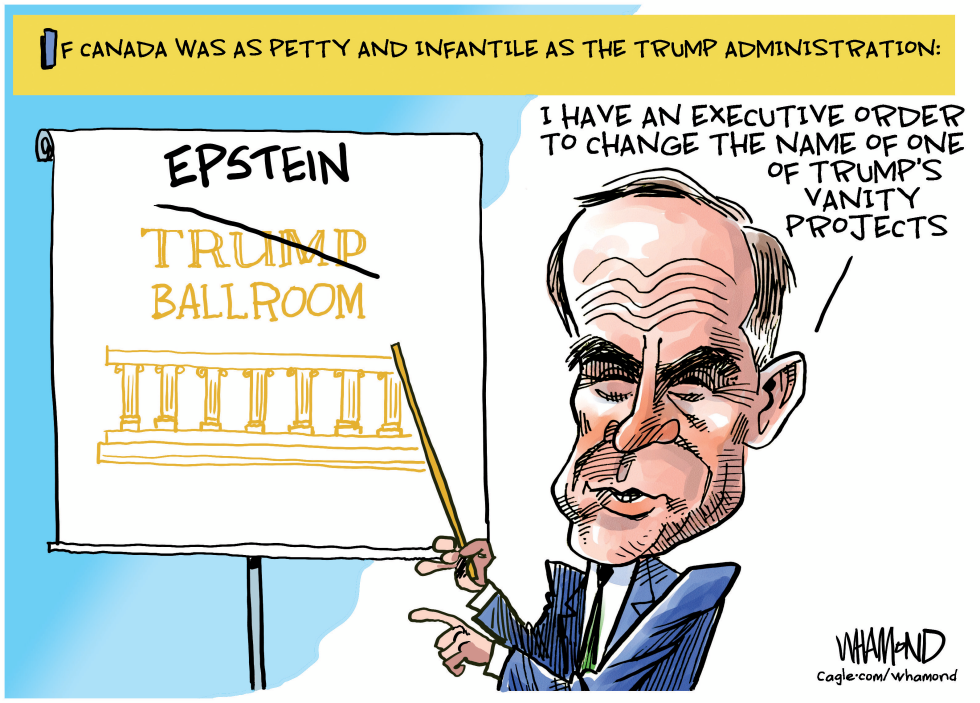
On August 27, 2026, a cartoon depicted Canadian Prime Minister Justin Trudeau issuing a mock executive order to rename a property tied to Jeffrey Epstein as the Trump Ballroom. The move parodies perceived pettiness in the Trump administration's handling of vanity projects and branding disputes. The piece argues that such tit-for-tat gestures underscore how executive actions can devolve into personal score-settling rather than substantive governance.
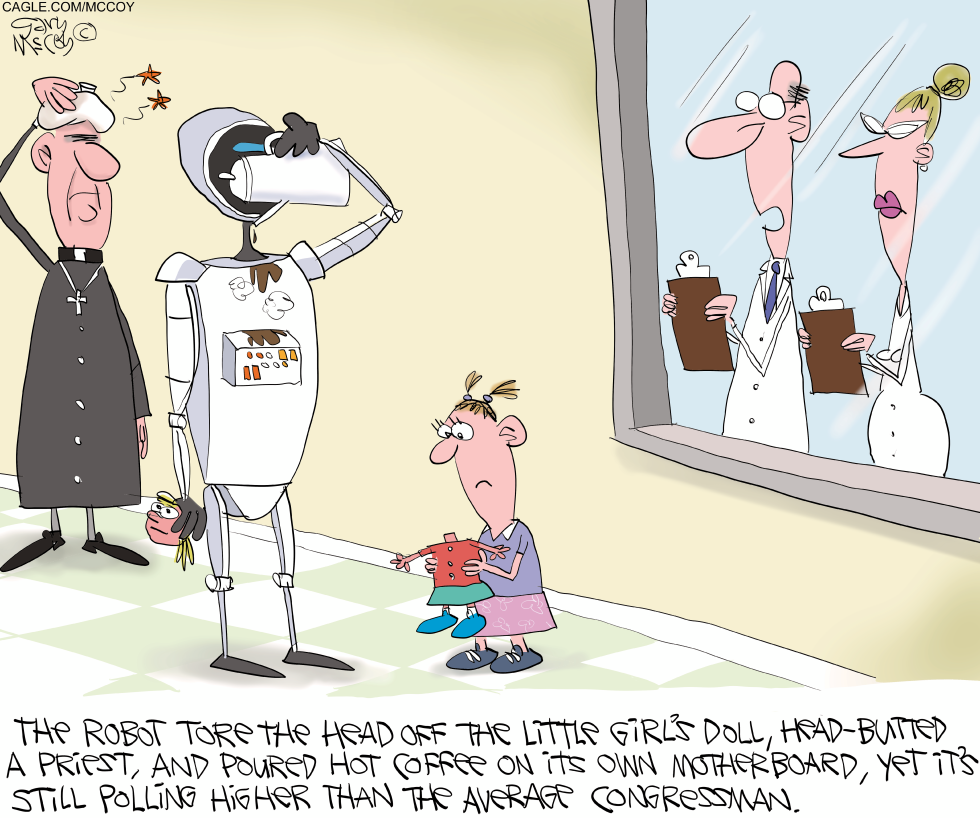
A robot's string of mishaps including tearing a doll's head off, head-butting a priest and spilling coffee on its own systems still leaves it polling higher than the average member of Congress. The piece highlights widespread public frustration with congressional performance and low approval ratings that allow even flawed alternatives to rank higher.
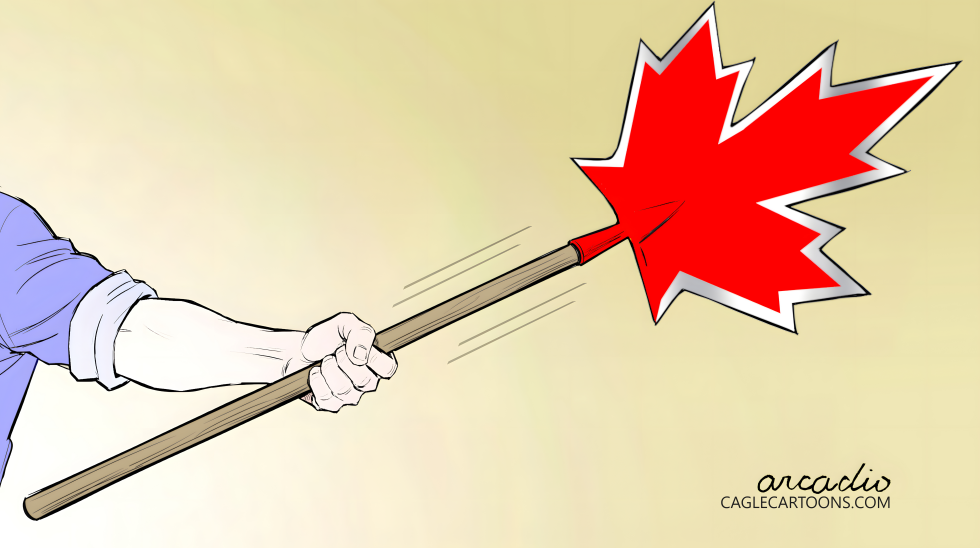
Canada maintains its distinct national identity amid global shifts in trade, security, and cultural relations. The waving flag underscores ongoing pride in Canadian sovereignty and values. The piece affirms this symbol as a steady point of unity.
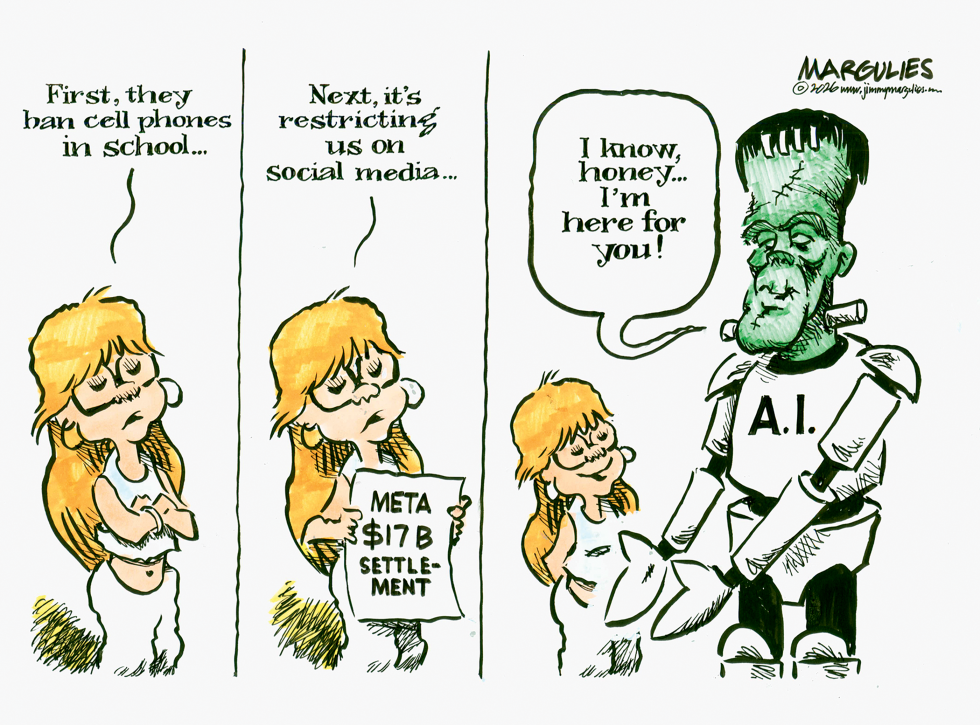
A $17 billion Meta settlement and expanding school cell phone bans have accelerated restrictions on teen social media use. The developments raise questions about how young users will fill the gap left by reduced platform access. The cartoon frames artificial intelligence as the unexpected beneficiary, positioning an AI Frankenstein figure as a comforting presence for a disappointed girl. This visual argument suggests that limits on social media may simply shift reliance toward unregulated AI tools rather than solving underlying concerns about youth screen time.
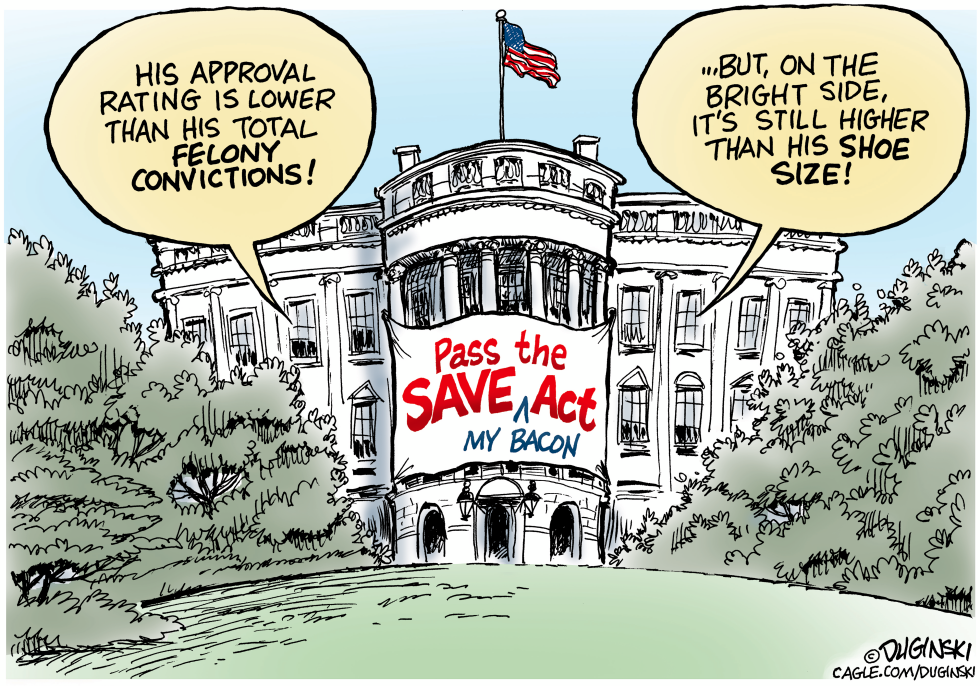
A president facing historically low approval ratings tied to prior felony convictions pushes the SAVE Act through Congress in late summer 2026. The legislation aims to require proof of citizenship for federal voting. The editorial view holds that the effort serves mainly as a lifeline for an embattled administration rather than a substantive reform.
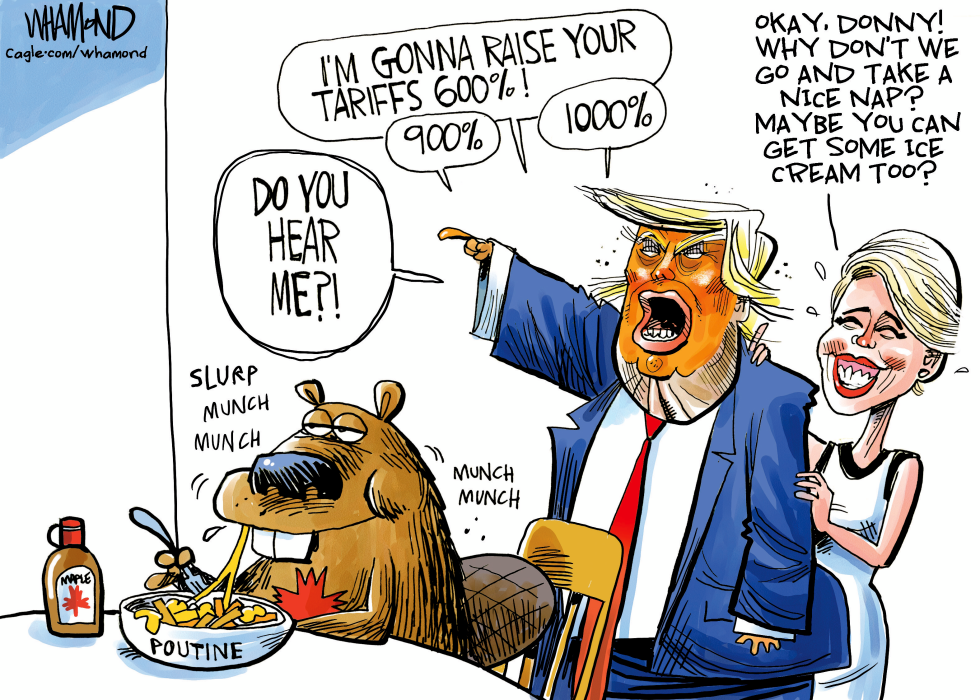
Donald Trump has renewed threats to impose tariffs as high as 1000 percent on Canadian goods. The move targets longstanding trade partners and risks disrupting supply chains for autos, lumber and agriculture. Canada has responded with calls for calm negotiations rather than retaliation. The escalation comes as both nations seek to stabilize economic ties ahead of potential policy shifts. The cartoon portrays the threats as an overreaction best met with indifference and redirection rather than escalation.
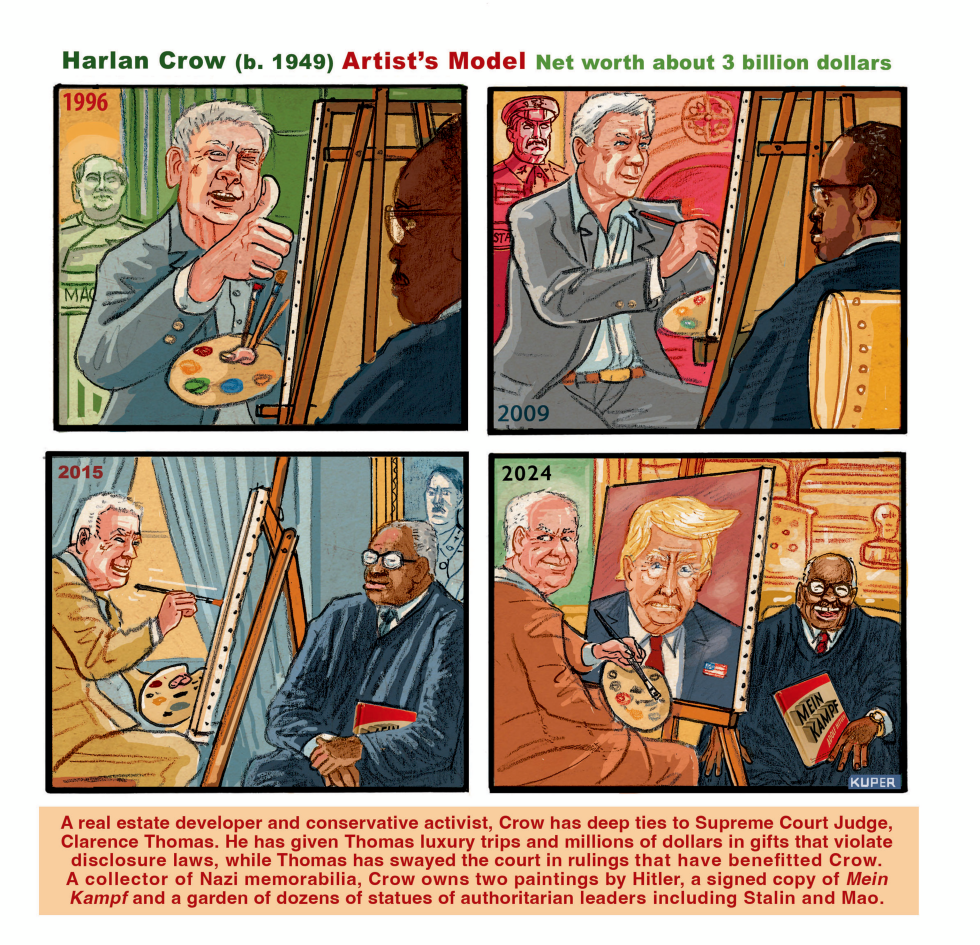
Real estate developer Harlan Crow has provided Supreme Court Justice Clarence Thomas with luxury trips and millions in undisclosed gifts that violate ethics rules. Thomas has participated in rulings benefiting Crow. Crow also collects Nazi memorabilia including Hitler paintings and a signed copy of Mein Kampf. The cartoon extends the pattern to a 2024 portrait of Donald Trump. It criticizes the intersection of wealthy donor influence and judicial decisions.
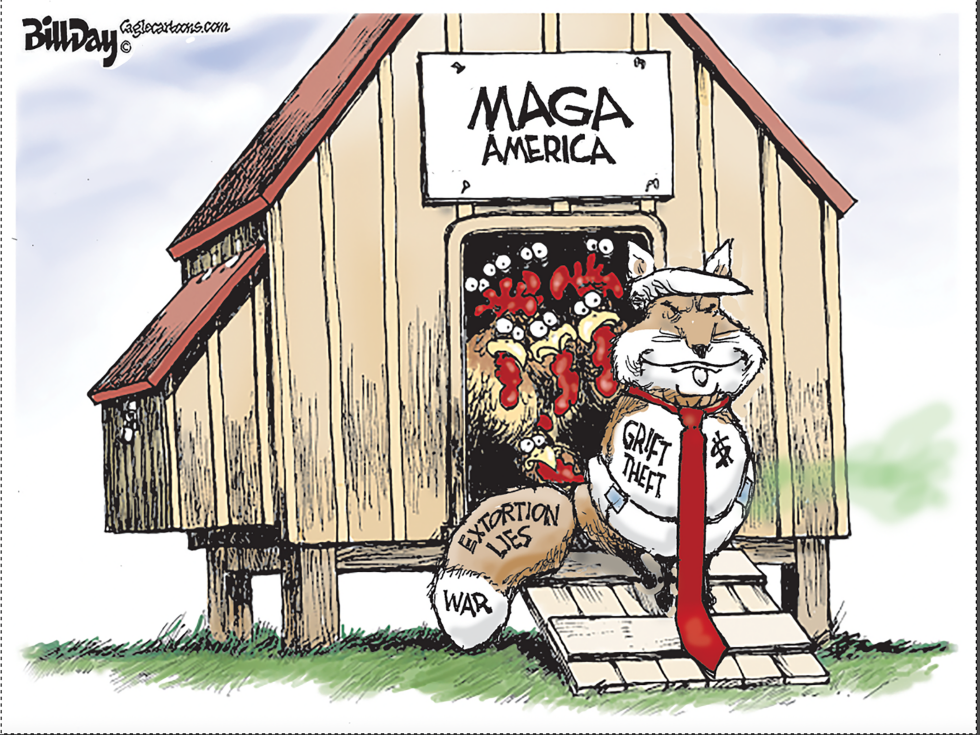
Donald Trump maintains strong influence over the MAGA movement in 2026 amid ongoing accusations of personal enrichment and divisive rhetoric. Critics point to patterns of grift, false claims, and inflammatory language as undermining the base. The piece portrays these dynamics as self-serving predation on supporters.
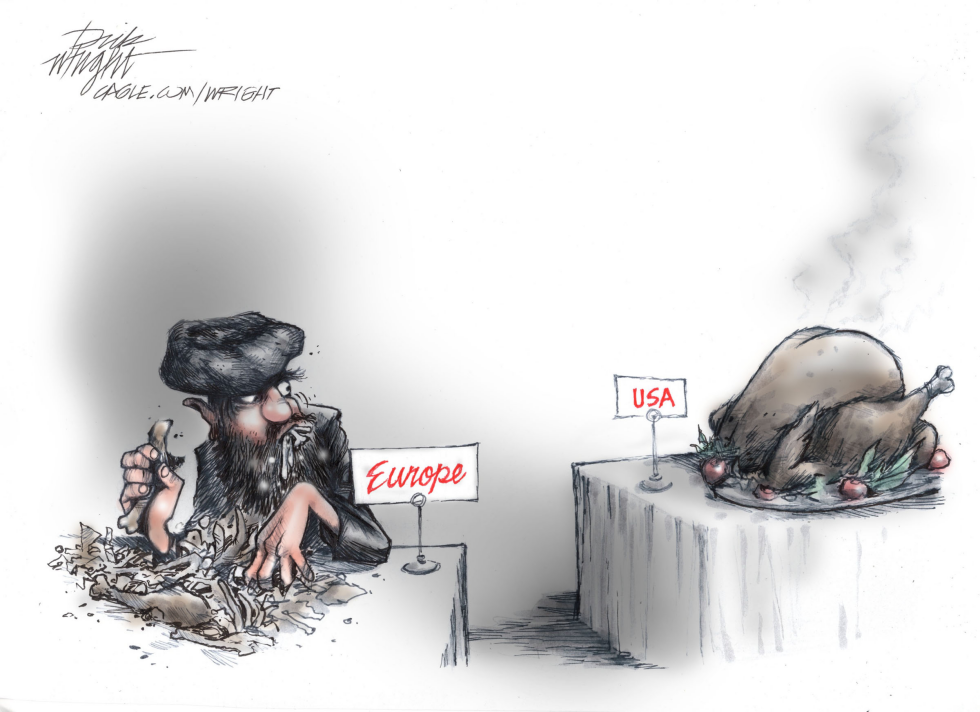
A foreign leader has stripped Europe bare and now eyes the United States as the next prize. The piece argues that unchecked expansionist momentum threatens American security and global stability.
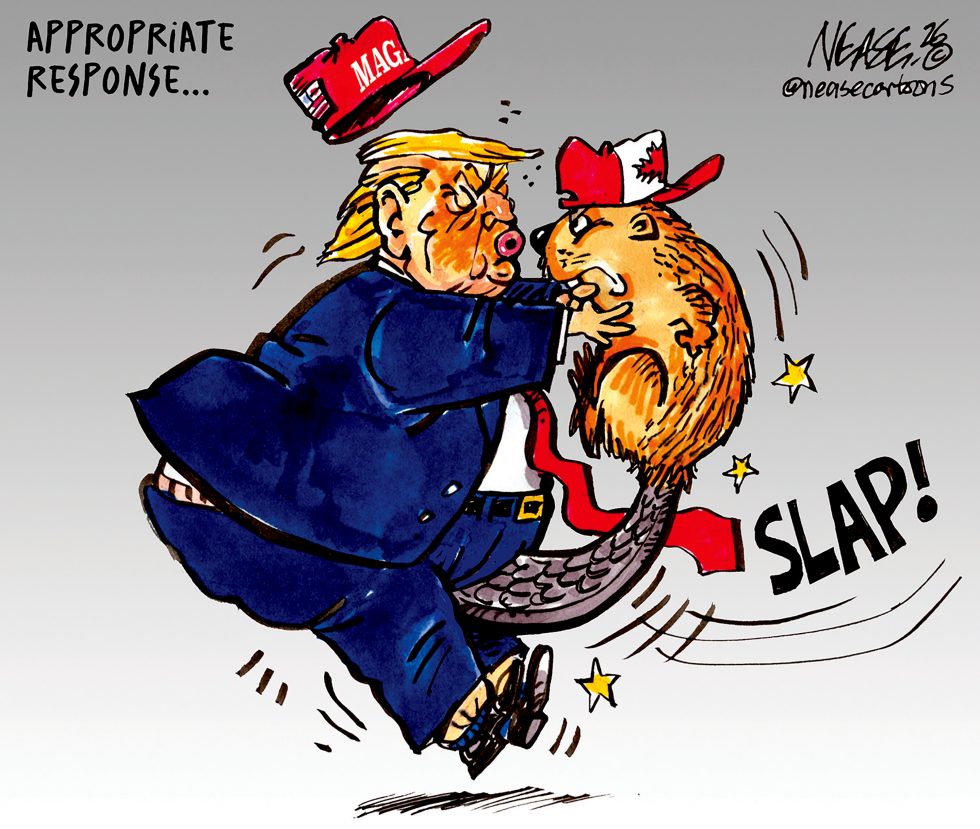
Donald Trump appears in a 2026 cartoon delivering a slap to a beaver representing Canada. The image captures ongoing friction between the United States and Canada over trade and tariffs. Trump, shown with a flying MAGA hat, embodies an aggressive posture toward the northern neighbor. The piece reflects broader debates about American foreign policy under renewed Trump influence. It portrays the confrontation as blunt and personal rather than diplomatic. The editorial position criticizes the approach as undignified and counterproductive for bilateral relations.
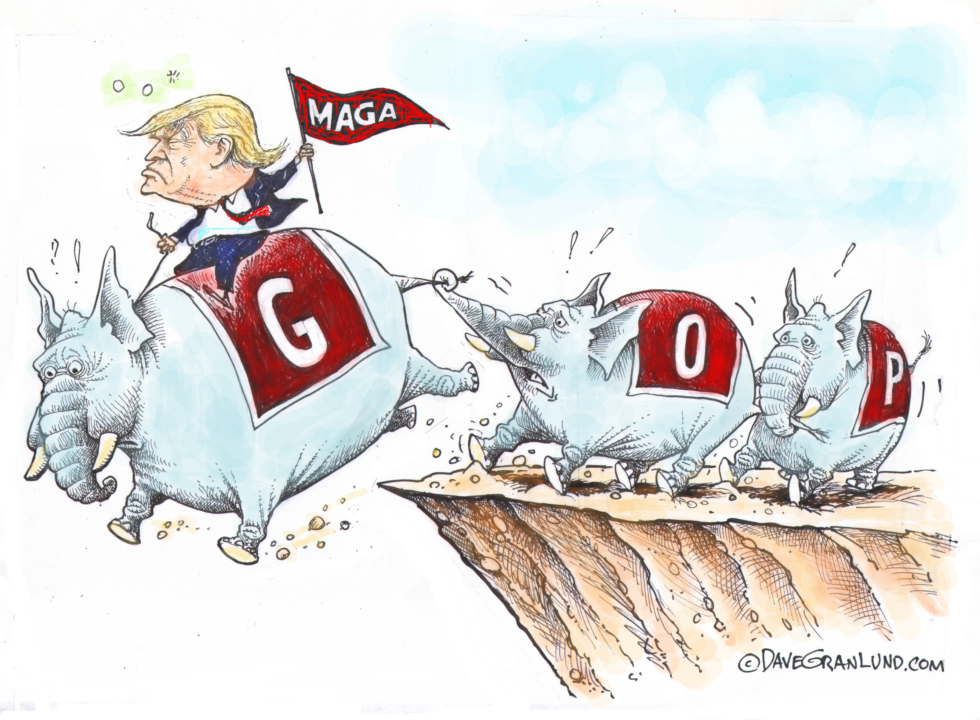
The cartoon shows Donald Trump perched on the lead elephant labeled G, waving a red MAGA flag, as the three elephants forming GOP charge toward the edge of a cliff. The middle and rear elephants display expressions of alarm. The image was published on August 27, 2026, and uses the longstanding Republican elephant symbol to illustrate concerns about party direction under Trump's influence.
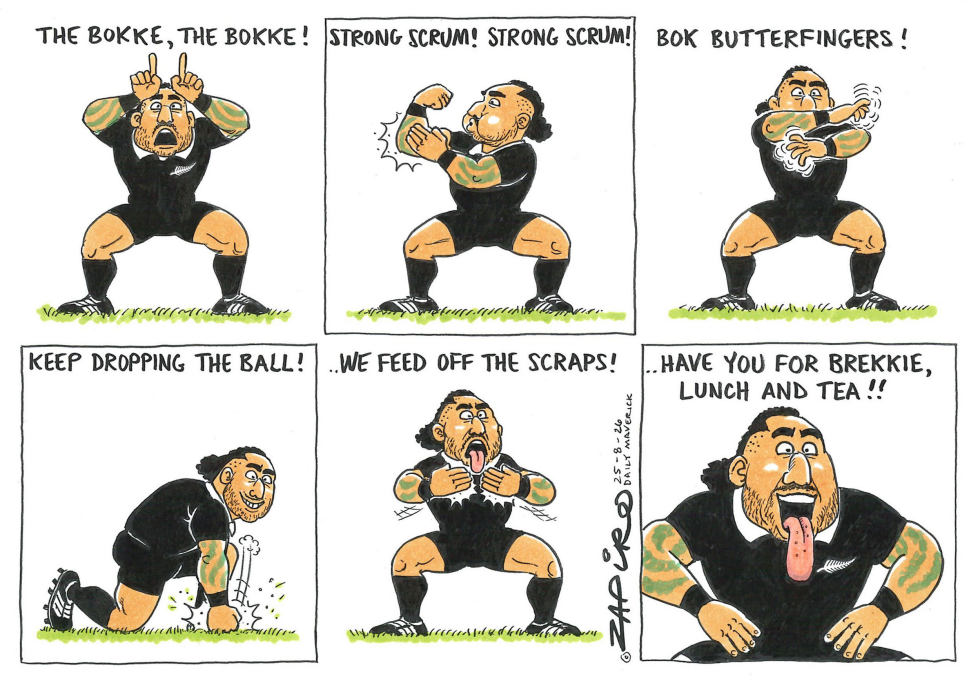
The Springboks rugby team faced ongoing criticism for handling errors and scrum vulnerabilities in matches against strong opponents like the All Blacks. The cartoon uses repeated failure motifs to argue that South African performance has deteriorated into consistent mistakes that opponents exploit easily.